Vet-informed guide to a short-term bland diet for dogs: chicken and rice 1:2 ratio, daily cup ranges by weight, how many meals to split into, and red flags t...
Article
•
Designer Mixes
Dog Diarrhea Treatment: Fun Facts and Tips

Shari Shidate
Designer Mixes contributor
As a veterinary assistant here in Frisco, Texas, I can tell you this: diarrhea is a very common reason dogs end up needing a vet visit. The good news is that many mild cases clear up quickly with smart home care. The key is knowing what is normal, what is urgent, and how to support your dog’s gut safely.
What diarrhea is (and why it happens)
Diarrhea is not a diagnosis. It is a sign that the intestines are moving contents too quickly (or pulling too much water into the stool). That can happen for lots of reasons, including:
- Diet changes (new food, new treats, rich table scraps).
- Stress (travel, boarding, thunderstorms, new pets, schedule changes).
- Parasites (especially in puppies, newly adopted dogs, and dogs who visit dog parks).
- Infections (viral or bacterial).
- Food sensitivities or inflammatory bowel disease.
- Toxin exposure (trash, compost, human medications).
Fun fact: Your dog’s gut has a huge immune role. A significant portion of immune activity is tied to the digestive tract, which is one reason diarrhea can show up when the body is stressed or fighting something off.
Call the vet now
Home care is only for dogs who are acting mostly normal. Think: normal or only slightly reduced energy, still drinking water, no repeated vomiting, and no obvious pain. Call your veterinarian promptly or seek urgent care if you notice any of the following:
- Blood in the stool (red streaks or a black, tarry look).
- Vomiting repeatedly, or cannot keep water down.
- Lethargy, weakness, pale gums, or obvious pain.
- Dehydration signs: dry or tacky gums, sunken eyes, reduced urination.
- Puppies, seniors, pregnant dogs, or dogs with chronic disease (kidney, diabetes, Addison’s, cancer).
- Possible toxin ingestion (trash, chemicals, xylitol, chocolate, grapes/raisins, human meds).
- Diarrhea lasting more than 24 to 48 hours, or sooner if worsening.
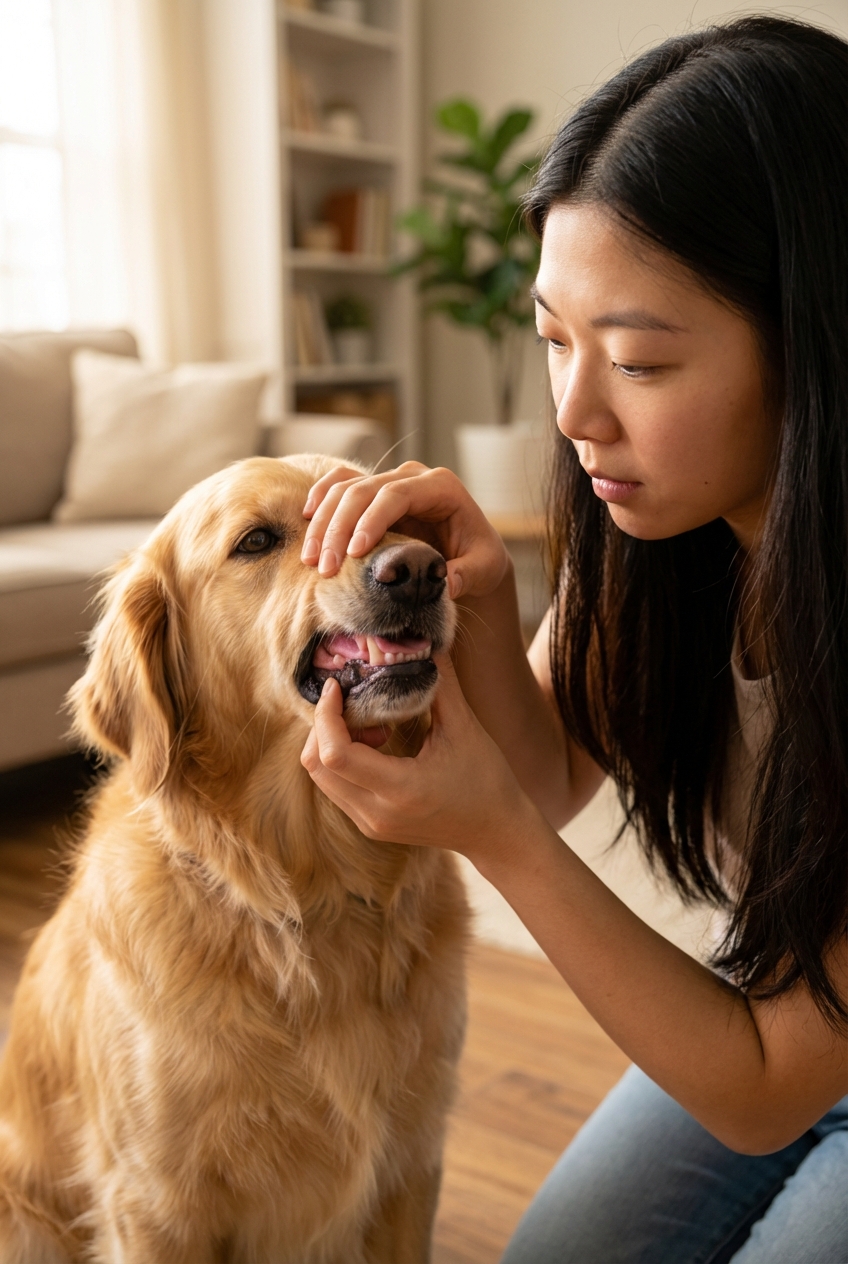
At-home care
1) Hydration first
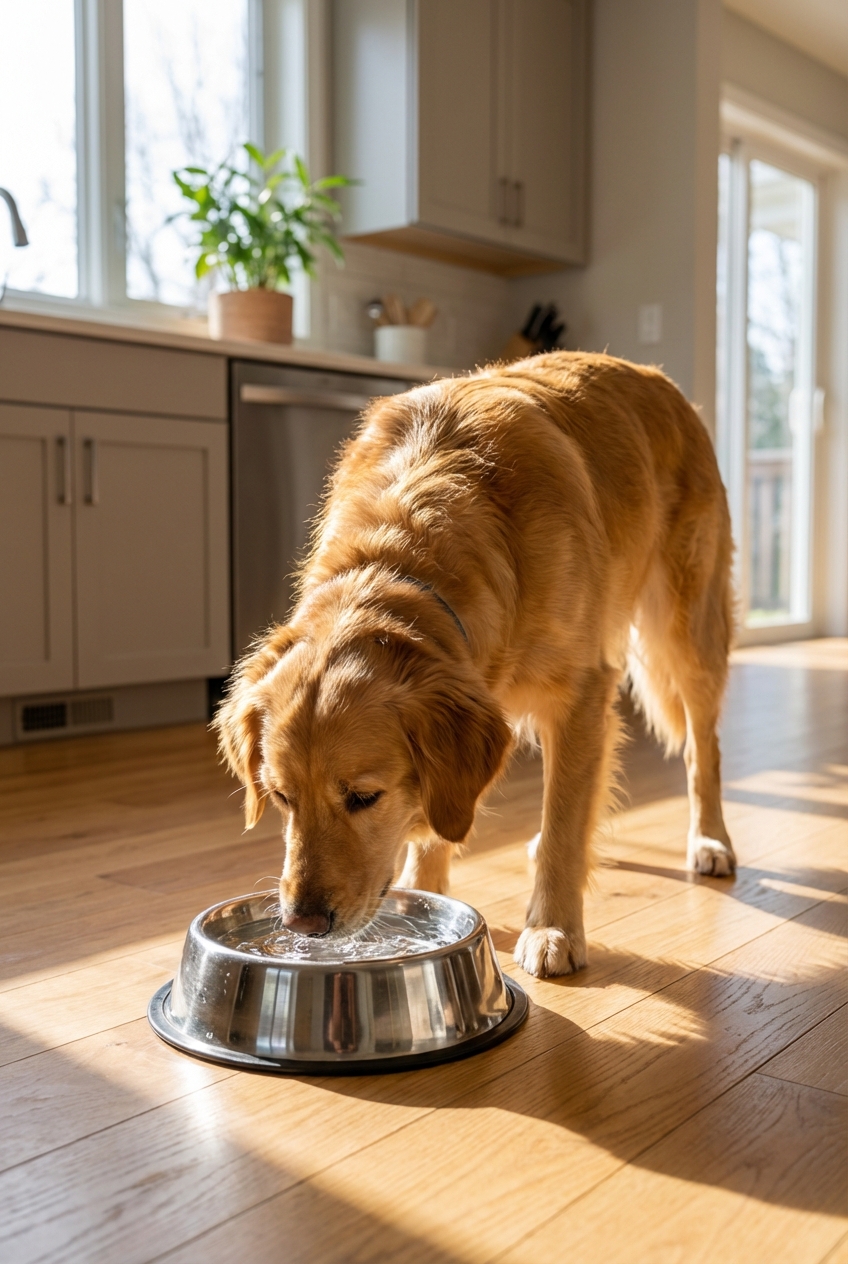
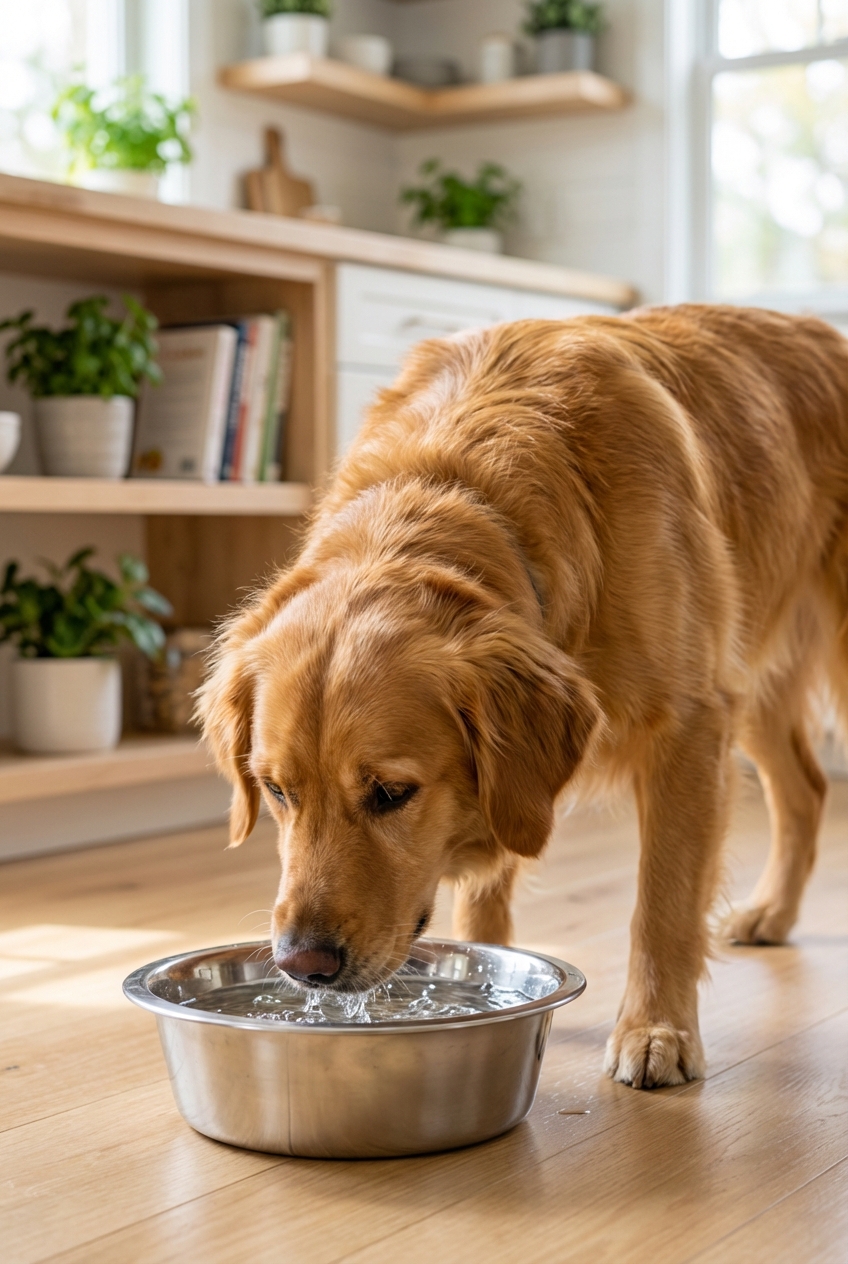
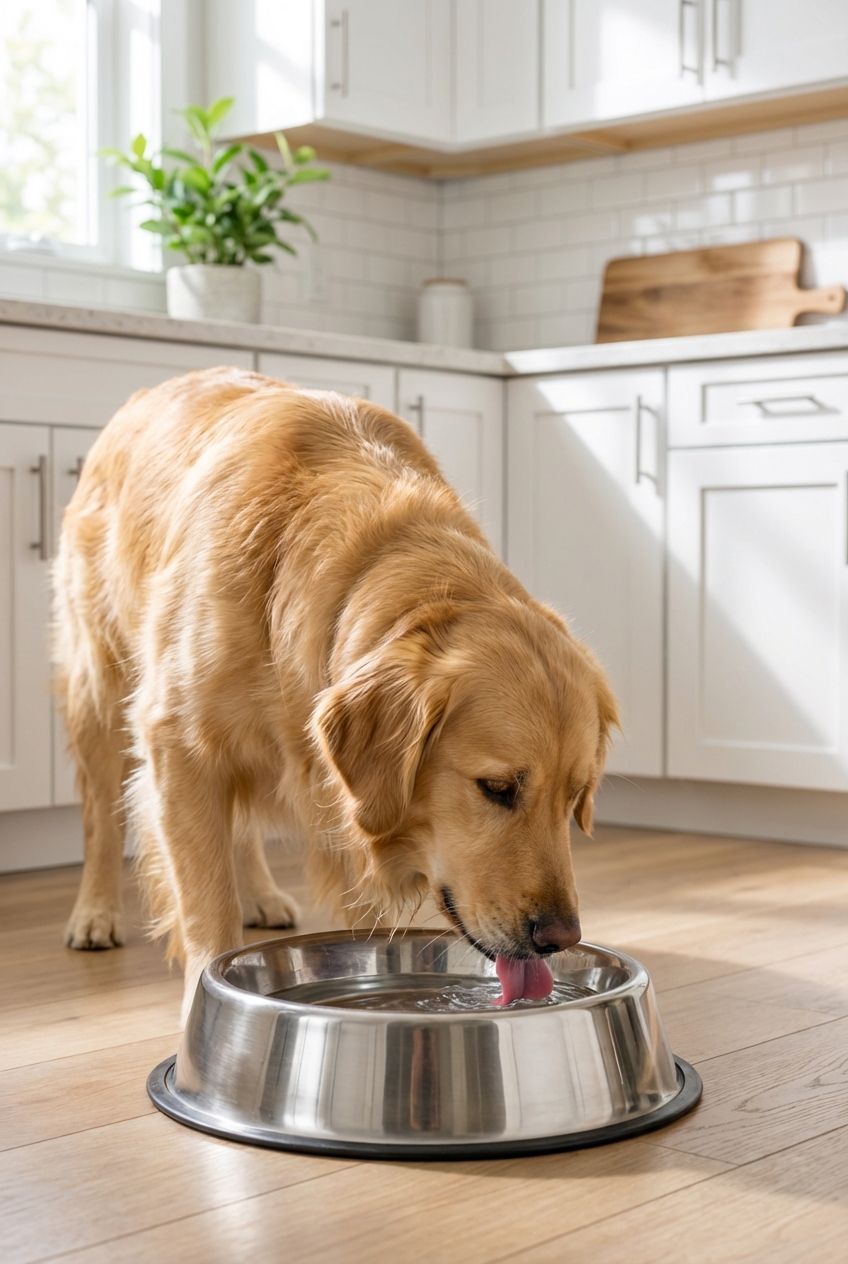
Dehydration is often the biggest danger with diarrhea. Make sure fresh water is always available. If your dog will not drink, drinks and then vomits, or seems “off,” that is vet territory.
Tip: Some dogs drink more readily from multiple bowls placed around the house, or from a pet fountain.
Monitor at home: Check for tacky gums and note urination. Some people use the “skin tent” test, but it can be misleading (especially in seniors or overweight dogs). When in doubt, call your vet.
2) Short-term bland diet
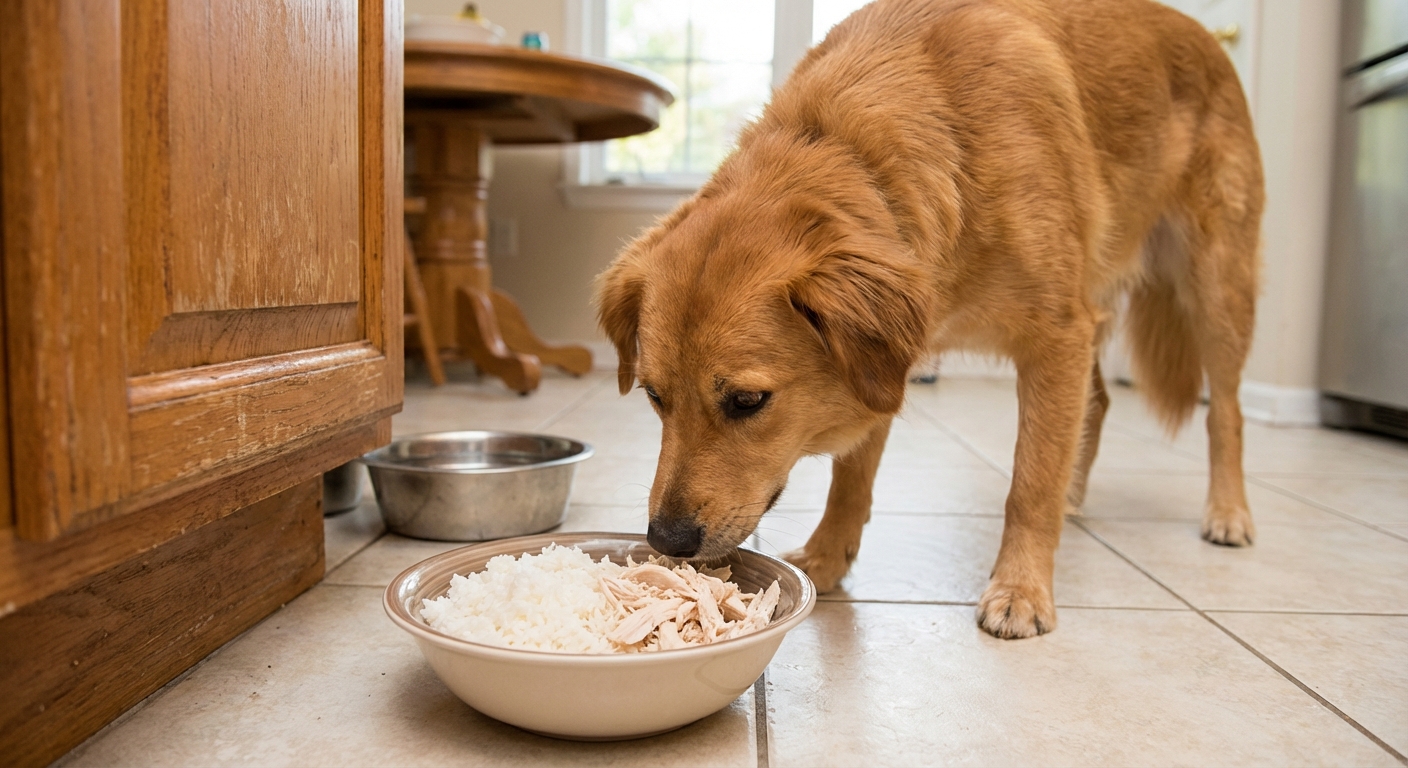
For many adult dogs with mild diarrhea and no red flags, a short-term bland diet for 24 to 48 hours can help calm the gut. It is not one-size-fits-all, so if your dog has diabetes, is very small, has other medical issues, or you are unsure, check with your veterinarian first.
Common options include:
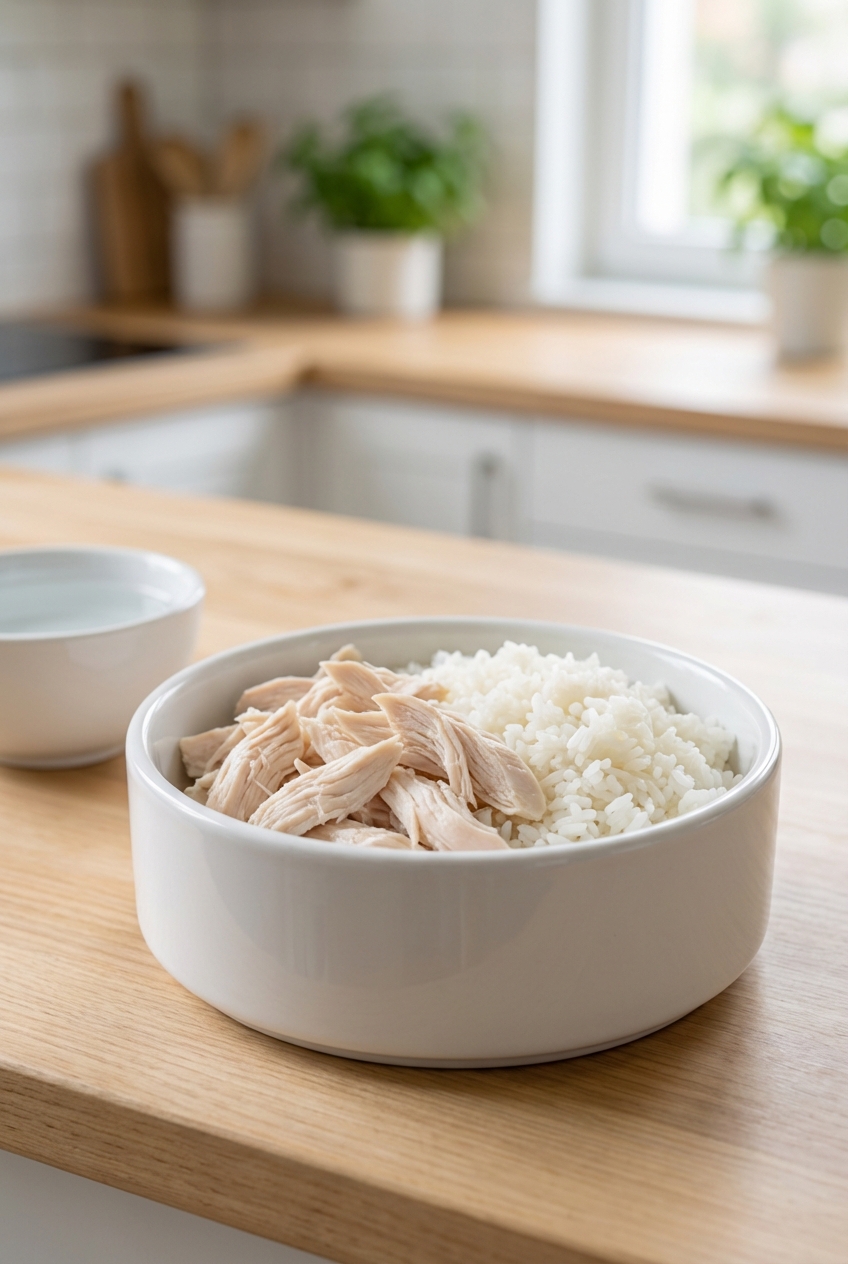
- Boiled skinless chicken breast with plain white rice
- Lean ground turkey with white rice
- Low-fat cottage cheese (small amounts) with rice, if your dog tolerates dairy
Feed small meals, 3 to 6 times per day, rather than one big meal. Once stools improve, transition back to regular food slowly over 3 to 5 days by mixing increasing amounts of the normal diet.
If things improve then come back: If your dog firms up on a bland diet but diarrhea returns when you reintroduce normal food, pause the transition and call your vet. It may mean your dog needs a fecal test, a prescription GI diet, or treatment for parasites.
Fun fact: A sudden diet switch is one of the top triggers for diarrhea because the gut microbiome needs time to adapt to new ingredients.
3) Gentle fiber (optional)
Fiber can help some dogs by absorbing excess water and supporting healthier stool formation. A classic option is plain canned pumpkin (not pumpkin pie filling). Evidence is mixed and dosing matters, so keep it as a small-amount trial.
Simple guide: Start with about 1 teaspoon per 10 pounds of body weight mixed into food, up to 1 tablespoon for most dogs. If gas or looser stool shows up, stop and check in with your vet.
4) Dog-specific probiotics
Some veterinary probiotic products may help shorten the course of certain diarrhea cases by supporting a healthier balance of gut bacteria. Results vary by product and strain, so choose a product formulated for pets and follow label dosing (or your vet’s guidance).
Tip: Save the “human probiotic gummy” for humans. Some human products contain sweeteners or additives that are not ideal for dogs.
5) Avoid common mistakes
- No Pepto-Bismol or Imodium unless your veterinarian tells you to. Bismuth products can contain salicylates, and loperamide can be dangerous in certain breeds, with certain medical conditions, or with some toxin exposures. Dosing matters.
- Do not do high-fat foods (bacon, greasy meat, rich treats). Fat can worsen diarrhea and even trigger pancreatitis.
- Avoid abrupt fasting in puppies. Puppies can become hypoglycemic more easily.
- Avoid risky home remedies. Skip onion or garlic “broths,” essential oils, and random OTC meds. Some “natural” options are not dog-safe.
Helpful facts
- Stress poops are real. The gut and brain communicate constantly. Big emotions can equal big bathroom problems.
- Color matters. Bright red blood often suggests lower GI irritation; black, tarry stool can indicate digested blood and needs fast vet attention.
- Mucus is common. A jelly-like coating can happen when the colon is irritated. It can be mild, but paired with straining or frequent small stools, it may point to colitis.
- Not all parasites are visible. Giardia, coccidia, and roundworms often require a fecal test even if you never see worms in stool.
Large vs small bowel
- Large bowel diarrhea often shows up as frequent, small-volume stools, straining, and mucus (sometimes with bright red blood).
- Small bowel diarrhea is more likely to be larger volume, less frequent, and may be paired with weight loss or poor appetite if it is ongoing.
What your vet will ask
If you end up calling or visiting, you will help your vet tremendously by noting:
- How long the diarrhea has been going on
- Frequency and volume (a lot at once vs frequent small-volume stools)
- Any vomiting, appetite change, or behavior change
- Diet changes, new treats, chews, trash access, or recent boarding
- Vaccination and parasite prevention status
Practical tip: If you can safely bring a fresh stool sample (in a sealed bag or container), do it. Ideally it is less than 12 hours old and kept cool.

Prevention
- Transition foods slowly over 7 to 10 days.
- Limit rich treats and avoid frequent “table scraps.”
- Use consistent parasite prevention year-round as recommended by your vet.
- Trash-proof your home with secured bins and compost lids.
- Support gut health with consistent, high-quality nutrition and a vet-approved probiotic during stressful events (travel, boarding).
Bottom line: Most mild diarrhea improves with hydration support, a gentle diet, and smart monitoring. But if your dog seems unwell, diarrhea is your cue to call your vet sooner rather than later.