Vet-informed guide to a short-term bland diet for dogs: chicken and rice 1:2 ratio, daily cup ranges by weight, how many meals to split into, and red flags t...
Article
•
Designer Mixes
Dog Diarrhea Home Remedy Steps

Shari Shidate
Designer Mixes contributor
Diarrhea is one of the most common reasons pet parents panic, and I get it. When your dog has sudden loose stools, you want to help fast. The good news is that many mild cases improve at home with simple, evidence-based care. The key is knowing what’s reasonable to try at home, and what’s urgent and needs a veterinarian.
Quick note: Online guidance cannot replace an exam. If anything feels off, call your veterinarian.
First: Is this an emergency?
Before you try any home remedy, do a quick safety check. Diarrhea can be mild, or it can be a sign of infection, poisoning, pancreatitis, parasites, intestinal blockage, or other serious issues.
Go to an ER vet now if you see any of these
- Blood in the stool (bright red) or black, tarry stool (digested blood)
- Repeated vomiting, bloated abdomen, retching, or unproductive heaving
- Severe lethargy, collapse, weakness, or pale gums
- Signs of dehydration such as tacky or dry gums, sunken eyes, marked weakness, reduced urination, or a fast heart rate (a dry nose alone is not a reliable dehydration sign)
- Suspected toxin exposure (xylitol, grapes or raisins, rat poison, human meds, marijuana products, etc.)
- Puppies, seniors, pregnant dogs, or dogs with chronic disease (kidney, liver, diabetes, Addison’s)
- Diarrhea that is worsening or not improving after 24 to 48 hours (rule of thumb: be more cautious with small dogs). Severity, hydration, and other symptoms matter more than the clock
- Possible foreign body (chewed toy pieces, socks, bones, corn cobs) or straining with little coming out
If you are unsure, it is always okay to call your veterinarian for guidance. Better a false alarm than a missed emergency.
Why dogs get diarrhea
Most sudden diarrhea comes from irritation and inflammation in the gut. Common causes include:
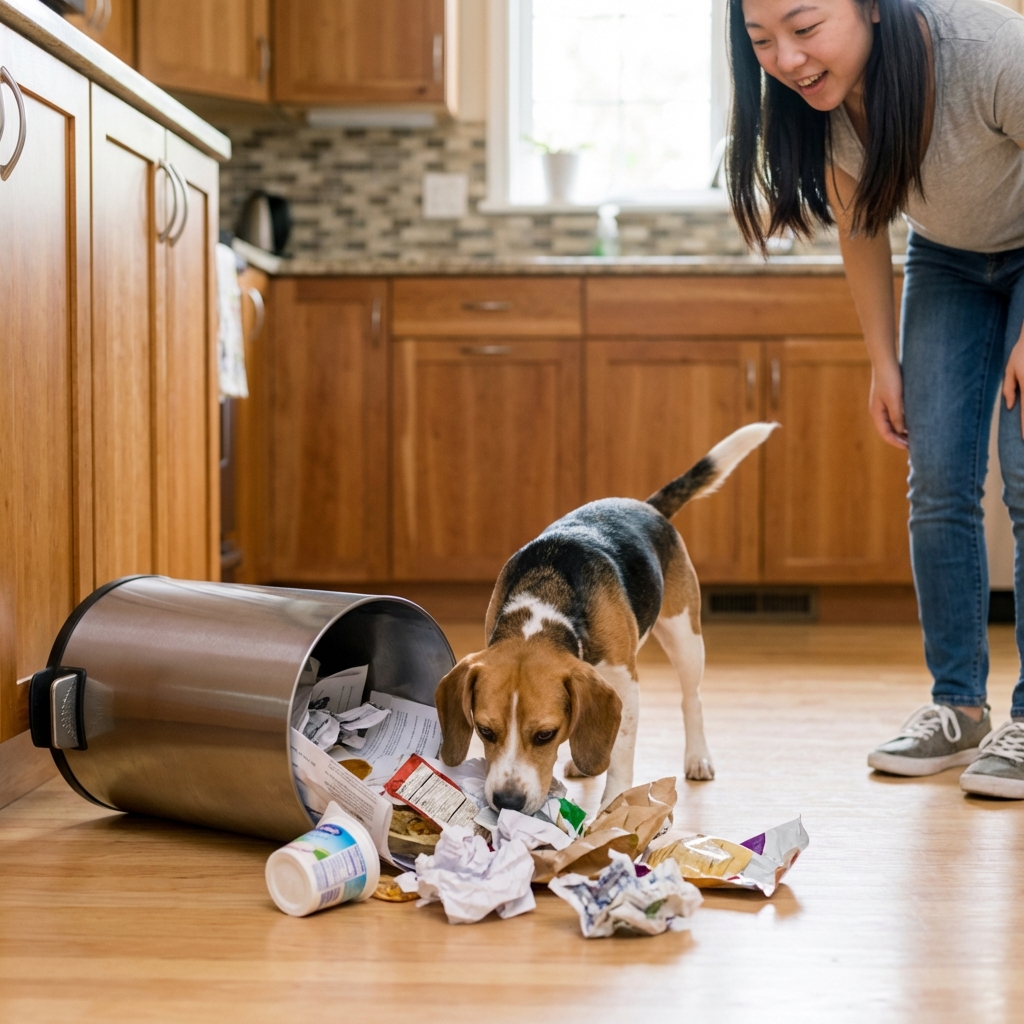
- Dietary indiscretion (trash, table scraps, rich treats, new chews)
- Sudden diet change
- Stress (travel, guests, boarding)
- Parasites (giardia, roundworms, hookworms)
- Infections (viral or bacterial)
- Food intolerance
- Pancreatitis (often after fatty foods)
- Medication side effects (including some antibiotics and NSAIDs)
Home care steps
These steps are for a bright, alert dog with mild diarrhea who is still drinking and acting mostly normal.
Step 1: Stop the extras
Stop all treats, chews, bones, table food, and new supplements for now. Your dog’s gut needs a quiet, simple routine.
Step 2: Hydration first
Diarrhea pulls water (and electrolytes) out of the body. Your job is to make drinking easy.
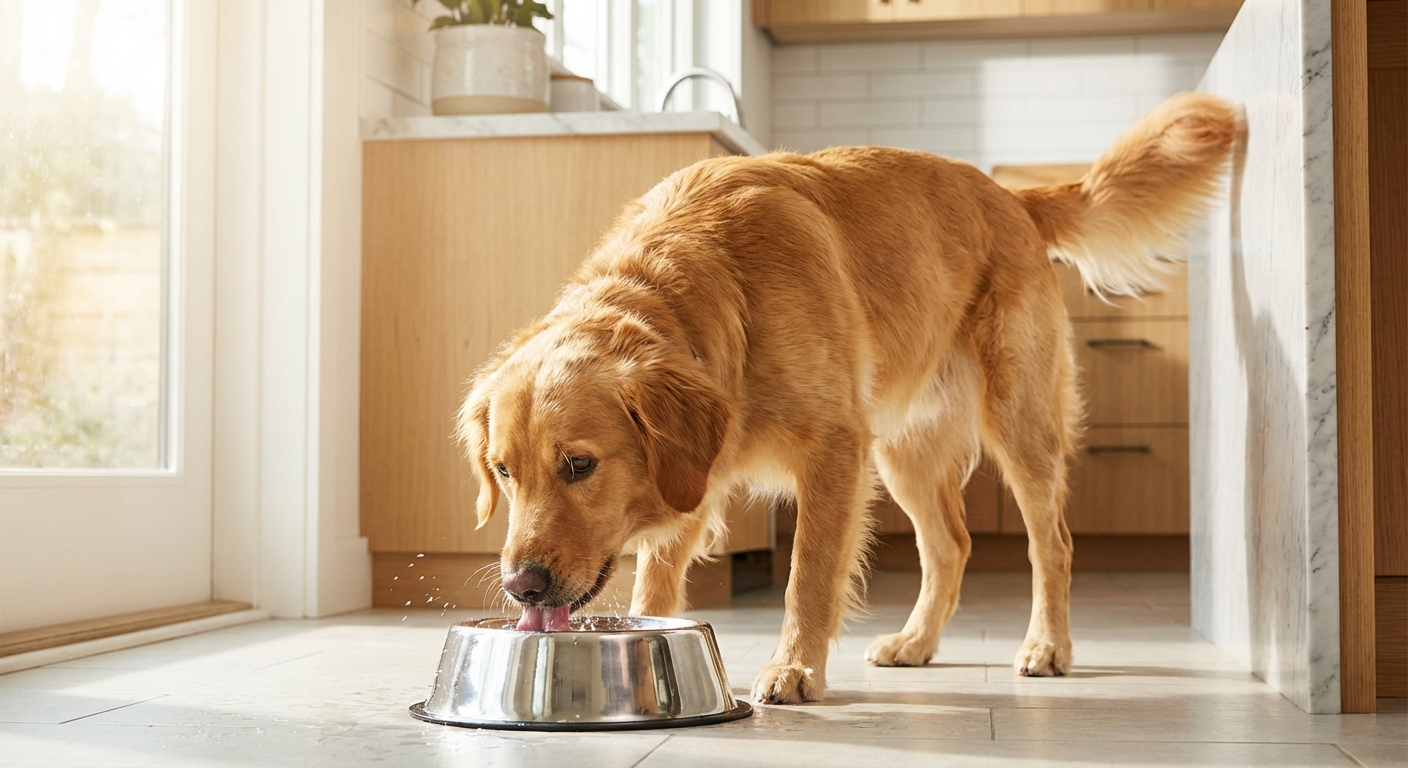
- Offer fresh water at all times.
- If your dog is willing, offer ice cubes or small amounts of water frequently. For small dogs, try a few teaspoons every 10 to 15 minutes.
- You can offer unseasoned broth (no onion or garlic, no excess salt) to encourage drinking.
Tip from the clinic: If your dog cannot keep water down, seems weak, or is not urinating normally, that is not a home-care situation. Call your vet.
Step 3: Consider a brief food break (adult dogs only)
For healthy adult dogs, some veterinarians may recommend a short food break to let the gut settle. This is often 8 to 12 hours.
- Do not fast puppies or tiny toy breeds without veterinary direction. They can develop low blood sugar.
- Do not fast dogs with diabetes, known liver disease, or other conditions unless your vet tells you to.
- Always keep water available.
- Stop and call your vet if vomiting, weakness, worsening diarrhea, or dehydration signs show up.
Step 4: Start a bland diet
Once your dog is keeping water down and seems stable, introduce bland food in small portions.
Simple bland options (choose one):
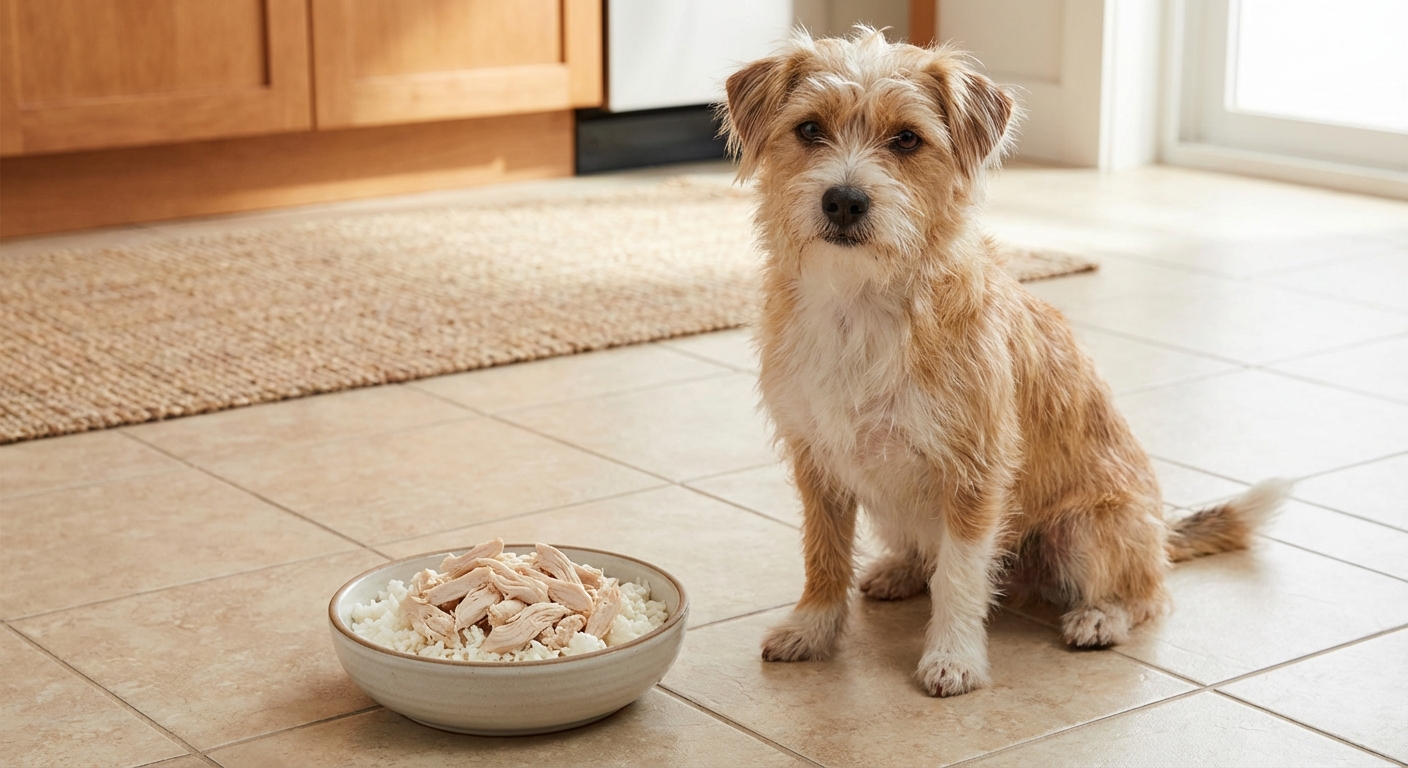
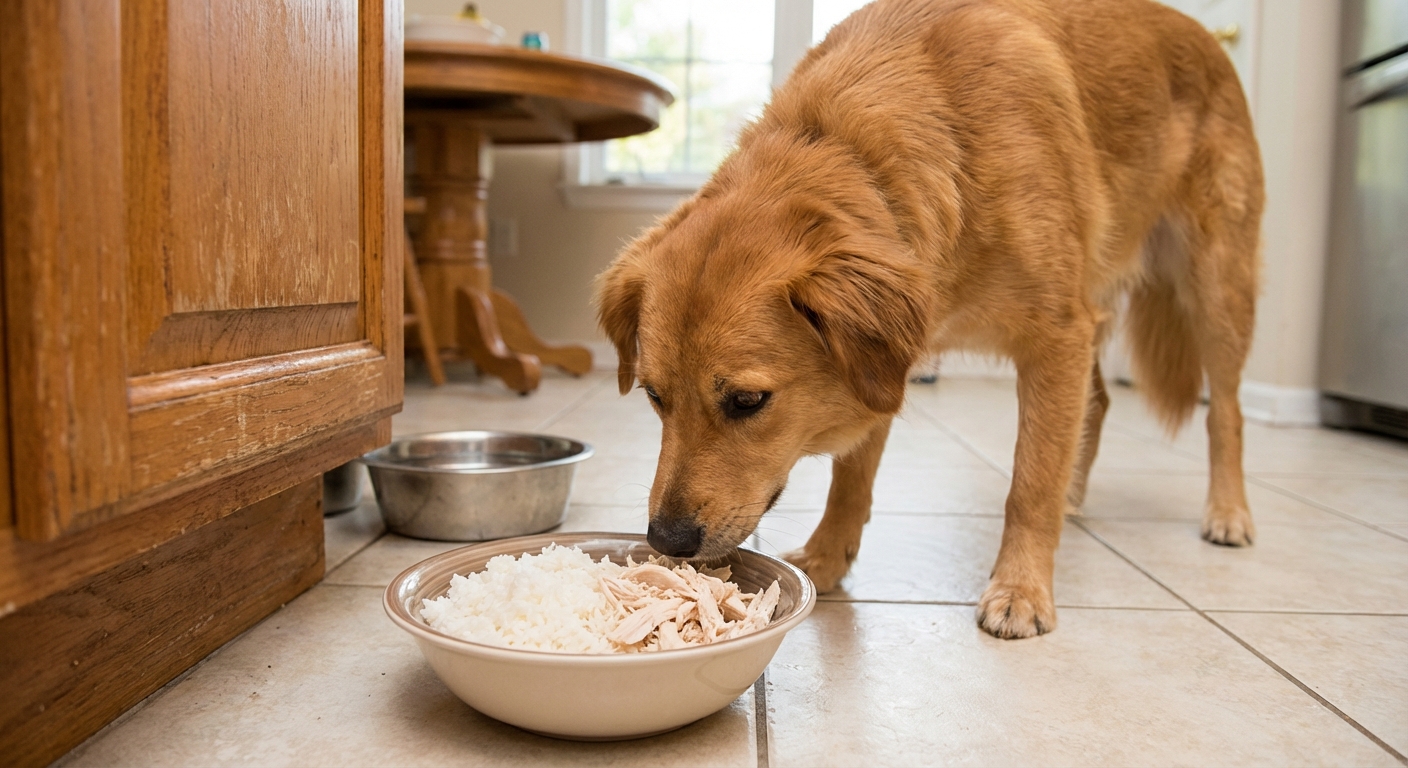
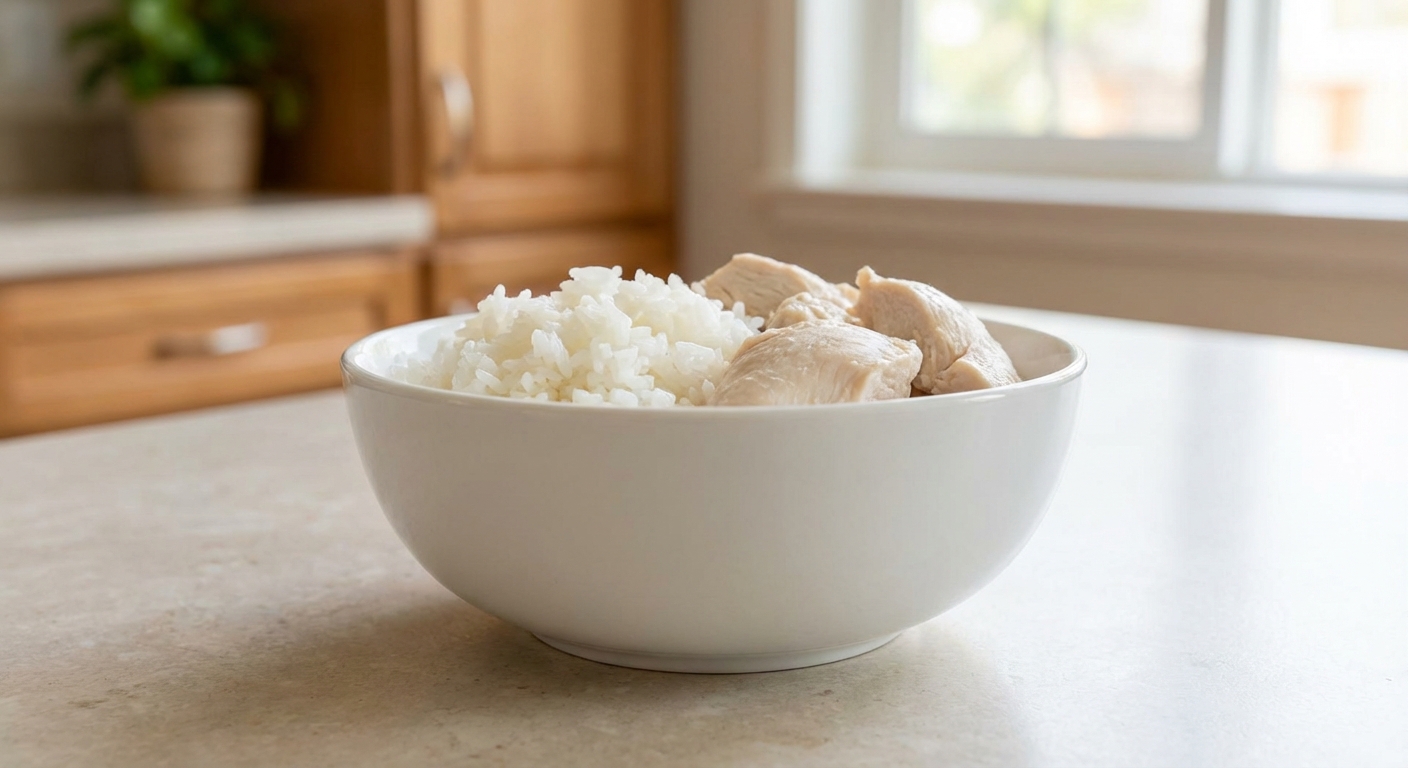
- Boiled skinless chicken breast + white rice
- Boiled lean turkey + white rice
- Boiled lean ground beef (drained well) + white rice
- Prescription GI diet if you already have one from your veterinarian
- Low-fat cottage cheese + white rice (some dogs do not tolerate dairy, so skip if unsure)
How to feed it: Offer small meals, about 4 to 6 times/day for 1 to 3 days. The goal is to avoid overloading an irritated gut.
Step 5: Add soluble fiber
Soluble fiber can help firm stool by absorbing water and supporting colon health.
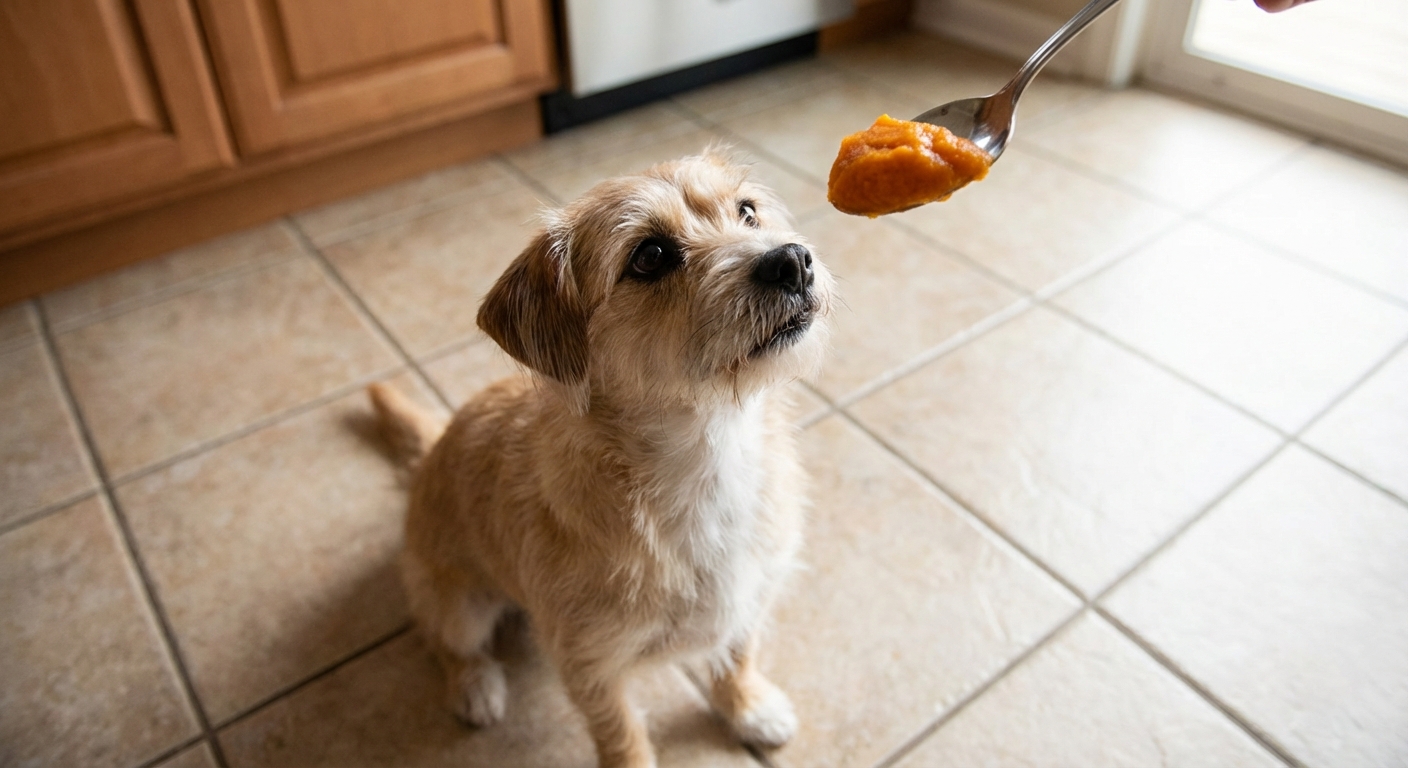
- Plain canned pumpkin (100% pumpkin, not pie filling) is a common choice.
- Start low and adjust. A typical starting point is about 1 teaspoon per 10 pounds of body weight per day, mixed into food. Smaller dogs may only need 1 teaspoon total, while medium to large dogs may do well with 1 tablespoon or more.
If pumpkin is not available, ask your vet about other fiber options that fit your dog’s history.
Step 6: Consider a veterinary probiotic
There is some evidence that certain veterinary probiotics can shorten the course of acute diarrhea in dogs, but results vary by product and strain. Choose a product formulated for pets, and follow the label directions or your veterinarian’s advice.
Important: Skip random human probiotics unless your vet says it is okay, since strains and doses vary widely.
Step 7: Return to normal food slowly
When stools are clearly improving for 24 to 48 hours, transition back gradually:
- Day 1: 75% bland diet, 25% regular food
- Day 2: 50% bland diet, 50% regular food
- Day 3: 25% bland diet, 75% regular food
- Day 4: 100% regular food
If your dog has a sensitive stomach, extend each step to 2 to 3 days. If diarrhea returns during the transition, step back to the previous ratio and call your veterinarian if it does not improve.
What not to do
Some well-meaning fixes can actually make things worse.
- Do not give human anti-diarrhea meds (like loperamide or Imodium) unless your veterinarian instructs you. It can be dangerous for some breeds (including dogs with the MDR1 gene mutation such as many Collies, Australian Shepherds, and Shelties) and may be unsafe if infection, toxin exposure, or poor gut movement is a concern.
- Do not give fatty foods to tempt appetite. High fat can trigger pancreatitis.
- Do not use seasoned broths or foods with onion, garlic, or xylitol.
- Do not overfeed after a brief fast. Bigger meals can restart diarrhea.
Track symptoms
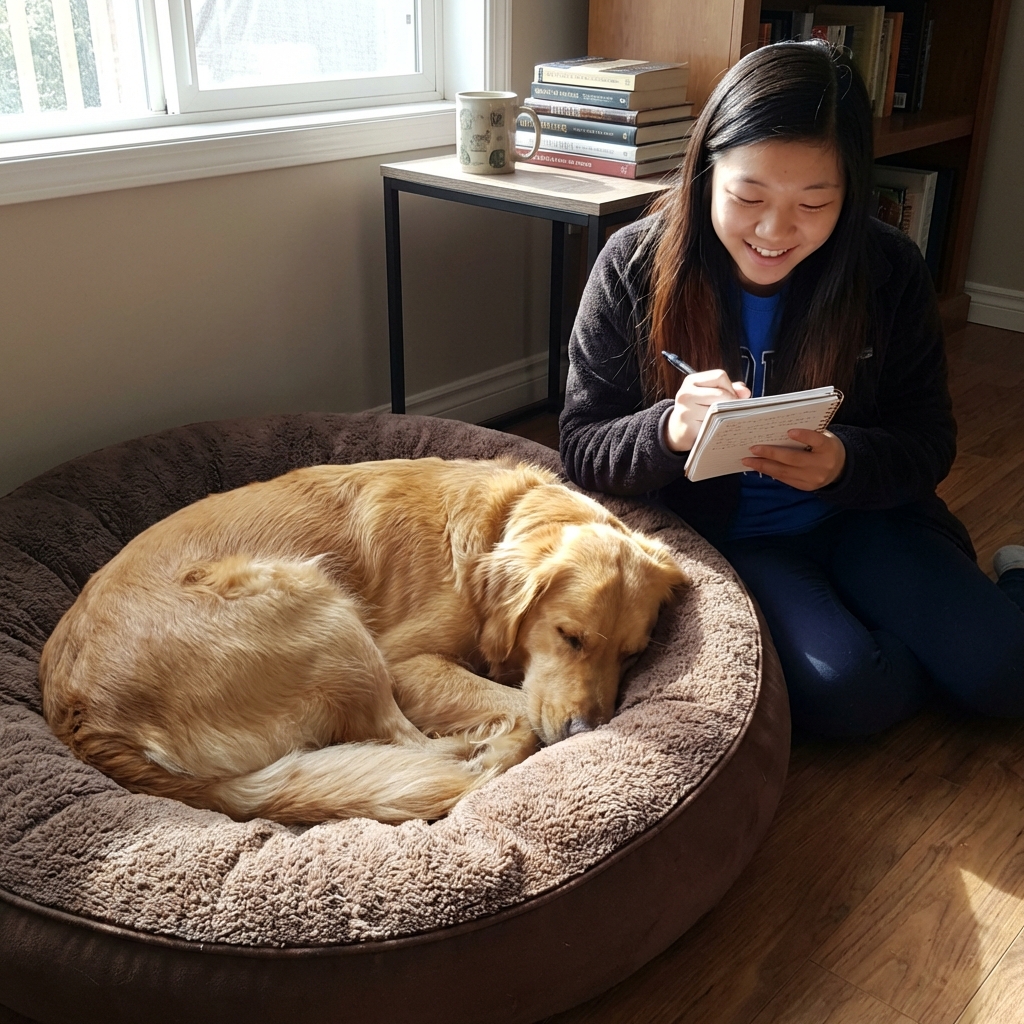
When you are dealing with diarrhea, details help you and your vet make faster decisions.
- Frequency: how many episodes per day
- Volume: small frequent squirts versus large puddles
- Appearance: watery, pudding-like, mucus, blood, black and tarry
- Other symptoms: vomiting, appetite, energy level
- Hydration: gum moisture, drinking, urination
- Possible cause: new treat, trash access, stress, boarding
If you can safely do it, take a photo of the stool and bring a fresh stool sample to your veterinarian. Parasite testing is very common for a reason.
Helpful clue: Large-bowel diarrhea often looks like smaller, more frequent poops with mucus and straining. Small-bowel diarrhea is often larger volume and may come with weight loss or poor appetite. Either can be serious, but this can help your vet narrow the story.
Call your vet
- Diarrhea continues beyond 24 to 48 hours, or it is getting worse
- Your dog has multiple episodes overnight or cannot settle
- Your dog is not eating for a full day
- There is mucus or a strong foul odor that is new
- You suspect parasites (daycare, dog parks, puddles, wildlife exposure)
- Your dog has repeated bouts of diarrhea or diarrhea lasting more than 2 to 3 days (this needs a workup for things like parasites, food intolerance, IBD, or other chronic issues)
Veterinary care may include a fecal test, hydration support, deworming, diet therapy, or medication depending on the cause.
Hygiene and spread
Some causes of diarrhea are contagious to other dogs (and some parasites can affect people). While your dog has diarrhea:
- Pick up stool promptly and disinfect soiled areas.
- Wash hands after cleanup.
- Avoid dog parks, daycare, and shared water bowls until stools are normal for at least 48 hours.
Prevention tips
- Transition foods slowly over 7 to 10 days.
- Keep garbage secured. Diarrhea prevention is sometimes a lid and a latch.
- Choose treats with simple ingredients and limit rich, fatty snacks.
- Ask your vet about routine fecal testing and parasite prevention.
- For sensitive stomachs, discuss a consistent diet plan and whether a veterinary probiotic is a good fit.
If your dog is bright, drinking, and only mildly affected, simple bland food, hydration, and close monitoring are often enough. If anything feels off, trust your gut and call your veterinarian.