Step-by-step home care for mild dog diarrhea and vomiting: short food break, small sips of water, bland diet, pumpkin, probiotics, dehydration checks, and ur...
Article
•
Designer Mixes
Dog Diarrhea and Vomiting: Trusted Home Remedy Facts

Shari Shidate
Designer Mixes contributor
As a veterinary assistant here in Frisco, Texas, I can tell you one reassuring truth: a single episode of vomiting or a short bout (under 24 hours) of loose stool is common in dogs, and many cases improve with simple, safe support at home.
But here is the other truth: diarrhea and vomiting can also be the first sign of dehydration, toxin exposure, pancreatitis, an intestinal blockage, or a contagious infection. The key is knowing what you can do at home and when it is time to call your veterinarian.
Quick note: This is general education, not a diagnosis. If something feels “off” for your dog, call your veterinarian for personalized guidance.
First: Is this an emergency?
Before you try any home remedy, do a quick safety check. If any of the items below apply, skip home care and contact your veterinarian or an emergency clinic right away.
Go to the vet now if you notice:
- Repeated vomiting over a short period (for example, several episodes in a few hours), vomiting that continues, or inability to keep water down
- Blood in vomit or stool (bright red or dark, tarry stool)
- Severe lethargy, collapse, weakness, or pale gums
- Bloated belly, painful abdomen, or unproductive retching (can be bloat, which is life-threatening)
- Signs of dehydration: sticky or dry gums, sunken eyes, skin that “tents” when gently lifted, very low energy, or urinating much less than normal
- Suspected toxin exposure (grapes/raisins, xylitol, chocolate, rodent bait, medications, mushrooms, etc.)
- Possible blockage: repeated vomiting, hunched posture, restlessness, no stool, or a history of chewing toys, socks, bones
- Puppies, seniors, or dogs with chronic conditions (kidney disease, diabetes, Addison’s, heart disease) because they can dehydrate faster and crash quicker
- Diarrhea lasting longer than 24 to 48 hours or vomiting lasting longer than 12 to 24 hours
- Fever suspected (warm ears can be misleading, but if your dog feels unusually hot and is lethargic, call your veterinarian)
If you are unsure, calling your veterinarian for triage advice is never “overreacting.” Quick guidance can prevent a small GI upset from becoming a bigger problem.
Common causes
Most mild cases are caused by dietary upset, but there are many possibilities. Knowing the most common causes helps you make smart next steps.
- Dietary indiscretion: trash, greasy table food, spoiled treats, new chews
- Sudden diet change: switching foods too fast
- Parasites: Giardia, roundworms, hookworms, whipworms
- Stress: boarding, travel, storms, household changes
- Infections: viral or bacterial gastroenteritis, sometimes contagious
- Food intolerance or sensitivity
- Pancreatitis: often triggered by fatty foods, can cause vomiting, abdominal pain, lethargy
- Toxins or foreign body obstruction
Trusted home care basics
When a dog is bright, alert, still interested in water, and only mildly affected (no blood, no severe pain, no repeated vomiting), supportive care is often focused on three goals: rest the gut, prevent dehydration, and reintroduce food gently.
Also important: stop all treats, bones, chews, table scraps, and rich foods until your dog is fully back to normal.
1) Hydration comes first
Diarrhea and vomiting pull fluid and electrolytes out of the body. For many dogs, dehydration is the part that turns “mild” into “serious.”
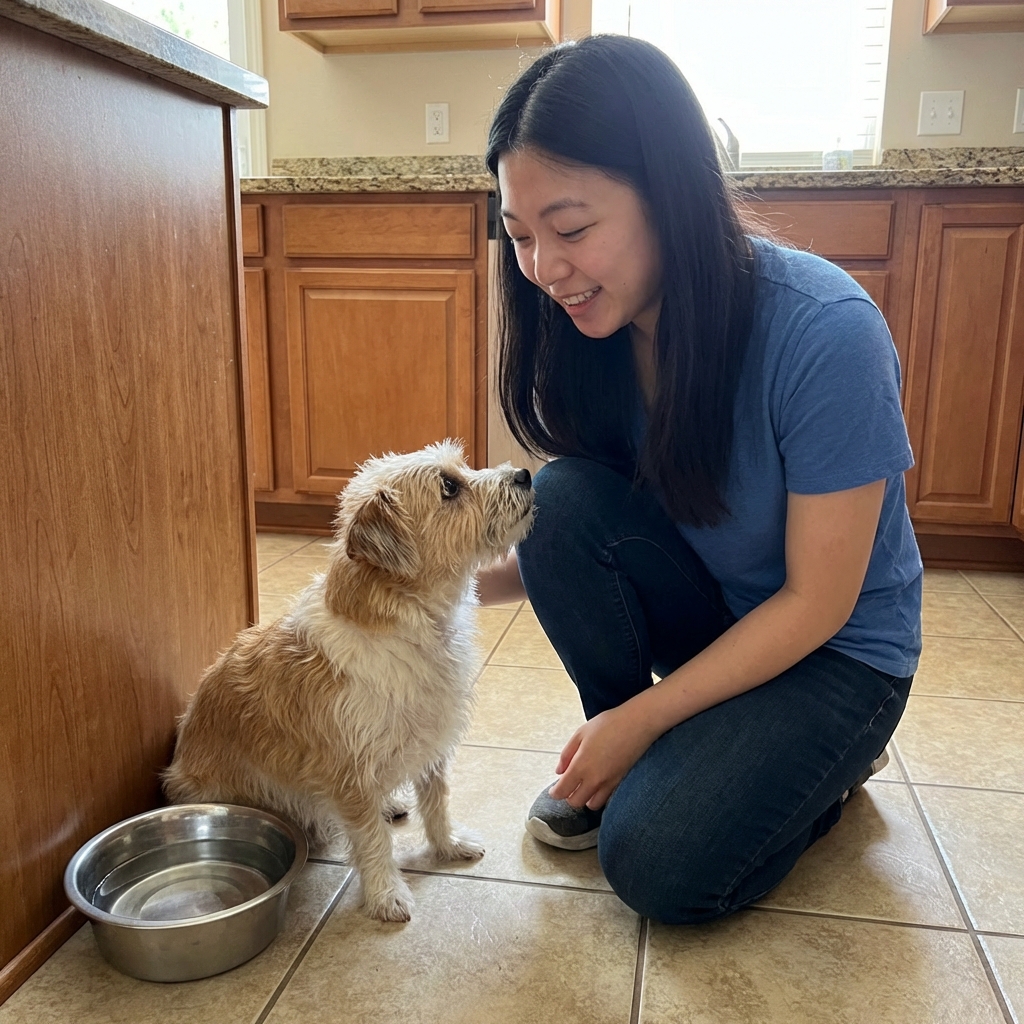
- Offer small, frequent sips of water rather than letting your dog gulp a large amount at once.
- If your dog vomits after drinking, many veterinarians recommend pausing water for about 30 to 60 minutes, then offering a small amount again (for example, 1 to 2 tablespoons at a time for small dogs, a few tablespoons for medium to large dogs). If your dog is a puppy, toy breed, diabetic, or medically fragile, call your veterinarian before restricting water.
- Ice chips can be easier for some dogs to tolerate.
- Ask your veterinarian whether a veterinary oral electrolyte solution is appropriate. Some human products can be too high in sugar or sodium for dogs.
Avoid: sports drinks, sugary drinks, and bone broth products high in onion or garlic powder. Also avoid forcing water with a syringe unless your veterinarian instructs you, because aspiration is a risk.
2) Short food break (only for some dogs)
For adult dogs with vomiting, some veterinarians recommend a short rest period for the stomach. For many dogs, that is about 6 to 12 hours without food, while continuing careful water access.
Do not fast very young puppies, toy breeds prone to low blood sugar, diabetic dogs, or dogs with other medical conditions without veterinary guidance.
3) Bland diet, then a slow transition
A bland diet is not a long-term diet. It is a short, gentle bridge to calm irritation while the gut lining recovers.
Common vet-approved bland options:
- Boiled chicken breast (no skin, no seasoning) with plain white rice
- Lean ground turkey (drained well) with white rice
- Prescription GI diets (often the easiest on the stomach and balanced for short-term use)
Feed small portions 3 to 6 times per day. If stools firm up and vomiting stops, gradually transition back to the regular diet over 3 to 5 days by mixing increasing amounts of the normal food into the bland food.
4) Pumpkin (sometimes helpful)
Plain canned pumpkin (not pumpkin pie filling) is a gentle fiber source. Fiber can help some dogs with mild diarrhea by adding bulk, and it can also help some constipated dogs. It is not appropriate for every dog, and it will not fix infections, parasites, pancreatitis, or obstruction.
- A common starting guideline is about 1 teaspoon per 10 pounds of body weight mixed into food, 1 to 2 times daily. If your dog is sensitive, start with less.
- As a practical ceiling for most dogs, avoid exceeding 1 to 2 tablespoons per day unless your veterinarian recommends otherwise.
- Stop if stool worsens, vomiting returns, or your dog seems uncomfortable.
Probiotics and yogurt
There is decent evidence that some probiotic strains and products can shorten the duration of acute diarrhea in dogs, especially when stress or antibiotics are involved. The important part is choosing a product made for pets with clear labeling and quality control.
Probiotics
- Dog-specific probiotics are usually preferred because the strains and dosing are designed for canine GI systems.
- If your dog is immunocompromised or very ill, ask your veterinarian first.
Yogurt
Plain, unsweetened yogurt can be tolerated by some dogs, but many dogs are lactose sensitive. If you use it, use a very small amount and stop if gas or diarrhea worsens. Avoid any “diet” or “no sugar added” products that contain xylitol, which is toxic to dogs.
Home remedies to avoid
Some “quick fixes” can do more harm than good. These are the big ones I see causing trouble.
- Human anti-diarrheal meds (like loperamide) without veterinary direction: unsafe for certain breeds and conditions, and can mask serious disease. This is especially important for herding breeds that may have the MDR1 gene mutation (for example, Collies, Shelties, Australian Shepherds).
- Pepto-Bismol without veterinary guidance: bismuth can darken stool and confuse the picture if bleeding is a concern, and salicylates are not appropriate for all dogs.
- Essential oils given orally: can be irritating or toxic
- Garlic or onion for “immune support”: can damage red blood cells in dogs
- High-fat foods (even if your dog begs): can trigger pancreatitis or worsen nausea
- Raw diets during an active GI upset: higher bacterial load and harder to digest for many dogs
How to monitor at home
If your dog seems stable enough for home care, keep notes for 24 hours. It helps you spot improvement and gives your veterinarian excellent information if things do not improve.
Track these basics:
- Frequency of vomiting and diarrhea
- Appearance of stool (watery, pudding-like, mucus, blood)
- Water intake and whether water stays down
- Appetite and energy level
- Urination (dehydrated dogs often urinate less)
If symptoms are not clearly improving within a day, or if they worsen at any point, that is your sign to involve your veterinarian.
Hygiene and other pets
Because parasites and some infections can spread, use simple precautions while your dog has diarrhea:
- Pick up stool promptly and dispose of it securely.
- Wash hands after cleanup.
- If you have other dogs, avoid shared water bowls and minimize close contact until stools are normal, especially if Giardia or kennel exposure is a concern.
When to request a fecal test
If diarrhea is more than mild, lasts more than 24 to 48 hours, or keeps coming back, a fecal test is one of the most practical next steps. Parasites like Giardia are very common and can look exactly like “just a sensitive stomach.”
Bring a fresh stool sample in a sealed bag or container if your clinic requests it. If your dog is actively vomiting, ask if they want you to come in sooner rather than later.
A simple 24-hour reset
If your adult dog has mild diarrhea with no red flags, here is a gentle plan many veterinarians use as a starting point.
- Hydration: offer small sips frequently
- Meals: small bland meals 3 to 6 times daily
- Add-in (optional): a dog probiotic, if tolerated
- Skip: treats, bones, chews, fatty foods, dairy
Once stools are normal for 24 to 48 hours, transition back to regular food slowly over several days.
Bottom line
Home care can be safe and effective for mild, short-lived stomach upset, especially when you focus on hydration and gentle food. The moment you see blood, repeated vomiting, severe lethargy, abdominal pain, or signs of dehydration, it is time to bring your dog in.
You know your dog best. If your instincts say, “This isn’t normal for my pup,” trust that feeling and call your veterinarian.