Understand canine cognitive dysfunction (CCD) in senior dogs. Learn DISHA signs, rule-outs to discuss with your vet, and home + routine changes to ease pacin...
Article
•
Designer Mixes
Dog Dementia: Signs and Solutions

Shari Shidate
Designer Mixes contributor
When an older dog starts pacing at night, staring at walls, or seeming “lost” in their own home, it can feel scary and heartbreaking. As a veterinary assistant here in Frisco, Texas, I want you to know two important things: you are not alone, and there are real, evidence-based ways to help.
What many families call “dog dementia” can look like Canine Cognitive Dysfunction (CCD), but similar dementia-like signs can also come from other medical issues. The good news is that with a thoughtful veterinary workup and a supportive plan at home, many dogs can stay comfortable and connected for a long time.
What is dog dementia (CCD)?
Canine Cognitive Dysfunction is a progressive decline in brain function in senior dogs. It is similar in some ways to Alzheimer’s disease in people, and it is associated with age-related changes in the brain.
CCD is not the same thing as “just getting old.” Normal aging might slow your dog down. CCD changes how your dog thinks, remembers routines, and processes their environment.
How common is it? Cognitive decline becomes more common with age, especially in dogs over 10 years old, though signs may appear earlier in some dogs.
Signs to look for
Veterinary teams often use the acronym DISHA to remember core CCD signs. You may notice one or several.
- Disorientation: getting stuck behind furniture, staring into space, seeming confused in familiar rooms.
- Interaction changes: seeking less attention, becoming clingy, not greeting you like they used to, irritability.
- Sleep-wake cycle changes: awake at night, vocalizing, pacing, sleeping more during the day.
- House soiling: accidents after being reliably house-trained.
- Activity changes and anxiety: repetitive pacing, restlessness, new fears, increased separation anxiety.
Other changes can include decreased interest in play, reduced response to cues they once knew well, or appetite changes.
Could it be something else?
This is so important: many medical problems can mimic dementia. Before you assume CCD, your veterinarian should screen for other causes, because some are treatable.
Common look-alikes include:
- Pain (arthritis, dental disease, spinal issues) causing nighttime restlessness or irritability.
- Hearing or vision loss leading to startle, confusion, or not responding.
- Endocrine disease such as diabetes or Cushing’s disease affecting urination, thirst, and sleep.
- Urinary tract infection causing accidents and agitation.
- Neurologic disease (seizures, brain tumors, vestibular disease) that changes behavior or balance.
- Medication side effects or toxin exposures.
If possible, bring short videos of the behaviors you are seeing. In clinic, these videos can be incredibly helpful.
How veterinarians diagnose CCD
There is no single “dementia test” for dogs. Diagnosis is typically based on:
- Age and behavior history, including DISHA signs
- Physical exam and neurologic assessment
- Baseline lab work (blood and urine tests) to rule out medical causes
- Blood pressure measurement in some patients
- Additional testing when indicated (imaging, endocrine testing)
You can help by keeping a simple log for 2 weeks. Note accidents, night waking, pacing episodes, appetite, and any triggers (like visitors, storms, schedule changes).
Solutions that help
Once your veterinarian has ruled out look-alike medical issues (or treated what is treatable), you can shift your energy into daily support. CCD is progressive, but supportive care can make a meaningful difference.
In practice, the best results usually come from a multi-modal plan that combines environment, routine, nutrition, and veterinary therapies.
1) Home setup: make navigation easy
- Add night lights in hallways and near sleeping areas to reduce disorientation after dark.
- Place non-slip rugs in high-traffic areas so senior dogs feel stable, which can lower anxiety.
- Block hazards like stairs or pools if your dog gets confused.
- Keep furniture consistent. Rearranging the home can increase stress.
- Use baby gates to reduce wandering and “getting stuck.”
2) Routine: predictable days reduce stress
Dogs with cognitive changes do better with consistency. Try to keep feeding, walks, play, and bedtime as steady as possible.
- Increase potty breaks, especially right before bed and first thing in the morning.
- Keep walks short and calm, ideally at the same times daily.
- Create a gentle evening routine: dim lights, quiet music, and low activity.
3) Brain-friendly enrichment
We want mental stimulation, but we do not want your dog feeling overwhelmed.
- Offer food puzzles with easy wins (snuffle mats, slow feeders).
- Try scent games: hide a few treats in one room, then let them “find it.”
- Refresh familiar cues (sit, touch) with high-value rewards and short sessions.
If your dog seems stressed by a game, simplify it. Success builds confidence.
4) Nutrition and supplements
Nutrition is one of the most practical ways to support aging brains. Some dogs benefit from diets formulated for cognitive support, which often include antioxidants and specific fats.
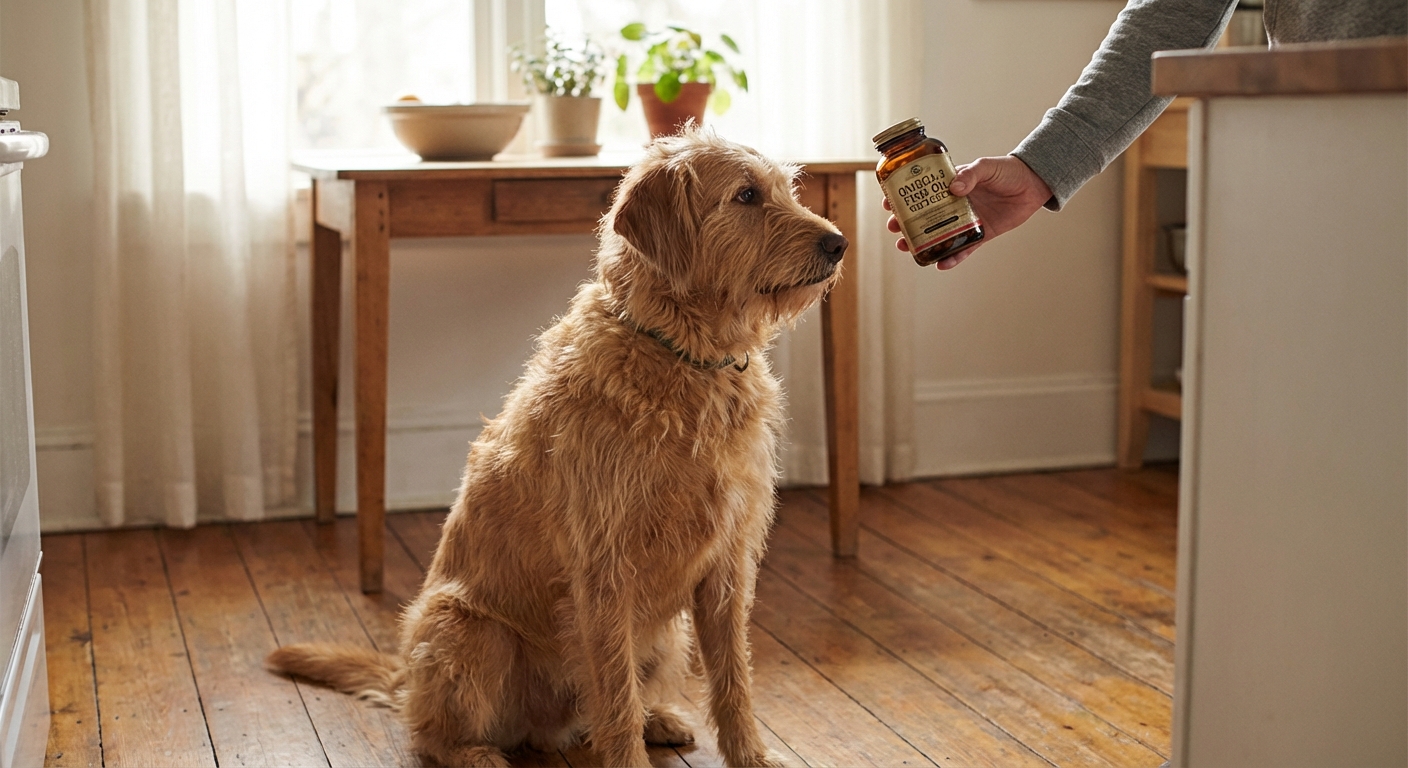
- Omega-3 fatty acids (especially DHA and EPA) are commonly recommended for brain support. Ask your veterinarian for dosing based on your dog’s weight and health conditions.
- Antioxidants (from whole foods and veterinary-formulated diets) may help support aging cells.
- Medium-chain triglycerides (MCTs) have evidence for supporting cognitive function in some older dogs, including in certain veterinary therapeutic diets. They are not a fit for every dog. They may not be appropriate for dogs with a history of pancreatitis or fat intolerance, so ask your veterinarian before adding them.
If you feed homemade or partially homemade meals, it is especially important to ensure the diet is balanced. “Healthy ingredients” do not automatically equal “complete nutrition,” and imbalances can worsen weakness and confusion over time.
5) Veterinary treatments and medications
Your veterinarian may recommend prescription options and behavior-support medications depending on symptoms, overall health, and what is most disruptive to your dog’s quality of life (night waking, anxiety, accidents).
- CCD-specific medication: selegiline is a commonly used prescription option for some dogs with CCD. Your veterinarian will decide whether it is appropriate based on your dog’s health and medication history.
- Anxiety and sleep support: options vary by case and can include prescription medications or supplements chosen for senior safety.
- Pain control: if arthritis, dental disease, or another source of discomfort is contributing, pain management can make a huge difference in nighttime restlessness and irritability.
Never start human sleep aids or anxiety medications without veterinary guidance. Many are unsafe for dogs.
Night pacing and sundowning
Many families tell me nights are the hardest part. Here are gentle strategies that often help:
- Schedule a late potty break plus a calm, consistent bedtime routine.
- Set up a comfortable, supportive bed in a familiar area.
- Use white noise to reduce startle responses.
- Keep soft lighting to reduce confusion in the dark.
- Talk to your veterinarian about pain, anxiety, or sleep support options if pacing is frequent.
If your dog is panting, trembling, or cannot settle, treat it like a medical and comfort issue, not misbehavior.
House soiling: kind fixes
Accidents can feel discouraging, but punishment is not helpful and can increase anxiety. Instead, focus on management:
- Increase potty breaks and reward immediately when they go outside.
- Protect floors and beds with waterproof covers and washable rugs.
- Create a consistent “potty station” in the yard for easier memory cues.
- Ask your vet to rule out UTI, kidney disease, diabetes, and mobility pain.
Some families choose belly bands or dog diapers as a temporary tool. Used kindly, these can reduce stress for everyone while you work on a plan.
Sensory decline support
Vision and hearing changes are common in senior dogs and can overlap with CCD. A few small adjustments can lower confusion and anxiety:
- Keep pathways clear and furniture placement consistent.
- Use gentle touch or a familiar sound before approaching to prevent startling.
- Try hand signals paired with verbal cues if hearing is reduced.
- Add rugs or runners to help them feel where they are in the home.
When to call your veterinarian
Please seek veterinary care urgently if you notice:
- Sudden, severe disorientation or rapid behavior change
- Collapse, seizures, or circling
- Head tilt, loss of balance, or vomiting with dizziness
- Not drinking, or refusing food for 24 hours especially with lethargy, vomiting, diarrhea, or known medical conditions
- Signs of pain like yelping, hiding, or growling when touched
CCD usually progresses gradually. Fast changes often point to another medical issue.
Quality of life
Dog dementia can be emotionally heavy. A simple quality-of-life check-in can keep you grounded. Ask yourself weekly:
- Are they comfortable most of the day?
- Are they still enjoying food, affection, or short walks?
- Are nights manageable with support, or are they distressed?
- Are good days still outnumbering hard days?
If you are unsure, ask your veterinarian to help you assess comfort and next steps. You do not have to make decisions alone.
You are doing the right thing by noticing changes early and advocating for your dog. With the right support, many senior dogs with CCD can still have sweet, connected days.
Quick checklist
- Add a hallway night light
- Put down non-slip rugs in high-traffic areas
- Schedule a senior wellness exam and lab work (many seniors benefit from checkups every 6 months)
- Start a 2-week behavior log
- Ask your vet about omega-3s and a cognitive-support diet
- Offer easy enrichment like scent games and simple puzzles