

A step-by-step puppy crate training guide: choosing the right crate, building positive associations, first-week routines, nighttime potty breaks, and solutio...
Article
•
Designer Mixes
Dog Crying in the Crate: Secrets That Work

Shari Shidate
Designer Mixes contributor
Few things feel as stressful as hearing your dog cry in the crate, especially at night. As a veterinary assistant here in Frisco, Texas, I can tell you this is one of the most common questions I hear from families with puppies and newly adopted dogs. The good news is that most crate crying is fixable once you identify why it is happening and you follow a simple, consistent plan.
Let’s walk through the most helpful, research-supported “secrets” I’ve seen work in real homes, with real dogs.
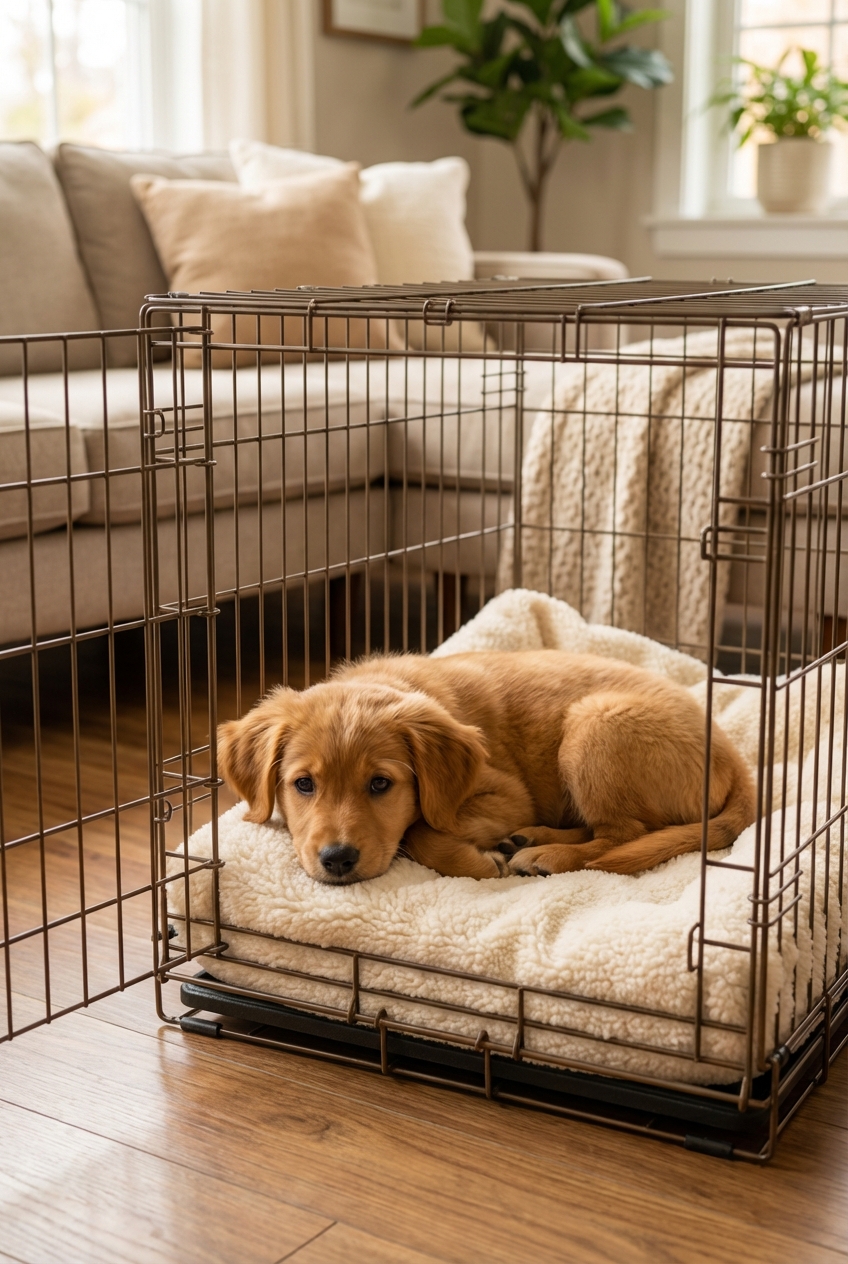
First, decode what the crying means
“Crying” is communication. The fastest way to make progress is to match your solution to the cause. Here are the most common reasons:
- Normal protest: Your dog is frustrated because the crate limits movement, attention, and access.
- Separation distress: Your dog panics when you leave or when you are out of sight. This is more intense than simple protest.
- Needs a potty break: Especially common in young puppies, seniors, or dogs with GI upset.
- Overstimulated or overtired: A wired puppy can cry because they cannot settle.
- Fear of the crate: The crate was introduced too quickly or used for punishment, so it predicts something scary.
- Discomfort: Too hot, too cold, noisy environment, collar tag rattling, or an underlying medical issue.
Quick gut-check: If the vocalizing escalates into frantic drooling, biting the crate, trying to escape, or self-injury, treat it as anxiety and slow the process down. That is not “stubbornness.”
Secret #1: Start with the crate setup
A crate should feel like a safe, predictable den, not a lonely holding cell. Try these setup upgrades:
- Right size: Enough room to stand up, turn around, and lie down comfortably. Too big can encourage potty accidents in many puppies (though some dogs will still stay clean).
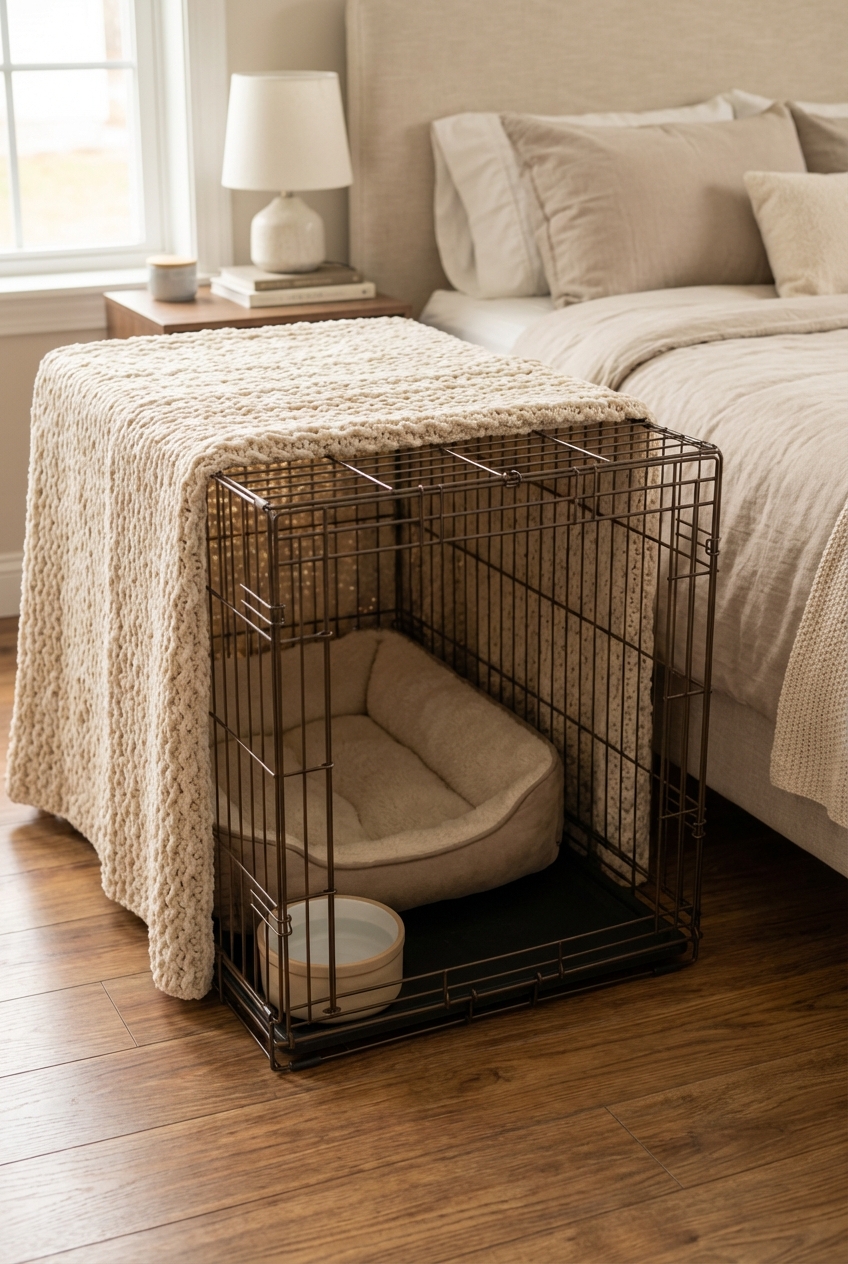
- Location: Start where your dog can see you. Many dogs do best with the crate in the bedroom for sleep, at least at first.
- Comfort: A supportive mat or bed (if your dog does not shred). Add a washable blanket for nesting.
- Reduce outside triggers: Covering 2 to 3 sides with a breathable cover can lower visual stimulation. Make sure airflow stays good and your dog does not overheat.
- Quiet enrichment: A stuffed food toy can turn “crate time” into “snack time.”
- Basic safety: If it is safe for your dog, remove collars and harnesses in the crate to reduce snag and strangulation risks. Use a breakaway collar only if your vet recommends it.
Secret #2: Teach the crate as a skill
Crate training is really “settle training” plus positive association. The goal is for your dog to think: Crate equals good things, and I know how to relax here.
Try this simple 5-step plan
- Open-door treats: Toss treats in, let your dog walk in and out freely. No closing the door yet.
- Meals in the crate: Feed meals just inside the door, then gradually deeper as comfort grows.
- Short door closures: Close the door for 1 to 5 seconds while your dog eats a treat, then open before crying starts.
- Build duration: Add time slowly: 10 seconds, 30 seconds, 1 minute, 3 minutes, 5 minutes.
- Add distance: Take one step away, return, treat. Then two steps, then briefly out of sight.
Important: Progress is not linear. If crying starts, you increased difficulty too fast. Go back to the last “easy win.”
Secret #3: Timing beats willpower
Many crate problems happen because we crate a dog when their body is not ready to settle.
Use the “3 needs” checklist
- Potty: Give a calm potty break right before crate time.
- Movement: Age-appropriate exercise (a walk, sniff time, gentle play). Not intense zoomies right before bed.
- Mental work: 3 to 5 minutes of training, a lick mat, or a food puzzle can help your dog feel satisfied.
For puppies, I love a short “sniff walk” in the evening. Sniffing is naturally calming and helps take the edge off without getting them overly amped up.
Also: Be realistic about time. Puppies and many adult dogs should not be crated longer than they can comfortably hold their bladder and stay regulated. If you need longer coverage, plan a midday break or consider a safe puppy-proofed area or pen.
Secret #4: Reinforce quiet, not panic
This is where people feel stuck. Here is the balanced approach:
- If it is mild protest: Wait for a brief pause in the crying, then reward the quiet. Quiet is the behavior you want to reinforce.
- If it is likely a potty need: Take them out calmly, on leash, no play, no excitement. Potty only, then back in the crate.
- If it looks like anxiety or panic: Do not “tough it out.” You can worsen the fear. Go back to shorter, easier sessions and consider professional help.
Pro tip: Teach and reinforce calm during the day by catching quiet moments on a bed, on a mat, or in the crate with the door open. Nighttime is not the easiest time to start teaching a brand-new skill.
Secret #5: Nighttime rules
Night crying is often a mix of loneliness and potty needs. Set yourself up for success:
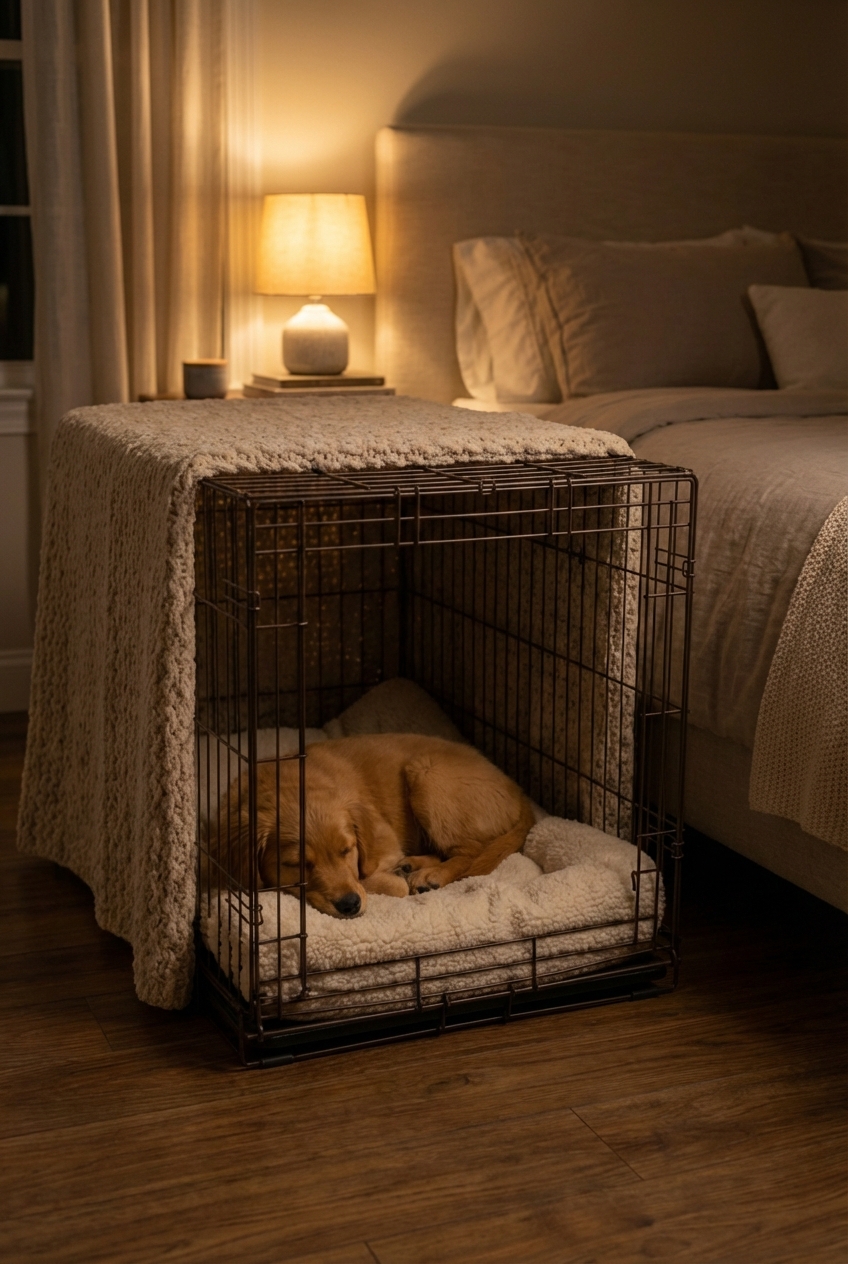
- Bedroom placement: Especially for puppies, putting the crate near your bed can dramatically reduce crying.
- Last call potty break: One final potty trip right before lights out.
- Keep it boring: If they wake up and cry, take them out quietly. No play, no long talking, no “party.” If you are still house training, it is fine to give a tiny, low-value reward after they potty outside, then go right back to bed.
- Alarm strategy: If your puppy is waking you frequently, set a proactive alarm for a potty break. Over time, push it later by about 10 to 15 minutes every few nights, adjusting based on your puppy’s age, size, and how reliably they stay dry.
Secret #6: Use food the right way
Food can be a powerful crate training tool because it changes emotion. But it must be used thoughtfully:
- Best: Give a long-lasting, safe activity such as a frozen stuffed Kong or lick mat right as they enter the crate.
- Avoid: Only giving the “good stuff” after they cry for several minutes. That can teach, “Crying makes snacks happen.”
- Watch the tummy: If rich treats cause loose stool, nighttime crying may increase because they need to go out. Use simple ingredients and keep portions reasonable.
- Safety first: Supervise new chews and food toys at first. Use appropriately sized, durable products, and remove anything your dog can shred and swallow.
If your dog has a sensitive stomach, use part of their regular meal in the food toy instead of extra treats.
Secret #7: When a crate is not the tool
Crates are wonderful for many dogs, but they are not one-size-fits-all. If your dog shows signs of severe separation anxiety, a crate can increase panic because it adds confinement.
In those cases, some dogs do better with:
- A puppy-proofed room or exercise pen
- Gradual alone-time training in tiny steps
- Support from a credentialed professional (for example, IAABC, CAAB, or a board-certified veterinary behaviorist, DACVB)
- Veterinary guidance if anxiety is intense or escalating
Quick fixes for common bumps
- First night in a new home: Expect more crying. Keep the crate close, stick to potty-only overnight trips, and focus on comfort and predictability for a few days.
- Regression: Illness, schedule changes, storms, travel, and adolescence can trigger setbacks. Drop back to an easier step for 2 to 3 days, then rebuild.
- New sudden crying: If your dog was fine in the crate and suddenly is not, think pain, GI upset, or a new fear. Do not assume it is “attitude.”
Red flags: when to call your vet
Please reach out to your veterinarian promptly if you notice:
- Sudden new crate crying in a previously comfortable dog
- Vomiting, diarrhea, straining, or frequent urination
- Coughing, labored breathing, or restlessness that seems physical
- Escape attempts that risk injury (bloody nose, broken nails, teeth damage)
Behavior and health overlap more often than many people realize, and ruling out pain or illness is always a smart step.
A gentle 7-day reset plan
If you feel overwhelmed, try this simple reset. It is intentionally conservative, because slow is fast when you are rebuilding trust.
Days 1 to 2
- Crate door stays open for most of the day
- Treat tosses and meals in the crate
- Short sessions with 3 to 10 second door closures
Days 3 to 5
- Build to 1 to 5 minutes closed while you sit nearby
- Add a stuffed food toy for longer calm periods
- Practice 2 to 3 sessions daily, very short and successful
Days 6 to 7
- Add short distance: stand up, walk around the room, briefly step out of sight
- Begin a short daytime nap in the crate after potty and a calm walk
Measure progress by calm moments, not total silence. Even a few seconds of quiet you can reward is a real step forward.
Bottom line
Crate crying is common, and it does not mean you are failing. With the right setup, slow skill-building, and calm consistency, most dogs learn that the crate is a safe place to rest.
If you want one takeaway to start today, make it this: reward quiet, build duration slowly, and never rush a dog who is truly scared.
Note: This advice is general education and not a substitute for individualized veterinary or behavior care, especially if your dog is panicking or at risk of injury.