A step-by-step puppy crate training guide: choosing the right crate, building positive associations, first-week routines, nighttime potty breaks, and solutio...
Article
•
Designer Mixes
Dog Crate Training for Puppies, Adults, and Seniors

Shari Shidate
Designer Mixes contributor
As a veterinary assistant here in Frisco, Texas, I have seen crate training turn chaos into calm for dogs of every age. When it is done kindly and consistently, a crate becomes a safe “den” your dog chooses, not a punishment. It can help with house training, prevent destructive chewing, reduce travel stress, and give multi-dog households a peaceful way to manage space.
This guide walks you through choosing the right crate, setting it up for success, and building crate comfort for puppies, adult dogs, and seniors. I will also share what to avoid, because a few common mistakes can accidentally create fear of the crate.
What crate training is and is not
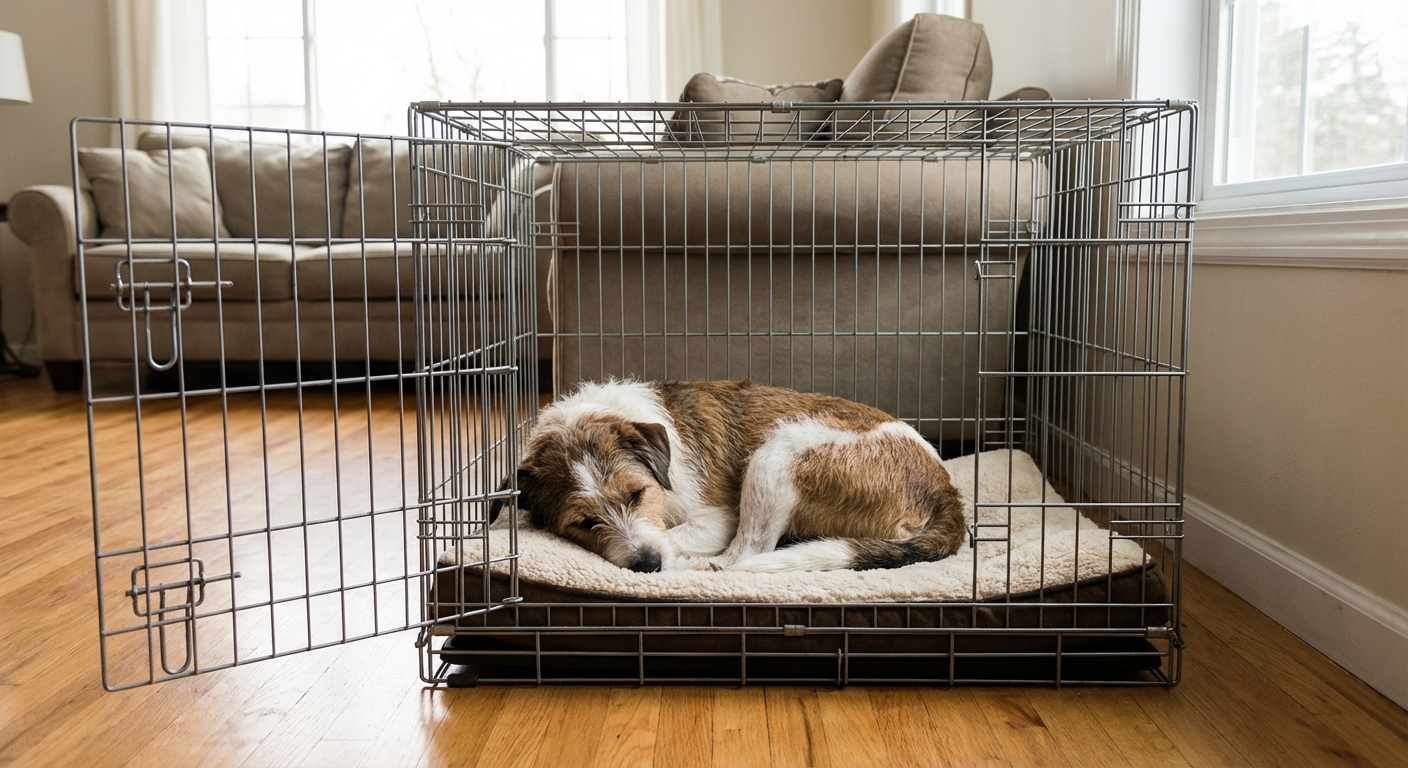
Crate training is teaching your dog that the crate predicts good things: treats, rest, a favorite chew, and a sense of security.
Crate training is not locking your dog away for long periods, using the crate as a time-out for behavior you do not like, or forcing your dog inside when they are frightened.
If your dog panics in a crate, scratches until nails bleed, breaks teeth on the door, or drools heavily and cannot settle, you may be looking at separation anxiety or confinement distress. Those signs also deserve a call to your veterinarian to rule out pain or medical contributors. In many cases, helping these dogs requires a structured, gradual desensitization plan with a force-free professional, and sometimes a crate is not the right tool at first.
Choosing the right crate
Crate types
- Wire crate: Great airflow, visibility, and often comes with a divider for growing puppies.
- Plastic airline-style crate: More den-like and often helpful for travel or dogs who settle better with less visual stimulation.
- Soft-sided crate: Best for calm dogs and supervised use. Not ideal for chewers or anxious dogs.
- Furniture-style crates: Can look nice, but make sure ventilation, door security, and interior size are truly appropriate.
Size matters
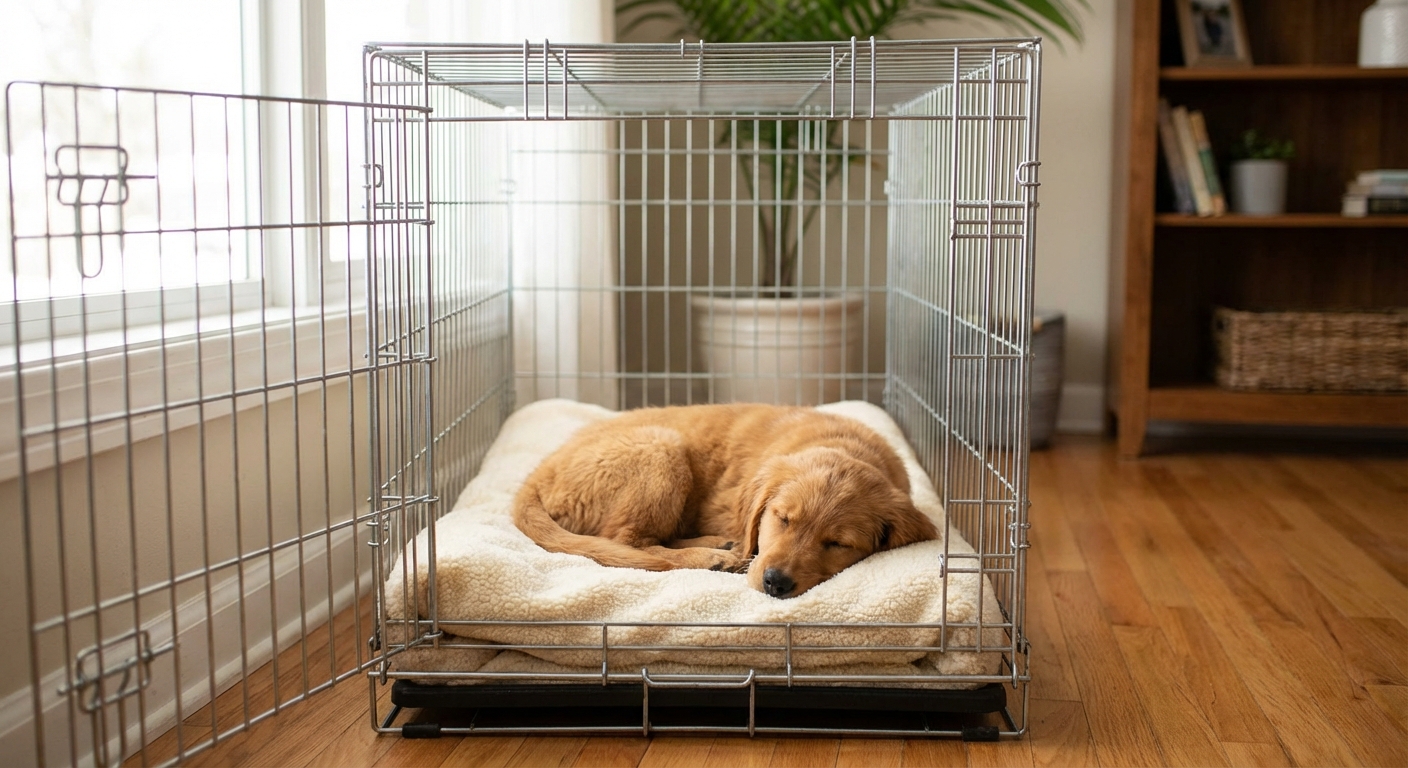
Your dog should be able to stand up, turn around, and lie down comfortably. For puppies, use a divider so the crate is not so large that they can potty in one corner and sleep in the other.
Where to place it
Put the crate in a low-traffic area where your dog can still feel part of the family, like a living room corner. Many puppies also do well with a second crate or travel crate in the bedroom for nighttime.
Set up for comfort and safety
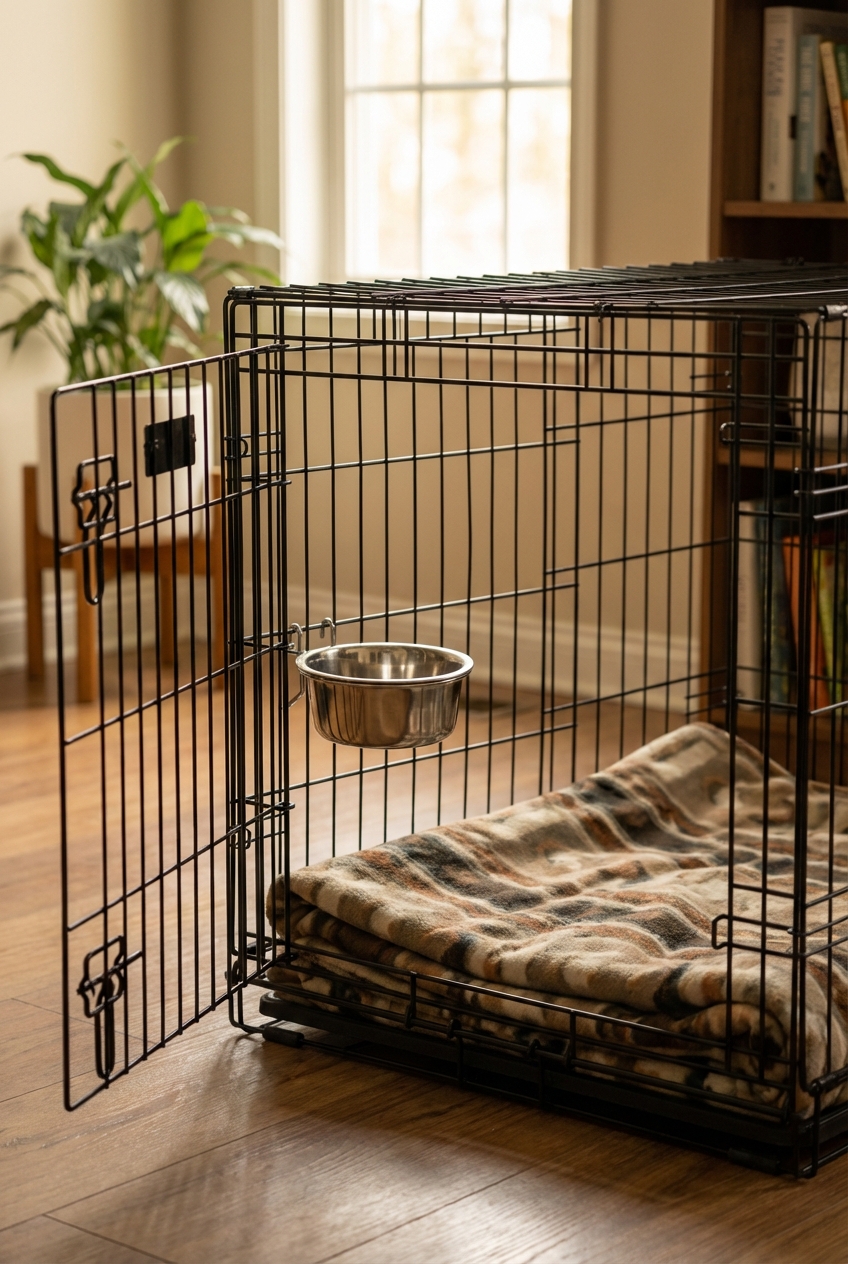
- Bed or mat: Choose something washable. If your dog shreds bedding, start with a flat crate mat or no bedding until chewing improves.
- Water: For longer periods, use a crate-safe bowl that clips to the side. Remove it for very young puppies at night if it leads to frequent potty trips, but do not restrict water excessively.
- Chew enrichment: Stuffed Kongs, lick mats designed for dogs, or a safe chew can make crate time feel like a reward. Supervise new items at first, and remove anything that cracks, splinters, or sheds pieces.
- Covering the crate: Some dogs relax with a light cover over part of the crate. Others feel trapped. Watch your dog’s body language.
- Collars and tags: For many dogs, it is safer to remove dangling tags or even the collar during crating to reduce the risk of snagging.
- Avoid hazards: Skip long rope toys, dangling straps, or anything that could wrap around a neck or limb. If you use bully sticks or similar chews, a holder can reduce choking risk.
Step-by-step training plan
Step 1: Crate equals treats
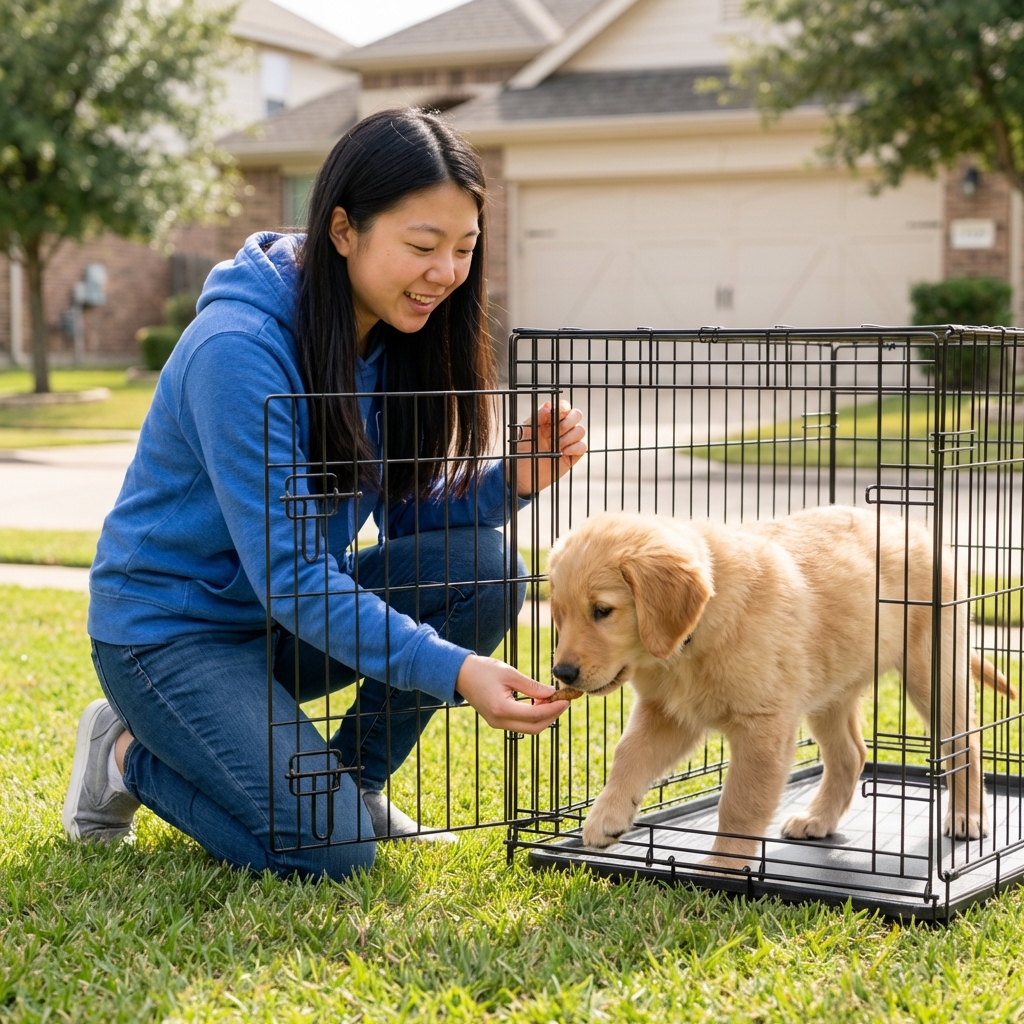
Start with the door open. Toss a treat in, let your dog walk in, then let them walk out. Repeat 5 to 10 times. Keep it light and casual.
Step 2: Meals and chews in the crate
Feed meals near the crate at first, then inside the crate. Provide a special chew that only happens in the crate. This is a powerful way to build positive association.
Step 3: Close the door briefly
When your dog is happily eating or chewing inside, gently close the door for 5 to 15 seconds, then open it before your dog worries. Slowly increase duration over sessions.
Step 4: Build calm time
Work up to a few minutes with you sitting nearby, then moving around the room, then briefly stepping out of sight. Progress in tiny increments. If you see persistent whining or stress signals (panting, lip licking, pacing, frantic pawing), you went too fast.
Step 5: Practice real naps
Once your dog can relax for 20 to 30 minutes, start using the crate for short naps. A tired dog learns faster than an overstimulated one.
Tip: The goal is not silence at all costs. The goal is a dog who feels safe enough to settle. “Settled” usually looks like a soft body, normal breathing, and resting (even if they are awake).
Teach cues and a calm release
When your dog is happily going in, add a simple cue like “crate” or “kennel” right before they step inside. Also teach a calm release word such as “okay.” Try not to hype your dog up when you open the door. Calm in, calm out supports calmer crate time.
Age-by-age crate training
Puppies
Puppies are learning bladder control and life skills all at once, so crate training should be very structured and very kind. Remember, crating can support house training, but it does not teach it by itself. Your puppy still needs a consistent potty routine and close supervision when out of the crate.
- Nighttime: Many puppies do best with the crate near your bed at first.
- Potty schedule: Take your puppy out after waking, after eating, after drinking, after play, right after crate time, and before crating.
- Divider use: Keep the space just big enough for sleeping comfortably.
- Prevent accidents: If your puppy potties in the crate, do not punish. Clean thoroughly with an enzymatic cleaner and tighten your schedule.
Adult dogs (including rescues)
Adult dogs may already have crate opinions, especially if they were crated too much or had a scary experience. Go slower and rebuild trust.
- Start with choice: Keep the door open and reward any investigation.
- Focus on calm: Practice short sessions after exercise and a potty break.
- Watch for stress: Panting, lip licking, pacing, and frantic pawing are signs you need to reduce duration and increase positive association.
Senior dogs
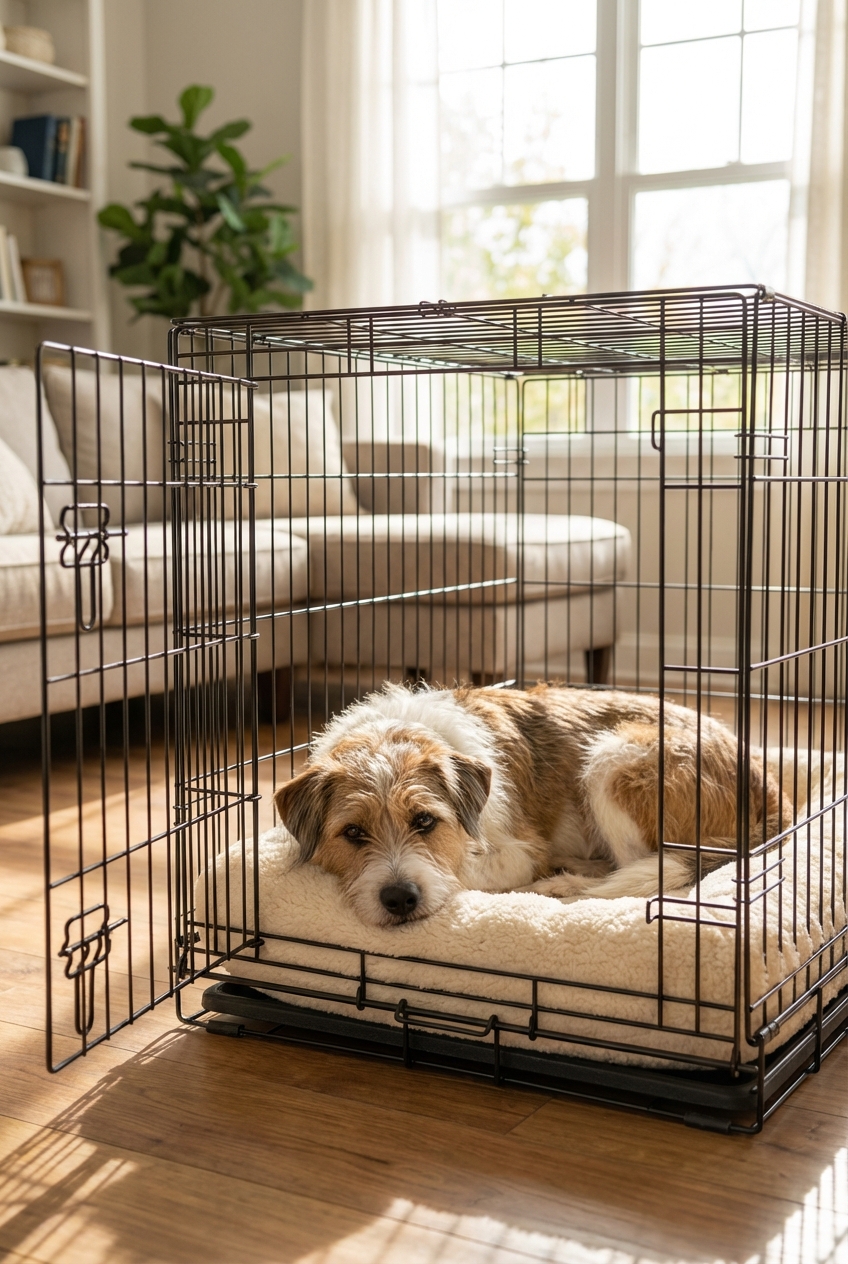
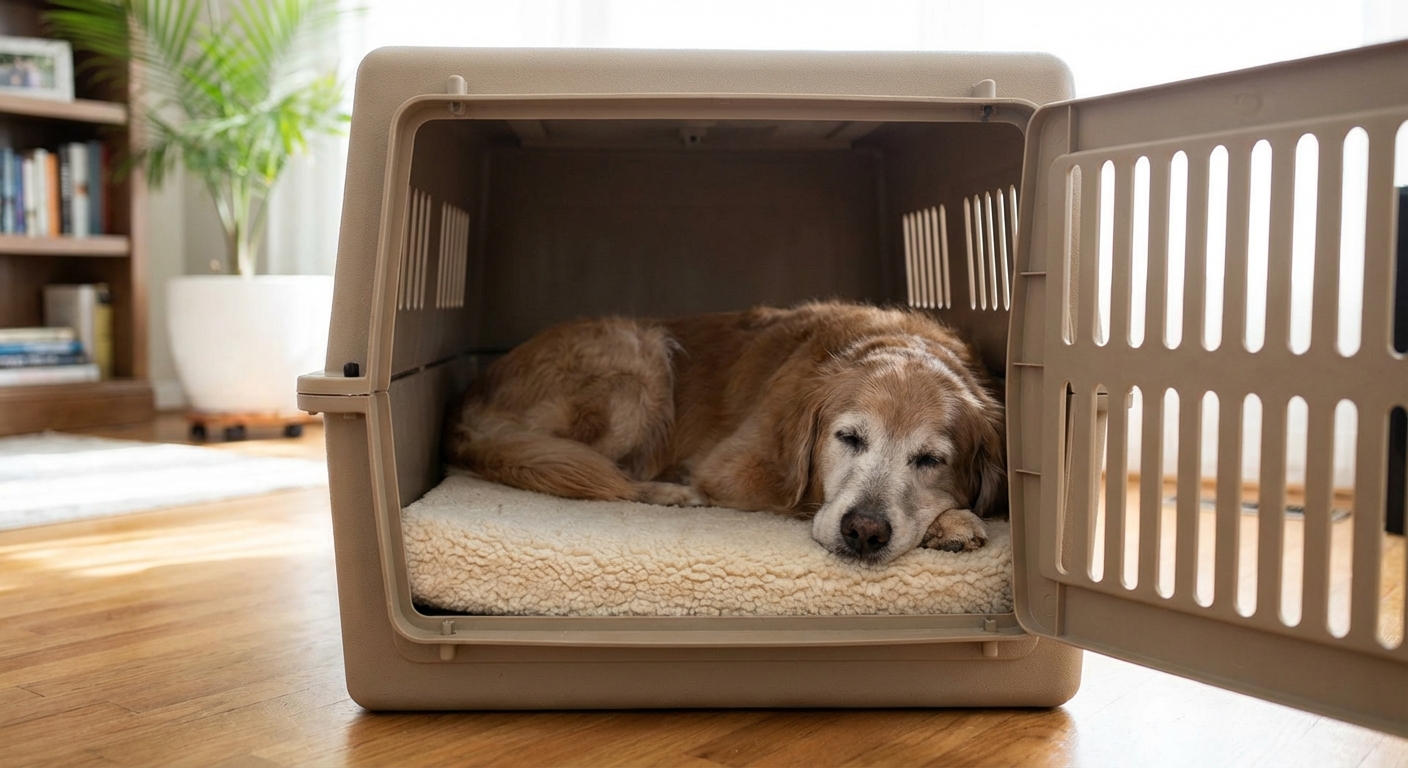
Seniors can love crates as a quiet retreat, but comfort and mobility are key.
- Orthopedic bedding: Consider a supportive mat, especially for arthritis.
- Easy entry: Choose a crate with a low threshold or a larger door opening.
- Shorter sessions: Seniors may need more frequent potty breaks and movement breaks.
- Medical considerations: If your senior is suddenly soiling in the crate or cannot settle, talk to your veterinarian. Pain, cognitive changes, and urinary issues are common and treatable.
How long can a dog stay crated?
There is no single number that fits every dog. Use these as loose starting points, and adjust based on your dog’s age, size, health, and comfort level. When in doubt, plan for more frequent breaks.
- Puppies: A commonly used rule of thumb is about 1 hour per month of age when they are resting during the day (for example, a 3-month-old puppy about 3 hours). Many puppies need breaks sooner when they are awake and active, and many still need a nighttime potty trip.
- Healthy adults: Many adult dogs can handle about 4 to 6 hours occasionally when they have had exercise, enrichment, and a potty break, but it varies widely and is not an ideal everyday target for every dog.
- Seniors and medical needs: Frequently need shorter periods and more potty breaks.
If you routinely need longer than your dog can comfortably hold it, consider a dog walker, pet sitter, doggy daycare, or a safe puppy pen setup.
Common mistakes to avoid
- Forcing the dog into the crate: This teaches the crate is scary. Instead, lure and reward.
- Only using the crate when you leave: Practice when you are home so it does not predict separation.
- Letting the crate be boring: Save special chews and stuffed toys for crate time.
- Ignoring escalating distress: You do not want to accidentally teach that yelling is a magic door-opener, but fear and safety matter more. If your dog is escalating toward panic or self-injury, end the session as calmly as you can, then shorten the next session and rebuild at an easier step.
- Too much crate time, too little life: Dogs need movement, sniffing, training, and social time. The crate supports a healthy routine, it does not replace one.
Troubleshooting
Whining or barking
- Check needs first: Potty, thirst, pain, too hot or too cold.
- Reward quiet moments: If your dog pauses, calmly drop a treat in.
- Add exercise and enrichment: A short sniff walk plus a stuffed Kong can be magic.
- Go back a step: If the crate door closed is triggering, return to door-open sessions and rebuild.
Accidents in the crate
- Tighten the schedule: More frequent potty breaks, especially after meals and play.
- Use an enzymatic cleaner: This removes odor cues that invite repeat accidents.
- Confirm crate size: Too much space can contribute to soiling.
- Talk to your vet: If accidents are new or frequent, rule out urinary tract infection, parasites, gastrointestinal upset, or other medical causes.
Chewing the crate or bedding
- Increase appropriate chewing outlets: Offer vet-approved chews and rotate options. Supervise new chews and remove them if they start breaking down into swallowable pieces.
- Remove unsafe bedding temporarily: Safety first.
- Consider stress level: Destructive chewing can be boredom or anxiety. Address the root cause.
Travel and grooming
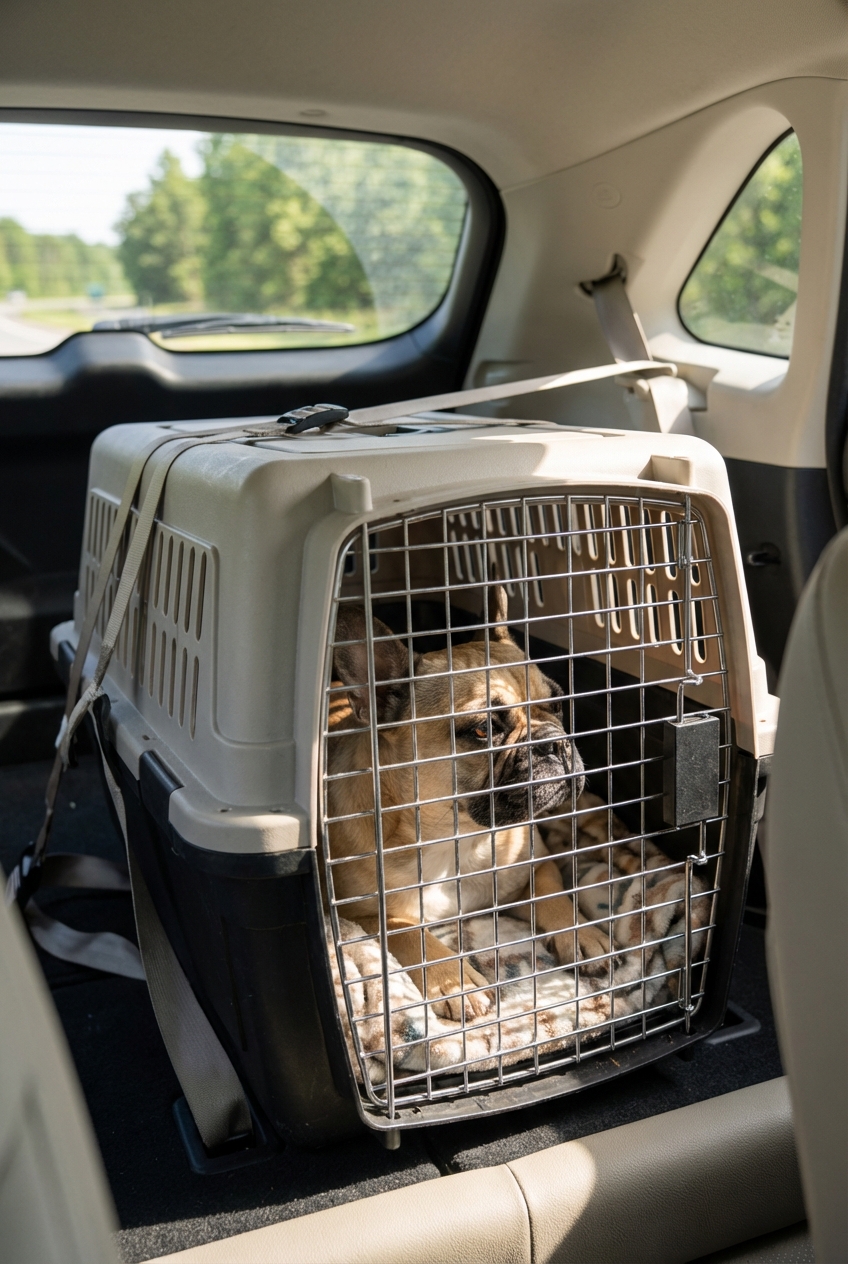
A crate-trained dog often handles car rides, boarding, and vet visits with less stress. Practice short “car crate” sessions with treats, then quick drives around the block, then longer trips. For grooming and nail trims, a dog who can settle in a crate is easier to manage safely before and after appointments.
Heat safety reminder (especially in Texas): Never leave a crated dog in a parked car, even for a few minutes. Temperatures can rise fast and become deadly.
When to get professional help
If your dog shows signs of true panic, self-injury, or intense distress, please do not push through it. A force-free trainer, a veterinary behaviorist, or your primary veterinarian can help you create a plan that protects both your dog’s emotional health and your home. Your vet can also help rule out pain, gastrointestinal discomfort, or other medical issues that can make crating harder.
In many cases, a puppy pen, baby gates, or a dog-proofed room can be a better starting point while you work on comfort with alone time.
A simple daily routine
Dogs thrive on predictable patterns. Here is a gentle routine you can adapt:
- Morning: Potty break, breakfast, short walk or play, then a brief crate rest with a chew.
- Midday: Potty break, training game or sniffing activity, then another rest period.
- Evening: Potty break, longer walk, dinner, calm family time, then final potty before bed.
With consistency, most dogs learn that the crate is part of a normal, safe day. And that is the real win: a dog who can relax anywhere because they feel secure.