Help a mildly constipated dog with safe homemade options: boost moisture first, add plain pumpkin or sweet potato, use gentle fiber, avoid risky fixes, and k...
Article
•
Designer Mixes
Dog Constipation: Pumpkin, Oil, and Home Help

Shari Shidate
Designer Mixes contributor
When a dog is constipated, it can look like repeated straining, tiny dry stools, or squatting with nothing coming out. As a veterinary assistant, I can tell you this is one of those issues that is often fixable at home, but it also has a few important red flags where you should not wait.
This guide walks you through gentle, commonly vet-recommended home support like pumpkin and added moisture, plus what to avoid, what to watch for, and when it is time to call your veterinarian.

Quick check: home care or vet?
Try home support if
- Your dog is bright, alert, and mostly comfortable
- Your dog is eating or only slightly picky
- Your dog is still passing some stool, even if it is small and dry
- No vomiting and no big belly swelling
Call your vet today if
- Repeated unproductive straining for a few hours, or your dog looks distressed
- Vomiting, a bloated abdomen, or obvious belly pain
- No stool at all and your dog seems uncomfortable
- Blood, swelling around the anus, or tissue protruding from the rectum
- You suspect your dog cannot urinate (this can be an emergency)
- Possible foreign body (toy, sock, corn cob) or your dog is a known scavenger
Is it really constipation?
Before you treat at home, make sure you are seeing constipation and not something that looks similar. Also keep in mind that “normal” poop frequency varies. Some dogs go once daily, others go two to three times. What matters most is a clear change for your dog, plus straining or discomfort.
Common constipation signs
- Straining to poop, especially with little output
- Dry, hard stools or pebble-like stools
- Pooping less often than normal
- Whining, discomfort, or reluctance to squat
- Reduced appetite, mild lethargy
Constipation vs. diarrhea straining
Dogs with diarrhea can strain too, but they usually pass soft stool, mucus, or frequent small amounts. If your dog is straining and producing liquid, treat that as diarrhea, not constipation.
Constipation vs. urinary blockage
If your dog is squatting often and seems unable to urinate, that can be an emergency. Urinary obstruction can be life-threatening.
Why dogs get constipated
Constipation is usually a symptom, not a diagnosis. Common causes include:
- Dehydration or not drinking enough water
- Diet low in moisture or fiber, sudden diet changes
- Too much bone (especially in some raw diets), which can create dry, chalky stool
- Hair ingestion, especially in heavy shedders
- Lack of exercise
- Pain from arthritis or hip/back issues that make squatting uncomfortable
- Medications (some pain meds and antihistamines can contribute)
- Foreign material or obstruction (corncobs, toys, rocks)
- Enlarged prostate in intact male dogs
- Anal gland issues or painful inflammation around the rectum
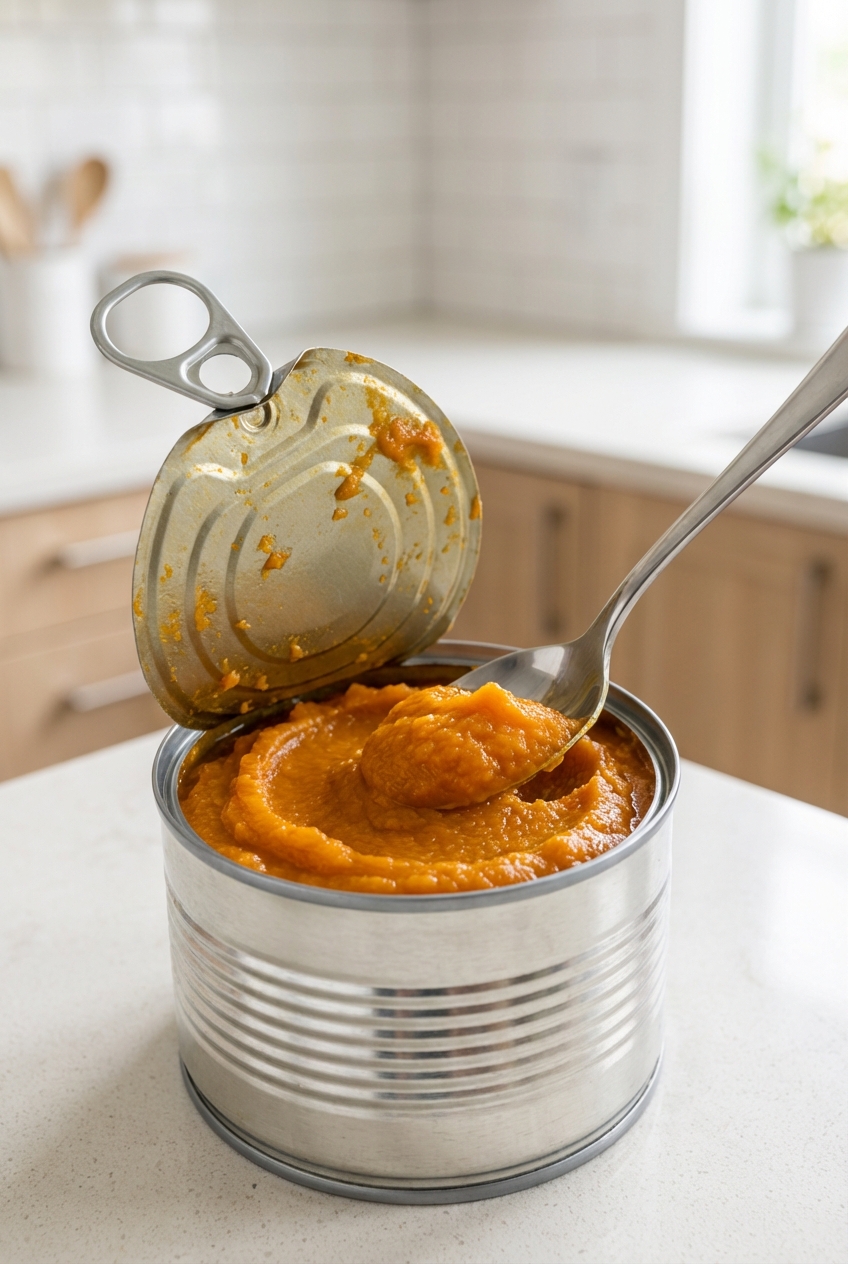
Pumpkin for dog constipation
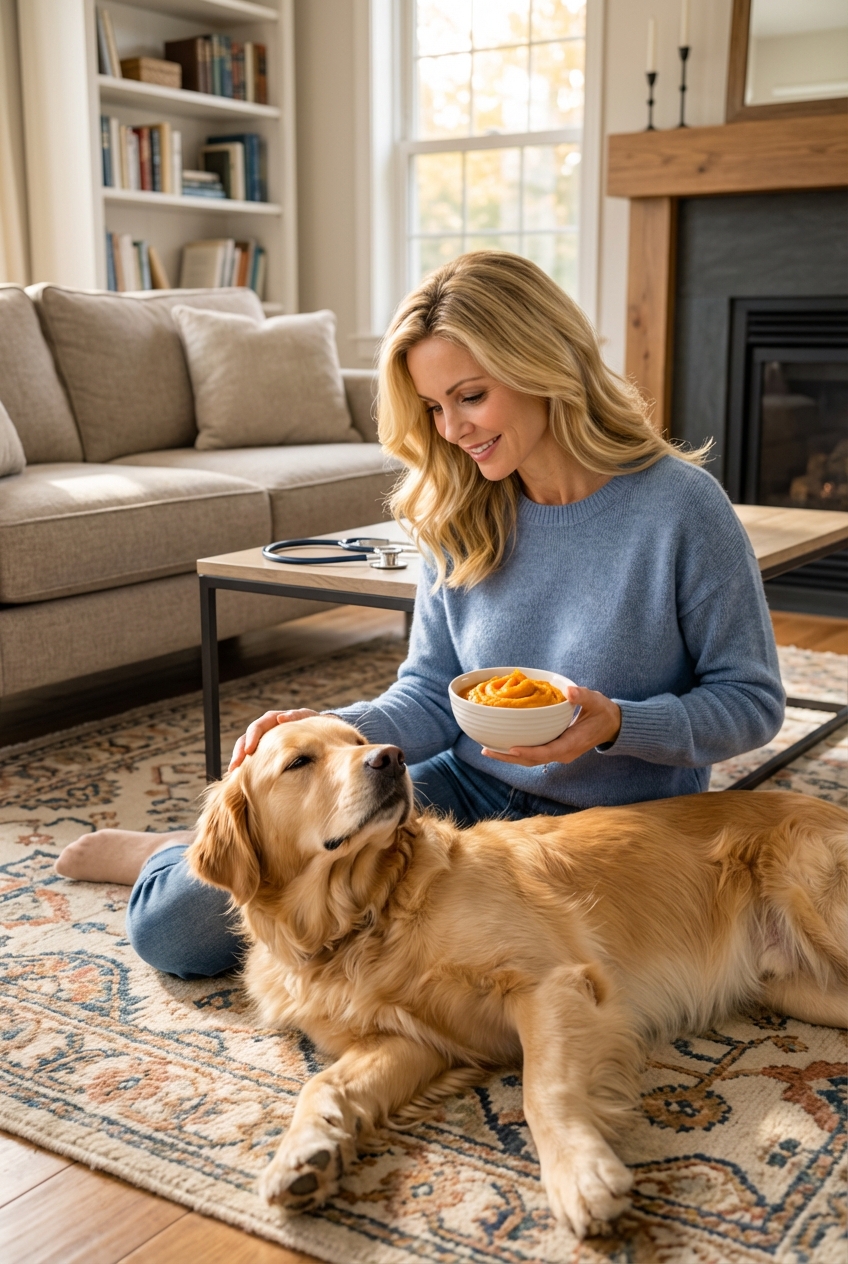
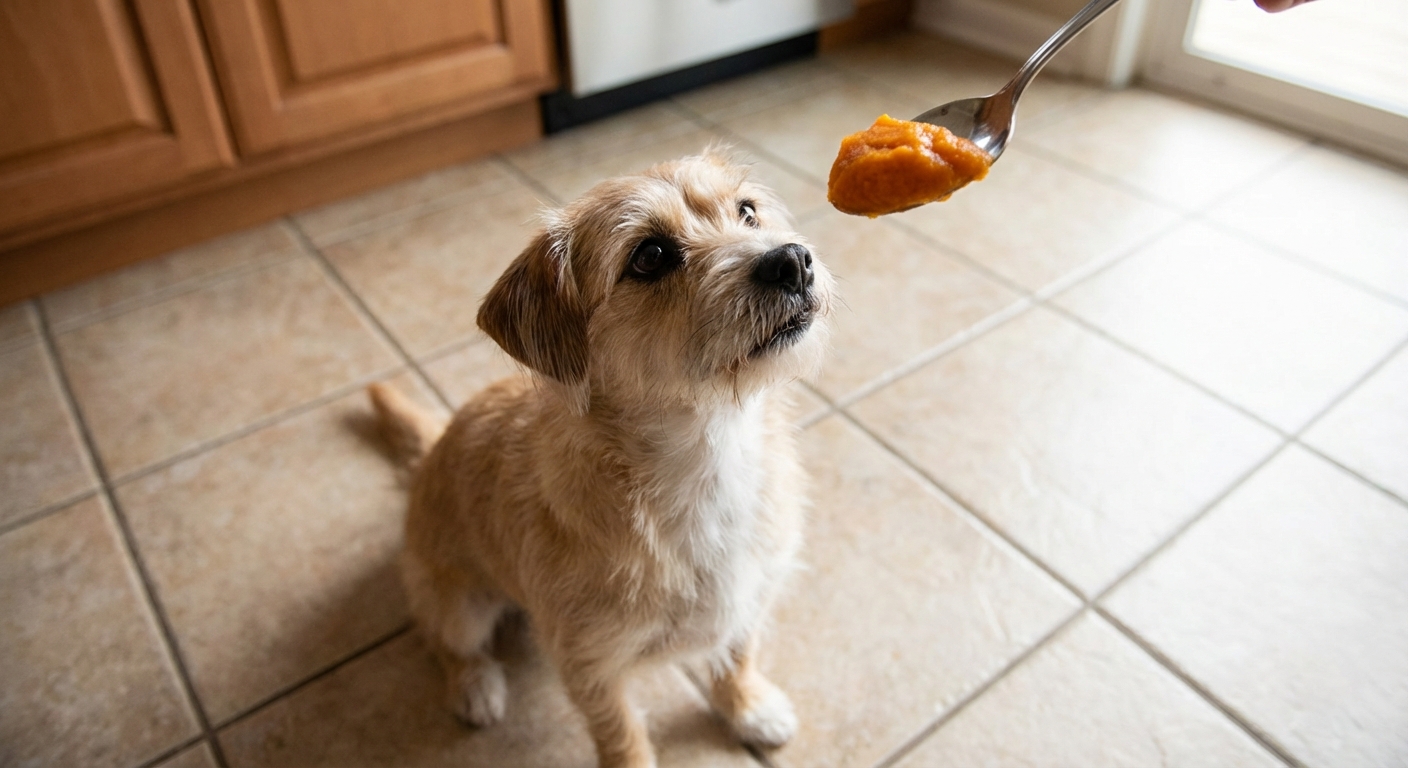
Plain pumpkin is one of my favorite first steps because it is gentle, widely tolerated, and easy to use. Pumpkin contains both soluble and insoluble fiber. That combination can help stools hold water and move through the gut more normally.
Which pumpkin is safe?
- Use: plain canned pumpkin (100% pumpkin) or cooked plain pumpkin
- Avoid: pumpkin pie filling (it can contain added sugar and spices that can upset the stomach)
How much pumpkin to give
Dosing varies by size and individual tolerance. For very small dogs, start low and check with your veterinarian if you are unsure.
- By weight (simple option): about 1 teaspoon per 10 lb (4.5 kg) once daily
- Small dogs: 1 to 2 teaspoons once daily
- Medium dogs: 1 to 2 tablespoons once daily
- Large dogs: 2 to 4 tablespoons once daily
Mix it into food. If your dog is new to fiber, start on the low end for 24 hours. Too much pumpkin can cause gas or loose stool.
How fast does it work?
Some dogs improve within 12 to 48 hours. If there is no progress by the second day, or your dog seems painful, it is time to involve your veterinarian.
Oil for constipation
People often ask about adding oil to “lubricate” things. Oils may soften stool in some dogs by increasing dietary fat, but they are not a first-line option. Too much fat can trigger stomach upset or, in some dogs, pancreatitis. Dogs with a history of pancreatitis, high triglycerides, or chronic GI disease should not be given oil without veterinary guidance.
If you are considering oil
I generally recommend focusing on water and fiber first. If your veterinarian says it is appropriate for your dog, use only a small amount mixed into food, and stop if you see vomiting, belly pain, or diarrhea.
Do not use mineral oil at home
Mineral oil can be aspirated into the lungs if a dog accidentally inhales it. That can cause serious pneumonia. This is one of those remedies that sounds old-school simple but comes with real risk, especially in older dogs or brachycephalic breeds.
Other gentle home support
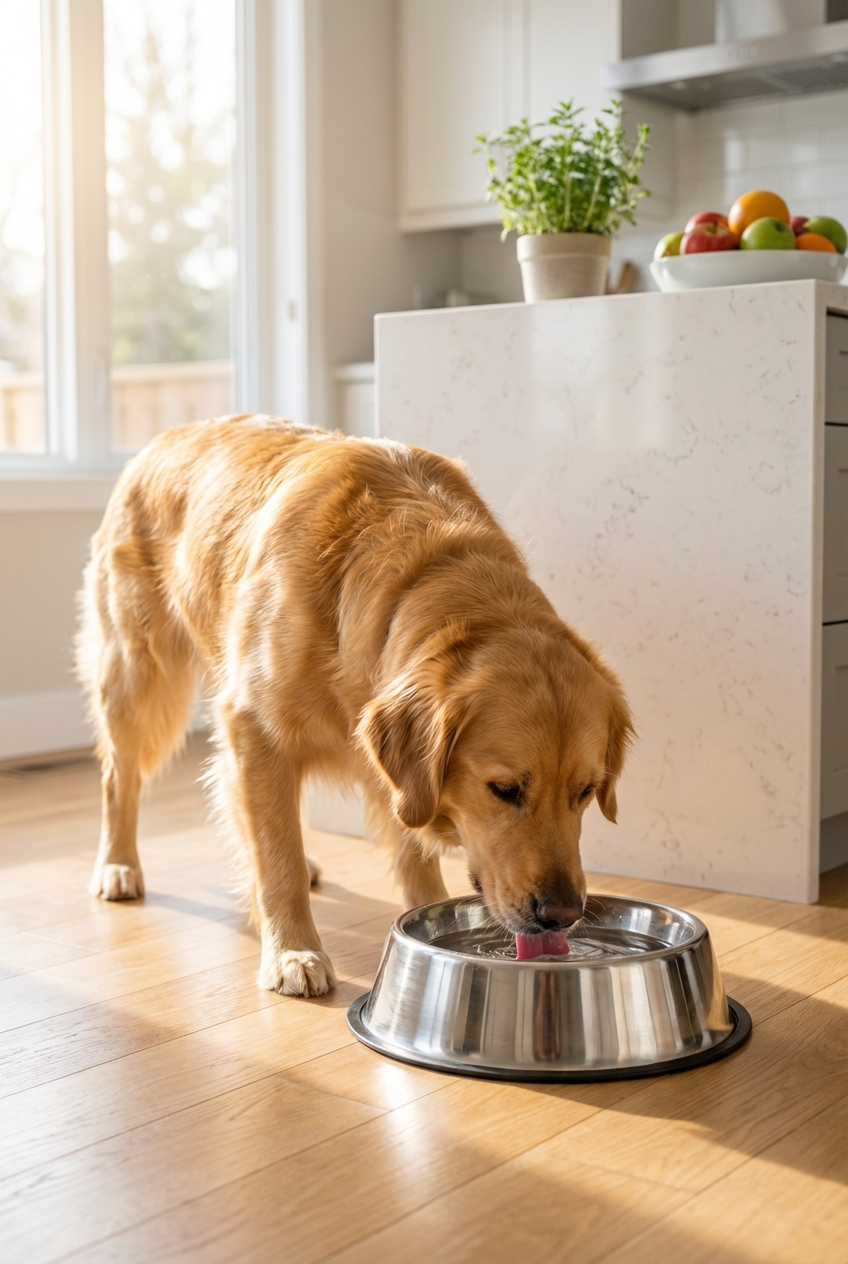
Add moisture first
For many dogs, constipation starts with dryness. Try:
- Switching one meal to a wet food or adding warm water to kibble
- Offering low-sodium broth (no onion or garlic added)
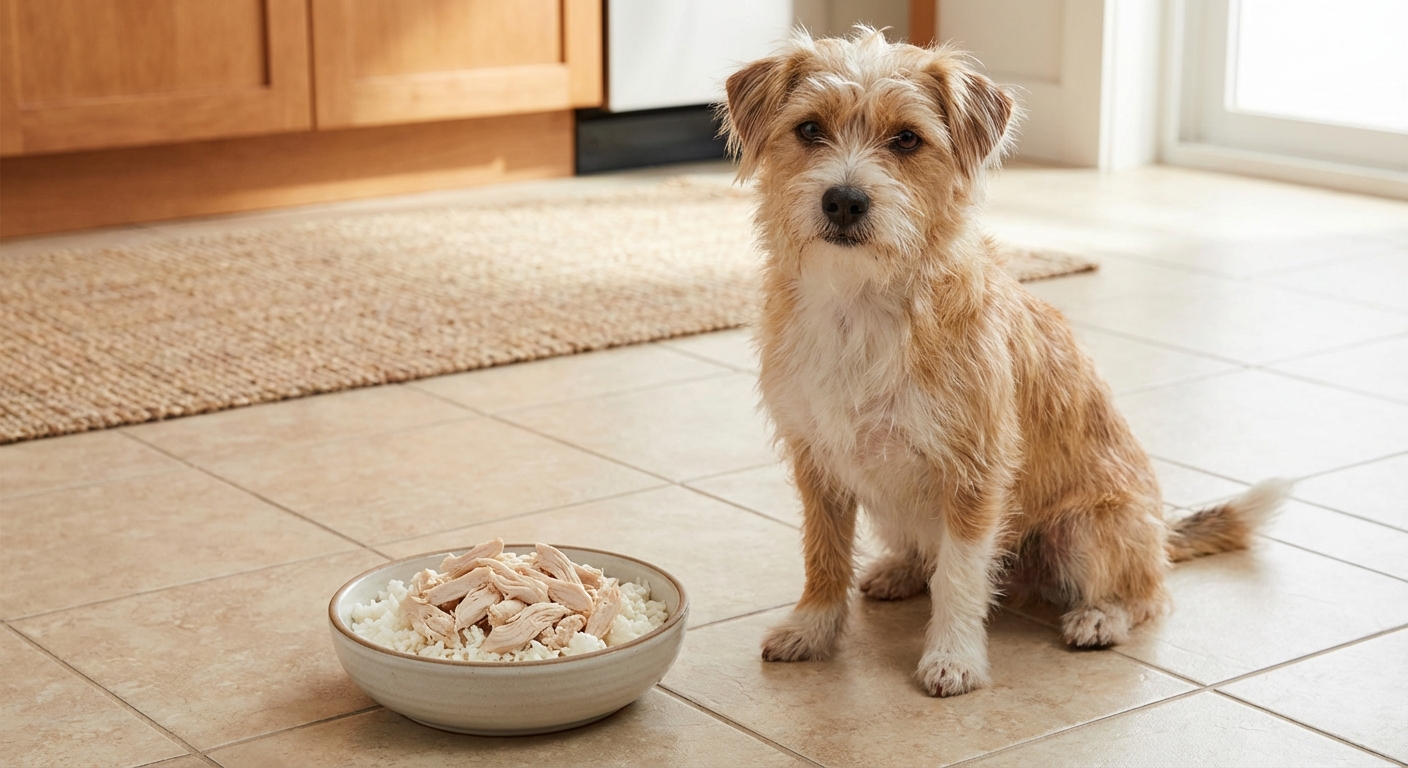
- Feeding moisture-rich foods like plain cooked turkey with a little extra water in the bowl
Safety note: when using any human foods or products, double check ingredients for xylitol (it is toxic to dogs) and avoid seasoning blends.
Light exercise
A calm walk can stimulate bowel movement. If your dog is stiff or arthritic, keep it gentle and short.
Fiber options besides pumpkin
- Psyllium husk (plain, unflavored): helpful for some dogs, but too much can cause gas and it is not a good idea if water intake is low
- Cooked sweet potato: mild fiber and often tasty
Any fiber works best when paired with increased water intake.
Probiotics
A quality canine probiotic may help normalize gut function over time, especially if constipation follows antibiotics or stress. It is not usually an instant fix, but it can reduce repeat episodes.
When not to add fiber
Fiber can help mild constipation, but it is not always the right move. Skip pumpkin, psyllium, and other fiber add-ins and call your veterinarian if your dog has:
- Vomiting
- Significant abdominal pain or a bloated belly
- Repeated unproductive straining (especially if nothing is coming out)
- Concern for a foreign body or blockage
In these situations, adding bulk can make an obstruction harder and more painful to pass.
Home remedies to avoid
- Human laxatives without veterinary guidance: many are unsafe or wrong for dogs
- Enemas at home: can cause injury or electrolyte problems, and some products are toxic to pets
- High-fat fixes like lots of butter, bacon grease, or heavy oils: can trigger pancreatitis
- Bones to “add bulk”: often make constipation worse and can create painful, dry stool
When constipation is urgent
Call your veterinarian urgently or go to an emergency clinic if you notice any of the following:
- Repeated straining with no stool, especially if it is persistent for several hours or your dog seems painful
- Vomiting, bloated abdomen, or obvious belly pain
- Lethargy or refusal to eat
- Blood in stool, or the rectum looks swollen or injured
- Swelling near the anus, a suspected anal gland abscess, or tissue protruding from the rectum (possible prolapse)
- Suspected foreign body (toy, corn cob, sock) or your dog is known to eat non-food items
- Your dog is a senior, has a history of pancreatitis, or has chronic conditions (kidney disease, diabetes, neurologic issues)
- Straining and you think your dog cannot urinate
These situations can signal obstruction, severe dehydration, painful inflammation, or problems that need imaging and medical treatment.
Vet treatments you might hear about
If home support is not enough, your veterinarian may recommend prescription or vet-guided options such as stool softeners or laxatives (for example lactulose or polyethylene glycol). These can be very effective, but dosing and safety depend on your dog and the cause of constipation. This is not a DIY situation, especially if there is any chance of blockage.
A simple 24-hour plan
If your dog is bright, eating, and only mildly constipated, here is a gentle plan many veterinarians are comfortable with:
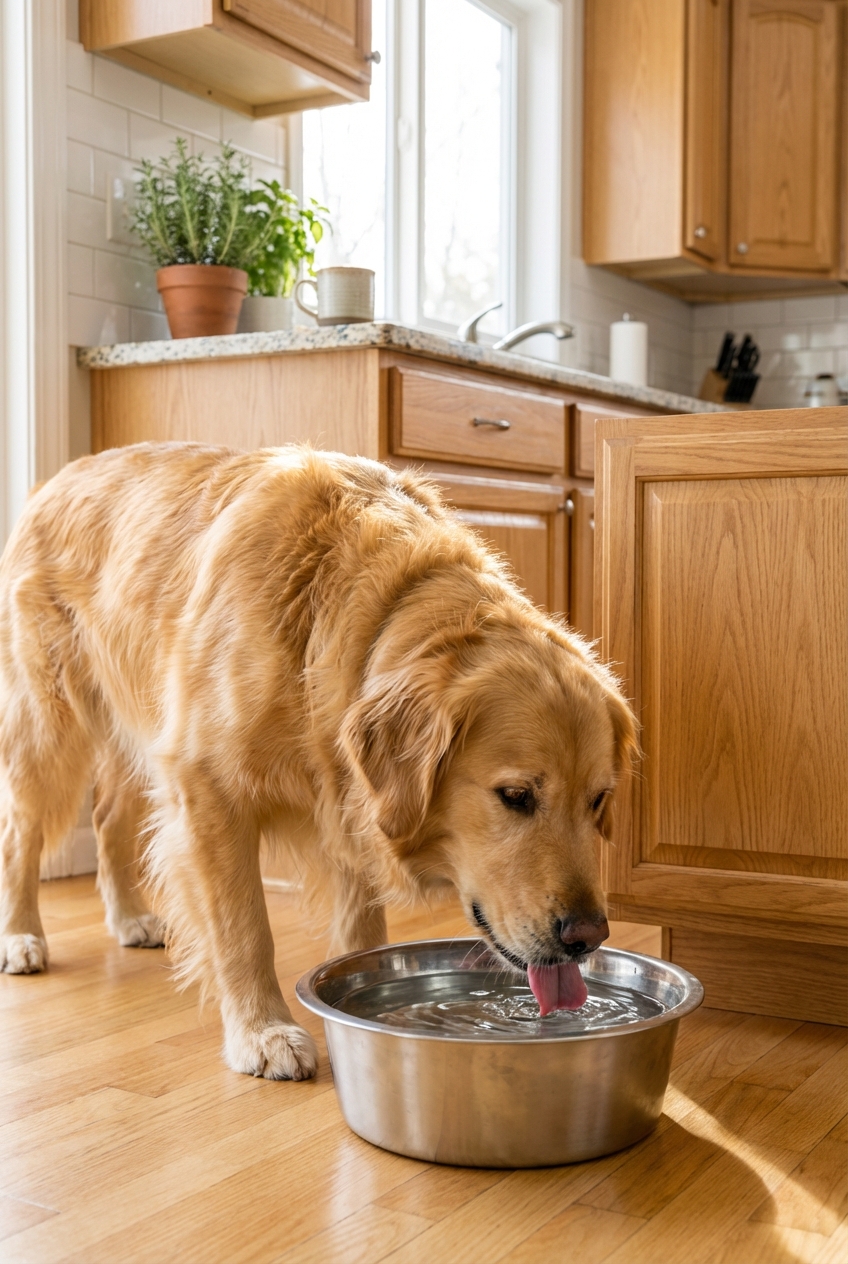
- Step 1: Add water to meals, and encourage drinking.
- Step 2: Add plain pumpkin once daily (start small).
- Step 3: Do a couple of short walks.
- Step 4: Monitor stool, appetite, and energy.
If there is no improvement within 24 to 48 hours, or symptoms worsen at any point, call your veterinarian. If your dog is repeatedly straining with nothing coming out, call sooner.
Preventing repeat constipation
- Hydration: fresh water, add moisture to meals
- Balanced diet: consider a higher-moisture diet or adding vet-approved whole foods
- Regular exercise: even short daily walks help
- Grooming: reduce hair ingestion, especially in long-haired mixes
- Talk to your vet if constipation happens more than occasionally, because chronic constipation deserves a medical workup
Kind reminder: home remedies are best for mild constipation in otherwise healthy dogs. If your dog looks painful, vomits, strains without producing stool, or stops eating, trust your instincts and call your veterinarian.