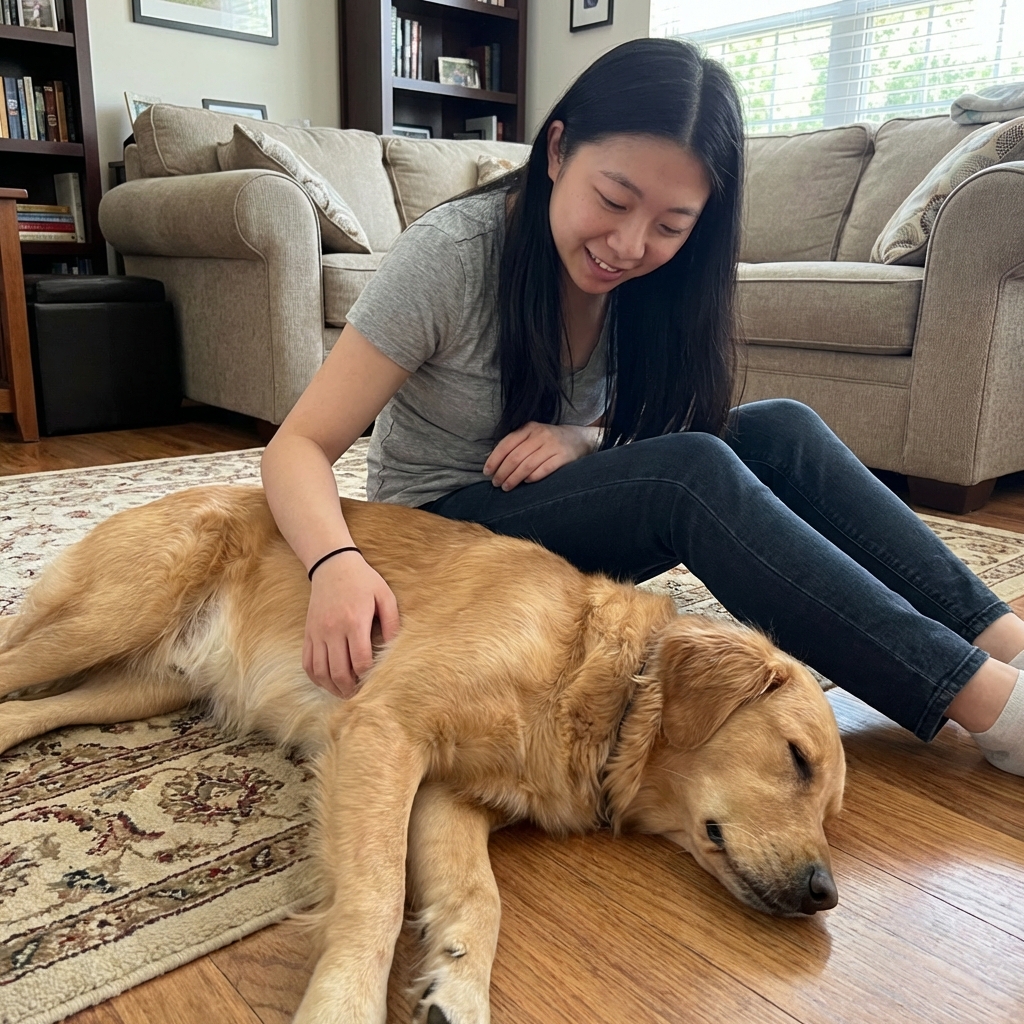
Worried about fast breathing while your dog rests or sleeps? Learn normal resting respiratory rates, common causes (dreaming, heat, stress), serious conditio...
Article
•
Designer Mixes
Dog Breathing Fast While Resting: What It Means

Shari Shidate
Designer Mixes contributor
If you have ever looked over at your dog while they are resting and noticed fast breathing, it can be unsettling. Sometimes it is completely normal, like after playtime or during a vivid dream. Other times, a higher resting breathing rate can be an early clue that your dog is in pain, overheated, stressed, or dealing with a heart or lung issue.
As a veterinary assistant, I always tell families the same thing: your best tool is a calm, accurate observation of your dog’s resting respiratory rate (RRR) and the context around it. Let’s walk through what “fast” looks like, what can cause it, and when it is time to call your veterinarian.
Note: This article is for education and is not a substitute for veterinary care. If your dog seems distressed, trust your instincts and seek help.

Normal resting breathing rate
For most healthy adult dogs, a normal RRR is typically around 15 to 30 breaths per minute while they are asleep or truly relaxed. Puppies can run a bit higher, and breed and size matter (some small dogs breathe faster than giant breeds). What you want to see is a calm, steady rhythm with minimal effort.
Helpful rule of thumb: If your dog is consistently over 30 breaths per minute at rest or during sleep, especially if it is new for them, it is worth a call to your vet for guidance.
How to count breaths
- Wait until your dog is asleep or resting quietly, not actively panting.
- Watch the chest rise and fall. One rise and one fall = 1 breath.
- Count for 30 seconds and multiply by 2.
- Or count for 15 seconds and multiply by 4 if your dog will not stay still.
Rate and effort both matter
An elevated rate is important, but increased effort is even more concerning. Signs of effort include nostril flaring, an abdominal push with each breath, neck extended to breathe, or your dog unable to get comfortable.
Fast breathing vs panting
Fast breathing can look similar to panting, but they are not always the same.
- Panting is often open-mouth breathing with the tongue out, commonly tied to heat, stress, excitement, or exercise.
- Rapid breathing at rest may happen with the mouth closed. If it is persistent, it can signal discomfort or illness.

Common causes
1) Normal recovery after activity
If your dog just ran around, played fetch, or got excited at the door, it can take a while for their breathing to return to baseline. In a cool, calm environment, you should see improvement within 10 to 30 minutes. If breathing is still fast after 30 minutes of true rest, call your vet for guidance.
2) Heat and humidity
Dogs have limited sweating (mainly through their paw pads) and rely mostly on panting to cool down. Hot weather, humidity, a warm room, a sunny spot by a window, or a thick coat can all push breathing faster even at rest.
Watch closely for heat-related danger signs: heavy panting that does not improve within several minutes of cooling and rest, drooling, bright red or very pale, gray, or blue gums, weakness, vomiting, or collapse. These require urgent care.
3) Stress or anxiety
Thunderstorms, fireworks, travel, separation stress, and even a new pet in the home can trigger a stress response. Some dogs will breathe rapidly even while lying down, especially if they are tense, trembling, or wide-eyed.
4) Pain
Pain is one of the most overlooked causes of a higher RRR. Dental pain, arthritis, an upset stomach, or an injury can all increase breathing rate.
- Reluctance to move or jump
- Hunched posture
- Restlessness or trouble getting comfortable
- Whining, licking a body part, or guarding
5) Fever or infection
When a dog has a fever, their metabolism rises and breathing can speed up. Respiratory infections can also make breathing more labored.
6) Heart disease or heart failure
One of the classic early clues of developing congestive heart failure is a higher sleeping RRR. As fluid builds up in or around the lungs, breathing becomes faster and sometimes more effortful.
Dogs with heart concerns may also cough, tire easily, or seem less interested in walks.
7) Lung and airway disease
Inflammation, infection, chronic bronchitis, pneumonia, or upper airway problems can raise respiratory rate. Common examples include collapsing trachea and laryngeal issues, especially in some small breeds and seniors. You may notice coughing, wheezing, nasal discharge, or reduced stamina.
8) Anemia or low oxygen states
If the body is not carrying oxygen efficiently, a dog may breathe faster to compensate. Causes can include parasites, internal bleeding, immune-mediated disease, or other conditions your vet can diagnose with an exam and lab work.
9) Medication effects
Some medications can change panting or breathing patterns. Steroids (like prednisone) commonly cause panting. Some opioid pain medications and certain anxiety medications can also affect respiration or how it looks. If fast breathing started after a new medication, do not stop it abruptly. Call your veterinarian for advice.
10) Dreaming (REM sleep)
During REM sleep, dogs may breathe faster, twitch, paddle their feet, or softly vocalize. If the breathing is only during sleep and your dog is otherwise normal, it is often harmless.
A quick note on higher-risk dogs
Brachycephalic breeds (like French Bulldogs, English Bulldogs, and Pugs) and dogs with obesity can have a harder time moving air and cooling themselves. For these dogs, I recommend a lower threshold for checking in with your vet if breathing looks fast, loud, or effortful.
When it is an emergency
Please seek emergency veterinary care right away if you notice any of the following:
- Blue, gray, or very pale gums
- Struggling to breathe, belly heaving, nostril flaring, or neck extended to breathe
- Breathing fast and not settling after cooling down and resting
- Resting or sleeping RRR above 40, or a sudden spike well above your dog’s normal, especially with any effort or weakness
- Collapse, weakness, or fainting
- Repeated coughing, especially if it sounds wet or ends with gagging
- Possible toxin exposure (including smoke inhalation)
- Bloat signs: distended belly, unproductive retching, sudden distress
Trust your instincts. If your dog’s breathing looks “wrong” to you, it is always okay to get them checked.
What to do at home
Step 1: Check RRR
Count breaths per minute while your dog is asleep or deeply resting. Write it down. If you can, take a short video to show your veterinarian. Videos help more than you might think.
Step 2: Check gum color
Healthy gums are generally pink and moist (some dogs have natural pigment, so look at the non-pigmented areas). If the gums look pale, gray, or blue, treat it as urgent.
Step 3: Think about context
- Was there exercise, hot weather, excitement, or stress?
- Is your dog coughing, gagging, or wheezing?
- Are they eating and drinking normally?
- Any vomiting, diarrhea, limping, or signs of pain?
Step 4: Keep them comfortable
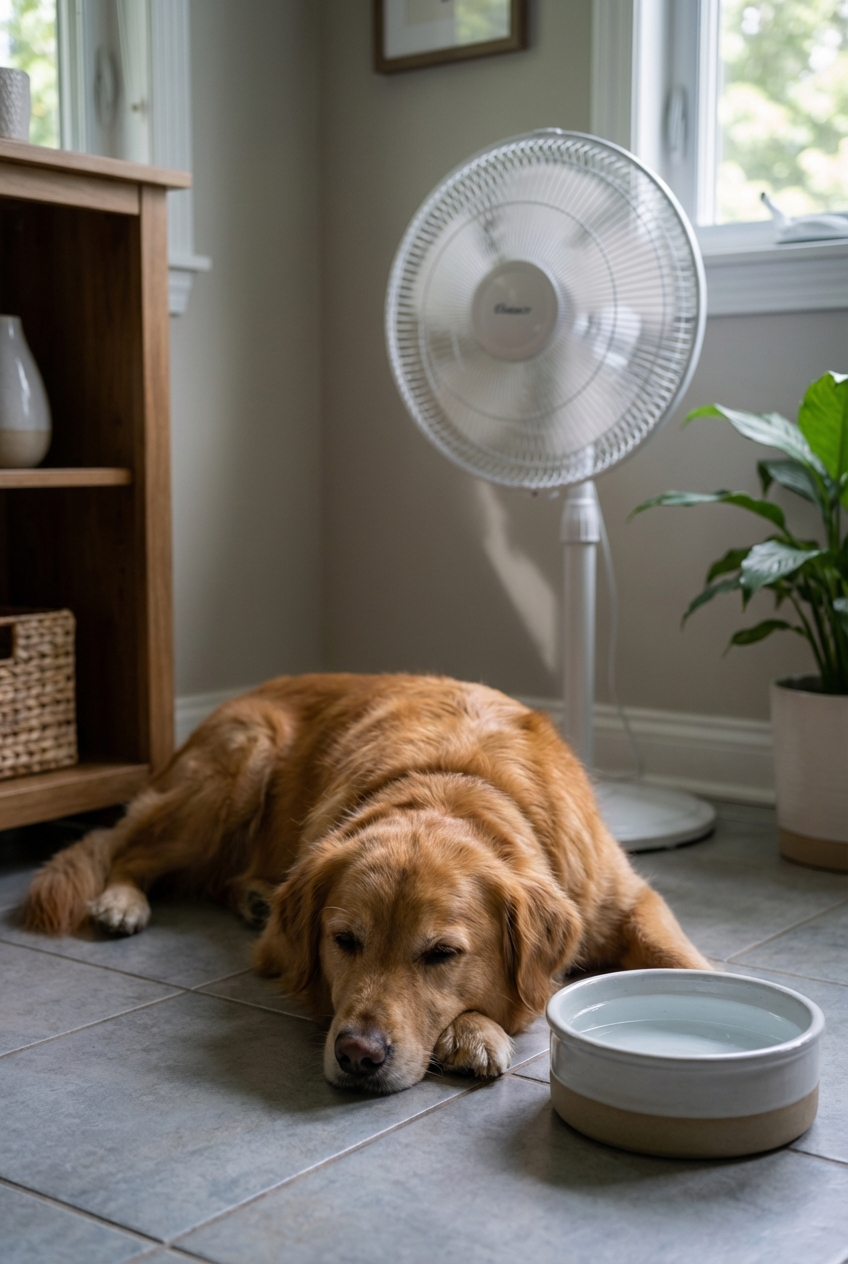
- Move them to a cool, quiet area with good airflow.
- Offer water, but do not force drinking.
- Avoid strenuous activity until you know what is going on.
What your vet may do
Because fast breathing is a symptom, not a diagnosis, your veterinarian will match testing to your dog’s history and exam findings. Common next steps may include:
- Physical exam with heart and lung auscultation
- Chest X-rays to look for pneumonia, fluid, masses, or airway disease
- Bloodwork to check for infection, anemia, organ function, and inflammation
- Heart testing such as an echocardiogram or an NT-proBNP test if heart disease is suspected
- Pulse oximetry to measure oxygen saturation
The best outcomes happen when we catch changes early, especially for heart and lung conditions.
Prevention and monitoring tips
- Know your dog’s normal. Take an RRR when they are healthy and relaxed.
- Keep a short log. Note breathing rate, coughing, energy, appetite, and any new meds.
- Maintain a healthy weight. Extra weight makes breathing harder and strains the heart.
- Avoid overheating. Limit activity in hot weather, provide shade and water, and never leave your dog in a car.
- Schedule routine vet visits. A murmur or lung change can be detected before symptoms are obvious.
Quick FAQ
Is it normal for my dog to breathe fast while sleeping?
It can be normal during dreaming. If it happens only in short bursts and your dog is otherwise healthy, it is often harmless. If breathing stays fast for long periods, is accompanied by coughing, or your dog seems unwell, call your vet.
My dog is breathing fast but not panting. Is that worse?
Not always, but it can be more concerning. Closed-mouth rapid breathing at rest is a reason to check RRR and look for other symptoms, especially breathing effort.
What resting rate is too high?
For many dogs, 15 to 30 breaths per minute is a typical resting range. A rate that is consistently above 30 at rest or during sleep is a common threshold to discuss with your veterinarian. If your dog is at 40+, has increased effort, seems weak, or you see gum color changes, seek prompt care.
The bottom line
Fast breathing while resting is sometimes a normal, temporary response to hot weather, excitement, or dreaming. But persistent rapid breathing can be an early sign that your dog needs medical attention. Count the breaths, note what you see, and do not hesitate to reach out to your veterinarian. You know your dog best, and acting early is one of the kindest things you can do.