Is your dog breathing fast while resting or sleeping? Learn the normal resting respiratory rate, how to count breaths, common causes like heat, pain, anxiety...
Article
•
Designer Mixes
Dog Breathing Fast at Rest: When It’s an Emergency

Shari Shidate
Designer Mixes contributor
If you glance over and your dog is breathing fast while resting, it can feel instantly alarming. Sometimes it really is an emergency. Other times it is a temporary, fixable situation like heat, stress, pain, or an upset stomach. The key is knowing what “normal” looks like, what warning signs mean “go now,” and what you can safely do at home while you get help.
What counts as “fast” breathing at rest?
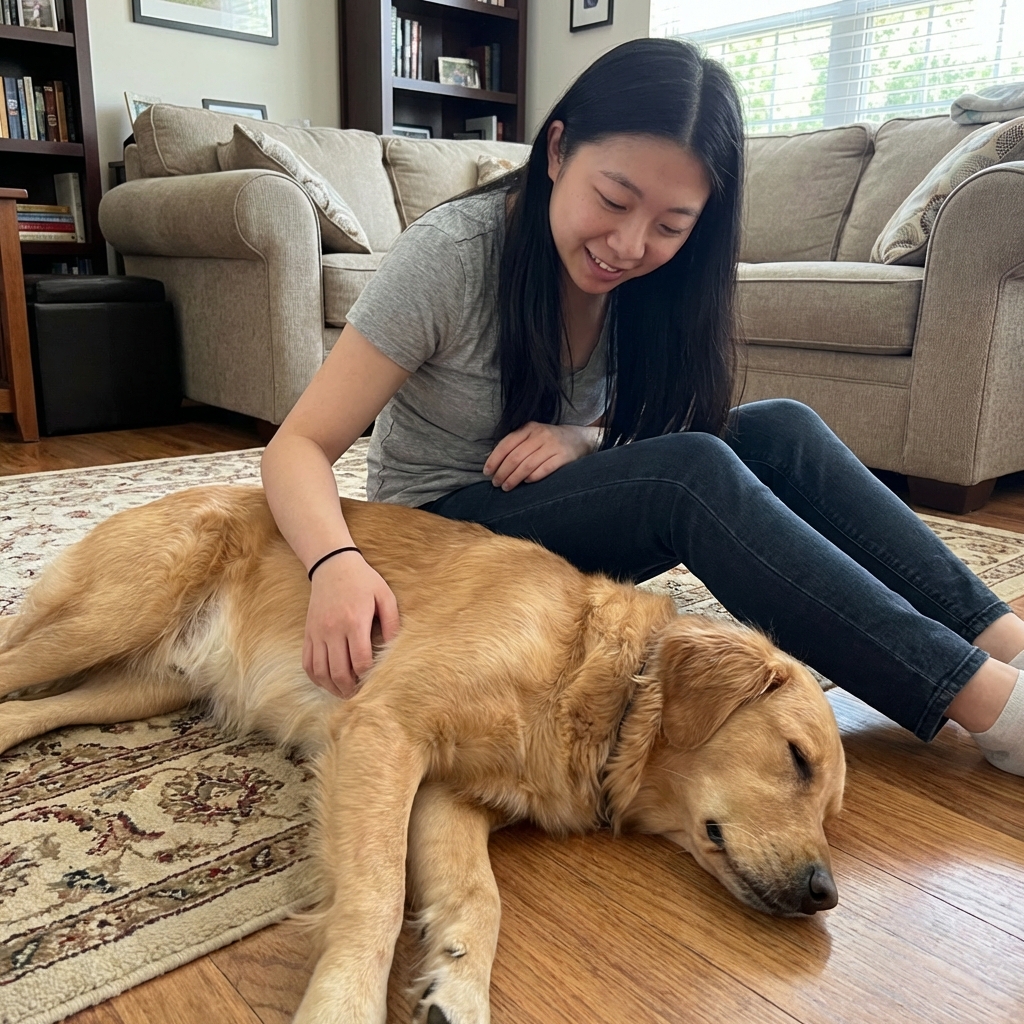
The most useful thing you can do is measure your dog’s resting respiratory rate (RRR). Do this when your dog is truly asleep or calmly resting, not right after play, a walk, excitement, barking, or a big meal.
Panting vs. breathing trouble
Many owners understandably mix these up. Panting is usually rapid and shallow, often with an open mouth and a relaxed body. Labored breathing looks like visible effort, such as belly heaving, elbows held out, neck extended, nostrils flaring, or a dog that cannot get comfortable. Labored breathing is always more urgent than simple panting.
How to count breaths
- Watch the chest rise and fall.
- Count one breath each time the chest rises and falls.
- Count for 30 seconds and multiply by 2 (or count for 60 seconds).
Typical resting range
Many healthy adult dogs rest around 10 to 30 breaths per minute (often roughly 15 to 30). Smaller dogs can sit a little higher. Puppies also tend to run faster than adults, and it is not unusual for a healthy sleeping puppy to land closer to the 30 to 40 range at times. What matters most is your dog’s personal baseline and whether the breathing looks easy and comfortable.
Red flag trend: If your dog’s RRR is repeatedly higher than their usual baseline, especially over 30 to 40 breaths per minute while resting, that deserves a call to your veterinarian. Sustained resting rates over 40 are generally more concerning, especially if the number is climbing or your dog looks uncomfortable.
Emergency signs: when it is “go now”
Fast breathing at rest becomes an emergency when it is paired with signs that your dog is not getting enough oxygen, is in shock, or may have a serious heart, lung, or abdominal problem.
If you see these signs, do not wait to “see if it passes.” Go now.
Go to an emergency vet immediately if you notice any of these
- Blue, gray, or purple gums or tongue (oxygen emergency).
- Very pale gums with weakness or collapse.
- Open-mouth breathing at rest (especially in dogs that do not normally do this). Short-nosed dogs may do this more, but a sudden change still matters.
- Breathing looks hard: belly heaving, neck extended, elbows held out, nostrils flaring.
- Cannot settle, paces, looks panicked, or seems “air hungry.”
- Collapse, fainting, or extreme weakness.
- Persistent coughing, especially with foam, pink-tinged fluid, or a wet “crackly” sound.
- Distended (bloated) abdomen, repeated retching with little to no vomit, restlessness (concern for bloat, also called GDV).
- Heatstroke signs: heavy panting that does not improve quickly, drooling, vomiting, diarrhea, wobbliness, or confusion. Gum color can be bright red early but may also become pale, brick-colored, or blue as things worsen. Heatstroke is an emergency either way.
- Known heart or lung disease and breathing is suddenly faster than normal.
- Possible poisoning or toxin exposure (including human medications, xylitol, rodenticides, illicit drugs).
- Recent trauma (hit by car, fall, dog fight) even if your dog “seems okay.”
Common causes of fast resting breathing
Here are some of the most common veterinary reasons I see behind “breathing fast while resting.” Some are urgent, and some are not. The problem is that you cannot reliably tell which one it is without a proper exam, especially if the breathing looks abnormal or the RRR stays elevated.
1) Pain
Dogs often pant or breathe fast when they hurt. Arthritis flare-ups, abdominal pain, dental pain, and injuries are big culprits. If you also notice stiffness, guarding the belly, yelping, hiding, or refusing food, call your vet.
2) Heat, humidity, or poor cooling
Dogs cool down mainly by panting. They do sweat a little through their paw pads, but it is not enough to regulate body temperature the way people do. Warm rooms, thick coats, short-nosed anatomy, and obesity make heat stress more likely, even indoors.
3) Stress or anxiety
Thunderstorms, fireworks, separation anxiety, vet visits, car rides, and new environments can cause fast breathing. If your dog’s breathing returns to normal once calm and cool, anxiety may be the trigger. Still, if it is frequent or severe, it is worth discussing with your vet because chronic stress can worsen medical issues.
4) Heart disease and fluid in or around the lungs
Congestive heart failure can cause fluid buildup in the lungs, making breathing faster and more difficult. A classic early clue is an increased RRR that stays elevated over time.
5) Respiratory disease
Pneumonia, bronchitis, asthma-like conditions, airway collapse (common in small breeds), and infections can all increase breathing rate and effort. Coughing, lethargy, fever, and decreased appetite are common companions.
6) Anemia
With fewer red blood cells, the body tries to compensate by breathing faster. Pale gums, weakness, and exercise intolerance can appear.
7) Bloat (GDV)
This is a true emergency where the stomach can fill with gas and twist. Dogs may retch without producing vomit, have a tight or enlarged abdomen, drool, and look extremely uncomfortable.
8) Hormones, weight, and other medical triggers
Cushing’s disease and obesity can increase panting and make breathing more labor-intensive, especially when lying down. Some medications can also increase panting, including steroids like prednisone. Seizures can temporarily cause fast breathing during the recovery period. If your dog started a new medication and the breathing changed, call your vet.
At-home triage: what to do now
If your dog is breathing fast at rest, stay calm and gather quick information. This helps you decide the safest next step and helps your vet help you faster.
Step 1: Check gum color and breathing effort
- Gums should generally look pink (pigment varies by dog).
- If gums are blue or gray or very pale, or breathing is clearly labored, go to emergency now.
Step 2: Count resting breaths
Count for 30 seconds and multiply by 2. Write it down and repeat in 10 to 15 minutes if your dog is calm and resting.
Step 3: Cool, quiet, and low-stress
- Move your dog to a cool, well-ventilated room.
- Keep them quiet and restrict activity.
- Offer water, but do not force drinking.
Step 4: Do not give medications unless your vet tells you to
Do not give human medications like ibuprofen, acetaminophen, or aspirin. And do not give any leftover pet medications unless your veterinarian directs you. Some drugs can worsen dehydration, bleeding risk, or sedation, and they can complicate emergencies involving the heart, lungs, or shock.
Step 5: Call your vet with specific details
When you call, share:
- Resting breaths per minute and whether it is rising.
- Any coughing, gagging, vomiting, retching, diarrhea.
- Energy level, appetite changes, or collapse.
- Gum color and whether breathing looks easy or effortful.
- Any known diagnoses (heart murmur, tracheal collapse, brachycephalic airway syndrome).
- Recent heat exposure, travel, trauma, new medications (especially steroids), or possible toxin exposure.

Monitor vs. same-day care
Okay to monitor briefly
- Fast breathing happens right after excitement, play, dreaming, or a stressful event and returns to your dog’s normal resting range within 10 to 30 minutes.
- Your dog is bright, alert, drinking normally, gums look normal, and breathing is not labored.
Tip: Keep a simple breathing log for a few days. Many vets use RRR trends as an early warning, especially for heart disease.
Seek same-day veterinary care
- Resting breathing is consistently above your dog’s baseline or stays elevated over 30 to 40 breaths per minute.
- Resting breathing near or above 40 that persists, even if your dog seems “mostly okay.”
- There is coughing, lethargy, reduced appetite, fever, or obvious pain.
- Your dog is a senior, has heart or lung disease, or is a short-nosed breed and seems worse than usual.
Emergency care now
- Any of the emergency signs listed earlier, especially blue gums, collapse, labored breathing, suspected bloat, or heatstroke.
What your vet may check
Fast breathing is a symptom, not a diagnosis. Depending on what your vet finds on exam, they may recommend:
- Pulse oximetry (oxygen level) and temperature.
- Chest X-rays to look for pneumonia, fluid, heart enlargement, or airway issues.
- Bloodwork to evaluate infection, anemia, metabolic issues, and organ function.
- Heartworm testing (if not current) and possibly cardiac labs.
- Echocardiogram if heart disease is suspected.
- Abdominal X-rays if bloat or abdominal pain is suspected.
If your gut is telling you “this breathing looks wrong,” trust that instinct. It is always better to be told it is mild than to miss the early window of a serious problem.
Prevention tips
- Know your dog’s normal RRR. Check it a few times when they are healthy and asleep. If you have a puppy, expect the baseline to be a bit higher.
- Keep dogs lean. Healthy weight reduces breathing workload and heat stress.
- Limit heat exposure. Use fans, AC, shade, and avoid midday walks in summer heat or extreme heat.
- Use a harness instead of a collar for dogs prone to coughing or airway collapse.
- Stay current on heartworm prevention and routine veterinary care.
- For large deep-chested dogs, ask your vet about bloat risk and safe feeding habits.