A practical 24–72 hour diet and hydration plan for mild dog diarrhea, with bland food options, safe add-ons like probiotics, foods to avoid, and clear red ...
Article
•
Designer Mixes
Dog Blood Diarrhea: What to Do

Shari Shidate
Designer Mixes contributor
First, take a breath and look closely
Seeing blood in your dog’s diarrhea is scary, and I get it. In clinic, this is one of the most common urgent concerns I hear, and it can range from mild irritation to a true emergency. The key is to notice the details, decide whether you need urgent care right now, and support your dog safely while you get veterinary guidance.
This guide walks you through what to look for, what you can do at home in certain cases, and when to stop everything and head to the veterinarian.
Red flags: go to an emergency vet now
If any of these are true, do not wait for the diarrhea to “pass.” Your dog should be seen urgently.
- Large amounts of blood, blood clots, or diarrhea that looks like raspberry jam
- Black, tarry stool (can suggest digested blood from higher in the GI tract)
- Repeated vomiting, especially if your dog cannot keep water down
- Weakness, collapse, pale gums, fast breathing, or severe lethargy
- Bloated or painful belly, crying, or a “prayer position” that won’t stop
- Suspected toxin or medication exposure (rat poison, human NSAIDs like ibuprofen, xylitol, grapes or raisins, etc.)
- Foreign body risk (chewed toys, socks, bones, corn cobs) or your dog is straining without producing stool
- Puppy, senior, pregnant, or immune-compromised dog with bloody diarrhea
- Known parvo exposure or your dog is not fully vaccinated
Also treat this as urgent: bloody diarrhea that continues or keeps recurring over the day, especially if episodes are frequent, your dog seems less interested in food or water, or you are seeing more blood over time. If it has lasted more than 24 hours, contact your veterinarian the same day for advice and an exam plan (ER vs. urgent daytime visit depends on amount of blood, hydration, frequency, and overall demeanor).
Trust your instincts. If your dog looks “off,” it is always appropriate to call an ER and describe what you’re seeing.
What the blood can look like
Bright red blood
Bright red streaks or drops typically come from the lower intestines or rectum. Causes can include colitis (large bowel inflammation), parasites, stress diarrhea, dietary indiscretion (trash, greasy food), anal gland irritation, or straining.
What “a small amount” often looks like: a few streaks on the stool, a light smear on the outside of the poop, or a little red on the wipe or grass afterward. A puddle of red, repeated bloody squirts, or clots is not “small.”
Dark red blood, clots, or “raspberry jam” stool
This appearance can indicate more serious inflammation or bleeding and should be treated as urgent. You may see it discussed online with acute hemorrhagic diarrhea syndrome (AHDS) (also called HGE in older articles), but this look is a description, not a diagnosis. Parvovirus, parasites, intussusception, toxins, and other severe enteritides can look similar. These dogs can dehydrate quickly and may need IV fluids and medications.
Black, tarry stool (melena)
Black stool can mean digested blood from higher in the GI tract (stomach or small intestine). This is a same-day vet concern. Also, certain medications can darken stool, especially bismuth (like Pepto-Bismol). Tell your veterinarian about any over-the-counter products you gave.
Is it actually blood?
Sometimes stool can look red or dark for reasons other than bleeding, like red food dyes, colored treats, or something your dog scavenged. Even so, if you are not sure, treat it seriously. Take a clear photo in good light and call your vet.
Step-by-step: what to do at home
Home care is only appropriate if your dog is bright, alert, drinking, and the blood is small in amount, with no vomiting and no red flags above.
Step 1: Call your vet and describe the stool
Even if your clinic cannot see you immediately, a quick phone triage can prevent a bad situation from becoming worse. Be ready to share:
- Your dog’s age, breed, weight, and medical history
- How many diarrhea episodes and when it started
- Color and amount of blood (streaks vs puddles vs clots)
- Vomiting, appetite, energy, water intake
- Any possible food changes, trash access, bones or chews, or toxins
Step 2: Offer water and watch hydration
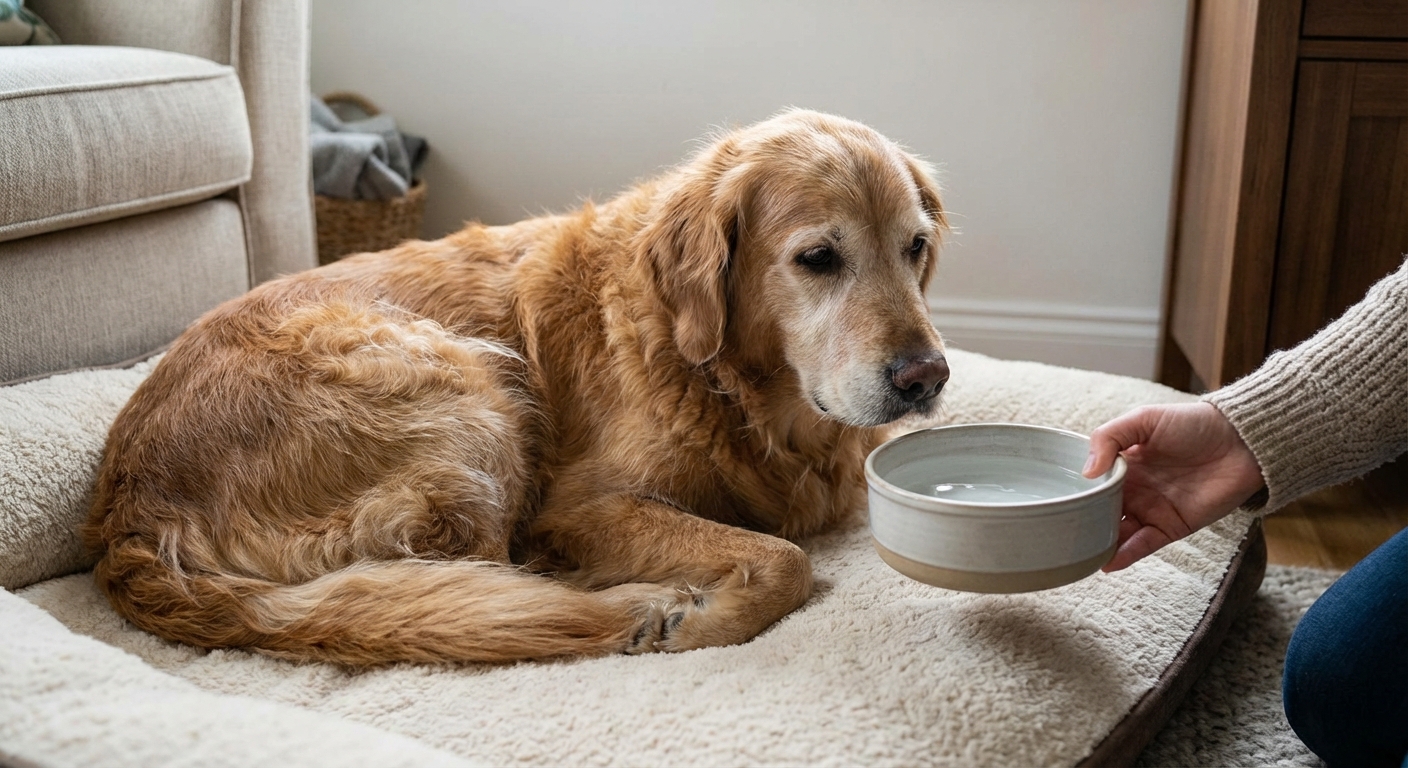
Diarrhea pulls fluid out of the body. Encourage small, frequent drinks. If your dog gulps and vomits, that is a reason to call the vet promptly.
At home, a few dehydration clues you can check:
- Gums: moist is normal. Dry or tacky can suggest dehydration.
- Energy: a dog who suddenly seems dull, weak, or wobbly may be dehydrated or worse.
- Skin tent: gently lift skin over the shoulders and release. Slow return can suggest dehydration, especially along with other signs.
If you are seeing these changes, or if diarrhea is frequent, your dog may need veterinary fluids sooner rather than later.
Step 3: Feed a gentle diet for 24 to 48 hours
For many uncomplicated cases, a low-fat, easy-to-digest approach helps the gut settle. If you have a complete veterinary gastrointestinal diet, that is often an ideal short-term option. If you do not, a bland homemade diet can work as a short-term bridge.
Common vet-approved options include:
- Boiled skinless chicken breast and white rice
- Boiled lean turkey and rice
- Veterinary gastrointestinal prescription diet if you have it
Feed small meals, about 4 to 6 times a day. Avoid fatty foods, rich treats, table scraps, bones, and new chews. Homemade bland diets are not nutritionally complete, so do not use them long term unless your veterinarian builds a balanced plan.
Step 4: Consider a probiotic made for dogs
Evidence supports certain veterinary probiotics for acute diarrhea. Ask your veterinarian which product and dose to use for your dog. Avoid human probiotics unless your veterinarian okays it, since strains and dosing can differ.
Step 5: Rest the gut and reduce stress
Stress colitis is real, especially after boarding, travel, thunderstorms, guests, or schedule changes. Keep things calm, keep walks short, and allow frequent potty breaks.
Step 6: Reduce spread risk to people and pets
Some causes of diarrhea are contagious (like giardia or parvovirus) and some are zoonotic. Until you know what is going on:
- Pick up stool promptly and dispose of it
- Wash hands after cleanup
- Keep your dog away from dog parks, daycare, and other dogs
- Clean soiled areas with an appropriate disinfectant (your vet can advise what works best for your situation)
What not to do
- Do not give human anti-diarrheal meds (like loperamide) unless your veterinarian specifically instructs you. It can be risky in certain situations, including some herding breeds that may carry the MDR1 mutation (Collies, Australian Shepherds, Shetland Sheepdogs, and related mixes), and it may be inappropriate with infectious diarrhea or some toxin ingestions.
- Do not give ibuprofen, naproxen, aspirin, or other human pain relievers. These can cause GI ulceration and bleeding.
- Do not fast puppies without veterinary direction. Small dogs and puppies can become hypoglycemic.
- Do not assume it is “just something they ate” if you see worsening blood, repeated diarrhea, weakness, or vomiting.
Common causes of bloody diarrhea
These are some of the most frequent reasons I see in practice. Your veterinarian may recommend testing based on your dog’s risks and symptoms.
- Dietary indiscretion: trash, greasy foods, sudden diet changes
- Parasites: giardia, hookworms, whipworms, roundworms
- Stress colitis: abrupt routine change, travel, boarding
- Infections: bacterial overgrowth or infectious colitis
- AHDS: sudden onset, significant blood, rapid dehydration risk
- Food sensitivity: recurring loose stool with mucus or blood
- Foreign material: toys, fabric, bones causing irritation or obstruction
- Medications: NSAIDs and steroids can contribute to GI ulceration and bleeding, especially when used together or without veterinary guidance
- Toxins: rodenticides and other poisons can cause dangerous bleeding problems
- Pancreatitis: often includes vomiting, belly pain, lethargy
How vets diagnose it
If you go in, your veterinarian may recommend a stepwise plan depending on severity:
- Physical exam including hydration status, belly palpation, temperature, gum color
- Fecal testing for parasites and giardia
- Parvovirus test for puppies or unvaccinated dogs
- Bloodwork to assess dehydration, infection or inflammation, organ function
- X-rays or ultrasound if foreign body, obstruction, pancreatitis, or bleeding is suspected
- Treatment that may include fluids, anti-nausea meds, gut protectants, pain control, probiotics, and sometimes antibiotics when warranted
Bring this to your appointment
This helps your vet move faster and treat more accurately.
- A fresh stool sample in a clean bag or container
- Photos of the stool (yes, truly helpful)
- A list of recent foods, treats, chews, and any medications or supplements
- Timeline of symptoms and any toxin exposure concerns
Stool sample tip: fresher is better. Try to keep it free of dirt or grass. If you cannot get to the clinic right away, seal it and refrigerate it until you leave. Do not freeze it unless your veterinarian instructs you.
Prevention tips
- Keep diet changes slow: transition over 7 to 10 days
- Year-round parasite prevention, based on your vet’s advice for your area
- Routine fecal checks, especially for dogs who visit parks or daycare
- Secure trash and avoid high-fat table foods
- Choose safer chews and supervise anything your dog can shred or swallow
- Keep vaccinations current, especially for puppies and social dogs
When it is safe to relax
If your dog has mild diarrhea with a small amount of bright red blood, remains energetic, drinks normally, and improves within 12 to 24 hours on a gentle plan, that is reassuring. Still, schedule a vet visit if this is a repeat issue or if you see mucus and blood frequently. Recurring colitis can have a treatable underlying cause.
If you are ever unsure, it is absolutely okay to call your veterinarian. You are not overreacting. You are advocating for your dog.