Chocolate can be toxic to dogs due to theobromine and caffeine. Learn which types are most dangerous, signs to watch for, and the fastest steps to take if yo...
Article
•
Designer Mixes
Dog Ate Chocolate Care Guide

Shari Shidate
Designer Mixes contributor
Chocolate accidents happen fast. One minute you have a wrapped candy bar on the counter, the next your dog is licking crumbs off the floor like nothing happened. If you are reading this with a worried stomach, take a breath. Most dogs do well when we act quickly and use the right next steps.
As a veterinary assistant in Frisco, Texas, I have seen the whole range, from a dog who stole a single chocolate chip cookie to true emergencies after dark chocolate or cocoa powder. This guide will help you decide what to do right now, what to watch for, and when it is time to head to an emergency clinic.
Quick note: This article is here to help you make safe decisions fast, but it cannot diagnose your dog online. When in doubt, call your veterinarian or a pet poison helpline. They use dose calculations based on your dog’s weight and the cocoa content to guide next steps.

Why chocolate is toxic to dogs
Chocolate contains methylxanthines, mainly theobromine and caffeine. Dogs metabolize these much more slowly than humans, so the compounds can build up and overstimulate the:
- Heart (fast rate, abnormal rhythms)
- Nervous system (restlessness, tremors, seizures)
- GI tract (vomiting, diarrhea)
In general, the darker and more concentrated the chocolate, the more dangerous it is. Dose matters too. A small dog can get into trouble with an amount that might cause only mild stomach upset in a larger dog.
Chocolate risk by type
Use this as a quick mental shortcut while you gather details for your veterinarian or poison helpline.
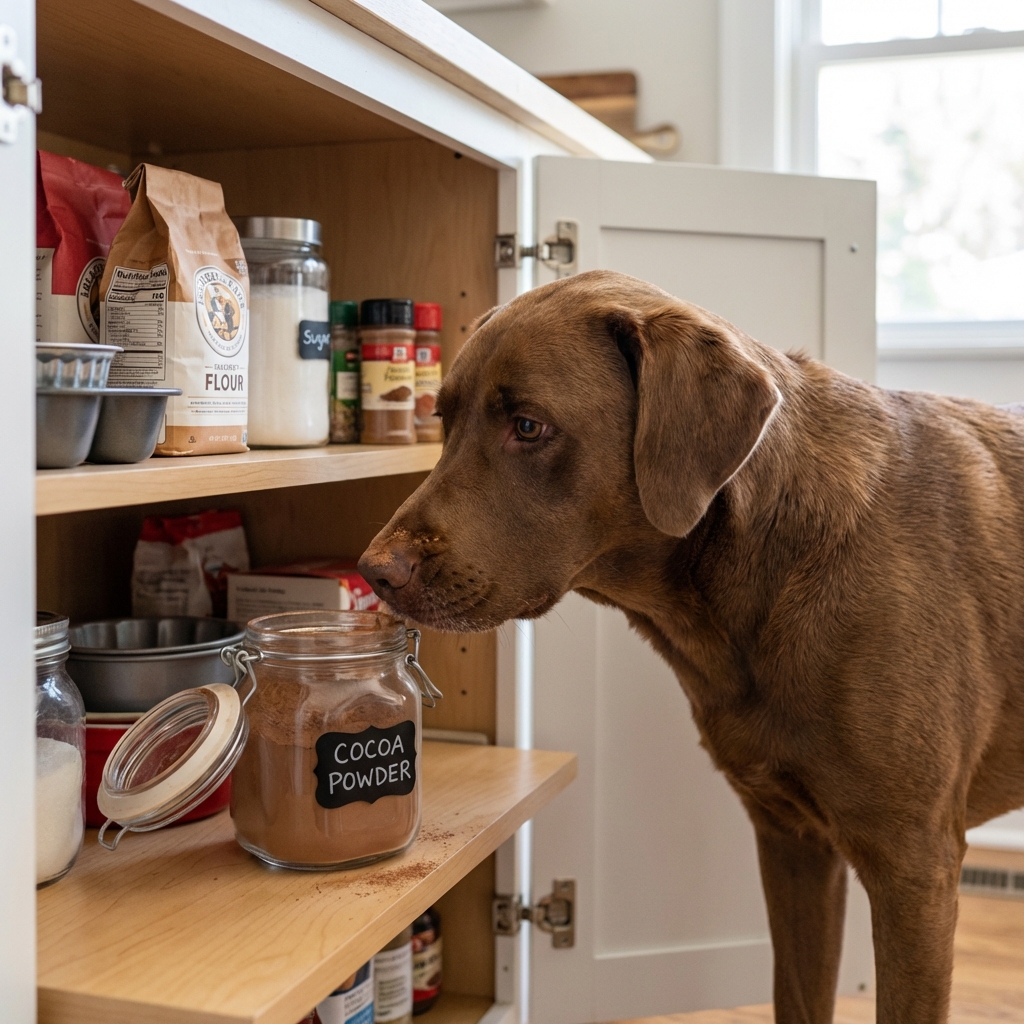
- Highest risk: cocoa powder, baking chocolate, cacao nibs, dark chocolate
- Moderate risk: semisweet chocolate chips, chocolate bars
- Lower (but not safe): milk chocolate
- Usually lowest: white chocolate (low theobromine, but still high fat and sugar, which can trigger vomiting, diarrhea, and can contribute to pancreatitis in susceptible dogs)
Do this first (5 details that matter)
Before you call, grab these details. They help professionals estimate risk and recommend next steps.
- Your dog’s weight (as accurate as possible)
- Type of chocolate (milk, dark, baking, cocoa powder, chocolate chips)
- How much was eaten (ounces, grams, number of squares, tablespoons, or “half a bag”)
- When it happened (minutes or hours ago)
- Any symptoms right now (vomiting, diarrhea, agitation, panting, tremors)
Dose matters: If you still have the wrapper, keep it. Ingredients and cocoa percentage can be very helpful for mg per kg calculations.
If any packaging is missing, mention that too. Wrappers, foil, and plastic can be a choking hazard or cause a GI obstruction.
When to call now
If you are unsure, calling is never a bad choice. These situations deserve an urgent call to your veterinarian, an emergency clinic, or a pet poison helpline:
- Your dog ate dark chocolate, baking chocolate, cocoa powder, or cacao
- Your dog is small and ate more than a lick, a crumb, or a tiny taste
- You do not know how much was eaten
- It happened within the last couple of hours (that is when decontamination helps the most), but call even if it has been longer. Vets can still help in many cases, especially with larger ingestions.
- Your dog has heart disease, is very young, is a senior, or has other serious conditions
- You see tremors, seizures, collapse, severe agitation, or nonstop vomiting
- You suspect your dog ate wrappers, foil, plastic, or a toy along with the chocolate
Emergency signs: seizures, collapse, severe weakness, blue or pale gums, or extreme panting. If you see these, do not wait. Go to the nearest emergency hospital.
If you need a poison expert quickly, you can also contact ASPCA Animal Poison Control or Pet Poison Helpline. A consultation fee may apply, and they can work directly with your veterinarian.
Symptoms and timing
Chocolate toxicity can look mild at first and then ramp up. Many dogs show signs within 2 to 6 hours, but signs can start as early as 1 to 2 hours after ingestion. With significant exposures, effects can last 24 to 72 hours because theobromine clears slowly.
Mild to moderate signs
- Vomiting
- Diarrhea
- Restlessness, pacing
- Increased thirst and urination
- Panting
Severe signs
- Fast heart rate
- Abnormal heart rhythm
- Tremors
- Seizures
- High body temperature
Tip: If your dog seems “wired,” cannot settle, or has a very fast heart rate at rest, that is a reason to seek care promptly.
What not to do at home
I know the internet is full of quick fixes. Some are risky, especially when your dog is already nauseated or overstimulated.
- Do not give hydrogen peroxide unless a veterinarian specifically instructs you on the correct dose and confirms it is safe for your dog.
- Do not give salt, syrup of ipecac, or “home remedies” to force vomiting.
- Do not wait for symptoms if a high-risk chocolate was eaten. It is much easier to help before the theobromine is fully absorbed.
- Do not give human medications (like antacids, pain meds, or sedatives) unless directed by your vet.
What the vet may do
Veterinary treatment depends on what was eaten, your dog’s size, time since ingestion, and symptoms. Common steps include:
- Inducing vomiting in-clinic if it was recent and appropriate
- Activated charcoal to bind toxins in the gut (sometimes repeated doses because theobromine can recirculate)
- IV fluids to support circulation and help the body eliminate toxins
- Heart monitoring for fast rate or arrhythmias
- Medications for tremors, seizures, nausea, diarrhea, or abnormal rhythms
Many dogs need monitoring for 12 to 24 hours after significant exposures, sometimes longer for severe cases.
If you are heading in, bring the packaging if you can, and do not try to induce vomiting unless a professional tells you to.

Home monitoring (if your vet says it is safe)
If a professional has assessed your dog and says home observation is appropriate, here is what to track for the next 24 hours:
- Energy level: can they settle, or are they restless and unable to rest?
- GI signs: vomiting, diarrhea, black or bloody stool
- Breathing: heavy panting at rest can be a warning sign
- Heart rate: if it feels very fast or irregular, call
- Neurologic signs: trembling, wobbliness, staring, seizures
Offer water. For food, follow your veterinarian’s guidance. If your dog vomits, do not push meals right away. Your vet may recommend a bland diet later, but the plan should match your dog’s situation.
Hidden hazards to mention
Chocolate treats often come with bonus troublemakers. Mention these if they apply:
- Xylitol (also called birch sugar): found in some sugar-free candies and baked goods, can cause dangerous low blood sugar and can cause liver injury
- Raisins or grapes: found in trail mix or cookies, can cause kidney injury
- Macadamia nuts: can cause weakness and tremors
- High fat: frosting, brownies, rich desserts can trigger pancreatitis in some dogs
- Caffeine add-ins: espresso powder or coffee in desserts can add extra stimulant risk
- Wrappers and foil: can cause choking or an intestinal blockage
If your dog ate a mixed dessert, it is worth calling even if the chocolate amount seems small.
Prevention that works
Most chocolate incidents are predictable, which means they are preventable with a few simple habits.
- Store chocolate up high and behind a closed cabinet door.
- Use a lidded trash can, especially during holidays.
- Teach a solid “leave it” cue and practice it with safe items.
- During parties, create a dog-safe zone with water, enrichment, and a gate.
- Remind guests that “just one piece” is not worth the risk.
Holidays to watch closely: Halloween, Christmas, Valentine’s Day, Easter, and any birthday party with brownies on the counter.
Quick checklist
If you are in a hurry, here is your streamlined plan.
- Remove access to all chocolate and wrappers.
- Find the wrapper and estimate type, cocoa percentage, and amount.
- Note your dog’s weight and the time of ingestion.
- Call your vet, an emergency clinic, or a pet poison helpline for guidance.
- Go in immediately if you see tremors, seizures, collapse, severe agitation, or nonstop vomiting.
With quick action and the right care, many dogs recover fully. You are doing the right thing by getting informed and moving fast.