Guide to using homemade dog food for an elimination diet: pick a novel protein and single carb, keep it strict for 8–12 weeks, track symptoms, then challen...
Article
•
Designer Mixes
Dog Allergy to Chicken Symptoms

Shari Shidate
Designer Mixes contributor
If you are wondering whether your dog is allergic to chicken, you are not alone. Chicken is among the most common proteins in commercial dog foods and treats, which means many dogs eat it regularly for years. While food allergy development is multifactorial, some dogs do end up developing symptoms that seem tied to chicken or to a chicken-based diet.
As a veterinary assistant here in Frisco, Texas, I want to help you sort out what may be going on, what to watch for, and how to run a safe, evidence-based elimination diet trial to get real answers. This is general education, not a diagnosis. Your veterinarian is the best person to guide your dog’s specific plan.

Chicken allergy vs. intolerance
These two get mixed up a lot, and the difference matters. You may also hear vets use the umbrella term adverse food reaction, which includes both allergy and intolerance.
- Food allergy: an immune reaction. In dogs, it most often shows up as skin and ear symptoms, and sometimes digestive signs.
- Food intolerance: not immune-driven. It may cause gas, loose stools, or vomiting, especially after rich treats or sudden diet changes.
Here is the tricky part: symptoms overlap, and they are not specific to chicken. Many proteins can cause similar issues, and you cannot confirm the trigger without a structured diet trial.
Common symptoms
Dogs with true food allergies often look like “allergy dogs” in general, not like dogs with a single, obvious rash. Here are the signs I see most often in clinic.
Skin and itch
- Itching or licking paws, belly, inner thighs, or armpits
- Face rubbing on carpet or furniture
- Red or irritated skin, recurring hot spots
- Hair thinning from chronic licking and chewing
Ears
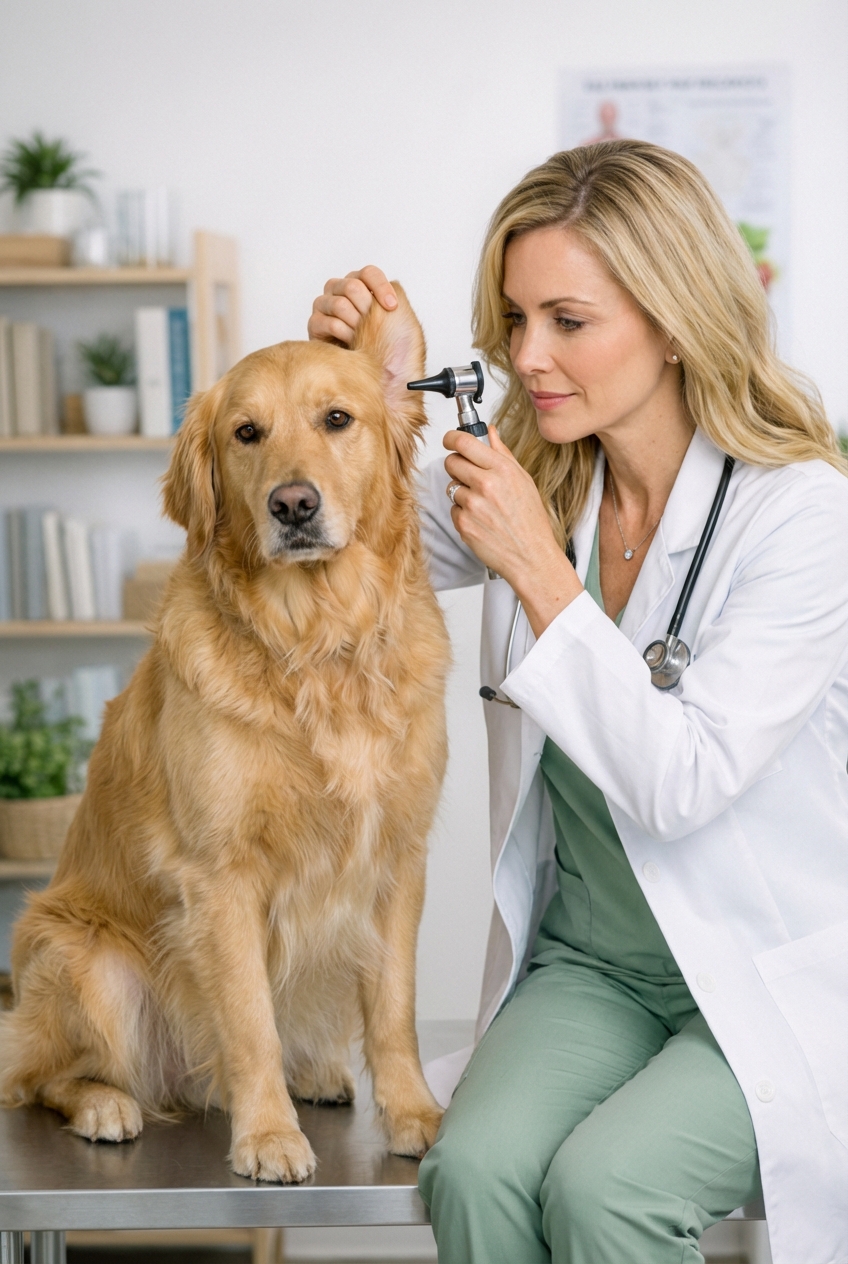
- Recurring ear inflammation or ear infections
- Head shaking or ear scratching
- Waxy buildup or odor in one or both ears
Digestive signs
- Soft stool or diarrhea
- Vomiting, especially recurring episodes
- Gas, abdominal gurgling, discomfort
Common secondary problems
- Anal gland issues tied to chronic soft stool
- Recurrent yeast or bacterial skin infections secondary to ongoing itch and inflammation
Many dogs with food allergies do not have dramatic “hives.” They have chronic itch, ears that keep flaring, and skin that never fully settles.
How fast do symptoms show up?
Food allergy symptoms are usually not immediate like a severe peanut allergy in humans. In dogs, signs often build over time and can wax and wane.
- After eating chicken once: some dogs may vomit or get loose stool within hours. That pattern is more typical of intolerance, but it is still worth discussing with your vet.
- With ongoing exposure: itching, ears, and skin infections can become a chronic pattern.
- After removing the trigger: digestive signs may improve sooner, sometimes within days to a couple of weeks. Skin and ear issues usually need at least 8 weeks of a strict trial, and many protocols recommend 8 to 12 weeks for skin cases.
Common look-alikes
It is very normal to suspect food first, but several conditions can mimic a chicken allergy.
- Environmental allergies (pollens, dust mites, molds): often seasonal at first, but can become year-round.
- Fleas: even one bite can trigger intense itching in flea-allergic dogs.
- Yeast or bacterial skin infections: can cause odor, greasy skin, and itch.
- Mites (like sarcoptic mange): very itchy and contagious to other pets, and can also cause temporary itching in people.
If your dog has open sores, a strong odor, ear pain, or significant hair loss, please involve your veterinarian early. Treating infection first often makes a diet trial more accurate and more comfortable.

How to confirm it
The gold standard for diagnosing an adverse food reaction is an elimination diet trial followed by a controlled challenge. Blood tests and saliva tests marketed online are not reliable for diagnosing food allergy or adverse food reactions in dogs. Intradermal testing and serum IgE testing are used for environmental allergies, but they are not recommended as a way to diagnose food allergy.
Step 1: Choose the right diet
You have two evidence-based options:
- Prescription hydrolyzed diet: proteins are broken down to reduce immune recognition. This is often the most straightforward option for complicated cases and for diagnosis.
- Novel protein diet: choose a protein your dog has truly never eaten, such as rabbit, venison, duck, kangaroo, or certain fish. Your vet may recommend pairing it with a compatible carbohydrate source if needed.
Important: “Chicken-free” on the front label does not always mean chicken-free in the ingredients. Look for chicken, poultry, chicken fat, chicken meal, chicken by-product, and mixed animal ingredients. Ingredients like natural flavor or animal digest may be poultry-derived unless the species is clearly specified.
Also important: over-the-counter limited-ingredient diets can have cross-contamination from shared manufacturing lines. That is one reason prescription hydrolyzed diets are often preferred for a diagnostic trial.
Step 2: Be strict for 8 to 12 weeks
During the trial, your dog can only have:
- The chosen diet
- Water
- Approved treats made from the same trial diet, or veterinary-approved alternatives
No flavored medications, no table scraps, no bully sticks, no dental chews, and no “just a bite.” Even small exposures can trigger symptoms and make the results unreliable.
Step 3: Track symptoms weekly
- Itch level (0 to 10)
- Ear scratching or head shaking
- Stool quality
- Skin redness, odor, or hot spots
Step 4: Do a chicken challenge
If your dog improves significantly on the elimination diet, the next step is to reintroduce chicken in a controlled way to see if symptoms return. This is the part that helps confirm chicken is the trigger, rather than just guessing.
A common vet-guided approach looks like this:
- Use plain chicken (cooked, unseasoned) or a measured amount of a chicken-based food your vet approves.
- Add a small amount daily for 3 to 7 days while keeping everything else the same.
- Stop immediately if you see a flare (itch, ear redness, digestive upset) and contact your vet. Many dogs flare within days, but timing varies.
- Return to the elimination diet until your dog settles again. Your vet may recommend further challenges to check other proteins.
If your dog has ever had facial swelling, hives, or breathing trouble, do not do an at-home challenge. Your veterinarian should direct next steps.
Hidden chicken sources
Chicken can sneak into a dog’s routine in ways that surprise people. Check:
- Treats labeled “meat flavor,” “grilled,” or “smokehouse”
- Dental chews and rawhide alternatives
- “Natural flavor” or “animal digest” in kibble and canned food (may be poultry-derived unless species is listed)
- Broths and toppers
- Flavored heartworm and flea preventives, flavored antibiotics, and some supplements
- Cat food, if your dog sneaks it
Poultry and cross-reactions
If chicken is a problem, some dogs may also react to other poultry like turkey or duck, but not all do. This is one reason it helps to choose a trial diet with your veterinarian. What is “novel” for one dog is not novel for another, especially if your dog has had lots of different treats over the years.
What to feed long term
Once you and your veterinarian feel confident chicken is the issue, you have options that can be both practical and nourishing.
Commercial diets
- Hydrolyzed diets for dogs with multiple allergies or unclear triggers
- Limited-ingredient diets with a single, clearly labeled protein (with the understanding that quality control varies by brand)
Read ingredients carefully and choose brands with strong quality control and clear sourcing.
Homemade (only when balanced)
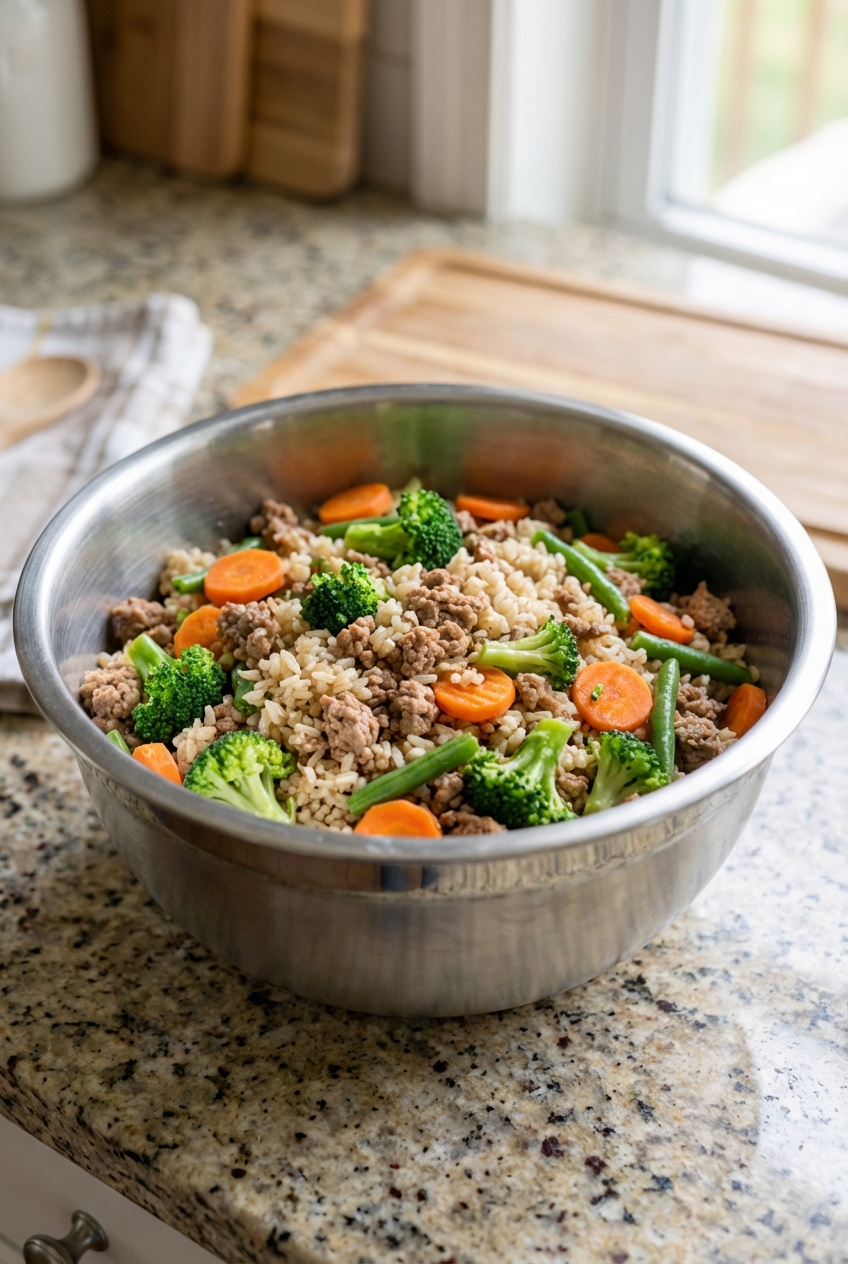
Homemade food can be wonderful, but it must be nutritionally complete. Dogs need the right balance of protein, fat, vitamins, and minerals, especially calcium and essential fatty acids. If you want to go homemade, ask your veterinarian for a referral to a board-certified veterinary nutritionist, or use a veterinary-formulated recipe.
When to call the vet
Diet changes are not an emergency most of the time, but some situations need prompt care:
- Ear pain, swelling, bleeding, or thick discharge
- Skin that is oozing, has a strong odor, or rapidly worsening redness
- Vomiting repeatedly, bloody stool, or signs of dehydration
- Sudden facial swelling, hives, or trouble breathing
If your dog is miserable, do not wait out an elimination diet without addressing infections and itch control. Comfort matters, and treating secondary issues makes the food trial much easier to interpret.
Simple action plan
- Make a list of everything your dog eats in a week, including treats, chews, toppers, and flavored meds.
- Take photos of ingredient panels so you can spot chicken, poultry, and mixed animal ingredients.
- Schedule a vet visit if there are ear or skin infections, or if itching is intense.
- Choose an 8 to 12 week elimination diet and commit to strict rules.
- Track symptoms weekly so you can see trends, not just day-to-day fluctuations.
The bottom line is this: you can absolutely get clarity here, and most dogs feel so much better once their trigger ingredient is identified and removed. Go slow, be consistent, and lean on your veterinary team when you need support.
References
- American College of Veterinary Dermatology (ACVD). Client Education: Food Allergies (Adverse Food Reactions). https://www.acvd.org (navigate to Client Education).
- WSAVA Global Nutrition Committee. WSAVA Global Nutrition Toolkit (including advice on selecting pet foods and interpreting labels). https://wsava.org/global-guidelines/global-nutrition-guidelines/
- Olivry T, Mueller RS, et al. Treatment and diagnosis guidance for canine atopic dermatitis and adverse food reactions published in Veterinary Dermatology (consensus and guideline documents). https://onlinelibrary.wiley.com/journal/13653164