
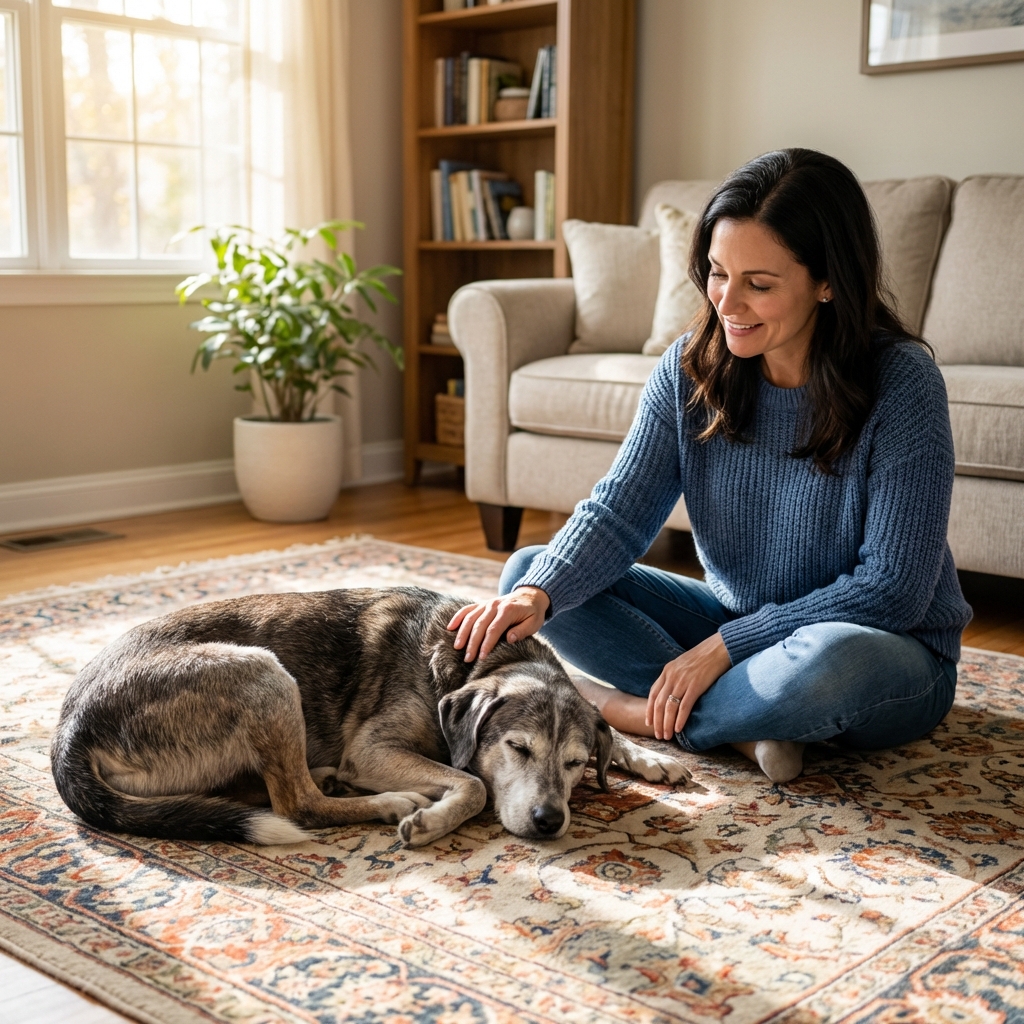
Understand canine cognitive dysfunction (CCD) in senior dogs. Learn DISHA signs, rule-outs to discuss with your vet, and home + routine changes to ease pacin...
Article
•
Designer Mixes
Does My Dog Have Dementia Quiz: Checklist and Next Steps

Shari Shidate
Designer Mixes contributor
When a dog starts pacing at night, staring into space, or seeming “lost” in their own home, it can feel scary and heartbreaking. As a veterinary assistant here in Frisco, Texas, I have seen how worried families get when their sweet senior starts acting differently. The good news is that many causes of behavior change are treatable, and even when the issue is canine cognitive dysfunction (CCD), there are practical steps that can help.
This page will walk you through a vet-used screening checklist approach, what the results can and cannot tell you, and what to do next.
What “dog dementia” means
“Dog dementia” is the common term for Canine Cognitive Dysfunction (CCD), an age-related condition that can affect memory, learning, awareness, and sleep patterns. It can look a lot like human Alzheimer’s disease in the way it progresses, but it is not something you can diagnose at home with certainty.
A checklist can be a helpful screening and tracking tool to spot patterns and decide whether it is time to schedule a veterinary visit.
Screening checklist: DISHAA
One of the most commonly used frameworks in veterinary medicine for noticing cognitive change is the DISHAA checklist. It focuses on the day-to-day ways CCD can show up.
Timeframe: Think about changes you have noticed over the past few months. If something changed suddenly, skip the quiz and call your veterinarian, because CCD is typically gradual.
How to use this checklist: For each question, choose the best fit.
- 0 = never
- 1 = occasionally (a few times a month)
- 2 = weekly
- 3 = daily or almost daily
As you go, jot down a quick example (what happened and when). Those details help your vet as much as the score.
D: Disorientation
- Does your dog seem lost in familiar rooms or get stuck behind furniture?
- Do they stare at walls, corners, or into space more than before?
- Do they have trouble finding doors, their food bowl, or their favorite resting spot?
I: Interaction changes
- Is your dog less interested in greeting people or following you around?
- Do they seem clingier, needier, or unusually anxious when you leave?
- Are they more irritable with people or other pets than they used to be?
S: Sleep-wake changes
- Are they restless at night, pacing, or waking you up?
- Are they sleeping more during the day and less at night?
H: House soiling
- Have there been new accidents indoors despite previously reliable housetraining?
- Do they seem unaware they are eliminating, or do they not signal like they used to?
A: Activity changes
- Is your dog less interested in walks, play, or toys?
- Do they pace, wander, or repeat the same behaviors more than before?
A: Anxiety changes
- Are they more startled by normal sounds or more sensitive to routine changes?
- Do they show new separation anxiety, trembling, panting, or “can’t settle” behavior?
About scoring: DISHAA is a framework, not a single universally standardized test with one set of official cutoffs. Use your total as a rough tracking number to guide your next steps.
- 0 to 5: Few or mild signs. Keep tracking monthly, especially if your dog is a senior.
- 6 to 15: Concerning pattern. Schedule a veterinary visit and bring your notes.
- 16+: High concern. Book an appointment soon for a full medical workup.
Important: A higher score does not prove CCD. It means your dog deserves a veterinary evaluation to rule out medical issues that can mimic dementia. Also, if your score is low but your gut says something is off, it is still worth calling your vet.
What can look like dementia
Behavior changes often have a physical cause. Before labeling a dog as having CCD, veterinarians commonly rule out issues such as:
- Pain from arthritis, dental disease, or spinal problems
- Vision or hearing loss (a dog may seem confused when they cannot see or hear cues)
- Urinary tract infection or other urinary issues causing accidents
- Kidney or liver disease, which can affect brain function in some cases
- Thyroid disease (especially hypothyroidism) affecting energy and behavior
- Diabetes (including blood sugar swings that can affect behavior)
- Cushing’s disease (often tied to increased thirst, urination, restlessness)
- High blood pressure and related effects on the eyes and brain
- Anemia or other systemic illness that causes weakness and “not themselves” behavior
- Vestibular disease (balance changes that can look like confusion)
- Gastrointestinal discomfort (nausea, reflux, constipation, or abdominal pain can cause night restlessness)
- Brain disease including tumors or inflammation (less common, but important to consider)
- Medication side effects or interactions
This is why a checklist is best used as a conversation starter with your veterinary team, not a final answer.
What to bring to the vet
You can make the visit more productive by arriving with clear notes. Here is what helps most:
- Your DISHAA notes and examples of the behaviors you marked
- Timing: when you first noticed changes and whether they are worsening
- Video clips of pacing, staring, confusion episodes, or nighttime restlessness
- Bathroom log: accident frequency, location, and whether your dog tried to signal
- Diet and supplements (include brands and dosages)
- Current medications and any recent changes
Your veterinarian may recommend bloodwork, urinalysis, a blood pressure check, and sometimes additional testing or imaging depending on the full picture.
What can help now
If your dog is safe and stable, there are supportive steps that can improve quality of life for many seniors. Think of these as “brain-friendly basics.”
1) Protect sleep
- Keep evenings calm and predictable.
- Offer a last potty break right before bed.
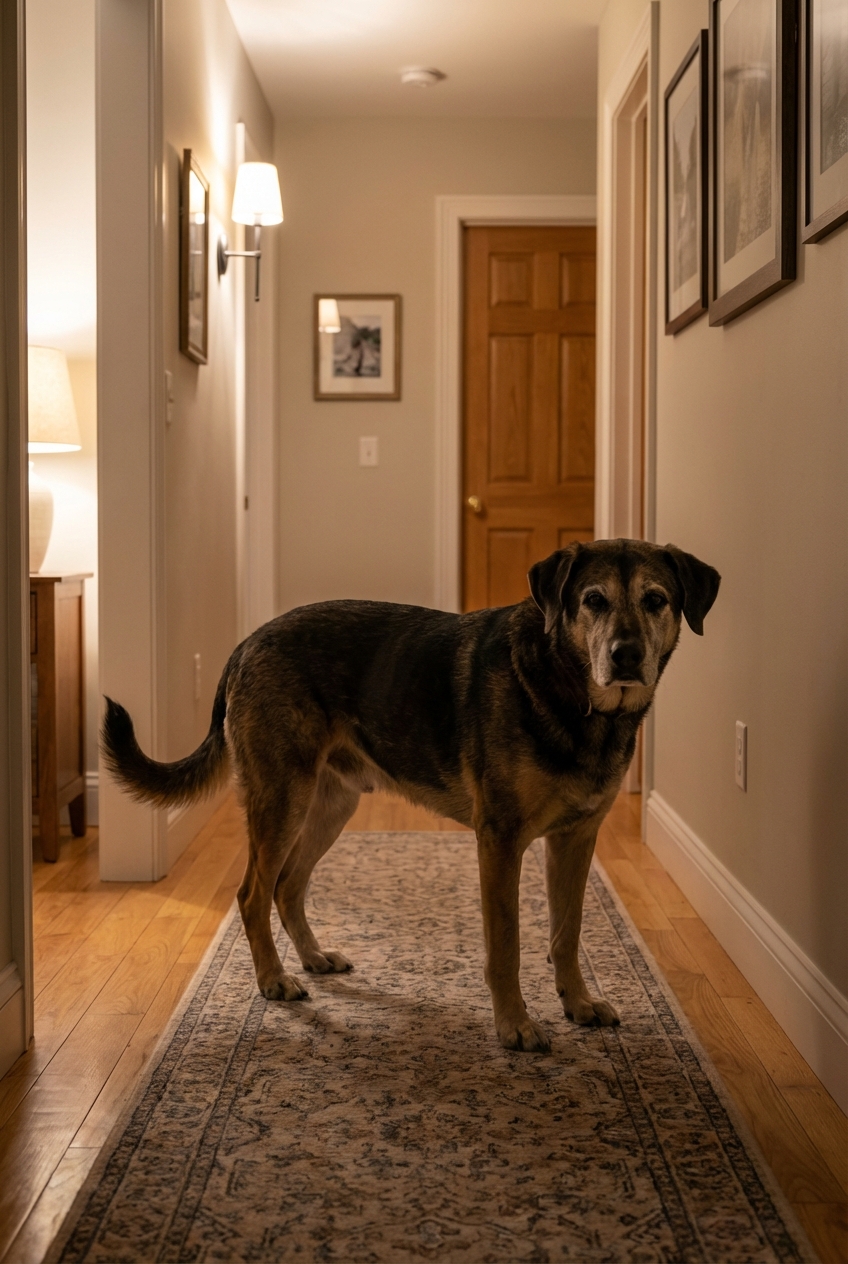
- Use a night light in hallways to reduce confusion.
- Ask your vet before using any calming aids or sleep supports, especially if your dog is on other medications.
2) Make the home easier
- Use non-slip rugs to prevent falls.
- Block off stairs if balance is an issue.
- Keep furniture placement consistent.
- Provide a cozy “home base” bed in a quiet spot.
3) Night safety
- Use baby gates to limit wandering into unsafe areas.
- Block access to pools, stairs, and slick floors at night.
- Consider a harness for steadier support on late-night potty breaks.
- Make sure ID tags are updated and microchip info is current, especially if your dog is starting to door-dart or seem disoriented.
4) Gentle mental exercise
- Short training refreshers like “sit,” “touch,” or “find it.”
- Food puzzles that are easy, not frustrating.
- Scent games with treats hidden in one room.
5) Daily movement
Even a slow, sniffy walk supports circulation and can reduce anxiety. If your dog has arthritis, ask about a pain plan. Pain can make a dog look confused or restless.
6) Nutrition and brain support
There is growing evidence that some senior dogs may benefit from diets formulated for cognitive health and from targeted nutrients that support brain function. The results can be modest and vary by dog, so it is best to choose these with your veterinarian, especially if your dog has other medical conditions.
Your veterinarian may discuss options such as:
- Omega-3 fatty acids (DHA and EPA) for brain and inflammation support
- Antioxidants (often included in senior cognitive diets)
- Medium-chain triglycerides (MCTs) in some veterinary cognitive support foods
If you feed homemade or partially homemade meals, it is especially important to ensure the diet is balanced for a senior dog’s needs. Small upgrades can help, but we always want to avoid nutrient gaps.
Treatment options your vet may discuss
If your veterinarian suspects CCD after ruling out other causes, the plan is often a combination of medical support plus home and routine changes. Depending on your dog and their health history, your vet may discuss:
- Prescription medication options that are sometimes used for CCD, such as selegiline in select cases
- Therapeutic diets formulated for brain aging
- Targeted supplements when appropriate
- Anxiety and sleep support if nighttime restlessness is affecting quality of life
- Rechecks to adjust the plan as symptoms change
The goal is comfort and function, not perfection.
When to seek help fast
Call your veterinarian promptly if you notice any of the following:
- Sudden confusion or behavior change within 24 to 72 hours
- Head tilt, circling, loss of balance, weakness, or seizures
- Not eating, vomiting, severe diarrhea, or signs of dehydration
- Crying, panting, or inability to get comfortable (possible pain)
- Rapid increase in accidents or straining to urinate
CCD usually progresses gradually. Sudden changes often point to a medical issue that needs prompt attention.
Living with CCD
If your checklist results point toward dementia, please know this: you are not failing your dog. Aging can be messy and confusing, for them and for us. What matters most is that you notice the change, track it, and advocate for support.
Progression is variable, but CCD is often gradual. Many dogs do better with a combination of veterinary care, routine, enrichment, and home safety adjustments. The goal is comfort, dignity, and more good days together.