Dogs can grieve after losing a companion. Learn common symptoms, how long grief may last, red flags that need a vet, and practical routines to support appeti...
Article
•
Designer Mixes
Do Dogs Grieve?

Shari Shidate
Designer Mixes contributor
Yes, dogs can grieve. As a veterinary assistant here in Frisco, Texas, I have seen it many times: a dog who once greeted the day with a wag suddenly sleeps more, eats less, and seems to be searching for someone who is not coming home.
Grief in dogs is not “just in your head.” Dogs form strong social bonds with people and other pets, and when those bonds change suddenly due to death, rehoming, divorce, or a family member moving away, many dogs show real behavior and appetite changes. Dogs can also react to our grief and to the schedule changes that often come with a loss.
What grief looks like in dogs
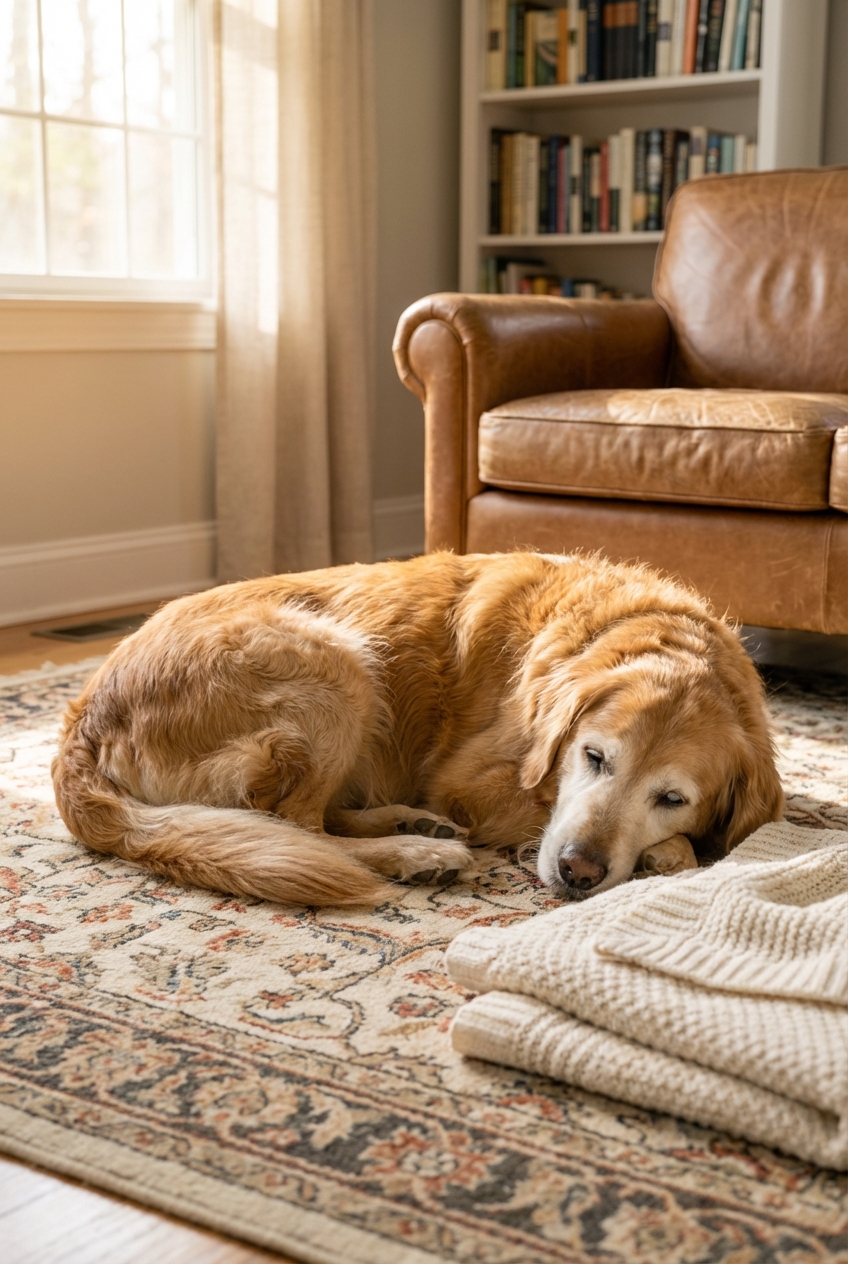
Grief can be subtle, and it can also look a lot like illness. That is why it helps to know common signs and track what you are seeing day to day.
Common signs
- Decreased appetite or picky eating
- Sleeping more, or pacing and restlessness
- Clinginess, following you closely, or increased separation distress
- Vocalizing more than usual (whining, howling)
- Searching behaviors (checking rooms, waiting by doors, sniffing belongings)
- Less interest in play, walks, or favorite toys
- House soiling in a previously house-trained dog
- Changes in grooming behavior (over-licking or reduced self-care)
Some dogs also seem “flat” emotionally, while others become anxious. Both can be normal responses to loss. If signs are sudden, severe, or paired with vomiting, diarrhea, coughing, limping, collapse, or labored breathing, call your vet right away.
Step-by-step: how to help a grieving dog
Your goal is not to force your dog to “get over it.” Your goal is to restore a sense of safety, routine, and connection while gently rebuilding healthy habits.
Step 1: Rule out medical issues
Any sudden change in appetite, energy, sleep, or bathroom habits deserves a veterinary check, especially in senior dogs. Pain, nausea, dental disease, infections, and digestive issues can look a lot like grief. Endocrine issues (including thyroid disease) can also affect energy and behavior.
- If your dog is not eating, contact your vet promptly. As a general guideline, call within 24 hours. Puppies, toy breeds, dogs with diabetes or other medical conditions, and very small dogs may need same-day guidance.
- If you notice vomiting, diarrhea, coughing, limping, collapse, or labored breathing, seek care right away.
Step 2: Keep a steady routine
Dogs find comfort in predictability. Try to keep feeding times, walks, and bedtime consistent. If your household is grieving too, routines can be healing for everyone.
- Feed at the same times daily.
- Keep walks short and easy at first, then gradually add time.
- Offer calm enrichment at predictable times, like a food puzzle after breakfast.
Step 3: Support appetite safely
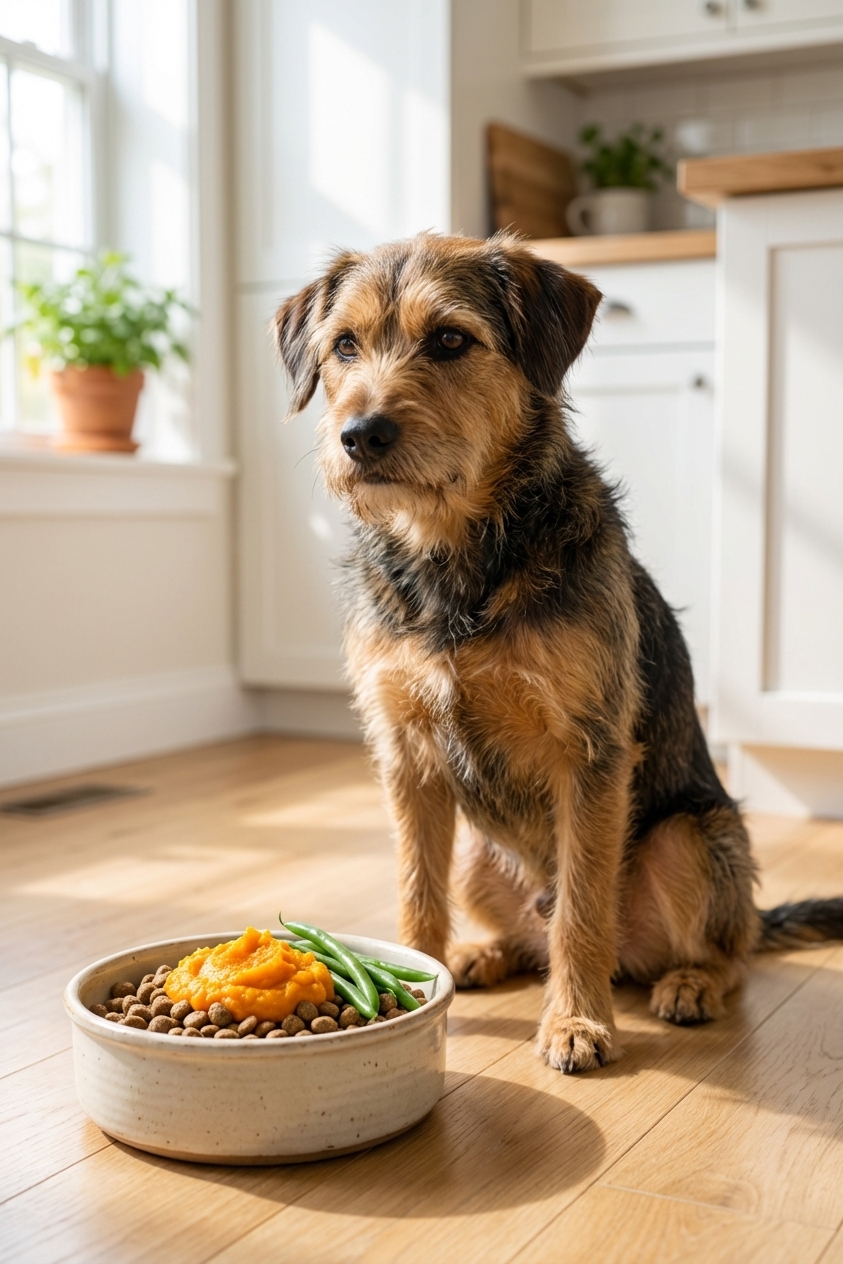
Loss of appetite is one of the most common grief signs. You can encourage eating while still protecting good nutrition.
- Warm food slightly to increase aroma.
- Add a small topper like onion-free, garlic-free low-sodium broth or a spoonful of plain cooked chicken.
- Offer smaller meals more often for a few days.
- Avoid constantly switching foods, which can teach a dog to hold out for something “better.”
- Avoid high-fat toppers and rich table scraps, especially in dogs prone to stomach upset or pancreatitis.
- Keep toxic foods out of reach, including xylitol (birch sugar), grapes, raisins, and cooked bones.
If your dog is on a prescription diet, ask your vet before adding toppers.
Step 4: Increase gentle connection
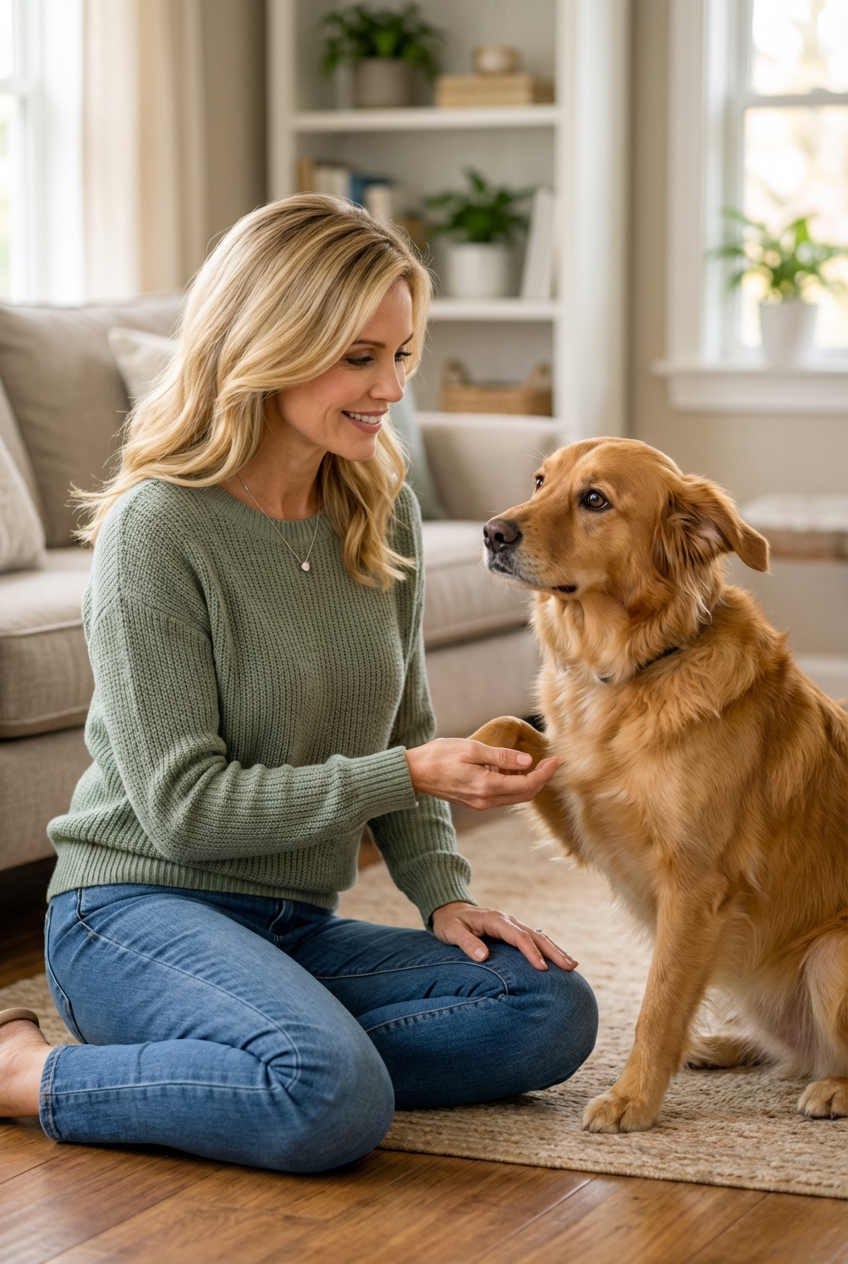
Many grieving dogs need more closeness, not less. Calm touch and quiet together-time can help reduce stress and promote calm.
- Sit with your dog while they eat or rest.
- Add a few short cuddle breaks throughout the day.
- Use slow, relaxed petting instead of high-energy play if your dog seems overwhelmed.
Step 5: Add low-pressure enrichment
Think “low pressure, high reward.” Enrichment gives the brain something healthy to do besides worry.
- Sniff walks: let your dog set the pace and sniff more.
- Lick mats or stuffed Kongs (use safe ingredients and appropriate portions).
- Scatter feeding: toss kibble in the grass or on a snuffle mat.
- Simple training games: touch, sit, down, find it.
Step 6: Help them sleep
Sleep disruption is common during grief. Create a cozy, quiet rest spot and keep evenings calm.
- Dim lights and lower activity an hour before bed.
- Provide white noise if outside sounds trigger alert barking.
- Talk to your vet before using calming supplements, especially if your dog takes medication.
Step 7: Respond to searching kindly
Some dogs look for their companion for days or weeks. Do not scold searching behaviors. Instead, redirect gently.
- Allow a brief sniff of the companion’s bed or blanket if it seems comforting.
- Then offer a routine activity: a short walk, a food puzzle, or a cuddle session.
- Pick up items only if they seem to increase distress.
What not to do
- Do not punish accidents or “clingy” behavior. It increases stress and can slow progress.
- Do not flood your dog with stimulation (dog parks, lots of visitors, long outings) if they seem overwhelmed.
- Do not force interactions with other dogs or people. Let your dog choose.
- Do not ignore sudden symptoms that could be medical just because there was a recent loss.
How long does dog grief last?
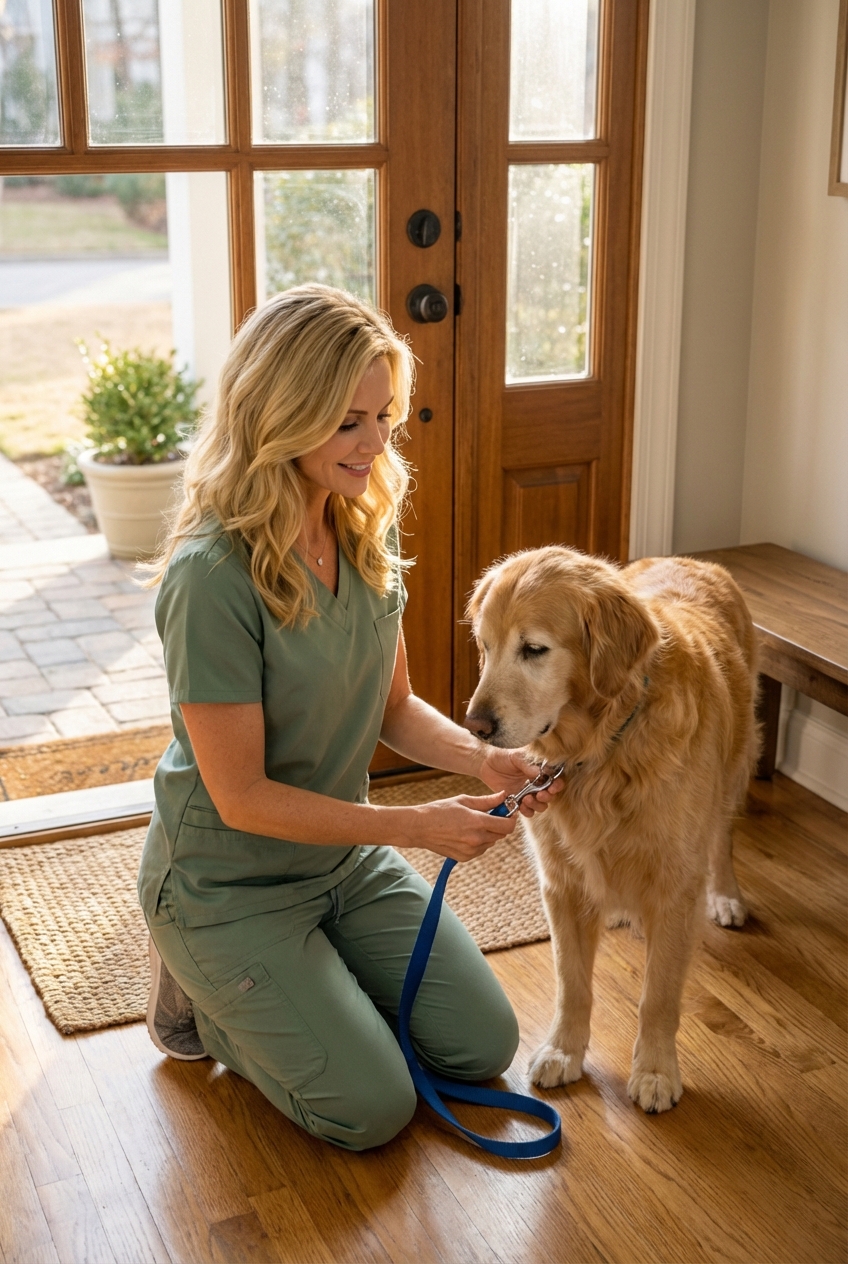
There is no single timeline. Some dogs rebound in a couple of weeks, and some take a few months. Factors that can affect the timeline include:
- How close the bond was
- Your dog’s age and health
- Whether daily routines changed dramatically
- Your dog’s baseline anxiety level
- How suddenly the change occurred
A helpful approach is to watch for small improvements. Is your dog eating a little more? Showing interest in one toy again? Relaxing more quickly after a trigger? Those are meaningful signs of healing.
When to get extra help
Sometimes grief blends into anxiety or depression-like behavior that needs more support.
Call your vet or a behavior pro if you notice:
- No interest in food beyond a day, ongoing weight loss, or dehydration
- Persistent pacing, panting, or inability to settle
- New aggression, snapping, or intense irritability
- Severe separation anxiety (destroying, escaping, self-injury)
- House soiling that does not improve with routine and management
- Symptoms lasting several weeks (about 2 to 4) with little improvement, or sooner if symptoms are intense
Your veterinarian may recommend a medical workup, targeted behavior strategies, and in some cases short-term medication. That is not “giving up.” For some dogs, it is the bridge that helps them return to themselves.
If you are looking for behavior support, ask for a board-certified veterinary behaviorist (DACVB) or a credentialed trainer who uses force-free methods (for example, IAABC or CPDT).
Another dog right away?
It depends. Another dog can be wonderful, but it is not a guaranteed fix for grief. Some dogs perk up with a new companion. Others feel stressed by a new personality in the house when they are already emotionally off-balance.
Consider waiting if:
- Your dog is not eating well or is showing high anxiety
- Your household routine is still chaotic
- You are hoping a new dog will “replace” the one you lost
Consider a careful intro if:
- Your dog generally enjoys other dogs
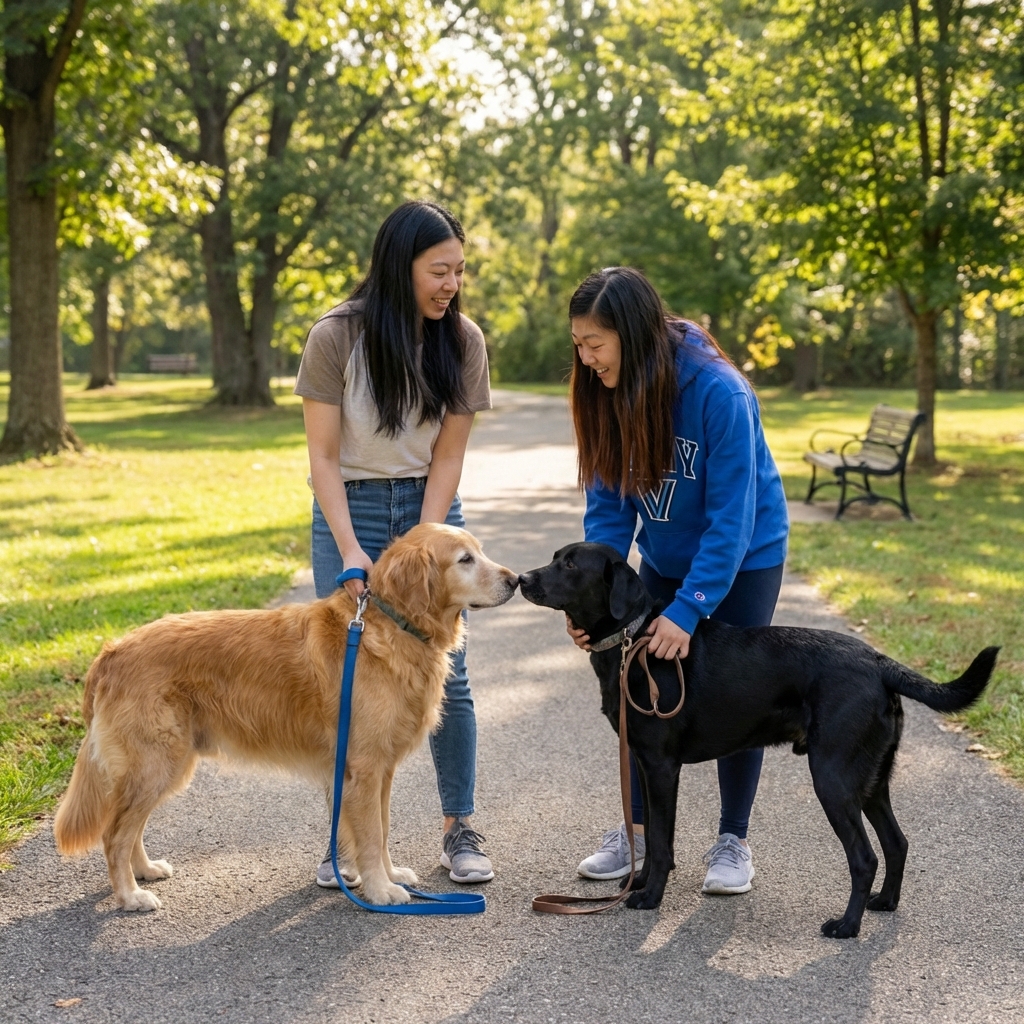
- You can do a meet-and-greet on neutral territory
- You can provide separate spaces and slow integration
What to tell yourself
Grief is love with nowhere to go. Your dog is not being difficult. They are adjusting to a world that changed.
If you are grieving too, be gentle with yourself. The best gift you can give your dog is steady care, a predictable rhythm, and moments of calm connection. Healing rarely happens overnight, but it does happen.
Quick checklist
- Morning: short sniff walk, breakfast, quiet cuddle
- Midday: enrichment (lick mat or puzzle), brief training game
- Evening: gentle walk, dinner, calm time before bed
- All day: watch appetite, stool, energy, and any new symptoms
If you want, take notes for a week. Patterns make it easier for your vet to help if you need extra support.