Cats hide illness well. Learn the most reliable signs your cat may be sick—appetite, vomiting, litter box, breathing, pain, and behavior—plus urgent vs e...
Article
•
Designer Mixes
Do Cats Sweat? How Cats Cool Down

Shari Shidate
Designer Mixes contributor
Cats absolutely can sweat, but not in the way we do. If you have ever felt your cat’s paw prints on a warm surface or noticed slightly damp paw pads (yes, those “toe beans”) during stress, you have seen their version of sweating. Most of the time, though, cats rely on grooming, breathing, and finding cooler spots to keep their body temperature in a safe range.
As a veterinary assistant, I like to remind cat parents of a simple truth: cats are heat-smart, but they are also masters at hiding discomfort. Knowing how cats cool down helps you spot trouble early and keep your feline friend comfortable year-round.
Do cats sweat?
Yes, cats sweat, but their sweat glands are limited and do not cool them efficiently. Most of a cat’s functional (eccrine) sweat glands are found in the paw pads. Cats also have glands associated with hair follicles, but these are not a major cooling tool.
- Paw-pad sweating can happen during heat, stress, fear, or excitement.
- It is usually subtle and easy to miss unless your cat is walking on a smooth surface.
- Because sweating is minimal, it is not a cat’s primary cooling method.
If your cat seems overheated and you are waiting for “sweat” as a sign, you may wait too long. Cats often show heat stress in other ways first.
How cats cool down
Cats have several built-in cooling strategies. Some are physical, and some are behavioral. Most of the time they use a combination of these.
1) Grooming
When cats lick their fur, saliva spreads over the coat and skin. As that saliva evaporates, it creates a cooling effect similar to how sweat evaporating from our skin cools us.
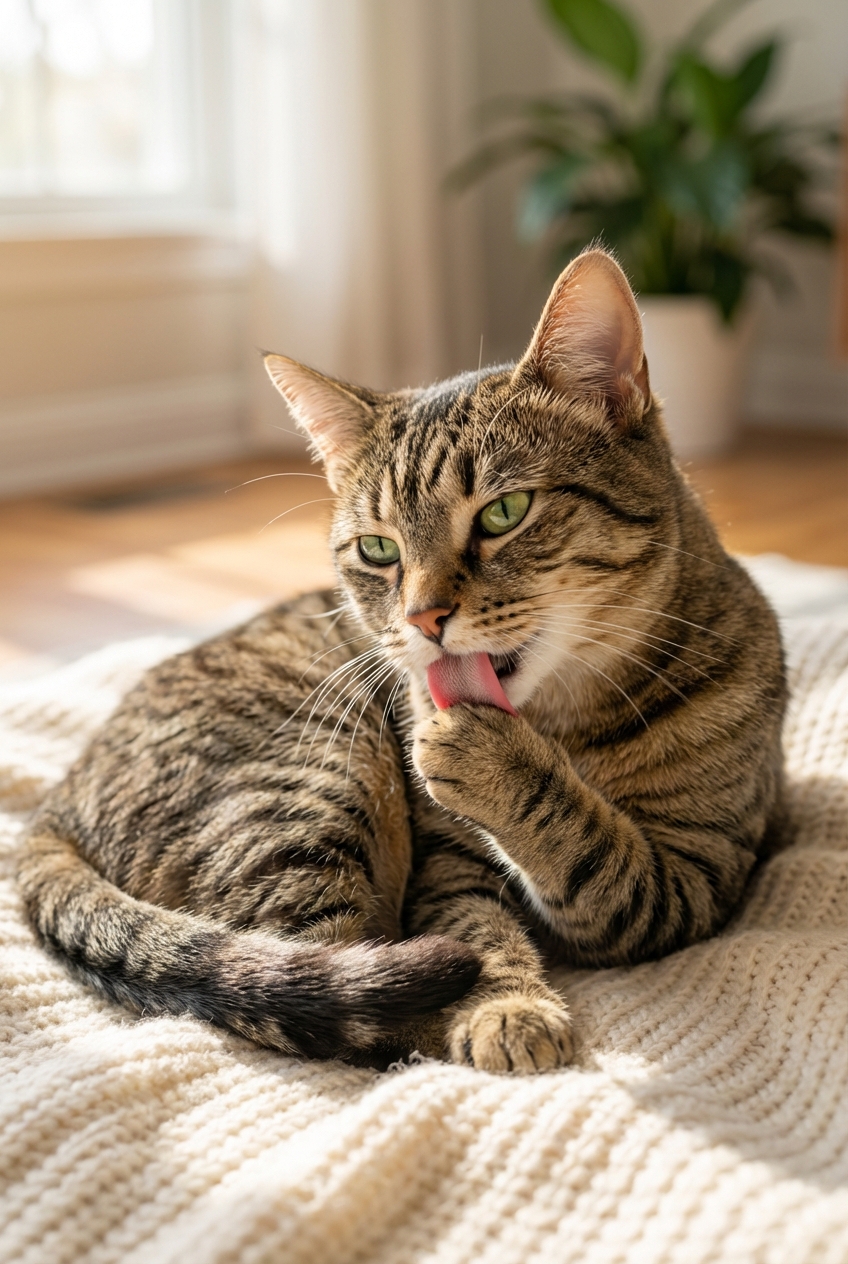
This is one reason cats may groom more in warm weather. If you notice bald spots, irritated skin, scabs, or nonstop licking, that is not “normal summer grooming” and it is worth a vet check to look for anxiety, pain, allergies, or skin disease.
2) Airflow and stretching out
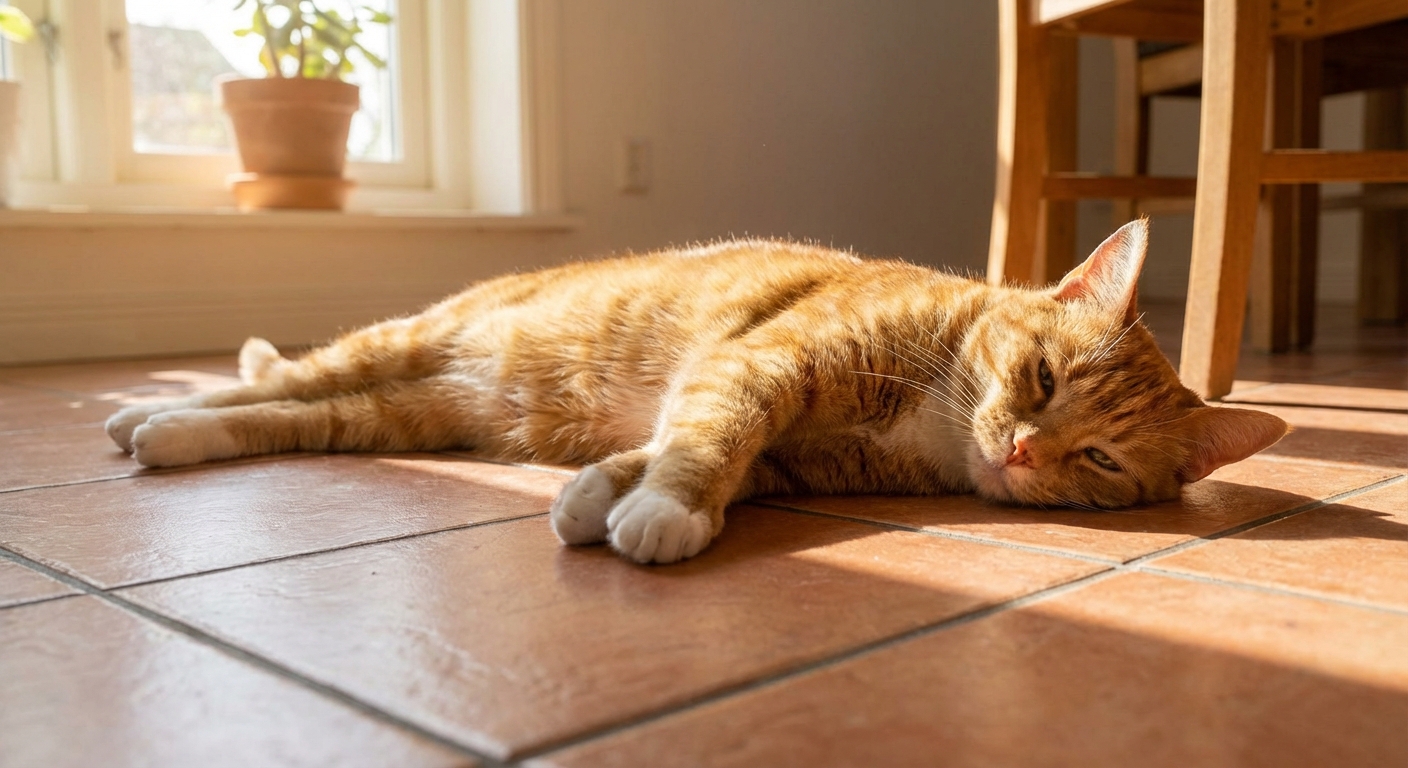
Cats love to sprawl out with their belly exposed, stretch long, or lie with paws extended. This increases the body surface area exposed to air, helping heat move away from the body. You will also see cats choose breezy hallways, near fans, or doorways where air moves.
3) Cool surfaces
Tile floors, bathtubs, shaded spots under beds, and basement areas are popular for a reason. Cats instinctively choose cooler surfaces to pull heat away from their bodies.
4) Panting (a warning sign)
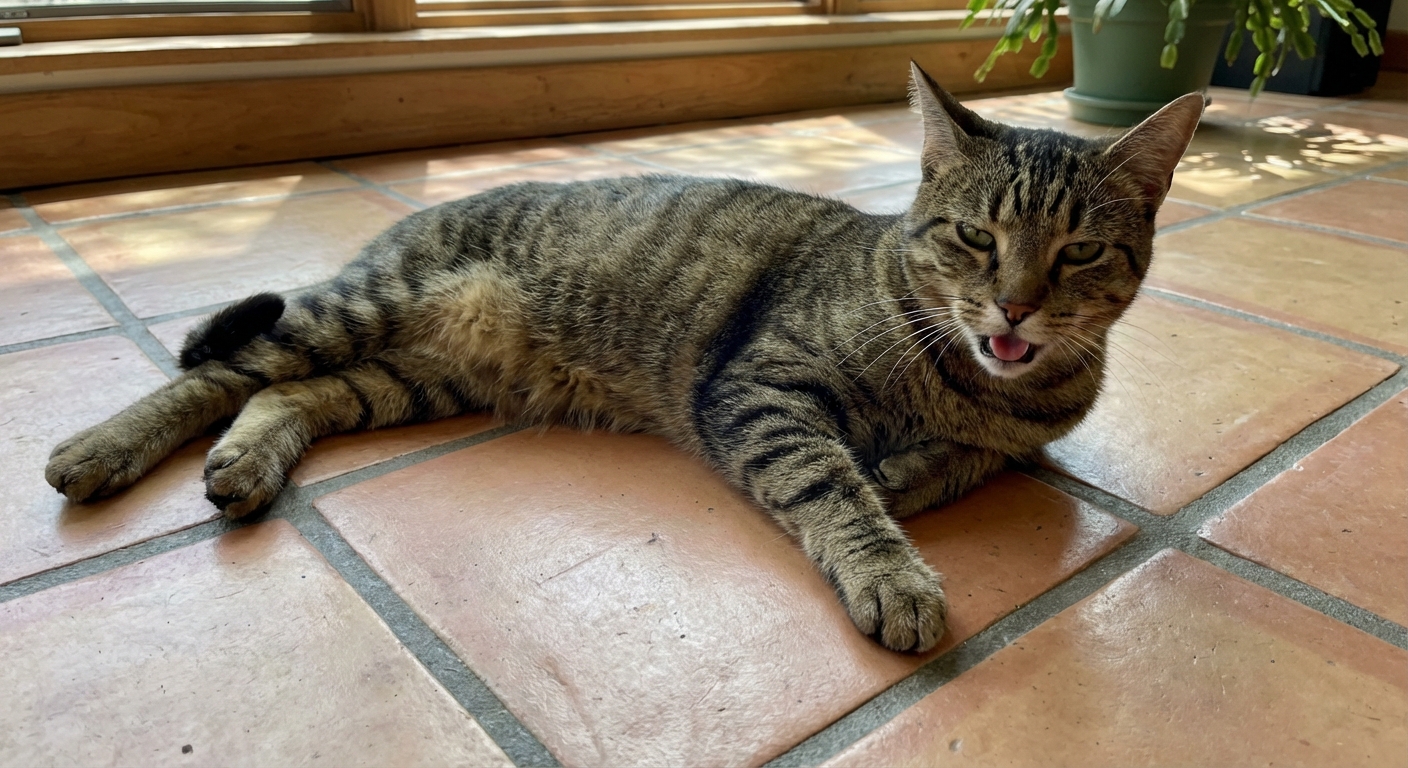
Cats can pant, but it is much less common than in dogs. Some cats may pant briefly after intense play or stress. Persistent panting, panting at rest, or panting with other symptoms can be a red flag.
Important: A panting cat is not “just being cute.” It can be a sign of overheating, stress, pain, respiratory disease, or heart issues. When in doubt, call your veterinarian.
5) Shifting blood flow
Like people, cats may redirect blood flow toward the skin and ears to release heat. You might notice ears feeling warmer to the touch when your cat is hot, but it is not a reliable “test” on its own.
6) Humidity matters
Evaporation (from saliva during grooming) works less effectively in high humidity. On muggy days, cats can struggle more even if the temperature does not seem extreme.
Signs your cat is too hot
Cats tend to get quiet and withdrawn when they are uncomfortable, so look for subtle changes.
- Seeking cool places and not wanting to move
- Restlessness, agitation, or acting “off”
- Faster breathing or open-mouth breathing
- Drooling or an unusually wet mouth
- Bright red or very pale gums
- Vomiting or diarrhea
- Weakness, wobbliness, or collapse
Heatstroke is a medical emergency. If your cat has continuous open-mouth breathing, seems disoriented, collapses, has seizures, has very dark red gums, or is hard to wake up, seek emergency veterinary care immediately.
Why some cats overheat faster
Any cat can overheat, but certain cats have less “cooling wiggle room.”
- Brachycephalic breeds (like Persians and Himalayans): shorter nasal passages can make breathing less efficient for cooling.
- Long-haired or heavily matted coats: mats can trap heat and prevent normal airflow to the skin.
- Overweight cats: extra body fat acts like insulation.
- Kittens and senior cats: may not regulate temperature as well.
- Heart or respiratory disease: reduced tolerance for heat and exertion.
- Stressed cats: stress can increase temperature and trigger paw-pad sweating and panting.
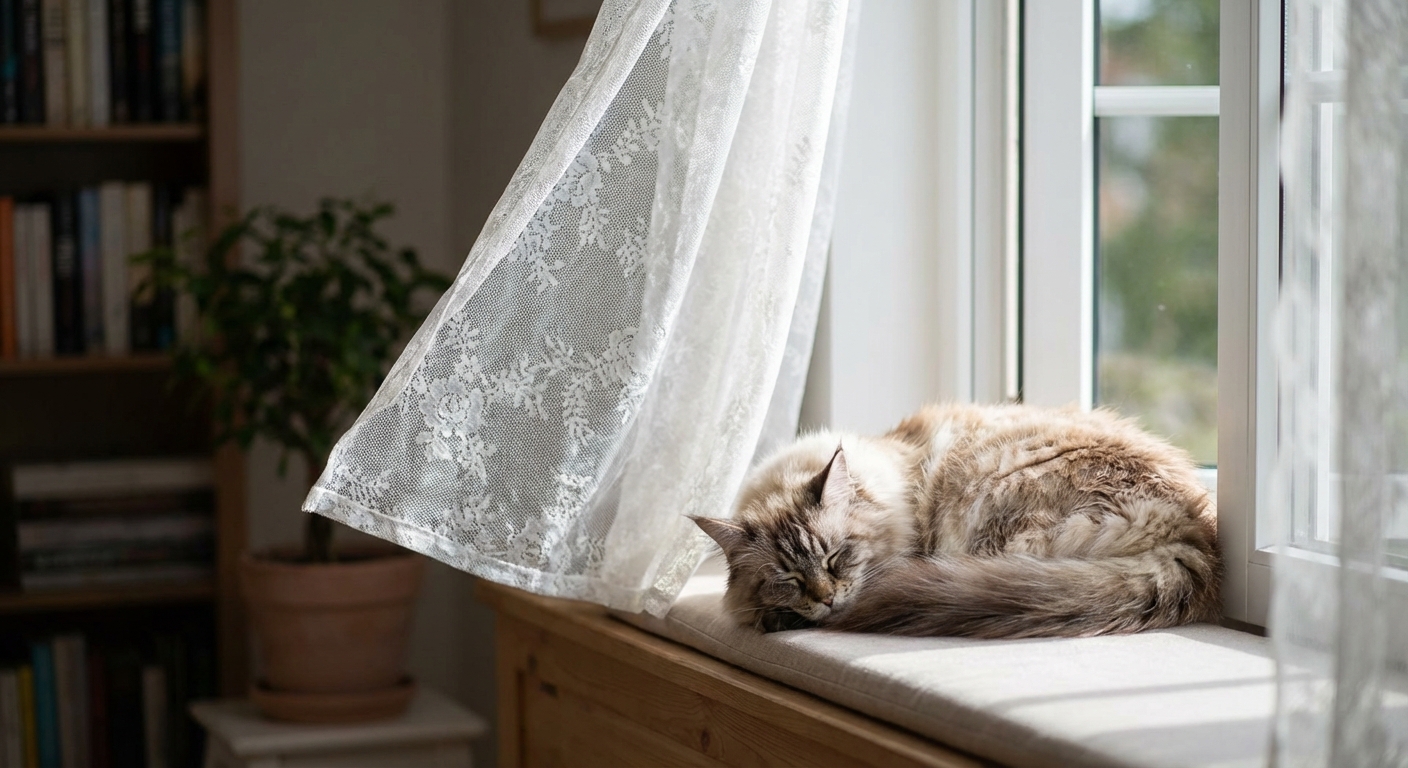
If your cat fits one of these categories, be proactive about keeping the environment cool and monitoring during hot months.
How hot is too hot?
There is no single “magic number,” because coat type, age, weight, health, airflow, and humidity all matter. In general, if your home is consistently above 80 to 85°F (about 27 to 29°C), it is smart to add cooling support and keep a closer eye on higher-risk cats. If it feels hot and still to you, it can be too much for them too.
Safety note: Never leave a cat in a parked car, a closed garage, a sunroom with poor airflow, or a carrier sitting in the sun. Temperatures can rise fast, even on “mild” days.
Help your cat cool down
You do not need fancy gadgets to make a big difference. A few practical steps can keep your cat comfortable and safe.
At home
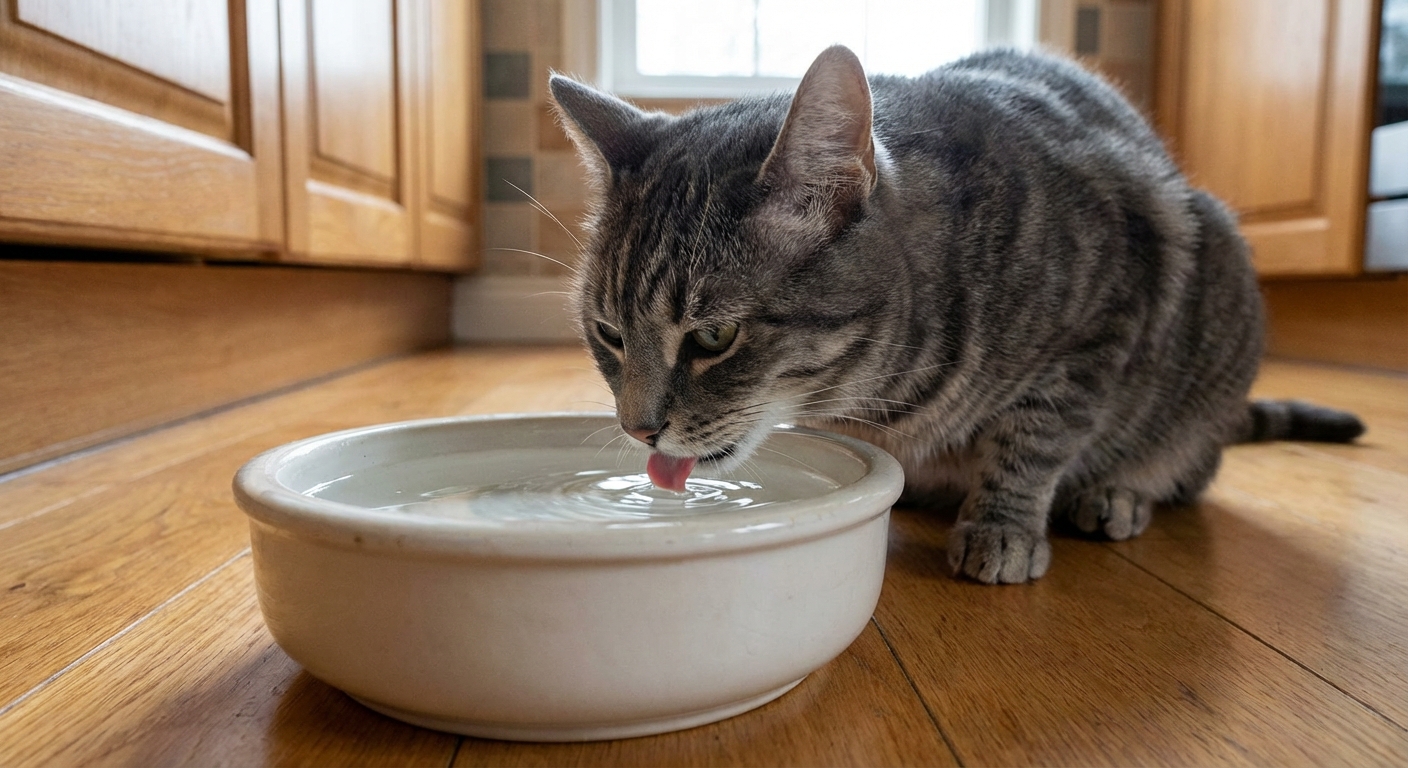
- Keep water easy to find: offer multiple bowls, refresh often, and consider a cat water fountain if your cat prefers running water.
- Use cool surfaces: provide access to tile, a cooling mat, or a lightly dampened towel for lying on.
- Improve airflow: fans can help, but make sure cords are safe and your cat can move away if they want.
- Close blinds during peak sun: reduce greenhouse heating in sunny rooms.
- Groom regularly: brushing removes loose undercoat. Never shave a cat unless your veterinarian recommends it for medical reasons.
- Schedule playtime wisely: exercise in the morning or evening instead of the hottest part of the day.
If you think your cat is overheating
If your cat is responsive but clearly too warm, move them to a cooler area and call your vet for guidance. While you are arranging care, you can:
- Offer small amounts of cool water (do not force).
- Use cool to tepid (not icy) damp cloths on paws, belly, and ears.
- Let them rest in front of a fan.
Avoid ice-cold water or ice baths unless your veterinarian specifically instructs you to do so. Extreme cold can cause stress, shivering, and blood vessel constriction, which can make cooling less effective.
FAQs
Why are my cat’s paws sweaty?
Sweaty paw pads are usually linked to stress or heat. A car ride, a vet visit, a new pet, or even loud guests can trigger paw-pad sweating. If it happens often or alongside vomiting, hiding, or litter box changes, talk with your veterinarian to rule out medical causes and to discuss stress reduction.
Do cats cool down by sweating like dogs pant?
Not really. Dogs primarily cool themselves by panting, and they have eccrine sweat glands on their paw pads, but they do not meaningfully sweat over most of the body. Cats cool mostly through grooming, seeking cool environments, and small adjustments in breathing. Panting in cats is more of a warning sign than a normal everyday cooling strategy.
Can indoor cats get heatstroke?
Yes. Indoor cats can overheat if the home is warm, ventilation is poor, water access is limited, or they get trapped in a hot space like a sunroom, laundry room, or garage.
Takeaway
Cats do sweat, but only a little, mostly through their paw pads. Your cat’s real cooling power comes from grooming, choosing cool spots, and minimizing activity when it is hot. The best thing you can do is make cooling easy: fresh water, shade, airflow, and a calm environment.
If you ever see continuous open-mouth breathing, heavy panting at rest, collapse, seizures, or severe lethargy, do not wait it out. Heat-related illness can escalate quickly, and your veterinarian is your best partner in keeping your cat safe.