A practical guide to caring for hairless cats: skin checks, warming and bedding, wipe-downs, bathing routines, ear/nail/teeth care, sun safety, and when to c...
Article
•
Designer Mixes
Do Cats Get Cold? Signs Your Cat Is Too Cold and How to Help

Shari Shidate
Designer Mixes contributor
Cats look cozy and self-sufficient, but yes, they can absolutely get cold. In clinic, I often remind pet parents that cats are masters at hiding discomfort. A chilly cat might not cry or shiver dramatically. Instead, you will see subtle changes in posture, behavior, and where they choose to rest.
This guide will help you spot the signs your cat is too cold, understand which cats are most at risk, and take practical steps to warm them safely at home.
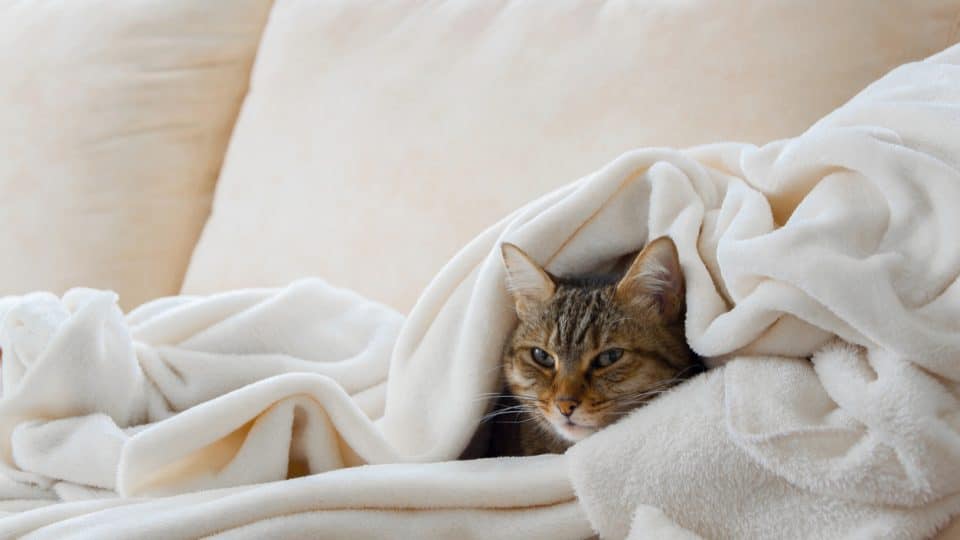
Do cats get cold?
Most indoor cats are comfortable in roughly the same temperature range as humans. Many cats may start to feel chilly when indoor temperatures drop into the low 60s Fahrenheit, but tolerance varies a lot based on coat type, body condition, age, health, and what they are acclimated to.
Outdoor cats face a higher risk because wind, rain, and snow pull heat away from the body quickly. Even a thick coat is not a guarantee of warmth when temperatures stay low for extended periods.
Normal cat temperature
A cat’s normal body temperature is generally around 100.4 to 102.5 degrees Fahrenheit. If your cat’s temperature drops, the body prioritizes vital organs, and the paws, ears, and tail may feel colder first.
What is too cold?
For most healthy indoor cats, a home that feels comfortable to you is usually fine for them too. Once temperatures slide cooler, especially overnight, you may notice more heat-seeking behavior. For outdoor conditions, the number matters less than the combination of wind, wetness, and duration of exposure.
If you are unsure, use your cat’s behavior as your guide and make sure they always have access to a warm, draft-free resting spot.
Signs your cat is too cold
Some cats shiver, but many show quieter signs. Watch for a cluster of changes rather than a single symptom.
- Seeking heat: Camping out on vents, near space heaters, on electronics, or in sunbeams more than usual.
- Tight, tucked posture: Curling into a small ball, paws tucked under, tail wrapped closely.
- Cold ears, paws, or tail tip: Especially noticeable in short-haired or hairless cats.
- Shivering or trembling: A clear sign they are trying to generate heat. Shivering can also occur with pain, fever, anxiety, or illness, so persistent shivering deserves a call to your vet even if your home feels warm.
- Slower movement: Hesitation to walk on cold floors, stiffness, or reduced activity.
- Clinginess or hiding: Some cats get unusually needy, others retreat to enclosed spaces like closets.
- Reduced appetite: Cold stress can affect appetite, but appetite changes are also nonspecific and can signal illness. If a cat is skipping meals or seems “off,” do not assume it is only the temperature.
- Vocalizing: Restlessness, meowing, or agitation can be a sign of discomfort.
If your cat is lethargic, weak, disoriented, breathing abnormally, or their gums look pale, treat it as urgent.
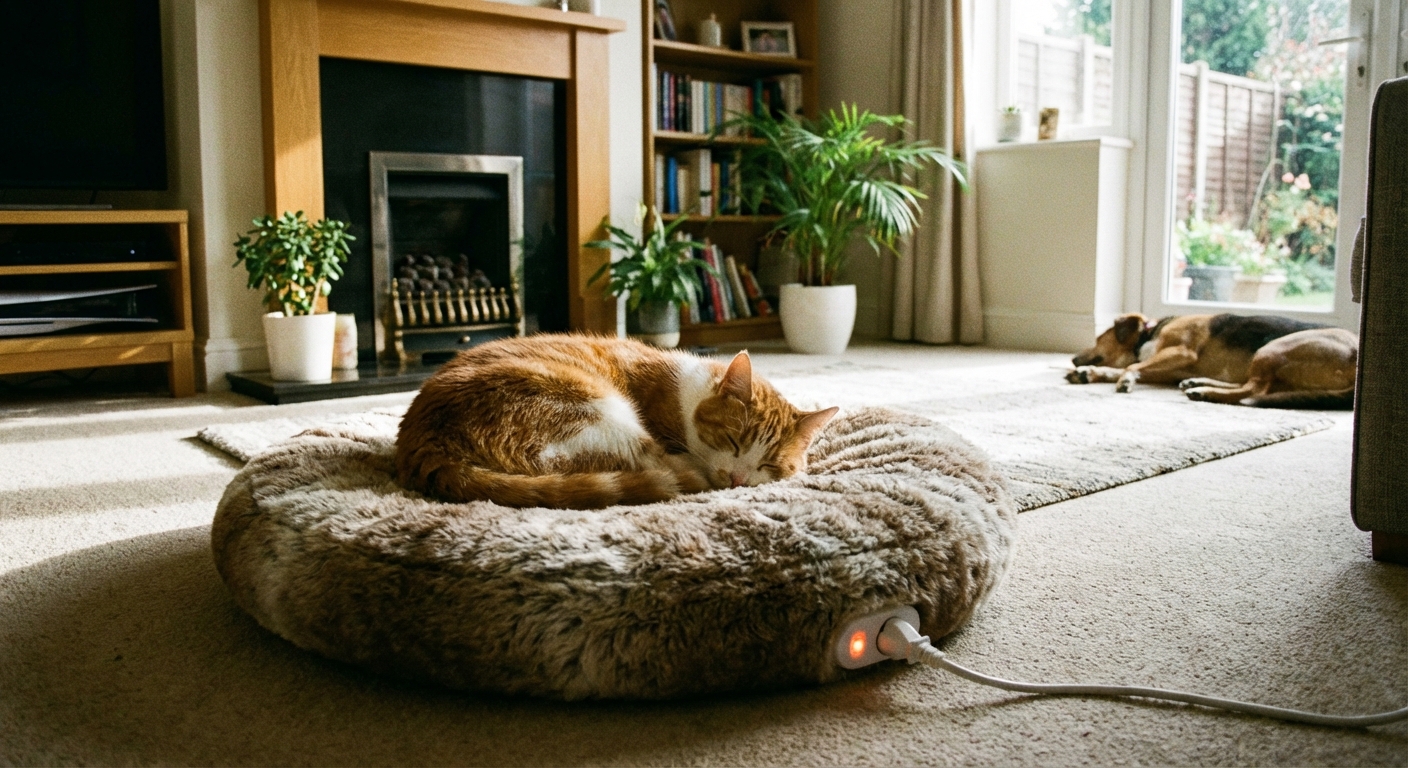
Hypothermia warning signs
Hypothermia occurs when body temperature drops below normal. It can happen faster than most people expect, particularly if a cat is wet or trapped outdoors.
As a practical guideline, a temperature below about 99 degrees Fahrenheit is concerning, and risk increases the lower it goes. Only take a rectal temperature if you are trained or comfortable doing so and your cat is stable enough to handle it safely. If you are not sure, do not wrestle a cold or weak cat to get a number. Focus on gentle warming and call a veterinarian.
Red flags
- Severe lethargy or inability to stand
- Weak pulse or very slow heart rate
- Slow, shallow breathing
- Glassy eyes, confusion, or unresponsiveness
- Very cold extremities and overall cool body
- Collapse
Safety note: If you suspect hypothermia, start gentle warming and contact an emergency veterinarian right away. Avoid rapid heating methods. They can worsen circulation problems and can cause burns.
Who gets cold easier?
Some cats are naturally more vulnerable to cooler temperatures, even indoors.
- Kittens: Small bodies lose heat quickly and they have less ability to regulate temperature.
- Senior cats: Reduced muscle mass and slower circulation can make staying warm harder.
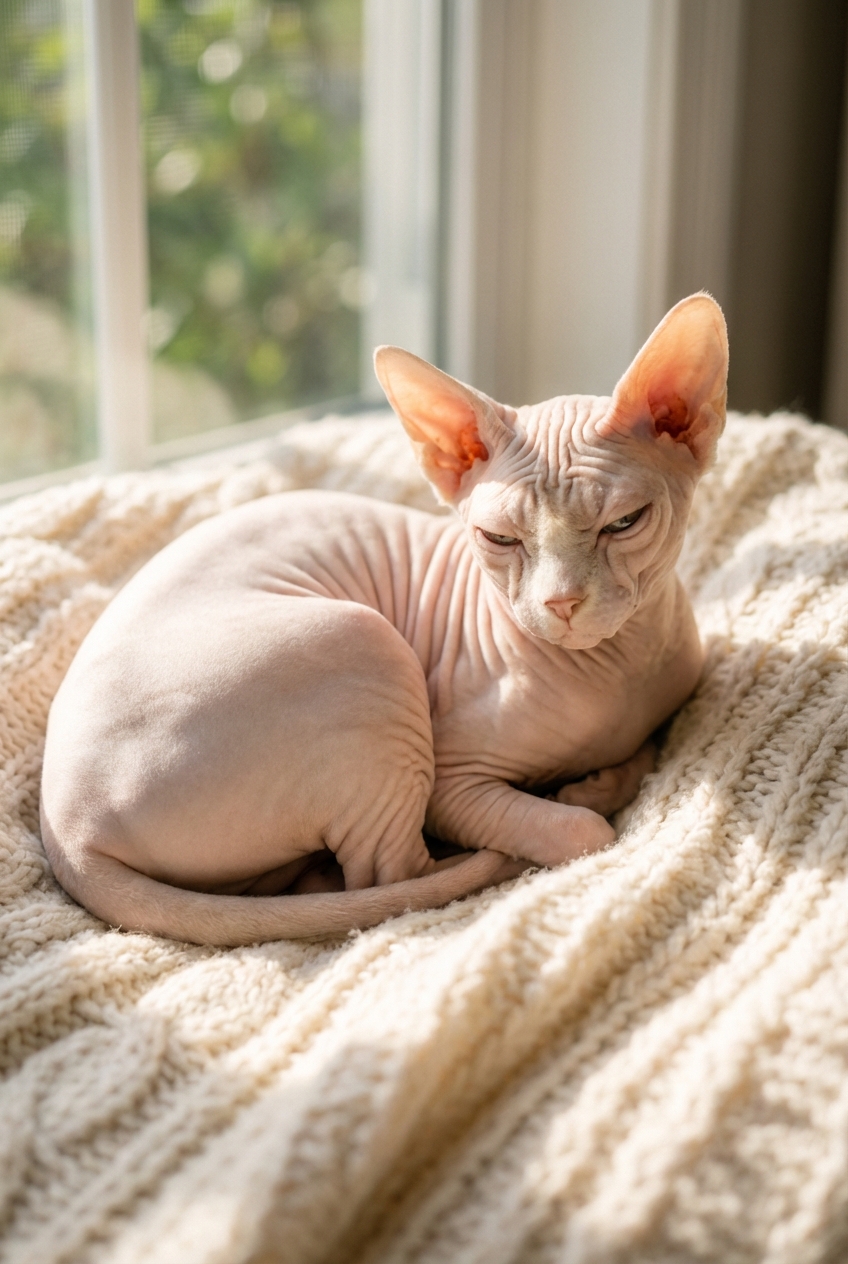
- Short-haired or hairless cats: Less insulation, especially on the belly and legs.
- Small or lean cats: Less body fat and muscle to retain heat.
- Cats with chronic illness: Kidney disease, diabetes, arthritis, and other conditions can affect comfort, energy, and mobility.
- Cats treated for hyperthyroidism: After treatment, some cats run cooler than they used to. If you notice new cold-seeking behavior, it is worth mentioning at their recheck.
- Post-surgery cats: Anesthesia and shaving can reduce body heat temporarily.
- Wet cats: After bathing or getting caught in rain, heat loss accelerates.
Warm a cold cat safely
The goal is gentle, steady warmth. Think cozy and gradual rather than hot and fast.
1) Make a warm nest
- Set up a quiet bed away from drafts.
- Use a fleece blanket or a covered cat cave to trap warmth.
- Choose a raised bed if your floors are cold, since heat is lost to hard surfaces.
2) Add safe heat
- Heating pad: Only use a pet-safe heating pad on a low setting, and place a thick towel on top. Make sure your cat can move away from it. Never place heat under a cat who cannot reposition easily, such as a sedated or post-op cat.
- Microwavable heat disk: Follow package directions and wrap it in a towel before offering it.
- Warm room: A small room warmed to a comfortable level can help, especially overnight.
Avoid: hot water bottles directly on skin, electric blankets not designed for pets, and placing a cat too close to a space heater. Burns can happen quickly, especially in older cats or those with decreased sensation.
3) Support hydration and eating
- Offer fresh water. Dehydration can make it harder for the body to maintain normal circulation and temperature.
- Consider a slightly warmed wet meal. Warmed food smells stronger and can encourage eating. Make sure it is just warm, not hot.
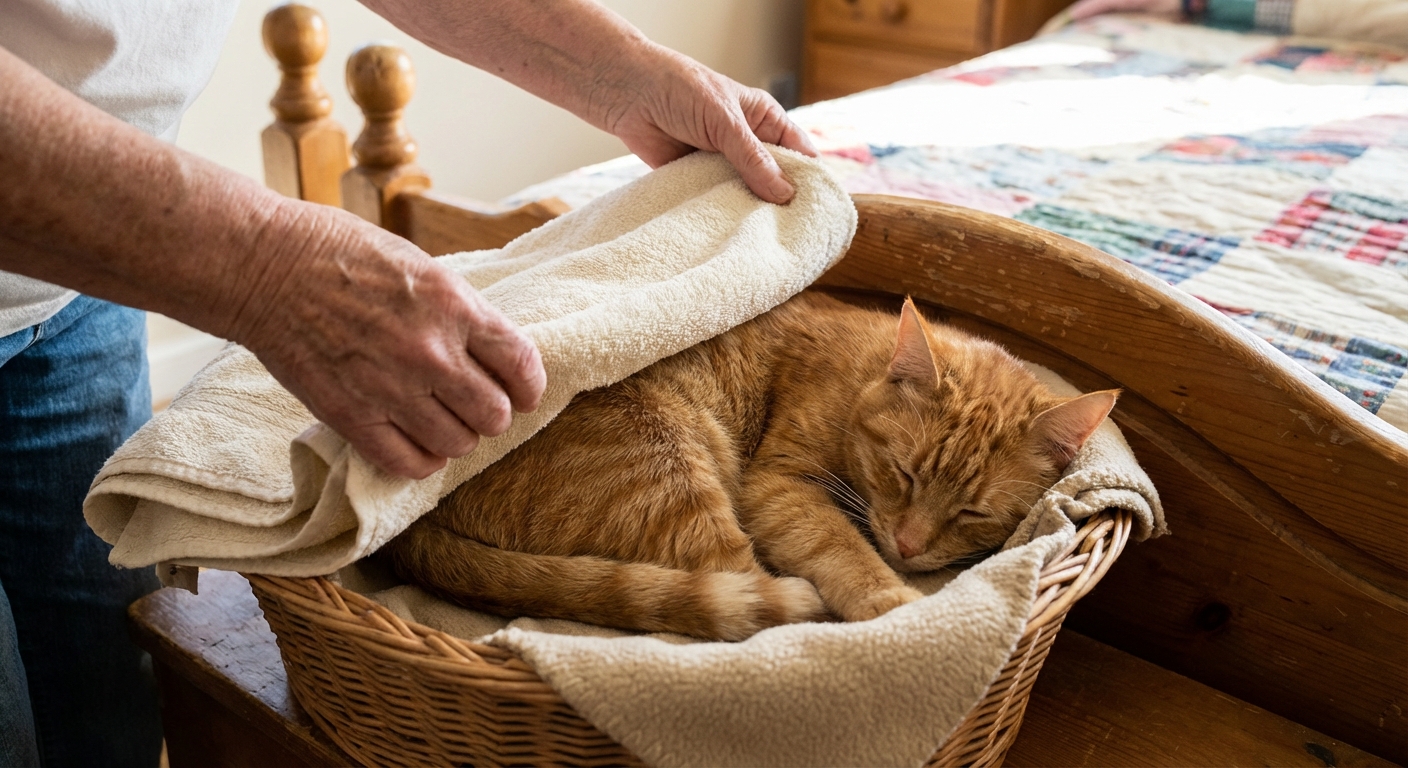
4) Dry them fully
- Gently towel-dry first.
- If you use a hair dryer, keep it on low heat, at a distance, and stop if your cat shows stress.
Cat sweaters
For some cats, especially short-haired or hairless breeds, a well-fitting sweater can help. For others, it is stressful or unsafe. If you try clothing, keep these tips in mind:
- Fit matters: It should be snug but not tight, and should not restrict movement or breathing.
- Choose soft, breathable fabric: Avoid itchy seams.
- Supervise at first: Some cats chew fabric or get limbs caught.
- Skip it overnight unless your veterinarian specifically recommends it and your cat tolerates it well.
Outdoor and stray cats
If you care for community cats or your cat goes outside, warmth and shelter are essential during cold snaps.
Outdoor shelter basics
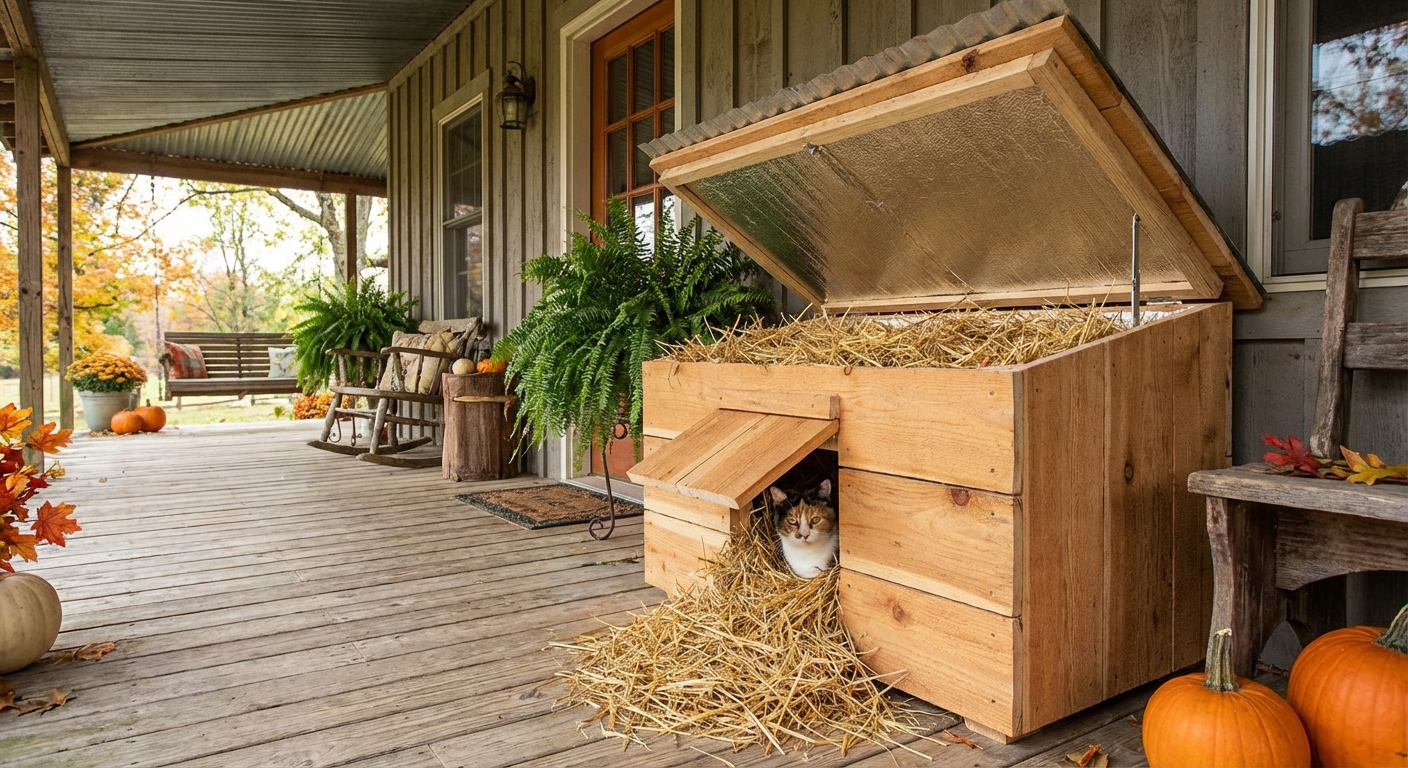
- Use a dry, wind-blocking shelter with a small entrance.
- Insulate with straw rather than blankets. Straw stays drier and provides better insulation.
- Elevate the shelter off the ground if possible.
- Provide unfrozen water and check it often.
Frostbite basics
Frostbite most often affects ear tips, toes, and the tail tip. You may see pale or gray skin, swelling, blisters, or areas that become dark over time. Frostbite can be painful, even if a cat initially acts stoic.
- Bring the cat into a warm, dry environment.
- Do not rub the area.
- Call a veterinarian urgently for guidance and treatment.
Quick home checklist
- My cat has a draft-free sleeping spot.
- They can choose between warmer and cooler areas.
- I am not relying on unsafe heat sources.
- I am watching for behavior changes like tight curling, hiding, or shivering.
- For older or ill cats, I am extra attentive during colder nights.
When to call the vet
Contact your veterinarian promptly if your cat shows any of the following:
- Persistent shivering
- Marked lethargy, weakness, or disorientation
- Cold body plus pale gums
- Breathing changes
- Concern for hypothermia after being outdoors, wet, or exposed to cold for hours
- Not eating, vomiting, or other signs of illness along with heat-seeking behavior
And if your cat seems cold more often than expected, even in a comfortable home, it is worth a checkup. Pain, weight loss, and medical conditions (including changes after hyperthyroidism treatment) can affect how well they tolerate temperature shifts.
Bottom line
Yes, cats get cold, and the signs are not always obvious. Warm bedding, fewer drafts, safe supplemental heat, and extra attention for kittens, seniors, and short-haired cats can make a real difference. If you ever suspect hypothermia, start gentle warming and call a veterinarian immediately.
Small, practical changes, like blocking drafts and upgrading their sleeping spot, add up to a more comfortable winter for your cat.