Stop fleas fast with a simple 3-part plan: use cat-safe medication, clean your home to break the life cycle, and prevent re-infestation for months. Avoid uns...
Article
•
Designer Mixes
Diagnose and Treat Fleas on Cats at Home

Shari Shidate
Designer Mixes contributor
As a veterinary assistant here in Frisco, Texas, I can tell you one thing with confidence: fleas are sneaky. Many cats have fleas long before you ever spot one. The good news is that you can often suspect (and sometimes fairly confidently confirm) fleas at home, as long as you know what to look for and when it is time to call your veterinarian. Other skin issues like allergies , mites , or ringworm can look similar, so when in doubt, your vet can help you sort it out quickly.
This guide walks you through safe, practical steps to check for fleas, help your cat feel better fast, and stop the life cycle so the problem does not keep coming back.
How to tell if your cat has fleas
Fleas are tiny, fast, and great at hiding in a cat’s coat. Most of the time you are looking for clues rather than the fleas themselves. It is also very common for cats to have big symptoms with only a few fleas, especially if they have flea allergy dermatitis .
Common signs of fleas
- Frequent scratching or licking, especially around the neck, base of the tail, belly, or inner thighs
- Small scabs or crusts, often along the back (this can be “miliary dermatitis,” a common flea allergy pattern)
- Hair loss from over-grooming
- Restlessness or difficulty settling down
- Pale gums or low energy in kittens, which can signal anemia from heavy flea feeding
The at-home flea comb test
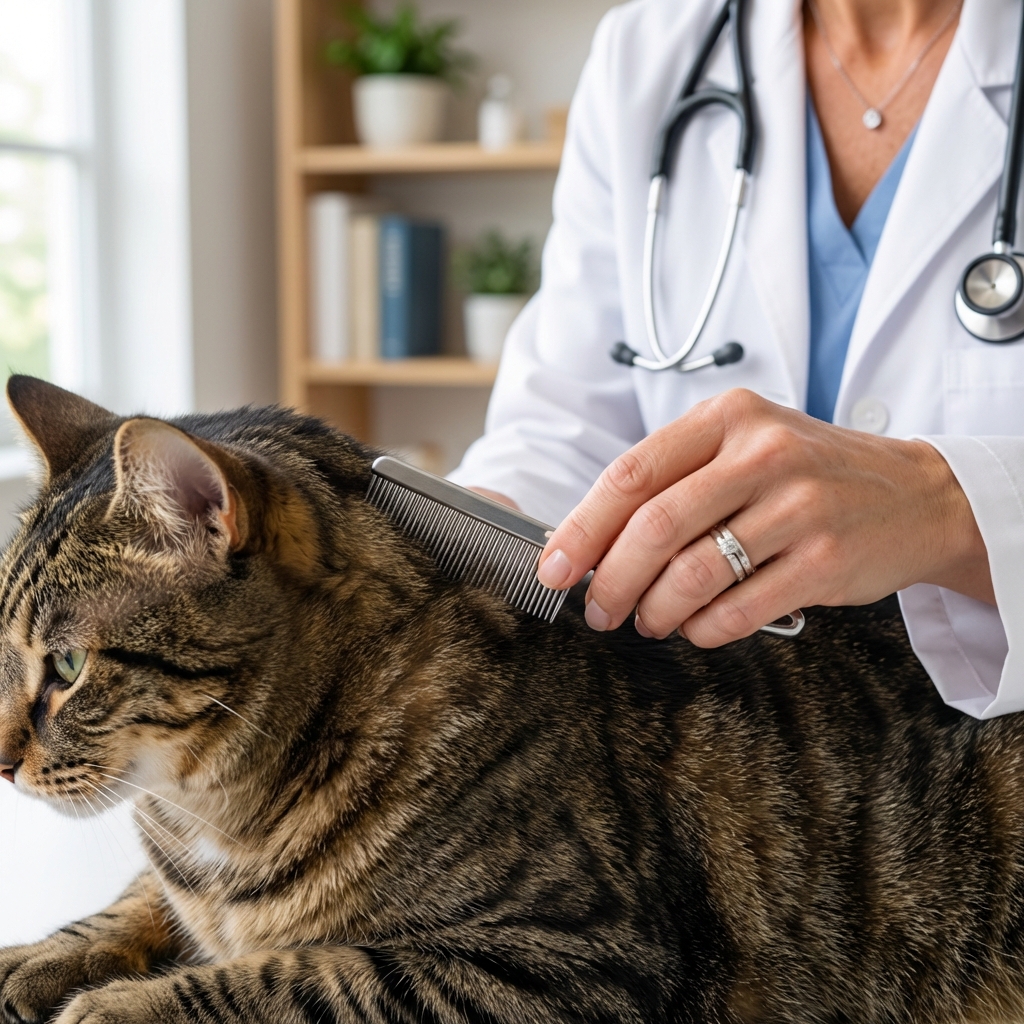
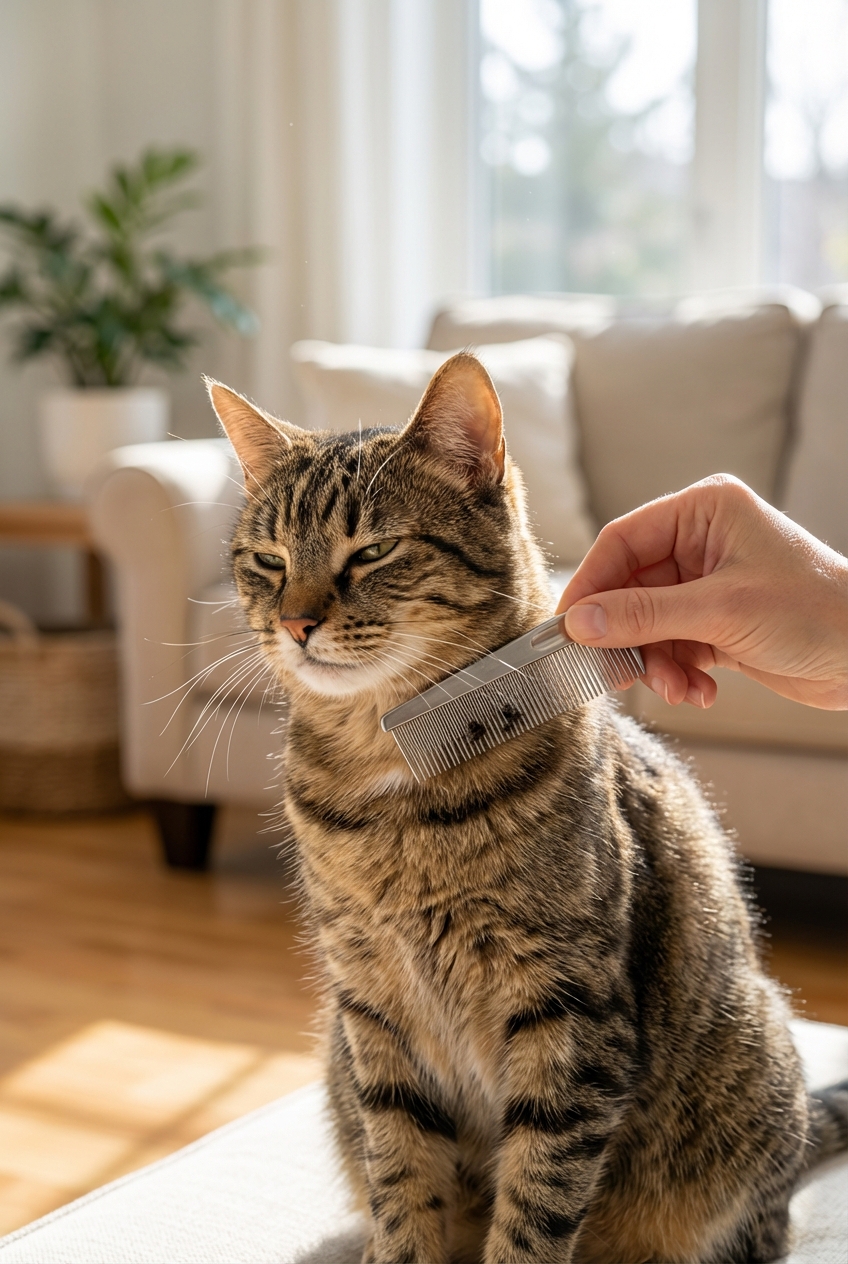
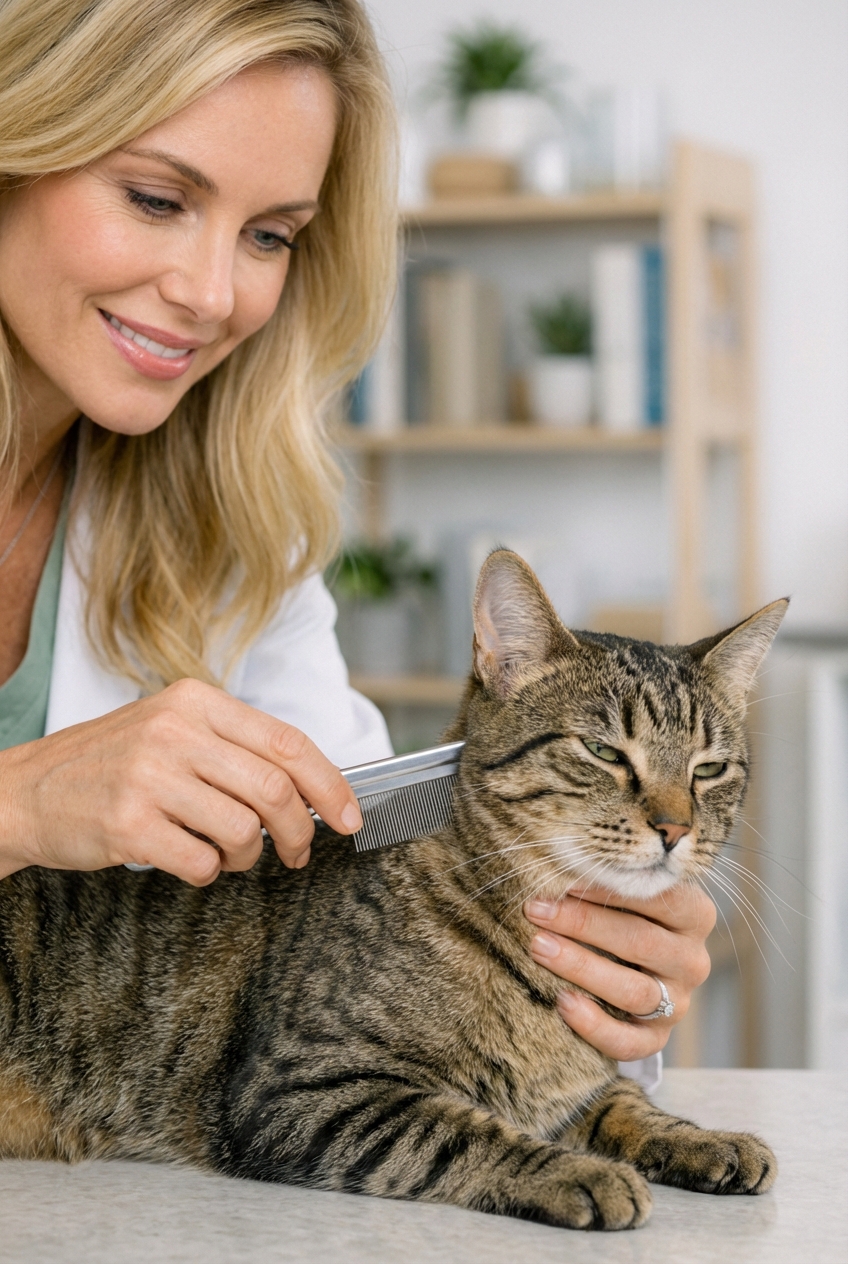
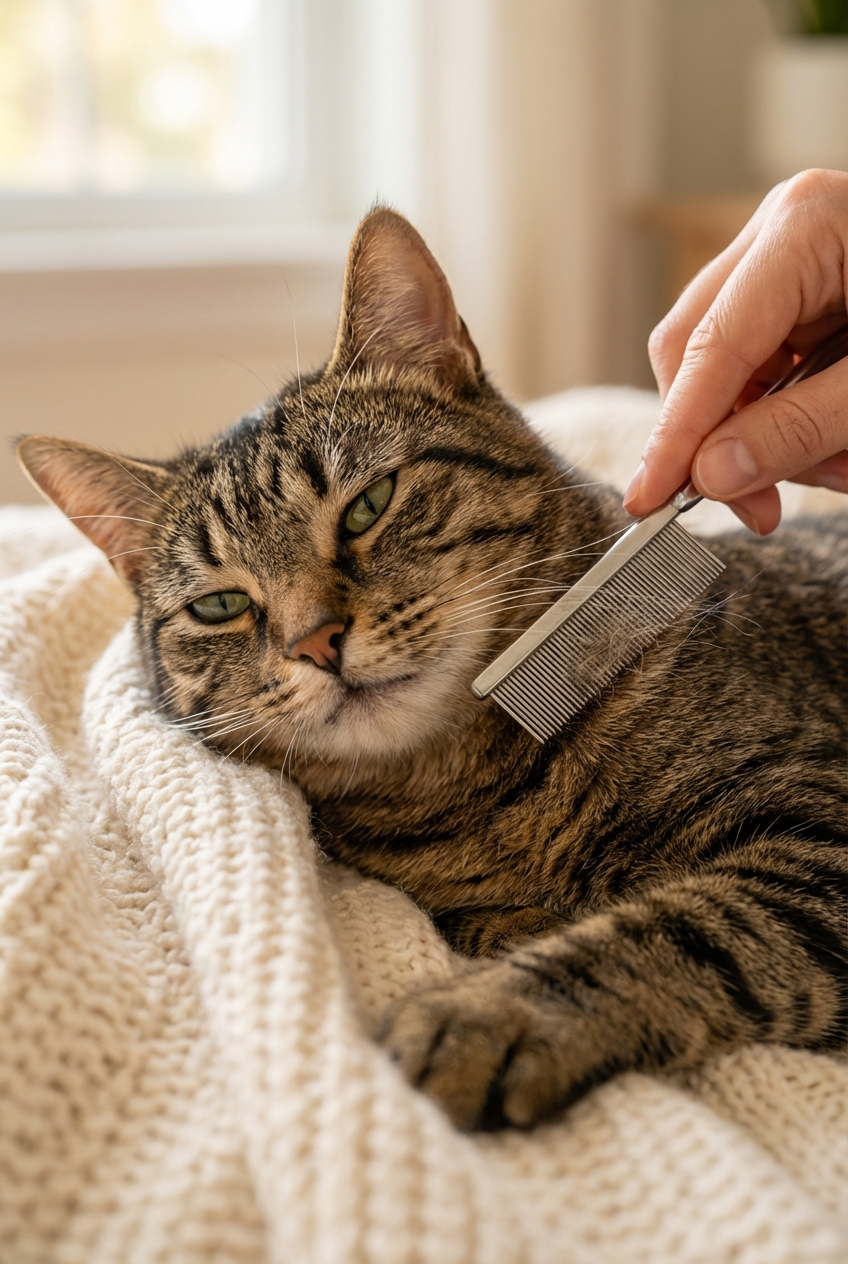
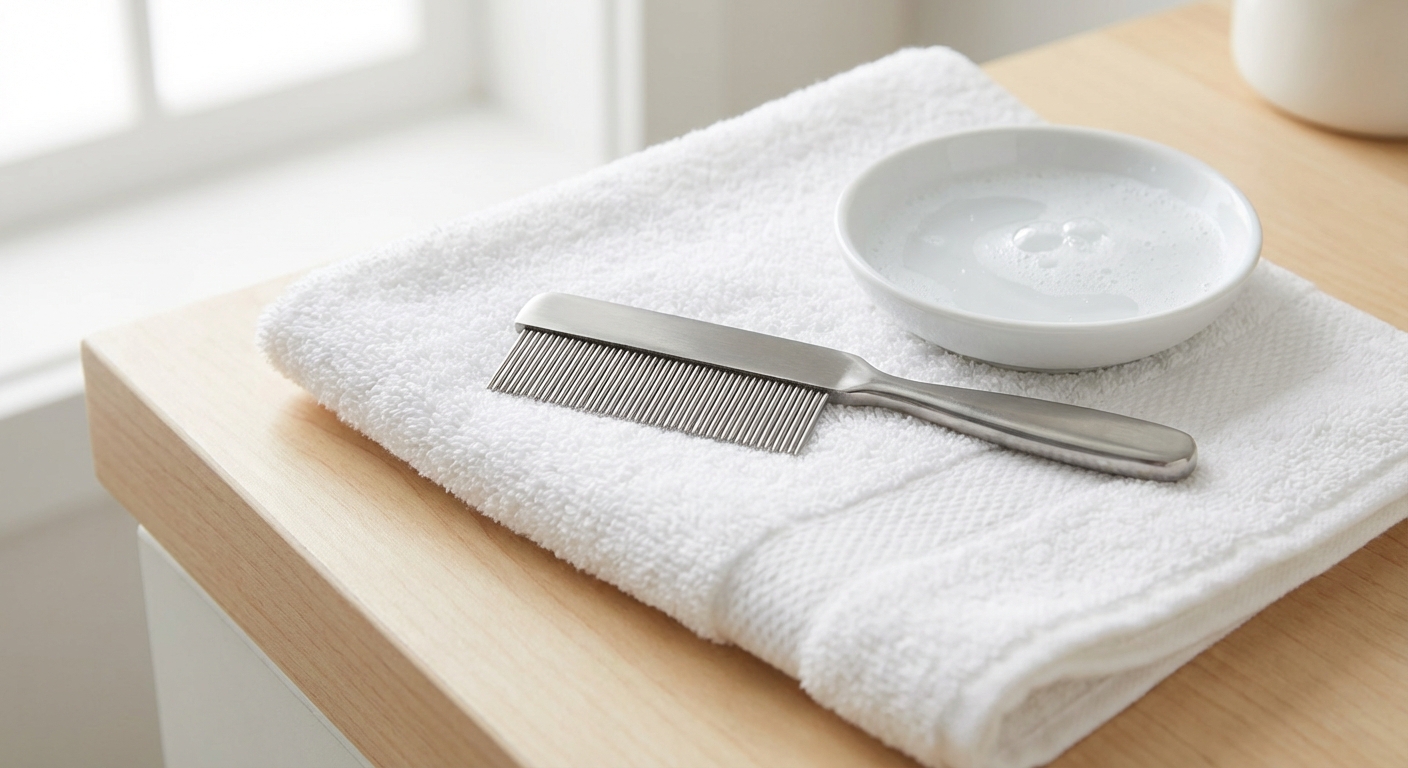
A flea comb is one of the best tools you can buy. Choose a fine-toothed metal comb and do this in good lighting:
- Place your cat on a light-colored towel.
- Comb slowly, focusing on the neck, behind the ears, along the spine, and at the base of the tail.
- Tap what you collect onto a damp white paper towel.
If you see black specks that turn reddish-brown when wet, that is flea dirt (digested blood), which strongly suggests an active flea problem. In real life, finding flea dirt is often easier than finding an actual flea, and it is enough reason to start proper flea control.
Why fleas keep coming back
Here is the frustrating part: the fleas you see are only a small portion of the infestation.
- Adult fleas live on your cat and bite.
- Eggs fall off into your home.
- Larvae hatch and hide deep in carpet, cracks, and bedding.
- Pupae form cocoons and can “wait” before emerging.
That means treating your cat is essential, but treating the environment is what breaks the cycle.
Immediate relief at home
1) Comb and remove fleas
Comb daily for a week if you can. Keep a bowl of warm water with a drop of dish soap nearby and dip the comb frequently to trap fleas.
2) Bathe only if it is safe for your cat
Many cats hate baths, and stress can be a real health risk for some. If your cat tolerates it, a gentle bath can help remove some fleas. Use only a cat-safe shampoo and follow product directions. Avoid essential oils and home “natural” mixes. Many are toxic to cats.
Important: Never use dog flea shampoo or dog flea products on a cat unless your veterinarian specifically tells you it is safe. Cats are much more sensitive to certain insecticides.
3) Do not rely on DIY remedies alone
I know it is tempting to reach for vinegar sprays, essential oils, or garlic. Unfortunately, these are not reliable for eliminating fleas, and several common “natural” ingredients can be dangerous for cats. A safe, regulated flea medication (the kind your vet recommends and that is labeled for cats) is usually the fastest and kindest option for your pet.
A safe home treatment plan
To truly fix a flea problem, think in three lanes: treat the cat, treat all pets, and treat the house.
Quick safety checklist
- Know your cat’s current weight and use the correct dose for that weight range.
- Check age minimums. Many products are not for very young kittens.
- Use cat-labeled products only. Never “split” dog doses or use dog-only products.
- Treat every pet the same day (with species-appropriate products) to avoid re-infestation.
- Do not combine products unless your vet says it is safe.
Step 1: Treat your cat with a vet-approved flea product
Modern flea control products can kill adult fleas quickly and keep working for weeks. Many are typically about 1 month, depending on the product. Some medications last longer, and some collars can last for months.
In general, flea products fall into these categories:
- Topical spot-ons applied to the skin (often monthly)
- Oral medications (not for every cat, and timing varies by product)
- Flea collars designed for long-term control (quality varies widely)
Because cats are sensitive and because counterfeit products exist online, I recommend buying flea meds directly from your veterinary clinic or a trusted pharmacy. If you are unsure what to choose, call your vet and ask what they recommend for your cat’s age and weight.
Step 2: Treat every pet in the home
If you only treat one animal, fleas simply hop to the untreated pet and you get stuck in a loop. Dogs and cats in the same home need species-appropriate products.
Step 3: Treat your home
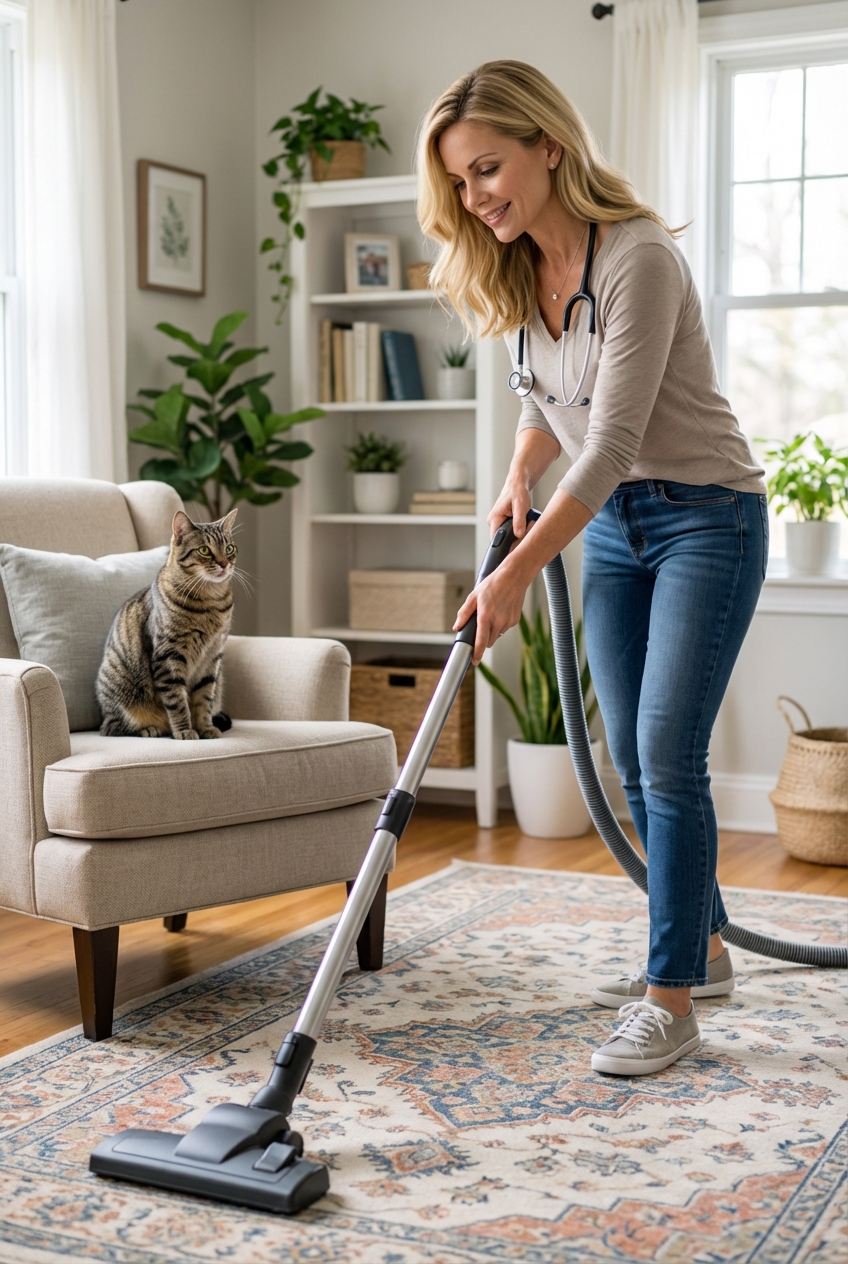
- Vacuum daily for 7 to 14 days. Focus on edges of rooms, under furniture, and carpeted areas. Immediately empty the canister or dispose of the bag outside. After the first 1 to 2 weeks, vacuum several times weekly until you are fully past the problem.
- Wash bedding weekly in hot water, including pet beds, throw blankets, and your cat’s favorite nap spots.
- Consider an indoor flea spray labeled for home use. Choose one that targets eggs and larvae (look for an IGR, or insect growth regulator). Follow directions exactly and keep cats away until fully dry.
If your cat goes outdoors, or if you have wildlife, feral cats, or neighborhood pets near your home, fleas can keep getting reintroduced. Shady outdoor areas, porches, and places where animals rest are common sources. Even indoor-only cats can pick up fleas that hitchhike inside on people, clothing, or visiting pets.
What not to do
- Do not use permethrin-containing dog products on cats. This can cause severe neurologic toxicity and is an emergency.
- Do not use essential oils like tea tree, peppermint, clove, or citrus oils on cats. Cats can absorb them through the skin and may become seriously ill.
- Do not over-apply flea medication or combine products unless your vet says it is safe.
- Do not skip the home treatment. You might see fewer fleas at first, then see new ones later as pupae emerge.
When to call the veterinarian
Home care is a great start, but please involve your vet promptly if any of the following apply:
- Your cat is a kitten, senior, pregnant, or has chronic illness
- You see pale gums, weakness, or rapid breathing (possible anemia)
- Your cat has open sores, significant scabbing, or hair loss
- Itching continues after you have treated properly for 2 to 4 weeks
- You suspect tapeworms (small rice-like segments near the anus or in bedding), which commonly occur with fleas
Seek emergency care right away if you accidentally applied a dog product or your cat shows tremors, seizures, drooling, vomiting, trouble walking, or severe weakness.
Fleas can also trigger skin infections and flare allergies, so persistent symptoms deserve a professional look.
How long it takes
With a quality flea medication on your cat and consistent home cleaning, many households see noticeable improvement in 48 to 72 hours because adult fleas on the pet start dying off fast. That said, it is normal to see new fleas appear for a while as the environmental stages continue to hatch.
Most homes make steady progress over 3 to 8 weeks, depending on how heavy the infestation is and how consistent the cleaning is. The longer timeline is usually because of the pupae stage, which can be stubborn.
Stick with monthly (or product-directed) prevention even after you stop seeing fleas. Prevention is almost always easier than another full clean-out.
Keeping fleas away
- Use year-round flea prevention if your vet recommends it for your region and your pet’s lifestyle.
- Wash pet bedding regularly and vacuum routine high-traffic areas.
- Watch for early signs like extra scratching or small scabs .
- Check new pets or visiting animals, since fleas often hitchhike into the home.
If you take one thing away, let it be this: fleas are a life cycle problem, not just a “few bugs” problem. Treat the cat, treat the home, and you will get your peaceful, itch-free household back.