Support steadier glucose with high-protein, low-carb homemade meals. Get macro targets, safe ingredients, what to avoid, portion guidance, and 4 simple recip...
Article
•
Designer Mixes
Diabetes Symptoms in Cats

Shari Shidate
Designer Mixes contributor
As a veterinary assistant, I have seen how quietly diabetes can creep up in cats. The good news is that many cats improve quickly once treatment starts and can go on to live a long, comfortable life. How fast they feel better depends on things like other health conditions, how advanced the diabetes is, and how easily treatment can be given at home.
This guide walks you through the detailed symptoms of diabetes in cats, what is urgent, what to track at home, and what to expect at the veterinary clinic.
What feline diabetes is
Most diabetic cats have a condition that is often similar to type 2 diabetes in people. It commonly involves insulin resistance plus a relative insulin deficiency. Some cats also have contributing issues such as pancreatitis or other conditions that affect insulin-producing cells.
When insulin is not working well, blood sugar stays too high. Over time, extra glucose spills into the urine and pulls water with it. That is why so many symptoms involve thirst, urination, weight, and energy.
Diabetes can affect any cat, but it is more common in middle-aged to senior cats and cats carrying extra weight. Risk tends to be higher in cats with low activity levels and calorie excess over time.
The classic early symptoms
These symptoms are common, but they can overlap with other illnesses. The pattern and combination matter.
1) Increased thirst (polydipsia)
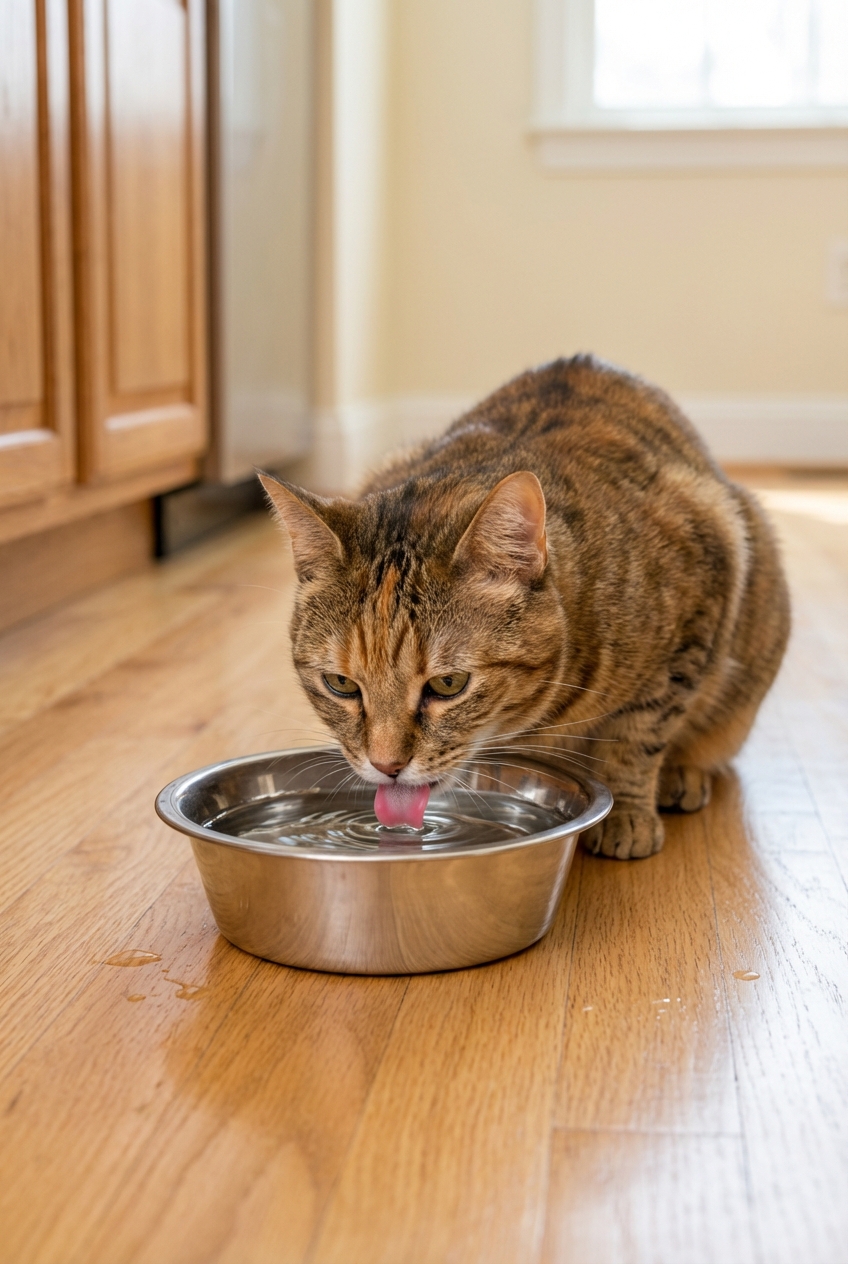
You may notice your cat returning to the water bowl more frequently, staying there longer, or drinking from unusual places like the bathtub or a dripping faucet.
- Water bowl emptying faster than usual
- More frequent trips to drink, including at night
- New interest in running water
A gentle benchmark: many sources cite roughly 40 to 60 mL of water per kg per day as a typical range for cats, but it varies a lot. Cats eating mostly wet food often drink less, and multiple pets sharing bowls can make this hard to measure. Changes from your cat’s normal routine matter most.
2) Increased urination (polyuria)
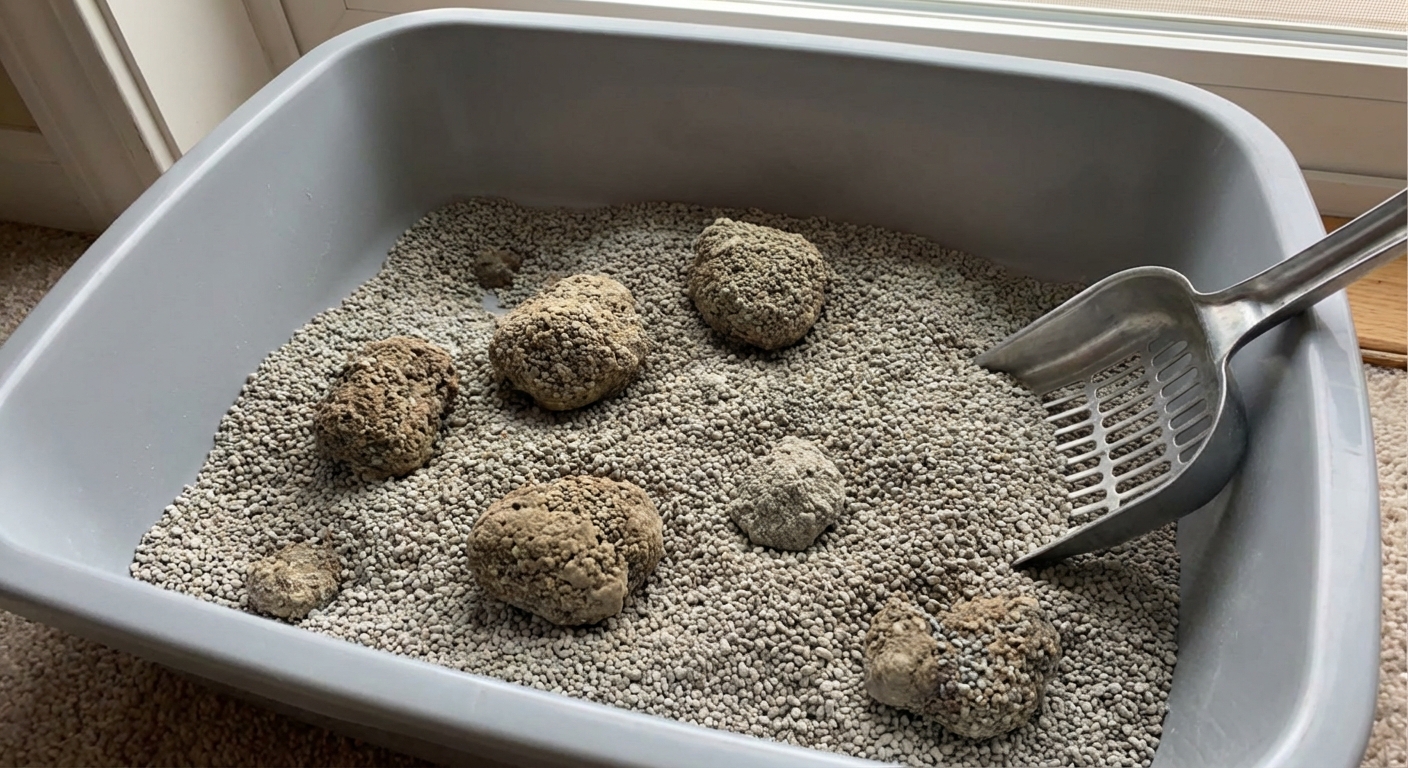
Because excess glucose is excreted in urine, the body produces more urine and loses more water.
- Larger clumps in the litter box
- Needing to scoop more often
- Accidents outside the box, sometimes even when the box is clean and easy to access
3) Weight loss despite a good appetite
This is one of the biggest red flags. Even if your cat is eating well, the body cannot use glucose normally, so it starts breaking down fat and muscle for energy.
- Ribs or spine becoming easier to feel
- Muscle loss along the back or hindquarters
- Coat looking less glossy as overall condition changes
4) Increased appetite (polyphagia)
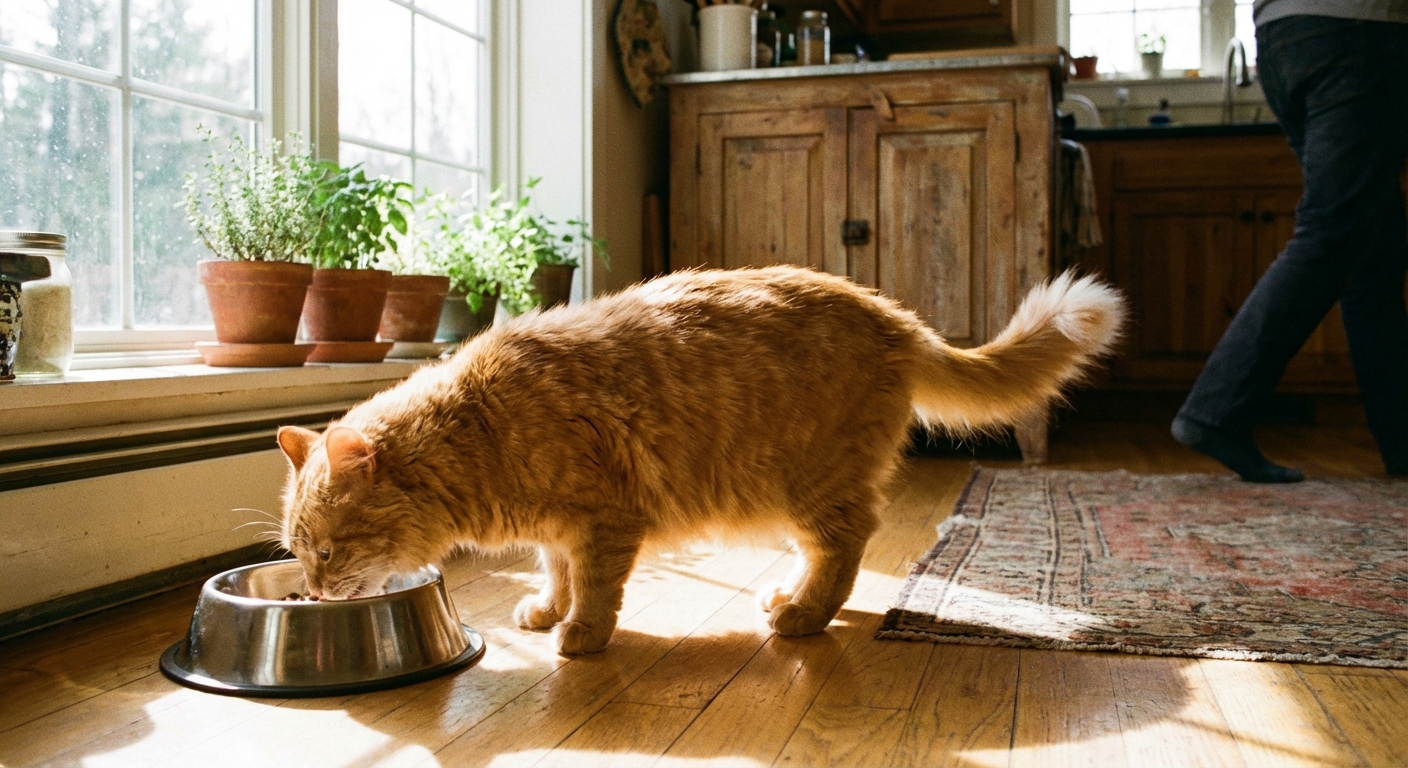
Many diabetic cats seem constantly hungry. It can look like begging, meowing for food, or stealing food more than usual.
Easy-to-miss changes
Some symptoms are subtle at first, especially in cats who hide illness well.
Low energy
- Sleeping more, playing less
- Less social behavior or reduced grooming
- Jumping up less often or hesitating before jumping
Dehydration
Even though your cat is drinking more, they can still become dehydrated due to fluid loss in urine. Signs can include tacky gums, a dull coat, and constipation.
Vomiting or nausea
Not every diabetic cat vomits. When vomiting happens, it can be a clue that something more than simple high blood sugar is going on, such as pancreatitis, infection, or diabetic ketoacidosis (DKA). Repeated vomiting or refusing food should be evaluated promptly.
Recurrent infections
High sugar levels can make it easier for bacteria and yeast to grow and can reduce immune effectiveness. Watch for:
- Urinary tract infection signs: straining, frequent small pees, blood in urine, urinating outside the box
- Skin infections: scabs, odor, redness, flaky areas
- Ear issues: head shaking, dark debris, strong odor
Urgent symptoms
These signs can indicate severe diabetes complications, including diabetic ketoacidosis (DKA), which is an emergency.
Diabetic neuropathy
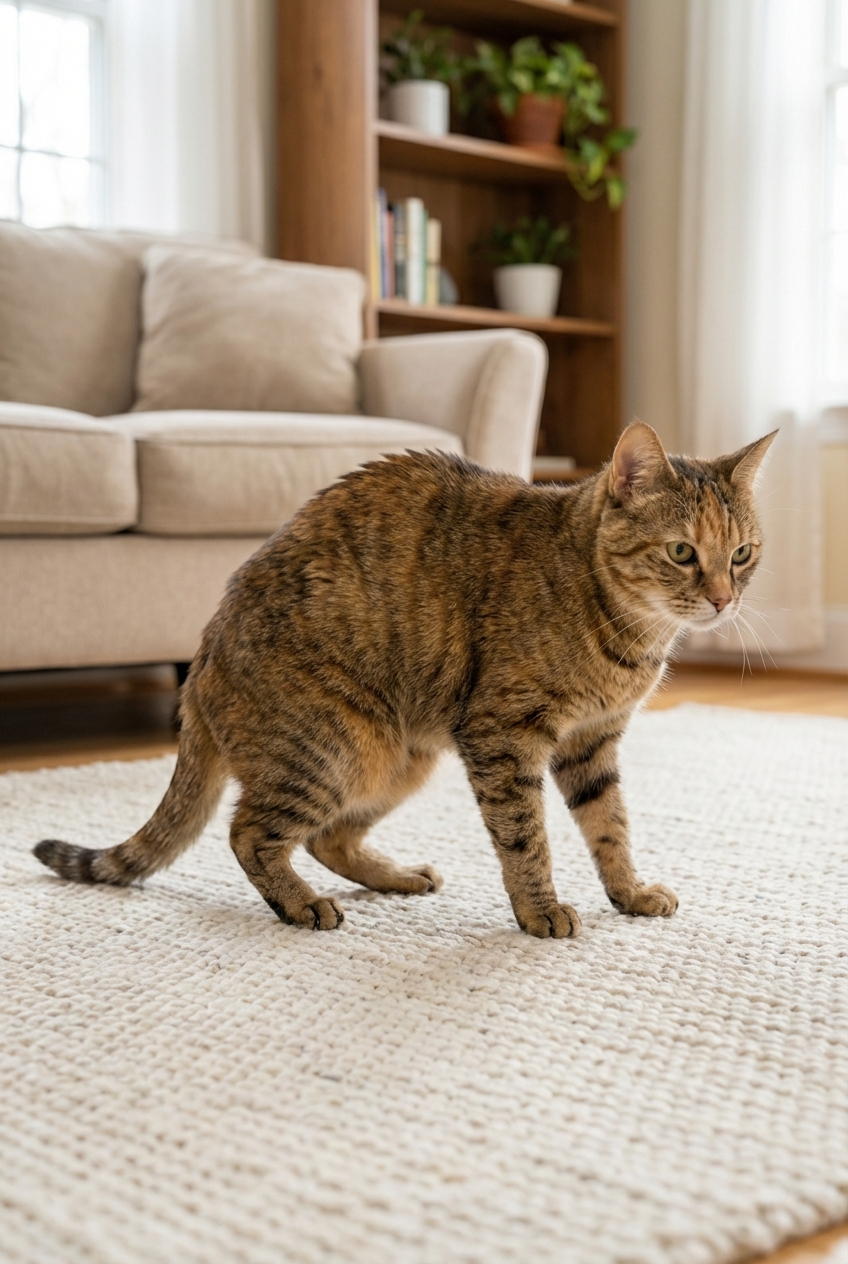
One hallmark in cats is a change in how they walk. Instead of walking up on their toes, they may walk with their hocks closer to the ground.
- Wobbly gait or weakness in hind legs
- Walking “flat-footed” on the back feet
- Difficulty jumping or climbing
Signs of DKA
Go to an emergency veterinarian immediately if you notice:
- Not eating or refusing food
- Repeated vomiting
- Extreme lethargy, collapse, or weakness
- Rapid or labored breathing
- Dehydration, sunken eyes, very dry gums
- Breath that may smell sweet, fruity, or like nail polish remover
If your cat is drinking and peeing a lot and then suddenly stops eating or becomes very lethargic, treat it as urgent. Cats can decline quickly.
At-home checks
If you are seeing classic symptoms, go ahead and schedule an exam and lab work. While you are waiting for your appointment, you can track a few details that help your veterinarian. For mild signs, I recommend tracking for 3 to 7 days. If symptoms are worsening or severe, do not wait to collect data first.
Step 1: Watch the water
- Measure how much water you put in the bowl each morning
- Measure what is left 24 hours later
- Note other water sources like fountains, sinks, or multiple bowls
Step 2: Check the litter box
- Count urine clumps and note their size
- Note any urine outside the box and where it happens
- Watch for straining or vocalizing
Step 3: Weigh your cat weekly
If you have a baby scale, use it. If not, you can weigh yourself holding your cat and subtract your weight alone.
Step 4: Track appetite and behavior
- Write down what and how much your cat eats each day
- Note begging, food stealing, or sudden picky behavior
- Log energy level and play time
Step 5: Do not self-treat
Nutrition is very important for diabetic cats, but insulin and medical monitoring may still be needed. Do not start insulin or make aggressive diet changes without veterinary guidance. Sudden food changes can also cause gastrointestinal upset, especially in senior cats.
What your veterinarian will do
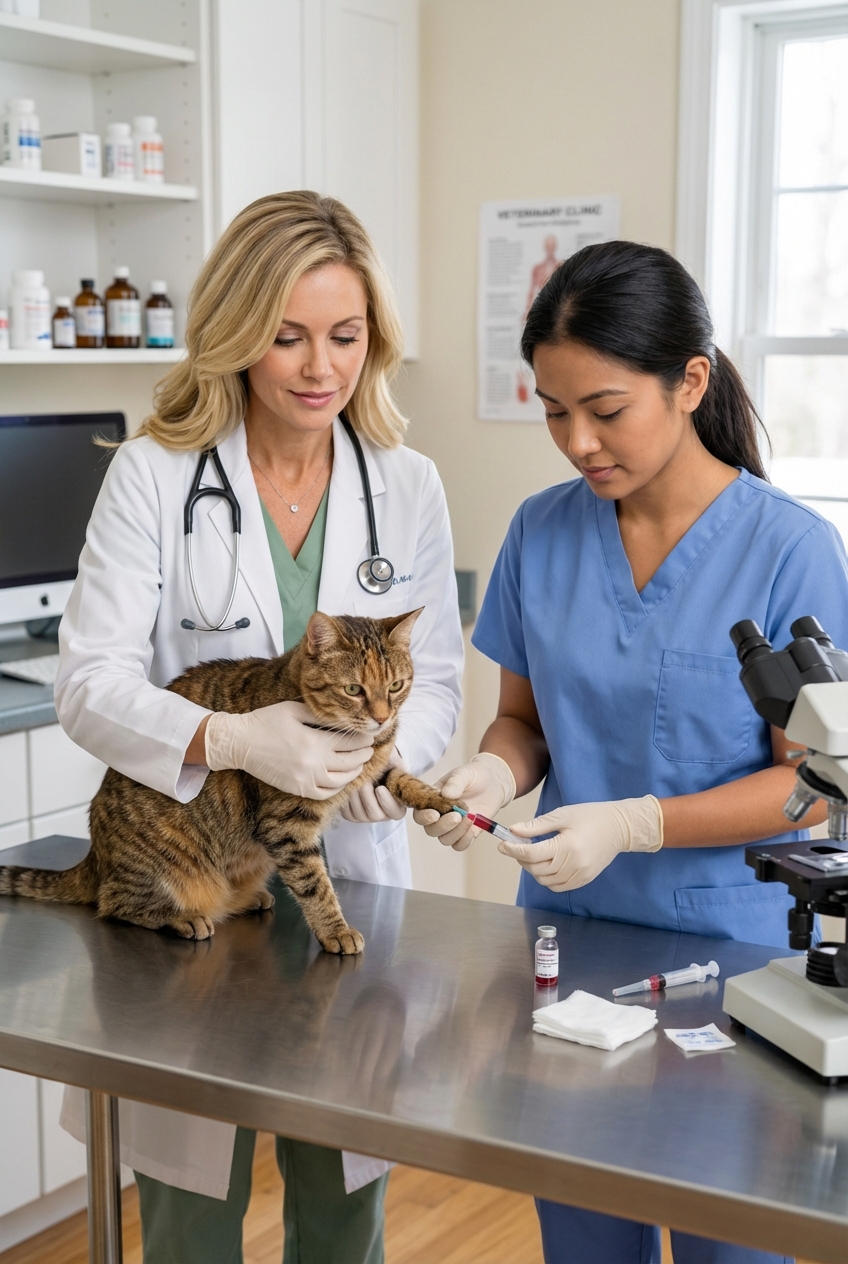
Diabetes is diagnosed with a combination of symptoms and lab work. A single high glucose reading can happen from stress, so your veterinarian will look at the whole picture.
- Physical exam: weight, hydration, muscle condition, coat quality
- Blood glucose: checks current blood sugar
- Urinalysis: looks for glucose in urine and checks for infection
- Fructosamine: estimates average blood sugar over the past 1 to 2 weeks, helpful when stress hyperglycemia is a concern
- Additional labs: kidney values, liver values, electrolytes, and sometimes thyroid testing in older cats
What treatment often involves
If your cat is diagnosed, treatment is usually very doable with support. Plans vary, but often include:
- Insulin given on a consistent schedule
- Diet plan to support steady blood sugar and healthy weight, guided by your veterinarian
- Monitoring such as glucose curves (in clinic or at home) and follow-up lab work
- Recheck visits to adjust the dose safely
Some cats, especially when caught early and when weight and diet improve, can even go into diabetic remission. Others need long-term insulin.
Low blood sugar warning
Once treatment starts, another urgent concern is hypoglycemia (blood sugar too low), usually from an insulin dose that is too high, a skipped meal, or a sudden change in appetite. Seek emergency care if you see weakness, wobbliness, tremors, confusion, seizures, or collapse.
Conditions that look similar
Several common cat health issues overlap with diabetes symptoms. This is why testing matters.
- Chronic kidney disease: increased thirst and urination, weight loss
- Hyperthyroidism: weight loss with increased appetite, increased activity or vocalization
- Urinary tract infection: litter box issues and frequent urination
- Diarrhea or malabsorption disorders: weight loss and poor coat
Some cats also have conditions that can affect diabetes control, such as obesity, pancreatitis, chronic kidney disease, and (less commonly) hormone-related disorders. Your veterinarian will help sort out what applies to your cat.
Next steps
If your cat has increased thirst, increased urination, and weight loss, treat that combination as a strong reason to book a veterinary visit soon.
Call your vet within 24 to 48 hours if:
- You see weight loss plus increased thirst or urination
- Your cat seems ravenous all the time
- There are new litter box accidents with large urine clumps
Seek emergency care now if:
- Your cat stops eating, is vomiting repeatedly, or is very weak
- You notice rapid breathing or collapse
- Your cat seems disoriented or severely dehydrated
The bottom line is this: early recognition leads to faster stabilization. And once a diabetic cat is regulated, many families tell me they finally feel like they have their cat back.