A practical, reassuring guide to feline diabetes: early signs, diagnostic tests, daily feeding and insulin routines, home glucose monitoring, hypoglycemia st...
Article
•
Designer Mixes
Diabetes Symptoms in Cats

Shari Shidate
Designer Mixes contributor
As a veterinary assistant here in Frisco, Texas, I can tell you that feline diabetes is one of those conditions that often whispers before it shouts. The earlier you catch the signs, the easier it is for your veterinarian to stabilize your cat and help them feel like themselves again.
This how-to guide walks you through the essential symptoms of diabetes in cats, what to track at home, and when it is time to seek care.
What feline diabetes is
Many (and often most) diabetic cats have a problem that looks similar to type 2 diabetes in people: their bodies do not use insulin well (insulin resistance), and over time they may not make enough insulin either. Insulin’s job is to move sugar (glucose) from the bloodstream into cells for energy.
When insulin is not doing its job, glucose builds up in the blood. Once blood glucose gets high enough, the kidneys cannot keep up and glucose starts to spill into the urine. That is why the classic symptoms often show up as a trio: drinking more, peeing more, and often eating more.
These signs can overlap with other common conditions (like kidney disease or hyperthyroidism), so a diagnosis always requires testing.
Common risk factors
Any cat can develop diabetes, but I see it more often in cats who are:
- Middle-aged to older
- Overweight or inactive
- Male (more common, not guaranteed)
- On certain medications, especially steroids (ask your veterinarian before making any changes)
Essential symptoms to watch for
These are the most common, most meaningful signs cat owners notice at home. You do not need to see every symptom for diabetes to be possible.
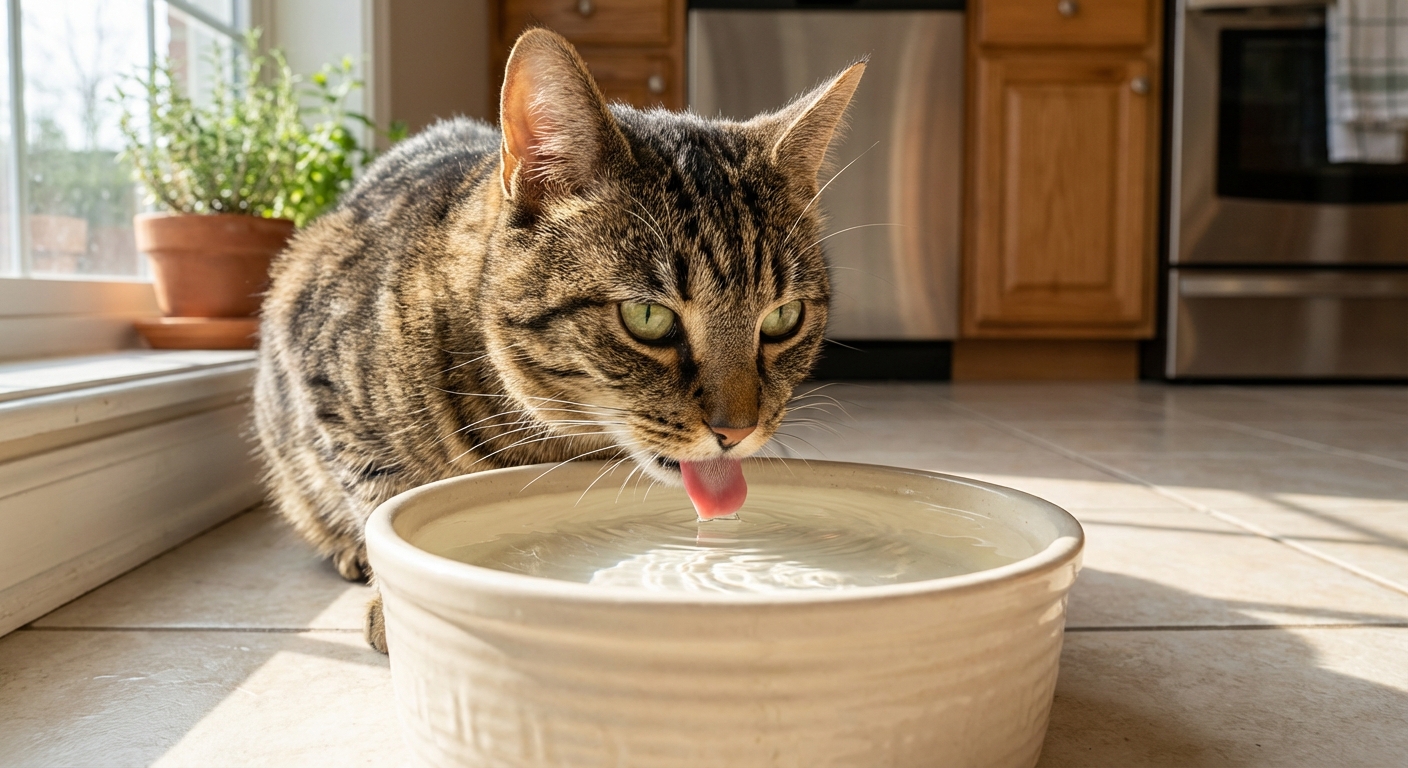
1) Drinking more water (polydipsia)
If you are refilling the water bowl more often, hearing your cat at the fountain constantly, or noticing them drinking from unusual places (sink, bathtub), write it down. Increased thirst is one of the earliest and most common clues.
2) Urinating more (polyuria)
More urine happens because glucose in the urine pulls extra water with it. At home, this can look like:
- Larger clumps in clumping litter
- More frequent trips to the box
- Accidents outside the box (especially if the box is far away or hard to access)
Important: peeing outside the box can also be urinary tract disease, stress, arthritis, or kidney issues. It always deserves attention.
3) Increased appetite with weight loss
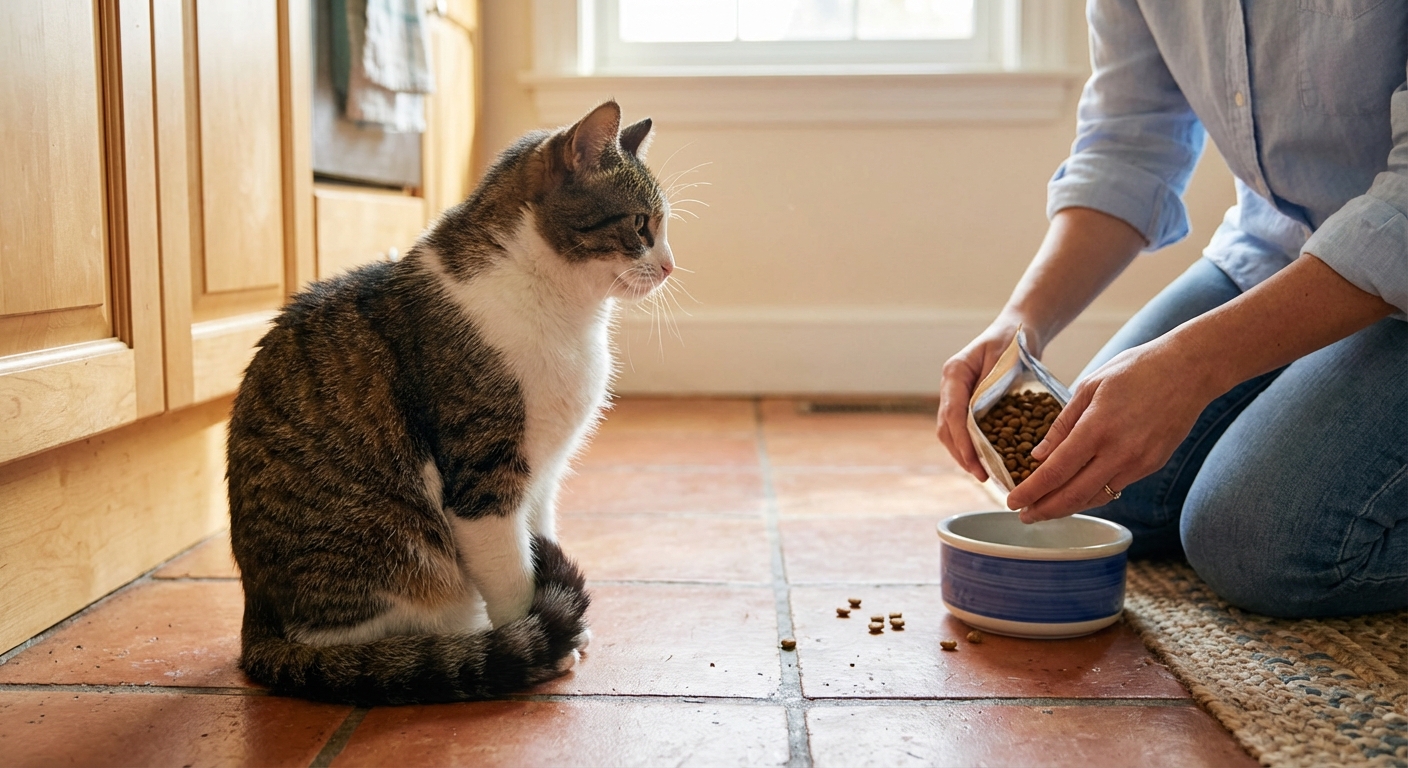
This combination is a big red flag. Even if your cat eats well, they may lose weight because their body cannot efficiently use glucose for energy. Many cats seem hungry all the time, beg more, or steal food, yet their body condition drops.
4) Weight loss (even without a big appetite change)
Unintentional weight loss is never “just aging.” If your cat feels bony along the spine, hips, or shoulders, or you notice the scale trending down, diabetes is on the list of possibilities.
5) Lethargy and lower play drive
When cells are not getting fuel, cats often sleep more, play less, and seem generally “off.” Some owners describe it as their cat looking dull or less engaged.
6) Poor coat quality
A diabetic cat may stop grooming as well, or their coat can become greasy, flaky, or unkempt. It is a subtle sign, but when it pairs with thirst and weight loss, it matters.
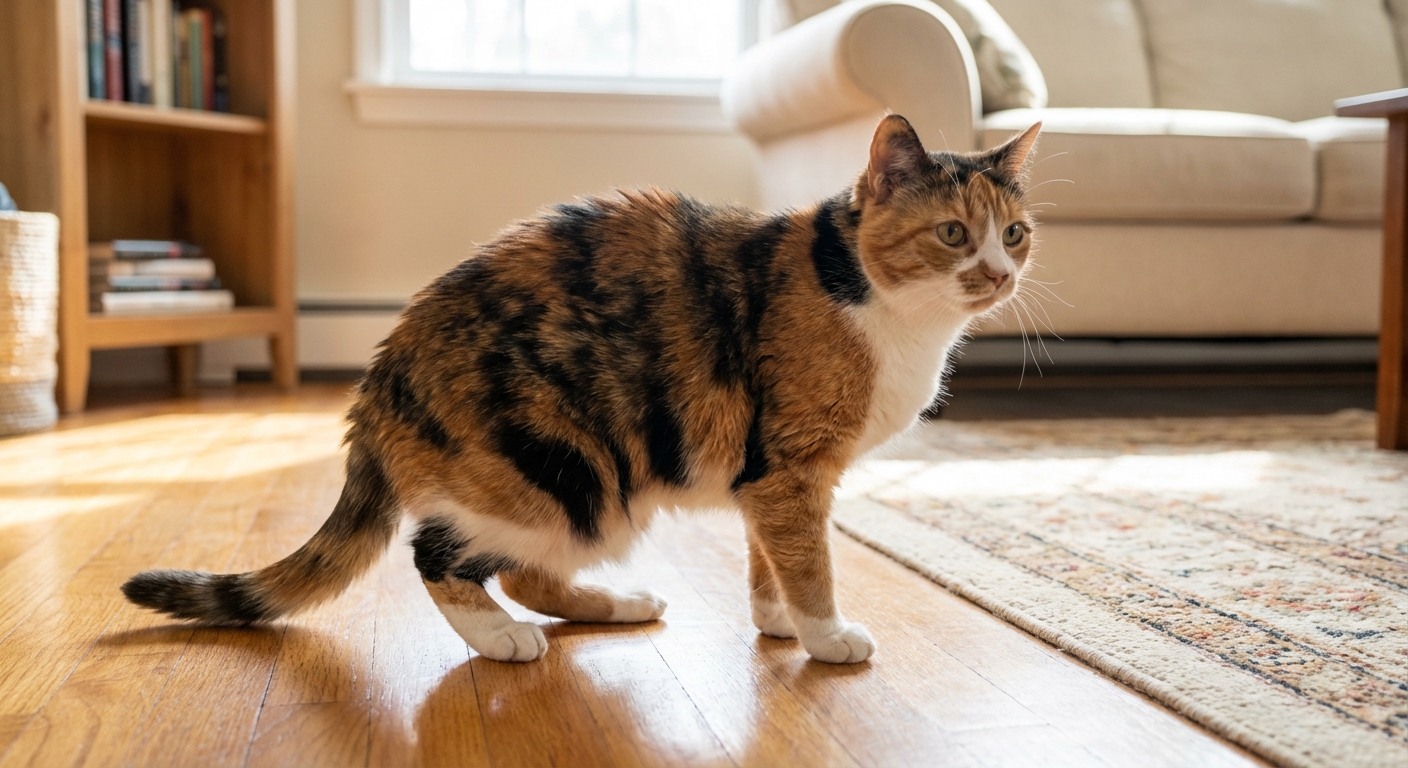
7) Weakness in the back legs (diabetic neuropathy)
Some cats develop nerve issues after blood sugar has been high for a while, especially if diabetes has been poorly controlled. You may notice:
- Walking lower to the ground
- Hocks closer to the floor (a “plantigrade” stance)
- Difficulty jumping to favorite spots
8) Vomiting, not eating, or severe weakness (urgent)
While many diabetic cats eat more at first, a cat that suddenly stops eating, vomits, seems very dehydrated, or is acting severely weak needs prompt veterinary care. One serious complication behind this cluster is diabetic ketoacidosis (DKA), which is an emergency.
How to check at home
You do not need special equipment to be helpful. A few consistent observations can give your veterinarian a clearer picture.
Step 1: Track water intake for 3 days
- Measure how much water you put down in the morning.
- Measure what is left 24 hours later.
- If you have multiple pets, consider separating your cat for portions of the day or using a microchip feeder and a separate water station when possible.
Keep in mind that fountains, multiple bowls, wet food, and evaporation can make numbers approximate. That is okay. Bring your notes anyway.
Step 2: Watch the litter box
- Are clumps larger than usual?
- Are you scooping more often?
- Are there accidents?
If your cat is urinating outside the box, do not punish them. Treat it as a medical clue.
Step 3: Weigh your cat weekly
If you can, weigh your cat on a baby scale. Otherwise, weigh yourself holding your cat, then subtract your weight alone. Track it in your phone notes.
Step 4: Note appetite changes
Write down whether your cat is finishing meals faster, crying for food, or stealing. Also note if they suddenly eat less, which can signal worsening illness.
Step 5: Take a short video if you notice hind-leg weakness
A 10-second video of your cat walking across the room can be incredibly helpful for your veterinarian.
When to call the vet
If your cat has increased thirst and urination, especially with weight loss, schedule a visit soon. Diabetes is treatable, but it is not something to “wait and see.”
Call urgently (same day if possible) if you notice:
- Vomiting plus lethargy
- Not eating for 24 hours (or even less in a cat that is acting ill)
- Severe weakness, collapse, or deep dehydration
- Labored breathing (not specific to diabetes, but it can happen with severe illness including DKA and should be treated as an emergency)
What your vet will typically do
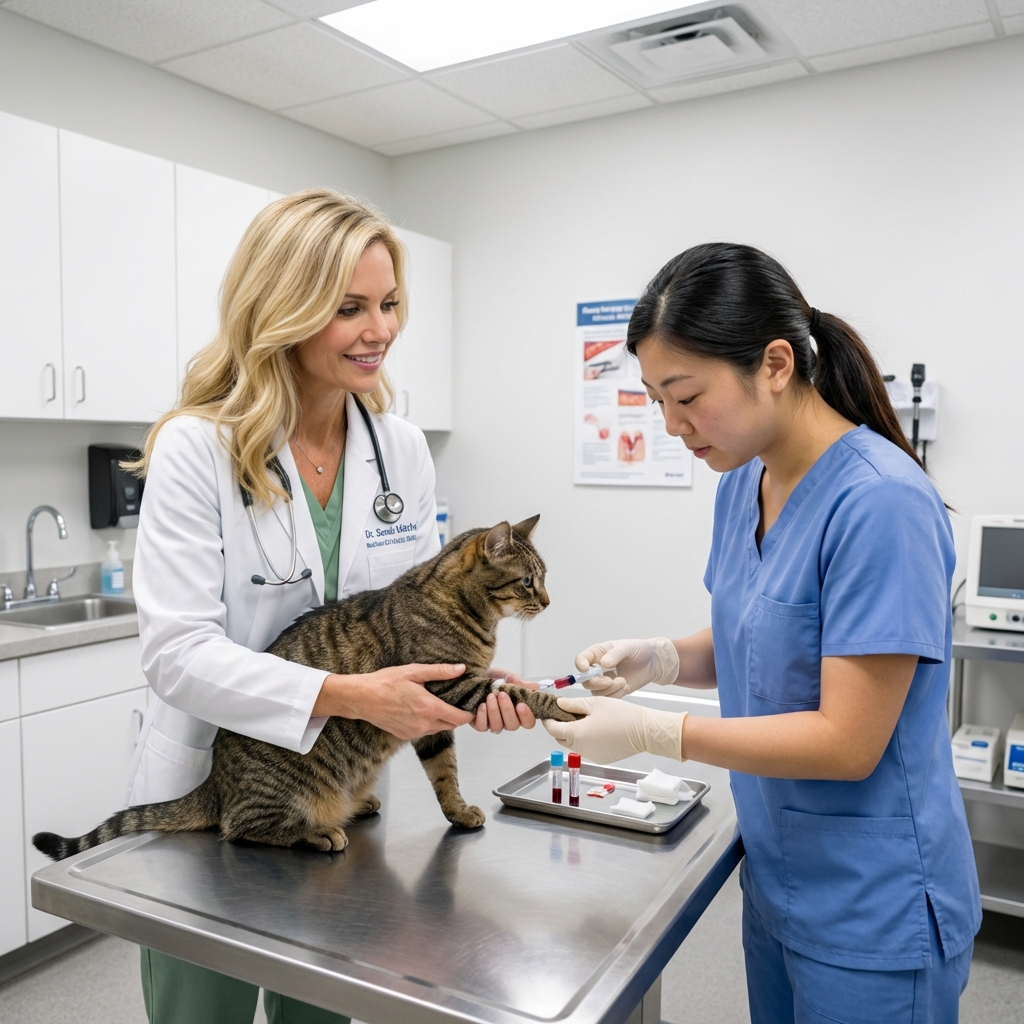
Diagnosis is usually straightforward and evidence-based. Most veterinarians will recommend:
- A physical exam and weight check
- Bloodwork to measure glucose and assess organs
- Urinalysis to look for glucose and ketones, and to screen for infection
- Sometimes a fructosamine test to evaluate average glucose over time
Helpful questions to ask
- Could anything else be causing these symptoms (kidney disease, hyperthyroidism, urinary tract infection)?
- Do you recommend insulin, diet change, or both?
- Should we monitor glucose at home, and if so, how?
- What signs of low blood sugar should I watch for?
What not to do
- Do not start insulin without veterinary guidance.
- Do not give human diabetes medications unless your veterinarian specifically prescribes them.
- Do not make abrupt diet changes or withhold food to “lower sugar” on your own, especially if your cat is acting sick.
- Do not ignore vomiting, not eating, or profound lethargy. Those can be emergency signs.
After diagnosis
Most diabetic cats do well with a combination of:
- Insulin (given under the skin with a tiny needle)
- Diet adjustments, often focusing on high-protein, low-carbohydrate patterns appropriate for cats
- Weight management if your cat is overweight
- Monitoring through vet rechecks and sometimes at-home glucose testing
Some cats even go into remission with timely treatment and the right plan. The key is consistency and staying in close communication with your veterinary team.
Quick recap
- The most essential symptoms are increased thirst, increased urination, increased appetite, and weight loss.
- Coat changes, lethargy, and hind-leg weakness can also be important clues.
- Track water, litter box output, weight, appetite, and mobility changes for a few days and bring that info to your appointment.
- If your cat is vomiting, not eating, very weak, or breathing abnormally, seek care urgently.
If you suspect diabetes, you are not overreacting by calling your vet. You are giving your cat the best chance at a stable, comfortable life.