Support steadier glucose with high-protein, low-carb homemade meals. Get macro targets, safe ingredients, what to avoid, portion guidance, and 4 simple recip...
Article
•
Designer Mixes
Diabetes in Cats: Signs and Step-by-Step Care

Shari Shidate
Designer Mixes contributor
Hearing the word diabetes can feel scary, especially when it is your cat. The good news is that feline diabetes is manageable, and many cats go on to feel like themselves again with the right routine. In this guide, I will walk you through what to look for, what the vet will test, and how to build a simple day-to-day care plan you can actually stick with.
Quick reassurance: With consistent feeding, insulin when prescribed, and home monitoring, many diabetic cats regain energy, stop losing weight, and have better quality of life. Some even go into remission.
What diabetes is in cats
Most diabetic cats have a form similar to type 2 diabetes in people, meaning insulin resistance plays a big role. True type 1 diabetes (where the body makes little to no insulin) is considered uncommon in cats. Insulin is the hormone that helps move glucose (sugar) from the bloodstream into cells for energy.
When insulin is not doing its job, glucose builds up in the blood. The body tries to get rid of the extra sugar through urine, which pulls water with it. That is why many of the classic signs involve thirst and urination.
Signs of diabetes in cats
Some signs are obvious, and others are easy to miss at first. If you notice any combination of the following for more than a few days, it is worth calling your veterinarian.
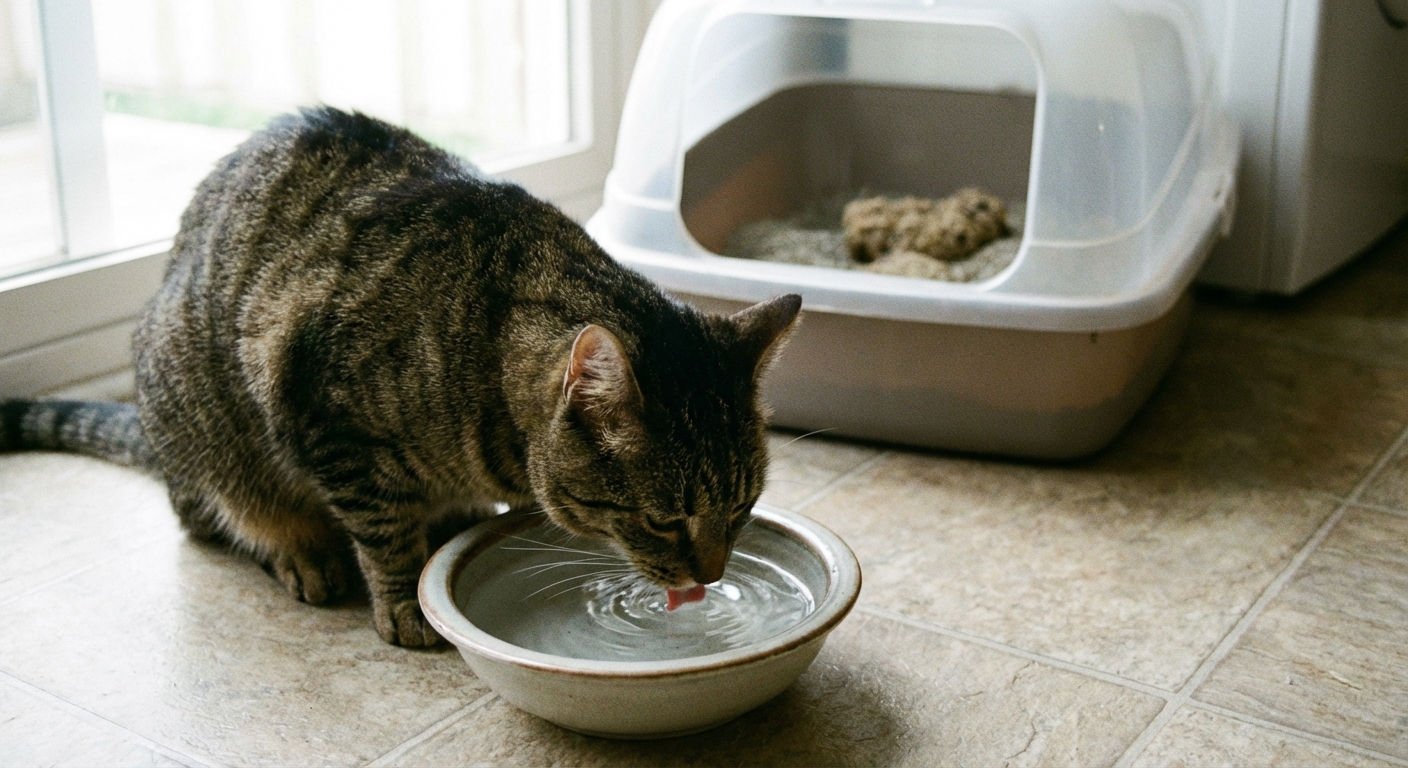
- Increased thirst (you are refilling the water bowl more often)
- Increased urination (larger clumps in the litter box or more frequent trips)
- Weight loss despite eating normally, or even eating more
- Increased appetite that feels intense or urgent
- Low energy, more sleeping, less play
- Messy or dull coat
- Weakness in the back legs or walking “down” on the hocks (diabetic neuropathy)
- Dehydration (dry gums, “tacky” mouth)
Urgent warning sign: If your cat is vomiting, not eating, breathing fast, acting very weak, or seems mentally “off,” seek emergency care. Diabetic ketoacidosis (DKA) is a life-threatening complication that needs immediate treatment.
What causes diabetes in cats
There is rarely one single cause. Most often, it is a combination of risk factors that stress how the body handles glucose.
- Excess body weight and inactivity
- Age (middle-aged to senior cats are more commonly affected)
- Male cats are slightly more commonly diagnosed
- High-calorie diets that promote weight gain in susceptible cats (some dry foods can be higher in carbs and calories, which may contribute indirectly)
- Chronic inflammation or concurrent disease (such as pancreatitis)
- Medications like corticosteroids or progestins can increase risk in some cats
None of this is about blame. My goal is always the same as yours: help your cat feel better and get you a plan that is realistic.
Step 1: Get the right diagnosis
Diagnosis matters because stress alone can temporarily raise a cat’s blood glucose. Your veterinarian will typically combine several pieces of information.
Common tests
- Blood glucose (high levels may suggest diabetes)
- Urinalysis (glucose in urine is common with diabetes; ketones may indicate an emergency)
- Fructosamine (helps confirm that blood glucose has been elevated over time, not just due to stress)
- Bloodwork to check kidneys, liver, electrolytes, and screen for other issues
If your cat is diagnosed, ask your vet whether any other conditions are present that could affect regulation, such as infection (including urinary tract infection), dental disease, hyperthyroidism, or pancreatitis.
Step 2: Build the daily routine
Diabetes care works best when it is boring and predictable. Most cats do well on a twice-daily routine, but your veterinarian will tailor this to your cat’s needs.
Example routine: Breakfast, insulin, normal day. Dinner, insulin, bedtime. Try to keep timing consistent, even on weekends.
Feeding basics
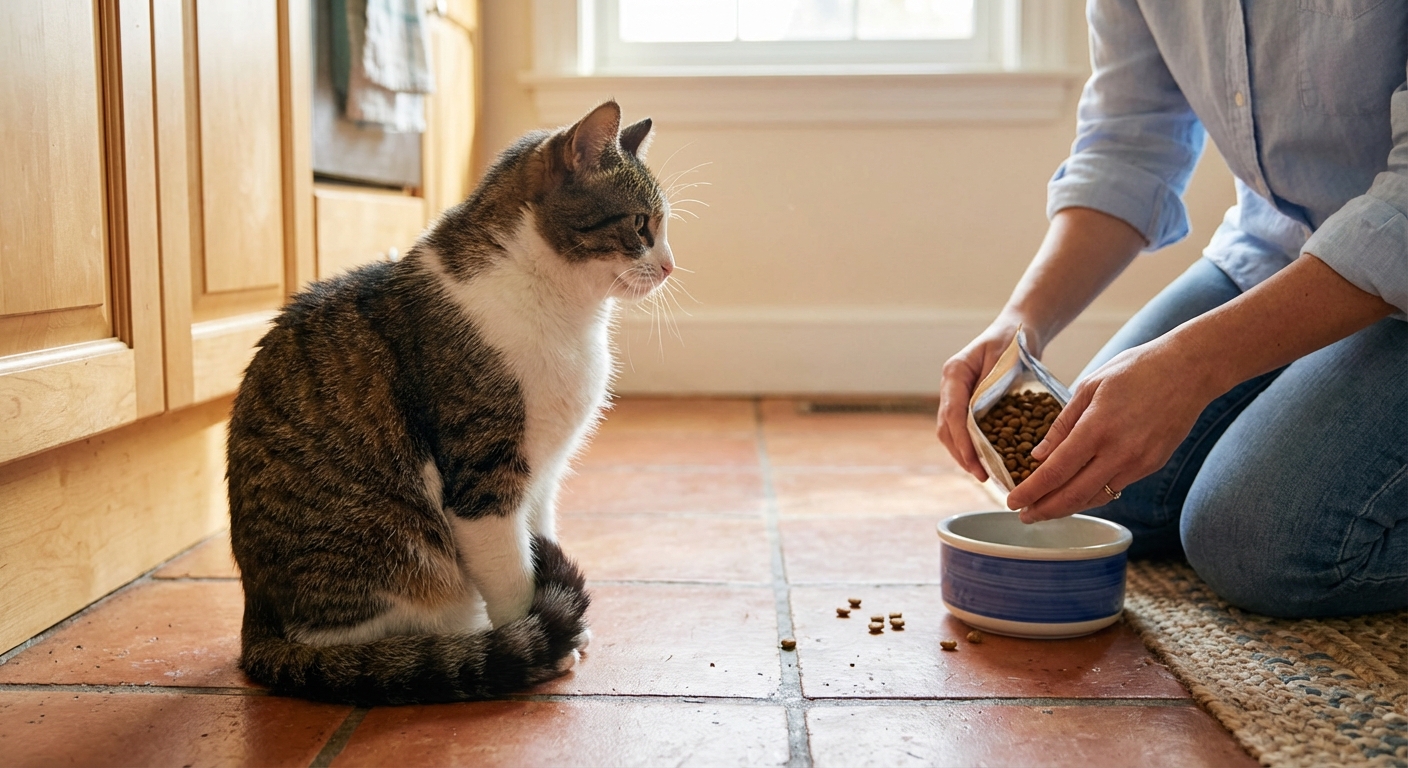
- Feed consistent meals at the same times each day.
- Choose a high-protein, low-carbohydrate diet when appropriate for your cat. Many diabetic cats benefit from canned foods with lower carbs, but always transition gradually.
- Ask about meal feeding versus grazing. Some cats do better with measured meals, while others may need a structured “small meals” plan. Your vet can match the feeding plan to the insulin and your cat’s habits.
- Do not make sudden diet changes once insulin has started unless your vet guides you. Diet changes can change insulin needs.
- Measure portions to support safe weight loss if your cat is overweight.
Insulin timing
Your vet will prescribe a specific insulin type and dose. In general, insulin is given on a schedule that matches meal timing.
- Give insulin exactly as prescribed.
- Do not adjust the dose on your own based on one reading or one weird day.
- If your cat will not eat, contact your veterinarian right away for instructions. Giving insulin to a cat that is not eating can be dangerous.
- Never double a dose to “make up” for a missed injection. If you think you missed a dose, follow your vet’s instructions. Many times the safest move is to skip and get back on schedule, but your clinic should guide you.
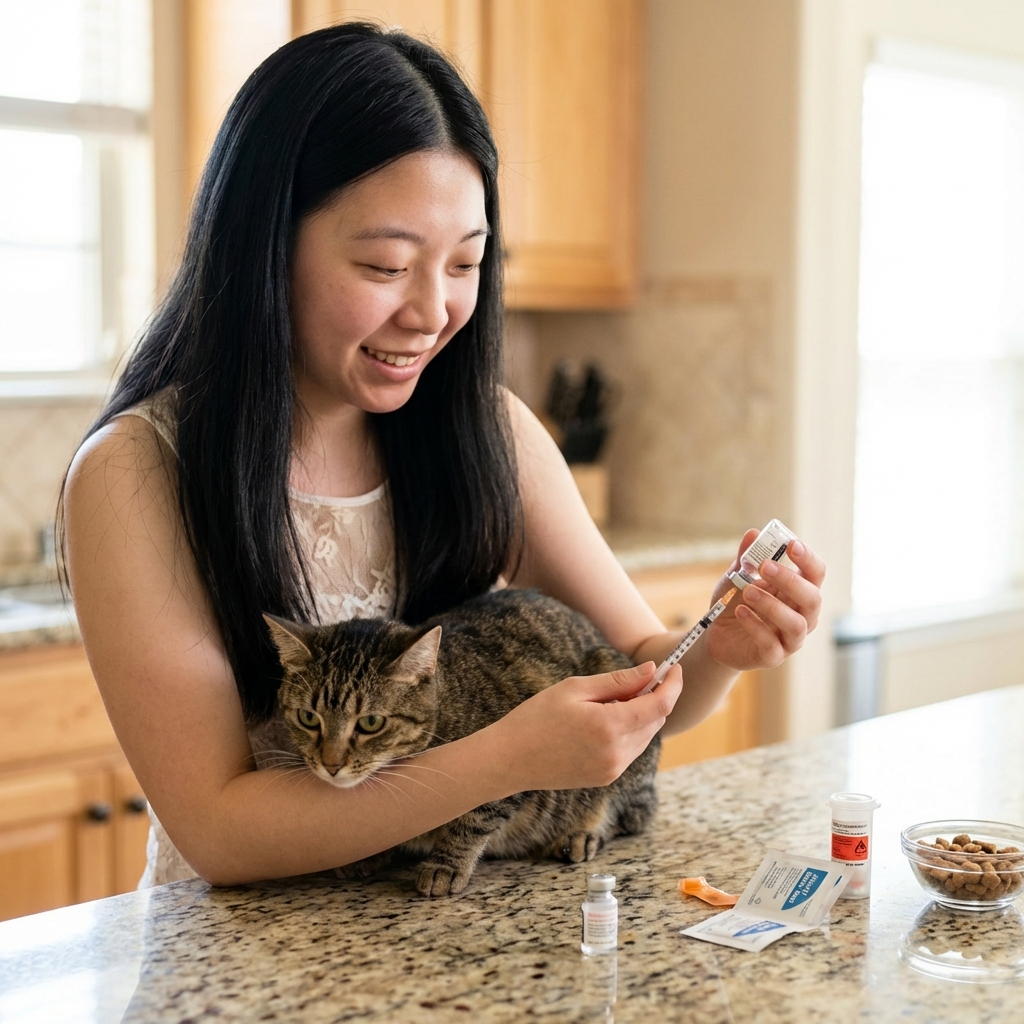
Tip from the clinic: Choose one “diabetes station” at home with your supplies. When everything lives in one place, it becomes less stressful for you and your cat.
Step 3: Give insulin safely
If you are new to insulin, you are not alone. Most people feel nervous at first. With a little practice, many cats barely react.
Handling insulin
- Store insulin as directed (many require refrigeration).
- Mix only as instructed. Some insulins are gently rolled, while others require more thorough mixing. Follow the label and your veterinarian’s directions.
- Use the correct syringe for the insulin concentration (this is very important).
- Check expiration and appearance. If it looks clumpy, frosty, or unusual, ask your vet before using it.
Injection tips
- Most insulin is given under the skin (subcutaneous), often along the side of the chest or flank.
- Use a calm, consistent approach: meal, quick injection, praise.
- Rotate injection sites to reduce irritation.
If you ever think you gave a “fur shot” (insulin leaked onto the hair) or you are unsure, do not automatically repeat the dose. Call your veterinary team for advice.
Step 4: Monitor at home
Home monitoring can be a game-changer because it helps prevent hypoglycemia (blood sugar that drops too low) and gives your veterinarian better information for dose adjustments.
What to track
- Appetite (how much, how eager)
- Water intake (is it trending up or down)
- Urination (litter clump size and frequency)
- Weight (weekly is often helpful)
- Energy and mood
Blood glucose checks
Your vet may recommend at-home blood glucose testing with a pet meter or a human meter, depending on their preference. Some cats can also use a continuous glucose monitor (CGM) placed on the skin.
Important: Pet and human meters can read differently. Use the meter type your veterinarian recommends, and follow their target ranges for that specific meter.
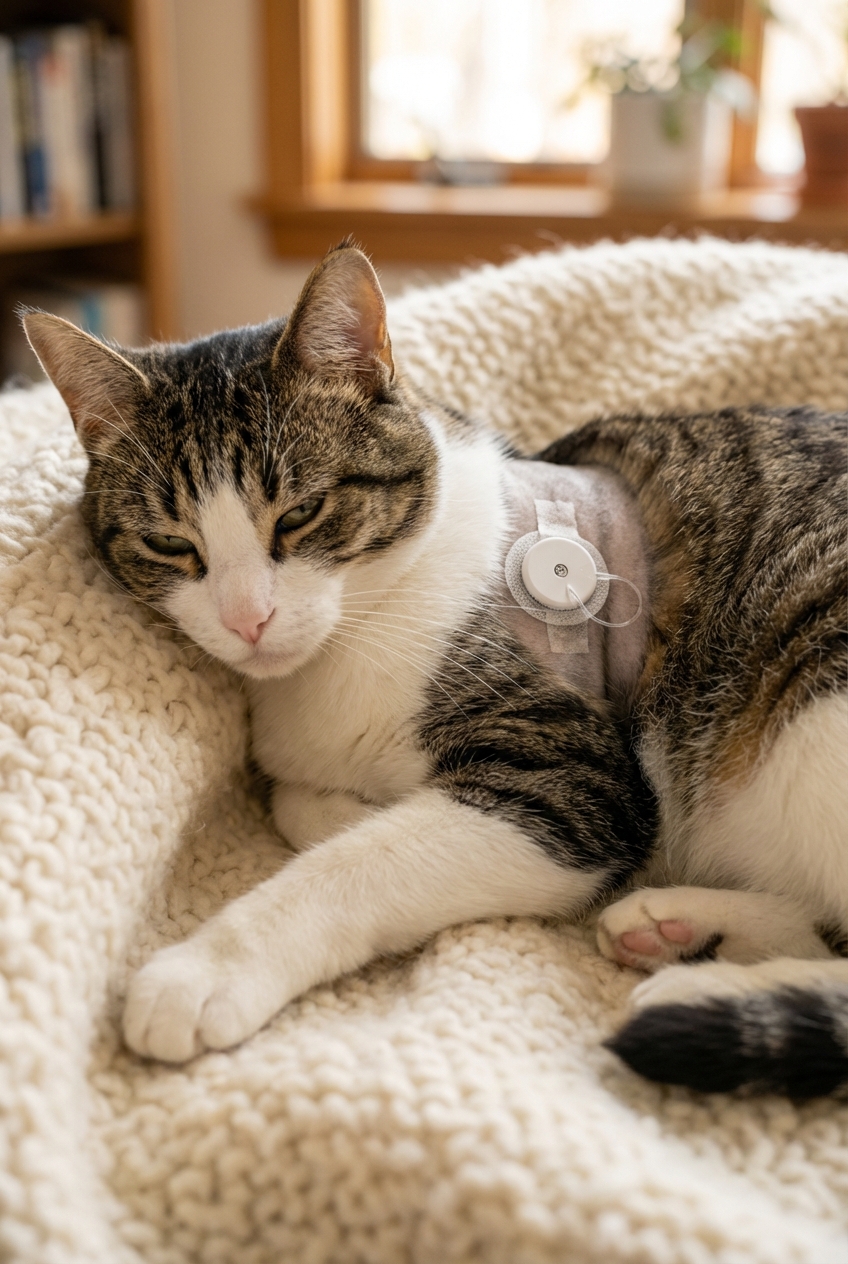
Ask your veterinarian what numbers are considered too low for your cat, and what to do step-by-step if that happens.
Tip from the clinic: If you are learning ear-prick testing, warming the ear with a warm (not hot) cloth for 30 to 60 seconds often makes it easier to get a tiny drop of blood.
Step 5: Hypoglycemia
Hypoglycemia is the most urgent at-home risk for diabetic cats on insulin. It can happen if a cat gets too much insulin, does not eat, vomits, or suddenly becomes more sensitive to insulin.
Signs of low blood sugar
- Sudden weakness or wobbliness
- Disorientation, staring, or acting “not present”
- Trembling
- Seizures
- Collapse
What to do right now
- If your cat is conscious and can eat, offer food immediately. A strong-smelling, higher-carb option (like wet food with gravy) can help quickly.
- If your cat is too weak to eat, refusing food, acting groggy, or seizing, rub a small amount of corn syrup, honey, or glucose gel on the gums right away, then head to an emergency veterinarian.
- Call an emergency veterinarian immediately for next steps.
- Safety note: Be careful not to get bitten. Do not pour liquid into your cat’s mouth. If your cat cannot swallow normally, stick to rubbing a small amount on the gums and seek emergency care.
Always keep your emergency vet’s number saved and posted where anyone in the home can find it.
Step 6: Follow-ups and curves
Most cats need dose adjustments early on. That is normal. Your veterinarian may recommend a glucose curve, which is a series of readings over the day to see how low the glucose drops and how long the insulin lasts.
- Curves can be done in the clinic or at home, depending on your comfort level and your cat’s stress level.
- Plan on regular rechecks during the first weeks, then less often once your cat is stable.
Consistency is what helps your vet make safe adjustments. Try to give insulin and meals at the same times, even on weekends.
What the first week feels like
The first week can feel like a lot. Expect a learning curve, a few nerves, and a couple of “wait, did I do that right?” moments. That is normal.
- Most cats settle into the routine faster than their people do.
- Write down doses and times, especially early on.
- If something does not make sense, call your vet. You are not bothering them. This is exactly what recheck support is for.
Can cats go into remission?
Yes, some cats can. Remission means the cat maintains normal blood sugar without insulin. It is more likely when diabetes is caught early and treated with a consistent routine and an appropriate diet.
Even if remission does not happen, many cats still do very well long-term. The win is a stable cat with good energy, healthy weight, and comfortable daily life.
Everyday care checklist
If you want a simple starting point, here is a practical checklist you can print or save.
- Feed measured meals on schedule
- Give insulin exactly as prescribed
- Track appetite, thirst, litter box habits, and weekly weight
- Keep treats consistent and vet-approved (avoid sugary treats)
- Watch for hypoglycemia signs
- Do not change diet or insulin dose without veterinary guidance
- Schedule follow-ups and curves as recommended
When to call the vet
Call your veterinarian promptly if you notice:
- Your cat stops eating or vomits repeatedly
- Sudden weakness, wobbliness, or collapse
- Very high thirst and urination that is worsening
- Ketones in urine (if you are checking at home)
- Any seizure activity or severe lethargy
You know your cat best. If something feels off, trust that instinct and call.
Educational note: This guide is for general education and is not a substitute for veterinary diagnosis or treatment.