Know what foods are toxic or high-risk for cats—onion/garlic, chocolate, caffeine, alcohol, grapes/raisins, xylitol, bones, mushrooms, and lilies—plus sy...
Article
•
Designer Mixes
Dangerous Treats for Cats: Chocolate, Grapes, and Onions

Shari Shidate
Designer Mixes contributor
If you have a cat, you already know how curious they are. And while cats are often pickier than dogs, it only takes one lick of frosting, one bite of a snack, or a few laps of “people food” juices to become a problem. Sometimes it is just a “call your vet now” moment. Other times, it can turn into an emergency quickly.
Three common household hazards veterinarians and poison control teams talk about a lot are chocolate, grapes (and raisins), and onions (and related plants). Let’s walk through why these foods are risky for cats, what symptoms to watch for, and what to do if your cat gets into them.
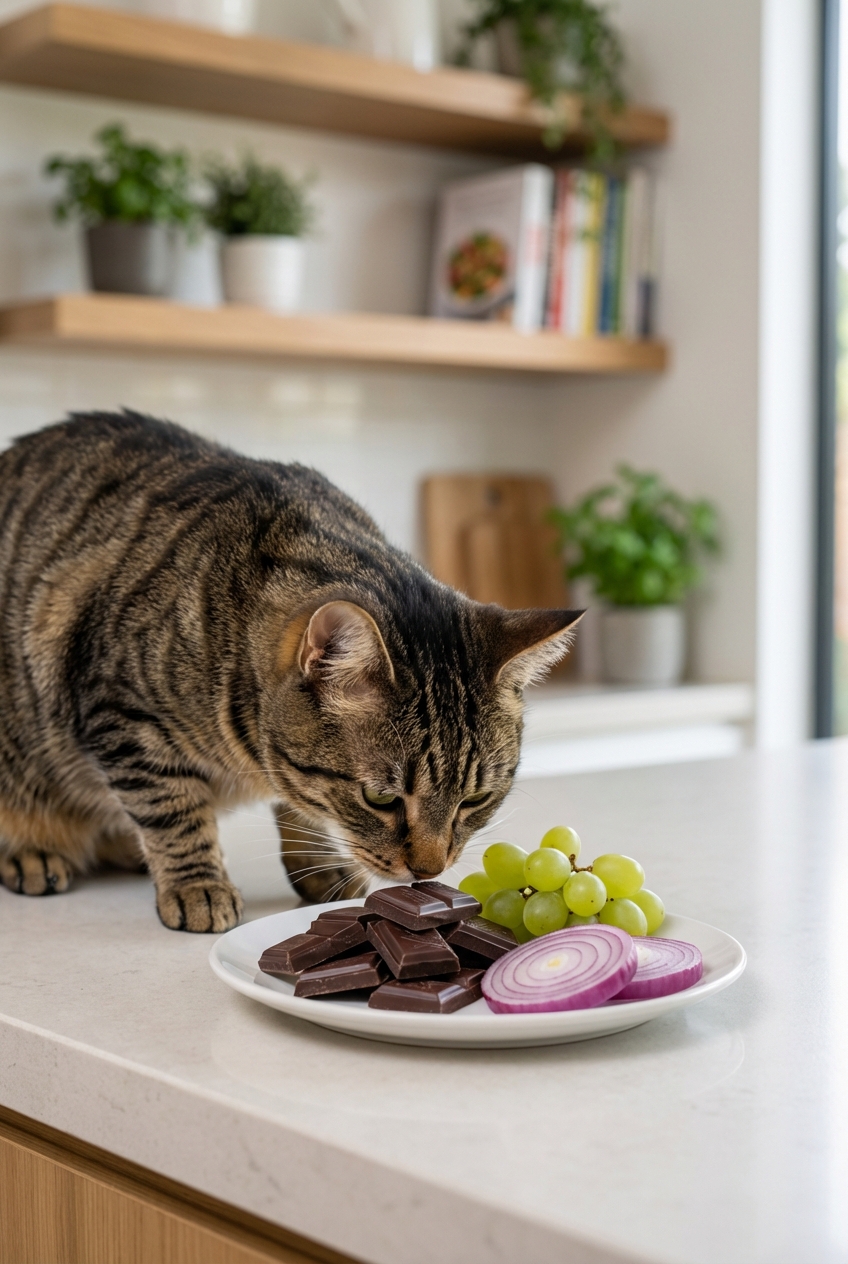
Why these foods are risky for cats
Cats are not small humans, and they are not small dogs either. Their bodies process many compounds differently, and for some substances their liver metabolism is more limited. Even when a toxic dose is not huge, cats can be affected quickly because many exposures happen in concentrated forms, like onion powder on chips or dark chocolate in brownies.
Also important: a “tiny taste” can still matter if your cat is small, is very young or older, has underlying liver or kidney disease, or if the food is especially concentrated.
Chocolate toxicity in cats
What makes chocolate toxic
Chocolate contains methylxanthines, mainly theobromine and caffeine. Cats are sensitive to these stimulants, which can affect the gastrointestinal tract, the heart, and the nervous system.
In general, the darker and more concentrated the chocolate, the more dangerous it is. Baking chocolate and cocoa powder are far riskier than milk chocolate.

Common signs to watch for
- Vomiting or diarrhea
- Restlessness, agitation, or hiding more than usual
- Fast breathing (panting is less common in cats)
- Increased heart rate
- Tremors or seizures in severe cases
Why cats get into chocolate
Many cats are not drawn to plain chocolate, but they may go for sweet dairy-based desserts (ice cream, frosting, pudding) or chocolate that is mixed with fats and flavors. Wrappers can also be a risk for choking or intestinal blockage if chewed and swallowed.
Grapes and raisins: caution for cats too
What makes grapes and raisins toxic
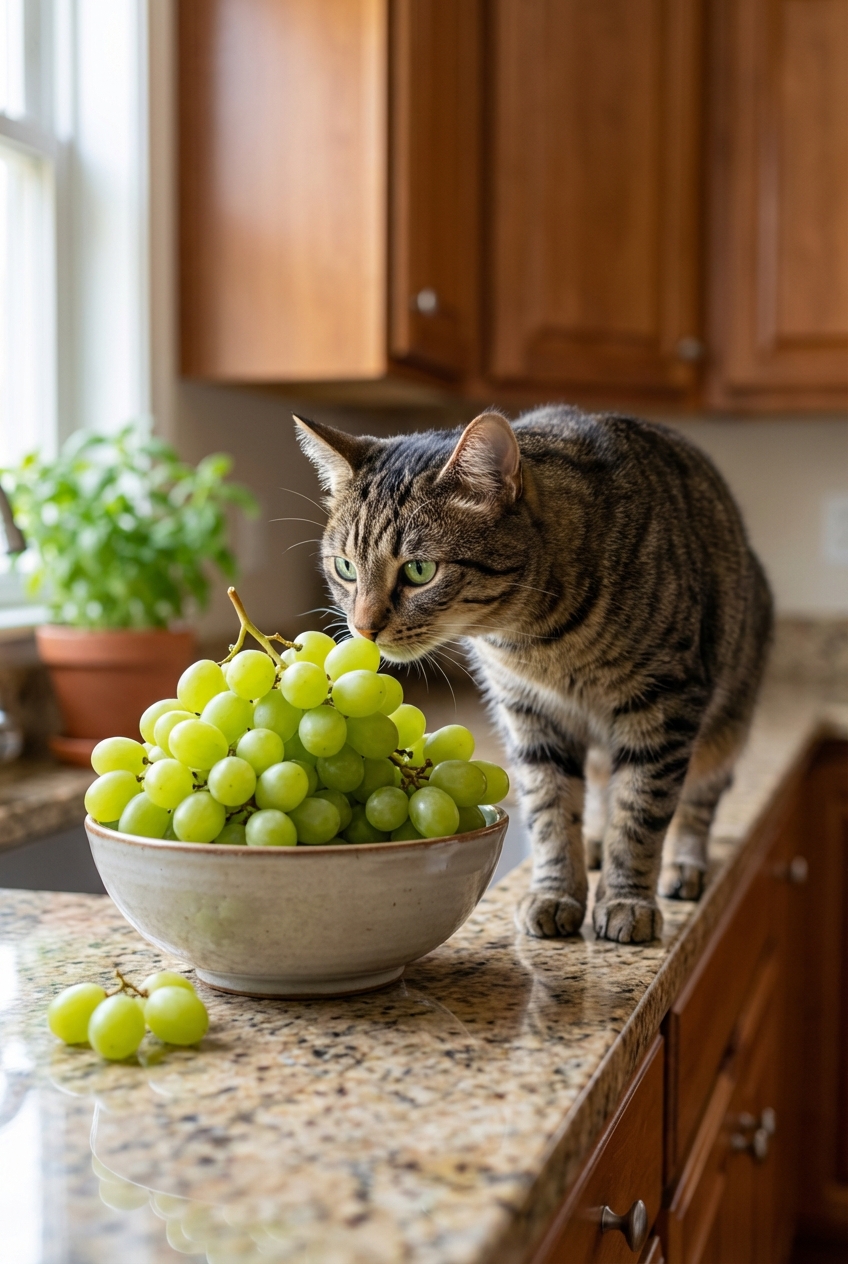
Grapes and raisins are a well-known cause of acute kidney injury in dogs. For cats, documented cases are less common and the risk is less clearly defined, but veterinary toxicology guidance still recommends taking exposures seriously because the potential outcome is severe and there is no reliable “safe” amount.
Updated science note: recent research points to tartaric acid (and potassium bitartrate) as the likely toxic principle in grapes and tamarinds, although individual susceptibility can vary.
Signs that can show up
- Vomiting, often within hours
- Loss of appetite
- Lethargy or weakness
- Increased thirst or urination early on, or decreased urination as injury progresses
- Abdominal discomfort
Kidney-related changes can evolve over 24 to 72 hours, so a cat that seems fine at first still deserves a call.
Hidden sources
Raisins hide in all kinds of “healthy” snacks: trail mix, oatmeal cookies, granola, breads, and cereals. Grapes can also roll under furniture and get batted around like toys, which increases the chance of a bite.
Onions (and garlic, chives, leeks): blood cell damage
What makes onions toxic
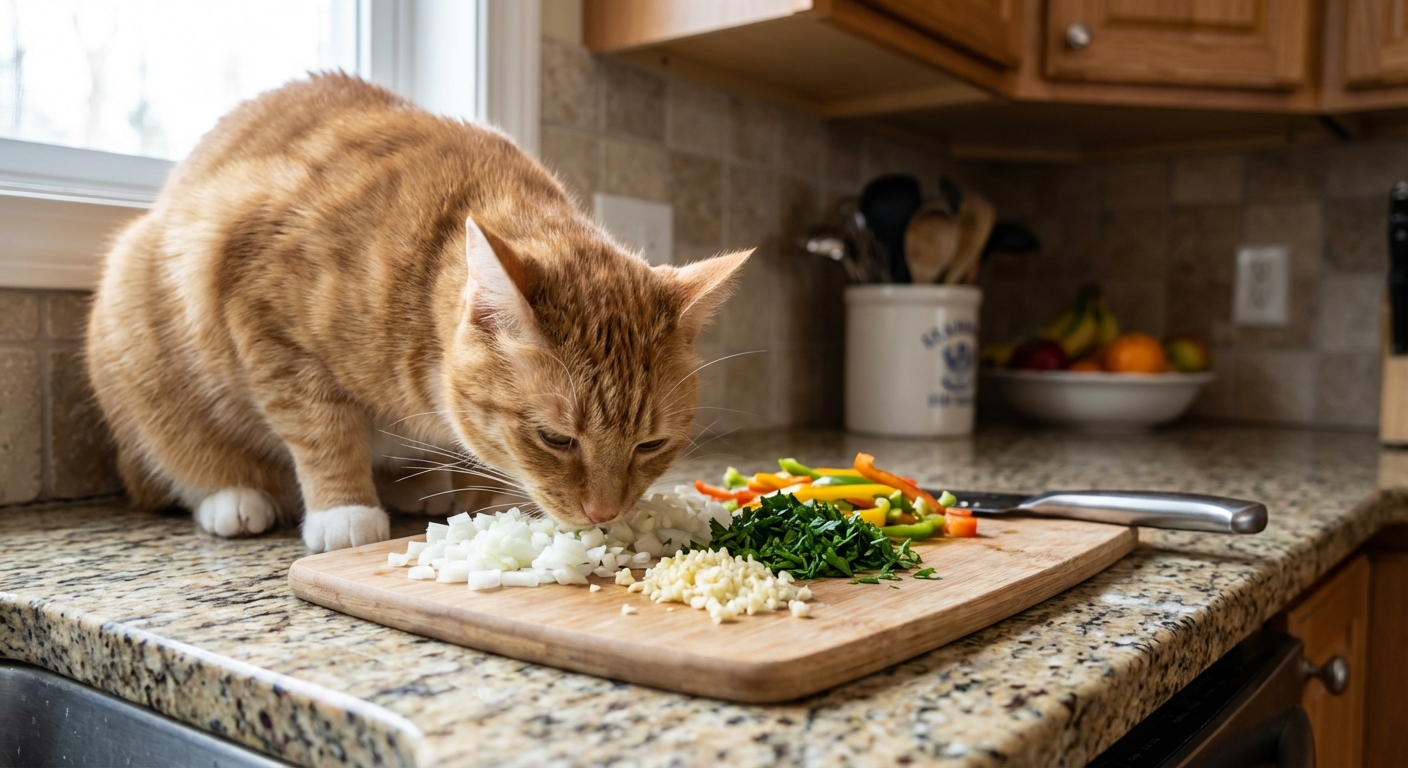
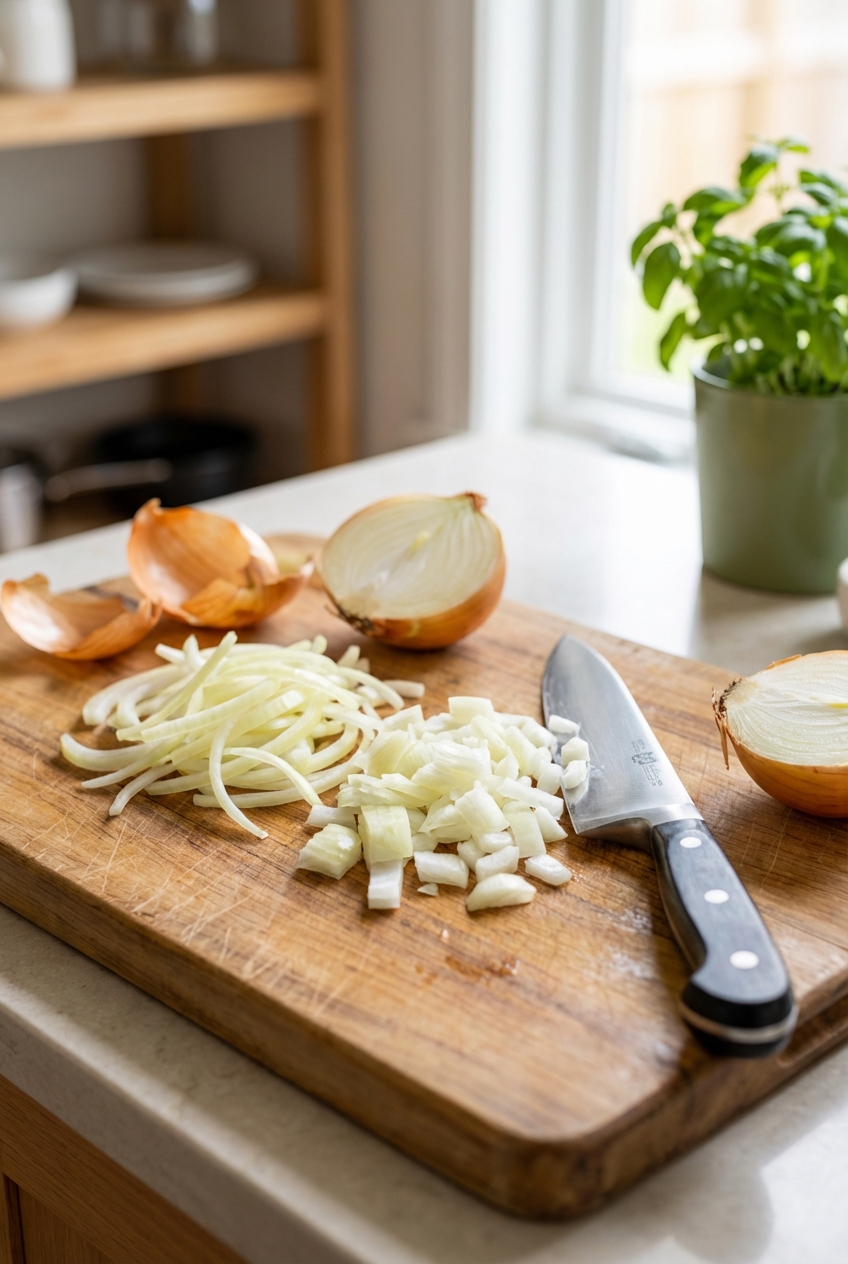
Onions are part of the Allium family (onions, garlic, chives, scallions, leeks). These plants contain compounds that can damage a cat’s red blood cells, leading to hemolytic anemia. Cats are considered particularly sensitive to this effect.
And this is the part many loving pet parents miss: onion powder is more concentrated than fresh onion. A little seasoning can pack a surprising punch.
Symptoms of Allium poisoning
- Vomiting or drooling
- Weakness or sudden low energy
- Pale gums
- Rapid breathing
- Increased heart rate
- Dark or reddish urine (a possible sign of red blood cell breakdown)
Important timing note: Allium-related anemia signs can be delayed and may not appear until 1 to 3 days (or longer) after exposure, especially if the exposure is repeated or spread out.
Common foods that contain onion
- Soups, broths, gravies, and sauces
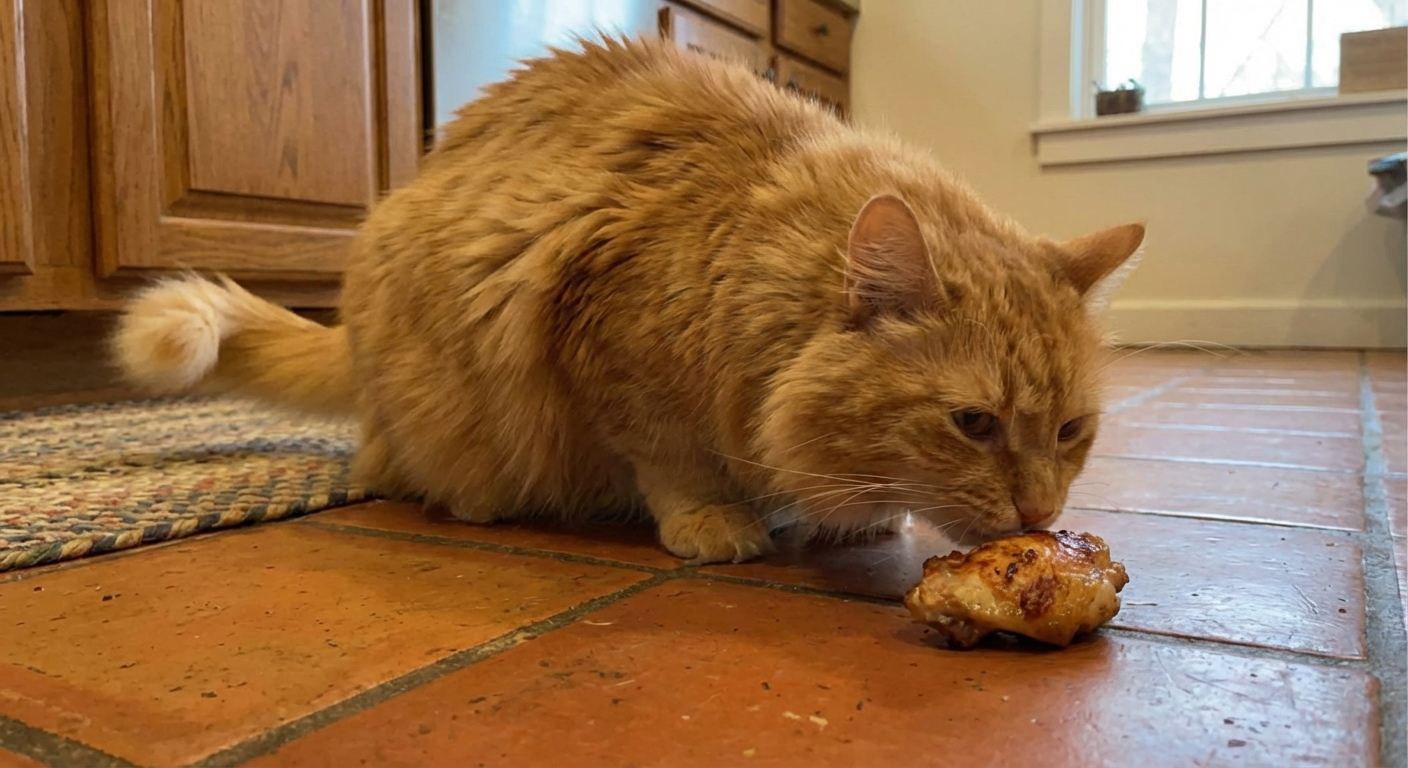
- Deli meats and seasoned rotisserie chicken
- Baby food and some “meat” purees
- Chips, crackers, and snack mixes with onion powder
- Pizza, burgers, and restaurant leftovers
What to do if your cat eats any of these
I know the panic that hits when you realize your cat just ate something they should not have. Take a breath, then act. Timing matters, especially in the first couple of hours.
Step-by-step
- Remove access to the food and any wrappers.
- Figure out what and how much your cat likely ate. Save the packaging and note details (dark chocolate vs milk chocolate, cocoa percentage if known, fresh onion vs onion powder, grape vs raisin).
- Call your veterinarian right away, even if your cat seems fine.
- If your vet is closed, contact a pet poison hotline for immediate guidance. (They may charge a consultation fee.)
- Do not induce vomiting unless a veterinary professional tells you to. Cats can aspirate vomit, and some situations make vomiting unsafe.
- Avoid home remedies like milk, oil, bread, or “detox” supplements unless your vet specifically recommends them.
Have this info ready when you call
- Your cat’s weight and age
- What was eaten and the best estimate of the amount
- When it happened (or the last time your cat was definitely not exposed)
- Any current symptoms (vomiting, lethargy, tremors, breathing changes)
- Any medical history, especially kidney disease, heart disease, diabetes, or medications
What your vet may recommend
Treatment depends on what was eaten, the amount, your cat’s size, and how long it has been. Your clinic may recommend decontamination (like activated charcoal), lab work to check organ function, IV fluids, monitoring, and supportive medications.
When it comes to toxins, “wait and see” can cost valuable time. If you even suspect exposure, it is worth a phone call.
Prevention tips that work
Most cat poisonings are accidents, not negligence. A few simple routines can dramatically lower risk.
- Store chocolate and snacks in closed cabinets, not on the counter.
- Use a lidded trash can. Cats love investigating smells at night.
- Keep cutting boards and pans out of reach until washed. Residue can be a concern, especially if it is concentrated (like powders) or if your cat licks it repeatedly.
- Be careful with leftovers. Many human meals contain onion or garlic without it being obvious.
- Tell guests not to offer “just a bite.” Cats do best with treats made for cats.
Cat-safe treat ideas
If your cat begs when you snack, you are not alone. The goal is to redirect with something safe and simple.
- Single-ingredient freeze-dried cat treats (like chicken or salmon)
- A small portion of plain cooked meat with no seasoning (no onion or garlic)
- Veterinarian-approved commercial cat treats in appropriate portions
If your cat has kidney disease, diabetes, food allergies, or is on a prescription diet, ask your veterinarian which treats are safest for your specific kitty.
When in doubt, call
Chocolate, grapes and raisins, and onions are common household items that can cause real harm. If exposure happens, quick action and professional guidance are your best tools.