Dalmatians are unforgettable. They are athletic, bright, affectionate, and often hilariously opinionated. They are also a breed with a few very specific needs that are easier to handle when you know what you are looking at from day one.
In this guide, I will walk you through four big Dalmatian basics: their high energy needs, a training approach that works for smart but stubborn dogs, what to know about deafness, and why urinary stones get mentioned so often with this breed. (And yes, we will talk about the shedding too, because it is a real thing.)
Temperament and family fit
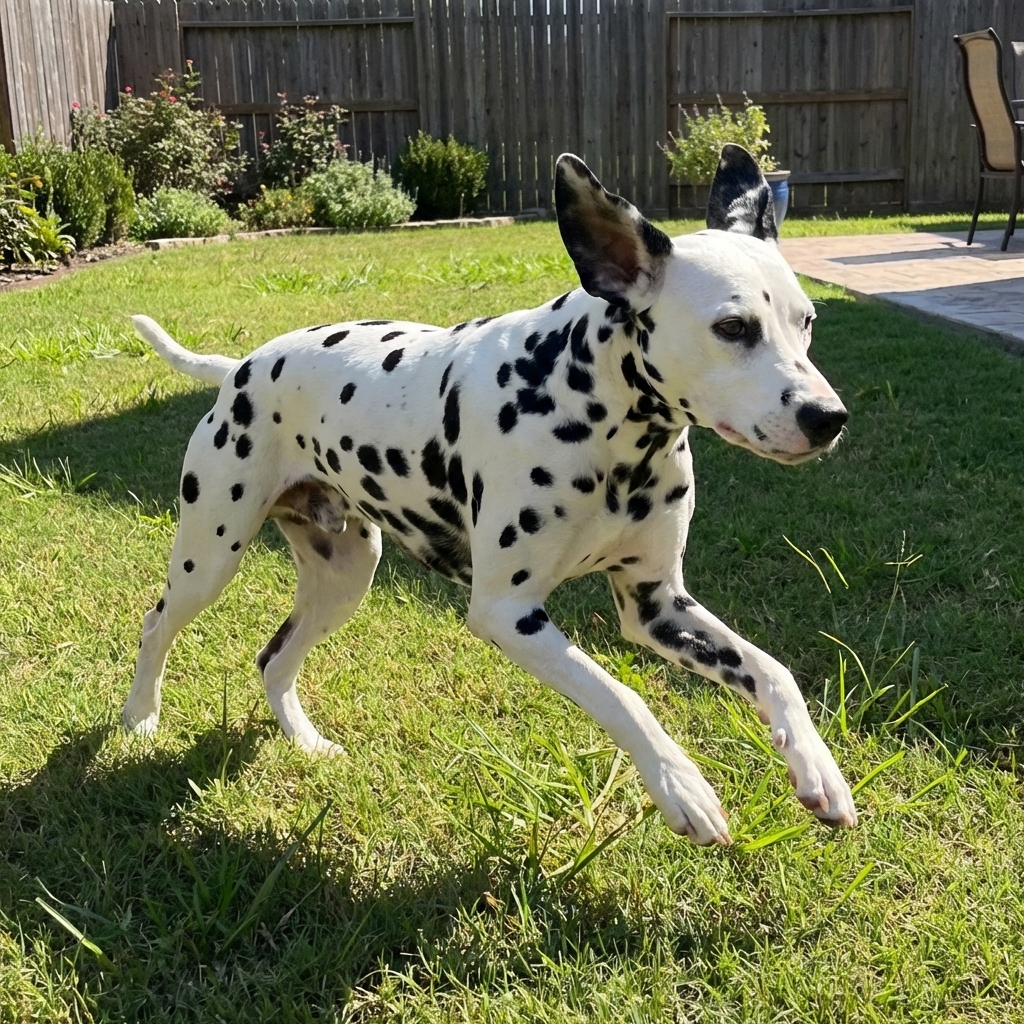
Most Dalmatians are people-focused and love to be involved in whatever the family is doing. They tend to do best in homes where someone enjoys training, walking, hiking, running, or dog sports. If you want a calm couch companion with minimal daily exercise, this may not be your match.
Great fit for
- Active individuals or families who can provide daily exercise plus mental work
- Homes that enjoy structured routines and training
- People who appreciate a dog with personality and independence
Harder fit for
- Very busy households where the dog is often under-exercised
- Homes that prefer an easygoing, biddable temperament all the time
- Families who cannot commit to training and management around jumping, mouthing, and adolescent antics
Kids and other pets: Many Dalmatians do well with respectful kids and other dogs, especially with early socialization. Because they can be excitable and strong, supervision and training matter a lot around small children. If you have cats or small animals, prioritize calm introductions and reward-based training from the start.
Boredom and separation: This is a social, active breed. When they are under-stimulated or left alone without preparation, you can see barking, destructiveness, counter-surfing, or general chaos. The solution is not “more discipline.” It is a better routine: appropriate exercise, enrichment, and gradual alone-time training.
Exercise and enrichment
Dalmatians were historically bred to run alongside horses and carriages. That athletic background shows up as stamina, speed, and an impressive need for daily outlets.
What “enough exercise” looks like
Most healthy adult Dalmatians thrive with a combination of:
- Daily aerobic exercise: brisk walks, hiking, structured fetch, or dog sports. Many adults need roughly 60 to 120 minutes of total activity per day, depending on the individual.
- Training games: short sessions that challenge the brain
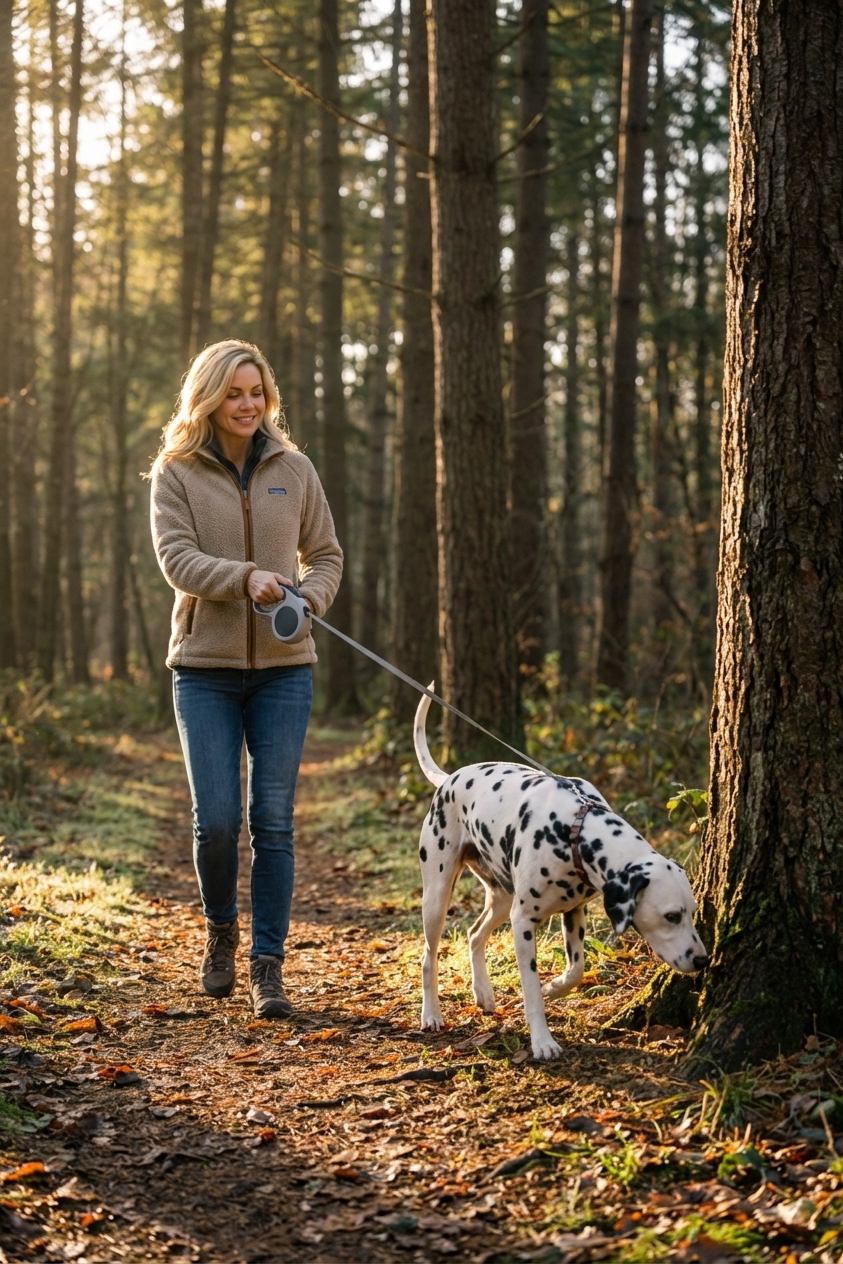
- Sniffing and exploring: decompression walks on a long line are often helpful for helping many dogs settle
Puppies need exercise too, but it should be age-appropriate and joint-friendly. Avoid repetitive high-impact running until your veterinarian confirms your dog is physically ready. If you want to jog, start only once your veterinarian says your dog is ready for it.
Easy enrichment ideas
- Scatter feeding in the yard or on a snuffle mat
- Frozen food toys for licking and calming
- Find-it games with treats hidden in one room
- Short trick-training sessions: spin, bow, place, touch
Training basics
In the clinic, I have seen it over and over: Dalmatians learn fast, but they do not always agree that your idea is the best idea. That does not mean they are “bad” or “dominant.” It means they are intelligent, observant, and motivated by what pays off.
What works best
- Positive reinforcement: reward the behavior you want with treats, toys, or access to something fun
- Short sessions: 3 to 8 minutes can be plenty, repeated a few times a day
- Clear criteria: be consistent about what earns the reward
- Management: use baby gates, leashes, and crates to prevent rehearsing unwanted behaviors
Common challenges and fixes
- Jumping on people: teach a reliable “sit for greetings” and reward four paws on the floor. Ask visitors to ignore jumping completely.
- Pulling on leash: reward loose leash steps frequently at first. Consider a front-clip harness and practice in low-distraction areas before leveling up.
- Mouthiness in young dogs: redirect to a chew toy, reinforce calm behavior, and build an off-switch with a “place” cue and food puzzles.
- Selectively listening: raise the value of your rewards and practice recall on a long line. Do not call your dog for things they dislike, like nail trims.
Training tip: For Dalmatians, consistency beats intensity. Calm, repetitive practice with good rewards typically outperforms harsh corrections.

Deafness awareness
Congenital deafness is more common in Dalmatians than in many other breeds. It can affect one ear (unilateral) or both ears (bilateral). Some dogs with one-sided hearing loss can seem totally typical at home, so it is not always obvious without testing.
Why it happens
At a simple, lay level, deafness risk in Dalmatians is linked to pigmentation genetics. Pigment cells (melanocytes) play an important role in normal inner ear development. When melanocytes are absent in parts of the inner ear, the structures needed for normal hearing can be affected. The coat pattern itself is not the “cause,” but it is tied to the same genetic pathways.
Testing that matters
If you are purchasing or adopting a Dalmatian puppy, ask about a BAER test (Brainstem Auditory Evoked Response). This is the standard, objective test used to evaluate hearing. BAER testing is commonly performed when puppies are around 5 to 6 weeks old or older, depending on local practice. Responsible breeders often BAER test litters and can provide results.
Living with a deaf Dalmatian
Deaf dogs can live full, happy lives. The keys are safety and communication.
- Train hand signals for sit, down, stay, come, and “look”
- Use a long line outdoors and avoid off-leash areas that are not securely fenced
- Teach a gentle wake-up routine to prevent startle responses
- Consider a vibrating collar as a cue (not a shock collar), if recommended by a trainer experienced with deaf dogs
Spotting genetics
Dalmatian puppies are famously born mostly white. Their spots develop over the first weeks of life and continue to refine as they grow.
For families, the takeaway is this: pigmentation genetics are not just cosmetic in Dalmatians. They are part of why breeders pay close attention to hearing and why reputable breeding programs emphasize health testing and careful selection.
If your Dalmatian mix has ticking or spots, it does not automatically mean they will have Dalmatian-specific health issues, but it is a reason to keep urinary health and hearing awareness on your radar, especially if the dog strongly resembles the breed.

Grooming and shedding
Dalmatians have a short coat, but do not let the sleek look fool you. Most are heavy, year-round shedders, and their short, stiff hairs have a special talent for weaving into upholstery, rugs, car seats, and sweaters like they pay rent.
What helps
- Brush routinely: a rubber curry brush or grooming mitt several times a week helps remove loose coat before it lands in your laundry
- Baths as needed: not too frequent, but occasional baths can help loosen shedding hair
- Nails and ears: keep nails short for comfort and traction, and check ears regularly (especially important for dogs with hearing concerns)
If someone in the home is sensitive to dog hair, plan for proactive cleaning and consider whether this coat type will be frustrating long-term.
Urinary stones
Urinary tract issues are one of the most important Dalmatian health topics. The reason is largely metabolic. Most traditional-line Dalmatians have a breed-related difference in how their bodies handle the end products of purine breakdown.
Here is the clean version: purines are broken down into uric acid. In most dogs, the liver enzyme uricase converts uric acid into allantoin, which is more easily dissolved and passed in urine. In many Dalmatians, more uric acid ends up in the urine, increasing the risk of crystals and stones, especially urate stones.
A note on LUA Dalmatians: You may hear about the LUA (Low Uric Acid) Dalmatian outcross project. These lines were developed to introduce a normal uric acid metabolism trait back into the breed. That is one reason it is accurate to say “many” or “most traditional lines,” rather than “all” Dalmatians, when discussing urate stone risk. If you are buying a puppy, it is reasonable to ask whether the dog is from an LUA line and what screening or guidance the breeder provides.
Signs to watch for
Urinary stones and urinary tract irritation can look like:
- Straining to urinate
- Frequent small urinations
- Blood in urine
- Accidents in a previously house-trained dog
- Licking at the genital area
- Discomfort, restlessness, or crying when trying to urinate
Emergency note: If your dog cannot pass urine at all, that can be a life-threatening obstruction, especially in males due to anatomy. Seek emergency veterinary care immediately.
Prevention basics
Your veterinarian is your best guide here because the right plan depends on your dog’s history, stone type (urate versus other types), and urine testing. In general, prevention focuses on keeping urine dilute and supportive of urinary tract health.
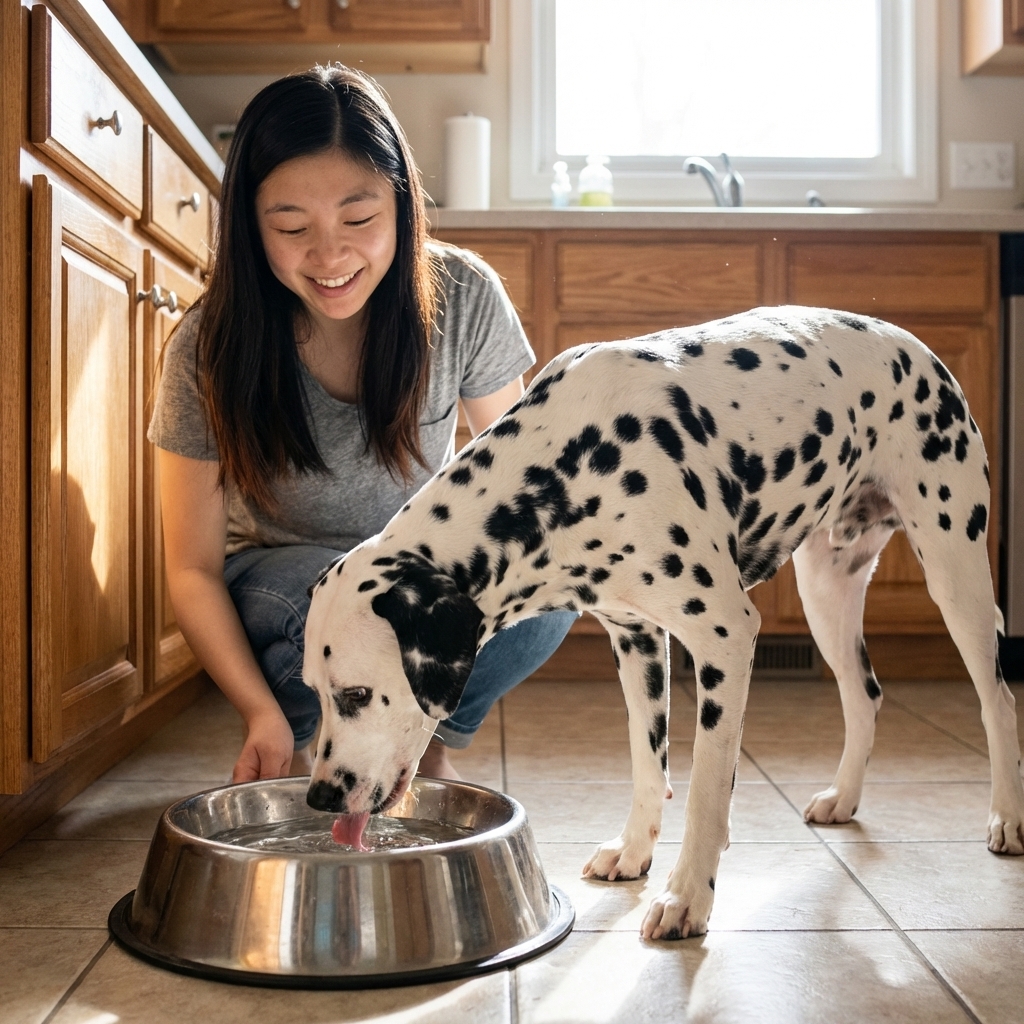
- Hydration: encourage water intake. Many Dalmatians do well with added water to meals or more canned or fresh foods with higher moisture.
- Frequent potty breaks: holding urine for long periods can increase risk in stone-prone dogs.
- Diet strategy: for stone-prone Dalmatians, veterinarians often recommend diets that manage purines and support appropriate urine concentration and pH.
- Monitoring: periodic urinalysis helps catch crystals early, before they become stones.
Food and treats
Because purines matter, avoid making big diet changes without guidance if your Dalmatian has a history of urate stones. Some dogs need a very specific nutritional approach.
If you want to add fresh foods, do it slowly and ask your veterinarian about safe options for your individual dog. The goal is always the same: support hydration, keep urine moving, and feed a plan that matches your dog’s risk.
Daily routine
If you want a simple blueprint, this is a realistic day that works for many healthy adult Dalmatians:
- Morning: brisk walk plus 5 minutes of training (sit, stay, leash skills)
- Midday: potty break and a food puzzle or sniff game
- Afternoon or evening: longer exercise session or sport practice, then calm settle time
- Night: final potty break, especially important for urinary health
When Dalmatians get consistent exercise, mental work, and clear rules, they are often wonderful companions. When they do not, they can invent their own job, and you may not like the job they pick.
Quick FAQ
Are Dalmatians good for first-time owners?
They can be, but they are rarely “easy.” If you are a first-time owner who loves structure, enjoys training, and wants an active lifestyle, a Dalmatian can be an amazing match. If you prefer low-maintenance, consider a lower-energy breed or older dog with a known temperament.
Do all Dalmatians get urinary stones?
No, not all. But the breed has a higher risk for urate stones, especially in traditional lines, so prevention, hydration, and monitoring are especially important.
Is a Dalmatian mix the same as a purebred Dalmatian for health risks?
Not always. It depends on genetics and individual risk factors. Still, if your dog has strong Dalmatian traits, it is smart to discuss urinary health and hearing with your veterinarian.
Key takeaways
- Dalmatians are high-energy dogs who need daily movement plus mental enrichment.
- They are smart and can be stubborn. Reward-based, consistent training works best.
- Congenital deafness is more common in this breed. BAER testing is the gold standard.
- They shed a lot, and the short hairs stick into fabrics. Routine brushing helps.
- Urinary stones are a major Dalmatian topic due to uric acid metabolism. Hydration and veterinary-guided diet choices matter.
If you are considering a Dalmatian or already share your home with one, you are in for a lively, loving companion. Put the right routines in place early, and you will be amazed at how much this spotted athlete can thrive in a family.