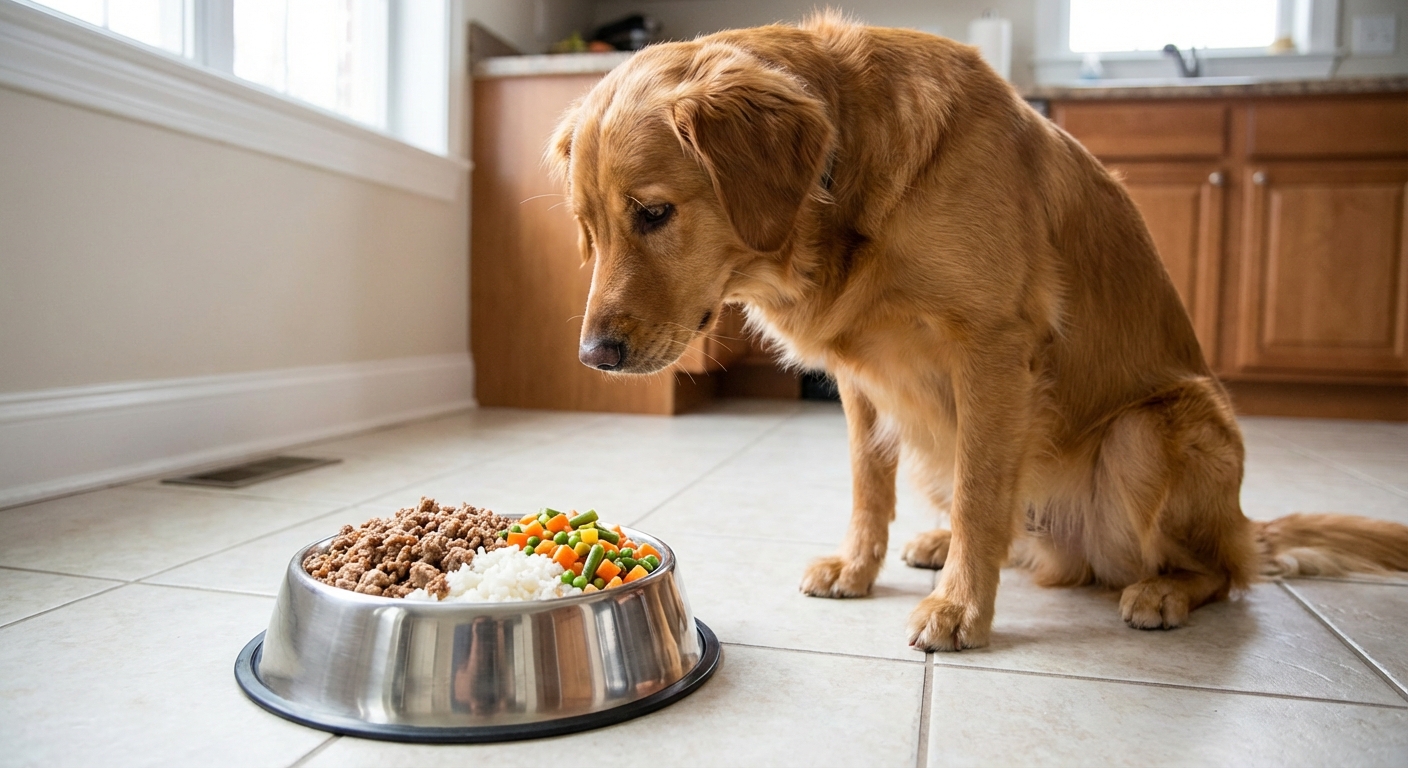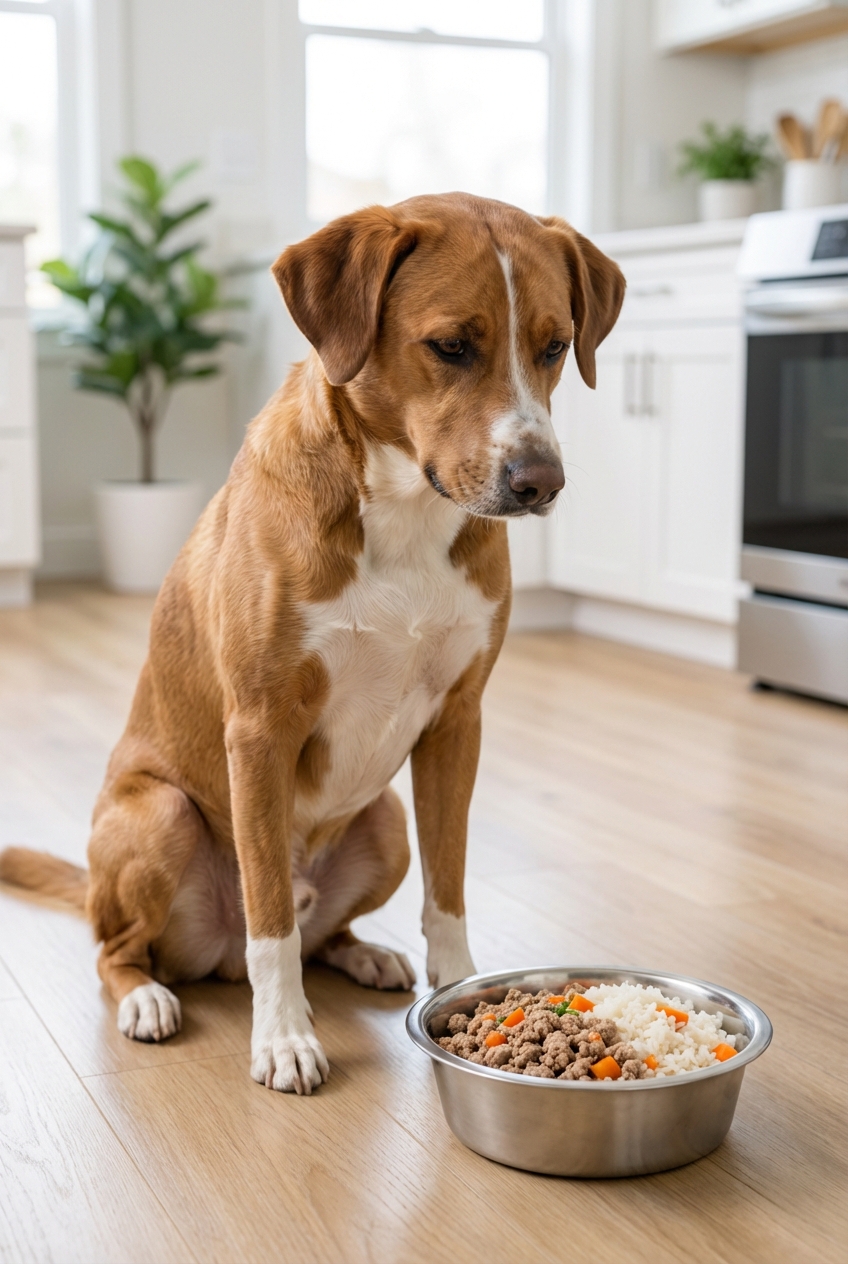
Help your dog feel better with gentle homemade meals for sensitive stomachs. Learn a 3-ingredient bland reset, easy recipes, transition steps, and what signs...
Article
•
Designer Mixes
Daily Upset Stomach in Dogs

Shari Shidate
Designer Mixes contributor
If your dog seems to have an upset stomach every day, you are not imagining things. Recurring nausea, loose stools, or increased gut sounds are common reasons pet parents call a clinic, and it can be frustrating because the causes range from simple and fixable to genuinely urgent. As a veterinary assistant in Frisco, Texas, I have seen how much relief families feel once they have a clear plan.
This handbook walks you through likely causes, what to track at home, when to call your veterinarian right away, and the vet-guided first-line strategies that often help reduce daily stomach issues.
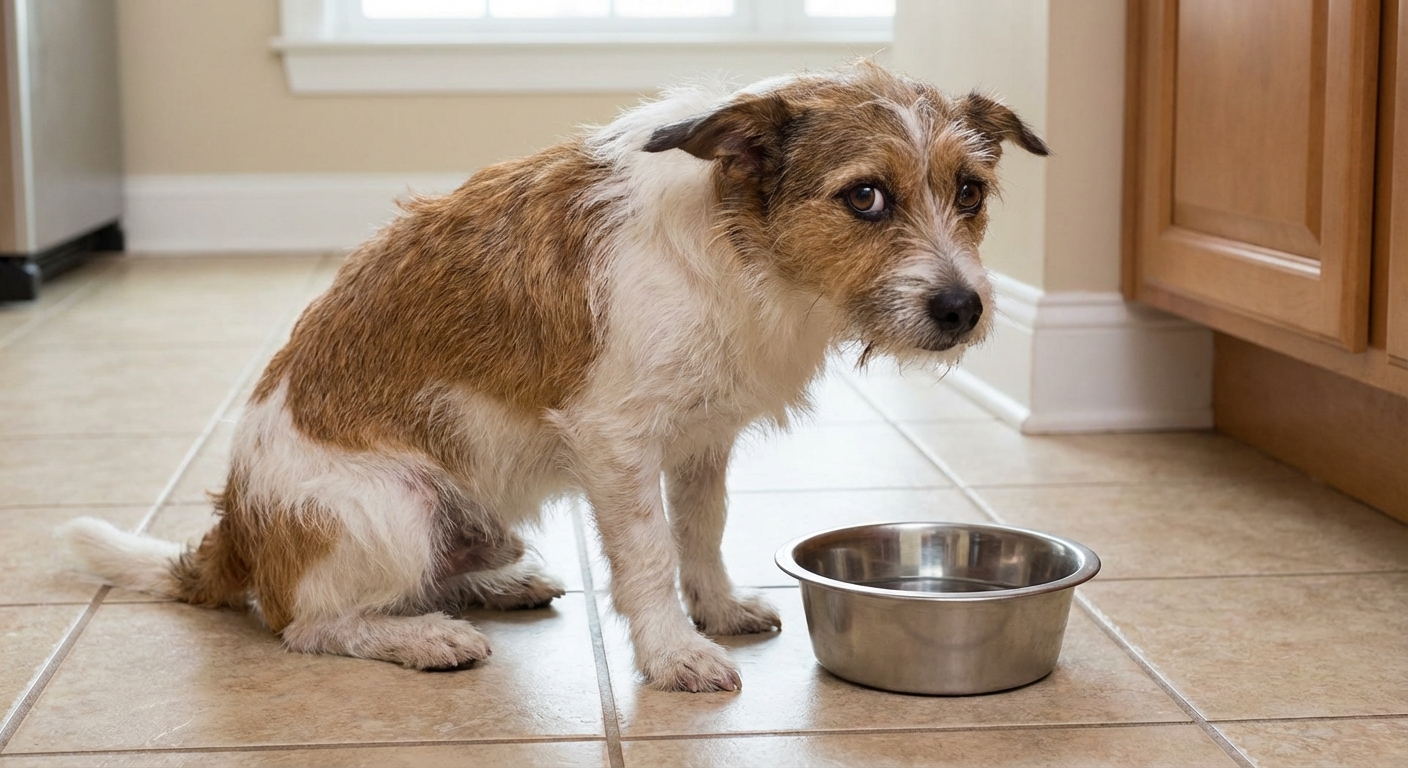
Quick guide: when to act
- Go to an emergency clinic now if you see blood, black tar-like stool, repeated unproductive retching, a swollen tight belly, collapse, severe weakness, or your dog cannot keep water down.
- Book a veterinary visit soon if symptoms happen most days for more than 2 weeks, there is weight loss, appetite changes, or the pattern keeps returning.
- If mild and your dog is otherwise normal, start a 7-day log, tighten the menu, and bring a stool sample to your appointment.
What counts as a daily upset stomach
Most dogs have an occasional soft stool or a single vomit episode and bounce back. “Daily” upset stomach means symptoms are persistent or predictable, such as:
- Vomiting or retching several times per week or daily
- Loose stool, mucus, or diarrhea that keeps returning
- Frequent grass eating, lip licking, drooling, or swallowing (common nausea signs)
- Increased gut sounds, discomfort, bloating, or restlessness
- Reduced appetite, picky eating, or skipping meals
- Excess gas, burping, or reflux-like symptoms
- Straining to poop, hard stools, or going less often (constipation can look like “stomach upset”)
What owners often notice: mucus can look like clear or whitish jelly on the stool. Black, tar-like stool (often described as sticky and very dark) can signal digested blood and should be treated as urgent.
Important: repeated “small” issues can still lead to dehydration, weight loss, nutrient deficiencies, and a very unhappy gut over time.
Red flags: get urgent care
Daily stomach upset is often not an emergency, but these signs can be. Contact your veterinarian or an emergency clinic now if you see:
- Vomiting with blood, coffee-ground material, or black tar-like stool
- Severe lethargy, collapse, pale gums, or trouble breathing
- A swollen, tight abdomen or repeated unproductive retching (possible bloat)
- Suspected foreign object, toxin exposure, or chewing on strings, socks, toys
- Inability to keep water down, or signs of dehydration (sticky gums, sunken eyes)
- Profuse watery diarrhea, very frequent diarrhea, or diarrhea lasting more than 24 hours, especially with vomiting or lethargy (small dogs and puppies can dehydrate fast)
- Puppies, seniors, or dogs with chronic disease getting worse quickly
- Weight loss, fever, or ongoing pain
If your dog is stable but has daily symptoms, you still want an appointment soon. Chronic GI problems are easier to treat when addressed early.
Common causes of daily upset stomach
Think of the stomach and intestines like a system. When it is irritated, inflamed, or out of balance, symptoms repeat. Here are common patterns we see in practice.
Dietary issues (the biggest bucket)
- Too many treats or rich foods: Fatty people-food, high-calorie treats, and chews can trigger pancreatitis or ongoing irritation.
- Food intolerance or sensitivity: Not a true allergy in many cases, but certain proteins, fats, or additives can cause chronic soft stool or vomiting.
- Sudden diet changes: Switching foods too quickly can upset the microbiome and cause diarrhea.
- Hard-to-digest diets: Some formulas are simply not a good match for certain dogs.
- Feeding schedule problems: Long gaps between meals can contribute to bilious vomiting syndrome (yellow foamy vomit in the morning).
Parasites and infections
- Giardia: A common cause of recurring soft stool, mucus, and foul odor, especially in dogs exposed to daycare, dog parks, shared water bowls, puddles, or creek water.
- Worms: Roundworms, hookworms, and whipworms can cause chronic GI signs.
Dysbiosis and antibiotic-responsive diarrhea
Some dogs develop an imbalance in gut bacteria (often called dysbiosis). This can happen after antibiotics, stress, diet changes, or illness. It is not something you can diagnose at home, so it is best discussed with your veterinarian as part of a workup rather than assumed.
Chronic inflammation
- Food-responsive enteropathy: Symptoms improve significantly on a carefully chosen diet trial.
- Inflammatory bowel disease (IBD): A diagnosis made after ruling out other causes and sometimes with biopsy. Can cause vomiting, diarrhea, and weight loss.
Pancreatitis (acute or smoldering)
Pancreatitis is inflammation of the pancreas and can be triggered by high-fat foods. Some dogs have recurrent low-grade episodes that look like “my dog’s stomach is always off.”
Reflux and nausea patterns
- Bilious vomiting syndrome: Typically early morning vomiting of yellow bile when the stomach is empty too long. Other causes of morning vomiting exist, so confirm the pattern with your veterinarian.
- Acid reflux: Can show up as lip licking, swallowing, gulping, or “burping.”
Stress and routine changes
Yes, stress can impact the gut. Travel, boarding, new pets, schedule changes, and separation anxiety can lead to chronic loose stool or vomiting. The gut and brain communicate constantly through the gut-brain axis.
Other conditions your vet may rule out
- Liver or kidney disease
- Endocrine disease (Addison’s disease is a classic “chronic GI” masquerader)
- Exocrine pancreatic insufficiency (EPI), especially with weight loss and large-volume stool
- Partial or intermittent obstruction (a foreign body that is not fully blocking can cause on-and-off symptoms)
- Protein-losing enteropathy (PLE) or other causes of poor nutrient absorption
- GI tumors, especially in older dogs
- Dental disease or oral pain that reduces appetite and can mimic nausea
- Medications and supplements that irritate the GI tract (NSAIDs, some antibiotics)

What to track at home
When stomach issues are daily, details matter. A simple notes app log can speed up diagnosis.
Daily GI journal
- Food: brand, flavor, protein source, treats, chews, table scraps, new items
- Timing: when meals are fed, any long fasting overnight
- Stool: frequency, consistency, mucus, blood, color
- Vomiting: time of day, what it looks like (food, foam, bile), frequency
- Energy and appetite: normal, picky, lethargic
- Weight: weekly weigh-ins if possible
- Environment: new stressors, daycare, boarding, dog park, standing water exposure
Bring a stool sample
If you can, bring a fresh stool sample to the appointment. Parasite testing, including Giardia, is often a first step for chronic loose stool.
- Best: fresh sample collected within about 12 hours.
- Storage: place in a clean container or sealed bag and refrigerate if you cannot bring it right away.
- Do not freeze unless your clinic specifically tells you to.
- Your clinic may ask for more than one sample collected on different days.
What your veterinarian may recommend
For daily upset stomach, your veterinarian will usually start with the safest, most likely answers and work step-by-step.
Common diagnostics
- Fecal testing: looks for parasites and Giardia
- Bloodwork: checks hydration, infection or inflammation, liver and kidney values, electrolytes
- Urinalysis: supports a broader health picture
- Pancreatitis testing: often an in-house or send-out test
- X-rays or ultrasound: checks for foreign material, organ changes, obstruction, chronic inflammation
- Diet trial: a prescription hydrolyzed or novel protein diet, usually for 8 to 12 weeks
Common treatments
- Anti-nausea meds: reduce vomiting and help dogs eat and hydrate
- GI protectants: used in certain cases to reduce irritation
- Probiotics: veterinary products may help normalize stool consistency in some dogs, but they are not a cure-all
- Parasite treatment: sometimes done even if tests are negative when suspicion is high
- Prescription diets: highly digestible, low-fat, or hydrolyzed depending on the suspected cause
Tip: If you try multiple things at once, it becomes hard to know what worked. Ask your veterinarian for a clear sequence and timeline.
At-home steps that often help
Always check with your veterinarian first, especially if your dog is young, elderly, or has health conditions. But these steps are commonly used and often helpful for recurring mild GI upset.
1) Tighten the menu
One of the fastest ways to calm a chronically irritated gut is to reduce variables.
- Stop table scraps completely for 2 to 3 weeks.
- Limit treats to a small amount and use the same ingredient as the main diet when possible.
- Pause new chews, rawhides, pig ears, and very fatty rewards.
2) Slow transitions
If you are switching foods, go slower than you think.
- Days 1 to 3: 25% new, 75% old
- Days 4 to 6: 50% new, 50% old
- Days 7 to 9: 75% new, 25% old
- Days 10 to 14: 100% new
If your dog has daily symptoms, your veterinarian may advise an even slower transition or may recommend a prescription diet trial instead.
3) Meal timing for morning bile vomiting
If the pattern is early morning yellow foam, ask your veterinarian about bilious vomiting syndrome. Many dogs improve with:
- A small bedtime snack
- Smaller, more frequent meals
- A highly digestible diet
Because morning vomiting can have other causes, it is worth confirming the pattern and ruling out other triggers with your veterinarian.
4) Hydration support
Even mild diarrhea can dehydrate dogs over time.
- Keep fresh water available.
- If your dog is not drinking well, ask your veterinarian whether adding water to meals or offering low-sodium broth is appropriate.
5) Veterinary probiotics, with realistic expectations
Not all probiotics are equal. Look for veterinary-recommended products with clear strain information and quality control. They can be helpful for some dogs, especially alongside diet changes, but they are rarely the only fix when symptoms are daily.
Homemade food: do it correctly
I love whole foods and I have seen many dogs thrive when their diets are simplified and improved. But for a dog with daily GI upset, homemade food should be used thoughtfully.
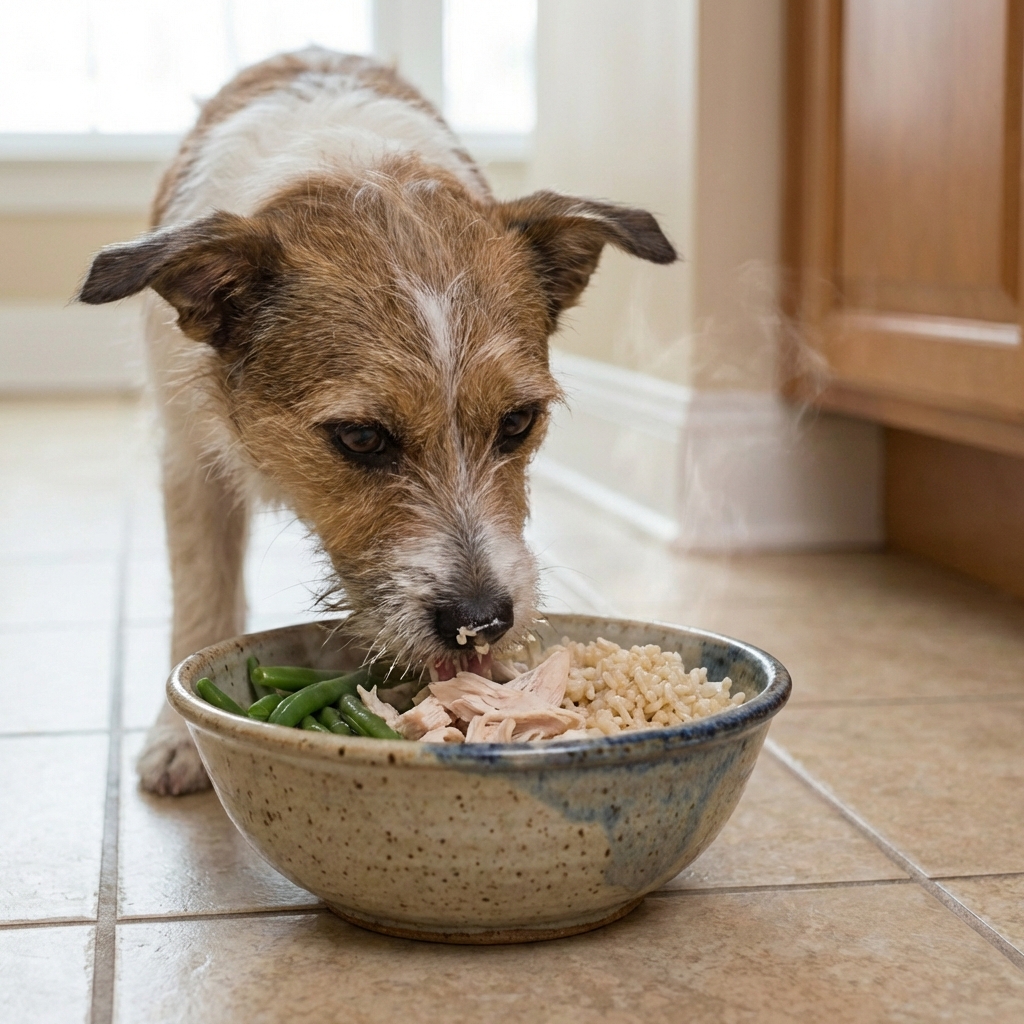
Short-term bland diet
Your veterinarian may recommend a temporary bland diet for a few days during a flare. Common options include cooked lean protein and an easy carb. The exact choice depends on your dog and their history, so ask first, especially if pancreatitis is a concern.
Longer-term homemade feeding
If you want to stay homemade, it is essential to balance the diet with the right calcium, vitamins, and minerals. An unbalanced homemade diet can cause deficiencies and make a sensitive gut worse over time.
- Work with your veterinarian or a board-certified veterinary nutritionist.
- Use a complete recipe or a properly formulated supplement designed to balance homemade meals.
- Keep fat levels appropriate for your dog, especially if pancreatitis is suspected.
Common triggers
- High-fat foods: bacon, sausage, greasy leftovers
- Dairy: some dogs tolerate it, many do not
- Rich chews: bully sticks, tendon chews, pig ears can be too much for sensitive dogs
- Trash access: “garbage gut” causes recurring problems if the habit continues
- Sudden treat overload: holidays and guests are classic triggers
- Outdoor water: puddles and creek water increase Giardia risk
How long is too long?
If your dog has GI symptoms most days of the week for more than 2 weeks, it is time to schedule a veterinary visit if you have not already. Chronic stomach upset is not “normal,” and you deserve a clear diagnosis and plan.
If your dog’s stomach seems upset daily, your goal is not just to stop the symptoms. Your goal is to find and remove the trigger, then rebuild a calmer, more resilient gut.
FAQ
Can stress cause daily diarrhea?
Yes. Stress can change gut motility and the microbiome. That said, do not assume it is stress until parasites, diet triggers, and medical causes have been considered.
Should I stop food for 24 hours if my dog vomits?
Not automatically. Fasting is not appropriate for every dog, especially puppies and small breeds. Follow your veterinarian’s instructions.
Are grain-free diets better for upset stomach?
Not necessarily. Some dogs do well on grain-free, but many do not need it, and grain-free diets are not a universal solution for GI problems. What matters most is digestibility, fat level, ingredient match, and overall formulation quality. Also, some grain-free diets have been associated with diet-associated DCM concerns, so it is worth discussing diet choice with your veterinarian.
Is it okay to give human OTC medications?
Please do not give human GI meds without veterinary guidance. Some are unsafe for dogs or unsafe with certain conditions, and they can mask symptoms that your veterinarian needs to evaluate.
Next steps
If you are dealing with daily upset stomach, start with two actions today:
- Log symptoms for 7 days including diet details and timing.
- Book a veterinary visit and bring that log plus a fresh stool sample if possible.
You are doing the right thing by paying attention. When we pair careful observation with the right testing and a steady nutrition plan, many dogs improve significantly.