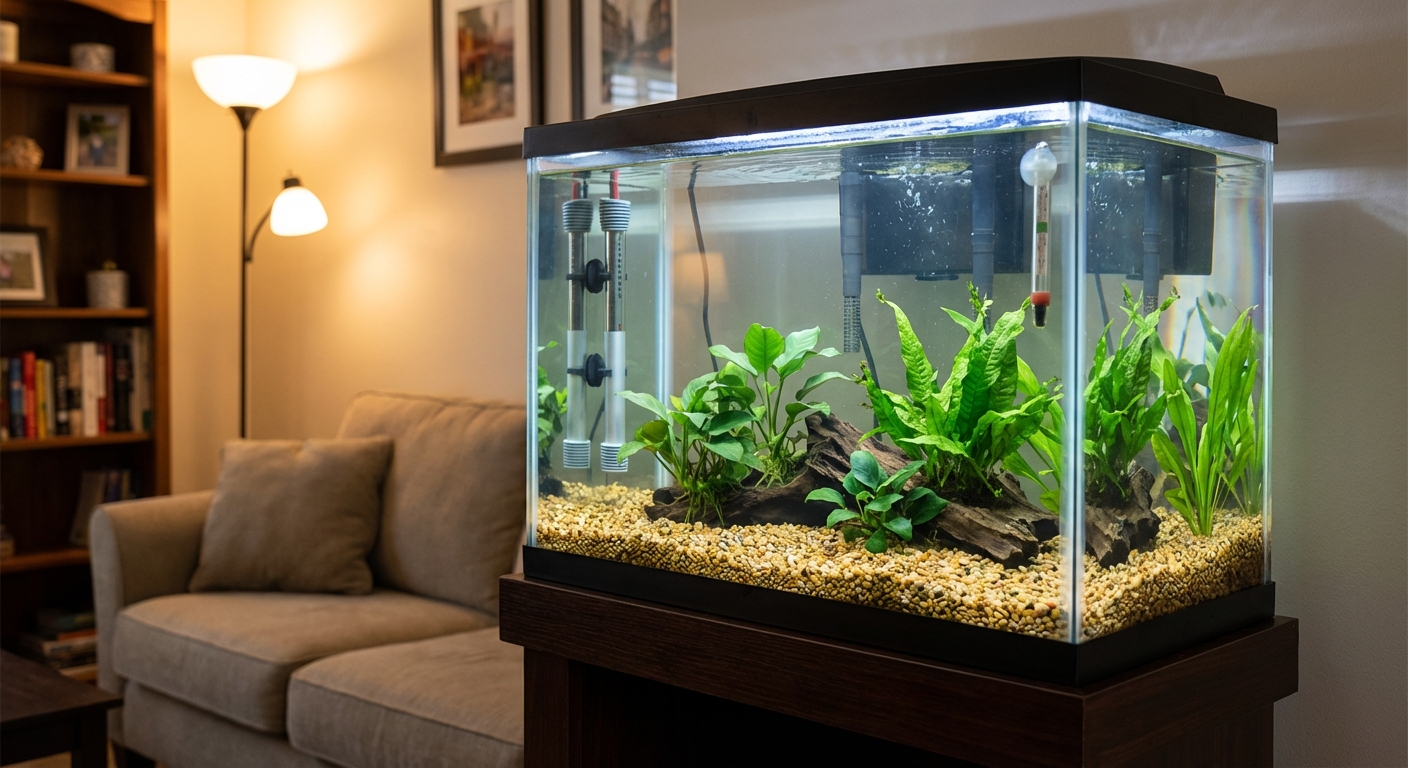
Understand aquarium cycling and the nitrogen cycle: how beneficial bacteria convert ammonia to nitrite to nitrate, how long it takes, and how to cycle fishle...
Article
•
Designer Mixes
Daily Tank Cycling Guide

Shari Shidate
Designer Mixes contributor
If you have ever watched a dog sprint joyful circles in the yard, you already understand the energy behind “cycling.” In the aquarium world, cycling a tank is the healthy, steady process of building the right bacteria so your fish can thrive. And just like good behavior training, it works best when you do a little bit every day, stay consistent, and pay attention to the signals.
As a veterinary assistant in Frisco, Texas, I am a big believer in routines that protect health. A properly cycled aquarium is one of the kindest things you can do for your fish because it prevents toxic ammonia and nitrite spikes that can cause stress, disease, and even sudden loss.
What cycling means
Cycling is the process of growing beneficial nitrifying bacteria that convert toxic waste into less harmful compounds. Fish release ammonia mostly through their gills (and also through waste), and leftover food breaks down into ammonia too. In a cycled tank, bacteria convert:
- Ammonia (NH3/NH4+) into nitrite (NO2-)
- Nitrite into nitrate (NO3-)
Nitrate is still not “good,” but it is much safer at low levels and can be managed with water changes and live plants.
Why this matters: Ammonia and nitrite can burn gills and skin, suppress immunity, and cause fish to gasp at the surface. Cycling is how you prevent that.
Before you start
Supplies that help
- Liquid test kit (ammonia, nitrite, nitrate, pH). Liquid kits are typically more reliable than paper strips.
- Dechlorinator (water conditioner). Chlorine and chloramine can harm fish and beneficial bacteria.
- Filter and media (sponge, ceramic rings, bio-balls). Beneficial bacteria live on surfaces, especially inside the filter.
- A heater (for tropical tanks). Stable temperature supports bacterial growth and reduces stress.
- Thermometer so you can verify temperature, not guess.
How long it takes
Most new tanks take about 2 to 6+ weeks to cycle. It can be faster if you seed with established media and keep temperature stable, and slower if the tank runs cool, the filter is underpowered, or parameters swing.
Choose your method
You will usually hear two options:
- Fishless cycling: you cycle the tank without fish by adding an ammonia source. This is the gentlest method for animals.
- Fish-in cycling: fish are present while the bacteria develop. This requires daily monitoring and careful water changes to protect the fish.
If you are deciding today, I recommend fishless cycling whenever possible. It can feel slower, but it is often faster in the long run because you avoid setbacks and illness.
Seeding options
If you can safely “borrow” bacteria, cycling gets easier. Options include:
- Established filter media from a healthy, mature tank (best option when available).
- Bottled bacteria (results vary by product and storage, but can help).
Quick caution: Moving media from another tank can also move unwanted hitchhikers (like parasites or algae). Only seed from a tank you trust and that has healthy fish.
Daily routine
The daily behavior that gets you the best results is simple: test, respond, and stay consistent. Below is a day-to-day guide that works for both fishless and fish-in cycling, with notes where they differ.
Step 1: Test daily
At about the same time each day, test:
- Ammonia
- Nitrite
- Nitrate
- Temperature
Goal during cycling: you are watching the pattern, not chasing perfection. The pattern tells you where you are in the process.
Step 2: Feed the cycle
If you are fishless cycling: add a measured ammonia source to “feed” the bacteria. Many hobbyists target a controlled level in the 1 to 4 ppm range depending on the method. The safest approach is to follow dosing instructions for your specific ammonia source and re-test after dosing.
Note: Very high total ammonia can slow bacterial growth, especially at higher pH and temperature where more ammonia is in the harsher NH3 form.
If you are fish-in cycling: feed fish lightly. Overfeeding is the fastest way to create an ammonia spike. Aim for small portions they finish quickly, and remove leftovers.
Step 3: Water changes for safety
Fishless cycling: you usually do fewer water changes until the end, unless you overdosed ammonia or readings are extremely high and not coming down.
Fish-in cycling: water changes are your safety net. If you see any detectable ammonia or nitrite, plan a partial water change and re-test.
- As a simple starting point, do 25 to 50% when ammonia or nitrite is above zero.
- If fish look stressed or numbers are rising fast, go toward the higher end and repeat as needed.
Use dechlorinator every time.
Behavior tip: Think of water changes like calm corrections. They are not a punishment. They are a gentle reset that keeps the environment safe while biology catches up.
Optional freshwater note: Nitrite interferes with oxygen transport. In some freshwater setups, adding chloride (often via aquarium salt) can reduce nitrite uptake. This is species-dependent and not appropriate for every tank (especially some plants, invertebrates, and salt-sensitive fish), so consider it optional and research your livestock first.
Step 4: Protect your bacteria
- Do not rinse filter media under tap water. If you must rinse, swish it in removed tank water.
- Keep the filter running 24/7. Beneficial bacteria need oxygen and flow. A short outage is usually not instantly catastrophic, but extended stagnation can harm the colony.
- Avoid deep cleaning during cycling. You are building a colony, not scrubbing it away.
Step 5: Log results
This is the unglamorous step that makes you successful. Write down ammonia, nitrite, nitrate, and any actions taken. In 5 minutes, you get peace of mind and a clearer sense of progress.
Cycling stages
Most tanks follow a predictable sequence.
Stage 1: Ammonia rises
In the beginning, you may see ammonia appear while nitrite and nitrate stay at zero. This is normal.
Stage 2: Nitrite spikes
Once ammonia-eating bacteria establish, ammonia starts dropping and nitrite rises. This is often the most dangerous stage for fish-in cycling because nitrite is very harmful.
Stage 3: Nitrate appears
When nitrite-eating bacteria establish, nitrite drops and nitrate rises. This is the sign that your biofilter is maturing.
How to know you are cycled
The big picture remains the same: ammonia and nitrite should read zero in a stable, cycled aquarium, while nitrate is present and manageable.
Fishless cycling benchmark: after dosing your chosen amount of ammonia, the tank can typically bring ammonia to 0 ppm and nitrite to 0 ppm within about 24 hours (with nitrate rising). Then do a partial water change to reduce nitrate before adding fish.
Nitrate basics: Nitrate is controlled with water changes, plants, and reasonable stocking. Many community freshwater tanks aim to keep nitrate below about 20 to 40 ppm, but needs vary by species and setup.
Fish behavior cues
Your test kit is your evidence. Your fish are your early warning system.
Stress signs that need a test
- Gasping at the surface or hanging near the filter output
- Clamped fins, lethargy, hiding more than usual
- Red or irritated gills
- Sudden refusal to eat
- Erratic swimming or rubbing against objects
If you see these: test ammonia and nitrite right away and be ready to do a partial water change.
Important: These signs are not exclusive to cycling problems. They can also point to low oxygen, temperature issues, or parasites. While you test ammonia and nitrite, also check aeration and surface agitation, confirm temperature, and consider other causes if readings are normal.
Common mistakes
- Replacing filter cartridges too often. That is where much of your beneficial bacteria live. If you must replace something, preserve established media whenever possible.
- Overcleaning gravel and decorations. A light vacuum is fine, but aggressive cleaning can set you back.
- Adding too many fish at once. Even after cycling, increase stocking gradually so the bacteria can adjust.
- Skipping dechlorinator. Chlorine and chloramine can damage the very bacteria you are trying to grow.
- Chasing pH with quick fixes. Stability is usually safer than constant swings.
Finish strong
When you start seeing consistent 0 ammonia and 0 nitrite readings, you are close.
- Keep testing daily for several more days to confirm stability.
- Do a 25 to 50% water change to reduce nitrate before adding more fish.
- Add livestock slowly, monitoring parameters after each addition.
If you are moving from fishless cycling to adding fish, go gently. Just because the tank can process waste today does not mean it can handle a full community overnight.
Quick daily checklist
- Check temperature and equipment (heater, filter flow)
- Test ammonia and nitrite (and nitrate as the cycle progresses)
- Fishless: dose ammonia appropriately, Fish-in: feed lightly
- Water change if needed for safety (especially fish-in)
- Log results
Consistency is what cycles a tank. A few minutes a day prevents the most common problems and keeps your fish safer while the biology matures.
When to ask for help
If you are doing daily testing and you are stuck in the same stage for weeks, it is okay to reach out to an experienced aquarium store or hobbyist group. Bring your log with exact numbers. Evidence-based troubleshooting is much faster than guessing.
Also consider asking for help if: you see repeated ammonia or nitrite spikes, unexplained fish deaths, or your water parameters swing dramatically after maintenance.