Understand common cat-in-heat behaviors, how long estrus lasts, and vet-approved steps to keep her comfortable and safe. Learn what not to do and when to cal...
Article
•
Designer Mixes
Daily Signs Your Cat Is in Heat

Shari Shidate
Designer Mixes contributor
If your sweet, quiet cat suddenly turns into a talkative, wiggly, attention-seeking little drama queen, you are not imagining things. When an unspayed female cat reaches sexual maturity, she goes through repeating heat cycles (also called estrus). These cycles can show up as noticeable behavior changes that feel mysterious, but they are actually very predictable once you know what to look for.
As a veterinary assistant, I always tell families this: a cat in heat is not “being bad.” Her hormones are doing exactly what they are designed to do, and your job is to keep her safe and comfortable until you can talk to your veterinarian about a long-term plan.
What “in heat” means
Heat (estrus) is the fertile part of a cat’s reproductive cycle. During this time, your cat’s body is primed to mate. Unlike dogs, cats are seasonally polyestrous, meaning they can cycle repeatedly during the breeding season, especially with longer daylight hours.
Most cats start having heat cycles around 4 to 9 months of age. Many are closer to 4 to 6 months, but it can happen earlier (sometimes 3 to 4 months) or later (even 12+ months) depending on genetics, body condition, and environment.
Owners mostly notice the behavior side of heat, but there are real physiologic changes happening too. They are just not always obvious from the outside.
Daily signs your cat is in heat
Heat is primarily a behavioral event from a pet parent’s point of view. Some cats also have subtle physical changes, but most of what you will notice is a shift in mood, sound, and body posture.
1) Loud, persistent vocalizing
This is often the first sign people notice. The sound is not a normal meow. It can be long, urgent, and repetitive, and it may happen more at night. She is essentially calling for a mate.
2) Extra affection and rubbing
Many cats in heat become extremely affectionate. You may see:
- Rubbing on furniture, walls, and your legs
- Head-butting more than usual
- Rolling around on the floor as if she cannot get comfortable
This can happen in bursts throughout the day, not just once.
3) The classic heat posture (lordosis)
If you pet her lower back, she may drop her front end, raise her hindquarters, and move her tail to the side. This posture is a hallmark sign of estrus.
Some cats will also “tread” with their back feet, almost like they are marching in place.
4) Restlessness and pacing
Your cat may seem like she cannot settle. She may pace from room to room, seem distracted, and have bursts of energy that do not match her normal routine.
5) Escape behavior and door-dashing
This one is a big safety concern. A cat in heat may become intensely motivated to get outside. Even indoor-only cats may:
- Try to slip out when a door opens
- Press at window screens
- Hang around entryways more than usual
If she gets out, pregnancy can happen quickly. Queens can mate multiple times in a short period, and ovulation is typically triggered by mating (cats are induced ovulators). Roaming also increases the risk of injury, getting lost, or exposure to disease.
6) Spraying or urine marking (sometimes)
Not every female cat sprays, but some do. The urine can carry pheromones that advertise fertility. If you notice new urine spots outside the litter box, heat may be the reason.
7) Decreased appetite (or picky eating)
Some cats eat less during heat. Others act normal. If she skips a meal but is otherwise bright, active, and drinking water, heat can be the culprit.
8) Increased attention from male cats
If you suddenly notice male cats hanging around your yard, spraying near doors, or vocalizing outside windows, it may be because they can smell a female in heat from a surprising distance.
Easy-to-miss clues
She may look uncomfortable, but she is usually not in pain
The rolling, stretching, and intense vocalizing can sound painful. Most of the time, it is not pain. It is hormonal behavior and mating-related signaling. That said, if you see true signs of illness like hiding, lethargy, vomiting, fever, or straining to urinate, call your veterinarian.
There is usually little to no bleeding
Many people expect bleeding like a dog. Cats typically do not have obvious bleeding in heat. If you see blood, do not assume it is normal heat. It can signal a urinary tract issue, injury, or another medical problem that needs attention.
Heat can repeat fast
If your cat does not mate and ovulate, she may go back into heat again in a couple of weeks. To families, this can feel like it never ends, especially during spring and summer when daylight is longer.
Indoor light can affect cycling
Because cats respond to day length, indoor cats exposed to long hours of artificial light may cycle more frequently. This is not your fault, just biology meeting modern living.
How long heat lasts
Estrus often lasts about 4 to 7 days, but it can be shorter or stretch longer. Some cats can show signs for 10 to 14 days. If she does not become pregnant, she may cycle again about every 2 to 3 weeks during breeding season, which is why it can feel nonstop.
If your cat’s heat behavior seems continuous for weeks with no breaks, talk to your veterinarian. Sometimes owners are seeing back-to-back cycles, but persistent signs can also point to other issues.
What you can do today
There is no safe home remedy that reliably stops heat. The real solution is veterinary care and, in most cases, spaying. There are hormonal medications that can suppress cycling, but they are prescription-only and are not recommended for routine use because of potential risks. Your veterinarian can tell you what is appropriate for your cat.
That said, you can absolutely make things easier right now.
Keep her safely indoors
- Double-check window screens and patio doors
- Use a baby gate or place her in a quiet room when guests come and go
- Avoid outdoor time during heat, even on a leash, unless you are very experienced and your area is secure
Offer comfort and enrichment
- Extra play sessions to burn nervous energy
- Food puzzles or treat toys for focus
- Cozy hiding spots and soft bedding
Gentle handling
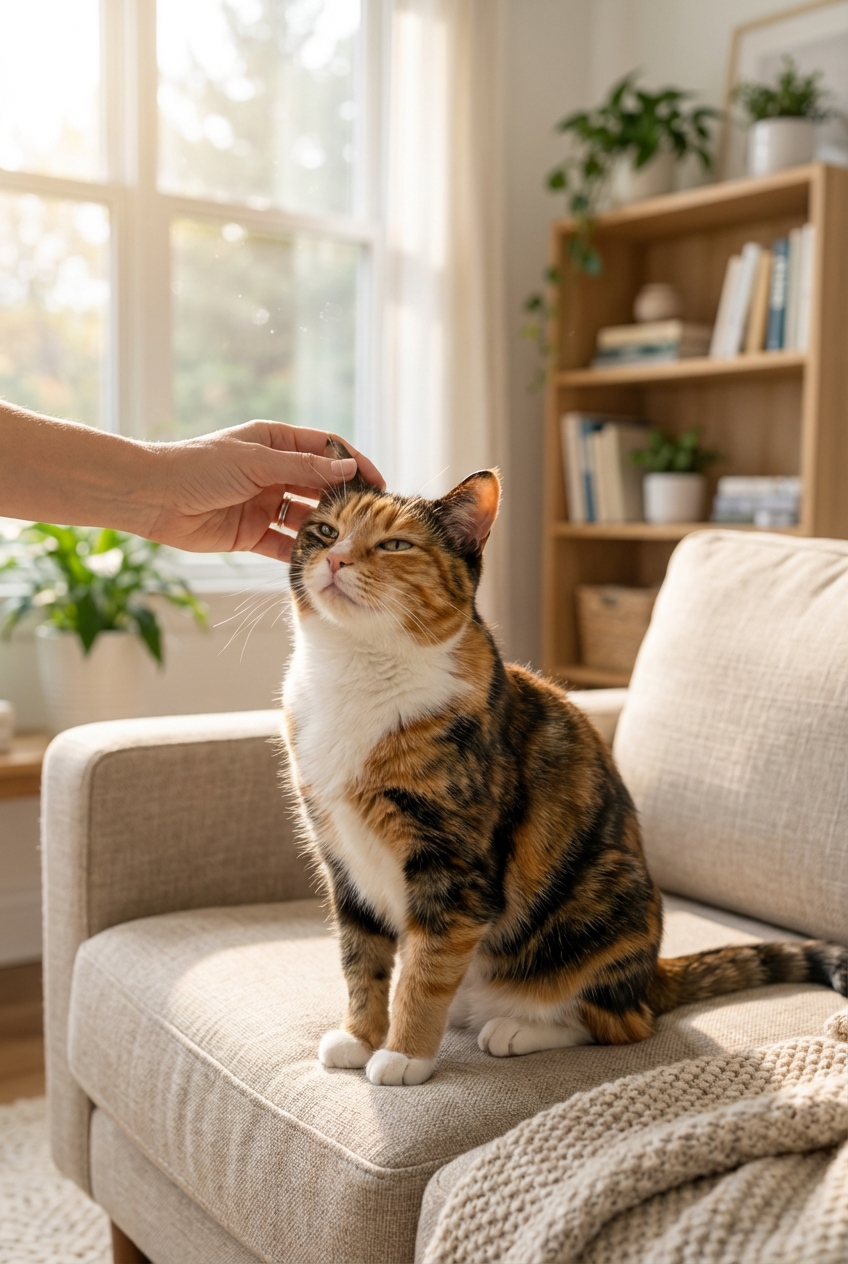
Many cats enjoy head scratches and cheek rubs during heat. Avoid overstimulating touch near the base of the tail if it seems to intensify restlessness.
Protect your sleep
Night vocalizing is common. Try a structured evening routine:
- Play session
- Small meal
- Calm, quiet room with white noise
This does not fix heat, but it can reduce nighttime disruption.
What not to do
- Do not punish vocalizing, rubbing, or spraying. It increases stress and rarely helps.
- Do not give human medications. Many are toxic to cats.
- Be cautious with essential oils, plug-ins, and unregulated calming products. Some can be irritating or unsafe for cats. Ask your veterinarian before using them.
When to call the vet
Heat itself is normal, but these signs are not just heat and should be addressed promptly:
- Straining to urinate, crying in the litter box, or frequent trips with little output
- Blood in urine or significant genital discharge
- Sudden lethargy, weakness, or collapse
- Vomiting or not eating for more than 24 hours
- Swollen belly or signs that pregnancy complications could be present
Also call if she may have escaped and mated. Your clinic can discuss timing, pregnancy prevention options, and next steps.
Important note: Some problems can look like heat, especially urinary tract inflammation (FLUTD), constipation, pain, stress-related urine marking, or other hormone-related issues. If something feels off or new for your cat, it is always okay to check in with your veterinarian.
The long-term fix: spaying
Spaying prevents heat cycles and prevents pregnancy. It also offers important health benefits. Spaying before the first heat greatly reduces the risk of mammary cancer compared with spaying after multiple heat cycles, and spaying eliminates the risk of a life-threatening uterine infection called pyometra.
A common question is: can a cat be spayed while in heat? Often, yes. Some veterinarians prefer to schedule spay surgery when she is not actively in heat because blood flow to the reproductive tract can be higher, but many clinics still spay safely during heat. Your veterinarian can advise you on timing based on your cat and their surgical protocols.
If cost is a concern, ask your local shelters or rescue organizations about low-cost spay programs. Many communities have resources that make this much more accessible than people realize.
If you are dealing with heat behaviors right now, you are not failing your cat. You are simply seeing normal feline biology, and the best next step is a calm plan with your veterinarian.
Quick checklist
- Sudden loud, repetitive vocalizing
- Rolling and rubbing constantly
- Hindquarters raised, tail to the side when petted
- Restless pacing and trouble settling
- Trying to escape outdoors
- Possible spraying or litter box changes
- Male cats showing up outside
If you check several of these boxes and she is unspayed, heat is very likely.