Considering a Maine Coon? Discover their friendly temperament, adult size and growth timeline, typical lifespan, common health concerns like HCM, plus groomi...
Article
•
Designer Mixes
Daily Maine Coon Cat Care

Shari Shidate
Designer Mixes contributor
Maine Coons are famous for their tufted ears, shaggy coats, and social, dog-like personalities. They are also a “high maintenance in the best way” breed: more fur, more body mass, and often more curiosity. Daily care does not have to be complicated, but it does need to be consistent. This handbook walks you through the everyday routines that support a healthy coat, strong joints, good digestion, and a calm, confident cat.
Know your Maine Coon
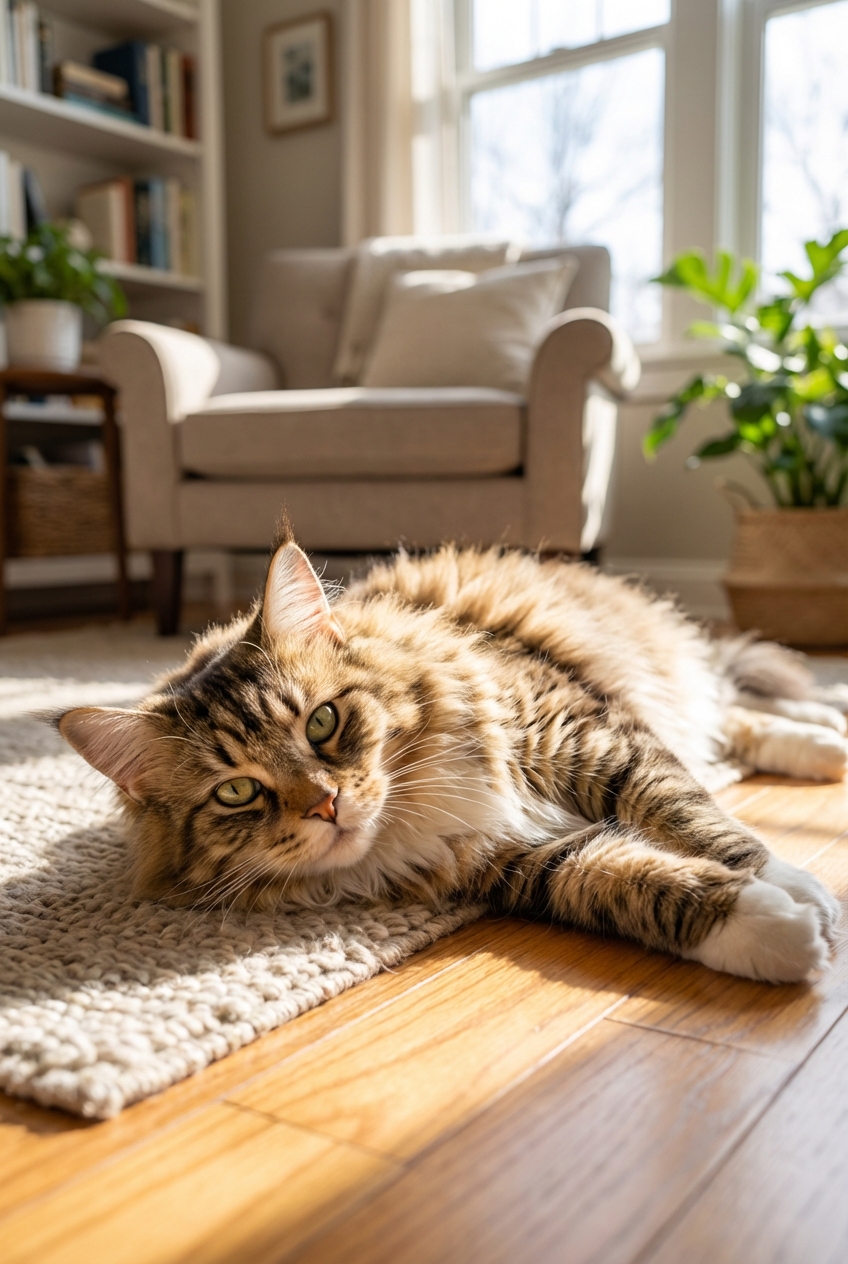
Maine Coons are one of the largest domestic cat breeds, and that size impacts everything from nutrition to litter box setup. Many are gentle and people-focused, but they can also be sensitive to changes in routine.
- Slow maturity: Many Maine Coons keep growing until around 3 to 5 years old.
- Coat type: A semi-long, water-resistant coat that is often plusher in winter and can mat if neglected.
- Common health considerations: Hypertrophic cardiomyopathy (HCM), hip dysplasia, spinal muscular atrophy (SMA), dental disease, and obesity risk if activity is low. Some cats also have other joint concerns, including occasional patellar luxation.
If your Maine Coon came from a breeder, ask for health testing information, especially HCM screening and SMA testing in the parents. If your cat is a rescue, your veterinarian can help you build a smart screening plan based on age and symptoms.
Your daily care checklist
If you only remember one thing, make it this: daily care is mostly about observation. You are looking for tiny changes before they become big problems.
- Fresh water: Refresh at least once daily. Many Maine Coons love fountains.
- Wash bowls: Wash water bowls daily. Wash wet food bowls after every meal (and wash dry food bowls daily too). This helps prevent biofilm buildup and can reduce feline chin acne.
- Meals and appetite check: Offer measured portions and note any sudden appetite changes.
- Litter box scoop: Scoop at least once daily and glance at stool and urine volume.
- Quick coat check: Run your hands along the chest, belly, armpits, and behind the ears for tangles.
- Play and movement: At least 10 to 20 minutes of active play total each day.
- Social time: A few minutes of brushing, cuddling, or calm companionship.
Nutrition for a big-bodied cat
Maine Coons need high-quality protein and a calorie plan that matches their lifestyle. Some are naturally athletic. Others become “couch lions” quickly, especially indoor-only cats.
What to feed
- Prioritize animal protein: Look for foods where a named meat is the first ingredient.
- Wet food helps hydration: Many cats do better with at least some wet food daily.
- Large-breed formulas can help: Some diets are designed for bigger cats with joint-supporting nutrients.
How much to feed
Portion needs vary widely. A lean, active 18-pound Maine Coon can need more calories than a sedentary 14-pound cat. Your best guide is body condition score, not the number on the scale alone.
- You should be able to feel ribs under a light fat cover.
- From above, there should be a slight waist behind the ribs.
- From the side, the belly should not hang dramatically.
Daily feeding routine
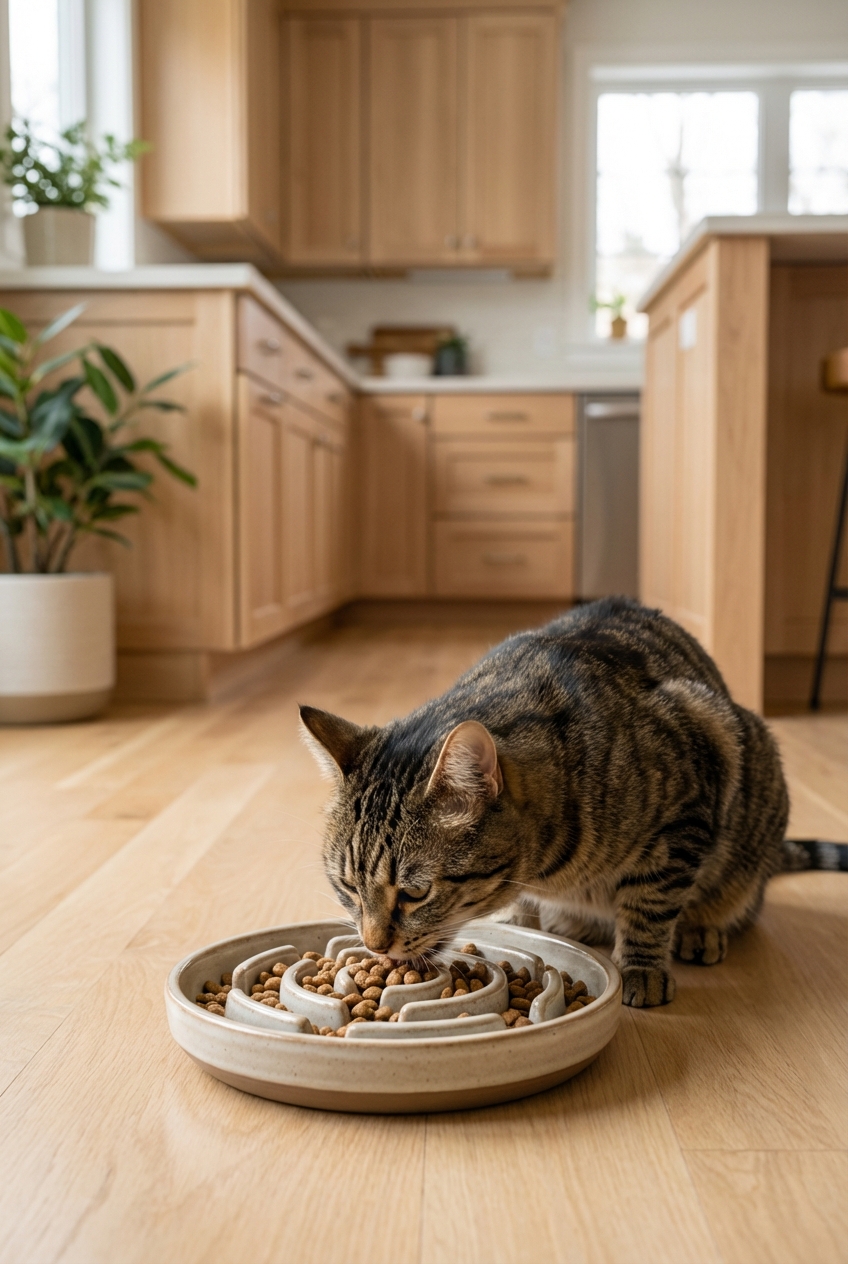
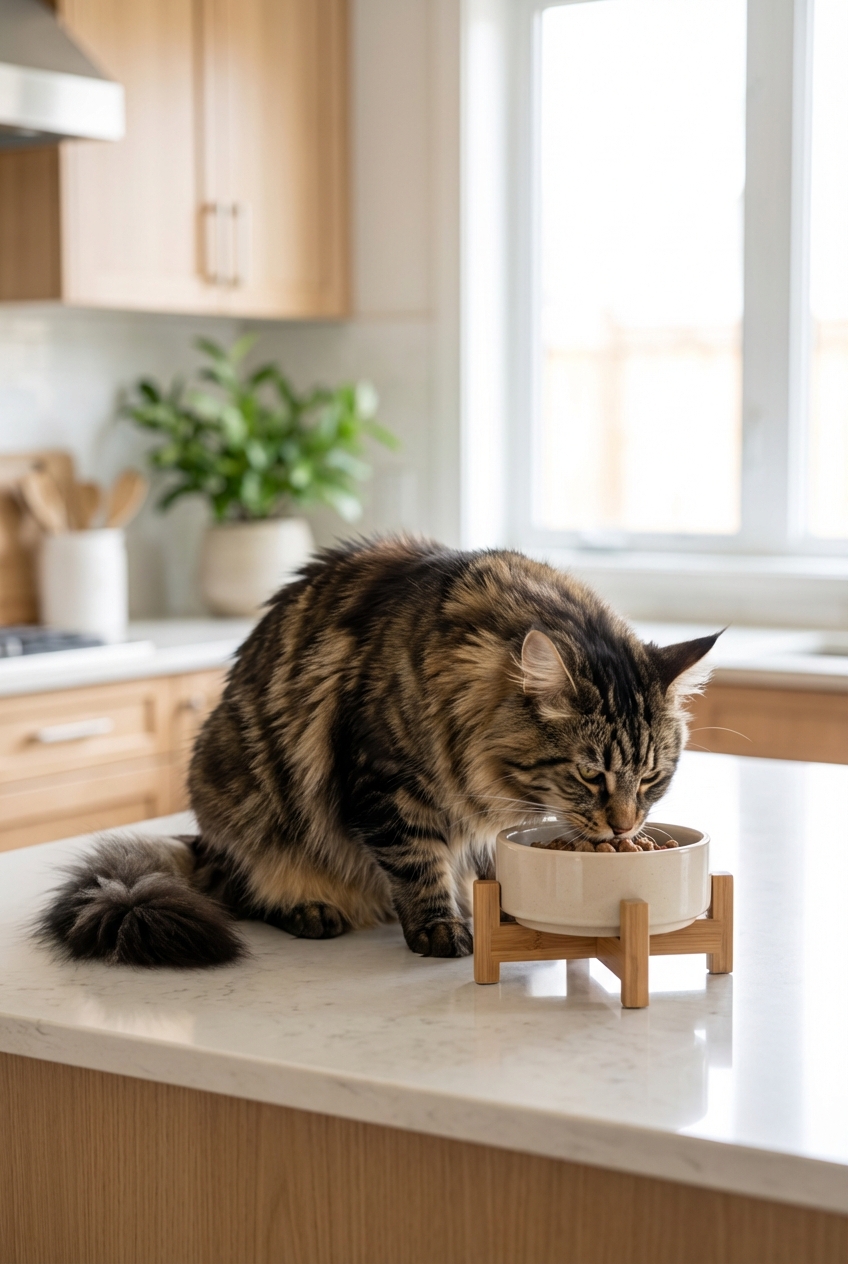
Most Maine Coons do well with 2 to 4 smaller meals a day. If your cat eats too fast, use a slow feeder, puzzle feeder, or scatter feeding with dry kibble (if your cat eats dry). This may reduce gulping and regurgitation and support smoother eating.
Hydration
Cats are designed to get moisture from prey, so many do not drink enough from a bowl. Better hydration can support urinary tract health, digestion, and overall energy.
- Consider a water fountain: Flowing water often encourages drinking.
- Offer multiple stations: Put water away from litter boxes and noisy appliances.
- Boost moisture: Add a spoonful of water or cat-safe broth to wet food.
Hydration is one of your first lines of defense against urinary issues, but it is still important to know the red flags. Call your vet promptly if you see straining, frequent trips to the litter box with little output, vocalizing while urinating, or blood-tinged urine.
Coat care
That gorgeous coat is one of the biggest joys of living with a Maine Coon. It is also the most common source of day-to-day trouble. Mats can form close to the skin and pull painfully. In severe cases, they can hide irritation or contribute to skin infection.
Where mats love to hide
- Behind the ears
- Under the collar area
- Armpits
- Chest ruff
- Belly and inner thighs
- Base of the tail and “pants”
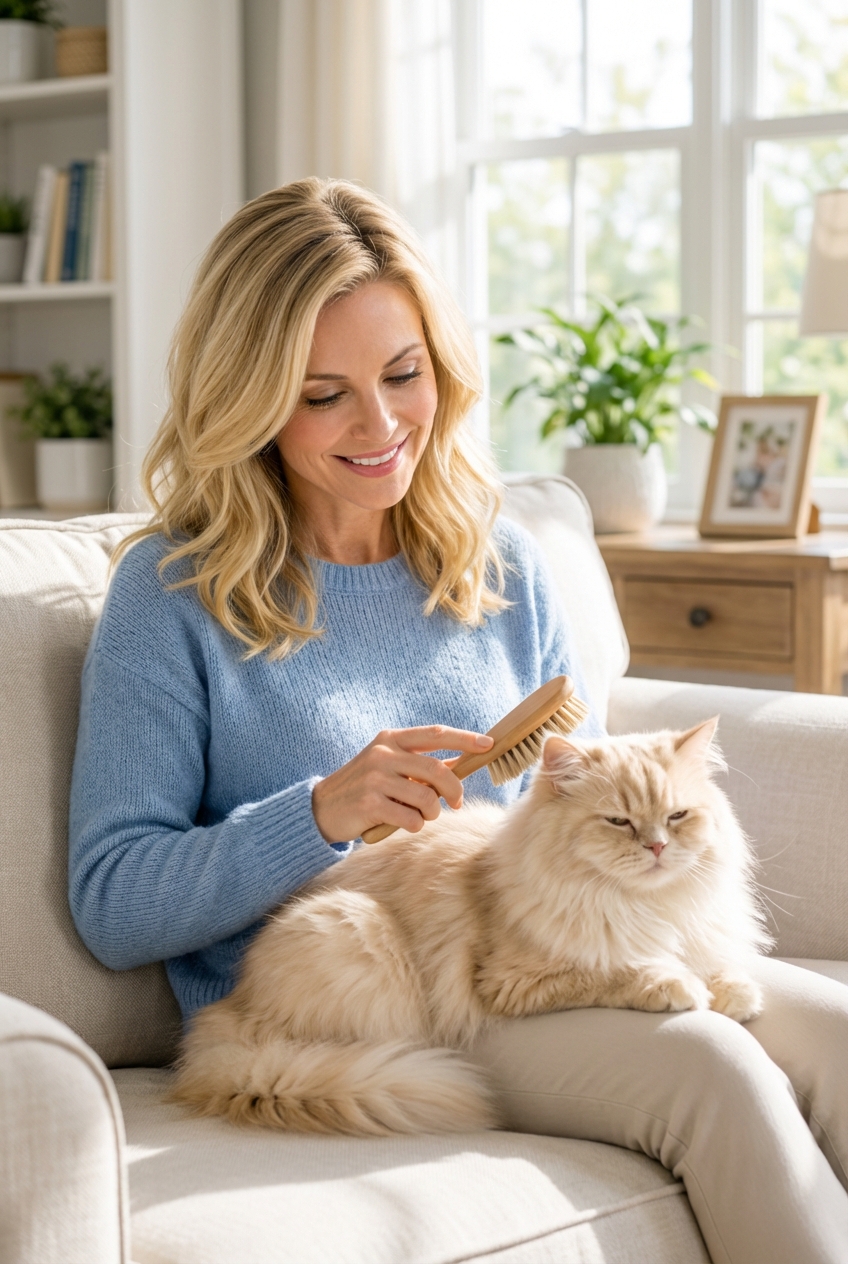
A simple daily brushing routine
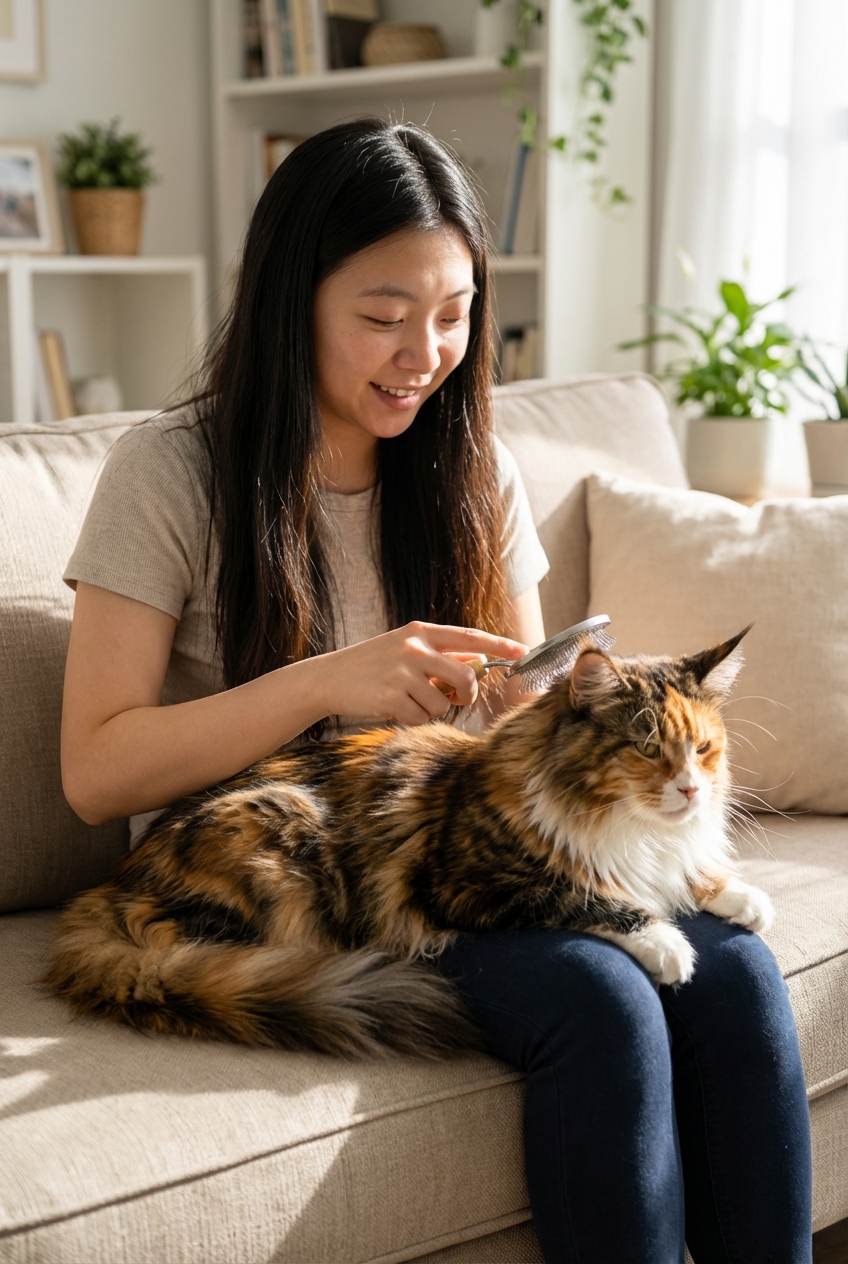
Daily brushing can be 3 to 5 minutes. The goal is consistency, not perfection.
- Start with calm timing: After a meal or a play session is ideal.
- Use gentle tools: A stainless-steel comb for checking tangles and a slicker brush for surface grooming.
- Work in sections: Ruff, back, sides, belly if your cat allows it.
- Stop before your cat is “done”: Ending on a positive note builds trust.
Safety note: Never pull hard on a mat. If you cannot loosen it with fingers and a comb, ask your groomer or veterinarian for help. Scissors can easily cut cat skin because it is thin and stretchy.
Bathing and hairballs
Most Maine Coons do not need regular baths, but an occasional bath can help if the coat gets greasy or your cat has trouble keeping up with grooming. Brushing is also your best hairball prevention tool. If you see frequent hairball vomiting, repeated gagging with little coming up, or appetite changes, check in with your vet.
Litter box setup
Maine Coons often outgrow standard boxes. A box that is too small can lead to accidents, litter tracking, and even litter box avoidance.
- Choose an oversized box: Your cat should be able to turn around comfortably.
- Use enough litter depth: Usually 2 to 3 inches works for most cats.
- Scoop daily: Twice daily is even better for multi-cat homes.
- Number of boxes: Aim for 1 per cat, plus 1 extra.
Daily scooping is also a health check. Diarrhea, constipation, very large urine clumps, or no stool for more than 48 hours are worth a call, especially if your cat is straining, vomiting, painful, or low energy.
Exercise and enrichment
Maine Coons are smart and social. Without daily activity, many will invent their own entertainment, which can look like cabinet raids, 3 a.m. zoomies, or play-biting.
Daily play ideas that work
- Wand toys: Mimic prey with short bursts and pauses.
- Fetch practice: Many Maine Coons will retrieve soft toys.
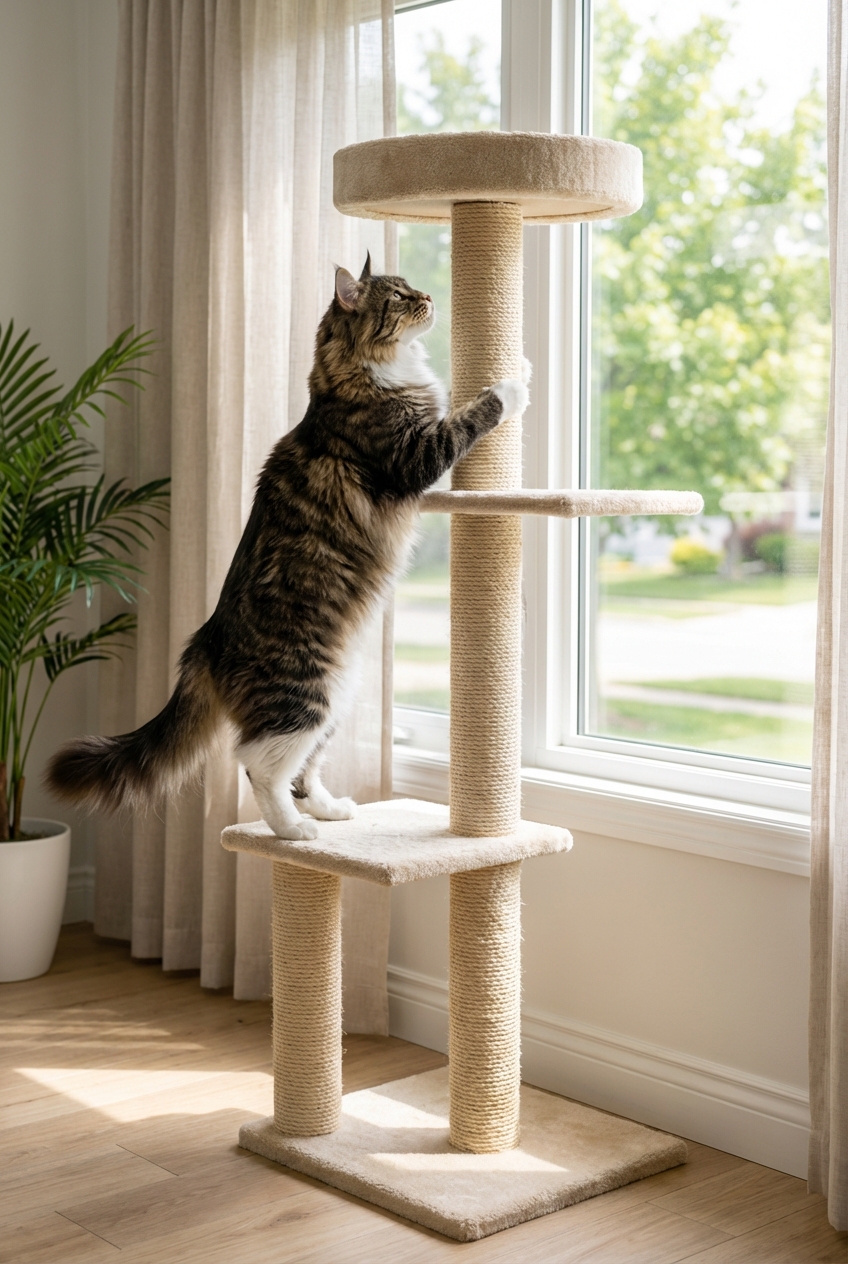
- Climbing: A sturdy cat tree with wide platforms supports their size.
- Food puzzles: Great for mental work and slower eating.
End play with a small meal or treat to complete the hunt cycle. Many cats settle better afterward.
If your cat is older or getting stiff, keep them lean and consider ramps or steps to favorite spots so they can move comfortably without giving up their routines.
Dental care
Dental disease is extremely common in adult cats, and large cats are not immune. Bad breath, drooling, pawing at the mouth, and chewing only on one side are all red flags.
What you can do at home
- Brush teeth daily if possible: Use cat toothpaste only.
- Start slow: Begin with touching the muzzle, then lip lifting, then a finger brush.
- Use approved dental products: Ask your vet for options like dental treats or water additives.
If brushing is not realistic today, do not quit. Even a few seconds of gentle brushing several times a week is a meaningful step forward.
Paws, nails, and details
Maine Coons have big paws and strong nails. When nails get too long, they can snag on carpet, split, or cause uncomfortable walking.
- Check nails weekly: Many cats need trims every 2 to 4 weeks.
- Wipe eyes if needed: Use a soft, damp cloth for mild tear staining.
- Monitor ears: A little wax is normal, but redness, odor, or dark debris is not.
If your cat’s rear-end fur gets messy, ask your groomer or vet about a sanitary trim. It can be a game-changer for cleanliness and comfort.
Home safety and travel
That thick coat makes Maine Coons more heat-sensitive than many short-haired cats. They also tend to be curious and athletic, which means home safety matters.
- Keep cool in summer: Provide shade, fans, and fresh water. Avoid hot rooms.
- Window safety: Secure screens. Falls can cause serious injuries.
- Plant check: Many common houseplants are toxic to cats. Lilies are especially dangerous.
- Carrier comfort: Leave the carrier out as a “safe cave” so vet days are less stressful.
Health monitoring
In clinic, we often tell families this: you do not need to be a medical expert to notice the early signs. Your cat’s normal is your best baseline.
Call your veterinarian if you notice
- Reduced appetite or not eating for 24 hours (sooner for kittens, seniors, or if other symptoms are present)
- Hiding more than usual, sudden irritability, or low energy
- Vomiting repeatedly, diarrhea lasting more than 24 hours, or straining to defecate
- Coughing, open-mouth breathing, or breathing that looks labored
- Limping, trouble jumping, or stiffness that is new
- Increased thirst, increased urination, or accidents outside the box
Maine Coons are excellent at “acting normal” until they really are not. When something feels off, trust that instinct and call your veterinary clinic.
Weekly and monthly schedule
Daily habits keep things stable. Weekly and monthly routines keep you ahead of the curve. Think of it as: daily quick check plus a weekly full reset.
Weekly
- Full coat comb-through, including belly and pants
- Nail check and trim if needed
- Quick ear look and paw pad check
- Deep clean fountains and do a hot wash of bowls (daily washing still applies)
Monthly
- Weigh your cat at home if possible and record it
- Check flea and tick prevention schedule if your vet recommends it
- Deep clean litter boxes
- Replace worn toys and inspect cat trees for loose parts
Vet care
Preventive care is where you save the most heartache. Your veterinarian will tailor recommendations to your cat’s age, lifestyle, and risk factors.
- Annual exams: Most adult cats benefit from at least yearly exams.
- Senior cats: Consider twice-yearly exams as your cat ages.
- Baseline bloodwork: Helpful for tracking kidney, liver, thyroid, and blood sugar trends.
- Heart screening: Talk with your vet about HCM awareness and whether an echocardiogram is appropriate.
- Vaccines: Ask your vet about core vaccines and risk-based boosters based on your cat’s lifestyle and region.
- Parasite prevention: Many indoor cats still benefit depending on local fleas, ticks, mosquitoes, and whether other pets go outdoors. Your vet can help you choose the right plan.
If you ever hear a heart murmur noted at an exam, ask what follow-up is recommended. Some murmurs are benign. Some need further evaluation, especially in breeds with higher HCM risk.
Bringing it all together
Daily Maine Coon care is not about doing everything perfectly. It is about building a routine your cat can count on: quality food, fresh water, a clean litter box, short grooming sessions, and play that keeps joints and minds strong.
If you want a simple starting point, aim for this week: scoop daily, brush for 3 minutes, and play for 10 minutes. Once those feel natural, you can layer in tooth care, puzzle feeding, and longer grooming sessions. Small, consistent steps add up to a healthier, happier cat.