Keep fish healthy while you travel with the safest vacation-feeding plan. Learn when to skip feeding, how long fish can go without food, and how to use auto ...
Article
•
Designer Mixes
Daily How To Feed Clownfish Answers

Shari Shidate
Designer Mixes contributor
If you have clownfish, you already know they are hardy, personable, and always “on the move” at the front glass when they think food is coming. The trick is keeping that enthusiasm healthy. Overfeeding is one of the fastest ways to create water quality problems, while underfeeding can leave fish stressed and more prone to illness.
Below are my daily, practical answers for feeding clownfish in a home saltwater tank, written for real life, not a lab. You will learn what to feed, how often, how much, and how to avoid the most common mistakes.
How often should you feed clownfish?
Most adult clownfish do best with 1 to 2 small feedings per day. If your schedule is busy, one feeding daily can still work as long as the meal is nutritionally complete and you are not trying to grow out juveniles.
- Adults (most home tanks): 1 to 2 times daily
- Juveniles (growing fast): 2 to 3 times daily in smaller portions
- New or thin fish: 2 times daily until body condition improves
- Single fish or bonded pair: typically the same schedule, just portion for the number of mouths
Actionable rule: Consistency matters more than perfection. Feeding at roughly the same times each day helps fish settle into a routine and reduces frantic feeding behavior.
Quick note on “nutritionally complete”: For most beginners, this means a reputable marine pellet or flake that lists marine proteins (like fish, shrimp, krill, or squid) plus added vitamins, and ideally some algae or spirulina content for omnivore balance.
How much should you feed clownfish each day?
A simple guideline used by many aquarists is: feed what they can fully eat in about 30 to 60 seconds, then stop. If food is drifting to the bottom untouched, it is too much.
Clownfish have small stomachs and a relatively quick metabolism, but in a closed aquarium, extra food becomes extra nutrients in the water. Those nutrients can drive algae blooms and put pressure on your filtration and maintenance routine.
What “enough” looks like
- Rounded belly is fine for a short time after a meal, but it should not stay distended all day.
- Fish should be alert, with strong swimming and normal interest in food.
- Feces should be formed most of the time. If you see long, stringy feces persistently, it may point to diet issues, stress, or parasites. If it continues, do not just keep changing foods. Check overall health and consider a quarantine evaluation.
What do clownfish eat in captivity?
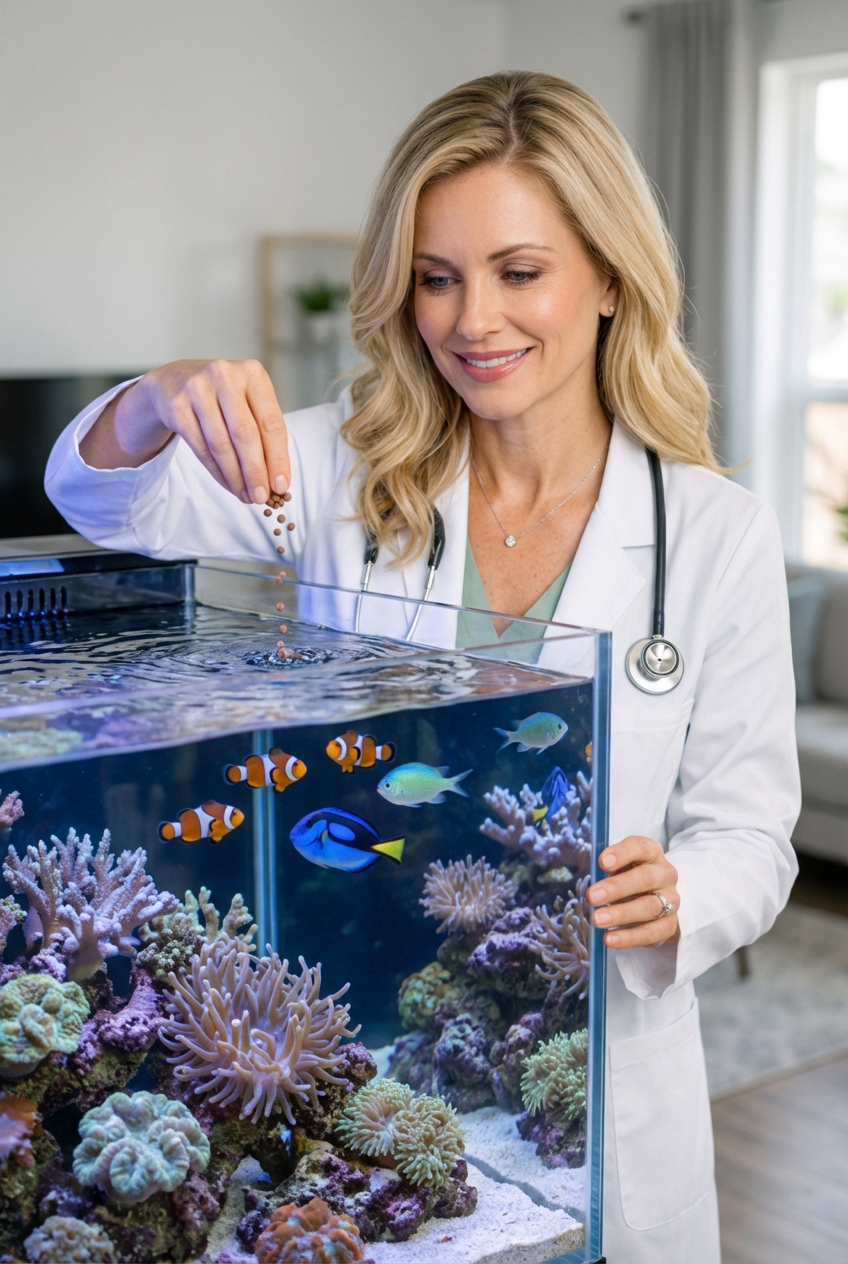
In the wild, clownfish are omnivores. They eat small crustaceans, zooplankton, and bits of algae and other plant material. In a home aquarium, they thrive when you combine high-quality protein with varied, vitamin-rich foods.
Best everyday foods
- Quality marine pellets: Great “base diet,” easy to portion, less messy than many frozen foods.
- Marine flakes: Convenient, but choose a reputable marine formula and replace often so it stays fresh.
- Frozen foods: Mysis shrimp, brine shrimp (better as a treat unless enriched), chopped krill, and mixed marine blends.
- Occasional plant support: Spirulina-based flakes or small amounts of finely chopped algae-based foods.
My practical approach: Pick one dependable staple (pellet or flake), then rotate in frozen foods several times per week. Variety helps cover micronutrient gaps and keeps picky fish interested.
Optional boost: For picky eaters, new arrivals, or fish in recovery, you can occasionally soak food in a vitamin/HUFA supplement (Selcon-type products). You do not need it every day for healthy fish on a good staple diet.
A simple weekly feeding schedule
If you want a clear plan that works for most community reef and fish-only tanks, start here and adjust based on your fish’s body condition and your nutrient levels.
- Mon: Pellets AM, frozen mysis PM
- Tue: Pellets or flakes once daily
- Wed: Pellets AM, frozen marine mix PM
- Thu: Pellets or flakes once daily
- Fri: Pellets AM, frozen mysis PM
- Sat: Treat day: a small portion of enriched brine or finely chopped krill (not both)
- Sun: Optional light feeding or skip if nutrients run high
Skipping one feeding occasionally is not harmful for healthy adult clownfish. In fact, it can help prevent chronic overfeeding in smaller systems.
Juvenile caveat: If you increase feeding frequency for growth, plan to increase nutrient export too. That can mean stronger skimming, more frequent water changes, better mechanical filtration habits, or a tighter cleanup routine.
Feeding tips that protect water quality
In aquariums, feeding is never just about nutrition. It also affects waste production, which is why smart feeding makes it easier for your biofilter to keep ammonia and nitrite at zero and helps you manage nitrate and phosphate over time.
Do this daily
- Thaw frozen food in a small cup of tank water (outside the tank), then strain or pour off excess liquid if it is cloudy. That “juice” can be nutrient heavy.
- Turn off the return pump for a few minutes if food is getting pulled into overflow too quickly. Set a timer or alarm to turn it back on.
- Target feed small portions and watch the fish eat, rather than dumping food and walking away.
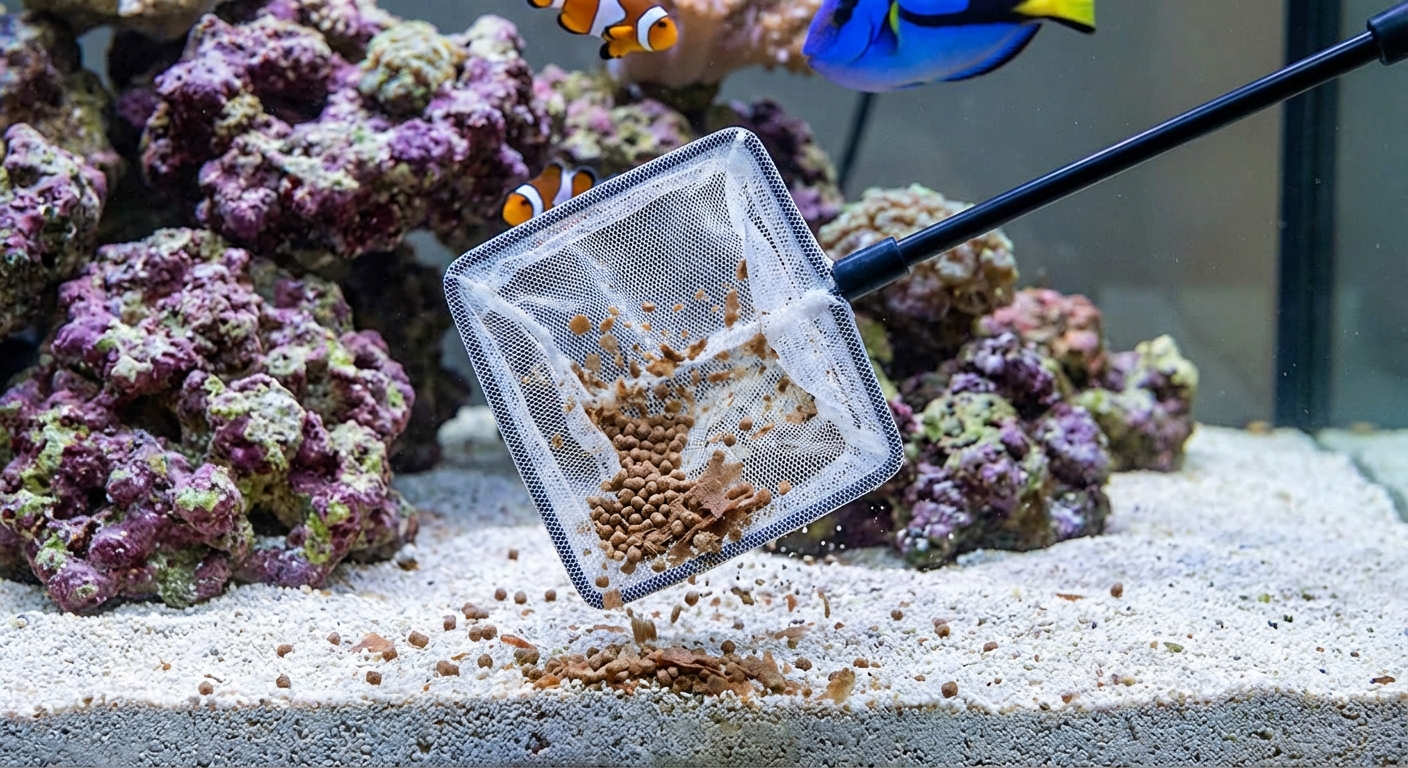
- Remove uneaten food with a net or siphon if it is collecting on the sandbed.
Common feeding problems
My clownfish acts hungry all the time. Am I underfeeding?
Not necessarily. Clownfish often beg because they learn your routine. Check body condition: a healthy fish should not look pinched behind the head, and the belly should not be sunken.
My clownfish spits food out.
This is usually a size or texture issue. Try smaller pellets, crush flakes, or offer finely chopped frozen foods. Also check for bullying during feeding, where a tank mate steals food and stresses the clownfish.
Can clownfish eat only brine shrimp?
They can eat it, but a brine-only diet is usually not balanced long-term unless it is enriched and paired with other foods. Mysis and quality pellets tend to provide better overall nutrition.
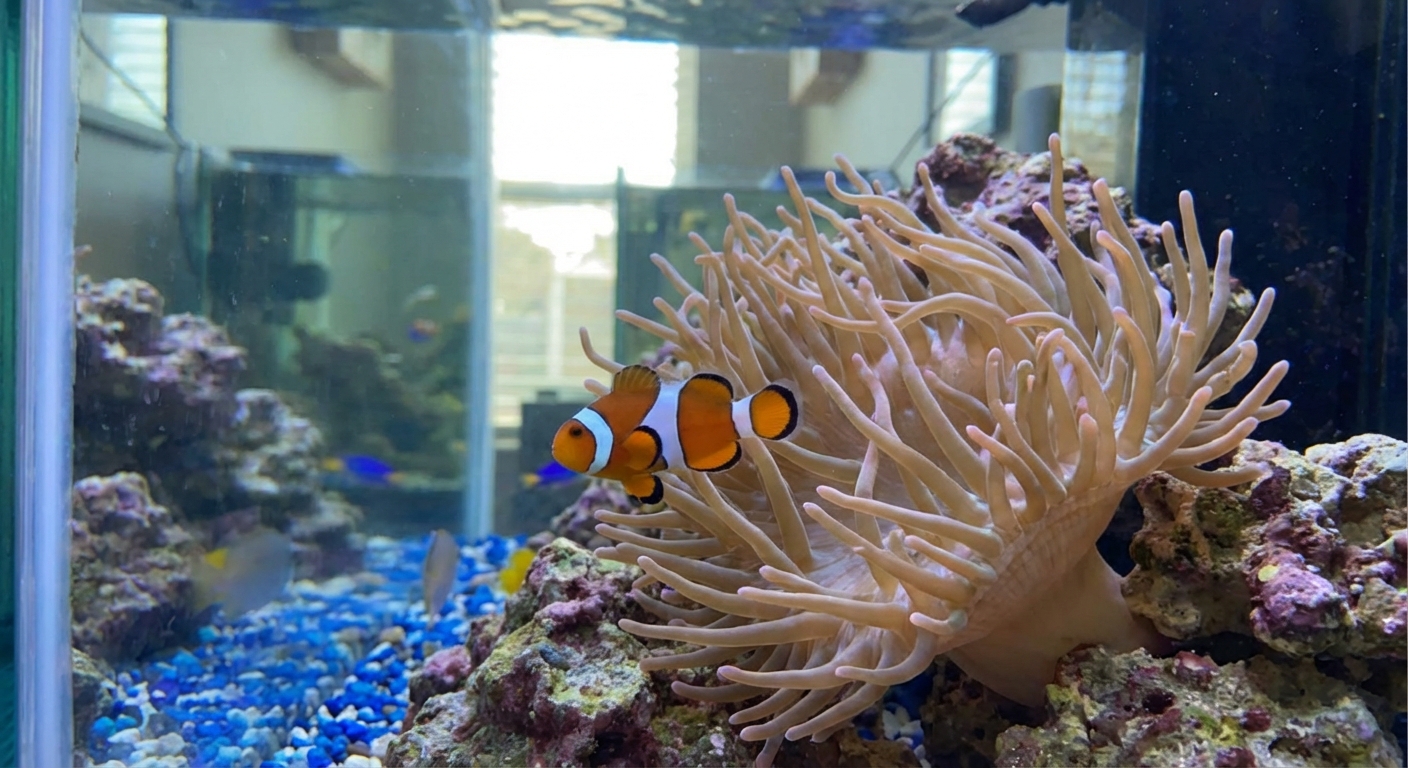
Should I feed my clownfish if it hosts an anemone?
Yes. Hosting does not replace a proper diet. Some clowns may share food with their anemone, but your clownfish still needs its own balanced feeding routine.
My clownfish suddenly stopped eating.
Do not assume it is “picky.” First, check the basics: temperature, salinity, and general water quality. Also watch for rapid breathing, spots, excess mucus, or flashing, which can point to disease. If appetite loss lasts more than a day or two, treat it as a health clue and consider quarantine rather than simply offering more foods.
Overfeeding vs underfeeding
Signs of overfeeding
- Uneaten food on sand or in filter socks
- Rising nitrate and phosphate
- More nuisance algae
- Fish looks constantly bloated
Signs of underfeeding
- Weight loss or a “pinched” look behind the head
- Lower activity or hiding more than usual
- Increased aggression during feeding
- Slow growth in juveniles
Tip: If you are unsure, adjust in small steps for 7 to 10 days and watch both fish condition and water test results before changing again.
Safety notes
Because I work in animal care, I always like to include the simple safety checks that prevent big problems:
- Wash hands before and after tank work, especially if you have lotions or soaps on your skin.
- Store food properly: Keep dry foods sealed and away from heat and humidity. Keep frozen foods frozen and do not refreeze thawed portions.
- Replace old food: Dry foods lose vitamin potency over time. If it smells off or looks stale, toss it.
- Quarantine when possible: Appetite changes are often an early health clue, and a quarantine tank makes treatment safer for corals and inverts.
Bottom line
Feed clownfish small, consistent meals, prioritize quality and variety, and let your fish and your water tests guide the fine-tuning. Do that, and you will usually see better color, better energy, cleaner water, and fewer “mystery” health issues over time.