From cooked chicken and eggs to pumpkin and a few fruits, learn cat-safe human foods, what to avoid (onion, garlic, chocolate, grapes), and smart portion tips.
Article
•
Designer Mixes
Daily Foods Dangerous to Cats

Shari Shidate
Designer Mixes contributor
Cats are curious, food-motivated, and often very persuasive. But their bodies process certain everyday foods very differently than ours, and even small tastes can cause big problems. As a veterinary assistant in Frisco, Texas, I have seen how quickly a normal kitchen snack can turn into an urgent vet visit.
This article walks you through common daily foods that are dangerous to cats, what signs to watch for, and what to do if you think your cat got into something they should not.
Why human foods can hit cats harder
Cats are true carnivores. Their livers and digestive systems are built to thrive on animal-based nutrition, not a wide variety of plant foods, sweeteners, and processed ingredients. That means some compounds are toxic at low doses, and others can trigger serious stomach upset, pancreatitis, anemia, or neurologic issues.
Also, cats are small. A bite that seems tiny to us can be a meaningful dose for a 9 to 12 pound cat.
Everyday foods dangerous to cats
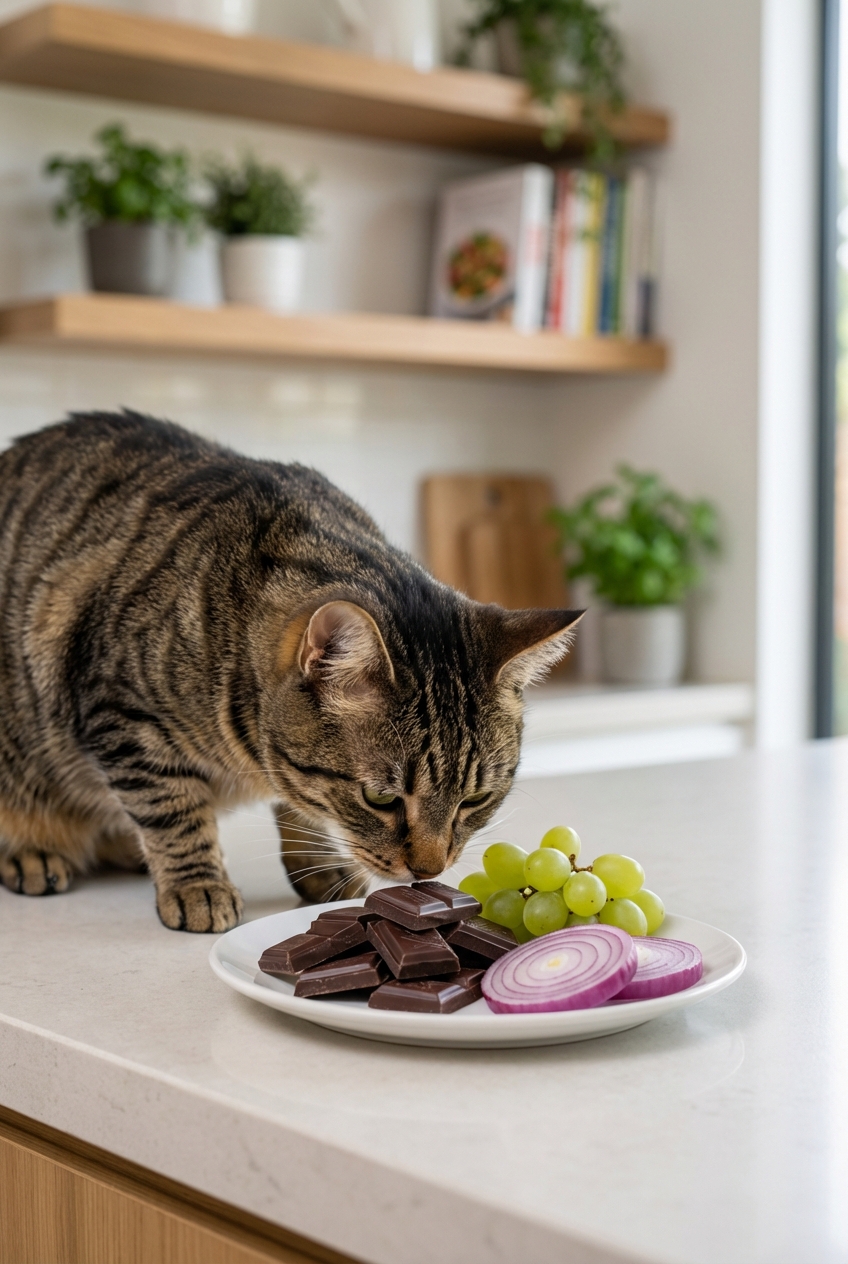
Onions, garlic, chives, and leeks
These allium foods can damage red blood cells and cause hemolytic anemia. The risk includes raw, cooked, powdered, or dehydrated forms, which means seasoning is just as concerning as a piece of onion.
- Where it hides: soups, sauces, deli meats, pizza, baby food, gravy mixes, seasoned chicken or beef, and many snack foods.
- Watch for: lethargy, weakness, pale gums, rapid breathing, vomiting, decreased appetite.
Grapes and raisins
Grapes and raisins are a well-known cause of acute kidney injury in dogs. In cats, cases are reported but uncommon and the data is limited. Because we cannot predict which pets will react severely, any exposure is still worth a prompt call to your veterinarian or a pet poison hotline.
- Where it hides: trail mix, oatmeal cookies, cereal mixes, fruit salads.
- Watch for: vomiting, diarrhea, lethargy, increased thirst, decreased urination.
Chocolate, cocoa, and coffee
Chocolate contains methylxanthines (theobromine and caffeine), which can overstimulate the heart and nervous system. Dark chocolate and baking cocoa are especially concentrated.
- Where it hides: brownies, chocolate chips, cocoa powder, tiramisu, mocha drinks, chocolate ice cream.
- Watch for: restlessness, vomiting, rapid heart rate, tremors, seizures, open-mouth breathing.
Alcohol and raw bread dough
Alcohol can cause dangerous drops in blood sugar and body temperature, along with neurologic depression. Raw yeast dough can expand in the stomach and also produce alcohol as it ferments.
- Where it hides: drinks left on tables, rum cakes, unbaked pizza dough, proofing dough on counters.
- Watch for: disorientation, wobbliness, vomiting, slow breathing, collapse.
Xylitol (in some sugar-free products)
Xylitol is well known for causing severe hypoglycemia in dogs. In cats, toxicity is less clearly defined, but it is still a risky ingredient. Treat any known or suspected xylitol exposure as urgent and call your vet or a pet poison hotline for guidance, especially because the dose is often unknown and sugar-free products may contain other ingredients that are not cat-safe.
- Where it hides: sugar-free gum, mints, some peanut butters (check labels), baked goods, toothpaste.
- Watch for: weakness, vomiting, tremors, seizures.
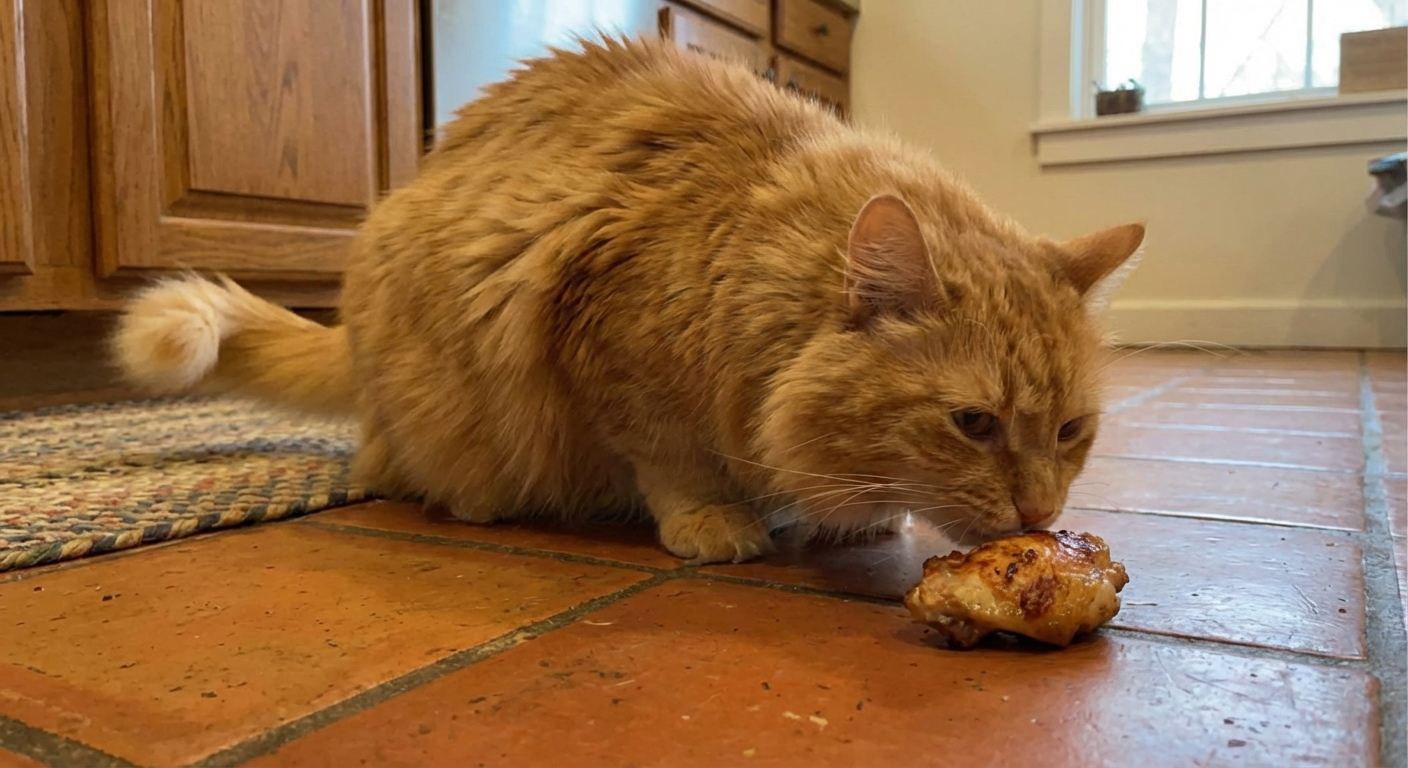
Cooked bones and fatty table scraps
Cooked bones can splinter and cause choking, tooth fractures, constipation, or intestinal perforation. Fatty scraps and greasy foods often cause vomiting and diarrhea, and in some cats may contribute to pancreatitis.
- Where it hides: rotisserie chicken bones, rib bones, steak bones, bacon grease, fried foods.
- Watch for: repeated vomiting, painful belly, hunched posture, refusal to eat.
Milk, cream, and ice cream
Many adult cats are lactose intolerant. Dairy is not usually toxic, but it is a common cause of diarrhea, gas, and stomach upset. Rich dairy can also be too fatty.
- Where it hides: cereal milk, whipped cream, cheese-heavy snacks, ice cream licks.
- Watch for: loose stool, gassiness, vomiting.
Raw eggs, raw meat, and raw fish
Raw foods increase the risk of bacterial infection (like Salmonella or Campylobacter). Raw egg whites also contain avidin, which can interfere with biotin over time with frequent feeding. Frequent raw fish can contribute to thiamine (vitamin B1) deficiency, which can be serious in cats.
- Where it hides: sashimi, raw feeding experiments, counter-surfing during meal prep.
- Watch for: vomiting, diarrhea, fever, low appetite, weakness, neurologic signs in severe thiamine deficiency.
Tuna in excess
Small tastes of tuna are usually not an emergency, but tuna should not become the main diet. Too much can contribute to nutritional imbalance. Tuna packed in brine or salted water can also be high in sodium. With frequent tuna intake, mercury exposure is another reason to keep it occasional.
- Where it hides: tuna salad, tuna juice from cans, tuna-based treats used too often.
- Watch for: picky eating patterns, weight loss, dull coat, digestive upset.
Salt, salty snacks, and seasoning blends
True salt toxicosis is usually tied to larger ingestions (salt dough, salty brines, lots of chips) or situations where a cat cannot access fresh water. That said, salty snacks and seasoning blends are still worth avoiding, especially for cats with heart or kidney disease, and because blends often contain onion or garlic powder.
- Where it hides: chips, jerky, ramen seasoning, flavored broths, cured meats.
- Watch for: vomiting, diarrhea, extreme thirst, weakness.

“But my cat only had a little”
For some toxins, dose matters a lot. For others, we cannot predict which pet will react severely. If you are not sure, it is always safer to ask a professional quickly than to wait and hope.
If you think your cat ate something toxic, call your veterinarian or a pet poison hotline right away. Early action can prevent serious complications.
Signs of food toxicity in cats
Different toxins cause different symptoms, but these are common red flags that deserve a same-day call to your vet:
- Repeated vomiting or diarrhea
- Drooling, pawing at the mouth
- Sudden lethargy, weakness, or hiding
- Tremors, wobbliness, seizures
- Fast breathing, open-mouth breathing, or collapse
- Refusing food for more than 24 hours, or less for kittens
- Swollen face, hives, or trouble breathing (possible allergic reaction)
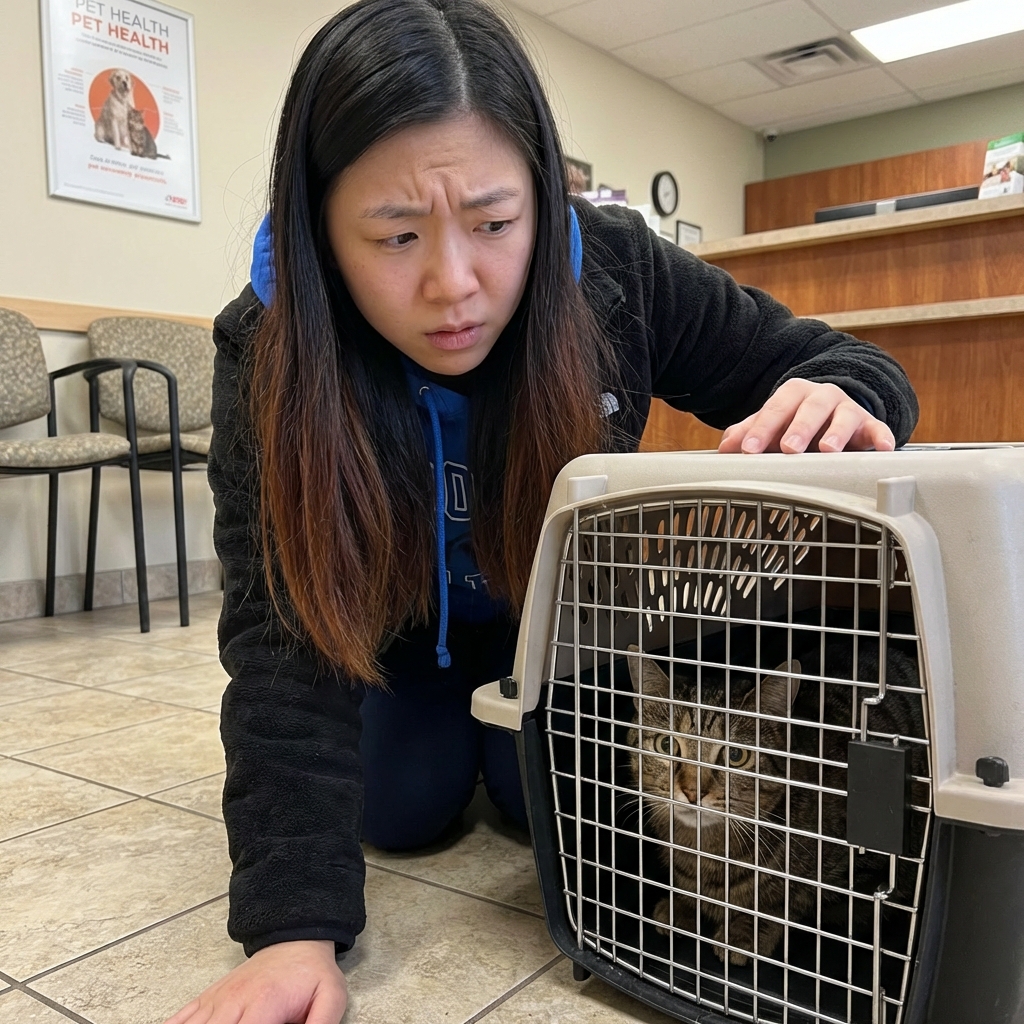
What to do if your cat eats something dangerous
Step 1: Remove access and check the amount
Move the food out of reach and estimate how much was eaten. Save the packaging or ingredient label, especially for gum, baked goods, sauces, or supplements.
Step 2: Call before home remedies
Do not induce vomiting unless a veterinarian specifically instructs you to. Some substances can cause more damage coming back up.
- Call your vet and describe: your cat’s weight, what was eaten, how much, and when.
- If your vet is closed, contact a pet poison hotline for immediate triage advice (a consultation fee may apply).
Step 3: Follow instructions closely
Your cat may need monitoring, bloodwork, IV fluids, medications, or supportive care depending on the toxin and timing.
Do not give human medications
Never try to treat symptoms with human medications. Common pain relievers like ibuprofen, naproxen, and acetaminophen can be extremely dangerous for cats.
Cat-proofing your kitchen
You do not need a perfect home. You just need a few habits that reduce risk.
- Store risk foods up high and sealed: raisins, gum, chocolate, and baking supplies should live in closed cabinets.
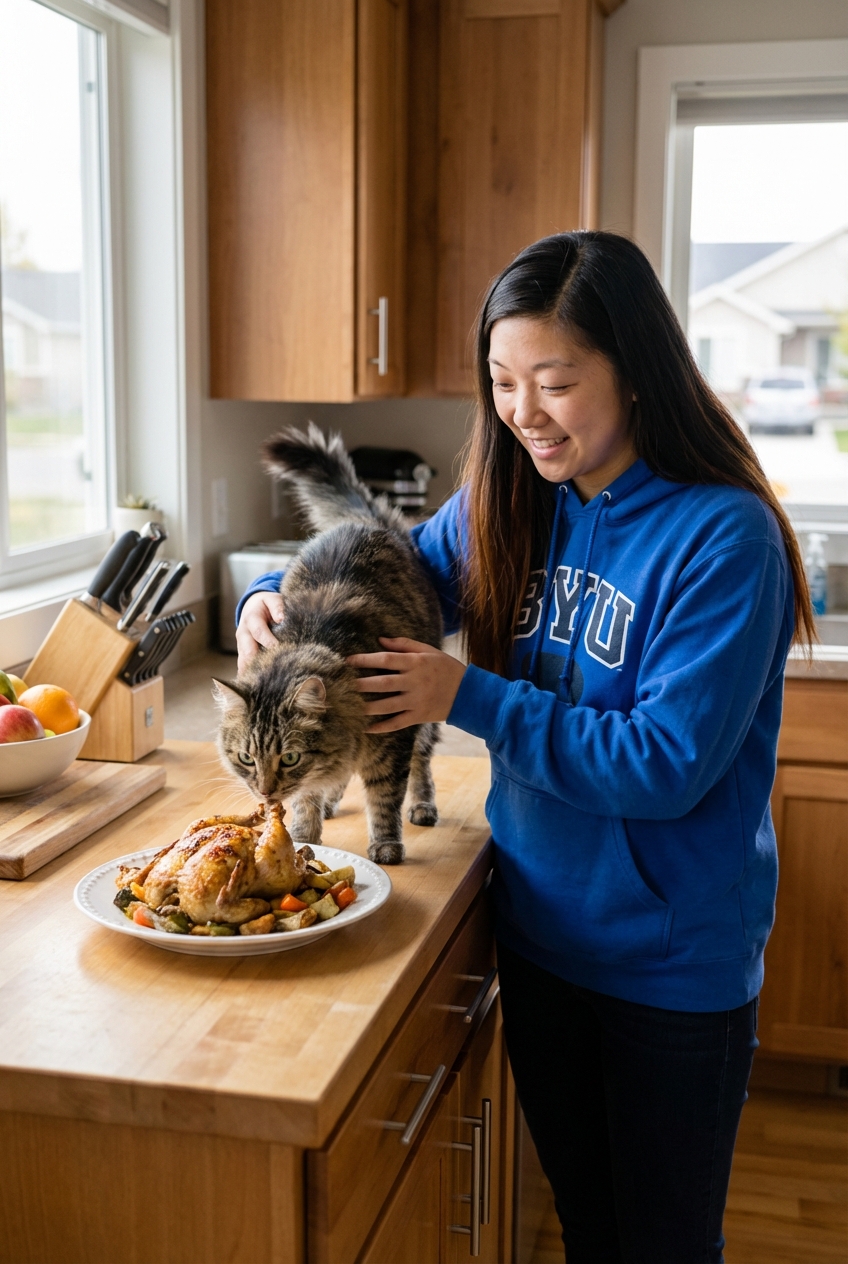
- Keep plates out of reach: push food back from counters and do not leave leftovers uncovered.
- Be careful with seasoning: onion and garlic powder are common in cooked meats and soups.
- Use a safe treat plan: choose vet-approved cat treats so your cat is not begging for your dinner.
- Secure trash: use a lidded can, especially after cooking chicken or fish.
Safer daily treat ideas
If you want to share food as a bonding moment, stick to small portions and simple ingredients.
- Plain cooked chicken or turkey (no skin, no seasoning, no onions or garlic)
- Plain cooked eggs in small amounts (fully cooked)
- Commercial cat treats made for cats
- Small amounts of plain canned cat food as a special snack
If your cat has kidney disease, diabetes, food allergies, or GI issues, ask your veterinarian before changing treats.
When it is an emergency
Go to an emergency veterinarian now if your cat has trouble breathing, collapses, has seizures, or cannot stop vomiting.
Call right away (even if your cat seems fine) for exposures involving chocolate, alcohol, allium foods (onion or garlic), raw bread dough, or any unknown medication. For grapes or raisins and xylitol, call promptly for guidance since feline risk is less predictable and product details matter.
One last encouragement: you are not a bad pet parent if this happens. Cats are fast, sneaky, and smart. What matters is acting quickly and learning what to change next time.