Not sure if your dog’s eye boogers are normal? Learn common causes (allergies, dry eye, infection, debris), a color guide, safe cleaning steps, and urgent ...
Article
•
Designer Mixes
Daily Eye Discharge in Dogs

Shari Shidate
Designer Mixes contributor
If you are wiping “eye boogers” off your dog every morning, you are not alone. A small amount of discharge can be totally normal, especially after sleep. But daily discharge can also be your dog’s way of saying, “My eyes are irritated,” or “Something deeper is going on.”
As a veterinary assistant in Frisco, Texas, I like to keep this simple: look at the color, the amount, and your dog’s comfort level. Comfort level means things like squinting, rubbing at the face, holding an eye closed, or acting sensitive to light. Those three clues usually tell us whether this is basic maintenance or a vet visit.
What counts as normal?
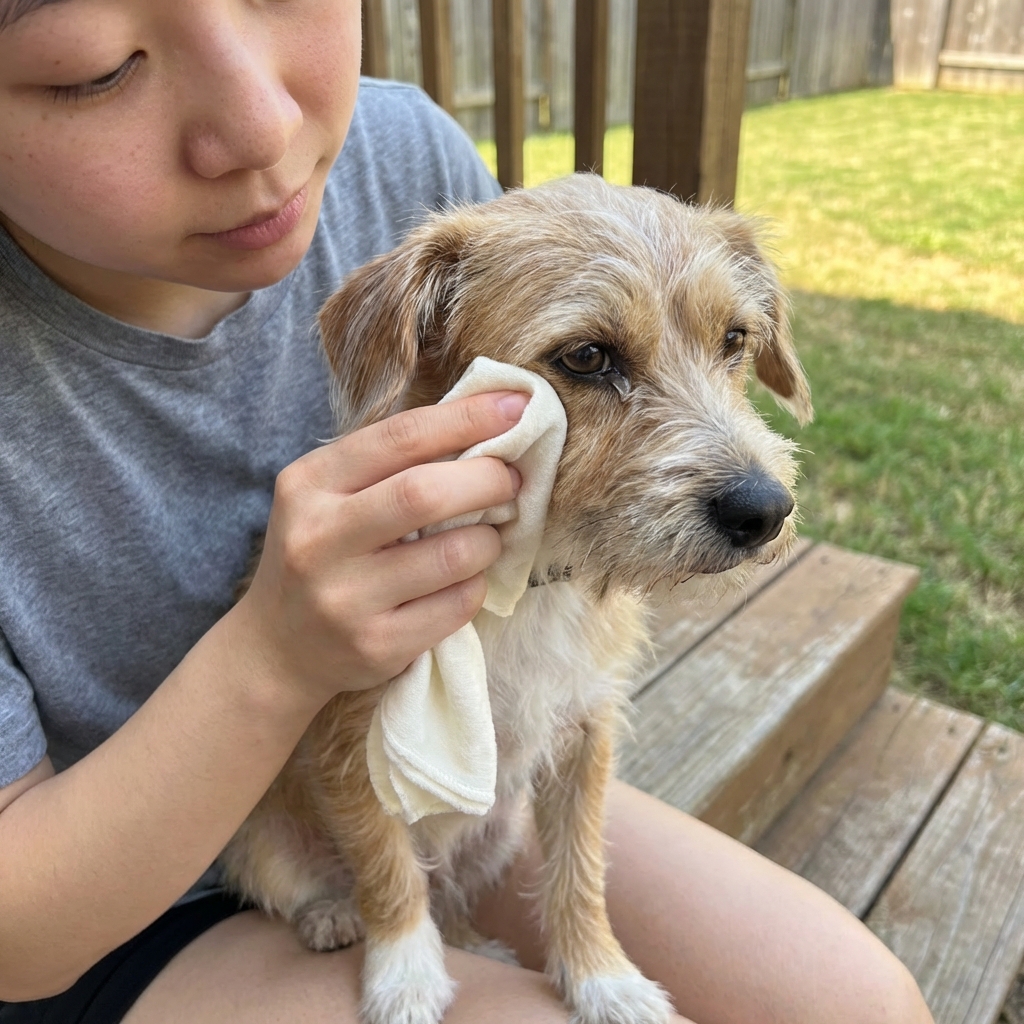
Dogs have a natural tear film that keeps the eye lubricated and flushes away dust. As tears dry, you may see a little crust in the inner corner of the eye.
- Normal: small amount of clear or light tan crust, mostly after naps or overnight, and your dog is not squinting or rubbing.
- Not normal: discharge that is increasing, thick, colored, or paired with redness, swelling, squinting, or pawing at the face.
Decode the discharge color
Clear and watery
This usually points to irritation. Common triggers include wind, dust, shampoo, smoke, seasonal allergies, or hair rubbing the eye. Watery tearing can also happen if the tear drainage system is partially blocked.
White, gray, or stringy mucus
This can show up with dry eye (keratoconjunctivitis sicca), mild inflammation, or allergies. Dogs with dry eye often have more frequent blinking, redness, and a “dull” look to the surface of the eye.
Yellow or green
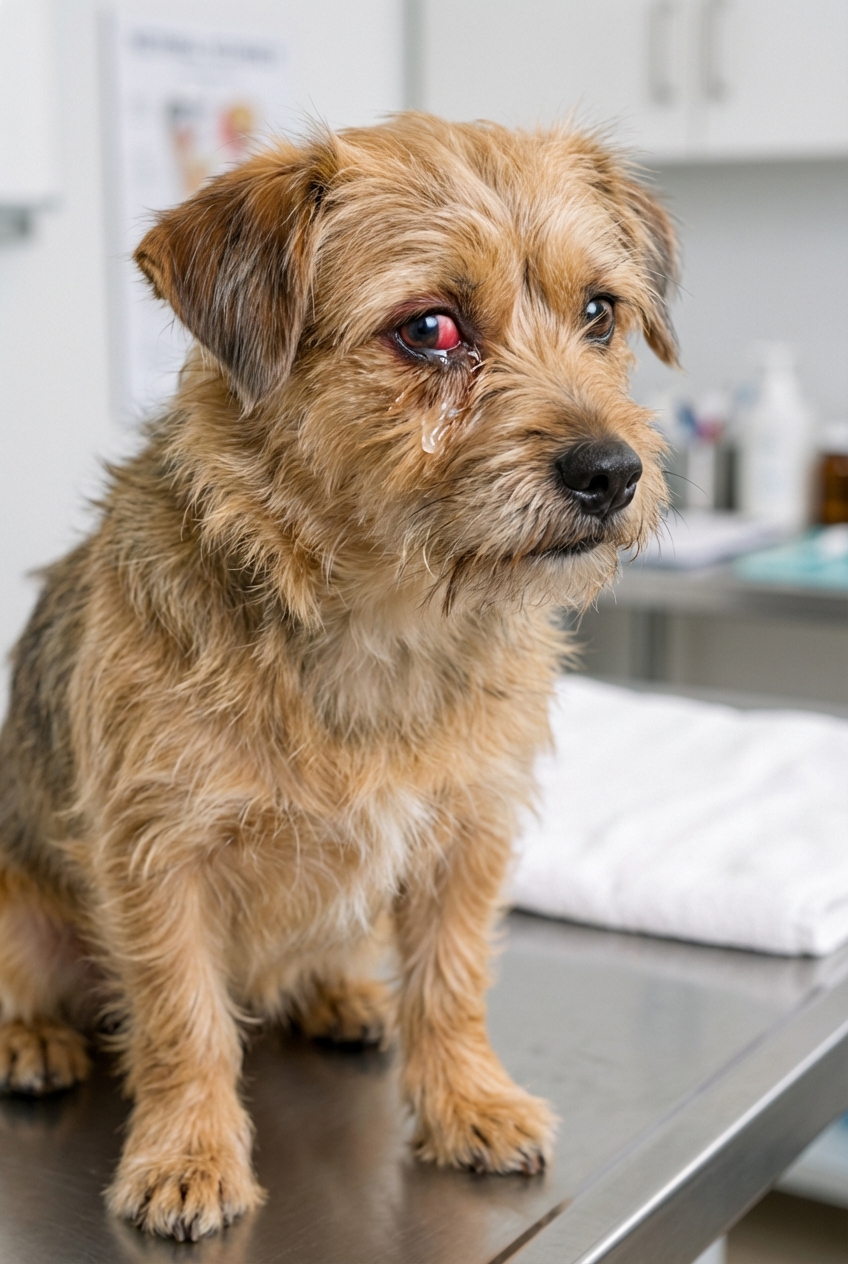
Yellow or green discharge suggests infection or significant inflammation. It can be caused by bacterial conjunctivitis, corneal injury, a foreign body, or infection secondary to allergies or dry eye. This is a “call your vet” situation, especially if it is happening daily.
Reddish-brown tear staining
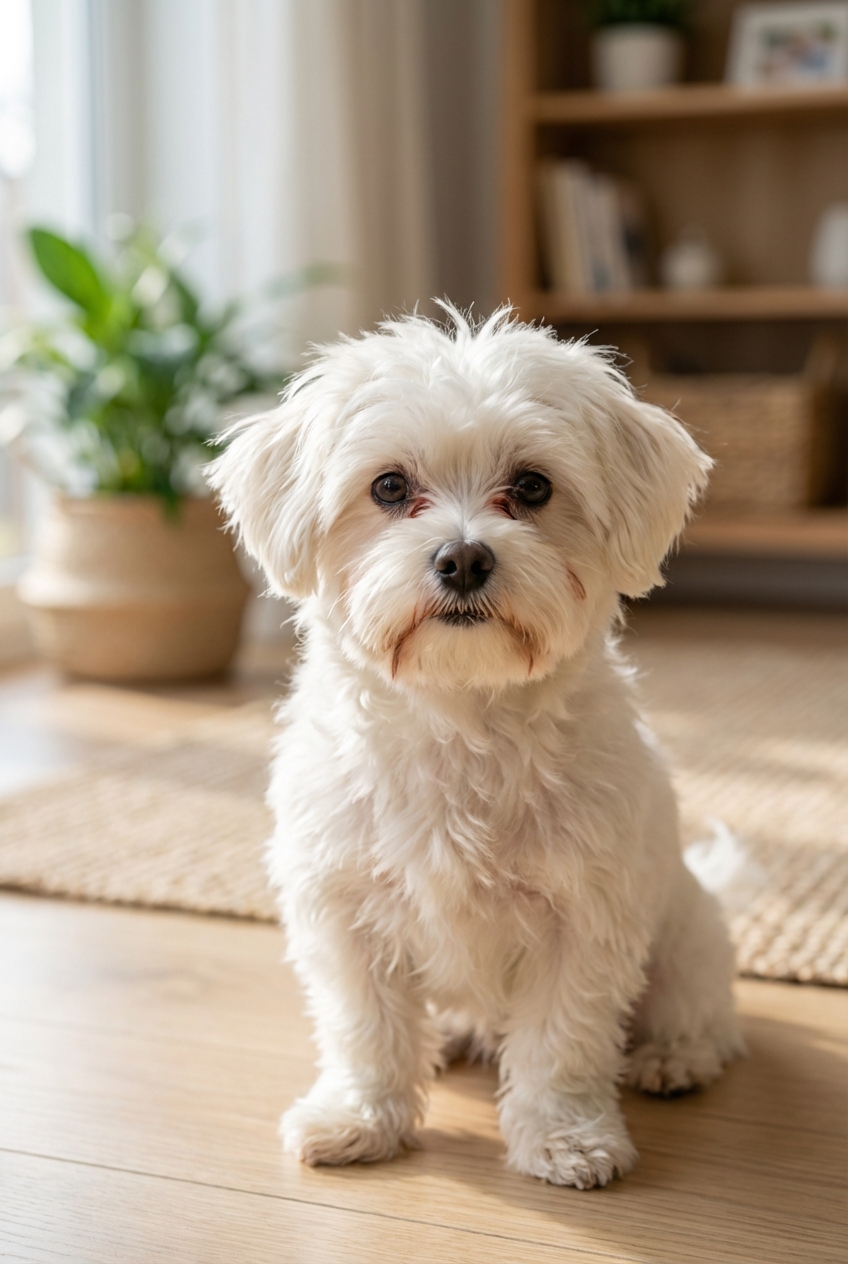
Tear staining is common on light coats and around flat faces. The stain is usually from tear overflow plus porphyrins (natural pigments found in tears and saliva). The reason behind the overflow matters, and chronic moisture can also irritate the skin and allow yeast or bacteria to overgrow around the eyes. Causes include allergies, eyelid shape issues, blocked tear ducts, or hair rubbing the eye.
Common causes of daily eye discharge
Allergies
Allergies can inflame the eye surface and surrounding tissues, leading to tearing and mucus. Environmental allergies are common. Food allergies can sometimes contribute too, but they are less often the main reason for eye discharge by themselves. Dogs may also lick paws, rub faces on carpet, or have recurring ear issues.
Breed and facial structure
Many designer mixes and popular breeds are prone to eye discharge because of face shape or coat type. Short-nosed dogs (like Pugs, Frenchies, Shih Tzus, and mixes) often have shallow eye sockets and tear drainage that does not work efficiently. Curly or wispy facial hair (think Poodle mixes) can continuously irritate the eye if not trimmed.
Dry eye (KCS)
Dry eye is more than “a little goop.” The eye is not producing enough watery tears, and that can become painful and damaging without treatment. Veterinarians diagnose this with a quick tear test (Schirmer tear test).
Blocked tear ducts or poor drainage
When tears cannot drain normally, they spill over. Some dogs are born with narrow ducts. Others develop obstruction due to inflammation, infection, or anatomy.
Conjunctivitis
Conjunctivitis means inflammation of the tissues around the eye. It is a sign, not a final diagnosis. The trigger might be infection, allergies, dry eye, or irritation.
Corneal scratch or foreign body
A tiny scratch or a small piece of plant material can cause excessive tearing, squinting, and discharge. Corneal injuries are urgent because they can worsen quickly.
Eyelid issues and abnormal lashes
If the eyelid rolls inward or lashes rub the cornea, the eye stays chronically irritated. This can cause daily discharge and recurrent redness.
Other causes your vet may consider
Less commonly, persistent one-sided tearing can be linked to issues in the nose or mouth (including dental disease affecting the tear duct area), or deeper eye conditions that need a full exam to sort out.
Age-by-age: what to watch for
Puppies
- Mild crust can be normal, but goopy discharge can worsen quickly in young dogs and should be checked.
- In some cases, eye infections or upper respiratory infections can be contagious between dogs, so do not assume it will just pass.
- Look for squinting, swelling, or one eye worse than the other.
- Puppies are more likely to get irritation from play, grass, and curious noses in dusty places.
Adult dogs
- Allergies, grooming irritation, and chronic tear overflow are common.
- If discharge starts suddenly and is only on one side, think scratch or foreign material.
Senior dogs
- Dry eye becomes more common, and so do eyelid changes.
- Any new cloudiness needs evaluation. A blue or hazy look on the surface can point to corneal disease or pressure issues like glaucoma, while a white or gray change inside the pupil can be more consistent with lens changes like cataracts. Either way, it is worth an exam.
When daily discharge is an emergency
Eye problems can go from mild to serious fast. Seek urgent veterinary care if you notice:
- Squinting or holding the eye closed
- Rubbing the face or pawing at the eye nonstop
- Sudden swelling around the eye
- Cloudiness, a blue or white haze, or a visible spot on the cornea
- Unequal pupils or a new “bulging” look
- Thick yellow or green discharge, especially with redness
- Trauma (dog fight, cat scratch, running through brush)
When in doubt with eyes, it is better to be seen sooner. Many treatments work best in the first 24 to 48 hours.
What you can do at home
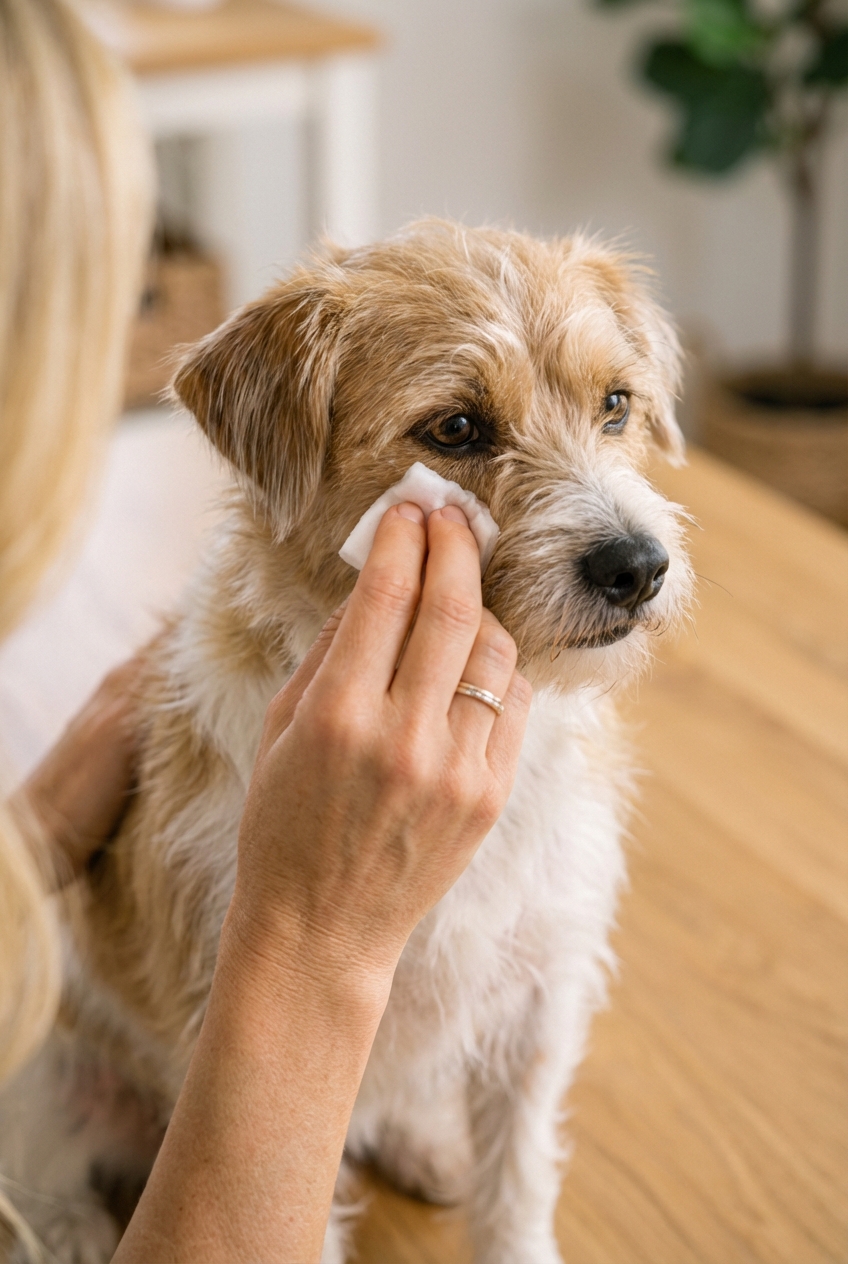
1) Clean gently, once or twice daily
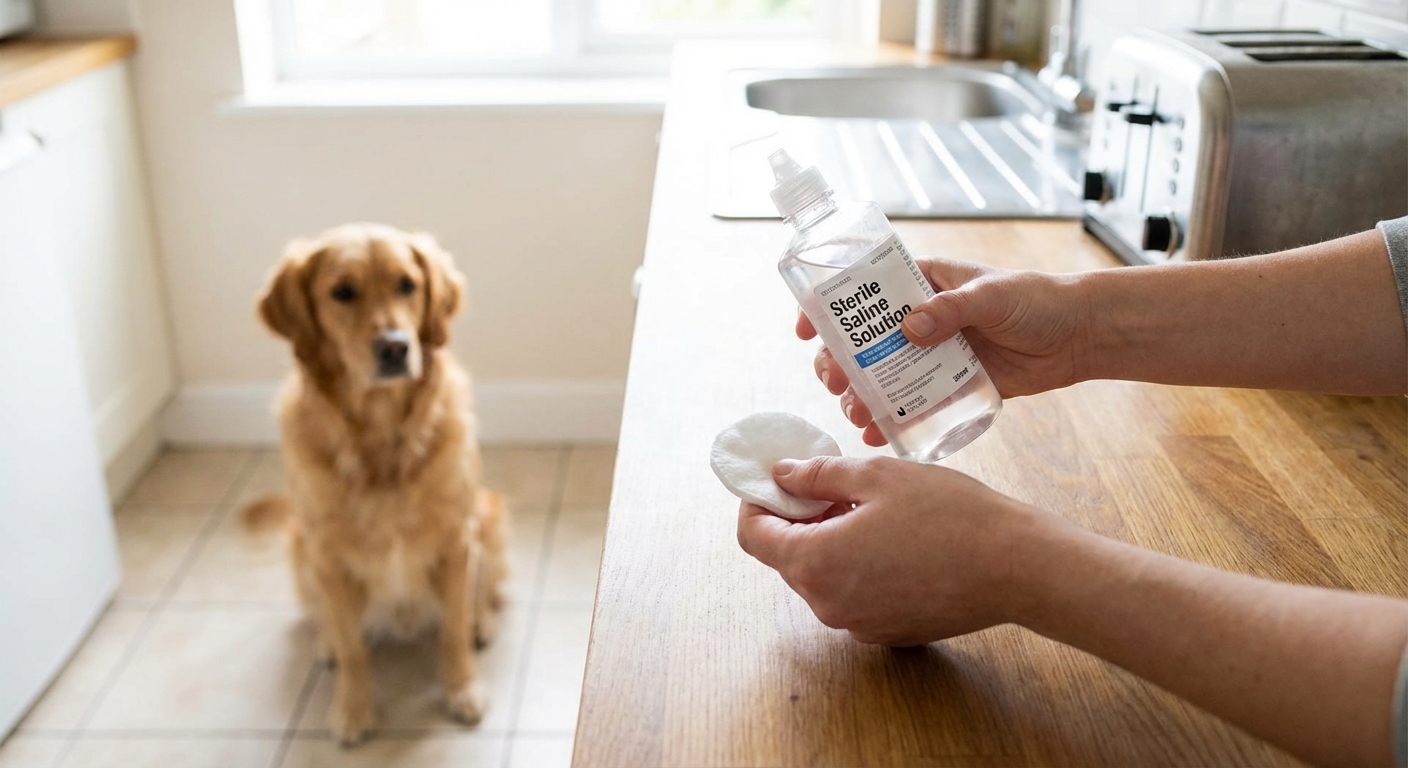
- Use a soft, damp cloth or sterile saline on a cotton pad or gauze.
- Avoid cotton balls that shed fibers.
- Wipe from the inner corner outward, using a fresh area of the cloth each pass.
- Avoid digging into the eye corner or scraping crust off dry. Moisten first.
2) Trim irritating hair
If hair is touching the eye, that is constant mechanical irritation. Ask your groomer for a tidy “eye corner trim,” or have your vet team show you safe techniques.
3) Do a quick irritant check
Think about what changed in the last week: new shampoo, new grooming spray, lawn treatment, dusty construction nearby, smoke, or a new fragrance plug-in. Removing triggers can help.
4) Support comfort, do not self-medicate
- Do not use human eye drops unless your veterinarian specifically recommends them.
- Do not use contact lens solution as “saline.” It is not the same as sterile saline and can sting or irritate.
- Do not use leftover antibiotic or steroid eye meds. Steroids can be dangerous with corneal ulcers.
- Be careful with tear stain removers: avoid hydrogen peroxide or harsh cleaners near the eyes. If you use a stain product, choose one made for pets and keep it on the hair and skin only, never in the eye.
What your veterinarian may do
If discharge is happening daily, your veterinarian will usually look for the “why” first, then treat the symptoms.
- Full eye exam including eyelids and lashes
- Fluorescein stain to check for corneal scratches or ulcers
- Schirmer tear test to screen for dry eye
- Eye pressure test if glaucoma is a concern
- Medication such as lubricating drops, antibiotics, anti-inflammatory meds, or dry-eye therapy depending on the diagnosis
- Tear duct flush in select cases
Preventing recurring eye discharge
- Keep face hair managed: especially for Poodle mixes and long-coated dogs.
- Rinse after grooming: make sure shampoo is fully removed from the face.
- Limit irritants: avoid smoke exposure, strong sprays, and dusty play areas when possible.
- Address allergies early: if your dog has itchy skin plus eye issues, talk to your vet about a targeted allergy plan.
- Feed for overall health: a balanced diet supports skin and mucous membrane health. If you are considering homemade meals, work with your vet or a board-certified veterinary nutritionist so the diet is complete.
Quick daily checklist
If you are trying to decide whether daily discharge is “normal for my dog” or a red flag, ask:
- Is it getting worse week to week?
- Is it thick, yellow, or green?
- Is one eye clearly worse than the other?
- Is my dog squinting, rubbing, or acting painful?
- Do I see redness, swelling, or cloudiness?
If you answered yes to any of these, it is time to schedule an exam. Eyes are delicate, and fast care often prevents long-term problems.