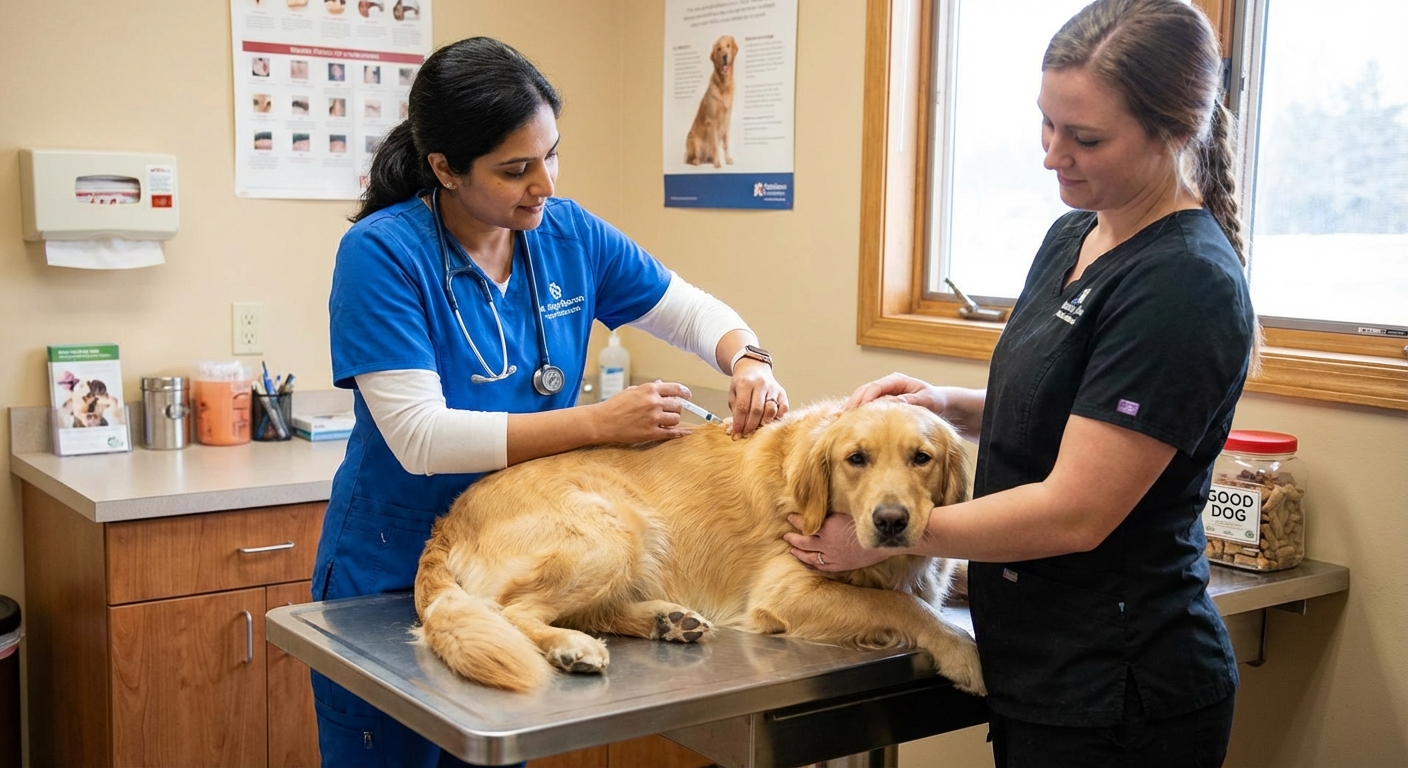
Use this vet-informed puppy vaccine timeline to stay on track with DHPP and rabies, add lifestyle vaccines as needed, and learn safe socialization plus what ...
Article
•
Designer Mixes
Daily Dog Vaccinations: Secrets Revealed

Shari Shidate
Designer Mixes contributor
If you have ever heard someone say a dog needs “daily vaccinations,” pause for a second. As a veterinary assistant here in Frisco, Texas, I mostly see this phrase pop up online or in conversations where “daily meds” and “vaccines” get mixed together. The good news is that real vaccine schedules are much calmer and much more predictable.
The practical truth is this: most vaccines are designed to build immune memory that lasts months to years, not hours to days. Giving extra doses outside the recommended schedule rarely adds meaningful benefit for most healthy dogs. It can, however, increase the chance of side effects and create extra costs and clinic visits.
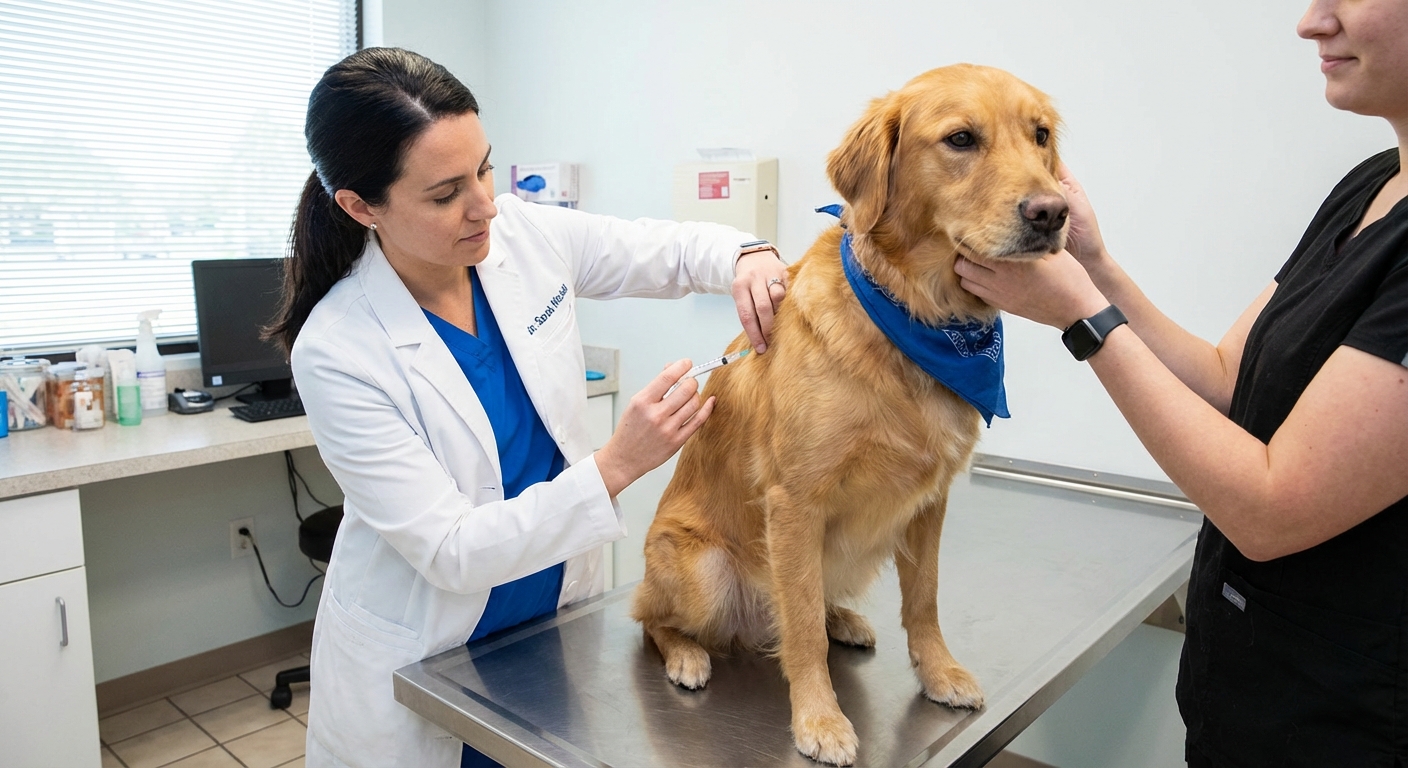
Myth: dogs need daily vaccines
There is no reputable veterinary guideline that recommends vaccinating dogs daily. Vaccines work by training the immune system to recognize a germ and respond quickly later. That training takes time, and it lasts.
When you hear “daily,” it is usually confusion around:
- Daily or regular preventives (like heartworm prevention or flea and tick products), which are not vaccines.
- Multi-dose vaccine series for puppies, which require boosters, but they are spaced weeks apart.
- Travel or boarding requirements, where owners feel pressured to “keep vaccinating” to stay compliant.
What vaccines dogs need and how often
Veterinarians generally group dog vaccines into two categories: core (recommended for most dogs) and non-core (recommended based on lifestyle and local risk). Schedules are influenced by product label directions, professional guidelines (like AAHA), and local laws, especially for rabies.
Core vaccines
- Rabies: Required by law in most places. Timing depends on state law and the vaccine used, commonly every 1 or 3 years after the initial dose and booster schedule.
- DHPP (distemper, adenovirus, parvovirus, parainfluenza): Given as a puppy series, then a booster at about 1 year, then usually every 1 to 3 years depending on your veterinarian’s protocol and your dog’s risk.
Common non-core vaccines
- Bordetella (kennel cough): Often required for boarding, grooming, daycare, and training facilities. Depending on the product and route (oral, intranasal, injectable) and the facility’s rules, boosters may be every 6 to 12 months.
- Leptospirosis: Often recommended in many areas of Texas due to wildlife and standing water exposure. Typically a 2-dose initial series, then boosted annually if risk is ongoing. Some products are labeled to start earlier than 12 weeks, but many clinics commonly begin around 12 weeks.
- Canine influenza: Consider if your dog is social, travels, or if there is local outbreak activity. It is commonly a 2-dose initial series, then periodic boosters (often annually) based on product and exposure risk.
- Lyme: More common in certain regions; your vet will advise based on geography, travel, and tick exposure.
Important: schedules can vary by product label, your dog’s medical history, and local disease patterns. Your veterinarian is your best guide here.

Puppy shots: where the confusion starts
Puppies do need multiple boosters, but not daily. The reason is maternal antibodies. Puppies receive antibodies from mom, and those antibodies fade at different rates. We give a series so we “catch” the moment the puppy can respond strongly.
A common puppy vaccination flow looks like this (your clinic may vary):
- 6 to 8 weeks: DHPP begins
- Every 2 to 4 weeks until at least 16 weeks of age: DHPP boosters (in higher-risk situations, some veterinarians continue to 18 to 20 weeks)
- 12 to 16 weeks (or older): rabies, based on local law and product label
- Leptospirosis: usually a 2-dose series starting around 12 weeks in many clinics, though some products may start earlier, then annual boosters if needed
After the puppy series, most dogs shift into a wellness rhythm. A helpful phrase I use with clients is: annual wellness does not always mean annual vaccines. Some vaccines are given yearly, while others may be boosted every 3 years depending on the product and plan.
Why more vaccines is not always better
Vaccines are one of the biggest public health wins in veterinary medicine. They save lives. But like any medical tool, they should be used thoughtfully and on an evidence-based schedule.
For most dogs, extra doses given outside recommended intervals add little benefit. There are exceptions, and your veterinarian may recommend additional vaccination in certain situations, such as unknown vaccine history, shelter intake, outbreak control, immunocompromised households, or if there is concern a previous vaccine was not handled or administered correctly.
Vaccine reactions are generally uncommon, but they can happen. More injections and more frequent vaccination visits can increase the chance you see minor side effects. Possible reactions include:
- soreness or swelling at the injection site
- sleepiness for a day
- mild fever or decreased appetite
- hives, facial swelling, vomiting, or diarrhea (less common but more urgent)
- rare severe allergic reactions (anaphylaxis)
If your dog ever has facial swelling, trouble breathing, repeated vomiting, collapse, or extreme lethargy after a vaccine, treat it as an emergency and contact a veterinarian right away.
Daily protection that actually matters
If you are looking for what truly protects dogs day to day, it is usually not a vaccine. It is consistent prevention and smart routines.
Daily or regular prevention basics
- Heartworm prevention (given monthly or as directed): Heartworm disease is serious and common in many parts of the U.S., including Texas.
- Flea and tick prevention: Your dog’s lifestyle and your area determine what is best.
- Parasite checks: Routine fecal testing helps catch intestinal parasites early.
- Dental care: Daily brushing is one of the best health habits you can start.
- Nutrition and weight management: A healthy body supports a healthy immune system.

A quick risk checklist
When clients ask me, “What vaccines does my dog really need?” I usually start with lifestyle questions. You can do the same before your next appointment:
- Does your dog go to daycare, boarding, grooming, dog parks, or group training?
- Does your dog hike, swim, or drink from puddles or creeks?
- Do you see wildlife like raccoons, skunks, coyotes, or rodents near your home?
- Do you travel with your dog to other states?
- Is your dog a puppy, senior, or immunocompromised?
These answers help your veterinarian tailor a plan that protects your dog without overdoing it.
Vaccine titers: an option for some dogs
For certain diseases, your veterinarian may offer vaccine titer testing, which is a blood test that looks for antibodies. Titers can be useful in specific situations, such as a dog with a history of vaccine reactions or an owner wanting more individualized decision-making.
A few gentle notes from the clinic side:
- Titers are most commonly discussed for DHPP components, not as a universal replacement for all vaccines.
- A titer can suggest immune response, but it is not always a perfect “yes or no” on protection.
- Rabies is typically governed by law, and titers usually do not replace legal vaccine requirements.
What to do next
If you are worried your dog is getting vaccinated too frequently, you are not being difficult. You are being a thoughtful pet parent.
Here is a simple plan:
- Bring your records (or ask your clinic to send them) before scheduling boosters.
- Ask for a core vs non-core review based on your dog’s lifestyle.
- Discuss intervals (1-year vs 3-year products and clinic protocols).
- If history is unknown, ask how your vet approaches it. Some dogs restart an age-appropriate series, while others may be candidates for titers for certain vaccines.
- Stay for the post-vaccine observation window if your dog has ever reacted before.
- Pair vaccines with a wellness visit so your veterinarian can check weight, heart, skin, teeth, and overall health.
My favorite approach is balanced and practical: vaccinate to protect your dog from real risk, and avoid unnecessary repeat doses that do not add meaningful benefit.