
Vet-assistant guide to calming itchy dogs at home. Learn common causes (fleas, allergies, yeast), a 10-minute itch check, safe remedies, what to avoid, and w...
Article
•
Designer Mixes
Daily Dog Scratching at the Carpet

Shari Shidate
Designer Mixes contributor
If your dog scratches at the carpet every single day, you are not imagining it. It is one of those behaviors that can be totally harmless in one home and a big red flag in another. As a veterinary assistant, I see this question a lot because it sits right at the intersection of skin health, allergies, anxiety, and plain old habits.
The good news is you can usually narrow it down with a few simple observations and a short plan. Let’s walk through what it can mean, what to try at home, and when it is time to involve your veterinarian.
What it can mean
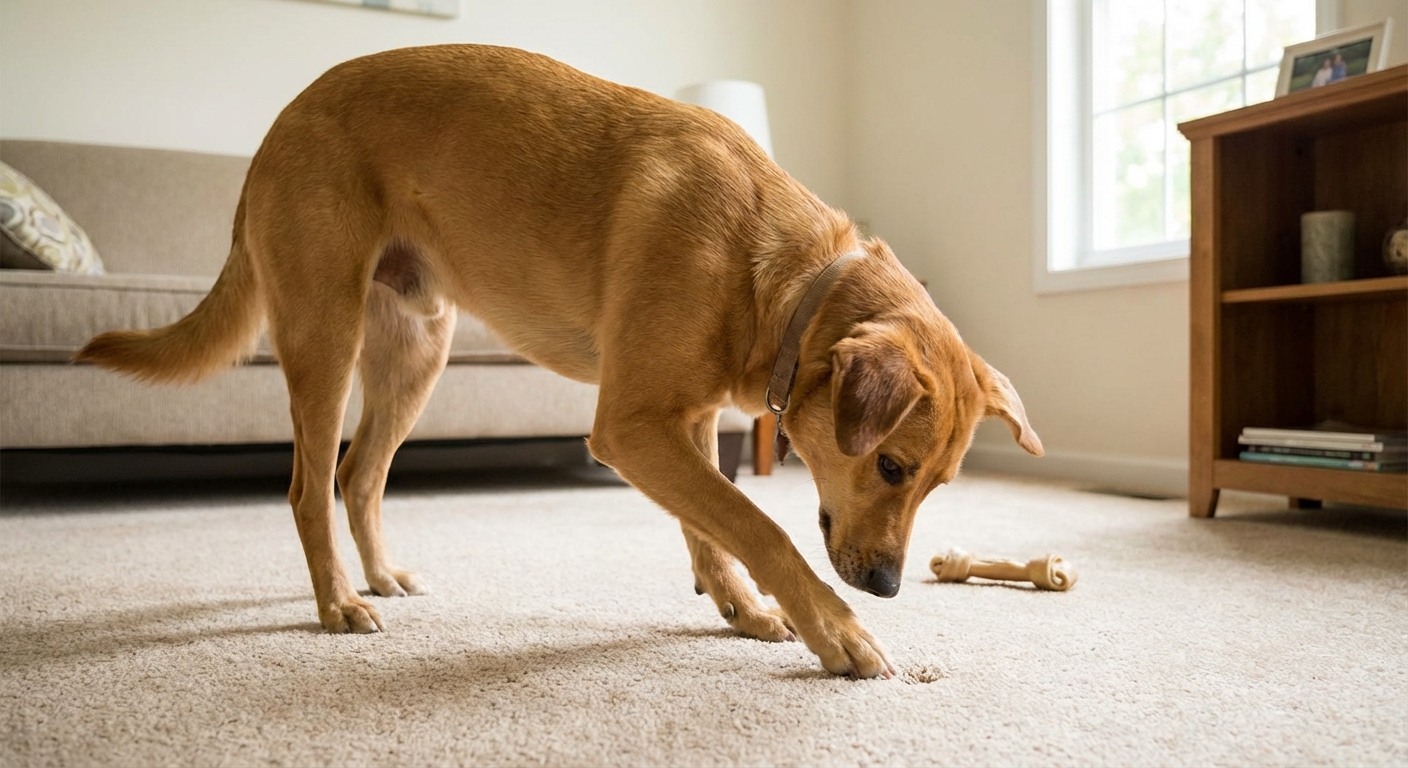
Carpet scratching can be a type of displacement behavior in some dogs, meaning it shows up when a dog feels conflicted, overstimulated, uncomfortable, or is trying to self-soothe. It can also be a straightforward response to itch, pain, or irritation. The tricky part is that several very different causes can look similar at first glance.
- Skin itch (pruritus): allergies, parasites (including mites), infections, or dry skin can drive a dog to rub and scratch anything that gives relief.
- Anal area discomfort: many dogs “butt scoot,” but some will rub or scratch their rear on carpet instead.
- Pain or nerve sensations (less common): back pain, arthritis, or neuropathic “tingly” sensations can sometimes show up as odd floor-scratching or rubbing. This is a good reason to get an exam, especially if it is new.
- Foreign body or localized irritation: something between the toes (like a splinter, grass awn, or irritated skin fold) can make a dog target one paw or one spot.
- Compulsive habit: repeated behavior that started for a reason and became a routine.
- Normal nesting or scent behavior: especially before resting, some dogs paw at the floor like they would at dirt or grass.
Quick clues
Before you change anything, take a quick inventory. These details help you and your vet pinpoint the most likely cause.
Where is your dog scratching?
- Whole body: think allergies, fleas, mites, or dry skin.
- Ears, paws, face: often allergies (environmental or food) and sometimes yeast or bacteria.
- Rear end: anal glands, intestinal parasites, irritation around the anus (perianal dermatitis), or impacted stool.
- One specific spot or one paw: a foreign body, injury, pain, or a localized skin issue.
When does it happen?
- After meals: sometimes excitement or a learned routine. Less commonly, discomfort or restlessness can play a role. If you also notice lip licking, gulping, or regurgitation, mention it to your vet.
- After coming inside: pollen and grass allergies can flare with outdoor exposure.
- At night: itch from allergies or parasites may feel more noticeable when the house is quiet and your dog is resting.
- Only when you are busy or leaving: boredom, attention-seeking, or separation stress.
What does the skin look like?
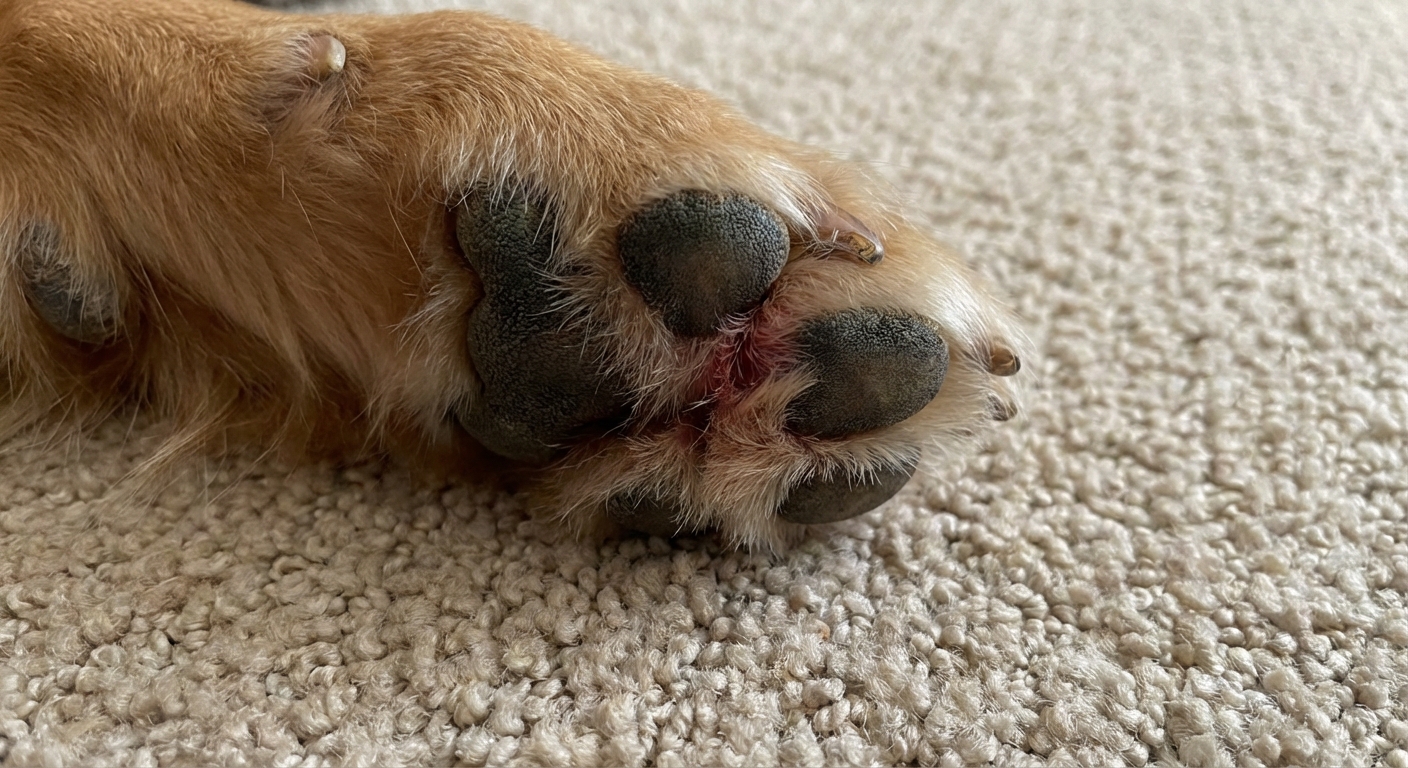
- Redness, odor, greasy feel: yeast or bacterial infection is possible and needs confirmation by your vet.
- Dandruff, flaky coat: dry skin, low humidity, bathing too often, or nutrition gaps.
- Hair loss, scabs: could be self-trauma, parasites, infection, or allergies.
Common medical reasons
1) Fleas and other parasites
Even indoor dogs can get fleas. One flea bite can trigger a big reaction in sensitive dogs, and carpet is a common place for itching and rubbing because it provides friction. Mites are also worth keeping on your radar, especially if the itch is intense or seems out of proportion to what you see on the skin.
- What to do: confirm your dog is on consistent, vet-recommended flea prevention. Check the rump and tail base for flea dirt (black specks that turn reddish-brown when wet).
- Vet help matters because: not all over-the-counter products are effective, and some are unsafe for certain pets.
2) Environmental allergies (atopy)
Pollen, mold, and dust mites can cause daily itching. Many dogs show it as paw chewing, ear issues, and rubbing their face and body on carpet.
- Common signs: licking paws, recurrent ear infections, seasonal flares, red belly or armpits.
- Helpful step: wipe paws and belly after outdoor time and wash bedding weekly in hot water when possible.
3) Food sensitivities
Food sensitivities can contribute to chronic itch, ear infections, and GI changes. They are less common than environmental allergies but still important, especially when symptoms are year-round.
- Clues: itch that never really “goes away,” recurring ear problems, soft stool, gas.
- Evidence-based note: the most reliable way to evaluate food allergy is a strict veterinarian-guided elimination diet trial (often 8 to 12 weeks) using a truly novel or hydrolyzed diet. Single blood or saliva tests are not considered definitive.
4) Yeast or bacterial skin infection
Infections often ride on top of allergies. The dog itches, the skin barrier gets damaged, yeast and bacteria overgrow, and now the itch is even worse.
- Clues: a musty or “corn chip”-like odor (especially on paws), redness, darkened skin, greasy coat, intense itching.
- Why prompt care helps: infections usually need prescription treatment to fully clear, and your vet can confirm the cause with cytology.
5) Anal gland or rear-end irritation
Overfull or irritated anal glands can cause scooting, licking, sudden sitting, or rubbing the rear end on carpet. Rear-end itch can also come from intestinal parasites or inflamed skin around the anus.
- Clues: fishy smell, licking the rear, scooting, discomfort when sitting.
- Do not DIY squeeze unless trained: it is easy to cause inflammation or rupture. If it keeps happening, a veterinary exam is the safest next step. If expression is appropriate, ask your veterinary team or a groomer who is specifically trained in anal gland expression.
Behavior and environment
It is very common for medical itch and behavioral factors to overlap. A dog might start scratching because of allergies, then keep doing it because it became a soothing habit or because it gets a reaction from the family.
Boredom and low enrichment
Some dogs scratch at carpet because it is something to do, especially high-energy mixes. If it happens most when the house is quiet, this jumps up the list.
- Try: two short training sessions daily (3 to 5 minutes), food puzzles, sniff walks, and rotating toys.
Anxiety and self-soothing
Carpet scratching can be a way to release tension. You might see it with pacing, panting, whining, or clinginess.
- Try: predictable routine, calming enrichment (lick mats, stuffed Kongs), and a quiet safe spot with white noise.
Habit and attention loops
If scratching reliably makes you look, talk, or move toward your dog, the behavior can be unintentionally reinforced even when you are trying to stop it.
- Try: redirect to an approved behavior (go to mat, sit, toy) and reward that instead.

What to do this week
Step 1: Start a simple log
Write down:
- time of day
- location on the body your dog targets
- what happened right before (walk, meal, visitors, vacuuming, bedtime)
- any stool changes, ear odor, paw licking, or head shaking
This sounds basic, but it is incredibly powerful. Patterns appear fast.
Step 2: Check prevention basics
- Confirm consistent flea and tick prevention.
- Keep nails trimmed. Long nails can change gait and contribute to discomfort or extra floor pawing.
- Use a gentle, dog-safe shampoo and do not over-bathe. Many itchy dogs do better with vet-recommended medicated baths on a schedule rather than random frequent bathing.
Step 3: Support the skin barrier
Many dogs with daily itching have a compromised skin barrier. Ask your veterinarian about omega-3 fatty acids (EPA and DHA) and whether your dog needs a therapeutic diet or dermatology support.
Food quality matters. A complete and balanced diet with appropriate fats, vitamins, and minerals supports healthier skin and a more resilient coat.
Step 4: Reduce irritants at home
- Vacuum and wash bedding weekly if allergies are suspected.
- Use fragrance-free laundry detergent when possible.
- Rinse or wipe paws after outdoor time, especially during high pollen days.
Step 5: Protect the carpet safely
While you sort out the cause, prevent damage and reduce reinforcement. Block off the favorite area with a baby gate, use a washable runner, or supervise and redirect to an approved spot.
Step 6: Give an alternative scratch zone
If your dog scratches carpet as a nesting habit, provide a washable dog bed or blanket and encourage digging there. You can even teach “dig here” and reward it. It is a small change that can save your carpet and reduce frustration for both of you.
Important note on OTC itch meds
Many owners reach for human antihistamines or creams. Please check with your vet before giving any medication or applying topical products. Some human creams can be unsafe if licked or can worsen infections, including products containing zinc oxide, lidocaine, or steroids used without guidance.
When it is urgent
Please call your veterinarian promptly if you notice any of the following:
- raw skin, bleeding, open sores, or rapidly expanding redness
- head shaking with ear pain or foul odor
- intense itching that disrupts sleep
- hair loss patches with scabs or oozing
- new scooting, straining to poop, or swelling around the anus
- behavior changes like yelping, stiffness, or trouble jumping up
- one paw suddenly becoming the focus, especially if there is swelling or limping
If your dog is scratching daily, the goal is not just to stop the behavior. The goal is to find the reason behind it and make your dog more comfortable.
What your vet may recommend
Depending on your dog’s history and exam, your veterinarian may suggest:
- Skin cytology: a simple test to look for yeast and bacteria.
- Parasite check and treatment plan: reviewing flea prevention, considering mites, and addressing intestinal parasites when rear-end irritation is part of the picture.
- Ear exam and ear cytology: especially if there is head shaking or odor.
- Paw and skin exam for foreign bodies: particularly if one paw or one spot is the main target.
- Allergy plan: targeted medications, immunotherapy, or dermatology referral for persistent cases.
- Elimination diet trial: a strict, time-limited trial (often 8 to 12 weeks) to evaluate food allergy.
- Anal gland evaluation: if rear-end discomfort is suspected, especially when it keeps recurring.
- Pain assessment: if there are signs like stiffness, trouble jumping, limping, or sensitivity along the back.
Most importantly, your vet can help you choose a plan that matches your dog’s age, breed mix, medical history, and lifestyle.