Turn chicken and rice into a more balanced homemade dog meal with veggies, calcium carbonate, and omega-3s. Includes gram weights, portion guidance, swaps, a...
Article
•
Designer Mixes
Daily Bloody Stool in Dogs

Shari Shidate
Designer Mixes contributor
Seeing blood in your dog’s poop once is scary. Seeing it daily can feel downright alarming. As a veterinary assistant here in Frisco, Texas, I want you to know two things can be true at once: many causes are treatable, and daily bloody stool is not something to “wait out”.
This article is for general education and triage support. It cannot diagnose your dog, and local risks (like specific parasites) can vary. When in doubt, call your veterinarian.
Blood may look like bright red streaks or drops, be mixed into soft stool, or appear black and tarry. The pattern, your dog’s behavior, and any other symptoms help narrow down what’s going on.
What the blood can look like
Bright red blood (hematochezia)
Bright red blood usually comes from the lower intestinal tract (colon, rectum, or anus). You might see streaks on the stool, drops at the end, or mucus with red blood. This is common with colitis, parasites, stress, diet changes, and anal gland issues.
Black, tarry stool (melena)
Black, sticky, tar-like stool suggests digested blood from higher up in the gastrointestinal (GI) tract (stomach or small intestine). This can be associated with ulcers, certain toxins, bleeding disorders, or severe intestinal disease. Melena is always a same-day veterinary concern, and heavy or worsening bright red bleeding is, too.
Blood with mucus
Mucus often points to inflammation of the colon. Dogs with colitis may have frequent small stools, straining, urgency, and accidents in the house even if they are normally reliable. Straining from colitis is commonly mistaken for constipation.
Daily bloody stool: common causes
Here are the most common reasons we see ongoing or daily blood in stool. Some are mild, some are serious, and many look the same at home, which is why patterns and a vet exam matter.
- Diet change or food intolerance: New treats, table scraps, rich foods, a sudden brand switch, raw diets, bones, or high-fat foods can inflame the colon.
- Stress colitis: Boarding, visitors, new pets, storms, moves, schedule changes, or even a new walking route can trigger colitis in sensitive dogs.
- Parasites: Giardia, whipworms, hookworms, and other intestinal parasites can cause blood and mucus. A negative single fecal test does not always rule them out because some parasites shed intermittently. Your vet may recommend a combination of fecal flotation plus Giardia antigen (or PCR), and sometimes repeat testing.
- Parvovirus (especially puppies): Often causes lethargy, vomiting, poor appetite, and foul diarrhea that may become bloody. This is an emergency.
- Hemorrhagic diarrhea syndrome: This is a clinical syndrome (you may hear it called HGE). It can cause sudden watery diarrhea with significant blood, often with vomiting. It can look dramatic and dogs can dehydrate quickly, so prompt care is important.
- Bacterial imbalance or infection: Inflammation in the gut can be related to bacterial overgrowth or infection. Many acute colitis cases improve with supportive care, and antibiotics are not automatically needed. Your veterinarian will decide based on your dog’s exam, risk factors, and test results.
- Inflammatory bowel disease (IBD): Chronic inflammation can cause intermittent or persistent blood, soft stool, weight changes, and picky appetite.
- Anal gland or rectal irritation: Scooting, licking, straining, or bright red blood at the end of a bowel movement can be connected to irritation near the exit.
- Foreign material: Toys, sticks, fabric, bones, or trash can irritate or obstruct the GI tract.
- Medication effects: Some medications can irritate the stomach or affect clotting. Never stop a prescription without guidance, but do call your vet.
- Bleeding disorders or toxins: Rat bait exposures, liver disease, and certain clotting problems can cause GI bleeding.
- Tumors or polyps: More common in older dogs, sometimes seen as ongoing blood or straining.
Behavior clues that help
Your dog’s behavior is not just “extra info.” It can be the difference between scheduling soon and going in today.
Often points to colitis
- Frequent attempts to poop with small output
- Straining, urgency, accidents
- Mucus, bright red streaks
- Energy is mostly normal
Suggests your dog feels truly sick
- Lethargy, hiding, trembling, restless pacing
- Vomiting or repeated gagging
- Not interested in food or water
- Abdominal pain (tense belly, “prayer position”)
- Weakness, pale gums
Emergency signs
- Weakness, collapse, pale gums, or severe pain
- Possible toxin exposure (rat bait, human meds, xylitol, grapes/raisins)
- Puppy or unvaccinated dog with diarrhea (even before blood appears)
- Black, tarry stool
- Large amounts of blood, clots, continuous dripping, or bleeding that worsens each bowel movement
- Bloody diarrhea plus vomiting
- Signs of dehydration (tacky gums, sunken eyes, collapse)
What to do at home now
If your dog seems ill, the stool is black and tarry, the bleeding is heavy, or vomiting is happening, skip home steps and go in. If your dog is bright, alert, drinking, and the blood amount is small, you can take a few safe steps while you arrange a timely vet visit. Because this article is about daily blood, home care should not become a multi-day plan without veterinary guidance.
1) Take a photo and notes
- Color: bright red or black
- Texture: formed, soft, watery
- Frequency: how many times today
- Any vomiting, appetite change, new treats, bones/raw items, meds, or trash access
This helps your vet make faster, better decisions.
2) Bring a fresh stool sample
Collect a fresh sample (ideally within a few hours) in a clean bag or container. Parasite testing is one of the first steps for many dogs with bloody stool. If your first test is negative, ask whether repeat testing, Giardia antigen testing, or PCR makes sense for your dog’s situation.
3) Hydration first
Encourage water. If diarrhea is present, dehydration can sneak up quickly, especially in small dogs.
4) Do not give human medications
Do not give Pepto-Bismol, ibuprofen, aspirin, or anti-diarrheals unless your veterinarian specifically directs you. Some are dangerous for dogs and can worsen bleeding. Also, bismuth (in some products like Pepto-Bismol) can darken stool and make it harder to tell if melena is present.
5) Keep food simple unless your vet says otherwise
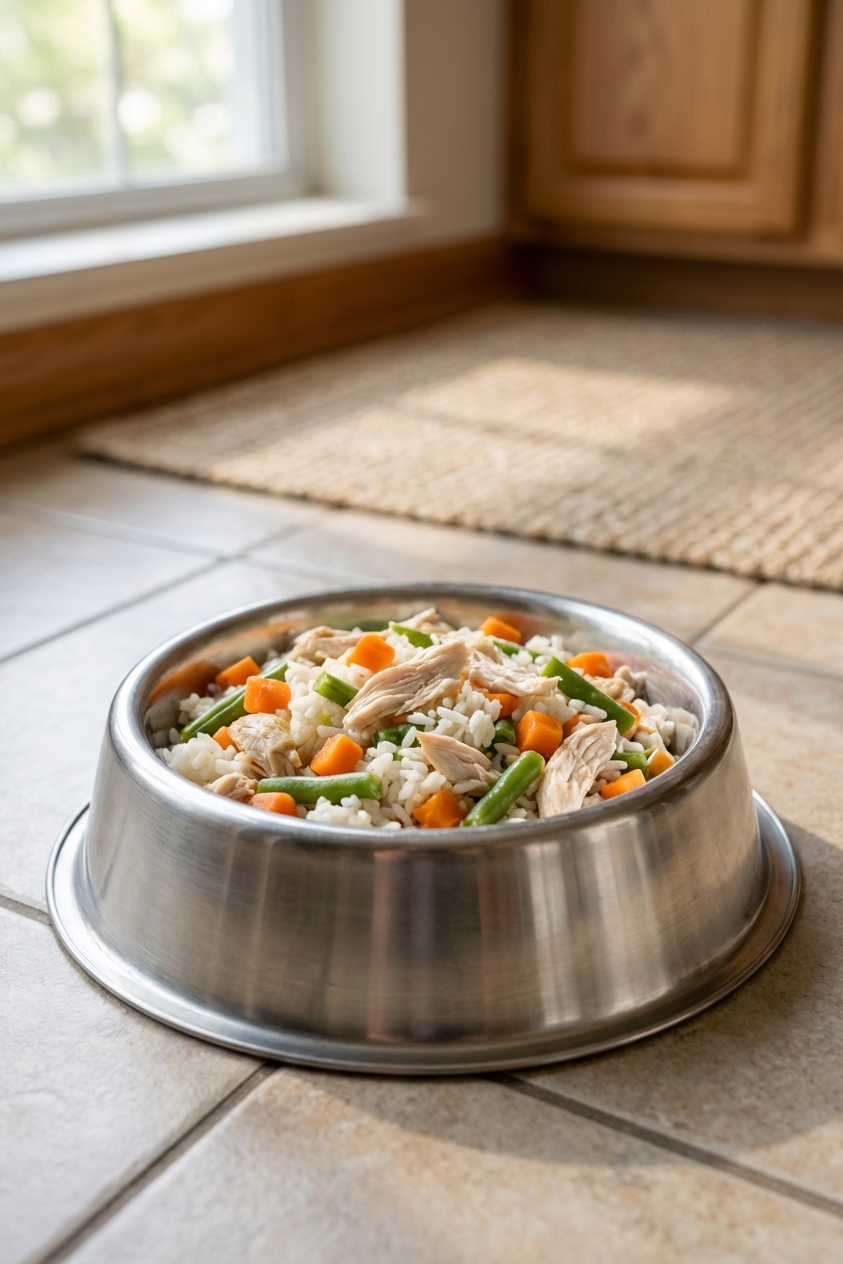
For mild cases, some vets may recommend a short bland diet trial. Ask your clinic what they want you to feed based on your dog’s age, size, and symptoms. Do not fast puppies, toy breeds, or dogs with other medical conditions unless your veterinarian instructs you.
What not to do
- Do not give leftover antibiotics or someone else’s prescription
- Do not delay care if stool is black and tarry or your dog is weak, vomiting, or painful
- Do not assume straining means constipation. Colitis can look similar
When to call vs go in today
Call your vet within 24 hours if
- Blood is present daily, even if your dog seems okay
- There is mucus and frequent urgent stools
- Your dog recently started a new food, chew, or medication
- You see worms, rice-like segments, or suspect parasites
Go to urgent care or the ER now if
- Stool is black and tarry
- Your dog is weak, pale, collapsing, or painful
- Bloody diarrhea is heavy, worsening, has clots, or seems continuous
- There is repeated vomiting, especially with blood
- Puppy, senior dog, or immune-compromised dog with bloody stool
- You suspect toxin exposure or foreign object ingestion
What your vet may recommend
At the clinic, your vet is trying to answer two key questions: Is your dog stable, and what is the source of the bleeding?
- Fecal testing to check for parasites and Giardia (sometimes with multiple methods)
- Parvovirus test for puppies or unvaccinated dogs with diarrhea
- Bloodwork to assess dehydration, anemia, organ function, inflammation, and clotting concerns
- Abdominal X-rays or ultrasound if obstruction, foreign body, tumor, or severe intestinal disease is suspected
- Diet trial using a veterinary therapeutic diet if food sensitivity or IBD is suspected
- Targeted medications such as dewormers, probiotics, anti-nausea meds, GI protectants, or antibiotics when truly indicated
- Fluids (subcutaneous or IV) if dehydrated
If your dog has had blood in stool daily, ask your veterinarian what monitoring they want at home and what red flags mean you should return immediately.
Preventing repeat episodes
Not every cause is preventable, but many are. These simple habits can significantly reduce the odds of recurring bloody stool.
- Slow diet transitions over 7 to 10 days when changing foods.
- Trash-proof your home and keep chews age-appropriate and digestible. Avoid risky items like cooked bones.
- Year-round parasite prevention based on your vet’s guidance for your area.
- Regular fecal checks, especially for dogs who visit dog parks or daycare.
- Stress support for anxious dogs (routine, quiet breaks, enrichment, and vet-approved calming strategies).
The most encouraging part is this: when we identify the trigger, many dogs improve quickly, sometimes within a few days. The key is not guessing for too long when blood is showing up every day.
Appointment checklist
- Photo of the stool
- List of foods, treats, chews, and any table scraps in the last 7 days
- All medications and supplements (with doses)
- Vaccination status and parasite prevention info
- Fresh stool sample
Daily bloody stool deserves a real plan. You are not overreacting by calling your veterinarian. You are advocating for your dog.