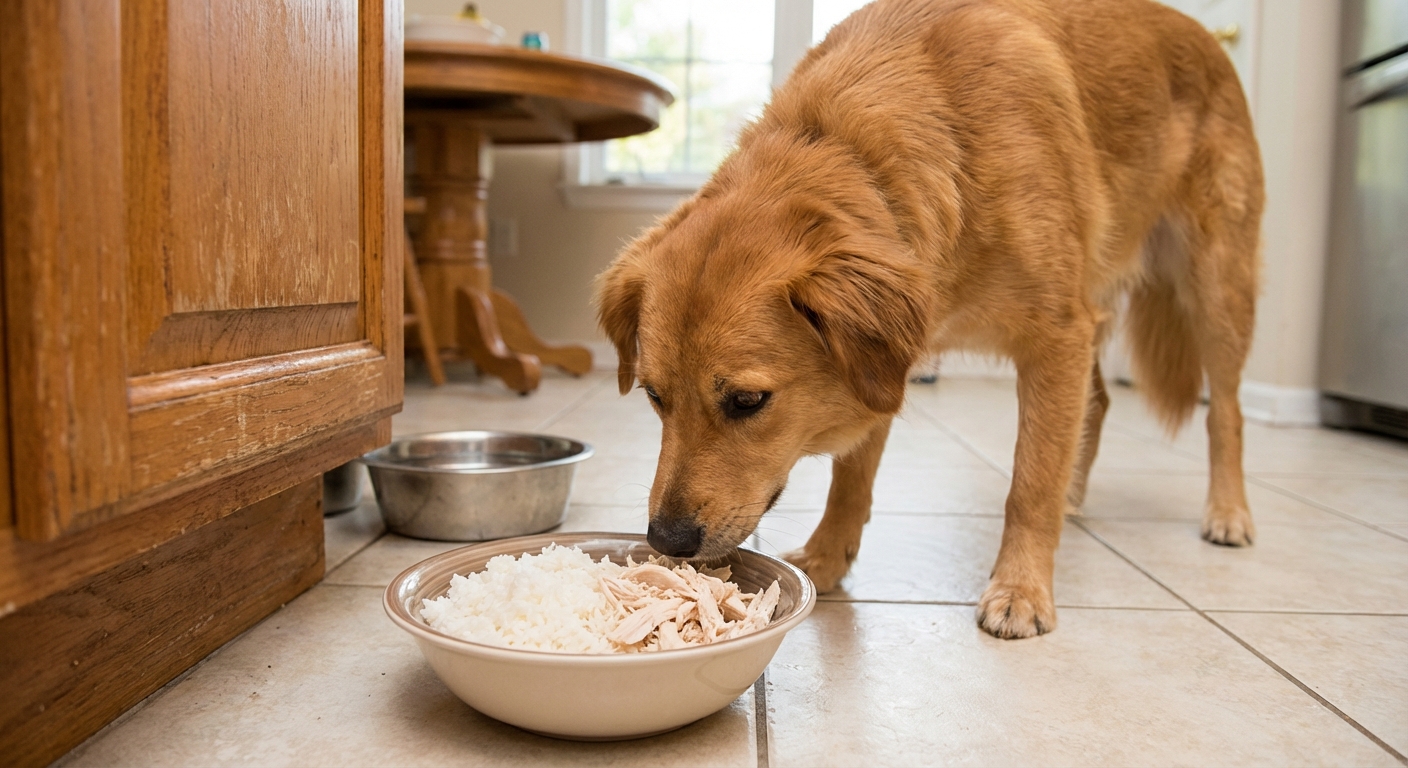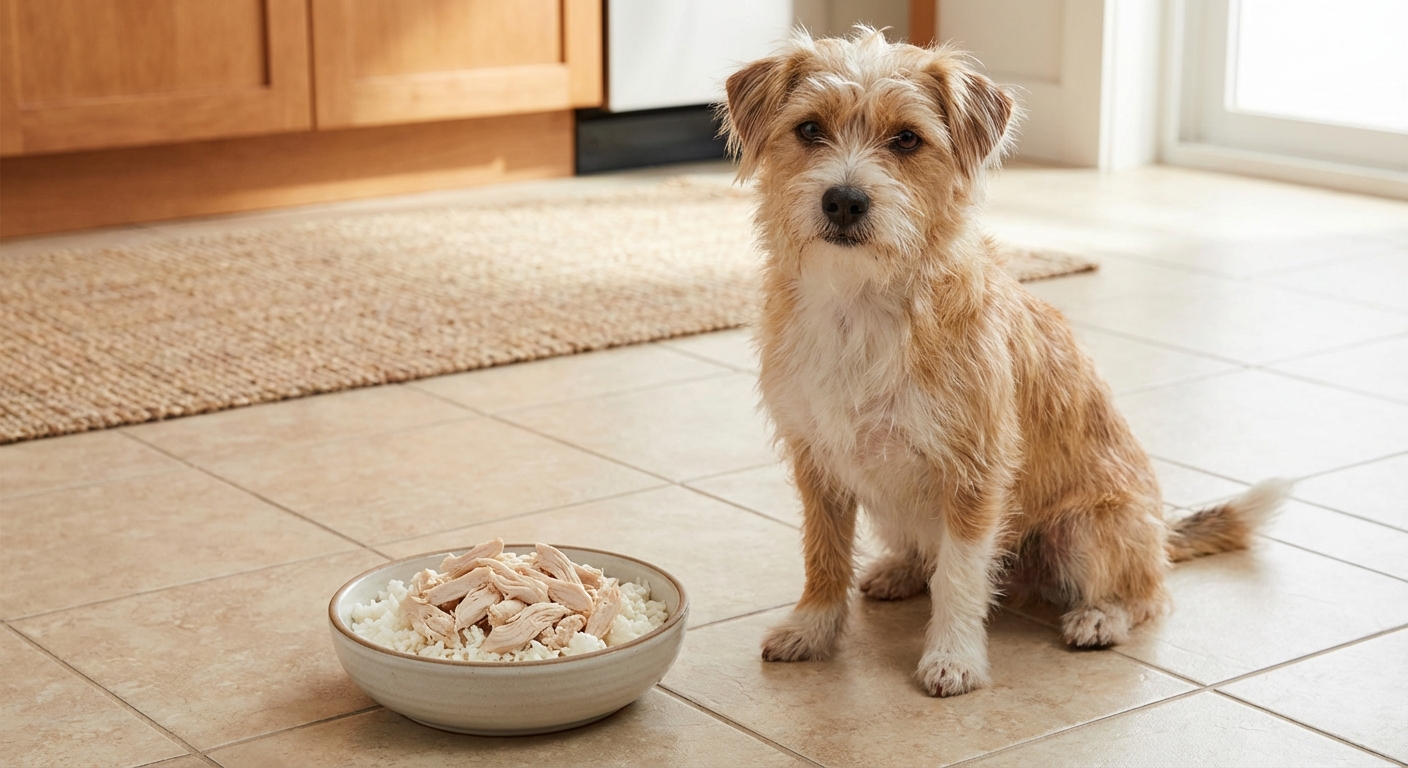
Worried about a vomiting dog? Learn when vomiting is an emergency, how to offer small sips safely, and the best bland foods (chicken/rice, turkey, pumpkin, e...
Article
•
Designer Mixes
Daily Blood in My Dog’s Vomit

Shari Shidate
Designer Mixes contributor
Seeing blood in your dog’s vomit is scary. If it’s happening daily, it’s also a strong signal that something needs attention fast. As a veterinary assistant in Frisco, Texas, I want you to know two things: you are not overreacting, and there are practical steps you can take today to keep your dog safer while you get veterinary guidance.
Blood in vomit can look bright red, dark red, or like coffee grounds. Any of those can be serious. Daily episodes raise the risk of dehydration, anemia, and a worsening underlying condition.
If your dog is vomiting blood daily, treat it as urgent. If your dog seems weak, pale, collapses, or the vomit looks like coffee grounds, treat it as an emergency.
When to go to the ER now
Go to an emergency vet immediately if you notice any of the following:
- Large amounts of blood or repeated vomiting that will not stop
- “Coffee grounds” vomit (often suggests digested blood from the stomach or upper GI tract)
- Weakness, collapse, wobbliness, or your dog cannot stay standing
- Pale gums (lift the lip and check if gums look white or very light pink)
- Bloated abdomen, unproductive retching, or signs of severe pain
- Black, tarry stool (melena can indicate GI bleeding)
- Foreign body risk (chewed toys, socks, bones, corn cobs, trash)
- Poison risk (rat bait, human meds like ibuprofen, marijuana products, xylitol gum)
- Anticoagulant rodenticide risk (some rat baits can cause dangerous internal bleeding and need immediate care even before symptoms are obvious)
- Known liver, kidney, or clotting disorders, or your dog is very young, very old, or immunocompromised
- Puppy parvo risk (unvaccinated or under-vaccinated puppy with vomiting, lethargy, fever, and especially bloody diarrhea)
If you are unsure, it is always appropriate to call an ER and describe what you’re seeing. Daily blood is not a “wait and see” situation.
What blood in vomit can mean
Vomiting blood is called hematemesis. It can come from irritation, injury, or bleeding in the mouth, throat, esophagus, stomach, or upper small intestine.
One important note: sometimes what looks like hematemesis is swallowed blood, such as from a nosebleed, bleeding gums, or a mouth injury. That still needs veterinary attention, but it helps your vet narrow down where the blood is coming from.
Bright red blood
Bright red streaks or small clots can be associated with:
- Mouth injury (chewing something sharp, broken tooth, gum trauma, bleeding gums)
- Nosebleed with swallowed blood (blood can drip back and be vomited up later)
- Esophageal irritation (severe reflux, frequent vomiting)
- Stomach irritation that may lead to erosions (diet changes, eating garbage, some infections)
Dark blood or “coffee grounds”
This can suggest blood has been sitting in the stomach and partially digested. It can be associated with:
- Stomach ulcers
- NSAID toxicity (ibuprofen, naproxen, or aspirin given without veterinary guidance)
- Serious infection or systemic disease that affects clotting or the GI lining
Why daily changes the picture
A one-time episode can still be serious, but repeated bleeding suggests an ongoing problem such as:
- Ulcers or erosions in the stomach
- Foreign material irritating the GI tract
- Chronic inflammation (food intolerance, inflammatory bowel disease)
- Parasites or infections (varies by region and exposure)
- Pancreatitis
- Bleeding or clotting disorders
- Tumors or masses in the GI tract (more common in older dogs)
What you can do at home while you contact your vet
Home care is not a substitute for veterinary diagnosis when blood is involved, especially with repeated episodes. But these steps can reduce risk while you arrange care.
1) Collect helpful information
- Take a clear photo of the vomit (yes, it feels gross, but it helps)
- Write down the basics: time, frequency, and amount
- Track food exposure: diet changes, treats, chews, bones, or table scraps
- List everything given: medications and supplements (including flea and tick products)
- Bring a fresh stool sample if you can
- Bring a vomit sample if you can do it safely (a small amount in a sealed container or bag, kept away from kids and other pets). If not, photos are still very helpful.
2) Prevent re-injury and re-exposure
- Remove risky items: shreddable toys, rawhide-like chews, sticks, bones, and trash
- Lock down medications: keep human meds and cleaning supplies fully out of reach
- Use a leash for potty breaks so you can prevent scavenging
3) Food and water: proceed carefully
If your dog is actively vomiting, do not force food. In many cases, your vet may recommend a brief rest period for the stomach, but do not fast a puppy, toy breed, or a dog with diabetes without veterinary direction.
Offer small sips of water. If your dog gulps and vomits, try:
- Ice cubes to lick
- Very small amounts of water every 10 to 15 minutes
Do not give Pepto-Bismol, aspirin, ibuprofen, or other human GI or pain meds unless a veterinarian tells you to. Some are dangerous for dogs and can make bleeding worse.
4) Check hydration and gum color
- Gums: healthy gums are bubblegum pink and moist
- Capillary refill: press gum until it turns white, release, pink should return in about 1 to 2 seconds
- Dehydration clues: sticky gums, lethargy, and in some dogs, sunken-looking eyes
Prevention going forward
Medical care comes first. Training and routine changes can help reduce future vomiting episodes tied to scavenging, chewing, or fast eating, but they do not replace urgent diagnostics when blood is showing up.
Teach “Leave it” for safety
This is one of the most protective cues you can teach. Start indoors with low-value items and build up slowly.
- Hold a treat in a closed fist. When your dog stops pawing and sniffing, mark with “yes” and reward with a different treat.
- Progress to an uncovered treat on the floor with your foot ready to block.
- Practice on walks with safe targets like a leaf, then move to higher temptation areas.
Use a muzzle for heavy scavengers
If your dog scavenges and you are dealing with repeated vomiting, ask your vet about a basket muzzle for short-term use on walks. It can prevent trash eating while still allowing panting. Pair it with treats so it becomes a calm, positive routine.
Slow down fast eaters
Fast eating can trigger vomiting and reflux. Helpful options include:
- Slow feeder bowl
- Scatter feeding in a clean area
- Food puzzle toys (only if your dog is not shredding them)
What your veterinarian may recommend
Because blood is involved, vets usually focus on two priorities: stabilize and find the cause.
Common diagnostics
- Physical exam and pain assessment
- Bloodwork (CBC and chemistry to check anemia, organ function, inflammation)
- Coagulation testing if clotting issues or toxins are suspected
- Fecal test for parasites
- X-rays to look for foreign bodies or obstruction
- Ultrasound for stomach and intestinal changes, pancreas, liver
- Endoscopy in some cases to check for ulcers, foreign material, masses, and to obtain biopsies
Common treatments
- Fluids for dehydration
- Anti-nausea medication to reduce vomiting and protect the GI tract
- GI protectants for ulcer suspicion (vet-directed)
- Diet therapy such as a bland prescription or limited-ingredient plan
- Parasite treatment if indicated
- Surgery if a foreign body or blockage is confirmed
Feeding after vomiting improves
Once your veterinarian says it is safe to feed again, the usual approach is small, frequent meals for a few days to reduce stomach workload.
Depending on the cause, your vet may suggest:
- A veterinary GI diet
- A short-term bland plan using simple ingredients
- A gradual transition back to the regular diet
If diet sensitivity is suspected, your vet may recommend a structured elimination diet. The key is consistency, because “a little bite here and there” can keep inflammation going.
What not to do
- Do not give human pain relievers (many can cause ulcers and bleeding)
- Do not assume it is “just stress” when it keeps happening
- Do not push exercise if your dog is weak, dehydrated, or nauseated
- Do not wait for the next appointment slot if symptoms are escalating
Action plan for today
- Call your vet or an emergency clinic and describe repeated vomiting with blood.
- Take photos of vomit and note timing, foods, and any possible toxins.
- Remove access to trash, chews, bones, and shreddable toys.
- Offer small sips of water only, unless your vet advises otherwise.
- Use a leash outside to prevent scavenging until your dog is evaluated.
You know your dog best. If something feels off, trust that instinct and get help. Vomiting blood repeatedly is one of those symptoms where fast action truly matters.