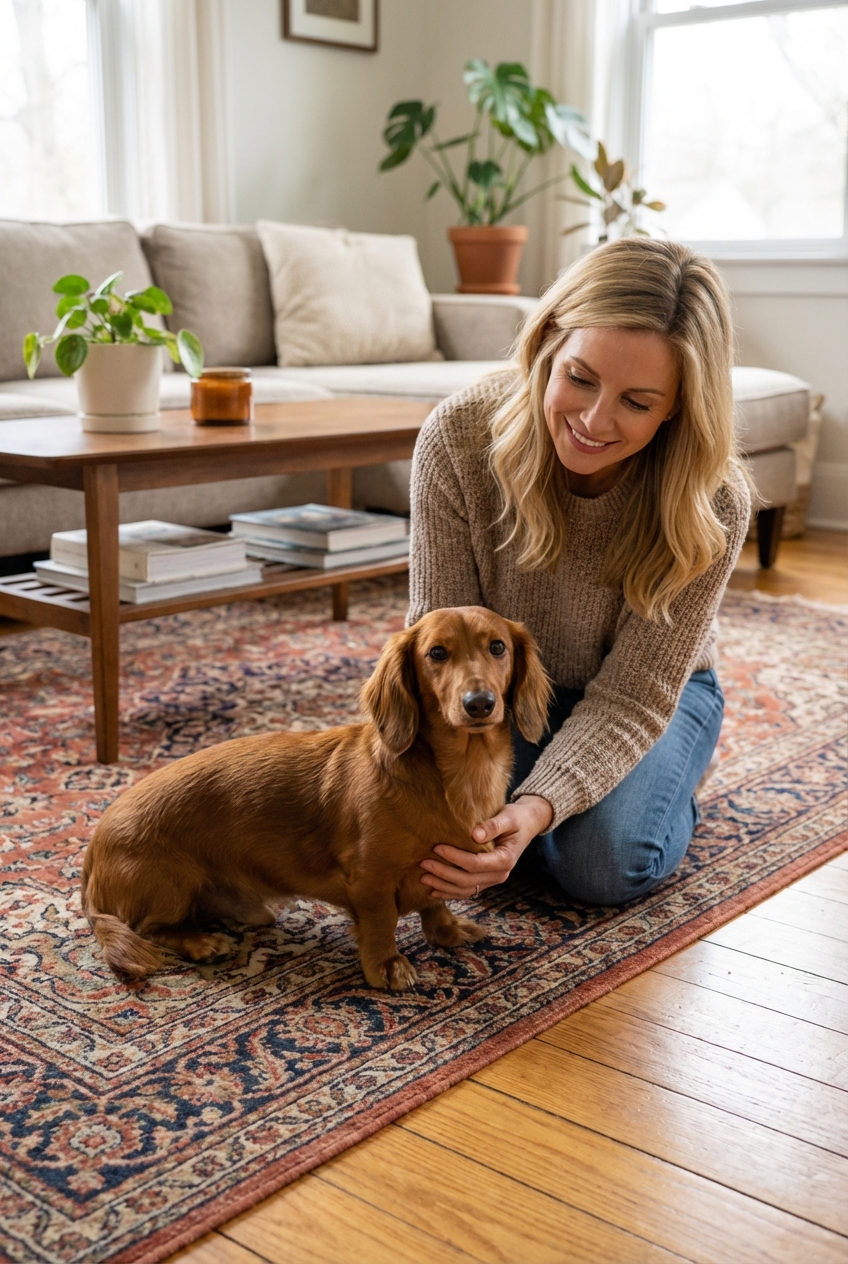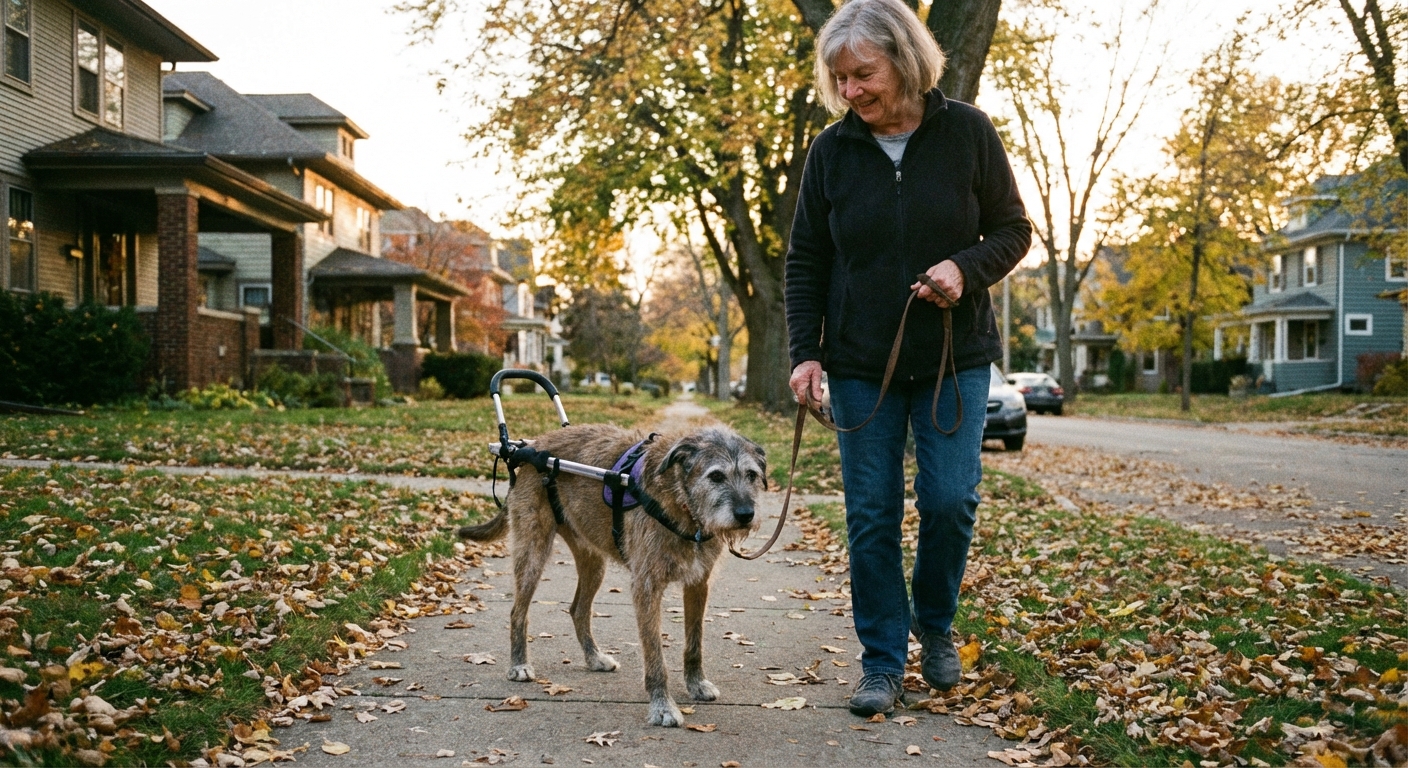
Learn practical, vet-informed ways to support a dog with arthritis, weakness, or paralysis—pain control, safer flooring, ramps, harnesses, exercise, and we...
Article
•
Designer Mixes
Dachshund Back Problems: Preventing IVDD

Shari Shidate
Designer Mixes contributor
Dachshunds are brave, funny, and wonderfully devoted. They are also built a little differently than most dogs, and that unique “long back, short legs” body type is exactly why we need to talk about IVDD. Intervertebral Disc Disease (IVDD) is one of the most common serious neurologic conditions seen in Dachshunds and other long-bodied breeds.
As a veterinary assistant, I have seen how fast a normal day can turn into an emergency when a dog injures their spine. The good news is that many risk factors for IVDD are within your control. Prevention is not about bubble-wrapping your wiener dog. It is about setting up daily habits that protect their back for the long run.
Quick note: This article is educational and cannot diagnose your dog. If you are worried your Dachshund is painful or weak, call your veterinarian.
What IVDD is and why Dachshunds are prone
Your dog’s spine is made up of vertebrae (bones) with discs in between them that act like cushions. With IVDD, those discs can degenerate and either bulge or rupture, putting pressure on the spinal cord. That pressure can cause pain, weakness, wobbly walking, and in severe cases, paralysis.
Dachshunds are predisposed because many have a genetic pattern of early disc degeneration associated with chondrodystrophy. In simple terms, their cartilage and discs tend to “age” earlier than you would expect. Research has linked this risk in Dachshunds to FGF4 retrogene variants, which helps explain why IVDD can show up in a relatively young adult, not only in seniors.
Two main patterns
- Disc extrusion (often called Hansen Type I): the disc can rupture suddenly. This is more common in Dachshunds and may happen after jumping, twisting, or even what seems like normal movement.
- Disc protrusion (often called Hansen Type II): slower bulging over time, more common in some other breeds and older dogs, but it can still occur.
Early warning signs
When it comes to spinal injuries, time matters. If you notice any of the signs below, contact your veterinarian right away. If your dog cannot walk, is dragging limbs, or cannot urinate, treat it as an emergency.
- Yelping when picked up or when moving
- Reluctance to jump, use stairs, or climb onto furniture
- Hunched back, tight tummy, “guarding” posture
- Shivering or trembling that is not from cold
- Wobbly gait (ataxia) or crossing legs
- Weakness in the back legs
- Knuckling (paw turning under) or scuffing nails
- Loss of bladder or bowel control
Neck IVDD signs
IVDD is not only a “back problem.” Dachshunds can also have cervical (neck) disc episodes. Watch for:
- Head held low or stiff, reluctance to turn the head
- Yelping when looking up or down
- Reluctance to eat or drink from a bowl (some dogs do better with a raised bowl)
- Front leg lameness or weakness that does not seem like a paw injury
If your Dachshund seems painful, do not “wait and see” for days. The safest move is to restrict activity and call your vet for guidance.

Preventing IVDD
1) Keep them lean
Extra weight increases the load on the spine and can make disc disease more likely and more severe. In practice, a lean Dachshund often moves more comfortably and recovers better from minor strains.
- Aim for a visible waist from above.
- You should be able to feel ribs easily with light pressure, without digging.
- If you are unsure, ask your vet team for a body condition score and a target weight.
Action step: Measure meals with a real measuring cup or kitchen scale. Eyeballing portions is one of the easiest ways for small dogs to gain weight.
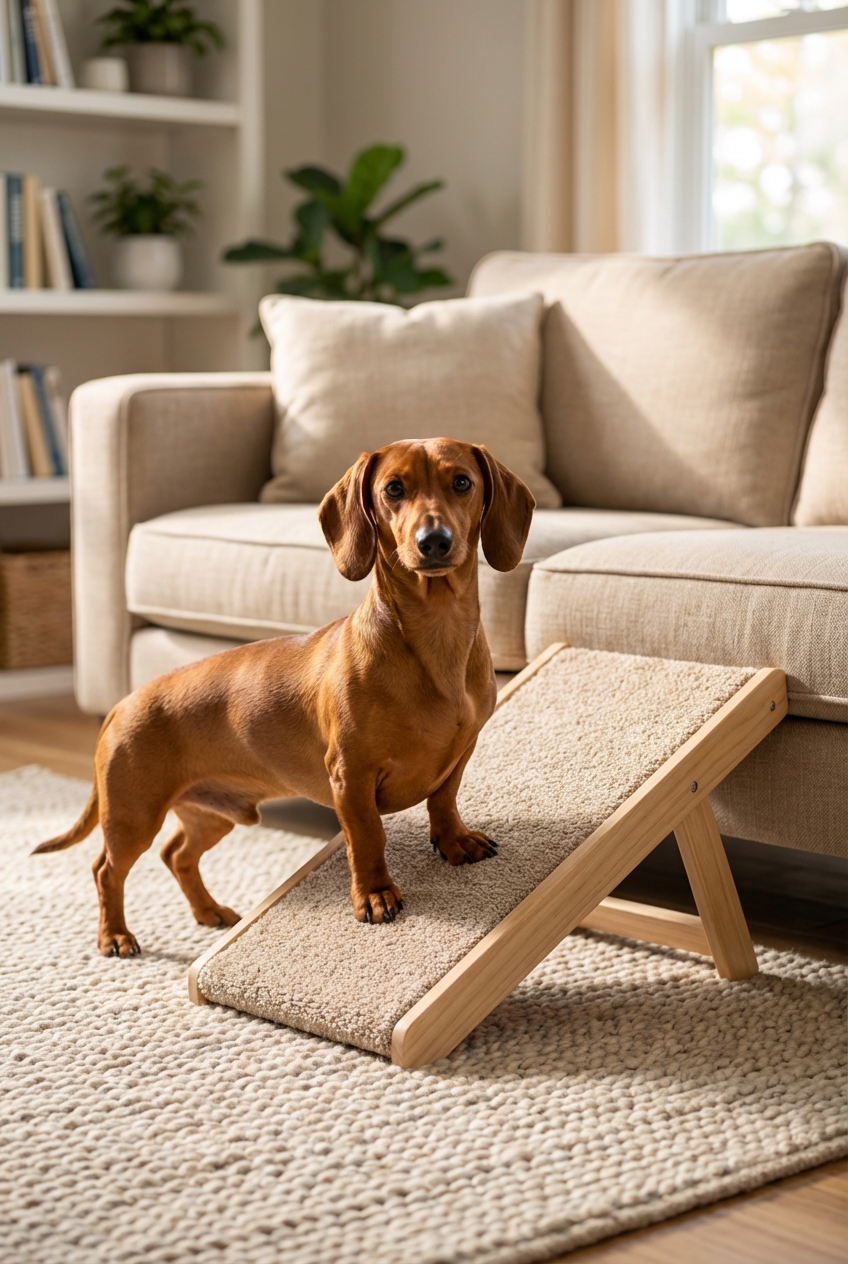
2) Use ramps and block jumps
Repeated jumping off couches and beds adds impact and twisting forces to the spine. Not every jump causes a problem, but the goal is to reduce the number of high-risk movements over a lifetime.
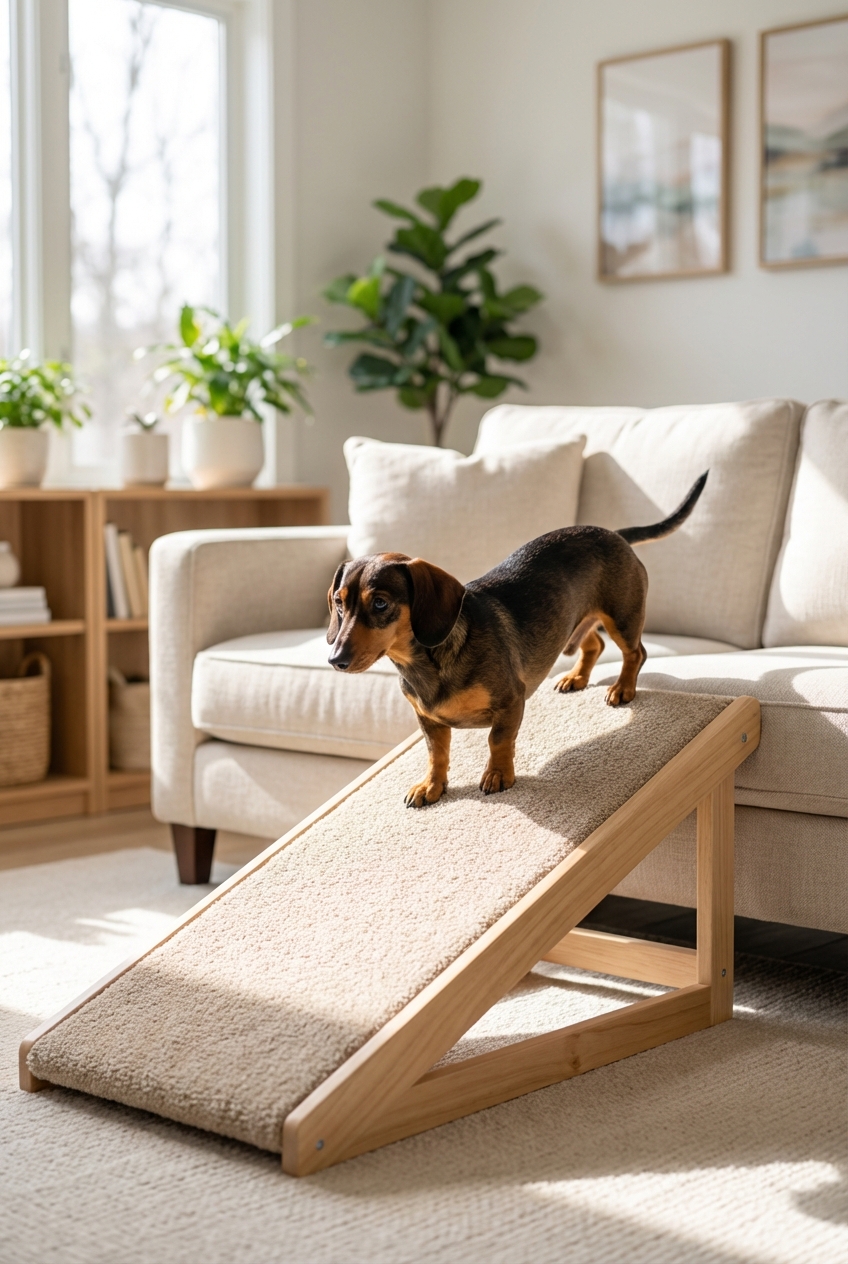
- Use a sturdy ramp with a non-slip surface for couches and beds.
- Block access to furniture until your dog learns the new routine.
- Consider a low, stable dog bed on the floor as a “safe zone.”
Tip: Look for ramps with a gentle incline and traction. Slipping is almost as risky as jumping.
Also think about cars: jumping in and out of vehicles is a common moment for twisting. A ramp or lifting your dog in and out can be back-friendly.
3) Limit stairs when you can
Stairs are not always avoidable, but they can be a trigger for back pain in long-backed dogs and are commonly reported by owners as a problem activity. If you live in a multi-story home, try to create one main living area where your Dachshund can eat, sleep, and relax without using stairs.
- Use baby gates at stairways.
- Carry your Dachshund up and down stairs when feasible.
- If stairs are unavoidable, ask your vet about safe conditioning and controlled stair use.
4) Lift the safe way
How you pick up your Dachshund matters. The goal is to support both the front and the rear so the spine stays level.
- Place one arm under the chest (behind the front legs).
- Use your other arm to support the rear end.
- Lift smoothly and keep your dog close to your body.
Avoid lifting under the armpits only, or letting the back end dangle.
5) Build strength with low-impact work
Strong muscles help stabilize the spine. You do not need extreme workouts. You need consistency.
- Leash walks: steady, controlled walks on flat ground are excellent.
- Slow hill walking: gentle inclines can build rear strength if your dog tolerates it.
- Balance and body awareness: supervised work on stable cushions or balance discs may help, ideally with guidance from a rehab professional.
- Swimming or underwater treadmill: great low-impact options for some dogs.
Important: Only start new conditioning work when your dog is pain-free and cleared by your veterinarian (or a certified canine rehab professional), especially if your dog has a history of back or neck episodes.
Avoid: high jumps, repetitive fetch with sudden stops, rough play with bigger dogs, tug-of-war with hard jerking, and slippery floors.
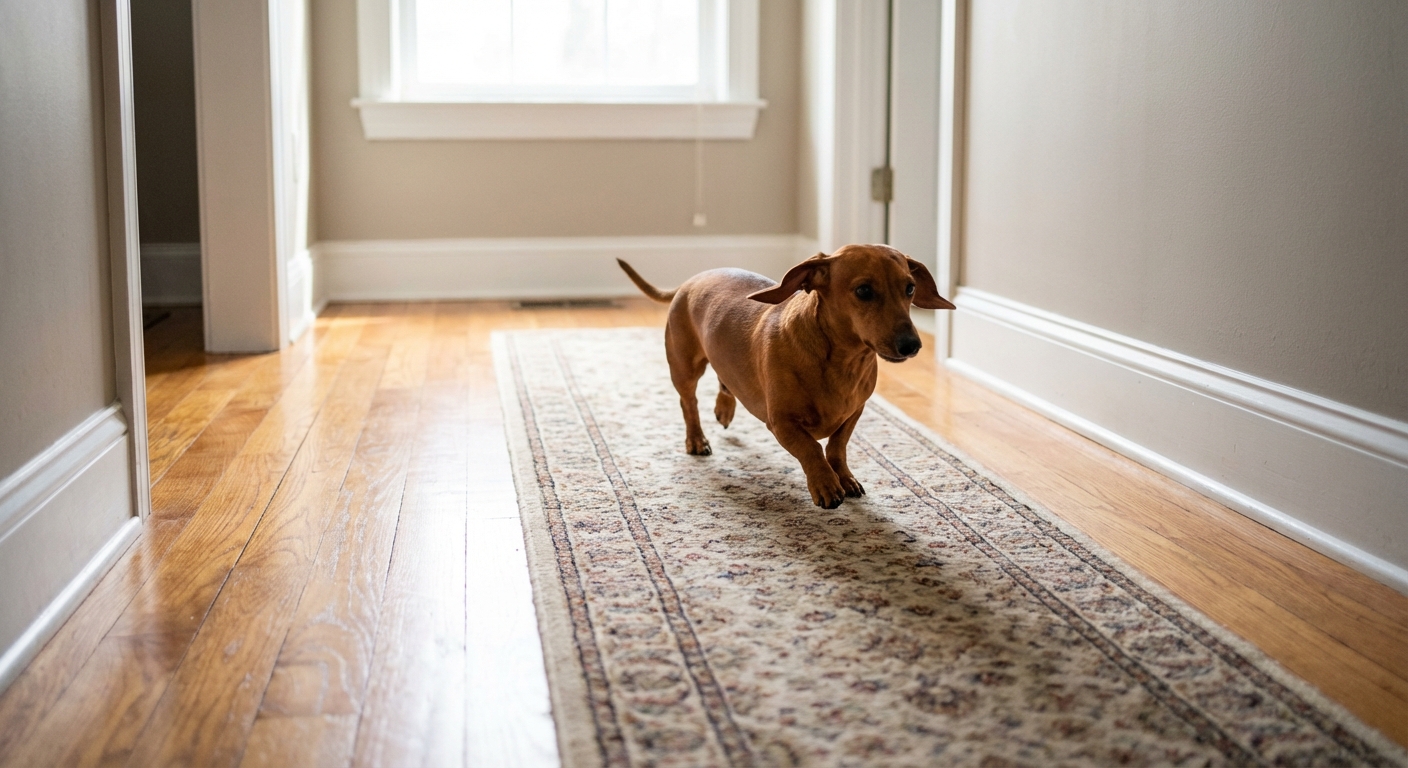
6) Improve traction at home
Hard floors can cause slipping and sudden splaying of the legs, which can strain the back. This often helps quickly and noticeably.
- Add runners or rugs in high-traffic areas.
- Use non-slip mats near doors and food bowls.
- Keep nails trimmed and consider paw grip products if recommended by your vet.
Nutrition and supplements
No food can guarantee IVDD prevention, but nutrition supports healthy body weight, muscle maintenance, and overall resilience. For Dachshunds, I focus on these evidence-based basics:
Weight-focused feeding
- Choose a complete and balanced diet appropriate for your dog’s life stage.
- Limit high-calorie treats. Treat calories add up fast in small breeds.
- Use training rewards like tiny pieces of lean cooked meat or a portion of their regular kibble.
Omega-3s
Omega-3s (EPA and DHA) can support joint health and help manage inflammation. They are not proven to prevent IVDD, but they can be a helpful part of an overall plan, especially for dogs with orthopedic wear and tear.
Talk with your veterinarian about a safe dose and product quality, especially if your dog is on any medications.
Joint supplements
Glucosamine and chondroitin are commonly used for joint support. Evidence is mixed, and quality varies by brand. If you want to try a supplement, ask your vet for a trusted option and realistic expectations.
Important: Never give human pain medications to a dog unless your veterinarian specifically instructs you to. Many are toxic to dogs.
If you suspect an episode
If you think your Dachshund may be having a disc episode, the safest approach is to act quickly and gently.
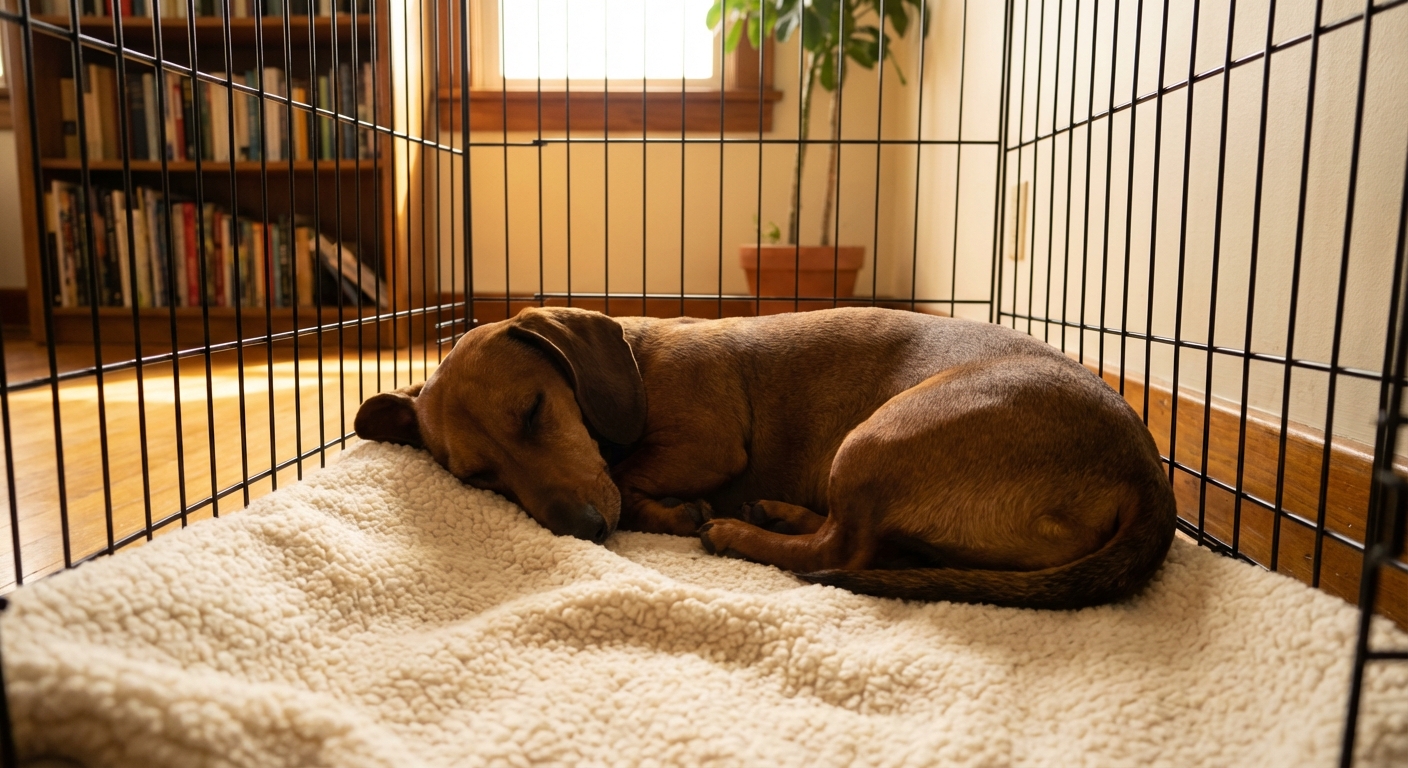
- Restrict movement immediately. Crate rest or a small, secure area helps prevent worsening injury.
- Carry your dog to the car. Keep the spine level and supported.
- Call your vet or an emergency clinic. Describe symptoms clearly, especially walking ability and bladder control.
- Do not massage or stretch. Avoid chiropractic adjustments unless specifically directed after an exam by a veterinary neurologist or a veterinarian with advanced training in rehabilitation.
What “crate rest” really means: strict rest, with leash-only potty breaks, no couch time, no stairs, and no free roaming until your veterinarian says it is safe.
Early veterinary evaluation can make a major difference, especially if neurological signs are progressing.
Treatment overview
IVDD treatment depends on severity. Your veterinarian may recommend:
- Conservative management: strict crate rest plus prescription pain control and anti-inflammatory medication, often for several weeks, along with a gradual return to activity.
- Advanced imaging and surgery: typically considered when there is severe neurological impairment, uncontrolled pain, rapidly worsening signs, or lack of response to conservative care. If a dog becomes paralyzed or loses normal sensation in the feet, this can be time-sensitive and should be treated as an emergency.
- Rehabilitation: physical therapy can support recovery and help rebuild strength safely.
The goal is always the same: relieve pain, protect the spinal cord, and restore function as much as possible.
Back-friendly home checklist
- Ramps to favorite furniture, with traction
- Baby gates at stairs
- Rugs or runners over slippery flooring
- Lean body condition, measured meals
- Daily controlled walks and gentle conditioning (when cleared)
- Harness for walks to reduce neck strain (ask your vet which style fits best)
- Safe lifting habits practiced by everyone in the home
- A plan for emergencies, including the nearest 24-hour clinic
You do not have to do everything perfectly. Pick two changes you can make this week, and build from there. Small habits, repeated daily, are what protect a Dachshund spine over time.