Compare wet vs dry cat food with vet-informed pros and cons. Learn how moisture affects urinary and kidney health, how carbs and calories differ, and when co...
Article
•
Designer Mixes
Cystitis in Cats Symptoms and Solutions

Shari Shidate
Designer Mixes contributor
If your cat is visiting the litter box over and over, crying out, or having accidents, it can be scary. One common cause is cystitis, which simply means inflammation of the bladder. As a veterinary assistant, I have seen how quickly worried pet parents feel better once they understand what to look for, what it might mean, and when it is an emergency.
Here is an evidence-based guide to cystitis in cats symptoms, why it happens, how it is diagnosed, and what you can do at home and with your vet to help your cat feel comfortable again.
What is cystitis in cats?
Cystitis is inflammation of the bladder lining. In cats, it often shows up as lower urinary tract signs, sometimes grouped under the umbrella term FLUTD (Feline Lower Urinary Tract Disease).
These signs can be linked to several different conditions, including:
- Idiopathic (stress-related) cystitis, also called FIC, which is very common
- Urinary tract infection (UTI), more common in older cats and cats with other health conditions
- Bladder stones that irritate the bladder
- Urine crystals (which may be incidental on testing, but can contribute to irritation or raise obstruction risk in some cats)
- Urethral obstruction from mucus, inflammation, and crystals (a dangerous complication, especially in male cats)
The tricky part is that many of these causes look similar at home, so it is important not to guess. The right treatment depends on the underlying cause.
Common cystitis in cats symptoms
Cystitis symptoms can range from mild to urgent. These are the most common signs pet parents notice:
- Frequent trips to the litter box, with little urine produced
- Straining to urinate or squatting for a long time
- Crying or yowling during urination
- Blood in the urine (pink or red tinges in clumps or puddles)
- Urinating outside the litter box, often on cool surfaces like tile or in the bathtub
- Excessive licking of the genital area
- Urine odor may change, but odor alone does not tell you the cause
- Irritability or hiding due to discomfort
Some cats also eat less or seem “off.” Pain and stress can affect appetite.
Important note: straining can look like constipation. If your cat is squatting and straining, and you are not sure whether they are trying to pee or poop, treat it as urgent and call a vet. Urinary blockage can become life-threatening quickly.
When cystitis is an emergency
Please take this part seriously: a cat that cannot pass urine can become critically ill. This is more common in male cats, but female cats can obstruct too, so do not dismiss the risk based on sex.
Go to an emergency vet now if you notice:
- Straining with no urine produced (or only a few drops)
- Repeated litter box trips with no output
- Vomiting, severe lethargy, or collapse
- A painful, firm belly or crying when picked up
A urinary blockage is life-threatening and is not something to watch overnight.
If your cat is straining and you are not sure whether urine is coming out, treat it like an emergency and get seen right away.
Why cats get cystitis
Cystitis is not always caused by infection. In fact, in many otherwise healthy adult cats, stress and inflammation play a big role (FIC).
Common risk factors include:
- Stressful changes (new pet, moving, schedule changes, visitors, construction noise)
- Low water intake (dry food only, limited water stations)
- Indoor-only lifestyle with low enrichment
- Overweight or low activity
- Multi-cat tension or competition for litter boxes
- Stones or crystals influenced by diet, hydration, and urine pH
Many cats are sensitive, routine-loving creatures. When their stress level rises, their bladder can become inflamed, leading to painful urinary signs even without bacteria.
One helpful expectation to set: many FIC flare-ups improve within several days with the right support, but recurrence is common. If signs keep coming back, your vet can help build a longer-term plan.
How vets diagnose cystitis
Because symptoms overlap, your vet will focus on identifying the cause and ruling out emergencies.
Common tests include:
- Urinalysis to check for blood, crystals, inflammation, and urine concentration
- Urine culture to confirm whether bacteria are truly present (important before long antibiotic courses)
- X-rays or ultrasound to look for bladder stones or other abnormalities
- Physical exam to assess pain, hydration, bladder size, and overall health
- Bloodwork in some cases, especially older cats or suspected obstruction
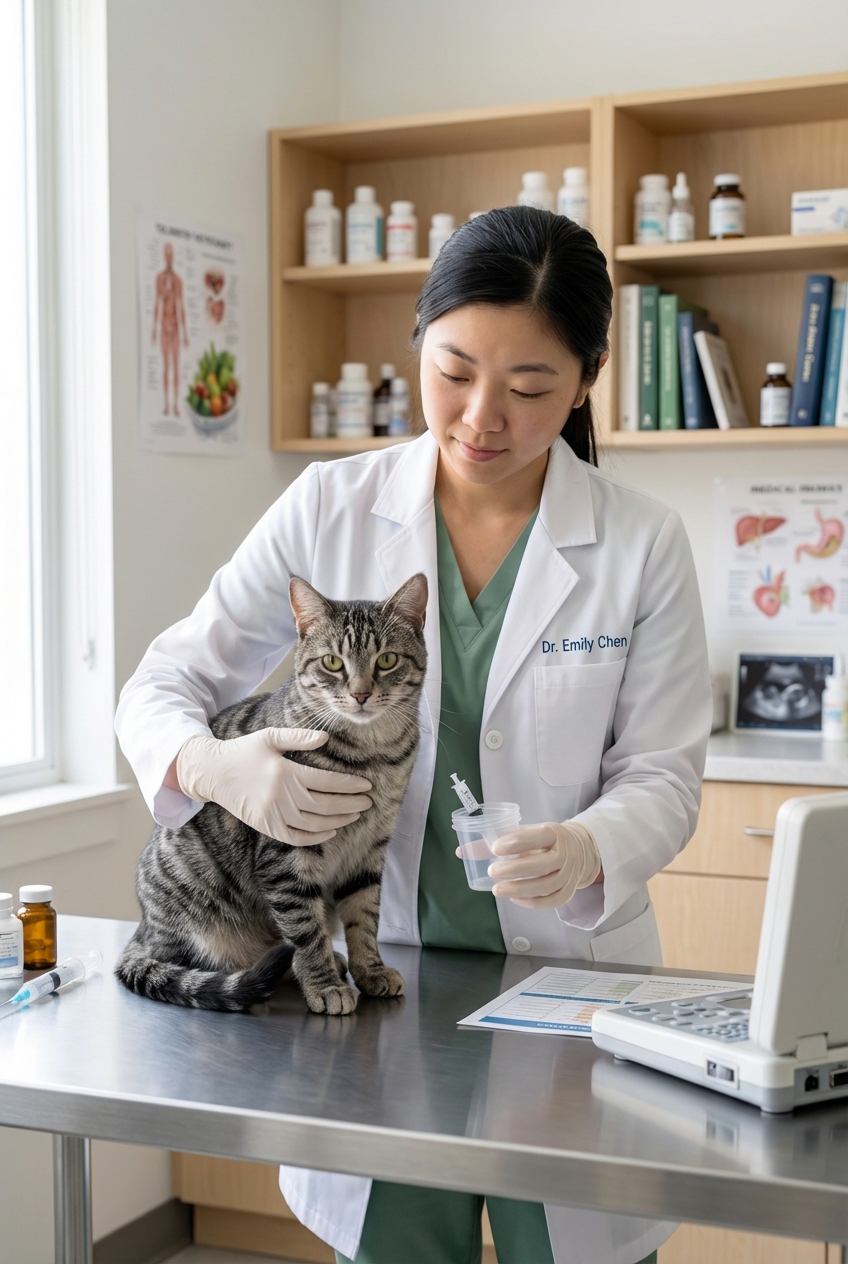
How the urine is collected matters. A sample may be collected by cystocentesis (a sterile needle sample from the bladder, often best for culture) or by free-catch (collected at home or in clinic). Your vet will recommend the best option for your cat and the question being answered.
Tip from the clinic: if you can safely bring a fresh urine sample, ask your vet’s office about the best way to collect it. In many situations, the most accurate sample is collected at the clinic, but your team can guide you.
Also, UTIs are more likely in older cats and in cats with conditions such as kidney disease or diabetes, which is one reason vets often recommend culture in those cases.
Treatment options that help
Treatment depends on the cause, but the goals are usually the same: relieve pain, reduce inflammation, support hydration, and prevent recurrence.
Common veterinary treatments
- Pain relief: bladder inflammation hurts, and pain control is a priority
- Urethral relaxing medications: sometimes used when straining is significant or after an obstruction, depending on the case
- Fluids: to support hydration and encourage urination
- Diet change: therapeutic urinary diets can reduce recurrence risk and may help dissolve struvite stones or crystals, while other stone types (like calcium oxalate) require different management
- Antibiotics: only when a UTI is confirmed or strongly suspected based on testing
If your cat has an obstruction, treatment is more intensive and can include catheterization and hospitalization.
Home support for comfort and prevention
These steps can make a meaningful difference, especially for cats with stress-related cystitis:
- Increase water intake: add more water bowls, try a pet water fountain, offer wet food, or add water to meals (ask your vet for safe amounts)
- Prioritize wet food when appropriate: hydration is one of the most helpful tools for many urinary cats
- Improve litter box setup: one box per cat plus one extra, uncovered boxes for many cats, scoop daily, keep them in quiet spots
- Reduce stress: predictable routines, more play sessions, safe hiding spots, and separate resources for multi-cat homes
- Environmental enrichment: window perches, puzzle feeders, scheduled interactive play
- Talk to your vet about pheromones: feline pheromone diffusers can help some stress-sensitive cats
One small change that often helps: set a reminder to scoop daily and fully refresh litter regularly. Cats can avoid a dirty box and hold urine longer, which does not help an irritated bladder.
What not to do
When your cat is uncomfortable, it is tempting to try quick fixes. These are common missteps I see:
- Do not give human pain medications (many are toxic to cats)
- Do not assume it is “just a UTI” and use leftover antibiotics
- Do not wait if your cat is straining with little to no urine output
- Do not punish accidents outside the litter box, because it is usually pain or urgency
Preventing repeat flare-ups
Some cats get one episode and never have another. Others have flare-ups, especially with FIC. Prevention is about stacking the odds in your cat’s favor.
Healthy habits that support the bladder
- Hydration first: wet food, fountains, and multiple water stations
- Maintain a healthy weight and daily activity
- Keep routines consistent and reduce household stress triggers
- Use vet-recommended urinary nutrition if your cat has stones, recurring crystals with clinical signs, or recurring issues
- Schedule rechecks when advised, especially after a first episode
If your cat has recurring urinary signs, ask your veterinarian about a long-term plan that includes diet, enrichment, and targeted follow-up testing.
Quick symptom checklist
If you suspect cystitis, this checklist can help you communicate clearly with your vet:
- How many litter box trips in the last 24 hours?
- Is urine coming out, and about how much?
- Any blood seen?
- Any vomiting, lethargy, or appetite loss?
- Any recent changes at home (new pet, guests, moving, schedule changes)?
- Diet type (wet, dry, both) and water habits?
- Any straining to poop, or signs of constipation?
Clear details help your veterinary team triage faster and choose the right diagnostics.