A veterinary assistant’s guide to safe dog nail trimming: how to spot overgrowth, choose clippers or grinders, avoid the quick, handle bleeding, set a sche...
Article
•
Designer Mixes
Cutting Black Dog Nails Safely

Shari Shidate
Designer Mixes contributor
Black nails can feel intimidating because the quick (a sensitive bundle of blood vessels and nerves) is hard to see. But with bright lighting, the right tool, and a slow, patient approach, most pet parents can learn to trim black nails confidently at home.
As a veterinary assistant, I always remind families of this: the goal is not “short nails today.” The goal is comfortable, safe trims that build trust, so nails get shorter over time as the quick slowly recedes.
What the quick is and why black nails are tricky
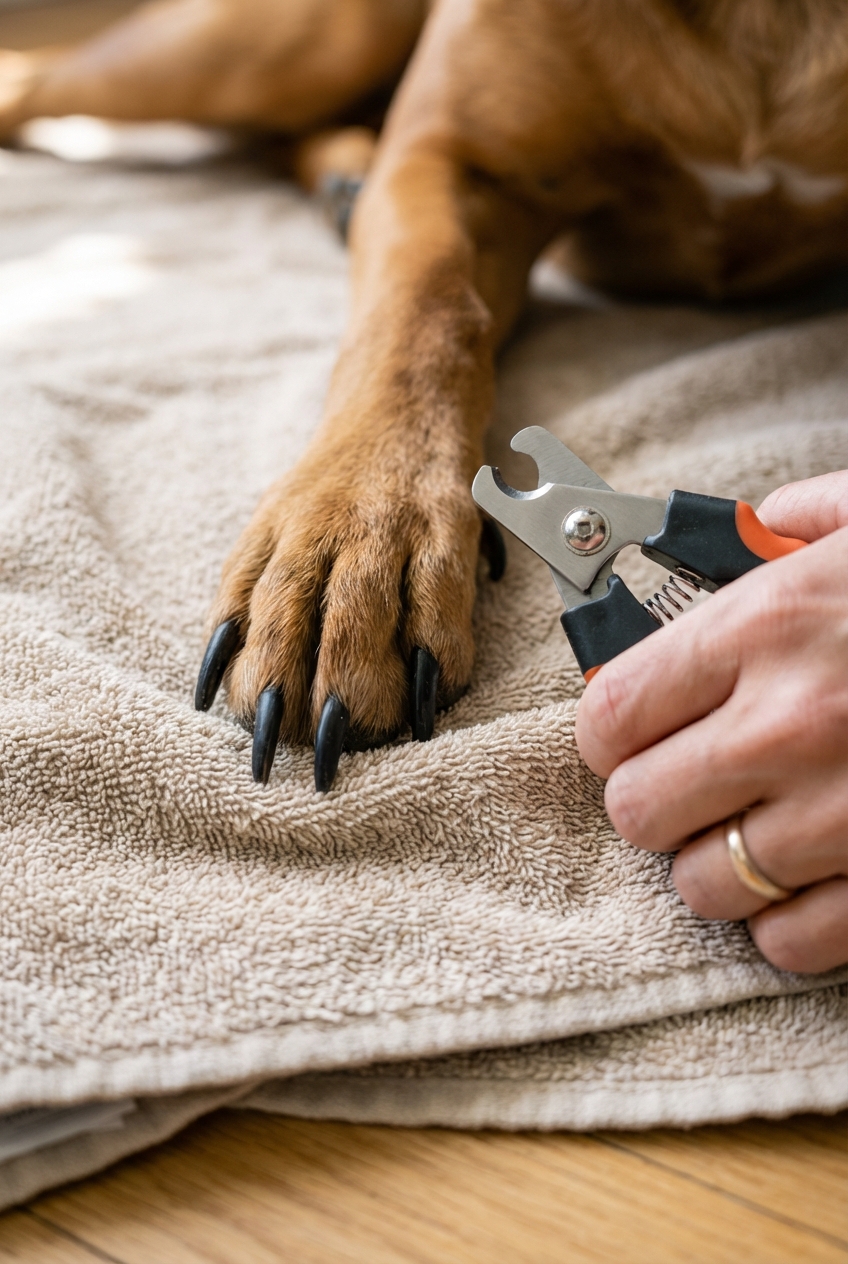
The quick is living tissue inside the nail. If you cut into it, it hurts and it bleeds. In clear or white nails, you can often see the pink quick. In black nails, you have to use other clues.
Two helpful truths:
- Many quicks are longer than people expect. Especially if a dog’s nails have been long for a while.
- You can still trim safely. You just trim in tiny increments and watch for signs that you are getting close.
Quick note on dewclaws: Do not forget them. Dewclaws do not wear down on the ground and can curl quickly, so they often need more frequent checks.

Tools that make black nails easier
You can trim black nails with either clippers or a grinder. The best tool is the one you can use calmly and consistently.
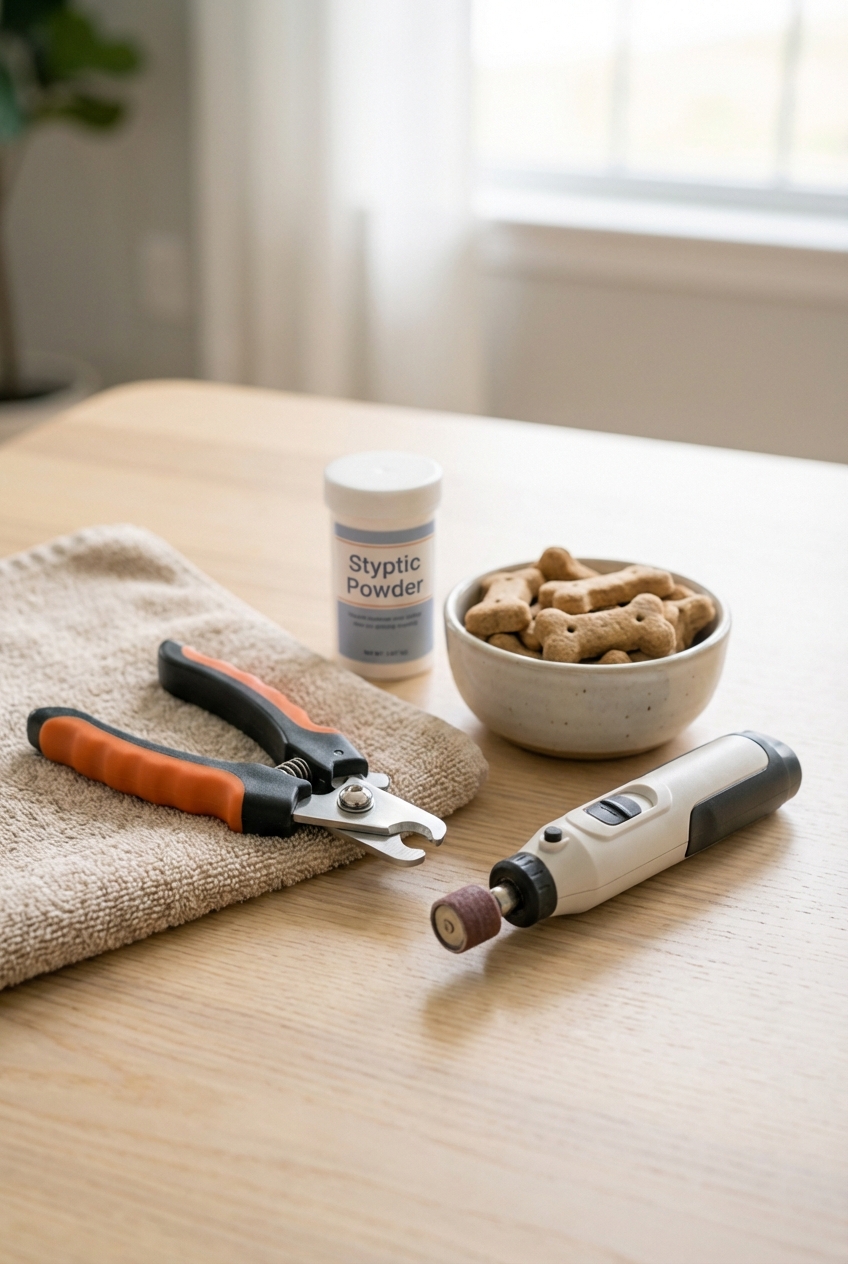
My favorite setup
- Bright light: a lamp you can aim directly at the nail, or a flashlight/headlamp.
- Quality clippers sized for your dog: scissor-style for many medium to large dogs, guillotine-style for small dogs (if you like that style).
- Nail grinder (optional but great for black nails): helps you creep up on the quick gradually.
- Styptic powder or styptic pencil: for emergencies.
- Treats: tiny, high-value, and frequent.
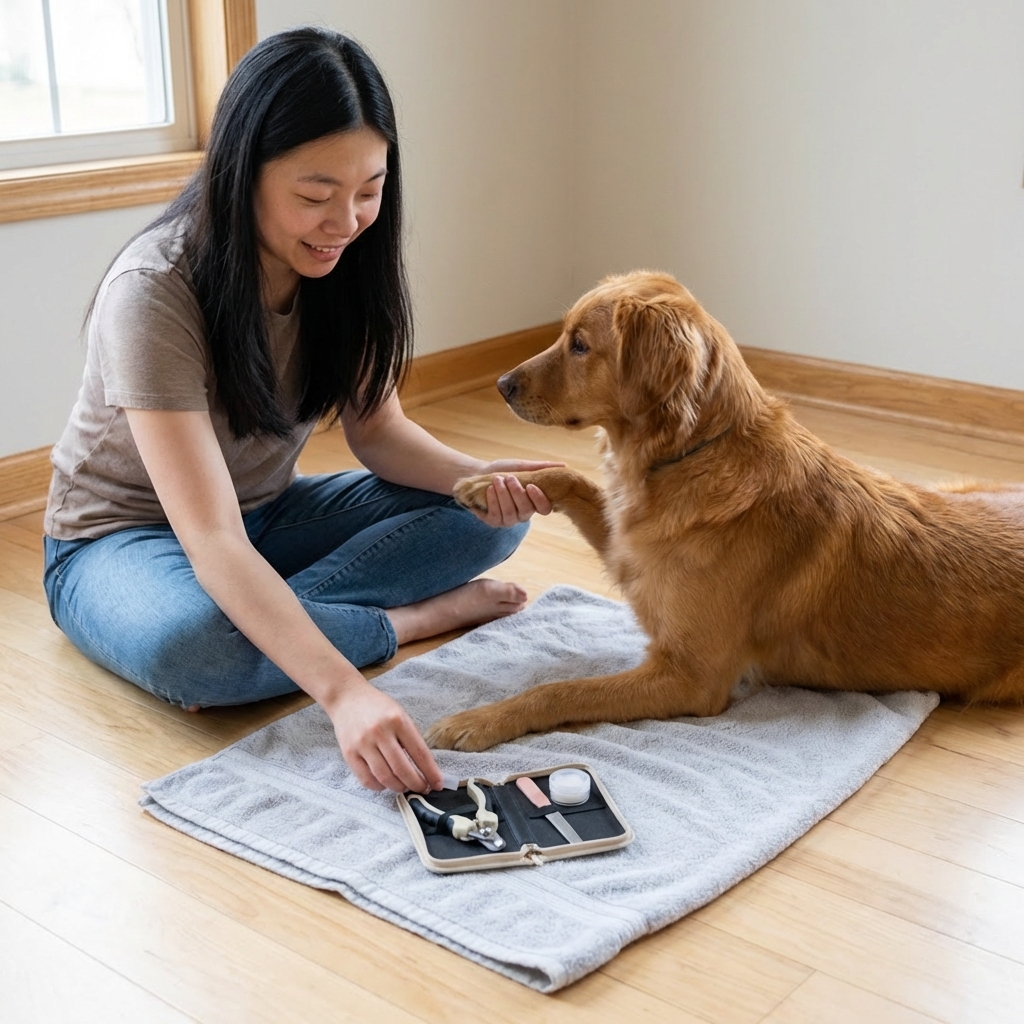
- Non-slip surface: yoga mat or towel so your dog feels stable.
Safety note: Pressure is the most important part of stopping a nail bleed. Home options like flour or cornstarch may help in a pinch, but styptic powder often works faster and more consistently. If bleeding will not stop, call your veterinarian.
Find the safe zone on black nails
When you trim a black nail, you are reading the nail as you go. The key is to take paper-thin slices and check the cut surface after each one. For many dogs, that means about 1 to 2 mm at a time (or less if you are nervous).
Step by step: slice and look
- Position the paw so you can clearly see the nail. Aim your light at the tip.
- Trim a tiny slice off the very tip, not a big chunk.
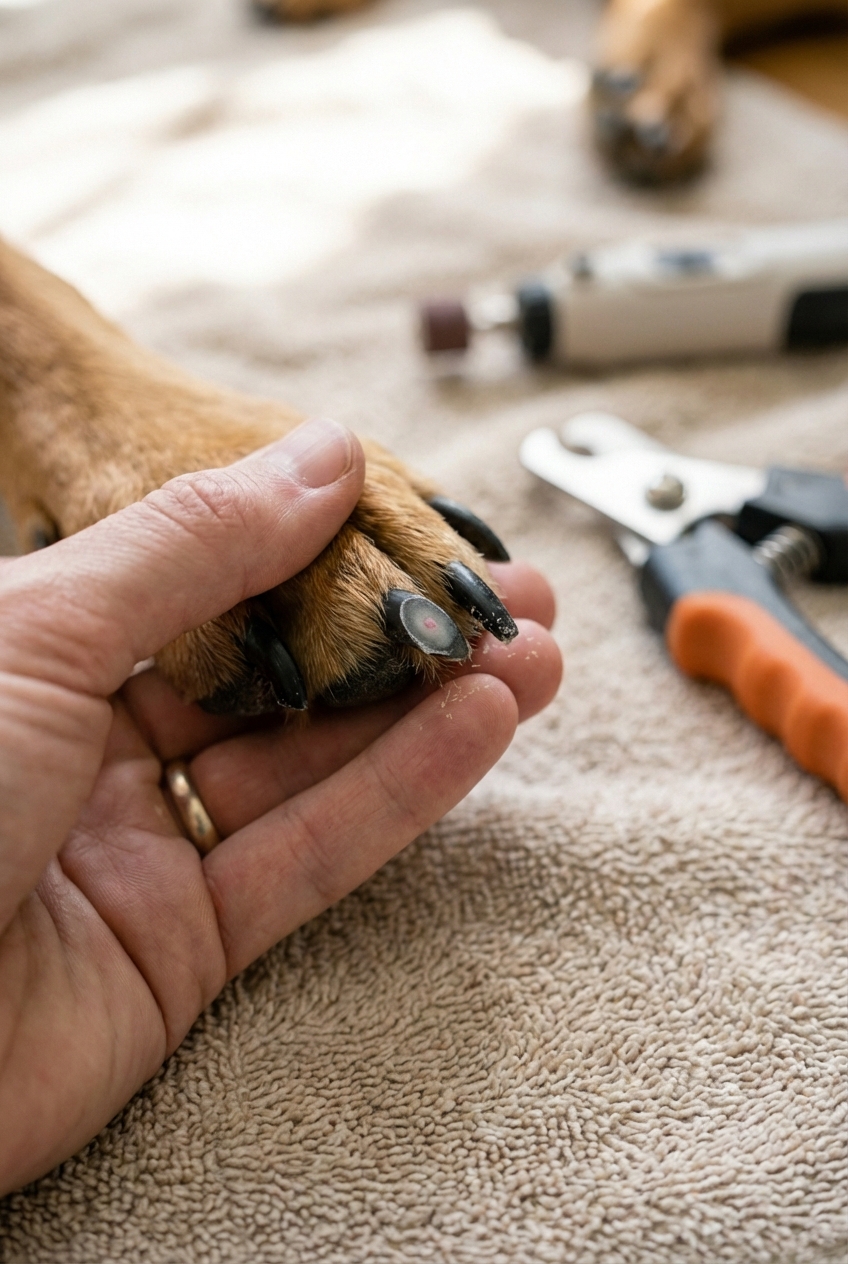
- Look at the cut surface of the nail. You are watching for changes in the center.
- Repeat with another tiny slice until you see the quick warning signs.
Quick warning signs
Many groomers describe a progression: a dry, chalky looking interior, then a darker center, then a moist or shiny center right before bleeding.
- A small dark dot or “bullseye” appears in the center (this is helpful when you see it, but it is not visible on every nail).
- The center starts to look grayish, soft, moist, or shiny. This is often the most reliable stop sign.
- You see a small gray or pinkish oval in the middle.
- Your dog suddenly becomes more sensitive to that nail.
When you see those signs, stop trimming that nail. If you want it smoother, use a grinder for gentle rounding at the same length.
Best trimming angles
Angle matters because it reduces the chance of cutting too deep.
- Trim from underneath when possible: If you can see the underside of the nail, you often get a better sense of where the hollow area begins.
- Follow the natural curve: Take the tip off where the nail starts to hook.
- Avoid straight-across cuts that remove a lot at once.
If your dog has very curved nails, trimming small slices frequently is safer than trying to fix the curve in one session.
Clippers vs grinder
Clippers
- Pros: Fast, quiet, inexpensive.
- Cons: Easy to take off too much in one cut.
Grinder
- Pros: More control, easier to creep up on the quick, smooth edges.
- Cons: Noise and vibration can bother some dogs, and you can heat the nail if you hold it in one spot too long.
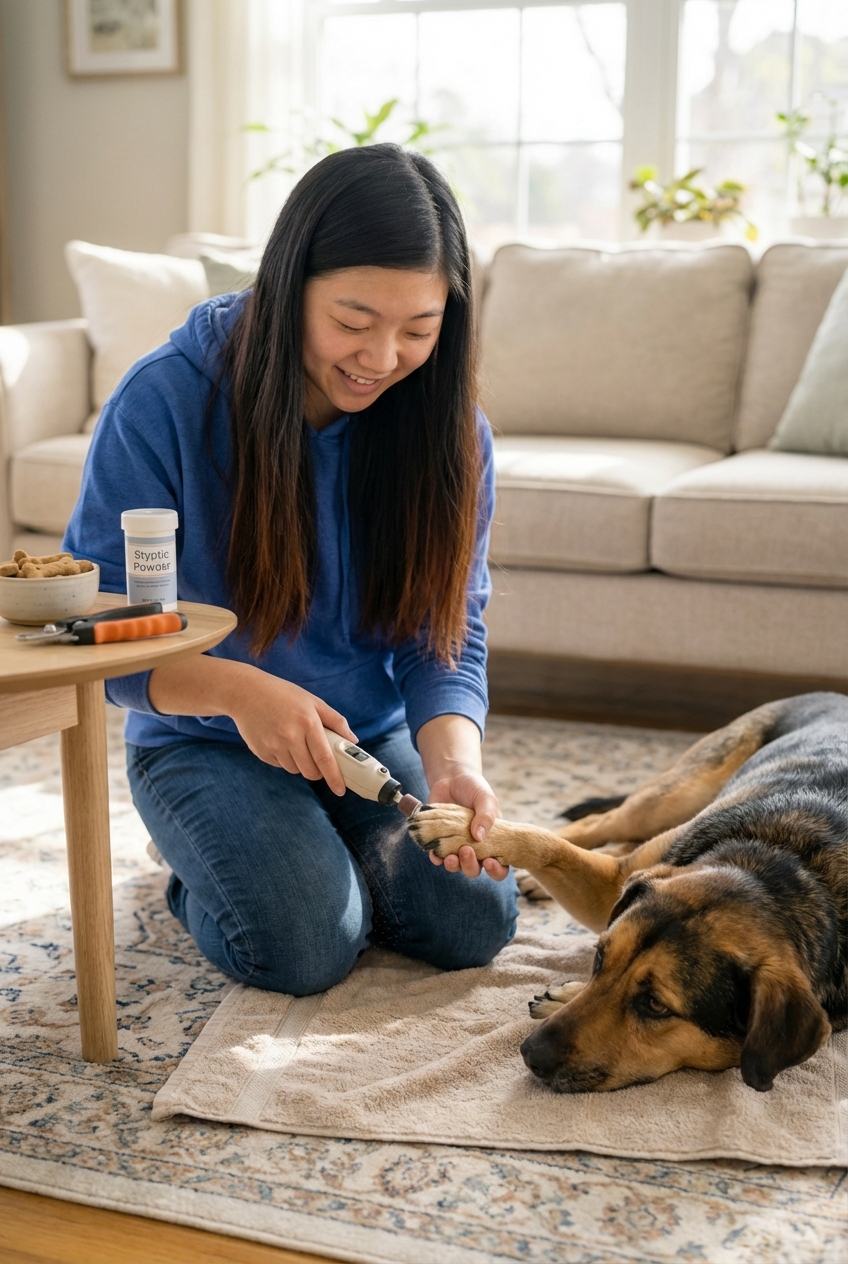
If you use a grinder: Use brief touches (often about 1 to 2 seconds) with pauses so heat does not build up. Grinder speed, nail thickness, and grit all matter, so err on the side of shorter touches. Always keep hair and skin away from the spinning tip.
A calm trimming routine
Many dogs hate nail trims because they feel restrained, startled, or rushed. A predictable routine helps.
Try this 5-minute plan
- Minute 1: Treats for showing the clippers or grinder.
- Minute 2: Touch a paw, treat. Touch a nail, treat.
- Minute 3: Trim one nail only, treat and praise.
- Minute 4: Check your dog’s body language. If they are still relaxed, trim one more nail.
- Minute 5: End on a win and walk away.
Yes, that means a full nail trim might take a couple days at first. That is completely fine. Consistency beats perfection.
If you hit the quick
It happens, even to professionals. The most important thing is to stay calm so your dog does not learn to fear the process.
Quick first aid
- Apply styptic powder with gentle pressure using a cotton ball or clean fingertip.
- Hold pressure for 30 to 60 seconds.
- Limit activity briefly so the clot can set.
Styptic products can sting for a moment, and they may temporarily discolor fur or fabrics.
Call your vet if bleeding continues beyond a few minutes, the nail is cracked or broken, your dog is extremely painful, or you are worried for any reason.
How short is short enough?
A practical home cue is sound. In many dogs, nails that are a good length do not click loudly on hard floors during normal walking. Another cue is function. Nails should not force the toes to splay or change how your dog stands. Every dog’s feet are a little different, so focus on comfort and gradual progress.
How often to trim
If nails are long, the quick is often long too. The quick can gradually recede when you trim frequently without hitting it.
- For long nails: trim or grind every 5 to 7 days in tiny amounts. Some dogs do best with even more frequent micro-trims (every 3 to 4 days).
- For maintenance: every 2 to 4 weeks for many dogs, depending on growth and activity.
Daily walks on pavement can help wear nails down, but most dogs still need routine trims, especially dewclaws, which do not touch the ground.
When to choose a pro
There is no shame in choosing a groomer or veterinary team, especially if safety is a concern.
- Your dog snaps, thrashes, or panics during nail handling.
- The nails are severely overgrown or curling into pads.
- Your dog has medical issues that make restraint risky (pain, arthritis, heart or breathing concerns).
- Your dog has a clotting disorder, bruises easily, or is on medication that affects bleeding (ask your vet what is safe).
- You notice swelling, discharge, limping, or a nail bed that looks infected.
If your dog is fearful, ask your vet about fear-free handling and whether training support, calming supplements, or prescription anti-anxiety medication could make trims more humane.
About muzzles: A basket muzzle can be a helpful safety tool for some dogs, but it should be introduced positively and calmly. If you are considering it, ask a trainer, groomer, or vet team to guide you.
Quick FAQ
Can I shine a light through a black nail to see the quick?
Sometimes a bright flashlight helps, but many black nails are too opaque. It is a nice bonus, not a guarantee. The cut-surface method is more reliable.
Is it better to trim after a bath?
Nails can be slightly softer after bathing, but they can also fray. The biggest benefit is that a clean paw lets you see what you are doing and helps your dog feel more comfortable with handling.
My dog pulls away. Should I hold tighter?
Usually no. Tighter restraint often increases panic. Try shorter sessions, higher-value treats, and better positioning. If you need help, a professional is often the kinder option.
Bottom line
To cut black dog nails without hitting the quick, you do not need perfect vision. You need bright light, tiny trims, and the habit of checking the cut surface after every slice. Go slowly, reward generously, and aim for progress over time. Your dog will feel the difference, and you will gain confidence with every session.