
Cushing’s Syndrome in Cats: Symptoms, Causes, and Treatment

Cushing’s syndrome in cats, also called feline hyperadrenocorticism, happens when a cat’s body is exposed to too much cortisol for too long. (You may also hear people say “Cushing’s disease.” Technically, that term is often used for the pituitary-driven form, but many pet owners and clinics use it as a catch-all.) Cortisol is a normal stress hormone, but in excess it can quietly wear down the skin, muscles, immune system, and metabolism. In cats, this condition is rare compared with dogs. Because it is rare, it is often missed early.
As a veterinary assistant, I’ve seen how frustrating it can feel when your cat is “just not right” but the signs are subtle. The good news is that once Cushing’s is on the radar, there are clear diagnostic steps and real treatment options, including surgery and medication. And because feline Cushing’s is strongly linked with diabetes, recognizing it can make a major difference in long-term quality of life.
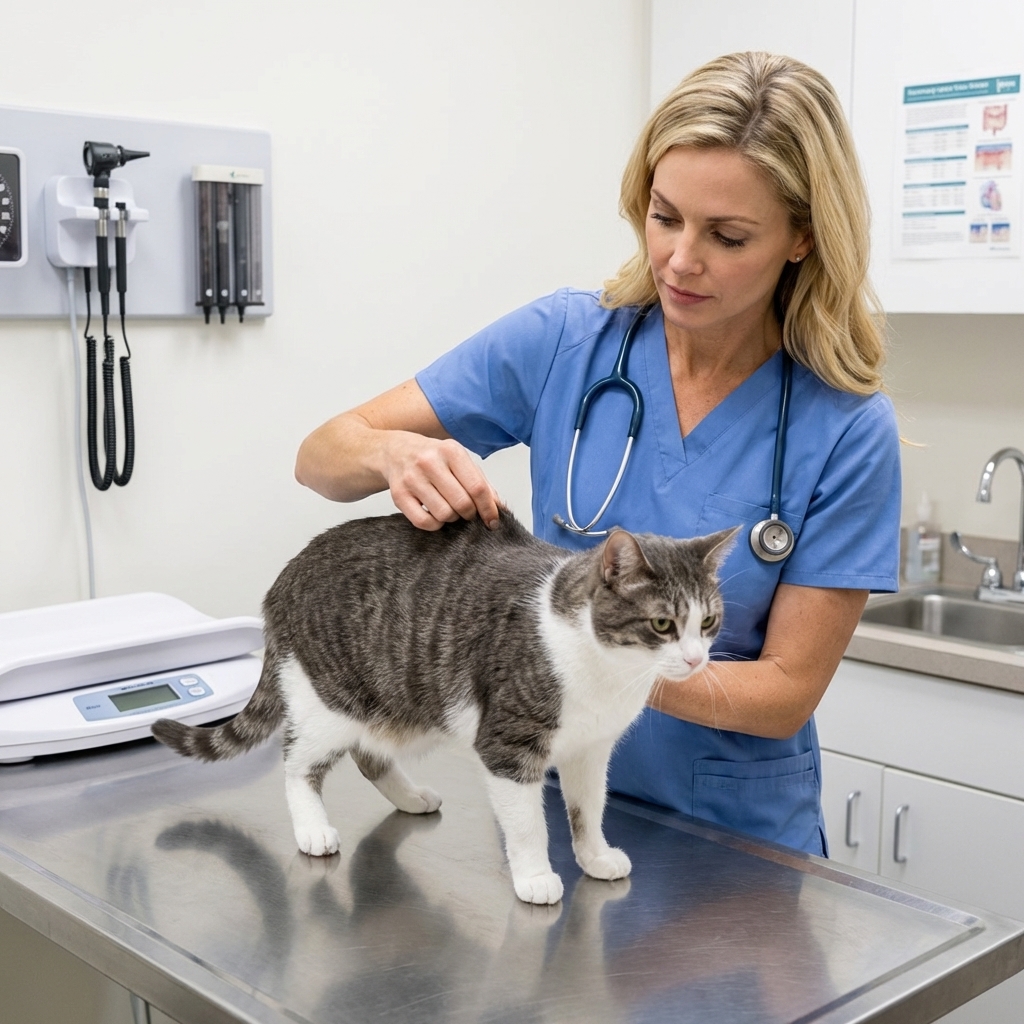
What it is
In many cats with spontaneous Cushing’s, the adrenal glands (small glands near the kidneys) are being overstimulated by a pituitary tumor, often an adenoma. The pituitary tells the body how much cortisol to produce. When that signal stays turned on, cortisol remains high.
Main types
- Pituitary-dependent hyperadrenocorticism (PDH): Commonly reported as the most frequent spontaneous form in cats. A pituitary tumor causes both adrenal glands to enlarge and produce excess cortisol.
- Adrenal-dependent hyperadrenocorticism (ADH): An adrenal tumor (often on one side) produces cortisol.
- Iatrogenic Cushing’s: From long-term or high-dose steroid medication (like prednisolone). This is less common in cats than in dogs, but it can happen, especially with chronic inflammatory conditions.
How it differs from dogs
Dogs with Cushing’s often show a classic pattern: increased thirst and urination, increased appetite, panting, and a pot-bellied look. Cats can show some of those, but feline Cushing’s frequently stands out for two big reasons.
1) Skin can be the biggest clue
Cats can develop very thin, fragile skin that tears easily, sometimes with normal handling or minor bumps. This “skin fragility syndrome” is a major red flag in cats and is often more dramatic than what we see in dogs.
Important nuance: fragile skin can also be seen with other serious problems (including uncontrolled diabetes itself, certain hormone medications like progestagens, and some severe systemic illnesses). So it is a strong clue, but it is not a diagnosis by itself.
2) Diabetes is often part of the story
A majority of cats diagnosed with Cushing’s in published reports also have diabetes mellitus. Exact percentages vary by study and referral population, but the overlap is high enough that the two conditions are closely linked in practice. If a diabetic cat suddenly needs higher insulin doses, or seems “insulin resistant,” your veterinarian may consider Cushing’s as an underlying cause.
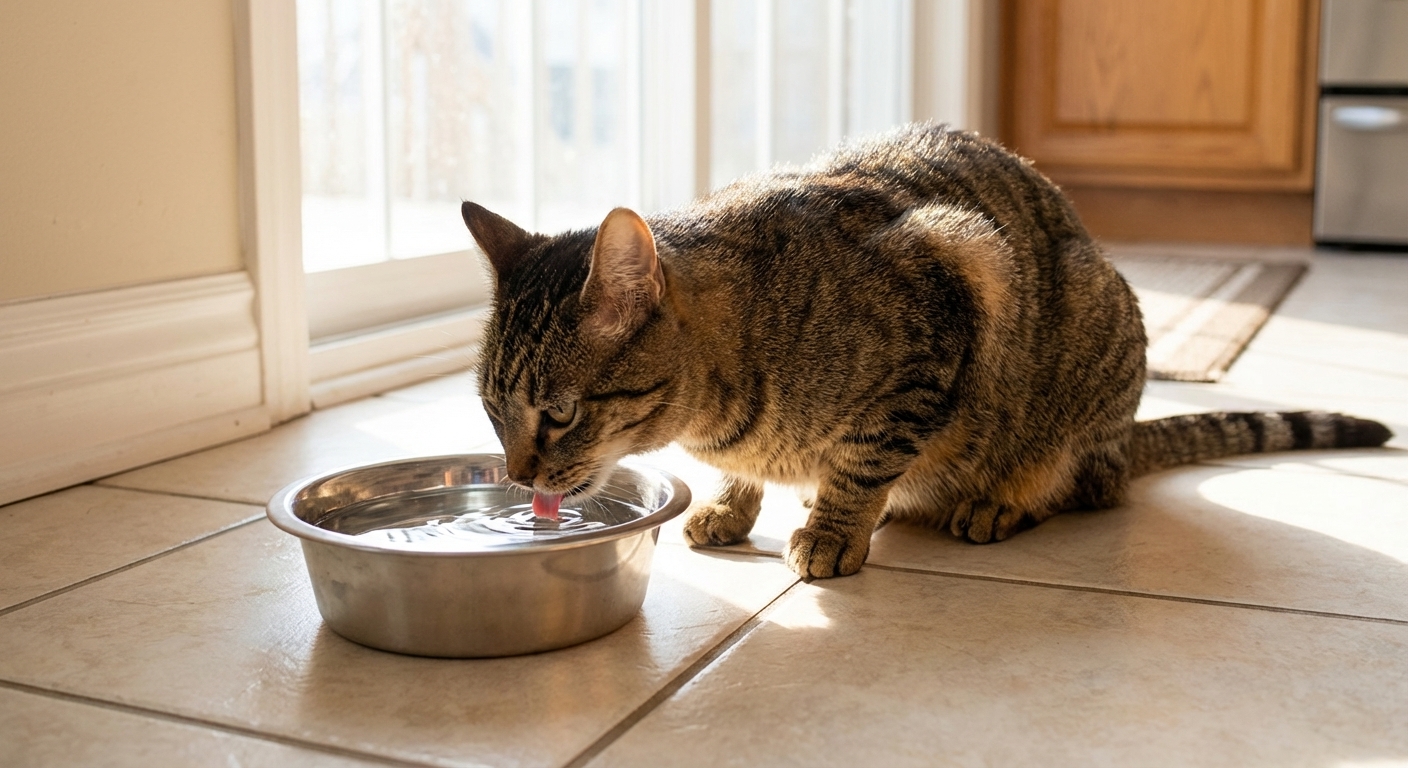
Symptoms to watch for
Some cats look sick, and others look mostly normal until the disease is advanced. Here are the signs I encourage cat parents to watch for, especially if they show up together.
Common signs
- Increased thirst (polydipsia) and increased urination (polyuria)
- Pot-bellied appearance from muscle weakening and fat redistribution
- Muscle loss, weakness, trouble jumping, or hind-end weakness and muscle wasting
- Thin or fragile skin, easy bruising, wounds that heal slowly
- Hair coat changes like thinning hair, patchy hair loss, or dull coat
- Recurrent infections (skin infections, urinary tract infections) due to immune suppression
- Increased appetite in some cats, though not all
- Lethargy or less interest in play
When to seek urgent care
If your cat’s skin tears, a tear or wound appears suddenly, your cat becomes weak quickly, stops eating, or is vomiting and dehydrated, do not wait. Cats can decline fast, and fragile skin also raises the risk of infection.
Causes and risk factors
Cushing’s in cats is usually caused by a functional tumor that changes hormone signals, not by anything you did at home. That said, there are patterns veterinarians recognize.
- Age: More common in middle-aged to senior cats.
- Diabetes: Many affected cats are diabetic or become diabetic during the course of disease.
- Chronic steroid exposure: Long-term corticosteroid medication can cause an iatrogenic form and can also complicate diagnosis.
Why diagnosis is tricky
Feline Cushing’s is uncommon, and the early signs can overlap with more common issues like diabetes, hyperthyroidism, chronic kidney disease, or skin allergies. It often takes a combination of history, physical exam findings, lab work, and hormone testing to get to a confident answer.
What your veterinarian may do
- Baseline lab work: Complete blood count, chemistry panel, urinalysis, and urine culture if infection is suspected.
- Blood pressure check and screening for complications.
- Hormone testing: Tests may include a low-dose dexamethasone suppression test (LDDST) or an ACTH stimulation test. In cats, the LDDST is often considered more sensitive, while the ACTH stim can miss some cases. Your veterinarian will pick the test that best fits your cat’s signs and medical history.
- Imaging: Abdominal ultrasound to look at adrenal glands, and potentially advanced imaging (CT or MRI) to evaluate the pituitary gland if PDH is suspected.
What labs can look like
Many readers expect a single “classic” bloodwork pattern, but cats can be variable. Depending on the cat, your veterinarian may see findings like high blood glucose (if diabetes is present), elevated liver enzymes, cholesterol changes, dilute urine, protein in the urine, or evidence of infection. Normal routine labs do not rule Cushing’s in or out, which is why hormone testing and the full clinical picture matter.
If you feel like you are getting mixed answers, it is completely reasonable to ask about referral to an internal medicine specialist. These cases can be complex, and a specialist can be incredibly helpful.
Treatment options
The right treatment depends on whether the disease is pituitary-dependent, adrenal-dependent, or caused by steroid medication, plus your cat’s overall stability and whether diabetes is present.
Surgery
- Adrenal tumor (ADH): If one adrenal gland has a tumor, surgical removal of the affected adrenal gland (adrenalectomy) can be curative in some cases. It is a specialized surgery and requires careful monitoring before and after.
- Pituitary tumor (PDH): Pituitary surgery (hypophysectomy) is less commonly performed in cats and may only be available at specialty centers. In select cases, it can be an option.
Medication
Medical management is often chosen for pituitary-dependent disease or when surgery is not a good fit. In cats, trilostane is one of the more commonly used medications to reduce cortisol production. Other options may be considered in specific situations, but your veterinarian will choose the safest plan based on current best practice, availability, and your cat’s response.
- Goals of medication: Lower cortisol to safer levels, improve skin strength over time, reduce infection risk, and make diabetes easier to control.
- Monitoring matters: Cats need repeat exams and lab testing to avoid over-suppressing cortisol, which can create new problems.
Specialty options
For some pituitary tumors, radiation therapy may be discussed at referral centers. Availability and suitability vary, but it can be another tool, especially when medication alone is not enough.
If steroids caused the problem
If your cat’s Cushing’s is iatrogenic, your veterinarian will typically plan a gradual taper of the steroid when possible. Never stop steroids suddenly unless a veterinarian instructs you to. Stopping abruptly can be dangerous.
Cushing’s and diabetes
One reason feline Cushing’s gets so much attention is the strong overlap with diabetes.
How high cortisol affects blood sugar
Excess cortisol increases insulin resistance. That means the body does not respond to insulin as well, so blood glucose stays high.
Clues in diabetic cats
- Needing higher and higher insulin doses
- Persistently high blood glucose despite good technique and consistent feeding
- Recurrent urinary infections or poor wound healing
- Skin becoming thin or tearing easily
In some cats, treating Cushing’s can improve diabetic control and, in rare cases, may contribute to diabetic remission. This is very individual, so plan on close veterinary supervision.
Complications to know
High cortisol affects the whole body. Depending on the cat, potential complications can include recurrent skin and urinary infections, poor wound healing, high blood pressure, and increased clotting risk. Your veterinarian may screen for some of these at diagnosis and during follow-ups.
Home care
You do not need to solve this alone. What you can do at home is track patterns and reduce risk while your veterinarian works up the diagnosis.
- Measure water intake for a few days if you can. Increased drinking is easier to prove with numbers.
- Monitor litter box output and note any accidents outside the box.
- Handle gently if skin fragility is suspected. Avoid rough play and watch for tears or bruising.
- Avoid adhesives on the skin: Do not use tape, sticky bandages, or at-home “wraps” directly on fragile skin. If your cat needs bandaging, let your veterinary team handle it with appropriate materials.
- Keep diabetes routine consistent if your cat is diabetic: same feeding schedule, insulin timing, and glucose monitoring plan as directed.
- Ask about infection screening, especially urine cultures in diabetic cats.
If your instincts say something is off, you are probably picking up on real changes. Early evaluation can prevent painful complications like skin tears and infections.
Prognosis
The outlook depends on the cause, severity, and whether complications like diabetes and infections are present. Some cats do very well with appropriate treatment and careful monitoring. Others have a more guarded prognosis, especially if skin fragility is severe or if there are multiple concurrent diseases.
Your veterinarian’s goals will typically be to reduce cortisol exposure, improve comfort and skin health, prevent infections, and improve day-to-day quality of life.
Questions to ask
- Do my cat’s signs fit pituitary-dependent or adrenal-dependent disease?
- Which screening test is best for my cat and why?
- Should we do an abdominal ultrasound or advanced imaging?
- If my cat is diabetic, how will treatment change insulin needs?
- What side effects should I watch for with medication?
- How often will we recheck labs and clinical signs?