Support a dog with Cushing’s disease using lean proteins, fiber-rich vegetables, smart carbs, and controlled fats. Get label tips, treat ideas, and safe fe...
Article
•
Designer Mixes
Cushing’s Symptoms in Dogs

Shari Shidate
Designer Mixes contributor
Cushing’s in dogs, also called hyperadrenocorticism, happens when a dog’s body is exposed to too much cortisol for too long. You may also hear veterinarians use “Cushing’s disease” more specifically for the pituitary-dependent form, while “Cushing’s syndrome” or “hyperadrenocorticism” covers all causes. In day-to-day pet owner conversations, people often say “Cushing’s” to mean any of the above.
Cortisol is not “bad” on its own. It is a normal hormone that helps with stress response, blood sugar regulation, inflammation control, and more. The problem is chronic excess, which slowly wears down the body and can look like “just aging” at first.
As a veterinary assistant, I have seen how frustrating this can be for families. The good news is that the symptoms follow patterns. When you know what to watch for, you can advocate for the right testing and treatment sooner.
Quick note: This article is for education and cannot diagnose your dog. If you are seeing these changes, your veterinarian is the best next step.
Most common symptoms
These are the signs that most often bring dogs into the clinic. If you are noticing a cluster of these changes, Cushing’s becomes an important condition to rule in or rule out.
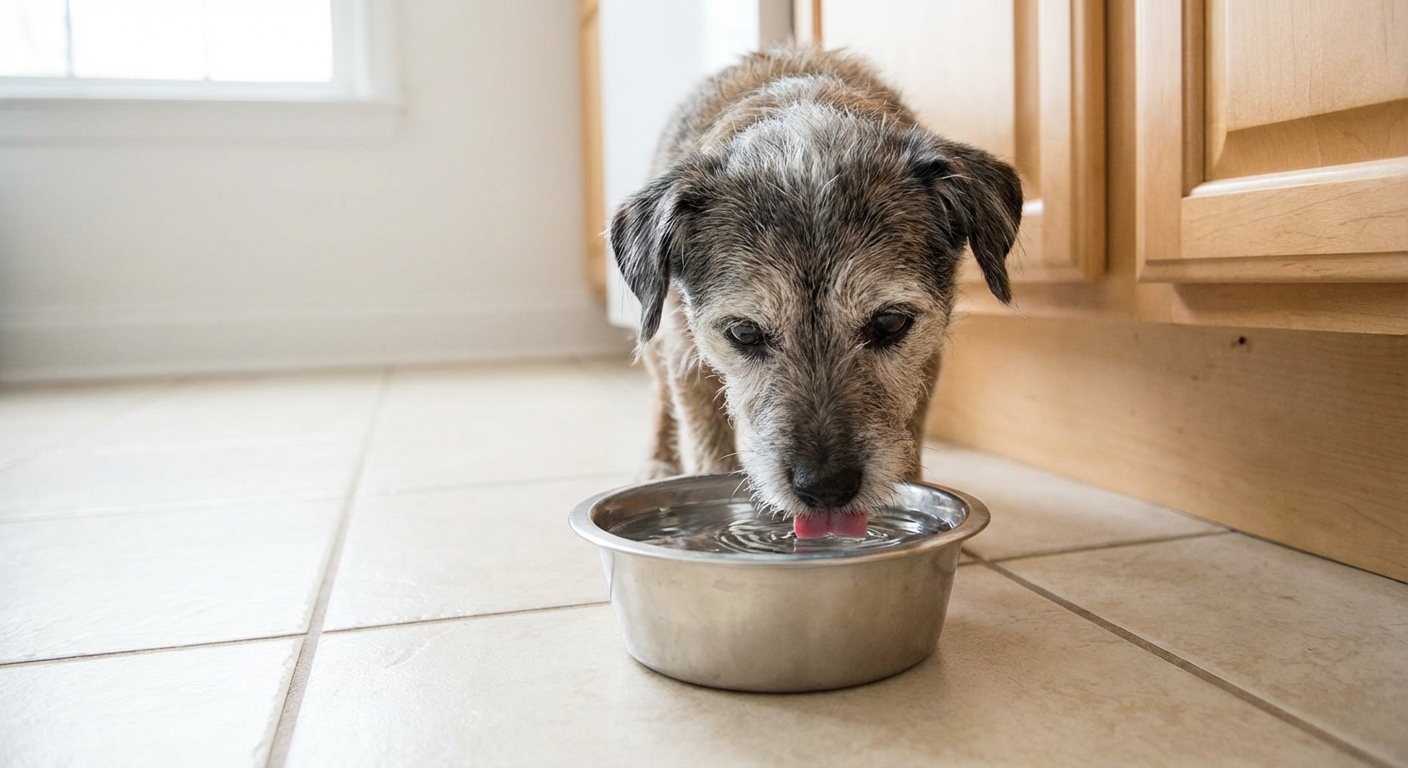
Increased thirst and urination
Polydipsia (drinking more) and polyuria (urinating more) are classic. You might notice larger wet spots on pee pads, more frequent trips outside, or accidents in a previously house-trained dog.
- Water bowl empties faster than usual
- Waking you up at night to go out
- Accidents that seem out of character
Increased appetite
Many dogs with Cushing’s act constantly hungry. They may beg, counter-surf, or seem frantic around food. This is not “bad behavior.” Cortisol can drive appetite and change metabolism.
Panting and heat intolerance
Excess cortisol can make dogs pant more, even when it is not hot or after only mild activity. Some dogs seem unable to settle at night because they are uncomfortable or warm.
Pot-bellied appearance
A rounded belly can develop due to muscle weakness and fat redistribution, and in some cases an enlarged liver. This can be especially noticeable when the rest of the dog looks thinner or less muscular than before.
Skin, coat, and body changes
Cushing’s is famous for its “outside” clues. These are often the changes you can see in photos month to month.
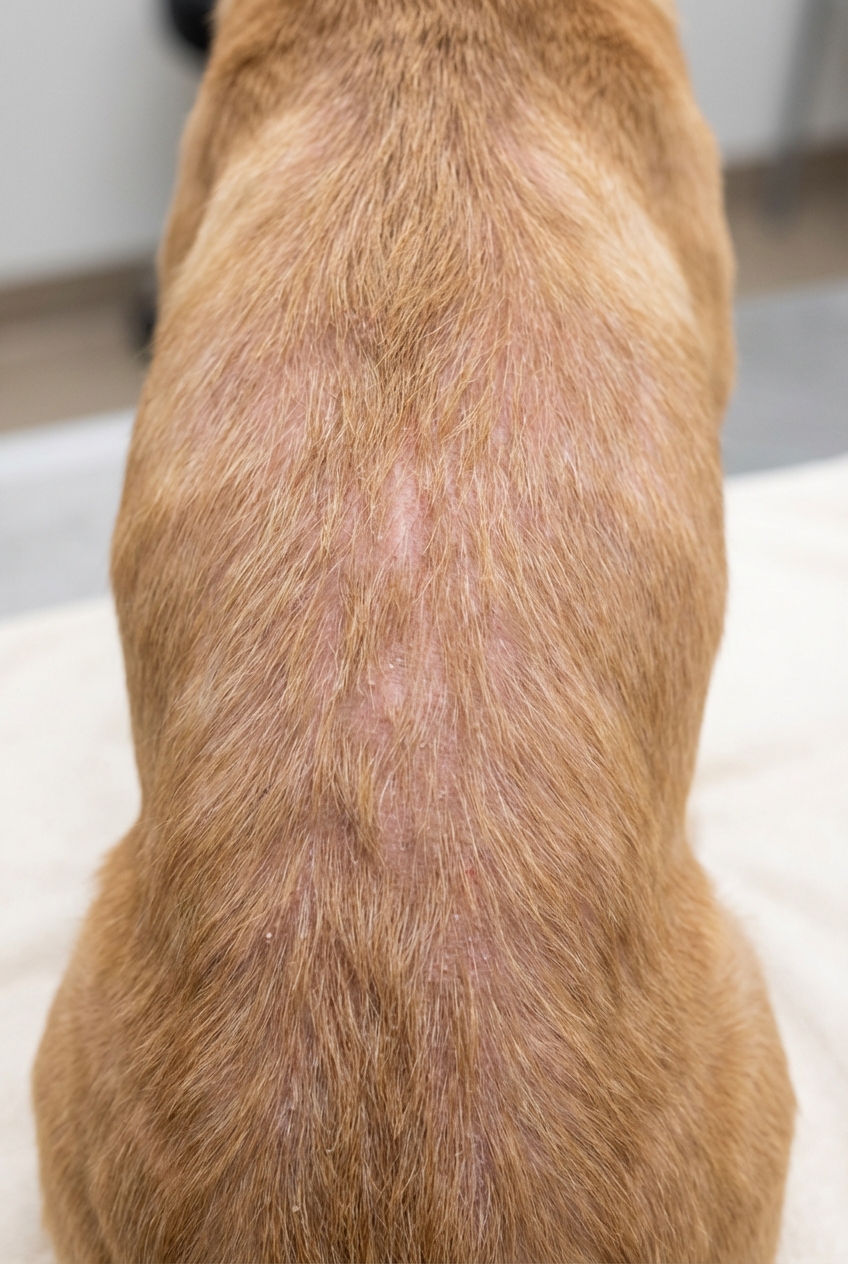
Hair loss or thinning
Hair loss is often symmetrical, meaning it happens on both sides of the body. Many dogs lose hair along the trunk while the head and legs keep more hair.
Dry skin, dandruff, and infections
Excess cortisol can suppress normal immune function and weaken the skin barrier.
- Recurring ear infections
- Skin infections (pyoderma), red inflamed itchy patches (often called “hot spots”), or a persistent odor
- Slow healing after small scrapes
- In some dogs, a flare-up of mites (demodicosis) due to reduced skin immunity
Thin skin, bruising, and blackheads
Some dogs develop fragile skin that tears more easily, or you may notice bruising. You might also see comedones (blackheads), especially on the belly. These are medical clues worth mentioning to your veterinarian.
Energy, muscles, and behavior
Cushing’s can quietly change how a dog moves and feels day to day.
Low stamina and weakness
Dogs may tire quickly, avoid stairs, or seem less interested in walks. Muscle wasting is common, especially over the shoulders and hips. Owners sometimes describe it as “he looks bony on top but round in the belly.”
Restlessness
Some dogs pace, seem unable to get comfortable, or sleep lightly. Others become more clingy. These are non-specific changes, but in combination with thirst, hunger, and coat changes they become more meaningful.
Less obvious symptoms
Not every dog reads the textbook. These signs can still fit Cushing’s, especially when they are new or gradually worsening.
- Recurrent urinary tract infections, sometimes with few outward symptoms (so-called “silent” UTIs)
- Elevated liver enzymes on routine bloodwork, especially a marked ALP elevation
- High cholesterol on bloodwork in some dogs
- High blood pressure
- Increased susceptibility to diabetes (Cushing’s can increase insulin resistance)
- Calcium deposits in the skin (calcinosis cutis) in some cases
What causes Cushing’s
There are three main categories. Knowing the type matters because it influences treatment choices.
Pituitary-dependent (most common)
A pituitary tumor signals the adrenal glands to produce too much cortisol. These tumors are often small and benign (microadenomas), but larger tumors can occur.
Adrenal-dependent
A tumor on an adrenal gland produces cortisol directly. This type can require additional imaging and a different treatment plan.
Iatrogenic (from steroids)
This happens when a dog has been on steroid medications (like prednisone) for a long time or at high doses. Never stop steroids abruptly without a veterinarian’s guidance because it can be dangerous. If you suspect this, talk to your vet about a safe taper plan.

When to call your veterinarian
Please call your veterinarian if your dog has increased thirst and urination plus any of the following:
- Ravenous appetite or sudden food obsession
- New accidents in the house
- Hair thinning, recurrent skin or ear infections
- Panting at rest
- Pot-bellied appearance or obvious muscle loss
These signs can overlap with diabetes, kidney disease, urinary issues, thyroid disease, and more. Overlap happens because many conditions affect water balance, appetite, weight, and energy, and some share similar bloodwork changes. That is why testing is so important. The goal is not to guess. The goal is to measure and confirm.
Diagnosis
Your veterinarian will typically start with history, a physical exam, and baseline labs.
Common first-step tests
- Blood chemistry and CBC to look for patterns such as a stress leukogram and changes like elevated ALP or ALT
- Urinalysis to evaluate urine concentration and screen for infection
- Urine culture if infection is suspected (this matters because UTIs can be “silent” in Cushing’s dogs)
Specific screening tests
Depending on your dog’s case, your veterinarian may recommend one or more of the following:
- ACTH stimulation test
- Low-dose dexamethasone suppression (LDDS) test
Imaging
Abdominal ultrasound can help evaluate adrenal gland size, liver changes, and look for adrenal tumors. Imaging is usually an adjunct to lab testing, not a stand-alone way to confirm or rule out Cushing’s.
Each test has strengths and limitations. Your vet will choose based on your dog’s symptoms, other lab results, and medical history.
Living well with Cushing’s
Cushing’s is often manageable. Many dogs feel noticeably better once cortisol is controlled. Treatment may include medication (commonly trilostane or mitotane depending on the case), monitoring tests, and supportive care for secondary issues like infections or high blood pressure.
Monitoring and medication safety
Cushing’s medications need follow-up testing to keep dosing safe and effective. Your veterinarian may recommend periodic ACTH stimulation tests and repeat lab work.
Contact your veterinarian promptly if your dog seems over-treated or suddenly unwell, especially with:
- Lethargy or unusual weakness
- Vomiting or diarrhea
- Loss of appetite
- Shaking, collapse, or severe depression
At-home support
- Track water intake: measure how much your dog drinks in 24 hours for a few days if you can. Your veterinarian can help you interpret what is normal for your dog’s size and situation.
- Keep a symptom journal: appetite, accidents, panting, energy, skin changes
- Prioritize gentle exercise: short, consistent walks help maintain muscle without overtaxing
- Ask about nutrition: a balanced diet that supports lean muscle, healthy weight, and stable blood sugar can make day-to-day life easier
If your dog’s “normal” has changed, trust that instinct. You know your dog. Cushing’s symptoms often whisper before they shout.
Quick symptom checklist
If you want a simple way to assess what you are seeing at home, review this list and bring it to your appointment:
- Drinking more water
- Urinating more or having accidents
- Increased appetite
- Panting at rest
- Pot-bellied appearance
- Hair thinning or symmetrical hair loss
- Blackheads on the belly
- Recurrent ear or skin infections
- Low energy, weakness, or muscle loss
- Restlessness or trouble settling
If several boxes are checked, it is worth scheduling a visit and discussing Cushing’s testing with your veterinarian.