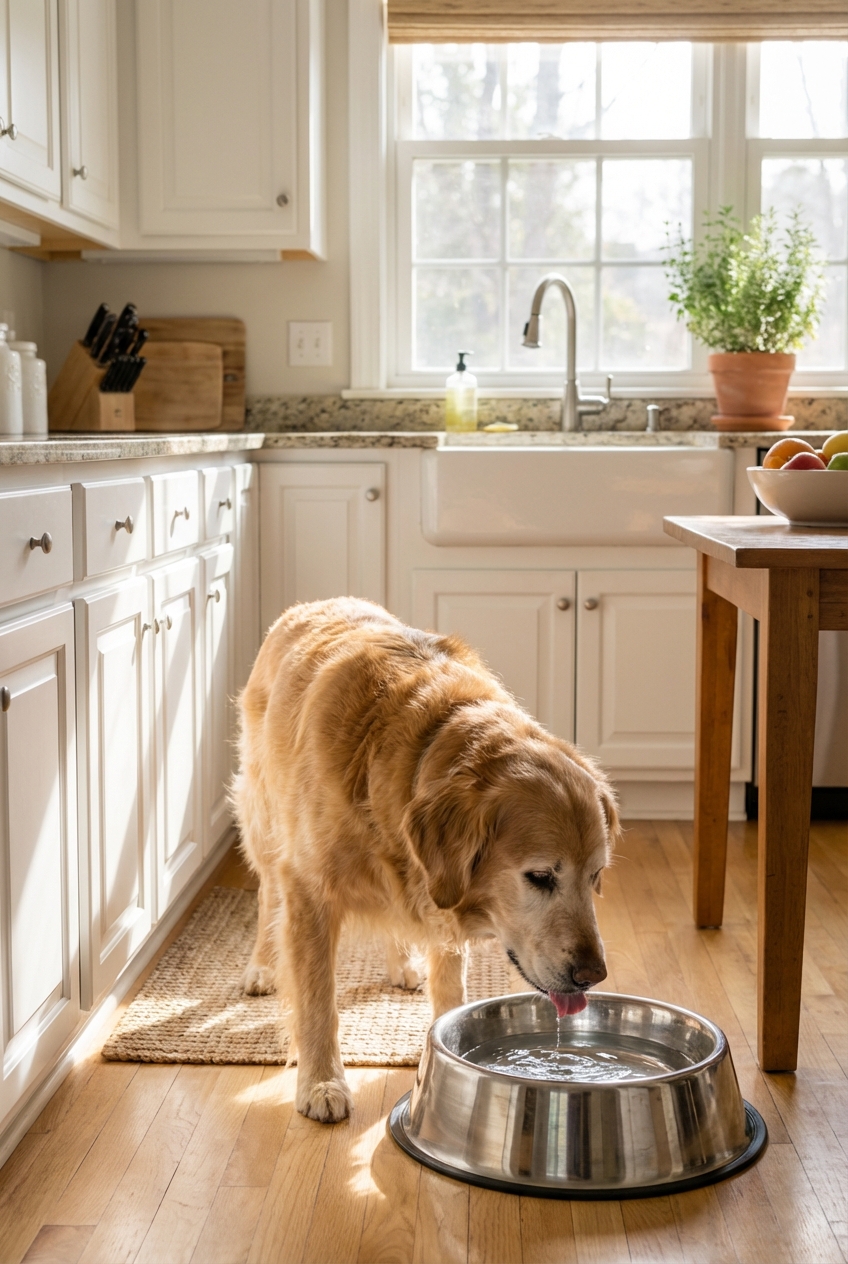
A clear, vet-backed guide to canine Cushing’s disease: types, diagnosis tests, trilostane vs mitotane, surgery options, home care routines, recheck schedul...
Article
•
Designer Mixes
Cushing’s in Dogs: Symptoms and Care Answers

Shari Shidate
Designer Mixes contributor
If your dog suddenly seems thirsty all the time, asks to go outside more often, or looks like their body shape is changing (like a pot-bellied appearance) even without a clear diet change, it is completely normal to wonder: Is this Cushing’s disease? As a veterinary assistant, I have seen how stressful this can feel for families. The good news is that Cushing’s is often manageable once it is correctly diagnosed and followed closely over time.
Below, I’ll walk you through common Cushing’s dog symptoms, what they can mean, how veterinarians confirm the diagnosis, and what practical care at home really looks like.
What is Cushing’s disease in dogs?
Cushing’s disease is the common name for hyperadrenocorticism, a condition where a dog’s body is exposed to too much cortisol for too long. Cortisol is a normal hormone that helps with stress response, metabolism, and inflammation. The problem is not cortisol itself, it is the chronic excess.
The most common types are:
- Pituitary-dependent Cushing’s (PDH): the most common form. A pituitary tumor, usually small and benign, signals the adrenal glands to make too much cortisol.
- Adrenal-dependent Cushing’s (ADH): a tumor in one adrenal gland produces excess cortisol.
- Iatrogenic Cushing’s: caused by long-term use of steroid medications (like prednisone). This is handled differently than naturally occurring Cushing’s.
Cushing’s dog symptoms
Cushing’s often creeps in slowly. Many families initially think their dog is “just getting older,” which is why it can take time to diagnose.
Most common signs
- Increased thirst and an empty water bowl more often
- More frequent urination, including accidents in the house
- Increased appetite, counter-surfing, begging, getting into trash
- Panting more than usual, even when resting
- Pot-bellied appearance (abdominal enlargement from muscle weakness and fat redistribution)
- Lethargy or less interest in play and walks
Skin and coat changes
- Hair thinning or symmetrical hair loss on the body (often not itchy)
- Thin skin that bruises easily
- Recurrent skin infections or hot spots
- Blackheads or changes in pigmentation
- Slow hair regrowth after grooming or shaving
Less obvious symptoms that still matter
- Weakness in the hind end, trouble jumping up
- Increased susceptibility to urinary tract infections
- Restlessness at night
- Heavy breathing during sleep
Important: these symptoms can overlap with diabetes, kidney disease, hypothyroidism, and certain liver conditions. That is why testing is so important before assuming it is Cushing’s.
Also, your veterinarian may mention common lab patterns that “fit” Cushing’s, such as elevated liver enzymes (often ALP), dilute urine, or a stress-pattern white blood cell count. These findings are clues, but they are not a diagnosis by themselves.
When symptoms are an emergency
Most dogs with Cushing’s are stable and treated as outpatients, but there are times you should call your veterinarian right away or go to an emergency clinic.
- Vomiting, diarrhea, or refusal to eat, especially after starting Cushing’s medication
- Extreme weakness, collapse, severe sleepiness, or disorientation
- Labored breathing or blue-tinged gums
- Distended painful abdomen
- Possible clot or embolism signs (sudden one-limb weakness, sudden paralysis, sudden severe limb pain, or a limb that feels unusually cold)
- Seizures
Dogs with Cushing’s can be more prone to complications like infections, high blood pressure, pancreatitis, diabetes, and clotting problems. It is always better to be cautious.
How vets diagnose Cushing’s
No single test is perfect for every dog. Veterinarians usually combine:
1) History and exam
Your description of drinking, urination, appetite, panting, and coat changes is incredibly valuable.
2) Baseline lab work
- CBC (complete blood count)
- Chemistry panel (often shows elevated liver enzymes like ALP)
- Urinalysis (to check concentration and screen for infection)
- Urine culture if a UTI is suspected, or sometimes even if your dog is not acting painful, because UTIs can be sneaky with Cushing’s
3) Hormone testing
- Low-dose dexamethasone suppression test (LDDS): commonly used and generally sensitive for naturally occurring Cushing’s.
- ACTH stimulation test: less sensitive as a first-line screen for spontaneous Cushing’s, but very helpful for iatrogenic Cushing’s and often used to monitor treatment once a dog is on trilostane.
- Urine cortisol:creatinine ratio: useful as a rule-out test. Stress can cause false positives, so it is not used alone to diagnose.
4) Imaging when needed
- Abdominal ultrasound can assess adrenal glands and look for masses.
- X-rays may be recommended depending on symptoms.
- Advanced imaging like CT or MRI is sometimes used for pituitary tumors.
If your vet recommends repeat testing, it does not mean they are unsure. It often means they are being careful and evidence-based, because the stakes are real and the medications are powerful.
Quick scope note: This article is general education and not a diagnosis. If you suspect Cushing’s, the safest next step is an exam and lab work with your veterinary team.
Which type is it?
Once Cushing’s is confirmed, many owners want to know whether it is pituitary-dependent (PDH) or adrenal-dependent (ADH). That answer can guide next steps and help set expectations.
Your vet may use:
- Abdominal ultrasound patterns: with PDH, both adrenal glands often look enlarged. With ADH, one adrenal may look enlarged or irregular while the other looks smaller.
- Endogenous ACTH testing: a blood test that can help differentiate PDH versus ADH in some cases.
- LDDS patterns: sometimes the way cortisol suppresses (or does not) provides a clue, but it is not always definitive.
Even if you do not pursue every differentiating test right away, many dogs can still start treatment safely under veterinary guidance. Your veterinarian will tailor this to your dog’s risks, symptoms, and budget.
Treatment options
The goal is to reduce cortisol to a healthier range without pushing it too low.
Medication (most common)
- Trilostane is commonly prescribed. It reduces cortisol production. It requires a planned recheck schedule and careful observation at home.
- Mitotane is another option used in certain cases.
With either medication, your veterinarian will schedule follow-up testing after starting or adjusting doses. For dogs on trilostane, monitoring commonly includes cortisol testing (often an ACTH stimulation test or a vet-specific pre and post cortisol protocol) plus a chemistry panel and electrolytes, depending on your clinic’s approach and your dog’s health.
Surgery (selected cases)
For some adrenal tumors, surgical removal can be considered. This depends on tumor type, size, spread, and your dog’s overall health.
If steroids caused it (iatrogenic Cushing’s)
Your vet will typically create a plan to taper steroids gradually rather than stopping suddenly, because abrupt withdrawal can be dangerous.
Home care
Medication is only one piece. Your day-to-day routines matter a lot.
Track the symptoms that matter
Keep simple notes for 2 to 3 weeks, especially after diagnosis or dose changes:
- How much water your dog drinks (rough estimate is fine)
- How often they urinate, and whether accidents happen
- Appetite changes
- Panting episodes and when they occur
- Energy level on walks
- Skin issues, itching, odor, or new bumps
This gives your veterinarian real-world data to adjust treatment safely.
Expect potty needs to change
Until cortisol is controlled, many dogs truly cannot “hold it.” Add extra potty breaks, use belly bands or pee pads temporarily, and protect your dog’s dignity. They are not being stubborn.
Nutrition
There is no single “Cushing’s diet,” but there are evidence-based goals most dogs benefit from:
- Maintain a lean body condition (extra weight worsens mobility and inflammation)
- Prioritize high-quality protein to support muscle maintenance, as Cushing’s can break down muscle
- Choose consistent, balanced food rather than frequent diet switches
- Discuss fat content with your veterinarian, especially if pancreatitis is a concern
If you want to add fresh, whole foods, go slowly and keep it simple. Think of it as supporting your dog’s overall resilience, not trying to “out-supplement” the disease.
Action step: Ask your veterinarian which body condition score your dog should target and what an ideal weight range looks like. This one conversation can guide everything else.
Skin care and infection prevention
Because Cushing’s can thin the skin and weaken immune defenses, many dogs get recurrent infections.
- Keep ears clean as recommended, but avoid over-cleaning
- Report skin odor, redness, pimples, or hair loss early
- Use parasite prevention consistently, since skin is more vulnerable
You can also ask your vet whether periodic urine cultures, even without obvious urinary symptoms, make sense for your dog. Silent UTIs are not rare in Cushing’s patients.
Medication follow-ups
How long until we see improvement?
Many dogs show reduced thirst and urination within weeks once the dose is right. Coat changes can take longer, often months, because hair regrowth is slow.
What side effects should I watch for?
Call your veterinarian promptly if you see:
- Vomiting or diarrhea
- Not eating
- Sudden lethargy, weakness, wobbliness
- Collapse
These can be signs cortisol is too low, or another complication is developing. Do not wait it out at home.
Medication safety note: If your dog seems ill after a dose, contact your veterinarian or an emergency clinic right away. In many cases, you will be told to hold the next dose until you get instructions, rather than making medication changes on your own.
Why are recheck tests so frequent?
Because the “sweet spot” is individualized. Two dogs can take the same medication and respond differently. Regular rechecks help prevent under-treatment and over-treatment.
Prognosis and quality of life
Many dogs with Cushing’s still enjoy a great quality of life. The winning combination is usually consistent medication, scheduled rechecks, and attentive home care.
Without treatment, chronic high cortisol can raise the risk of problems like diabetes, high blood pressure, recurrent infections, and clotting events. That is why diagnosis and ongoing follow-up matter.
Focus on what you can control:
- Keep vet appointments and follow-up tests on the calendar
- Maintain a healthy weight and steady routine
- Address infections early
- Make your home setup easier with extra potty breaks and slip-resistant rugs
If you are feeling overwhelmed, bring your questions to your vet team. We want you to ask. Caring for Cushing’s is not about perfection, it is about staying observant and adjusting thoughtfully.
Questions to ask your vet
- Which type of Cushing’s do you suspect, and why?
- Which test do you recommend first, and what can cause a false result?
- What is our recheck schedule for the next 2 to 3 months?
- What side effects mean I should call immediately, and should I give the next dose or hold it until I hear from you?
- Do you recommend screening for UTIs, diabetes, or high blood pressure?
- What is my dog’s ideal weight, and how much should they eat daily?