Support a dog with Cushing’s disease using lean proteins, fiber-rich vegetables, smart carbs, and controlled fats. Get label tips, treat ideas, and safe fe...
Article
•
Designer Mixes
Cushing’s in Dogs

Shari Shidate
Designer Mixes contributor
Cushing’s in dogs (also called hyperadrenocorticism) is one of those conditions that can sneak up on you. Many dogs look “just a little thirstier” or “a little more hungry” at first, and it is easy to chalk it up to aging. But Cushing’s is a real hormonal disorder that can affect your dog’s comfort, immune system, skin, muscles, and long-term health.
A quick terminology note: In everyday practice, many people use “Cushing’s disease” to mean any form of hyperadrenocorticism. Technically, “Cushing’s disease” is often used for the pituitary-dependent form, while “Cushing’s syndrome” or “hyperadrenocorticism” is the umbrella term. In this guide, I will use “Cushing’s” in the common, general way and point out the type when it matters.
As a veterinary assistant in Frisco, Texas, I have seen how much better dogs can feel once the right diagnosis is made and a treatment plan is in place. The goal of this guide is to help you recognize the signs, understand what is happening in the body, and know what to expect from testing and treatment.
What Cushing’s is
Cushing’s happens when a dog’s body is exposed to too much cortisol for too long. Cortisol is a steroid hormone made by the adrenal glands, and it is normal and necessary in healthy amounts. It helps regulate:
- Stress response
- Blood sugar and metabolism
- Immune function and inflammation
- Blood pressure and circulation
The problem is not cortisol itself. The problem is chronic excess, which can slowly change how your dog’s body functions and how they look and feel.
3 main types
1) Pituitary-dependent (most common)
This form is usually caused by a benign tumor in the pituitary gland (in the brain). The pituitary produces a hormone called ACTH, which tells the adrenal glands to make cortisol. If the pituitary produces too much ACTH, the adrenal glands keep pumping out cortisol.
2) Adrenal-dependent
This form is caused by a tumor on one adrenal gland that produces cortisol on its own. The tumor may be benign or malignant, and treatment options can differ based on what imaging shows and your dog’s overall health.
3) Iatrogenic (from medications)
This occurs when a dog receives steroid medications (like prednisone) at high doses or for long periods. These medications are often truly needed for certain conditions, but long-term exposure can create Cushing’s-like effects. Never stop steroids suddenly without your veterinarian’s guidance.
Common signs at home
Cushing’s often develops gradually. Many families tell us, “It felt like a bunch of small changes that added up.” These are the most common red flags:
- Increased thirst and increased urination (bigger pee clumps, more potty breaks, accidents)
- Increased appetite, sometimes with food-seeking behavior
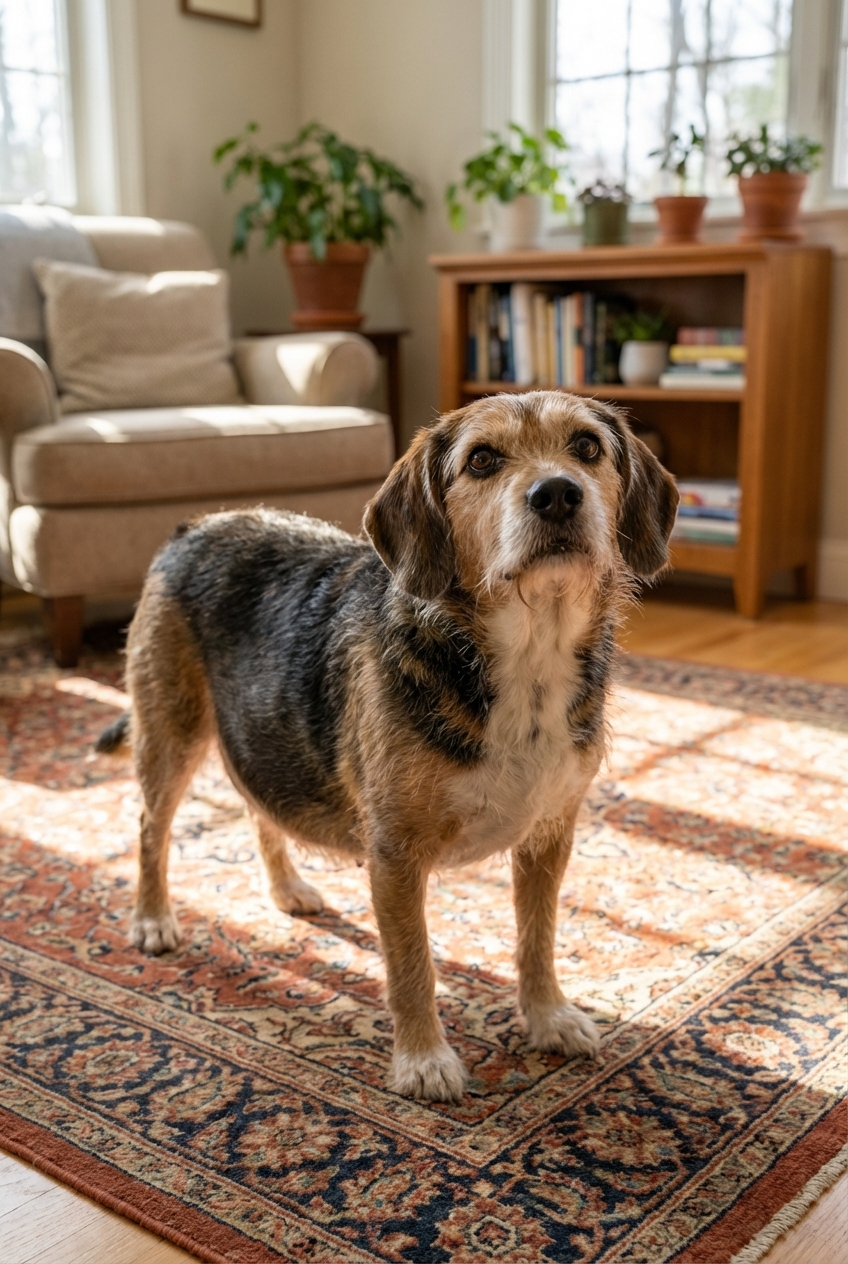
- Pot-bellied appearance due to muscle weakening and fat redistribution
- Hair thinning or hair loss, often on the trunk (not typically itchy at first)
- Thin skin, slower hair regrowth after shaving, easy bruising
- Recurrent skin infections or ear infections
- Panting more than usual
- Low energy or exercise intolerance
- Muscle wasting, especially along the back legs
Some dogs also develop darkened skin patches, blackheads, or a dull coat. Others mainly show the “thirst and hunger” signs.
Why it happens
Excess cortisol affects multiple systems at once:
- Kidneys and thirst: cortisol interferes with normal water balance, so dogs drink and urinate more.
- Muscles: cortisol is catabolic, meaning it breaks tissue down over time, leading to weakness and a pot-bellied look.
- Skin and coat: cortisol changes hair growth cycles and skin thickness, and it can reduce the skin’s ability to fight infection.
- Immune function: high cortisol suppresses immune defenses, making infections more likely.
- Metabolism: it can raise blood sugar and alter fat distribution.
Who is at higher risk?
Cushing’s is more common in middle-aged to senior dogs. It can occur in any breed, but we often see it more in smaller breeds and some specific purebreds. Mixed-breed dogs can absolutely develop it too.
Breeds that are commonly overrepresented include Miniature Poodles, Dachshunds, Boston Terriers, and Boxers (this does not mean other breeds are “safe,” it is just a trend).
Dogs receiving long-term steroid therapy for allergies, autoimmune issues, or certain inflammatory conditions may be at risk for iatrogenic Cushing’s.
How vets diagnose it
Diagnosis is rarely one simple test. Your veterinarian will put together the story using symptoms, exam findings, routine lab work, and targeted hormone testing. Just as important, many common issues can mimic Cushing’s signs, so good diagnostics help your dog avoid the wrong treatment.
Step 1: Exam and baseline labs
Your vet will likely start with:
- Bloodwork (CBC and chemistry panel)
- Urinalysis and possibly a urine culture
- Blood pressure and sometimes a screening for protein in the urine
Many dogs with Cushing’s show characteristic patterns such as elevated liver enzymes (often ALP), dilute urine, and changes in cholesterol or blood sugar. These results do not confirm Cushing’s by themselves, but they raise suspicion and help rule out other issues.
Step 2: Screening tests
Common tests include:
- ACTH stimulation test: evaluates adrenal response to ACTH. It is also commonly used to monitor certain medications used to treat Cushing’s.
- Low-dose dexamethasone suppression test (LDDST): commonly used to help diagnose hyperadrenocorticism overall, and it can sometimes provide clues about whether the cause is pituitary or adrenal based on the suppression pattern.
- Urine cortisol:creatinine ratio: typically a screening tool; a normal result can help rule out Cushing’s, but an abnormal result usually requires follow-up testing.
Your veterinarian will choose based on your dog’s symptoms, other health concerns, and practical factors like timing and cost.
Step 3: Finding the type
If Cushing’s is confirmed, your vet may recommend:
- Abdominal ultrasound to evaluate adrenal size and look for adrenal tumors
- Additional hormone testing in some cases
Knowing the type helps guide treatment decisions and expectations.
Look-alike conditions
Cushing’s shares symptoms with several common problems. That is one reason proper testing matters.
- Diabetes mellitus
- Kidney disease
- Urinary tract infection
- Hypothyroidism
- Chronic skin allergies and secondary infections
- Liver and gallbladder disease
If your dog is drinking more, urinating more, or losing hair, do not self-diagnose. The right treatment depends on the right cause.
Treatment options
The best plan depends on the type of Cushing’s, your dog’s overall health, and what matters most to your family (comfort, lifespan, budget, ability to medicate and recheck). Some dogs with very mild signs or significant other illnesses may not be treated right away, and that decision is individualized with your veterinarian.
Medication (most common)
For many dogs, especially with pituitary-dependent Cushing’s, treatment is long-term medication to reduce cortisol production. The most commonly used medication in many practices is trilostane. Some dogs may be treated with other medications depending on the case and veterinary preference.
With medication, the goal is typically control, not a permanent cure. Many dogs improve noticeably once the cortisol level is better regulated.
Surgery (some adrenal cases)
If an adrenal tumor is present, surgery may be an option for some dogs. This is a specialized procedure and depends on tumor type, location, and whether it has invaded nearby vessels. Your vet may refer you to a board-certified surgeon or internal medicine specialist.
Iatrogenic Cushing’s
If steroid medication caused Cushing’s-like signs, your veterinarian will create a plan to taper steroids safely and, when possible, shift to other therapies for the original condition.

What to expect with treatment
Many families notice improvement in the first few weeks, especially with drinking, urinating, and appetite. Skin and coat changes can take longer.
Monitoring matters
Cushing’s medications need recheck testing to make sure cortisol is controlled but not pushed too low. Monitoring protocols vary by clinic and medication. For trilostane, many veterinarians use an ACTH stimulation test or timed cortisol testing (based on when the dose is given). Your vet will schedule follow-ups and adjust dosing based on results and your dog’s day-to-day signs.
Complications when it is uncontrolled
- Recurrent infections (skin, ears, urinary tract)
- High blood pressure
- Protein loss through the kidneys
- Pancreatitis may be associated in some dogs
- Diabetes mellitus
- Blood clot risk may be increased
- Gallbladder issues (including gallbladder mucocele) may be more likely in some dogs
This is not meant to scare you. It is meant to underline why diagnosis and management matter. When we control cortisol, we protect multiple organs at once.
Home care right now
You can make a big difference at home by being observant and organized. Here are practical steps I recommend:
- Track water intake for a few days (measure what you pour in and what is left). Bring the numbers to your appointment.
- Note potty changes, including accidents, frequency, and urgency.
- Take monthly photos of your dog’s coat and body shape so subtle changes are easier to see.
- Weigh your dog regularly or ask your clinic if you can pop in for quick weigh-ins.
- Stay consistent with medication timing if your dog is being treated.
- Prioritize infection prevention with routine grooming, ear checks, and prompt vet visits for new odors, redness, or itching.
Food note: There is no single “Cushing’s diet,” but maintaining a healthy weight and feeding a balanced, evidence-based diet supports overall health. If your dog has high cholesterol, pancreatitis history, or diabetes risk, your veterinarian may recommend more specific nutrition guidelines.
Call your vet urgently
If your dog has confirmed Cushing’s and is on medication, call your veterinarian right away if you see:
- Vomiting, diarrhea, extreme lethargy, or weakness
- Loss of appetite that is unusual for your dog
- Collapse or severe shaking
- Signs of infection (feverish behavior, painful urination, foul odor from skin or ears)
These signs can be related to many conditions, but with Cushing’s treatment we take them seriously. In some cases, they can be signs that cortisol has dropped too low (hypoadrenocorticism), or that an infection is escalating faster than expected.
Prognosis
Many dogs with Cushing’s go on to live happy, comfortable lives with proper treatment and monitoring. The key is teamwork: your observations at home plus your veterinarian’s testing and dose adjustments.
If your gut is telling you “this isn’t just normal aging,” trust that instinct and schedule a checkup. Early management can mean fewer infections, better mobility, and a brighter day-to-day life.
Questions to ask
- Which type of Cushing’s do you suspect and why?
- What test do you recommend first, and what will it tell us?
- If Cushing’s is confirmed, will we need imaging such as an abdominal ultrasound?
- What treatment options fit my dog’s age and other conditions?
- How often will rechecks be needed and what will they cost?
- What side effects should I watch for at home?