A clear, vet-backed guide to canine Cushing’s disease: types, diagnosis tests, trilostane vs mitotane, surgery options, home care routines, recheck schedul...
Article
•
Designer Mixes
Cushing’s Disease in Dogs and the Pot Belly Sign

Shari Shidate
Designer Mixes contributor
If your dog’s belly suddenly looks rounder, lower, or “swingy,” it is normal to worry. As a veterinary assistant here in Frisco, Texas, I have seen many families notice a pot-bellied appearance and assume it is just weight gain. Sometimes it is. But sometimes it can be a key clue of Cushing’s disease, a hormonal condition that quietly changes a dog’s body over time.
This article will help you recognize what the “pot belly” of Cushing’s can look like, why it happens, what other signs tend to show up alongside it, and what your veterinarian can do to confirm what is going on.
What is Cushing’s disease in dogs?
Cushing’s disease (also called hyperadrenocorticism) happens when a dog’s body is exposed to too much cortisol for too long. Cortisol is a natural steroid hormone made by the adrenal glands. In healthy amounts, it helps regulate stress responses, metabolism, immune function, and inflammation.
With Cushing’s, the “cortisol signal” gets stuck on. Over time, that excess cortisol can change muscle strength, fat distribution, skin quality, and even how the liver stores energy.
Common types
- Pituitary-dependent Cushing’s (PDH): The most common form. A pituitary tumor, usually small and typically benign, tells the adrenal glands to produce too much cortisol.
- Adrenal-dependent Cushing’s (ADH): A tumor in one adrenal gland produces excess cortisol.
- Iatrogenic Cushing’s: Caused by long-term use of steroid medications (like prednisone) at doses high enough to mimic excess cortisol.
Why Cushing’s can cause a pot belly
The pot-bellied look in Cushing’s is not just “extra weight.” It is usually a combination of changes happening at the same time, including:
- Weakened abdominal muscles: Cortisol contributes to muscle breakdown, including the muscles that help hold the belly up.
- Fat redistribution: Dogs may gain fat in the abdomen even if their legs and back look thinner.
- Enlarged liver (hepatomegaly): Excess cortisol can cause the liver to enlarge due to glycogen accumulation, which can push the abdomen outward.
- Looser belly wall: With muscle loss, the abdomen may hang lower and sway when the dog walks.
Pot belly vs. weight gain
It can be tricky, especially if your dog is already a little “fluffy.” Here are some clues that the pot belly might be more than normal weight gain.
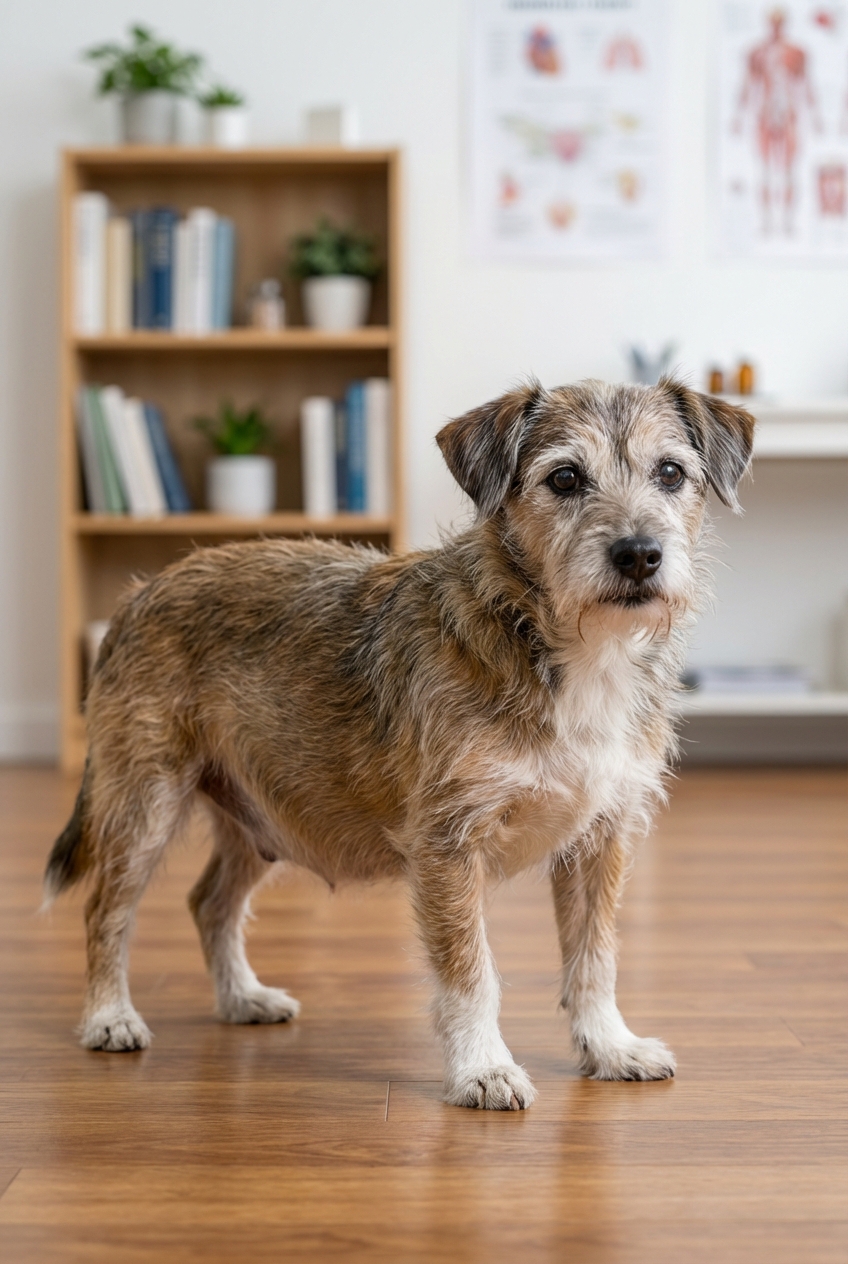
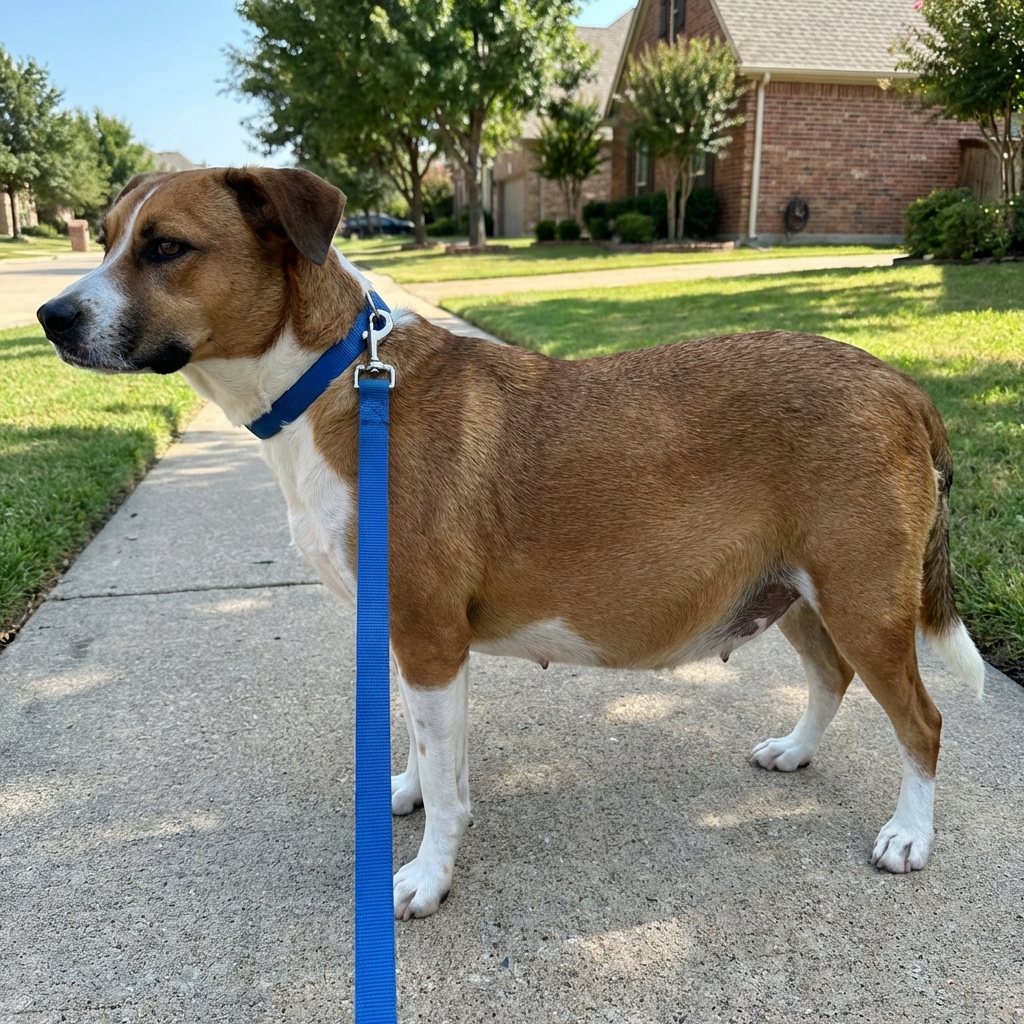
Pot belly from Cushing’s may look like
- The belly is rounded and low, sometimes more pronounced behind the ribcage.
- The dog may have thin limbs while the belly enlarges.
- The dog may seem to lose muscle along the back, giving a slightly hollowed topline.
- The belly can appear larger even if overall weight has not changed dramatically.
Weight gain alone may look like
- Fat is more evenly distributed over the ribs, chest, hips, and belly.
- The dog’s muscles are usually not shrinking at the same time.
- The dog may still have normal skin and coat (unless another issue is present).
Other causes of a pot belly
Cushing’s is not the only reason a dog’s belly can look enlarged or low. Depending on your dog’s age and overall signs, your veterinarian may also consider:
- Intestinal parasites (especially in puppies)
- Pregnancy
- Fluid in the abdomen (ascites) from heart, liver, or other disease
- Internal bleeding (can be life-threatening)
- Simple obesity
This is one reason a pot belly should be viewed as a clue, not a diagnosis.
Other symptoms that often show up
A pot belly is rarely the only sign. Many dogs with Cushing’s also develop a predictable cluster of symptoms. If you notice several of these together, it is a strong reason to schedule a veterinary visit.
Most common signs
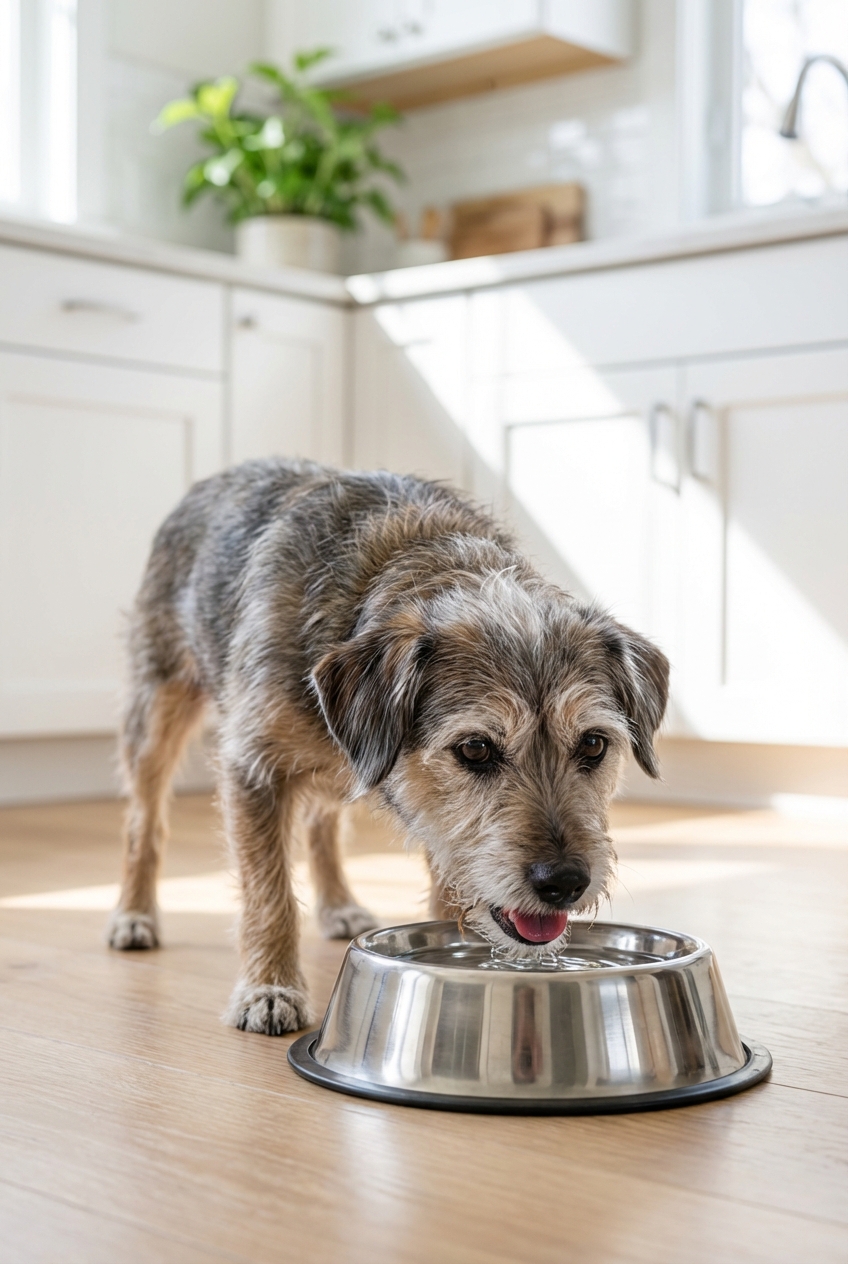
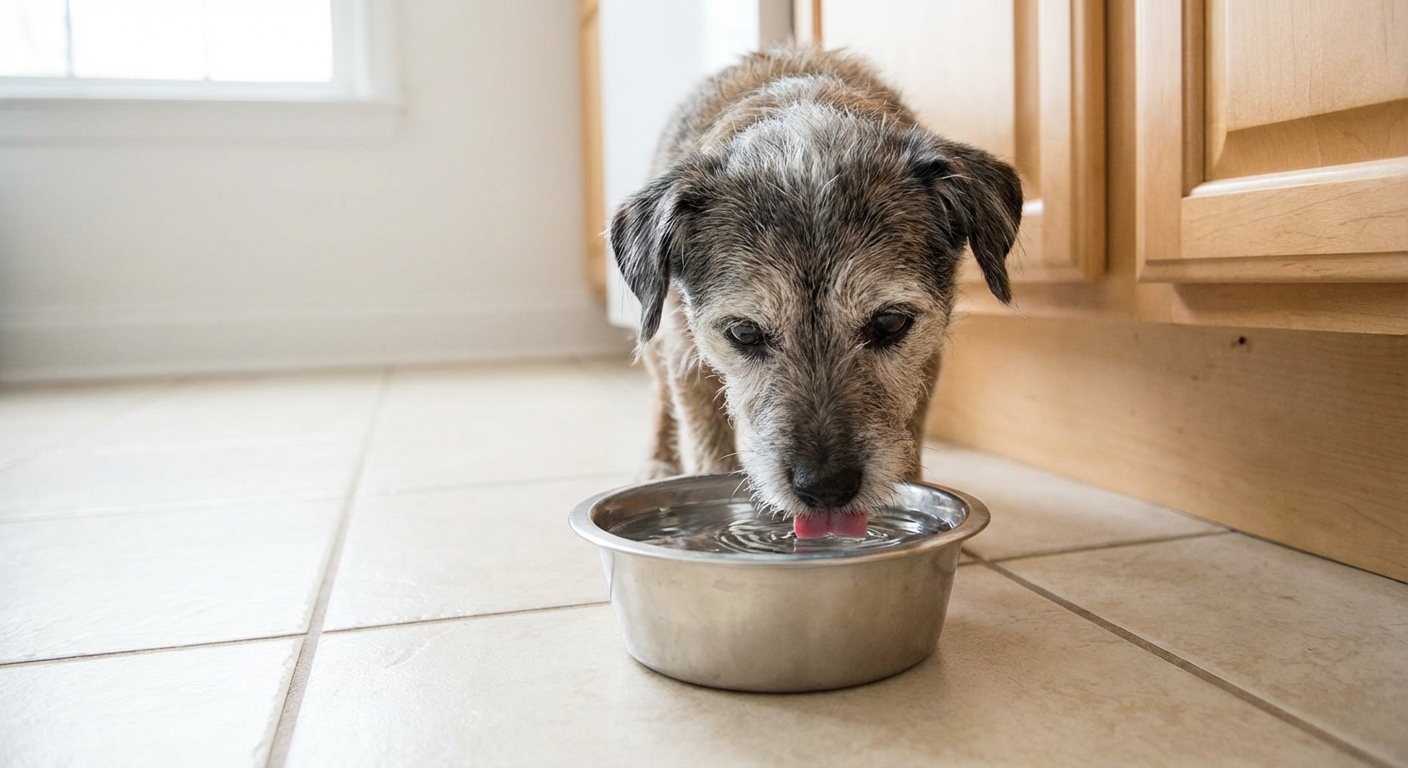
- Increased thirst and needing the water bowl refilled more often
- Increased urination, including accidents in a previously house-trained dog
- Increased appetite, sometimes acting like they are “starving”
- Panting more than usual, even at rest
- Lethargy or reduced interest in walks and play
- Hair loss or thinning coat, often on the trunk
- Thin skin, easy bruising, slower healing
- Recurring skin or ear infections
Not every dog has every symptom. Some dogs show the pot belly first. Others show the drinking and peeing changes first.
When it is an emergency
Most cases of Cushing’s develop gradually and are not an immediate emergency. But a suddenly enlarged abdomen can also indicate serious problems that need urgent attention.
Seek same-day care if you notice
- A belly that becomes enlarged quickly over hours to a day
- Unproductive retching, a tight painful abdomen, or obvious distress (concern for bloat or GDV)
- Restlessness, drooling, or repeated attempts to vomit with little coming up
- Collapse, weakness, pale gums, or trouble breathing
- Vomiting with a swollen belly
- Signs of pain when you touch the abdomen
Sudden belly swelling can also be caused by fluid buildup or internal bleeding. If you are unsure, call your vet or emergency clinic. It is always better to be overly cautious with abdominal swelling.
How vets diagnose Cushing’s
Because symptoms can overlap with other conditions, diagnosis usually happens in steps. Your veterinarian will combine your dog’s history, physical exam, and lab testing to build a clear picture.
Typical diagnostic pieces
- Bloodwork and urinalysis: May show changes suggestive of Cushing’s, such as elevated liver enzymes, dilute urine, or signs of infection.
- Screening and confirmation tests: Common tests include the ACTH stimulation test and the low-dose dexamethasone suppression test (LDDST).
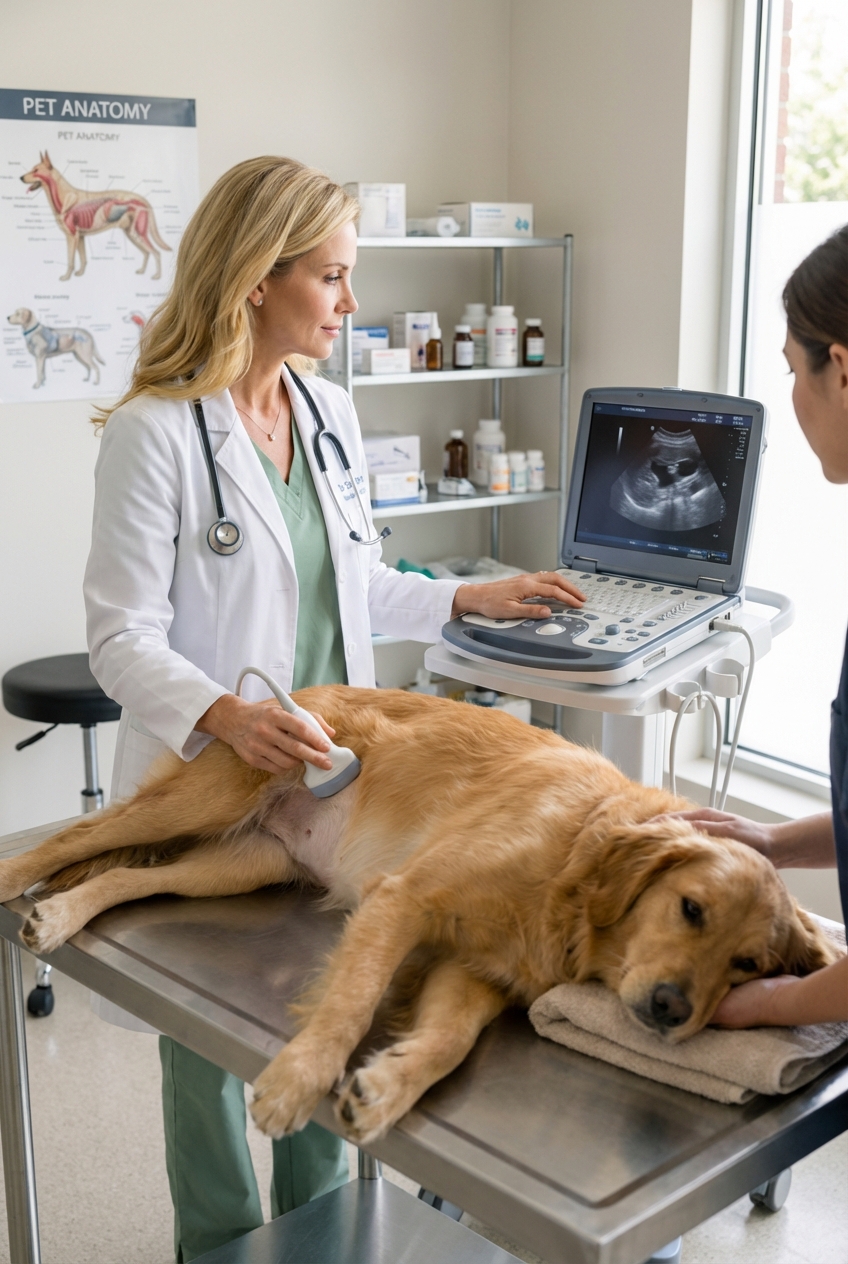
- Ultrasound: Helps evaluate the adrenal glands and liver. Patterns like enlarged adrenal glands on both sides can support PDH, while a one-sided adrenal mass can support ADH. Imaging is helpful, but it is not always definitive by itself.
- Blood pressure and urine culture: Dogs with Cushing’s can have high blood pressure and hidden urinary infections.
It can take more than one test to get the right answer, and that is normal. Cushing’s is a nuanced condition.
Treatment and what improves
The good news is that most dogs with Cushing’s can feel noticeably better once treatment is tailored to them. Treatment depends on the type of Cushing’s, your dog’s health status, and your veterinarian’s recommendations.
Common approaches
- Medication management: Many dogs are treated with medications that lower cortisol levels, such as trilostane (and in some cases mitotane). These require careful dosing and follow-up testing.
- Surgery: In select adrenal tumor cases, surgery may be considered.
- Adjusting steroid medications: If the cause is iatrogenic Cushing’s, your veterinarian will guide a safe taper plan. Never stop steroids abruptly without veterinary direction.
Will the pot belly go away?
It often improves, but it can take time. As cortisol levels become better controlled, dogs may regain muscle tone, pant less, and have more stable thirst and urination. The belly may become less pronounced as abdominal muscles strengthen and liver changes improve, but results vary by dog and how advanced the condition is.
Supportive care at home
While you cannot “diet” your way out of Cushing’s, supportive home habits make a real difference, especially while your veterinarian is working toward the right medication dose.
- Track symptoms: Note water intake, accidents, appetite, panting, and energy. A simple daily note on your phone helps your vet.
- Keep fresh water available: Dogs with suspected Cushing’s should not have water restricted unless a veterinarian specifically directs it.
- Prioritize steady routines: More frequent potty breaks reduce stress for everyone.
- Gentle exercise: Short, comfortable walks can help maintain muscle without overdoing it.
- Nutrition matters: Work with your vet on an appropriate diet plan, especially if your dog is overweight or has other conditions like pancreatitis or diabetes risk.
If you love the idea of adding fresh foods, start slowly and keep it simple. Plain cooked lean protein and dog-safe cooked vegetables can be reasonable “toppers” for some dogs, but avoid high-fat additions (important for pancreatitis-prone dogs) and do not let toppers replace a complete and balanced diet. When in doubt, confirm your plan with your veterinarian first.
Questions to ask your vet
If Cushing’s is on the table, here are a few questions that can help you feel more confident and clear on next steps:
- Which type of Cushing’s do you suspect, and why?
- Which test do you recommend first, and what will it tell us?
- Could any of my dog’s current medications be contributing to these signs?
- What follow-up testing schedule should I expect after starting treatment?
- What symptoms would mean my dog’s cortisol may be too high or too low?
The bottom line
A pot belly can be one of the most visible signs of Cushing’s disease, especially when it shows up alongside increased thirst, increased urination, panting, and coat changes. If you are seeing that rounded belly and thinking, “Something is off,” trust your instincts and schedule a vet visit.
Cushing’s is often a long-term condition, but with consistent monitoring and the right plan, many dogs do very well and maintain a good quality of life.
If you can, take a clear side photo of your dog standing naturally and bring it to your appointment. It is a simple tool that can help your veterinarian track changes over time.