A clear, vet-backed guide to canine Cushing’s disease: types, diagnosis tests, trilostane vs mitotane, surgery options, home care routines, recheck schedul...
Article
•
Designer Mixes
Cushing in Dogs

Shari Shidate
Designer Mixes contributor
Cushing can feel like a mystery at first. The symptoms usually build slowly, but once you notice the pattern it can feel like it happened overnight. One day your dog is acting mostly normal, and then you are noticing constant thirst, more frequent potty breaks, and a belly that looks a little rounder than usual. As a veterinary assistant in Frisco, Texas, I have seen how stressful this can be for families, especially because the early signs are so easy to brush off as “just aging.”
Let’s clear it up with evidence-based, practical guidance: what Cushing is, what it looks like at home, how vets diagnose it, and what treatment and daily care can realistically do for your dog’s quality of life.
Quick note: This article is educational and not a substitute for veterinary care. If you are worried about your dog, please schedule a visit with your veterinarian.
What it is
In dogs, hyperadrenocorticism is often called “Cushing’s.” Some clinicians use “Cushing’s syndrome” as the broad term and reserve “Cushing’s disease” for the pituitary form specifically. Either way, it refers to a condition where a dog’s body has too much cortisol over time.
Cortisol is not “bad.” It helps regulate stress response, blood sugar, blood pressure, inflammation, and metabolism. The problem is chronic excess. When cortisol stays high, it starts changing the body in ways that create the classic Cushing pattern: increased thirst and urination, increased appetite, muscle loss, thin skin, panting, and recurring infections.
Types
- Pituitary-dependent (PDH): The most common form. A pituitary tumor (usually benign and often small, but not always) produces excess ACTH, which tells the adrenal glands to keep making cortisol.
- Adrenal-dependent (ADH): Less common. A tumor on one adrenal gland produces cortisol directly.
- Iatrogenic: Caused by long-term or high-dose steroid medications (like prednisone). This is handled differently than PDH or ADH.
Who is most often affected: Cushing is most common in middle-aged to older dogs, and we see it frequently in small to medium breeds (for example: Poodles, Dachshunds, and many terriers). Any breed can be affected.
What owners wish they knew
1) The signs can look like aging
Many dogs with Cushing are older, and symptoms like slower walks, panting, or “needing to go out more” are easy to misread. Cushing is one of those conditions where you know something is off, but it can be hard to name what.
2) Drinking and urinating changes are a big clue
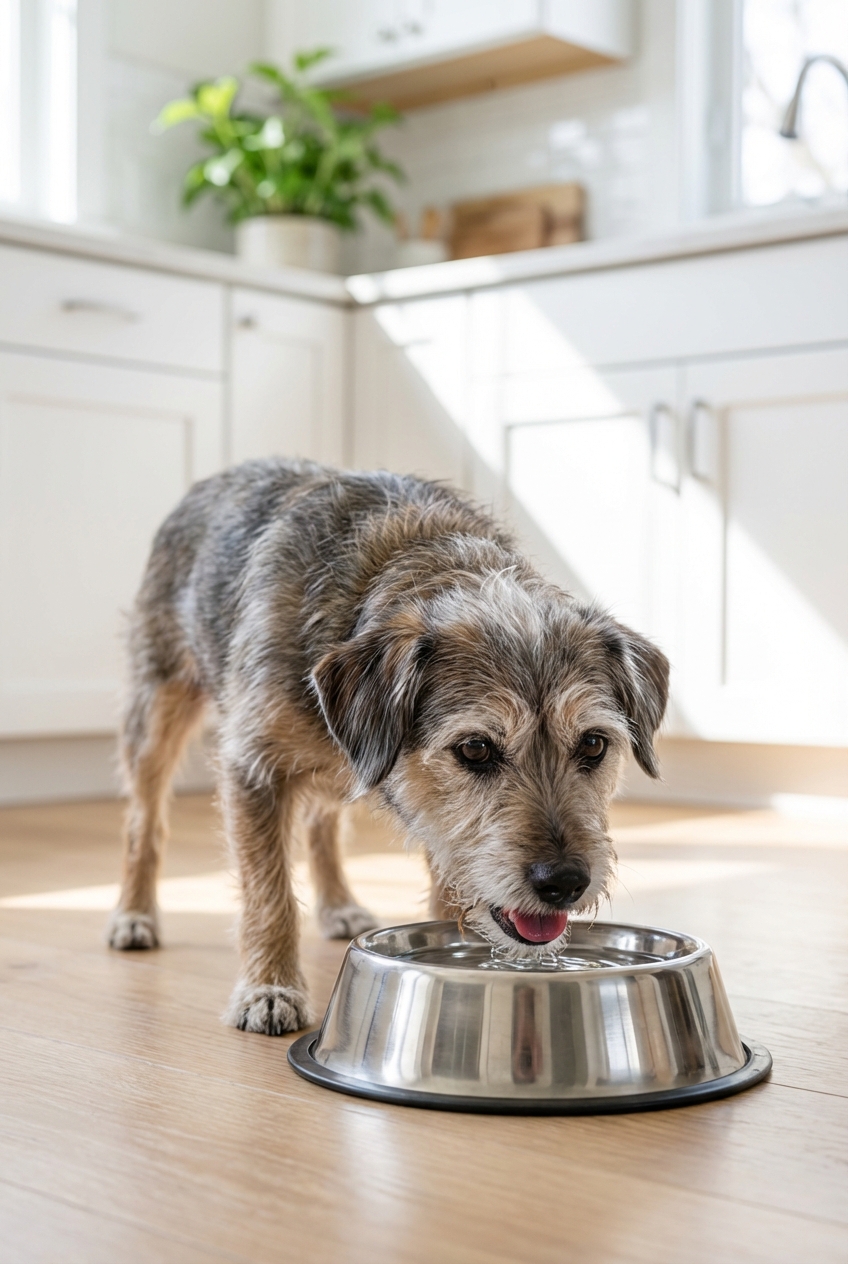
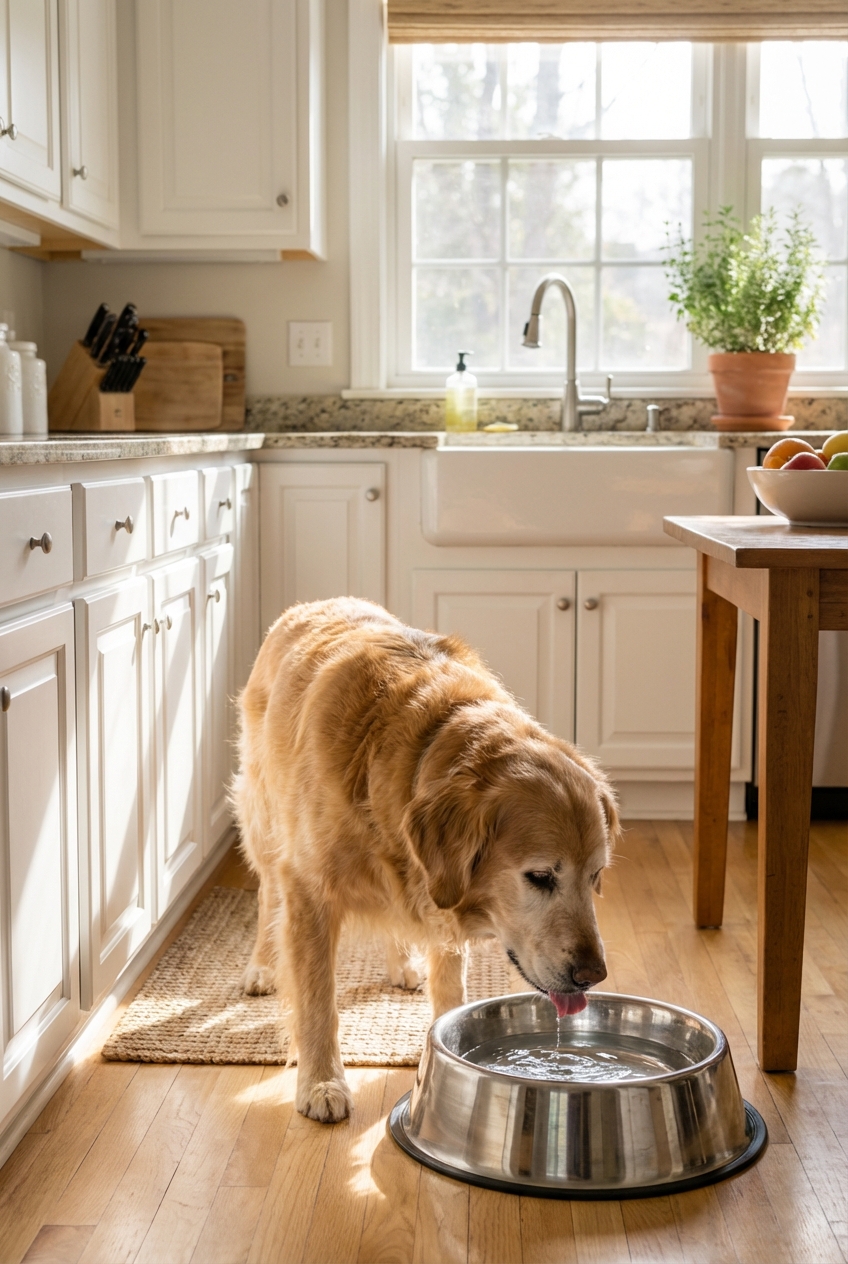
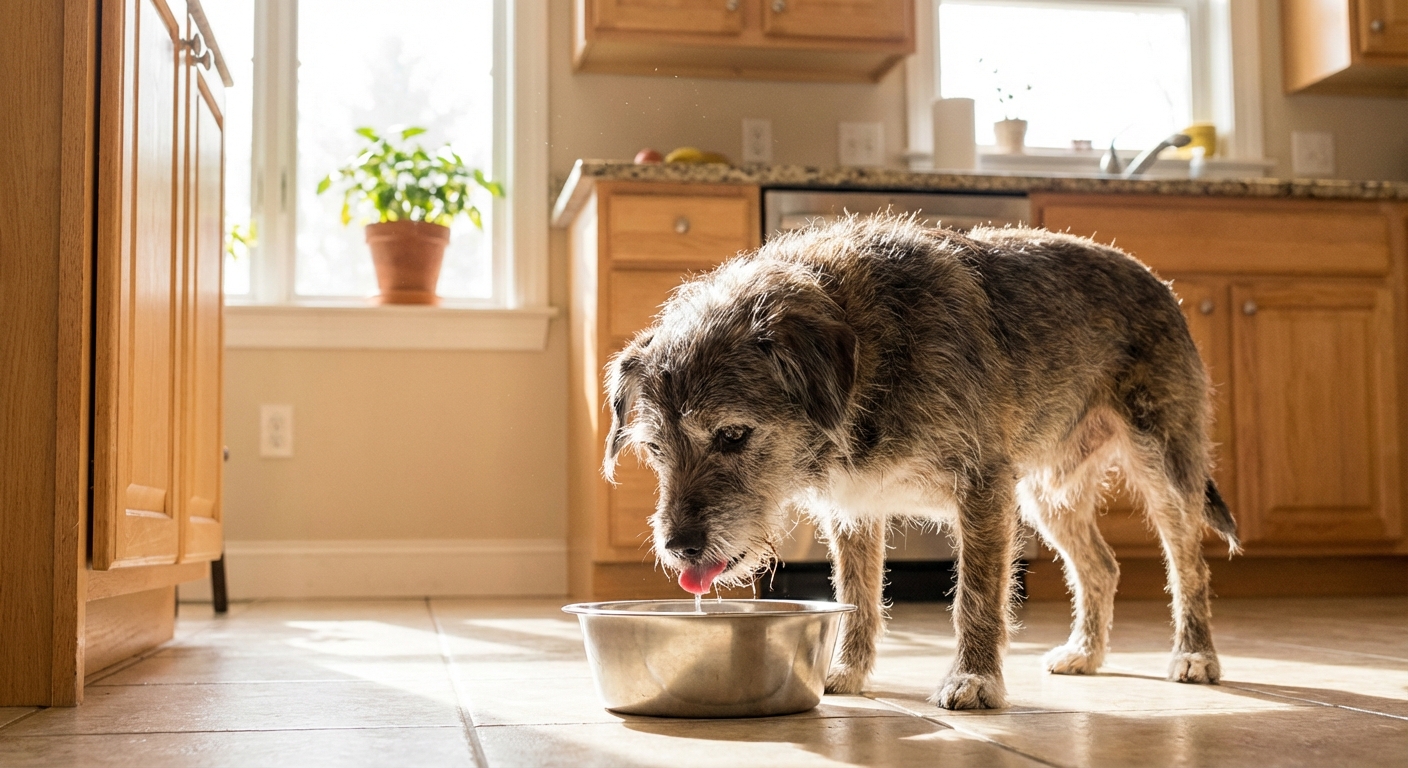
One of the most helpful at-home observations is water intake. A surprising number of Cushing diagnoses begin because an owner says, “She is emptying the water bowl twice a day,” or “He is having accidents and he never used to.”
If you want a practical benchmark, many veterinarians start paying closer attention when a dog is drinking around more than 90 to 100 mL per kg per day. Some variation is normal, so do not self-diagnose from this number alone. Bring your notes to your vet.
3) Skin and coat changes are not just cosmetic
Hair thinning on the trunk, recurrent skin infections, blackheads, slow hair regrowth after shaving, and thin fragile skin can all be part of cortisol’s effect on the skin’s immune and repair systems.
4) Treatment is very manageable for many dogs
Cushing is usually not curable in the pituitary form, but it is often very treatable. Many dogs feel noticeably better once cortisol is controlled, with improvements in thirst, appetite, panting, energy, and skin comfort.
Common symptoms at home
Not every dog has every symptom, and signs tend to build gradually. Common ones include:
- Increased thirst and increased urination (larger urine volume, more frequent urination, accidents)
- Increased appetite, food-seeking, scavenging
- Panting, restlessness, trouble settling
- Pot-bellied appearance from muscle loss and fat redistribution
- Muscle weakness, less stamina on walks, difficulty jumping
- Hair thinning on the body, dull coat
- Thin skin, easy bruising, slow wound healing
- Recurrent ear or skin infections
- Increased risk of urinary tract infections (sometimes with few obvious symptoms)
Urgent note: If your dog seems suddenly very weak, collapses, is vomiting repeatedly, will not eat, or is acting severely ill, treat it as an emergency. Dogs on Cushing medication can develop dangerously low cortisol (an Addisonian crisis) if they are over-suppressed. This is uncommon, but it matters most early on and around dose changes.
How vets diagnose it
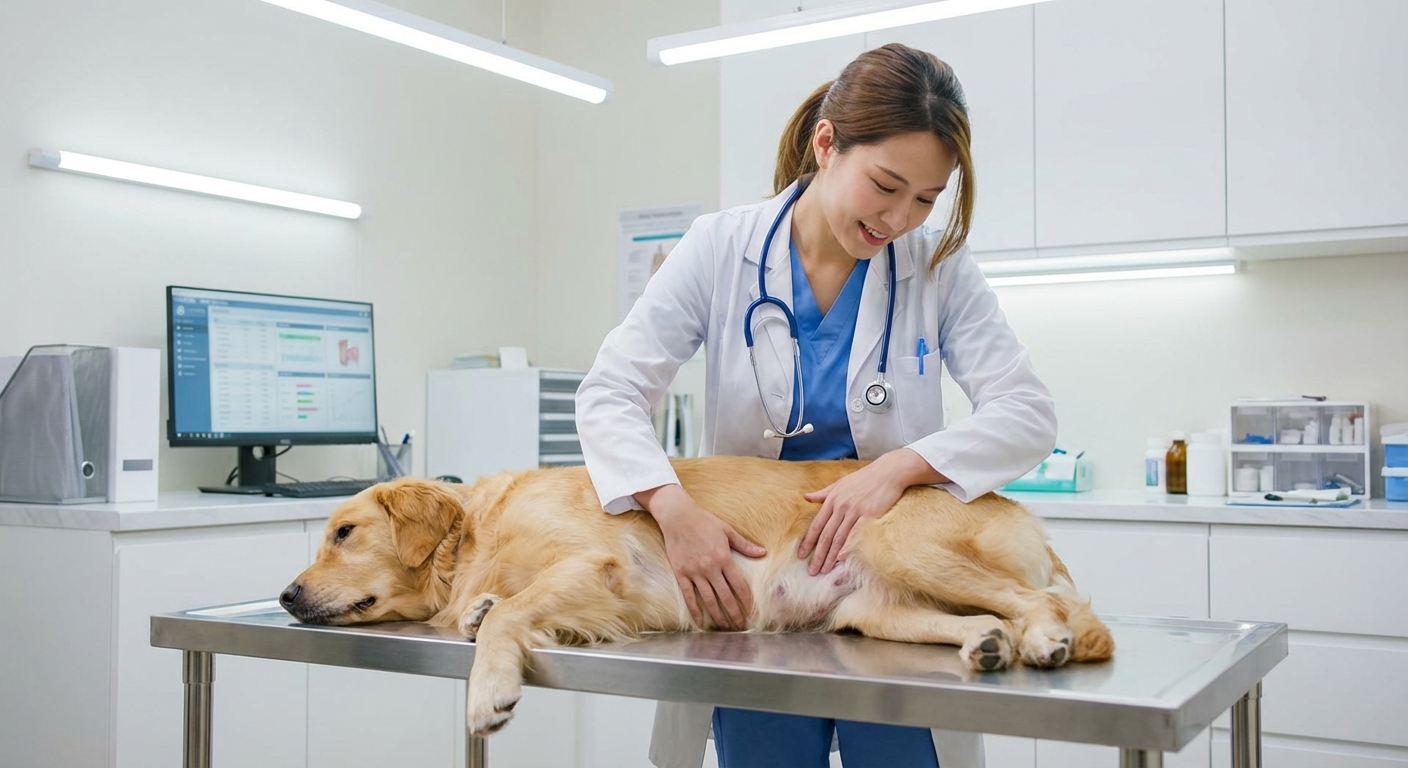
Diagnosis usually happens in layers, starting with routine testing and then moving into specific hormone testing.
Step 1: Basic labs
Your vet will typically start with:
- CBC (complete blood count) (may show a classic “stress” pattern that supports the overall picture)
- Chemistry panel (often shows elevated ALP liver enzyme, cholesterol changes, and other patterns)
- Urinalysis (checks urine concentration, infection signs, glucose)
- Urine culture if infection is suspected or if there is a history of recurrent UTIs
These tests do not prove Cushing by themselves, but they show supportive patterns and rule out other causes of increased thirst and urination like diabetes, kidney disease, liver disease, and infection. A common clue is urine that is more dilute than expected (low urine specific gravity), especially when paired with recurrent UTIs.
Step 2: Screening tests
- Low-dose dexamethasone suppression (LDDS): A commonly used screening test that looks at how cortisol changes after dexamethasone. It is generally more sensitive than the ACTH stimulation test for initial screening of naturally occurring Cushing, but it takes several hours in the clinic.
- ACTH stimulation: Measures cortisol response before and after ACTH injection. It can help diagnose Cushing, but it is especially useful for monitoring treatment and for diagnosing iatrogenic Cushing.
Step 3: PDH vs ADH
If Cushing is confirmed, your vet may recommend:
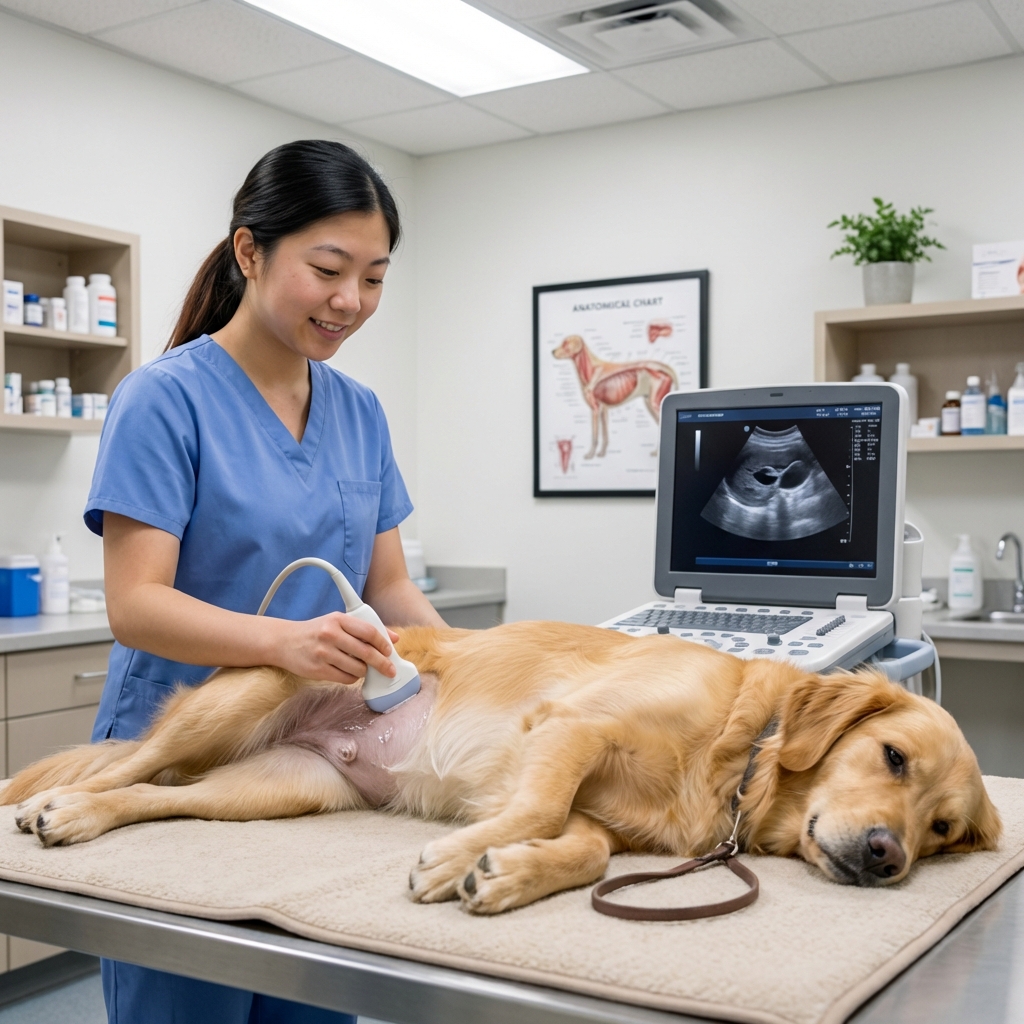
- Abdominal ultrasound to evaluate adrenal gland size and check the liver and other organs
- Endogenous ACTH blood test in some cases
Knowing the type matters because it can guide long-term expectations and, in adrenal tumor cases, whether surgery is an option.
Advanced imaging: CT or MRI is sometimes recommended in more complex cases, especially if a larger pituitary tumor is suspected or when planning adrenal surgery.
Treatment options
The right treatment depends on the type of Cushing, your dog’s overall health, and your family’s goals and budget. A good plan is individualized, and it often includes medication plus monitoring.
Medication
- Trilostane is commonly prescribed to reduce cortisol production. It requires follow-up testing to find the right dose and keep your dog safe.
- Mitotane may be used in some cases and works differently, but also requires careful monitoring.
Why monitoring is not optional: These medications can lower cortisol too much if the dose is too high, and doses often need adjustment over time. Expect scheduled recheck blood tests, especially early on.
If your dog seems unwell on medication: Many clinics advise owners to hold the next dose and call right away if their dog is vomiting, not eating, extremely lethargic, or weak. Follow your veterinarian’s specific instructions for your dog.
Surgery
If the cause is a tumor on one adrenal gland, an adrenalectomy may be considered. This is specialized surgery with higher complexity, so it is typically done by a surgical specialist and depends on staging and your dog’s overall risk.
Supportive care
Many dogs benefit from addressing secondary issues like:
- Skin and ear infections
- Urinary tract infections
- High blood pressure
- Diabetes (Cushing can contribute to insulin resistance)
At-home care
While you cannot “diet away” Cushing, home care can dramatically improve comfort and help you catch problems early.
Track drinking and bathroom habits
- Measure daily water if you can (especially during diagnosis and medication adjustments).
- Note accidents, urgency, or waking at night to urinate.
- Bring a simple log to rechecks. It helps more than most people realize.
Feed for muscle and weight
Many Cushing dogs lose muscle while also gaining fat around the abdomen. Ask your veterinarian about a diet that supports lean protein and a healthy weight.
- Keep treats small and calorie-controlled.
- If your dog has diabetes or is borderline, be cautious with higher-sugar treats (including fruit). When in doubt, choose low-calorie, low-sugar options your vet approves.
- If you want to add fresh foods, start small and keep it simple. A little cooked lean meat or lightly cooked vegetables can be safer choices than frequent sugary extras.
Protect the skin
- Use vet-recommended shampoos if infections are recurring.
- Report new lumps, bruising, scabs, or slow-healing spots.
- Stay consistent with flea and tick prevention since irritated skin becomes infected more easily.
Gentle exercise
Short, consistent walks help maintain mobility and muscle without exhausting your dog. Think “little and often.”
Know the red flags
Contact your veterinarian promptly if you see:
- Sudden lethargy or weakness
- Vomiting or diarrhea
- Not eating
- Shaking, collapse, or severe depression
These can be signs cortisol has dropped too low or that a complication is developing, and your dog needs quick evaluation.

Prognosis
With appropriate treatment and monitoring, many dogs with Cushing live happy, comfortable lives for years. The biggest predictors of success tend to be:
- How early it is caught
- How consistent follow-up testing is
- Whether other conditions are present (diabetes, hypertension, chronic infections)
I always tell families this: your dog does not need perfection. They need a plan, a watchful eye, and a team that adjusts as things change.
Questions to ask your vet
- Which type of Cushing do you suspect and why?
- Which test is best for my dog right now (LDDS vs ACTH stimulation)?
- Is the ACTH stimulation test being used for diagnosis, monitoring, or both in my dog’s case?
- What monitoring schedule do you recommend if we start trilostane?
- Should we do an abdominal ultrasound?
- What complications should I watch for at home?
- Do you recommend any diet changes for weight or muscle support?
Quick recap
Cushing (hyperadrenocorticism) is a common endocrine condition, especially in older dogs, where the body produces too much cortisol over time. The most common clues are increased thirst, increased urination, increased appetite, panting, a pot-bellied look, muscle loss, and skin issues. Diagnosis takes a step-by-step approach, and treatment often works very well when medication dosing is carefully monitored.
If you suspect Cushing, the best next step is simple and powerful: schedule a vet visit and bring notes about thirst, urination, appetite, panting, and any coat or skin changes. That information helps your veterinary team move faster and more confidently toward answers.