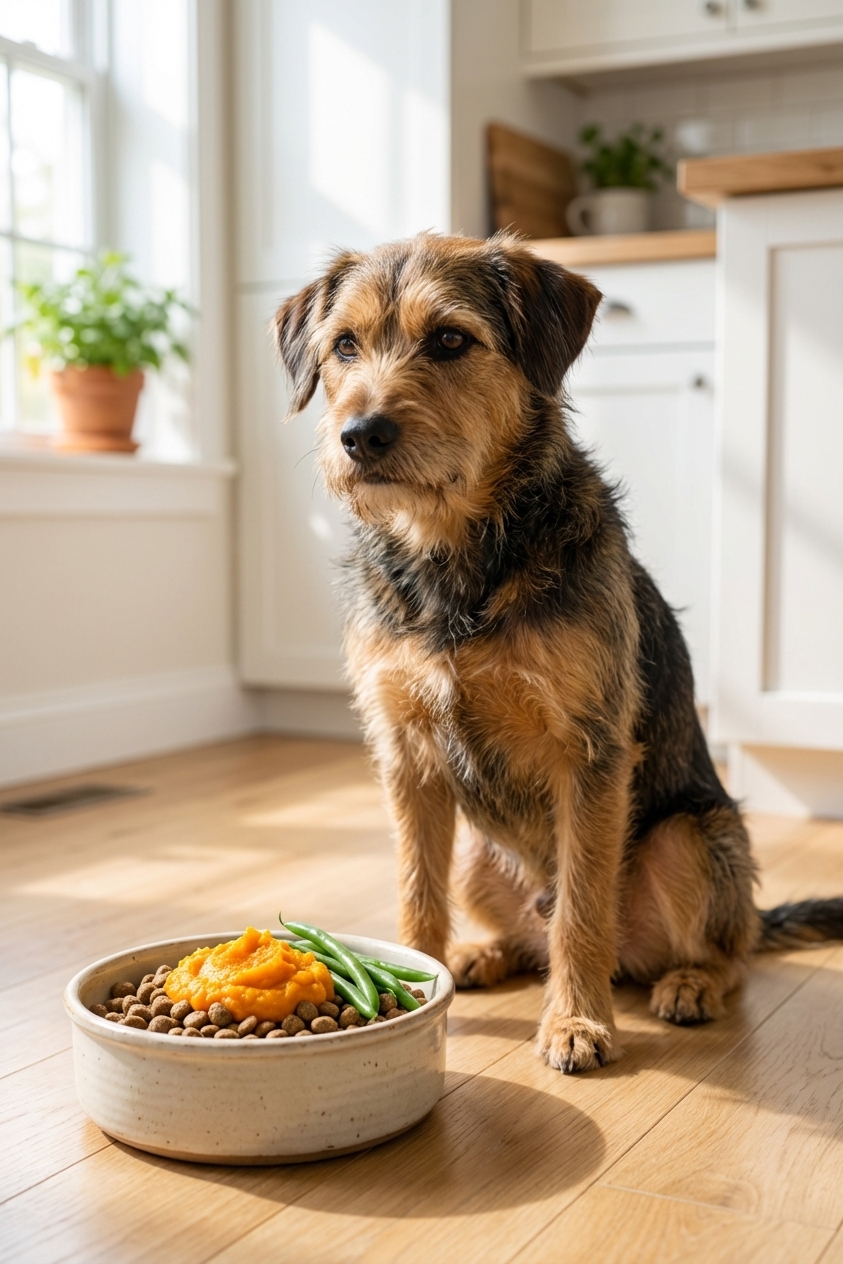
Cushing’s can cause relentless hunger in dogs. Learn vet-friendly diet goals, fiber add-ins, low-fat treat swaps, slow-feeding tools, and a 7-day reset to ...
Article
•
Designer Mixes
Cushing Disease in Dogs: Signs, Testing, and Treatment

Shari Shidate
Designer Mixes contributor
Cushing syndrome, also called hyperadrenocorticism, is one of those conditions that can sneak up on you. Many dogs start with “little” changes like extra thirst, a bigger appetite, or a slower gait. Over time, those changes add up and can affect everything from the skin and muscles to the liver and immune system.
A quick terminology note: In veterinary medicine, “Cushing’s disease” is sometimes used to mean the pituitary-dependent form specifically. In this article, I will use “Cushing” to mean the broader condition (hyperadrenocorticism), which includes pituitary-dependent, adrenal-dependent, and iatrogenic (steroid-induced) causes.
As a veterinary assistant, I like to reassure families that there are clear, evidence-based ways to test for Cushing, and many dogs do very well once we identify the cause and start the right treatment plan.
What it is
Cushing happens when a dog’s body has too much cortisol for too long. Cortisol is a normal, essential hormone produced by the adrenal glands. In healthy amounts, it helps with stress response, metabolism, inflammation control, and immune regulation. The problem is that chronic excess cortisol can strain multiple organs and change the body’s normal balance.
Main forms
- Pituitary-dependent (PDH): The most common form. A small tumor in the pituitary gland signals the adrenal glands to keep making cortisol.
- Adrenal-dependent (ADH): A tumor in one adrenal gland may produce cortisol directly.
- Iatrogenic: Caused by long-term or high-dose steroid medications (like prednisone or dexamethasone). The body is essentially getting cortisol-like effects from a drug.
Most dogs diagnosed are middle-aged to senior. Small breeds are commonly affected, but any dog can develop Cushing.
Signs at home
Many Cushing signs look like “normal aging” at first, which is why it is so helpful to track changes over weeks or months.
Classic signs
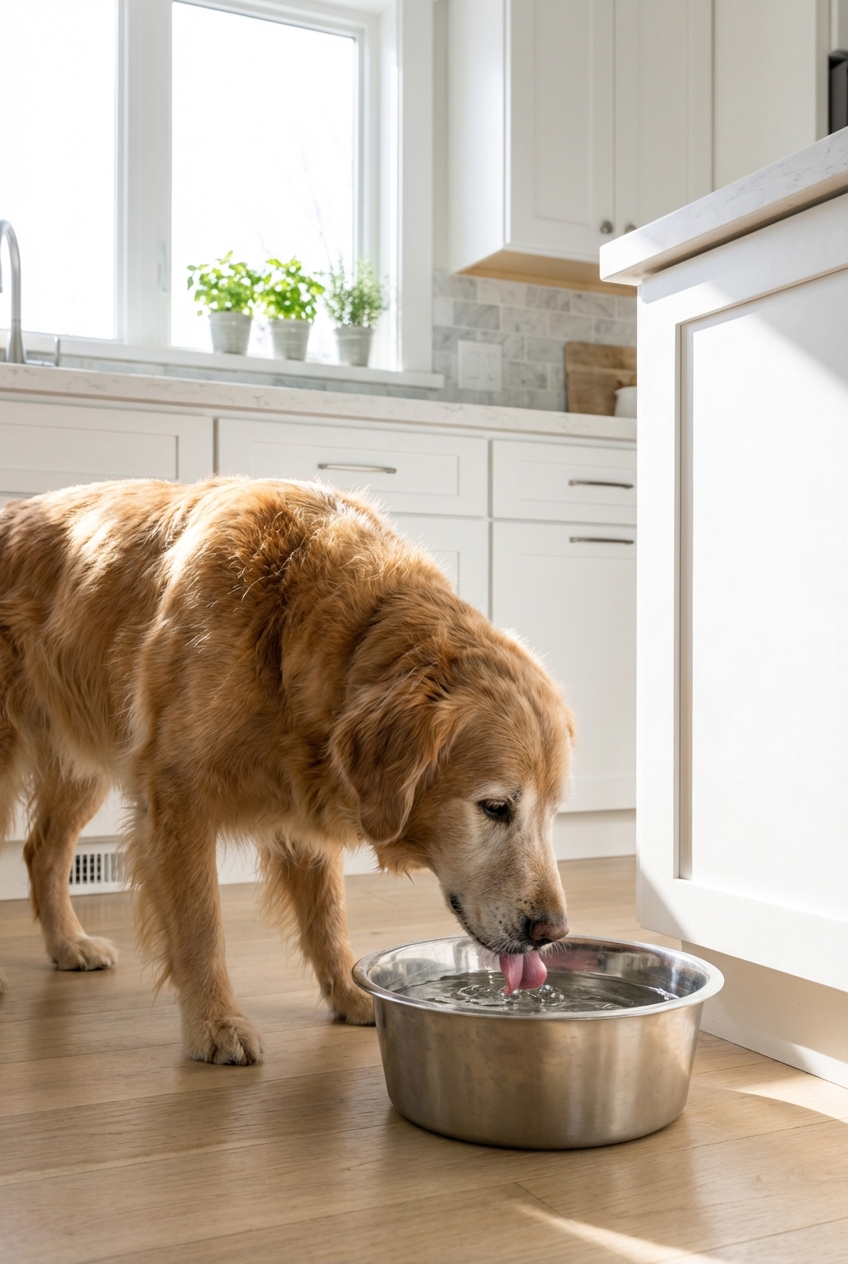
- Drinking more (often finishing the water bowl, asking out to potty more)
- Urinating more (larger volumes, accidents in a previously house-trained dog)
- Increased appetite and food-seeking behavior
- Pot-bellied appearance from muscle loss and organ changes
- Panting more than usual, even at rest
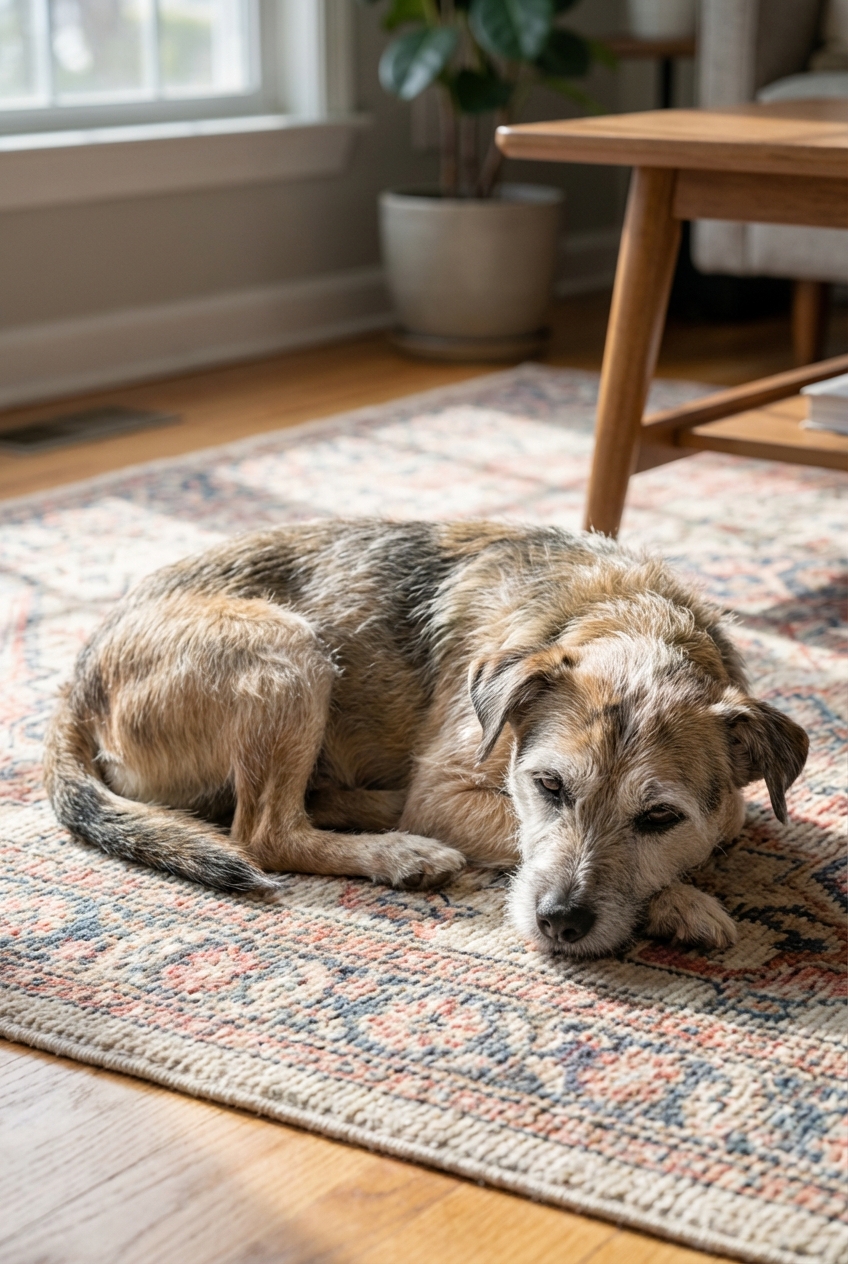
- Lethargy or reduced interest in walks and play
Skin and coat
- Hair thinning or symmetrical hair loss along the body
- Thin skin that bruises more easily
- Recurrent skin infections or “yeasty” skin
- Slow hair regrowth after grooming or shaving
Other signs
- Weakness, trouble jumping, or muscle wasting
- Ear infections that keep coming back
- Increased risk of urinary tract infections
- In some dogs, behavior changes such as restlessness
If your dog is drinking and peeing noticeably more, it is worth a vet visit. Cushing is one possibility, but diabetes, kidney disease, and urinary infections can look similar and also need prompt care.
How vets test
Testing for Cushing is not usually a single, simple test. It is more like putting together a puzzle: symptoms, baseline lab work, and then hormone testing to confirm and sort out the most likely cause.
Step 1: Screening labs
Your veterinarian will typically start with:
- Blood chemistry (commonly shows elevated alkaline phosphatase; may also show increases in ALT, cholesterol, and other patterns)
- Complete blood count (CBC) (can show stress-related changes)
- Urinalysis (checks urine concentration and looks for infection)
- Urine culture if infection is suspected, because UTIs can be “quiet” in Cushing dogs
Step 2: Hormone tests
Common tests include:
- Low-dose dexamethasone suppression (LDDS) test: Often the most sensitive test for diagnosing naturally occurring (spontaneous) Cushing.
- ACTH stimulation test: Measures how the adrenal glands respond after ACTH is given. This test is especially useful for iatrogenic Cushing and is commonly used to monitor treatment with trilostane (and mitotane). It can miss some pituitary-dependent cases, so your vet may recommend LDDS first depending on the situation.
- Urine cortisol:creatinine ratio (UCCR): A screening tool that can be useful in some cases. It is sensitive but not specific, meaning other conditions and stress can raise the result. It is often most helpful when collected at home in a calm, familiar setting.
Step 3: Type and next steps
If Cushing is confirmed, the next goal is often figuring out whether it is pituitary-driven or adrenal-driven, because that can affect treatment choices.
Your vet may recommend:
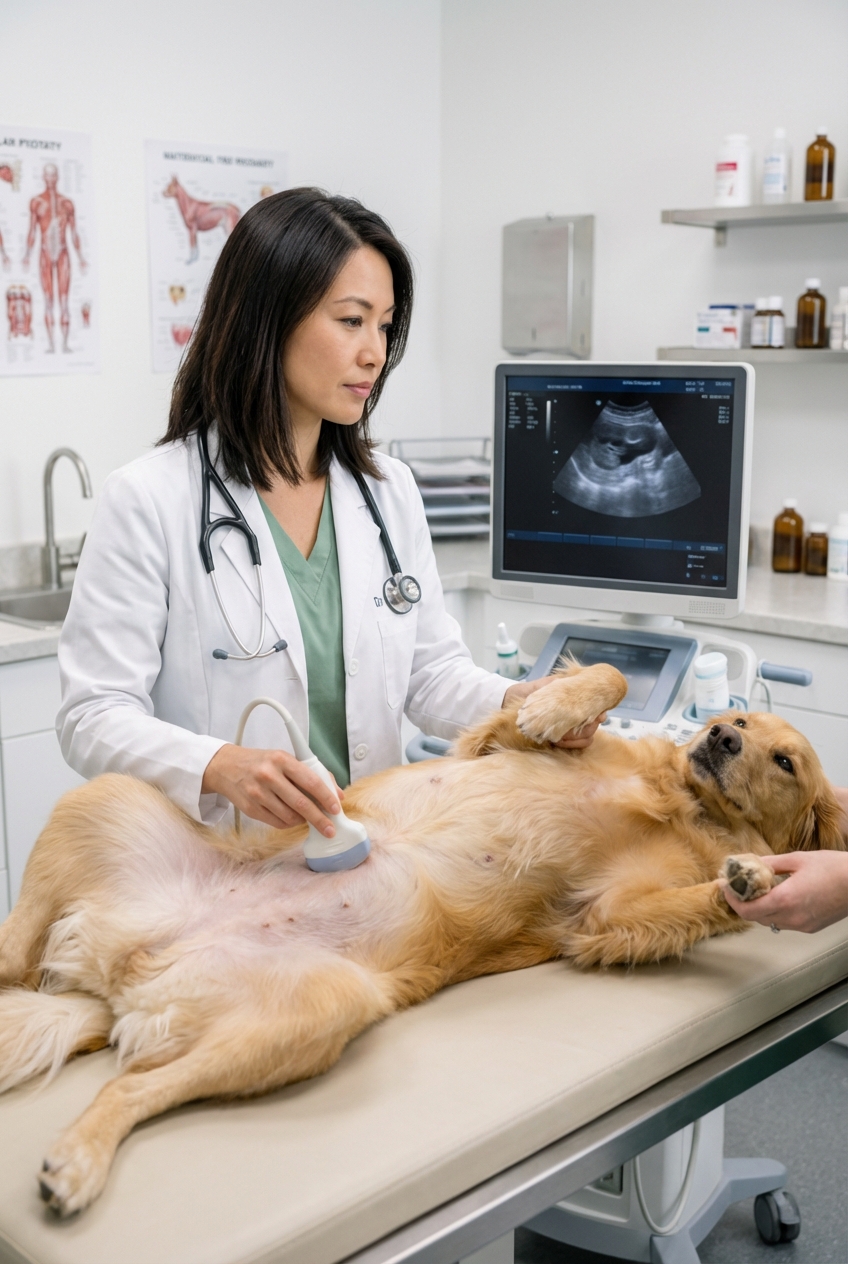
- Abdominal ultrasound to evaluate adrenal size and look for adrenal masses
- Endogenous ACTH blood test
- High-dose dexamethasone suppression test or interpretation of the LDDS pattern in select cases (one of several ways clinicians may differentiate types)
- Advanced imaging (CT or MRI) in certain cases, especially if radiation therapy or surgery is being considered
Tip from the clinic: Bring notes. Write down how often you refill the water bowl, changes in appetite, and any accidents. That real-life information helps your vet choose the best next test.
Treatment options
Once your veterinarian confirms Cushing and rules out look-alike conditions, treatment depends on the underlying cause, your dog’s overall health, and your goals. In most families, the goals are simple and very reasonable: reduce excessive thirst and urination, improve comfort and energy, and protect long-term health.
Medications
Trilostane is commonly prescribed for pituitary-dependent Cushing and for many adrenal cases when surgery is not pursued. It works by reducing cortisol production. Your veterinarian will schedule follow-up testing to make sure the dose is effective and safe.
Mitotane is another medication your vet may discuss in some cases. It is used less commonly than trilostane in many practices, but it remains a relevant option for certain dogs.
Monitoring matters with Cushing medications. Dose adjustments are common, especially early on. Many dogs are rechecked within the first few weeks, then monitored periodically long term. You will likely be asked to track thirst, urination, appetite, energy, panting, and any vomiting or diarrhea.
Surgery
If an adrenal tumor is present and the dog is a good surgical candidate, adrenalectomy can be curative in some cases. This is typically done by experienced surgeons, often at specialty hospitals, because it is a delicate procedure.
If steroids caused it
If Cushing signs are from steroid medication, your veterinarian may recommend a gradual taper. Never stop steroids abruptly unless your veterinarian specifically instructs you to, because sudden withdrawal can be dangerous.
Support at home
- Make water access easy, and plan for more frequent potty breaks.
- Ask about calories, because appetite often increases and weight gain can happen quickly.
- Protect the skin with gentle grooming and prompt vet care for infections.
- Keep follow-up appointments. Cushing is a condition where smart monitoring makes treatment safer.
After diagnosis
Many dogs improve noticeably within weeks of starting the right therapy, especially with thirst, urination, and appetite. Coat and skin changes may take longer, often months, because hair growth cycles are slow.
Cushing is usually a managed condition, not a quick fix. The good news is management can be very successful when families partner closely with their veterinarian.
Your veterinarian may also recommend screening for common related issues, depending on your dog’s signs and lab results. These can include high blood pressure, diabetes, protein loss in the urine, urinary infections, gallbladder disease (like a mucocele), and abnormal blood clot risk.
When it is urgent
Most Cushing cases are not emergencies, but certain symptoms should be treated as urgent. Call your veterinarian right away or go to an emergency clinic if you see:
- Sudden weakness or collapse
- Repeated vomiting, severe diarrhea, or refusal to eat
- Extreme lethargy or disorientation
- Labored breathing
- Signs of a painful abdomen
These signs can happen for many reasons, including serious complications of uncontrolled disease (such as pancreatitis, severe infection, or blood clots) or other conditions that can travel alongside Cushing (like diabetes). They can also be a sign of overtreatment with trilostane or mitotane, which can push cortisol too low and trigger an Addisonian-like crisis. If your dog is on Cushing medication and seems suddenly “off,” it is always safest to call.
Questions to ask
- Which form of Cushing do you suspect, and why?
- Which test is best for my dog right now: LDDS or ACTH stim?
- Do you recommend an ultrasound to check the adrenal glands?
- Do we need to screen for a UTI even if my dog seems comfortable?
- What follow-up schedule do you recommend after starting medication?
- What side effects should I watch for at home?

Bottom line
Cushing can feel overwhelming at first, but you do not have to figure it out alone. If your dog is drinking more, urinating more, panting, or developing a thinning coat and pot-bellied shape, a veterinary exam and targeted testing can bring real clarity. With the right plan, many dogs with Cushing go on to enjoy happy, comfortable years.