
Learn what causes hot spots in dogs and how to treat mild cases at home: prevent licking, clip for airflow, clean and dry well, use pet-safe antiseptics, and...
Article
•
Designer Mixes
Curing Hot Spots on Dogs

Shari Shidate
Designer Mixes contributor
Hot spots can show up fast and look scary: a wet, red, painful patch your dog suddenly cannot stop licking or chewing. In the clinic, we call them cases of acute moist dermatitis, and they are one of the most common “it happened overnight” skin problems I see. The good news is that most hot spots improve quickly when you dry the area, protect the skin, and address the itch or trigger that started it.
This guide walks you through what a hot spot is, what to do at home, and when it is time to get your veterinarian involved.
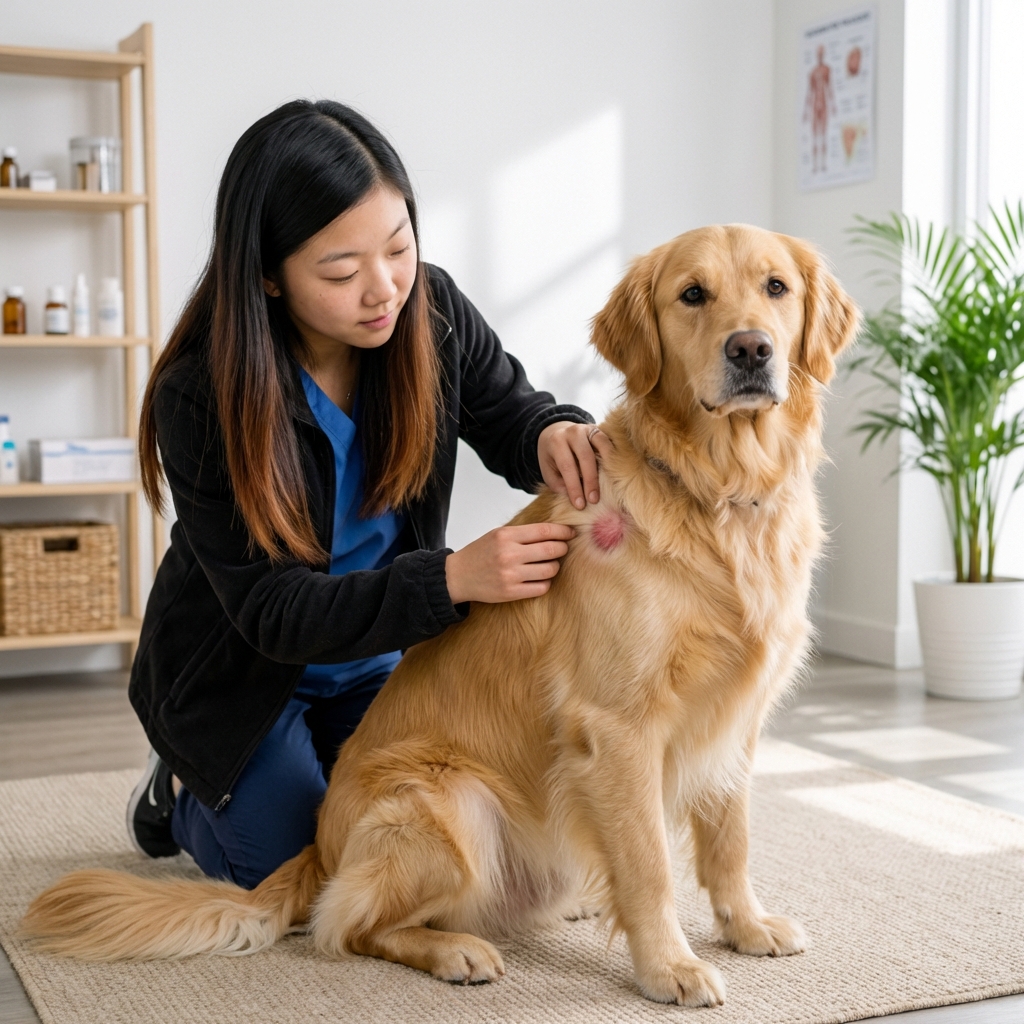
What hot spots are
A hot spot is a localized skin infection and inflammation that starts with itch and quickly turns into a moist, irritated wound. Dogs scratch, chew, or lick, which damages the skin barrier. Moisture, bacteria, and sometimes yeast take advantage of that broken barrier, and the area can enlarge within hours.
Common causes
- Allergies (seasonal pollen, dust mites, food sensitivities)
- Fleas or flea allergy dermatitis (one bite can trigger intense itch in sensitive dogs)
- Moisture trapped in the coat (after swimming, baths, rain)
- Ear infections (hot spot near the cheek or neck from scratching)
- Anal gland discomfort (hot spot near the rump from licking)
- Underlying skin infection or poor coat ventilation (thick coats, mats)
Hot spots are not usually “contagious,” but the behavior that causes them can repeat if the trigger is not addressed.
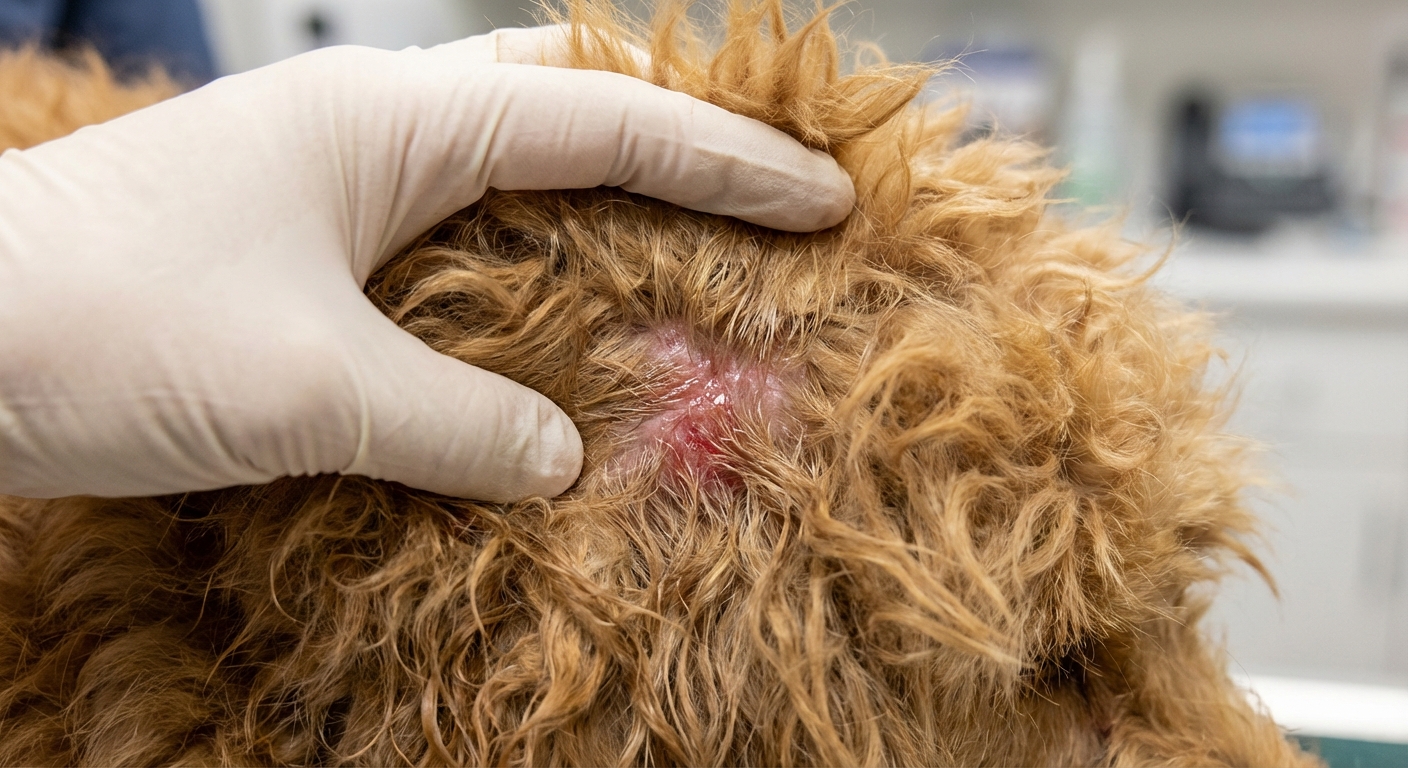
Signs of a hot spot
- Sudden, intense licking or chewing in one area
- A wet-looking patch of fur that feels sticky or crusty
- Redness, swelling, or oozing
- Hair loss in a circle or oval
- Pain when touched (some dogs yelp or pull away)
- A strong “skin infection” odor
If your dog has a thick coat, the hot spot can be larger underneath than it appears on top. Part the fur to check the skin.
Call the vet right away
Home care is reasonable for a small, early hot spot on an otherwise healthy dog. But please get veterinary help promptly if you notice any of the following:
- The spot is larger than about 2 to 3 inches, rapidly expanding, or very painful
- It is on the face, near the eyes, genitals, or over a joint
- Your dog seems unwell (feverish, lethargic, not eating)
- There is thick pus, heavy odor, or blackened tissue
- Your dog has multiple spots, recurring hot spots, or severe allergies
- Your dog is a puppy, senior, pregnant, or immunocompromised
- You cannot safely stop licking and chewing
Blackened tissue can be a sign of tissue death (necrosis) or a deeper, more serious infection, and it is urgent.
Many hot spots need prescription help: pain relief, anti-itch meds, and sometimes antibiotics, especially if there is deeper infection.
Before you start
- Do a quick check for fleas and start or update flea prevention if you are not current.
- Look for an underlying wound (bite, puncture, thorn, embedded mat) that might be driving the problem.
- If your dog is very painful, snapping, or you cannot handle the area safely, do not push through. Call your veterinarian.
- If you can, take a photo and measure the spot (or trace it on a piece of paper) so you can track whether it is shrinking day to day.
At-home care
The goal is simple: stop self-trauma, clean gently, dry thoroughly, and keep it clean. If at any point your dog is too painful or you are worried, pause and call your veterinarian.
Step 1: Stop licking
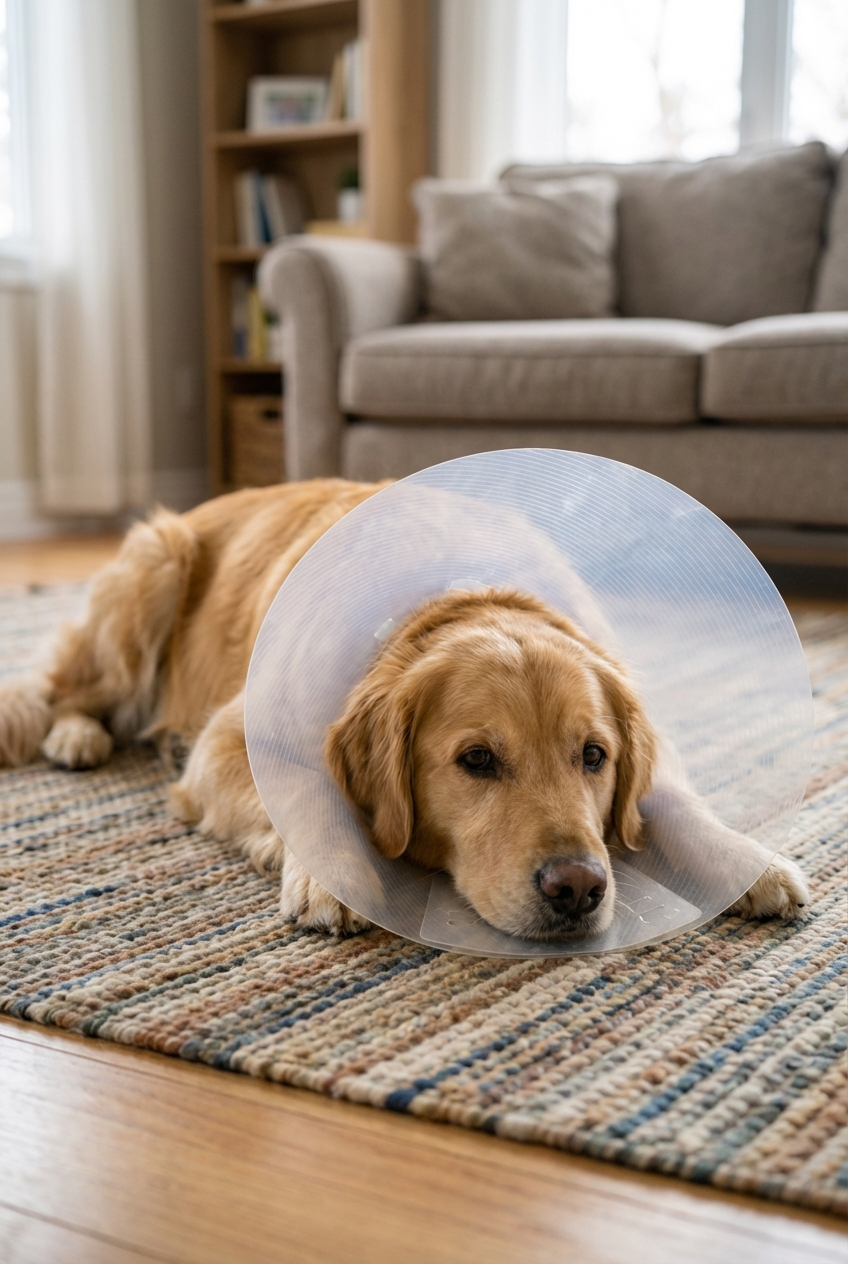
- Use an E-collar (cone) or inflatable collar.
- For some spots, a t-shirt or recovery suit can help, but only if it keeps the area dry and your dog cannot chew through it.
If you skip this step, even the best cleaning routine will fail. Licking re-injures the skin and keeps it damp.
Step 2: Clip the fur
If you can do it safely, clip the hair at least 1 inch beyond the red, moist area so air can reach the skin. Matted fur traps bacteria and moisture.
- Use electric clippers if possible. Scissors can cut skin very easily, especially on painful, swollen tissue.
- If your dog is wiggly, snappy, or the spot is very tender, let your vet or groomer handle clipping.
Step 3: Clean with a gentle antiseptic
Once the hair is out of the way, flush and clean the area 1 to 2 times daily:
- Chlorhexidine: use a veterinary product and follow the label directions (common strengths range from about 2% to 4%).
- Diluted povidone-iodine can also work. Aim for a light tea color, not dark brown.
- Use a clean gauze pad to gently remove discharge and debris.
Avoid: hydrogen peroxide, rubbing alcohol, essential oils, or harsh “stingy” products. They can damage healing tissue and increase pain.
Also avoid using human steroid or antibiotic creams unless your veterinarian tells you to. Some are unsafe if ingested, and some can mask a worsening infection.
Step 4: Dry completely
Pat dry with clean gauze or a soft towel. Keeping the area dry helps break the hot spot cycle. If your dog tolerates it, a hair dryer on a cool setting held at a distance can help.
Step 5: Use a topical only if recommended
Some dogs do well with veterinary hot spot sprays or creams that contain antiseptic and anti-itch ingredients. The key is choosing something safe if licked and appropriate for an infected lesion.
If you are not sure what to use, stick to cleaning and drying, and call your veterinarian. Many human products can make things worse.
Step 6: Re-check twice daily
Once licking stops and the area stays dry, you should see early improvement within 24 to 48 hours. If it is getting bigger, smellier, or more painful, it is time for a vet visit.
Common mistakes
- Do not bandage most hot spots. Bandages trap moisture and can worsen infection unless your vet specifically instructs you.
- Do not let your dog “air it out” without a cone. Licking is the reason it started, and it is how it spreads.
- Do not use essential oils (tea tree oil is a common culprit). Many are toxic to pets and irritating to inflamed skin.
- Do not rely on random home remedies if the spot is large, oozing, or painful. Infection can deepen quickly.
- Do not ignore fleas. Even indoor dogs can get them, and flea allergy is one of the biggest hot spot triggers.
Vet treatment
In a veterinary setting, treatment often includes:
- Clipping and thoroughly cleaning the lesion
- Prescription anti-itch medication (to stop the licking cycle)
- Pain control if the lesion is tender
- Topical antibiotics and antiseptics for many superficial hot spots
- Oral antibiotics sometimes, especially if infection is deeper, widespread, or not improving
- Antifungal treatment if yeast is involved
- Investigating the trigger (fleas, allergy management, ear infection, anal glands)
If hot spots are recurring, your vet may recommend allergy testing, diet trials, or a long-term skin plan.
Prevention checklist
Prevention is about keeping skin dry, reducing itch, and staying ahead of parasites.
Keep the coat breathable
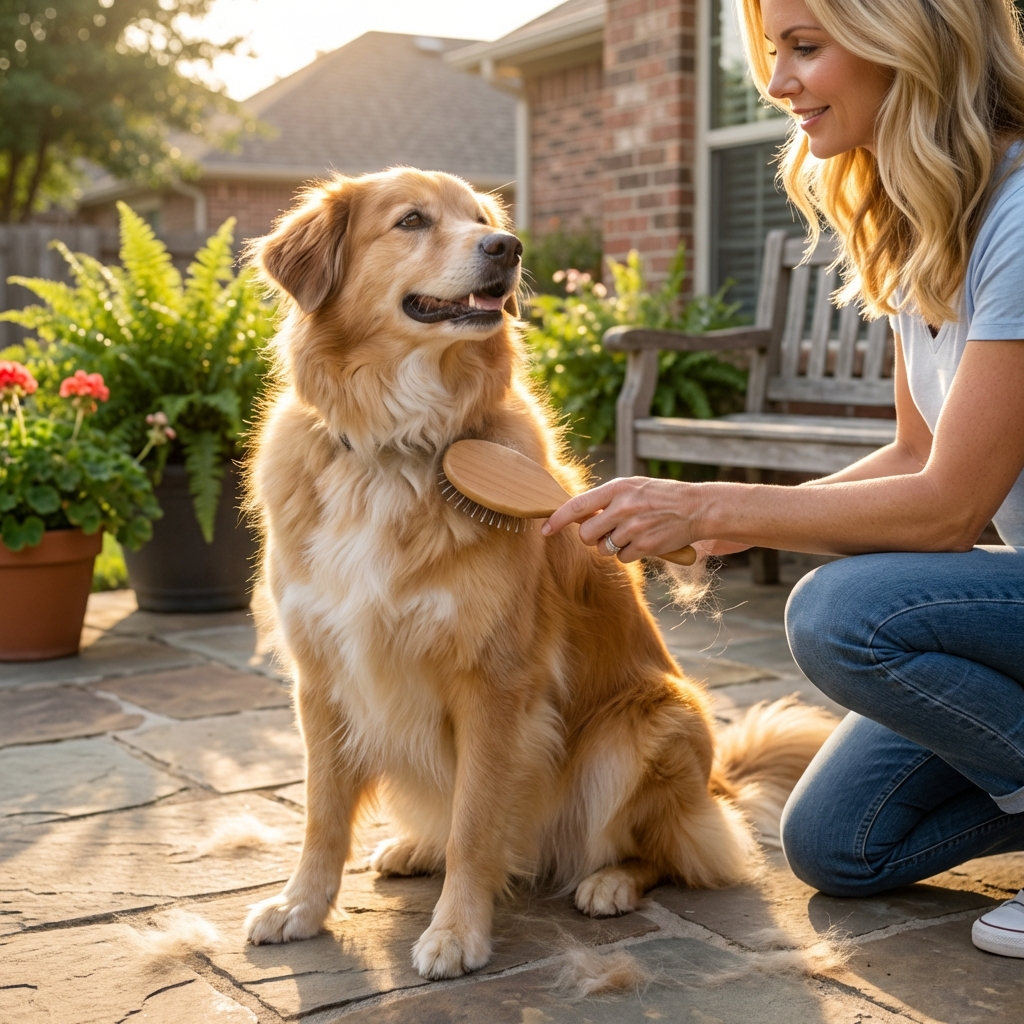
- Brush regularly, especially for doodles, double-coated breeds, and dogs prone to mats.
- After swimming or bathing, dry thoroughly down to the skin.
Use consistent flea control
- Use veterinarian-recommended flea prevention as directed. In many regions, fleas can be a year-round issue, and your local risk depends on climate and exposure.
- Wash bedding and treat the home if fleas are suspected.
Address allergies early
- Ask your vet about safe itch control options during flare seasons.
- Wipe paws and bellies after outdoor time if pollen is a trigger.
Watch ears and problem zones
- Ear infections often lead to hot spots on the cheek and neck from scratching.
- Dogs who lick their rump may need anal gland evaluation.
Nutrition and skin
Skin is an organ, and it reflects what is happening inside the body. For dogs with frequent skin flare-ups, talk with your veterinarian about nutrition and supplements that actually have evidence behind them.
- Omega-3 fatty acids (EPA and DHA) can support skin barrier function and reduce inflammation for some dogs.
- Balanced, complete diet: whether commercial or homemade, it needs to be nutritionally complete. Skin issues can worsen with deficiencies.
- Food sensitivity trials: if your vet suspects food allergy, a true elimination diet trial can be a game-changer.
If you are feeding homemade, make sure it is formulated with guidance from a veterinary professional so your dog is not missing key nutrients that support skin healing.
Quick FAQ
How long does a hot spot take to heal?
Many mild hot spots improve within 3 to 7 days with proper care. More severe lesions can take 1 to 2 weeks, sometimes longer if allergies or infection are ongoing.
Can I bathe my dog with a hot spot?
It depends. Bathing can help remove allergens and bacteria, but it can also worsen a hot spot if the coat stays damp. If you bathe, use a vet-approved shampoo and dry thoroughly.
Are hot spots a sign of something bigger?
Sometimes. One isolated hot spot can happen to any dog after a swim or a bug bite. Recurring hot spots often point to fleas, allergies, chronic ear issues, or coat matting.
My best “real life” advice: treat a hot spot like a race against dampness and licking. Stop the licking first, keep it clean, and keep it dry. If it is not clearly improving in 48 hours, bring your pup in so we can get ahead of infection and pain.