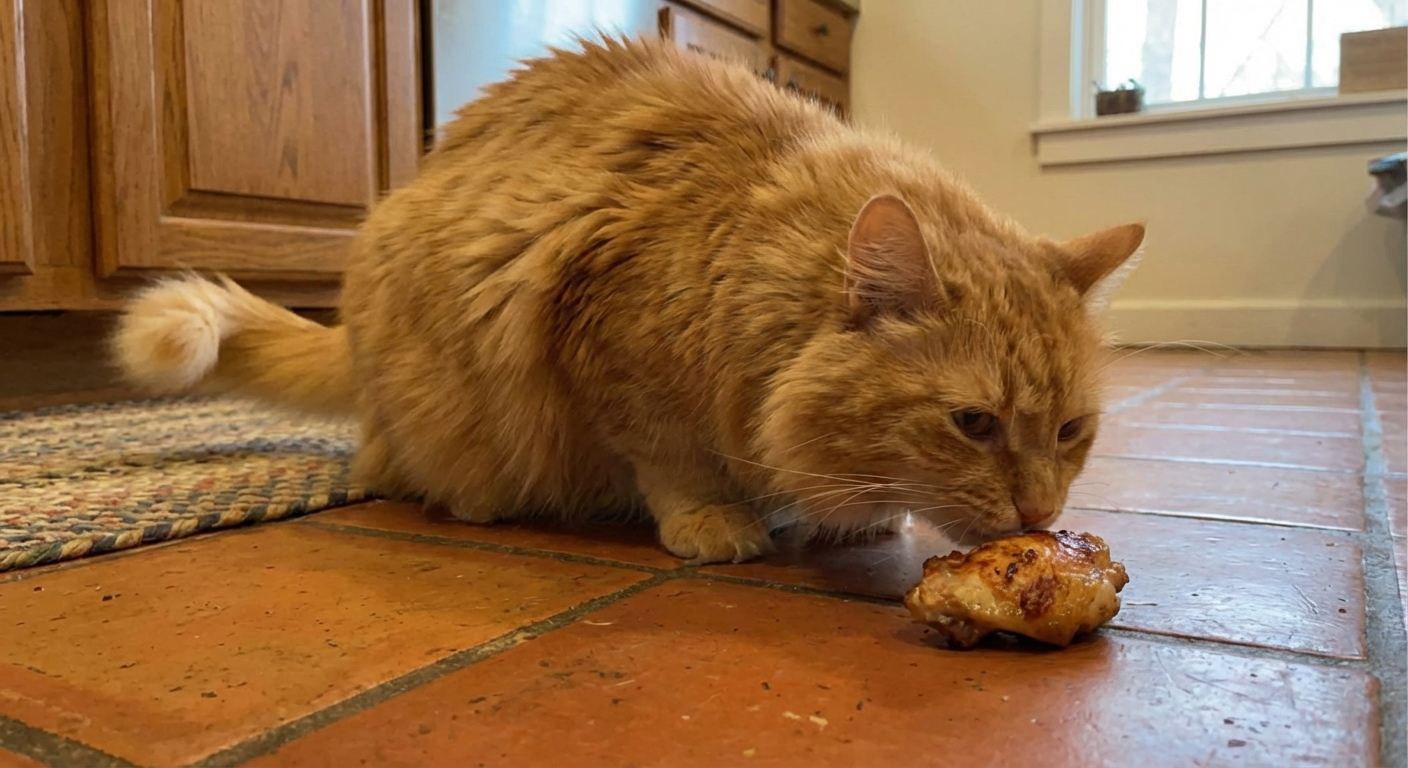
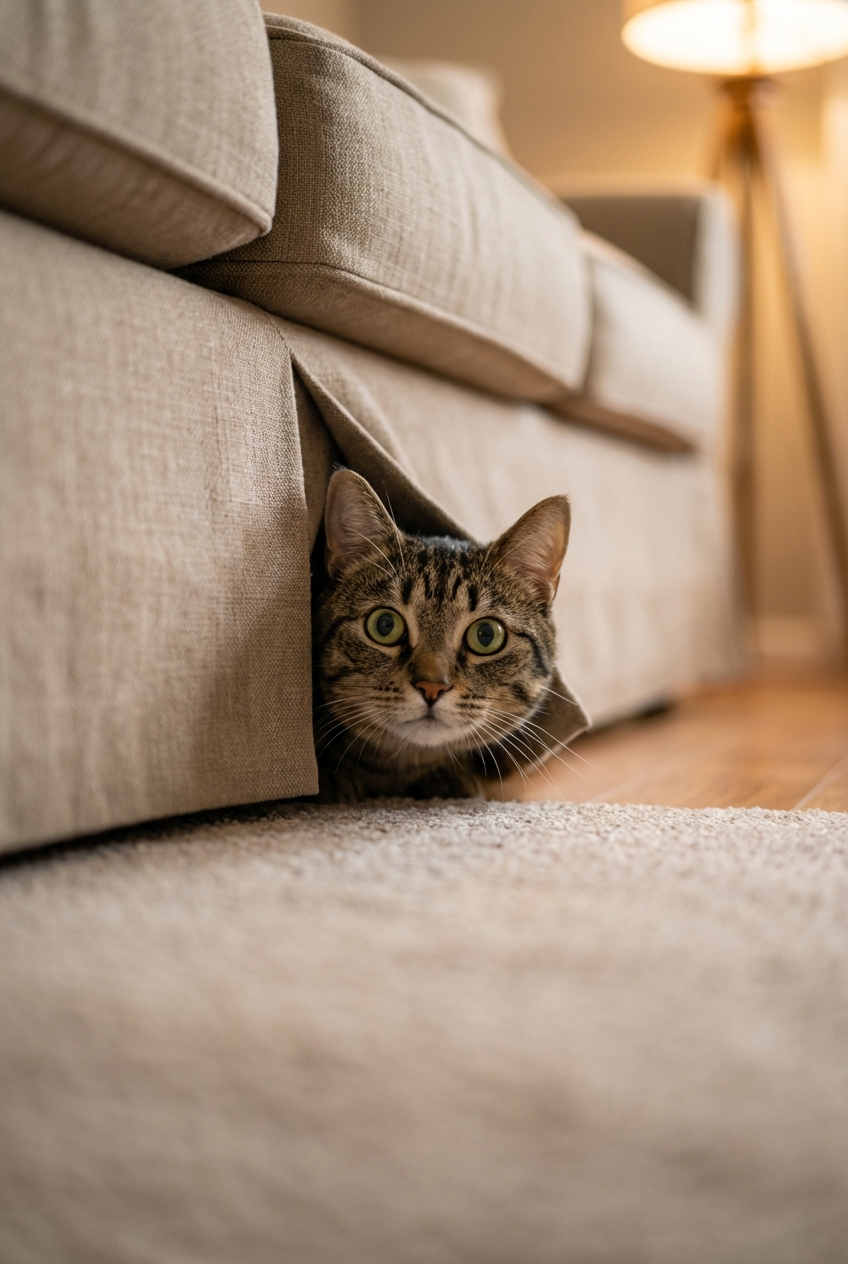
Cats aren’t inherently afraid of cucumbers. Most viral reactions are a startle response to an object suddenly appearing near food or a “safe zone.” Lea...
Article
•
Designer Mixes
Cucumber Catastrophe: Why Cats Fear Vegetables

Shari Shidate
Designer Mixes contributor
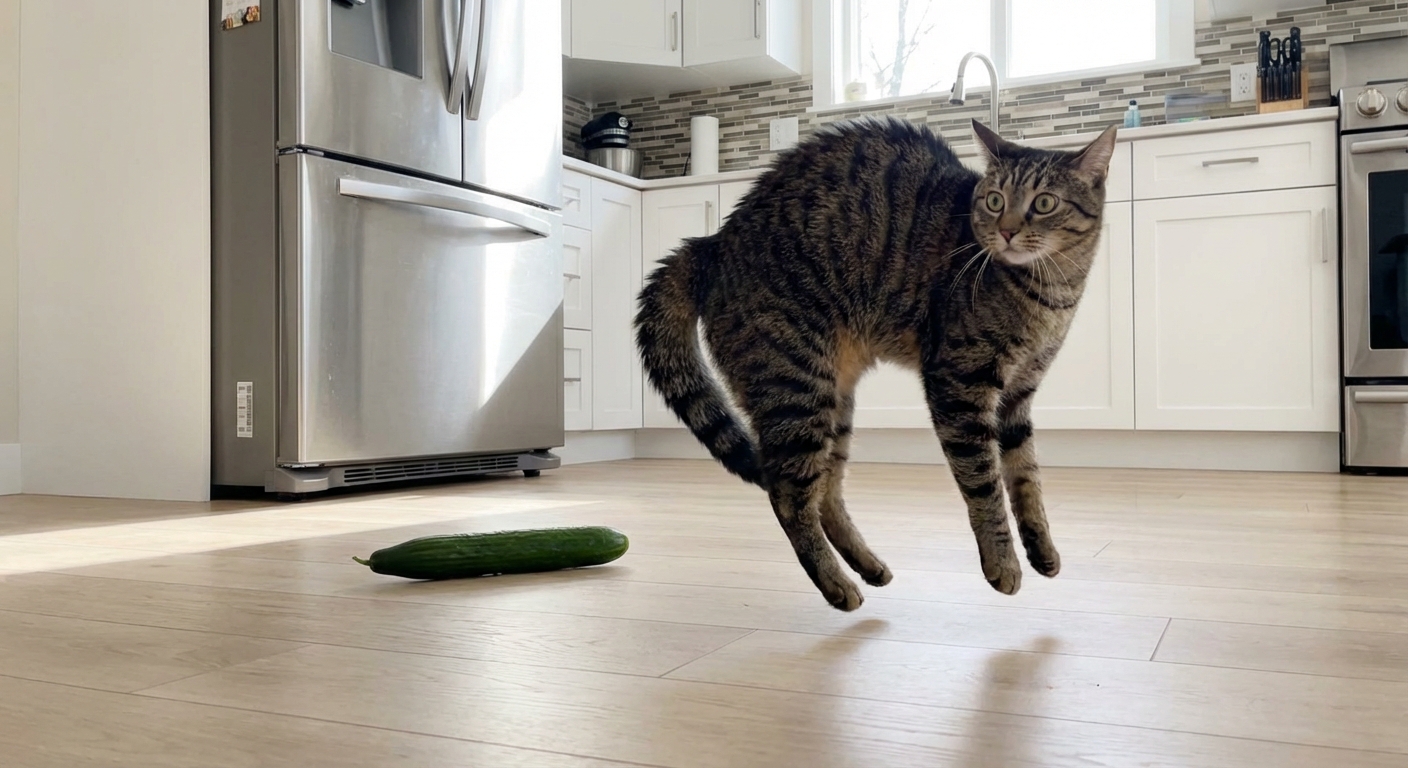
It’s one of the strangest pet videos on the internet: a cat calmly eating, then turning around, spotting a cucumber, and launching into the air like it just saw a tiny green monster.
So what’s really happening here? Are cats suddenly terrified of vegetables? And more importantly, should you ever try this at home?
It’s not really about cucumbers
Most cats aren’t afraid of vegetables in general. Many cats will sniff a cucumber slice, lick it once, and walk away like nothing happened. The dramatic reactions you see online usually come from a very specific setup: a cucumber (or zucchini, or banana) is placed silently behind a cat while the cat is distracted, often while eating.
When the cat turns around, it suddenly finds an unexpected object in a space it believed was safe. That surprise is the spark. The cucumber is just the prop.
Why some cats react so strongly
Cat behaviorists and veterinarians generally point to a few common factors behind these viral reactions:
1) Startle reflex in a safe spot
Cats are predators, but they’re also small enough to be prey for larger animals. That reality helps explain why even confident indoor cats can have a strong reflex to jump away from something that seems to appear out of nowhere, especially behind them. A feeding area is a vulnerable spot because their focus is down and forward, not scanning for surprises.
2) The shape may add to the alarm
There’s no strong evidence that cats universally think cucumbers are snakes, but many experts consider it a reasonable possibility for why a long, curved object could amplify the reaction in some individuals. In nature, quickly backing away from something snake-shaped can be a smart survival move.
In other words, your cat probably isn’t thinking “cucumber.” They’re thinking “unknown thing that shouldn’t be here.”
3) Novelty plus silence feels suspicious
Cats notice environmental changes. A new object that appears with no sound or obvious human movement can feel especially unsettling because it doesn’t match their expectations. Cats do best when new items are introduced in a predictable way, like a new bed placed in the room while they watch and investigate on their own terms.
4) Personality and stress level matter
Just like people, some cats are naturally bolder and others are more cautious. A cat that’s already anxious, newly adopted, dealing with tension in a multi-cat home, or sensitive to noise may react more intensely to surprises.
Don’t prank your cat
Even if it looks funny on video, intentionally scaring a cat can have real consequences:
- Injury risk: Cats can slip on flooring, hit cabinets, or land awkwardly and strain a limb.
- Food and litter box anxiety: If the scare happens near the food bowl or litter box, some cats may start avoiding that area, which can lead to appetite changes or inappropriate elimination.
- Trust and confidence hit: Cats can form strong negative associations. If weird surprises happen around you or around key resources, your cat may become more vigilant and less relaxed at home.
- Stress-related health issues: Ongoing stress can contribute to behaviors like overgrooming and hiding, and it can worsen feline lower urinary tract issues in susceptible cats.
Veterinary professionals generally advise against scare pranks like this. A laugh isn’t worth a sprain, a fear association, or a stressed-out cat.
If you already did it
If the prank already happened, don’t panic. Just don’t repeat it. Give your cat space, keep the home calm, and rebuild positive feelings around the area.
- Check for injury: Watch for limping, stiffness, or reluctance to jump.
- Watch for stress signals: Hiding, appetite changes, or litter box changes can show up after a scare.
- Reset the feeding spot: If they seem wary of the bowl area, temporarily move the bowl to a quieter location, then gradually reintroduce the original spot with calm, positive experiences.
If you notice pain, persistent hiding, or any urinary signs (straining, frequent trips, crying in the box), contact your veterinarian promptly.
Offer veggies the safe way
If your goal is enrichment, you can offer vegetables in a calm, respectful way:
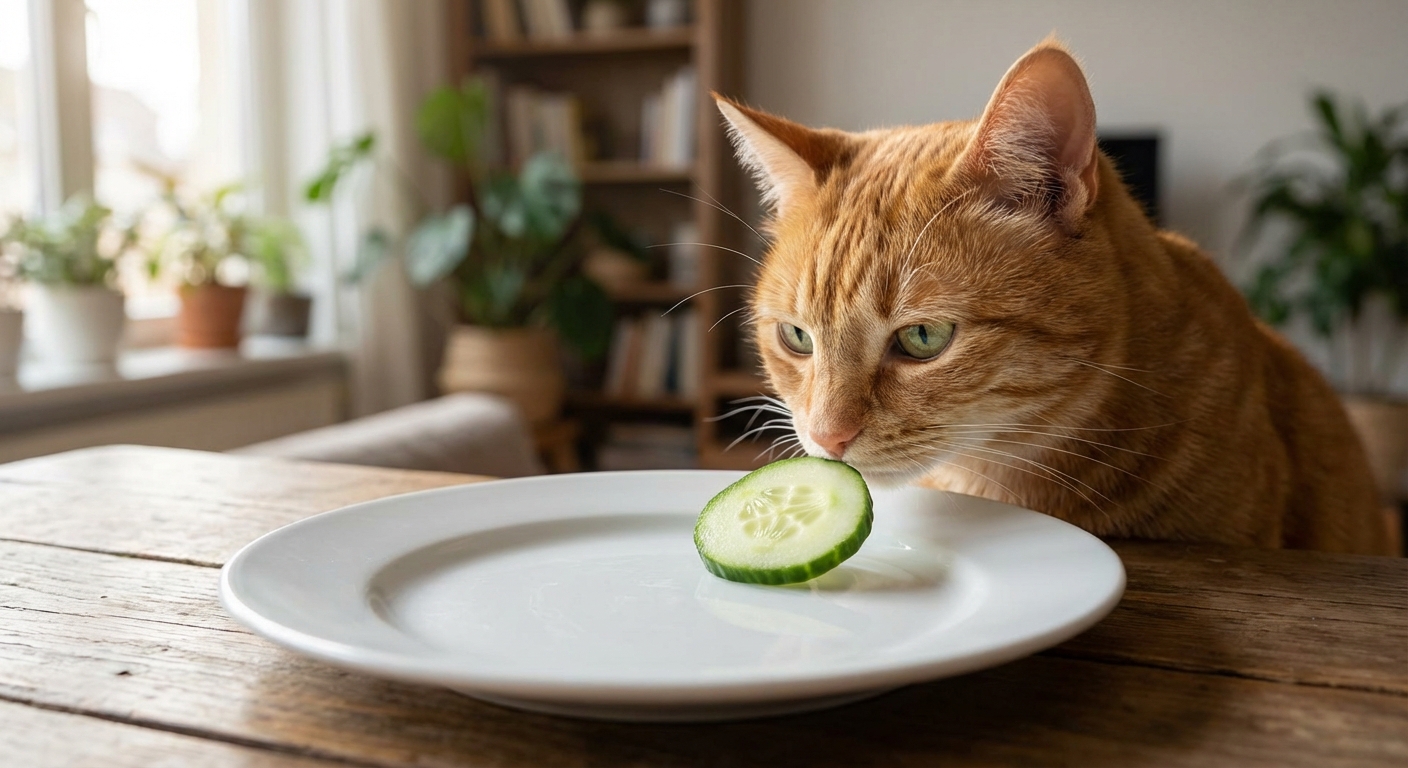
- Let your cat see it coming. Place a cucumber slice on a plate a few feet away and allow voluntary investigation.
- Keep it small. A thin slice is safer and less intimidating than a whole cucumber.
- Don’t force it. Sniffing and walking away is a perfectly normal “no thanks.”
- Stick to cat-safe options. Plain, fresh cucumber is generally non-toxic, but it isn’t nutritionally necessary.
Can cats eat cucumber?
In small amounts, cucumber is typically safe for cats. It’s mostly water, so it can be a crunchy, low-calorie snack. But cats are obligate carnivores, so treats like this should stay a tiny extra, not a meaningful part of the diet.
Serve it plain. No salt, no vinegar, no seasonings, and definitely no pickles. Offer small pieces to reduce choking risk, and don’t overdo it. Too much can cause stomach upset or diarrhea.
Skip unsafe veggies. Onions, garlic, chives, and leeks are toxic to cats, even in small amounts. When in doubt, ask your veterinarian before offering a new food.
When it’s more than a jump
If your cat startles easily or seems on edge even without pranks, it may be a sign of stress, pain, or an environment that doesn’t feel secure. Consider talking with your veterinarian if you notice:
- Hiding more than usual
- Sudden aggression or swatting when approached
- Overgrooming or hair loss
- Changes in appetite
- Litter box changes, straining, or frequent trips
A calm home setup, predictable routines, and enrichment like interactive play can make a huge difference for sensitive cats.
Bottom line
Most cats aren’t terrified of vegetables. They’re reacting to a surprise object appearing in a place they expected to be safe.
If you love your cat, skip the cucumber prank. If you want to enrich your cat’s life, focus on trust-building routines, play, and safe curiosity. A relaxed cat is a healthier cat, and that’s always the goal.
References: ASPCA Animal Poison Control (toxic and non-toxic foods) and general guidance from veterinary behavior resources on startle responses, stress, and feline lower urinary tract disease.