A vet-approved guide to crate training your puppy at night: ideal crate setup, safe comfort tips, bedtime routine, handling crying, and boring potty breaks f...
Article
•
Designer Mixes
Crating a Puppy at Night

Shari Shidate
Designer Mixes contributor
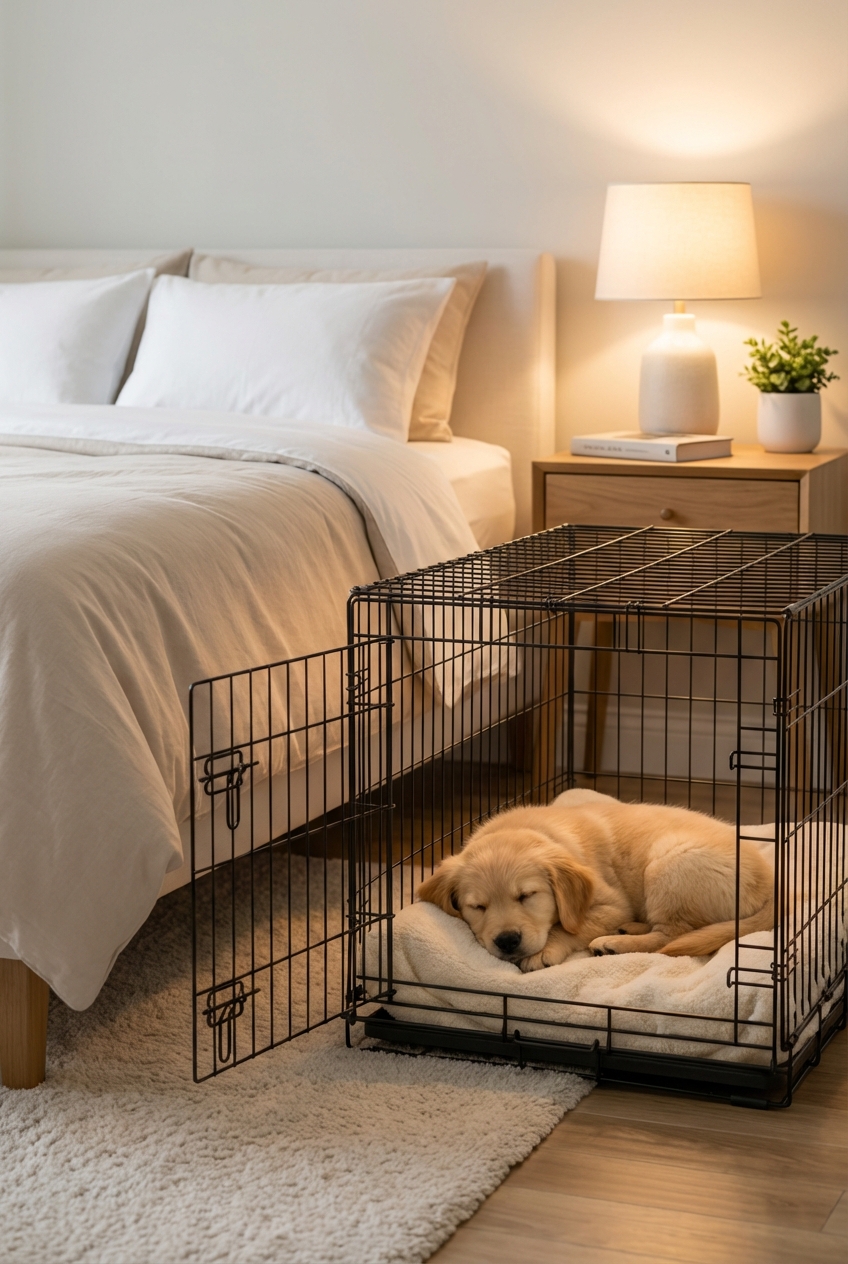
Nighttime crating can be one of the kindest, most practical gifts you give your puppy. It supports house-training, prevents dangerous chewing, and teaches your pup how to settle and self-soothe. And for you, it means better sleep and fewer middle-of-the-night surprises.
As a veterinary assistant in Frisco, Texas, I see the difference this makes in real homes. When crating is introduced gently and paired with a predictable bedtime routine, most puppies learn to sleep calmly in their crate faster than families expect.
Is it OK to crate a puppy at night?
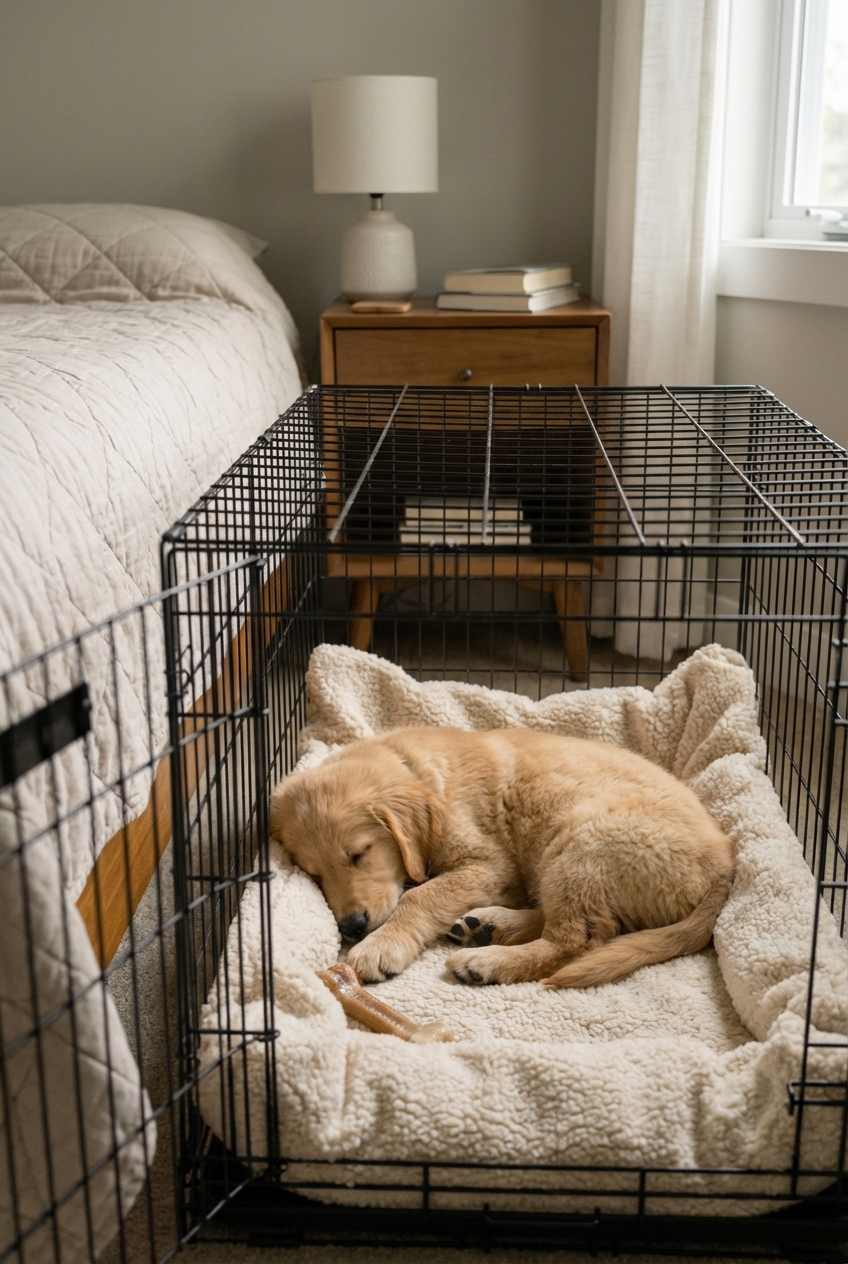
Yes, for most puppies it is both safe and beneficial when done correctly. A crate is not a punishment. It is a cozy, secure den that helps your puppy feel contained and protected.
Crating at night can help with:
- House-training: Many puppies prefer not to soil their sleeping area, which can support bladder and bowel control. (Some very young puppies, stressed puppies, puppies with GI upset, or pups from poor early conditions may not have this instinct yet.)
- Safety: It prevents chewing cords, swallowing socks, or getting stuck somewhere while you sleep.
- Structure: Predictable sleep reduces overtired, bitey behavior during the day.
When to avoid or modify nighttime crating: If your puppy is ill (vomiting, diarrhea), recovering from surgery, or shows panic-level distress, talk to your veterinarian or a qualified trainer. Mild whining is common. Intense drooling, frantic escape attempts, or self-injury is not something to ignore.
Choosing the right crate
Crate size
The crate should be large enough for your puppy to stand up, turn around, and lie down comfortably, but not so large that they can potty in one corner and sleep in the other. If you bought an adult-sized crate, use a divider panel to adjust the space as your puppy grows.
Wire, plastic, or soft-sided?
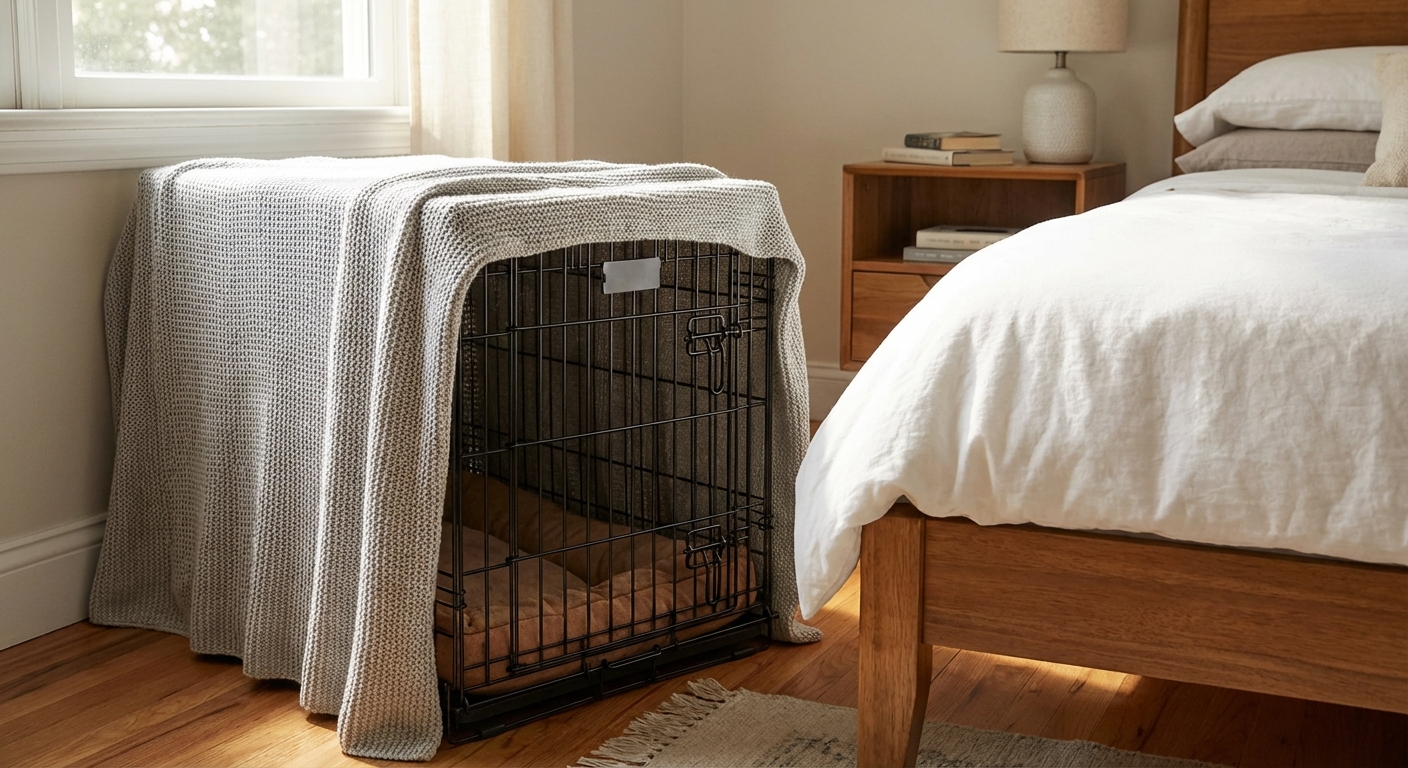
- Wire crates: Great airflow and visibility. Many puppies settle well when you cover three sides with a breathable blanket to reduce stimulation. If your room runs warm, skip the cover or use a light cover that does not block airflow.
- Plastic kennels: More den-like, often calming for travel and nighttime. Good for pups that are easily distracted.
- Soft-sided crates: Best for calm dogs and travel. Not ideal for young chewers or anxious escape artists.
What to put inside
- Safe bedding: Start simple. Some puppies shred plush beds. If that is your pup, use a thin crate pad or towel until chewing improves.
- Water: Make sure your puppy is well hydrated during the day. For many healthy puppies, it helps to pick up the water bowl about 1 to 2 hours before bedtime to reduce accidents, then offer water again right when they wake up. Very young or tiny puppies, hot environments, and medical conditions can change this, so follow your vet’s guidance if you are unsure.
- Chew option: A durable, puppy-safe chew can help them settle. Avoid anything that can splinter or break into chunks.
Best place to put the crate
For the first couple of weeks, I strongly recommend placing the crate in your bedroom or right next to it. Puppies are biologically wired to feel safer near their people. If your pup feels abandoned at night, you will hear about it.
Once your puppy is sleeping well, you can gradually move the crate toward your preferred long-term location. Do it slowly, a few feet every couple of nights, and watch how your puppy responds.
Ages and stages
These are typical ranges, not promises. Breed, size, individual metabolism, and daily routine all matter.
8 to 10 weeks
This is the toughest stretch for many families. Your puppy just left their litter, their routine changed overnight, and their bladder is tiny.
- Many puppies need 1 to 2 potty trips overnight (sometimes more).
- Whining can be normal for the first nights, especially at bedtime and after waking.
- Keep comfort high, but keep the routine consistent.
10 to 16 weeks
Most puppies begin to stretch their sleep. With consistent daytime potty breaks and a steady bedtime routine, many pups move to 0 to 1 overnight potty trip.
- Continue rewarding calm crate behavior.
- If accidents are happening, reassess crate size, bedtime water timing, and how late the last potty break is.
4 to 6 months
This is when a lot of puppies can sleep through the night, but adolescence can bring new testing behavior. Consistency matters more than ever.
- If your puppy suddenly starts protesting, check for teething discomfort, schedule changes, or too much daytime napping.
- Make sure your puppy is getting enough enrichment and exercise during the day.
6+ months
At this stage, your dog may be ready for more freedom, but only if they have earned it. If they can hold it overnight, settle calmly, and do not chew destructively, you can gradually transition to a larger safe area or keep crating as a lifelong skill.
A simple nighttime routine
Puppies thrive on predictable cues. Here is a simple routine that follows common veterinary and trainer best practices:
- Evening wind-down: About 60 to 90 minutes before bed, shift from wild play to calmer activities.
- Last potty break: Take your puppy out right before crating. Keep it boring and quiet.
- Crate cue: Say a consistent phrase like “crate” or “bed.” Toss a treat inside. Let your puppy walk in.
- Settle support: Sit nearby for a few minutes if needed. Quiet presence helps many pups.
- Lights out: Keep the room dim and calm. No late-night play.
Tip: If your puppy struggles to settle, feed meals in the crate during the day and practice short “crate naps” so nighttime is not the only time they are crated.
Optional but helpful: For the first week, many families do better with a planned potty alarm (often once per night), then gradually push it later and fade it out as your puppy proves they can hold it.
Whining at night
Nighttime whining is common, and how you respond can either build confidence or accidentally teach your puppy that noise controls you.
Step 1: Pause and assess
Ask yourself: Do they need to potty? Young puppies often do. If it has been around 2 to 3 hours for a very young puppy (or you have any doubt), take them out calmly.
Step 2: The boring potty trip
- Leash on
- Outside to the potty spot
- No talking, no playing
- Give a quiet “good” and one treat after they potty
- Back to the crate
Step 3: If you are confident they do not need to potty
Offer calm reassurance without turning it into a party. Many puppies settle if you place your fingers near the crate, breathe slowly, or speak softly for a minute.
If your puppy escalates, do not reward frantic behavior with big attention. Wait for a small pause in the whining, then offer brief reassurance. If you have tried calm reassurance for a few minutes and they are not settling, do a quick potty check. If the distress is intense, or it persists night after night or worsens over a week, bring in your vet and a qualified trainer. This can be a sign that you need a different plan, including support for separation-related distress.
What I tell clients at the clinic is this: we are aiming for calm, predictable, and boring at night. Calm gets comfort. Potty gets a quick trip. Big drama gets nothing to latch onto.
Goal: teach your puppy that the crate is safe, and calm behavior makes good things happen.
Daytime practice helps nights
If the crate only happens at bedtime, some puppies learn to dread it. Build positive crate time when you are awake:
- Crate games: Toss treats in and let your puppy go in and out freely.
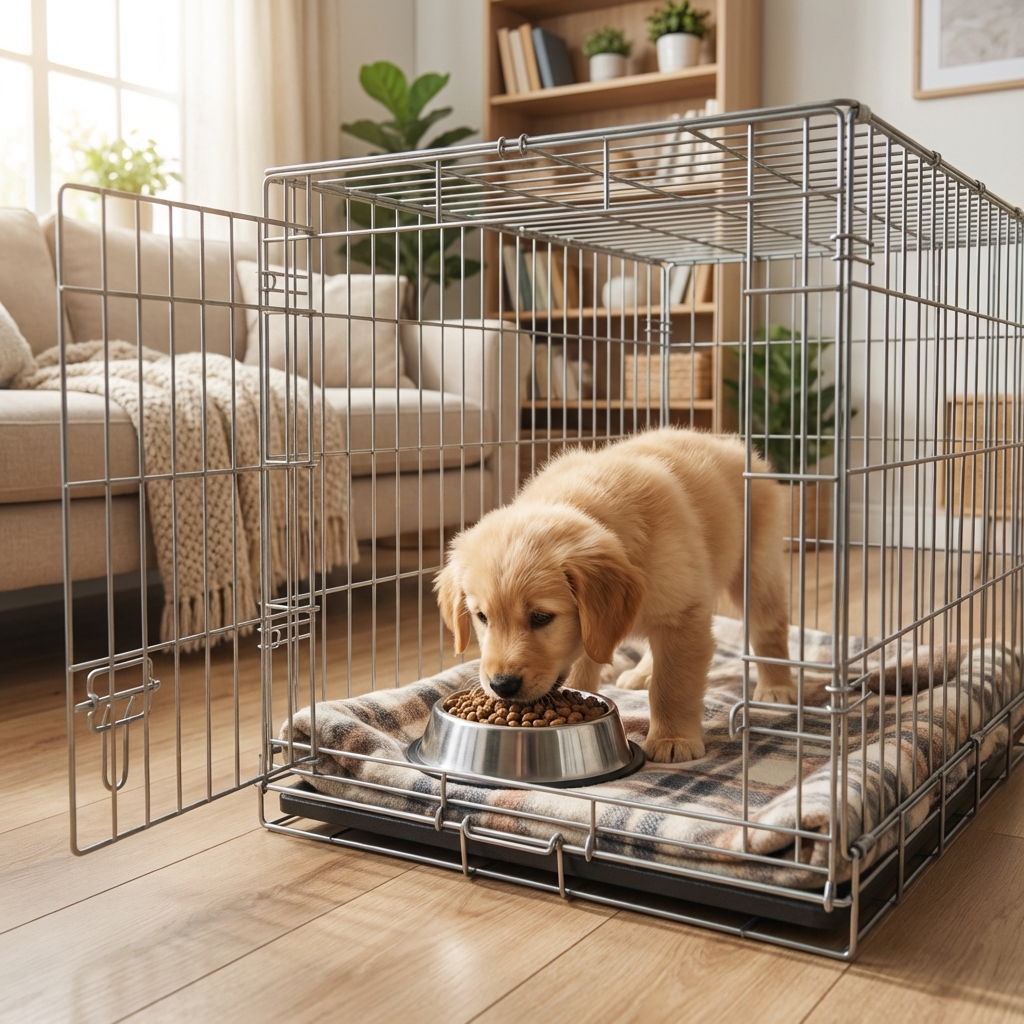
- Meal-time in the crate: Feed part or all of meals inside with the door open at first.
- Short, successful sessions: Start with 30 to 60 seconds with the door closed, then gradually increase.
- Practice leaving the room: Tiny absences build confidence.
Important: Even if your puppy sleeps in the crate at night, they still need age-appropriate potty breaks, movement, and interaction during the day. Do not expect a young puppy to handle long daytime crate stretches without breaks.
Common mistakes
- Using the crate only for time-outs: Your puppy will associate it with isolation instead of safety.
- Too much crate space: It can increase nighttime accidents.
- Late-night stimulation: Rough play right before bed can create a second wind.
- Inconsistent responses to crying: If one night crying works and the next night it does not, puppies often cry longer.
- Expecting a baby puppy to hold it all night: This is the #1 reason families get frustrated. Young bladders have real limits.
Safety notes
- No collar in the crate if there is any risk of snagging on wire or hardware. Use a breakaway collar if your vet or trainer recommends one, and always supervise its use.
- Avoid unsafe chew items overnight. If you would not leave it with your puppy unsupervised during the day, do not leave it overnight.
- Temperature matters: Keep the sleeping area comfortably cool and well-ventilated. If you cover a wire crate, make sure airflow is not blocked, and avoid heavy covers in warm rooms.
- Medical concerns: Frequent nighttime urination, sudden accidents, diarrhea, or restlessness can indicate a health issue. Call your veterinarian.
When to stop crating at night
Many dogs can transition out of nighttime crating when they reliably:
- Sleep through the night without potty accidents
- Do not chew furniture, cords, or household items
- Settle calmly without roaming
- Can be trusted not to practice problem behaviors unsupervised
A safe transition often looks like this: crate at night, then crate with the door open inside a puppy-proofed room, then gradually increase freedom. Some families keep the crate as a lifelong sleep spot. That is perfectly healthy for many dogs, and lots of dogs choose the crate even when the door stays open.
Quick bedtime checklist
- Potty break right before bed
- Crate is the right size (use divider if needed)
- Comfort item that is safe for your puppy
- Bedroom placement for the first weeks
- Water bowl picked up 1 to 2 hours before bed (unless your vet advises otherwise)
- Boring, calm response to nighttime potty needs
- Daytime crate practice so the crate feels normal
If you are feeling overwhelmed, take a breath. You are not behind. Most puppies improve quickly with consistency, and even small routine changes can make a big difference within a week.