A step-by-step, family-friendly plan to reduce separation anxiety in dogs using safety management, trigger desensitization, tiny absences, enrichment, and ve...
Article
•
Designer Mixes
Crate Training Games to Prevent Separation Stress

Shari Shidate
Designer Mixes contributor
Separation stress can sneak up on even the sweetest, most social dogs. As a veterinary assistant here in Frisco, Texas, I see it often: the pacing when you grab your keys, the whining when you step outside, the crate avoidance that turns into a protest. The good news is you can teach your dog that alone time is safe and even rewarding.
This article focuses on crate training games that build calm, confident independence. Games matter because they change the crate from “confinement” to “a predictable place where good things happen.”
Quick note: This is general education, not a substitute for veterinary advice. If your dog’s distress is severe or getting worse, pause training and contact your veterinarian or a qualified behavior professional.
Set up the crate for success
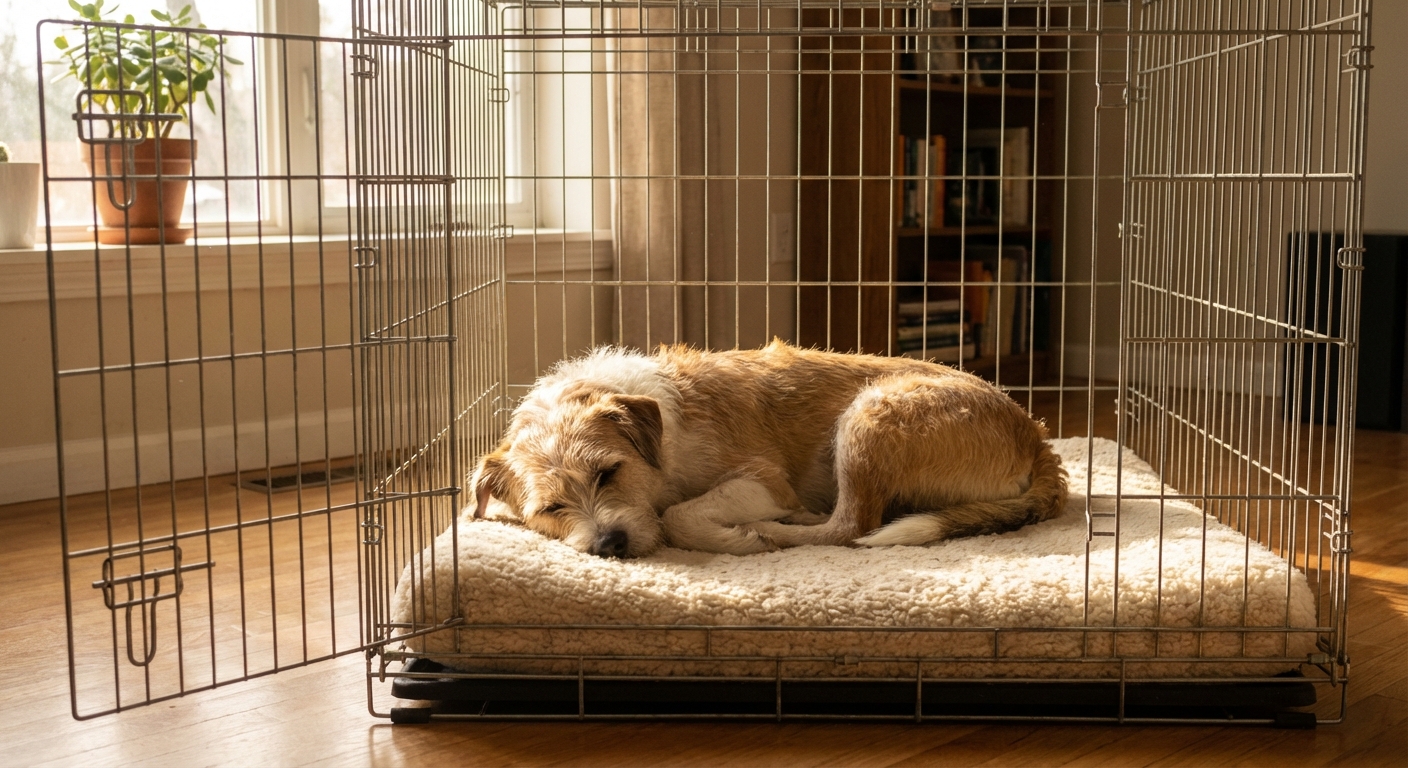
Before you start any game, set the stage. A well-set crate prevents frustration and keeps your dog comfortable.
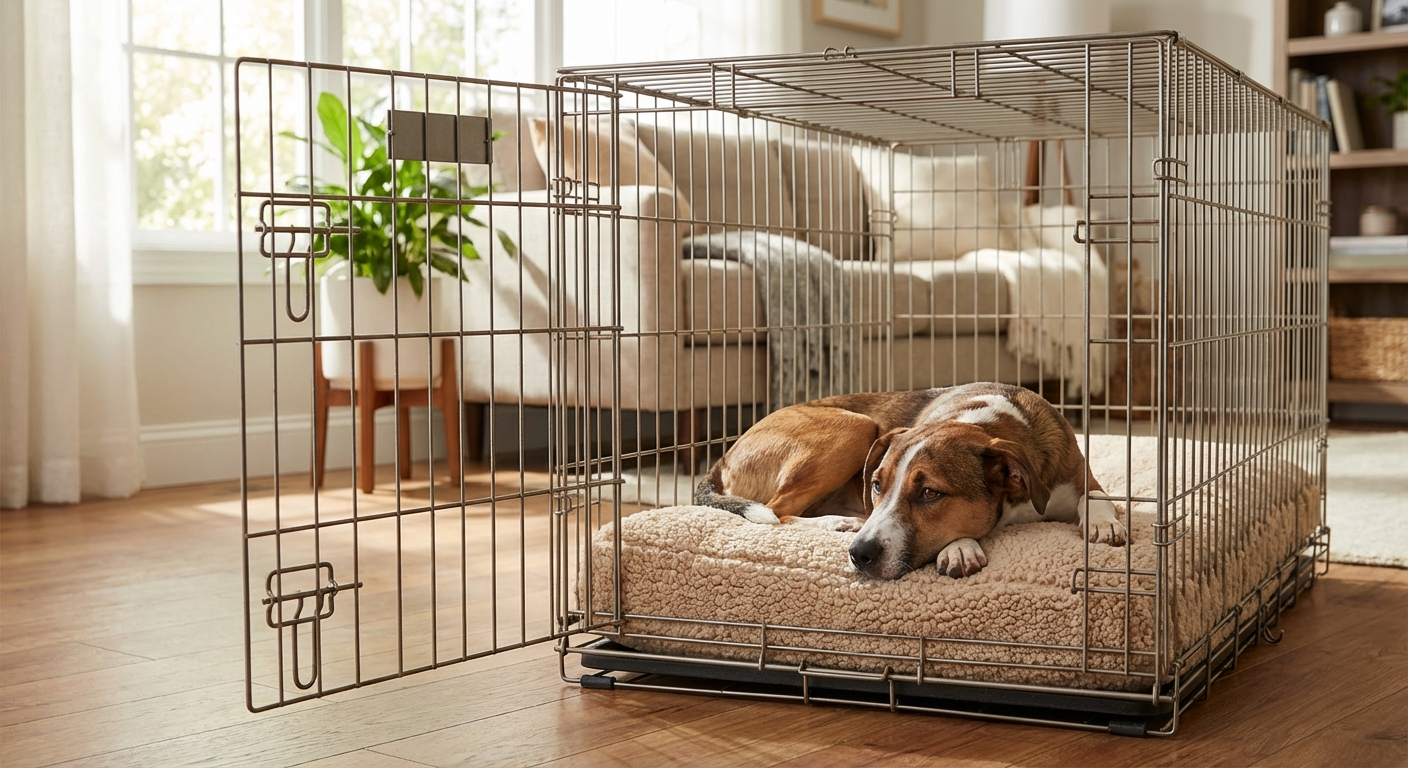
- Right size: Your dog should be able to stand, turn around, and lie down comfortably. Too large can encourage pottying in a corner.
- Comfort: Use a washable mat or pad. For chewers, start with a flat, durable surface.
- Location: Place the crate where your dog can see the household action at first. Later, you can practice short separations in a quieter spot.
- Door policy: In early training, keep the door open unless the game specifically involves closing it.
Safety note: Best practice is no collars, harnesses, or tags inside the crate due to snag risk. If you must use a collar, choose a properly fitted breakaway style and monitor closely.
Stress, anxiety, or confinement distress?
Crate games help many dogs, especially those with mild to moderate separation stress. But true separation anxiety can be more intense and needs a bigger plan.
One more important distinction: some dogs struggle most with confinement distress. They may panic when crated even if you are still home. If that is your dog, you may need a different setup (like a pen or dog-proof room) while you work on comfort with the crate.
Common signs of separation-related distress
- Drooling, panting, frantic scratching or biting at the crate
- Persistent howling or barking that does not settle
- Self-injury (broken nails, bloody gums, worn teeth)
- Accidents despite being house-trained
- Destruction focused near exits (doors, windows)
If you’re seeing severe panic or injury risk, please talk with your veterinarian or a board-certified veterinary behaviorist. Evidence-based behavior plans, and sometimes medication, can be life-changing.
Golden rules for crate games
- Go slower than you think you need to. Calm is the goal, not endurance.
- One variable at a time. Do not add a closed door, a longer duration, and you leaving the room all at once.
- Reinforce quiet. Feed for relaxed body language: loose muscles, hip rolled, soft eyes, slow breathing.
- End on a win. Stop the session while your dog is still successful.
- Short sessions count. Five one-minute sessions can beat one stressful 10-minute session.
These games move from easy wins (open door) toward harder skills (door closed, you stepping away). If any step causes stress, drop back to the last easy version.
Game 1: Crate Treasure Hunt
This game builds a happy emotional response to the crate. You are teaching: crate equals surprises.
How to play
- With the crate door open, toss 3 to 5 tiny treats just inside the doorway.
- Let your dog go in and eat them, then come out freely.
- Repeat, tossing treats a little deeper as your dog stays confident.
Make it better
- Use a mix of low- and high-value treats to keep interest.
- Occasionally toss a treat outside the crate too, so your dog does not feel “trapped into staying.”
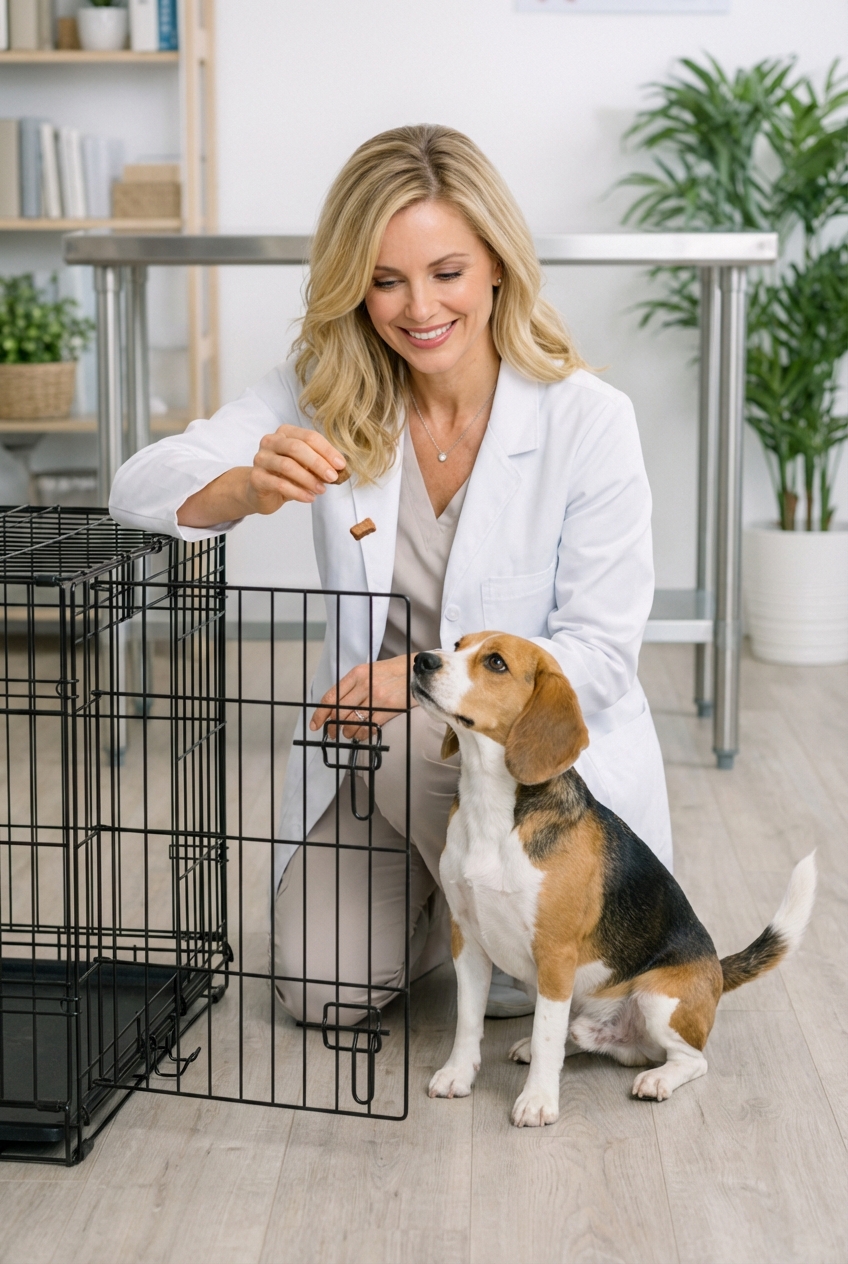
Game 2: In and Out
Separation stress often worsens when a dog feels they have no control. This game teaches the crate is a choice, not a trap.
How to play
- Stand near the open crate with treats in your hand.
- When your dog steps in, calmly drop a treat between their paws.
- Pause. Let them step out if they want.
- If they step back in again, drop another treat.
In the beginning, do not lure them in with the treat. Let them decide. You are reinforcing brave choices.
Game 3: Settle on the mat
A dog who knows how to settle has a skill they can use during alone time. Settling is not “doing nothing.” It is an active behavior you can reward.
How to play
- Place a mat or towel in the crate.
- When your dog steps in and puts even one paw on the mat, drop a treat.
- Next, wait for a sit or a down. Reward immediately.
- Once they offer a down reliably, begin rewarding slowly for longer relaxation, like resting a hip or lowering the head.
Tip: Use calm, quiet delivery. Excited praise can accidentally amp up a dog who needs help settling.
Game 4: Door means treats
Many dogs do fine until the door moves. This game makes the door a predictor of good things.
How to play
- Dog enters the crate voluntarily.
- Move the door one inch, then immediately drop a treat in the crate.
- Open the door back to neutral.
- Repeat, closing a little more each time.
Progression
- Door touches the frame
- Door latches for 1 second, then opens
- Latch for 3 seconds, then opens
- Latch for 10 seconds, then opens
If your dog starts to rush the door, paw, or vocalize, you went too fast. Back up to the last easy step.
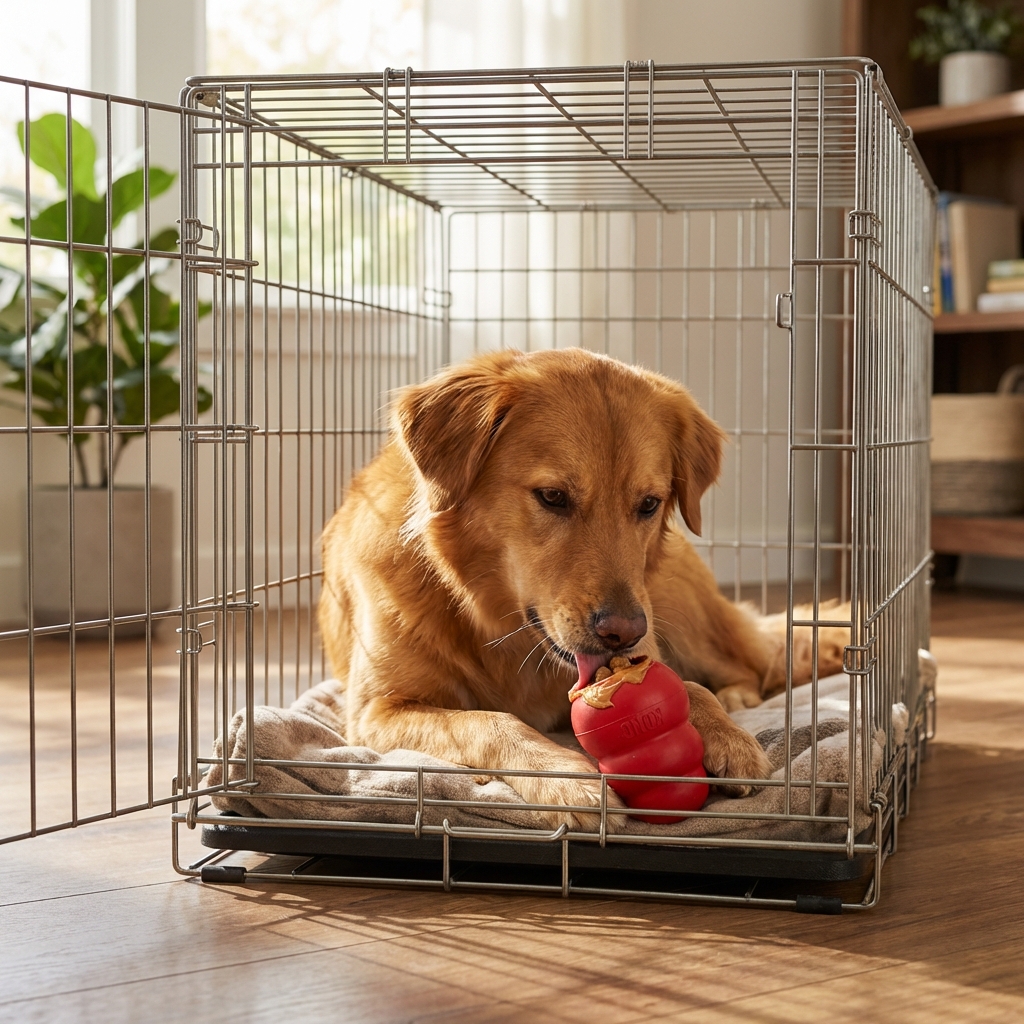
Game 5: Crate Kong Party (for calm licking)
Food toys can be powerful for preventing separation stress, but only if your dog can stay calm while using them. For anxious dogs, a food toy can sometimes create frantic energy. We want slow, soothing licking.
How to set it up
- Choose a lick-heavy filler: pumpkin, a small amount of plain yogurt, canned dog food, or a veterinarian-approved option for your dog.
- Introduce new foods slowly and watch for GI upset. Keep calories in mind, and avoid unsafe ingredients (like xylitol).
- Freeze it to extend duration and encourage slower licking.
- Give it in the crate with the door open at first.
Graduation steps
- Door open while they lick
- Door closed for 5 to 15 seconds, then open
- Door closed while you sit nearby
- Door closed while you stand up, sit down, and move casually
Game 6: Keys and shoes
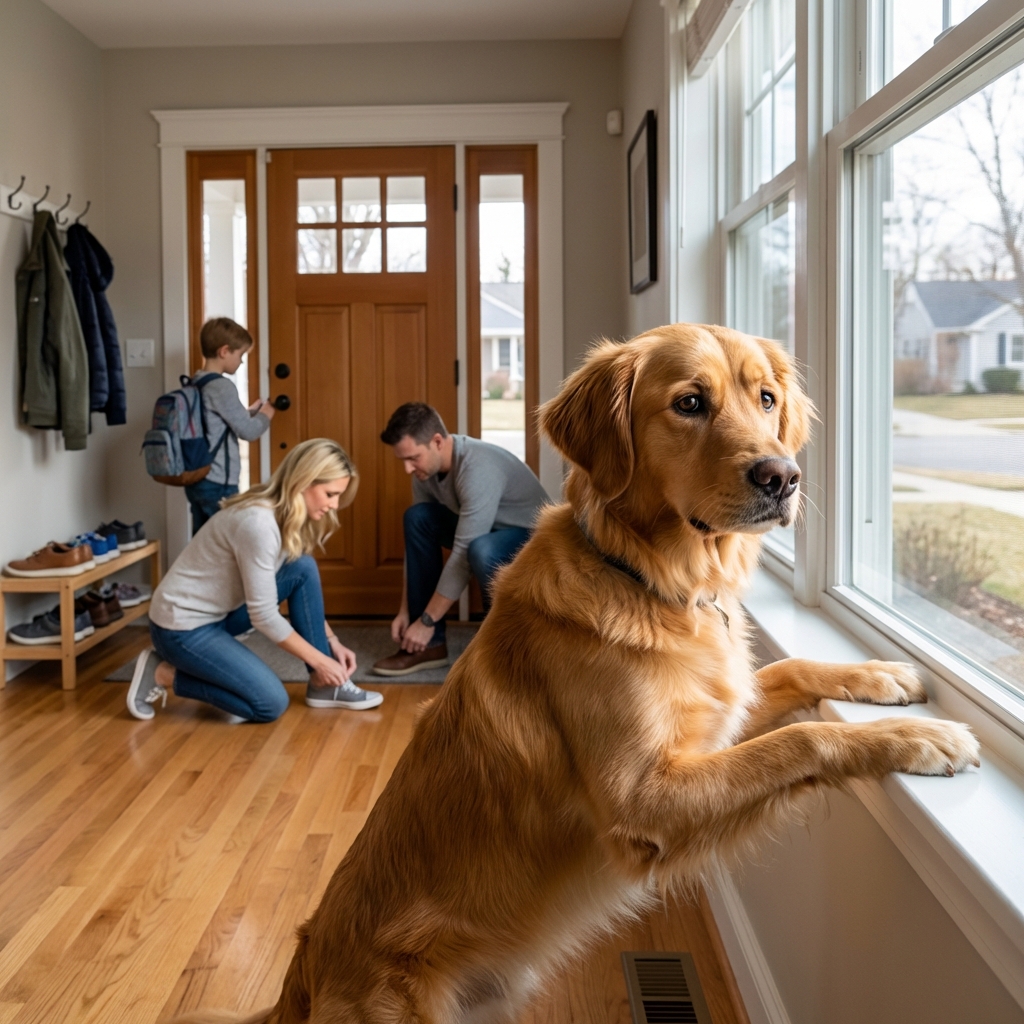
Many dogs learn your leaving routine and start stressing before you ever touch the crate. This game breaks that pattern.
How to play
- Pick up your keys, toss a treat into the crate, then set your keys down and continue your day.
- Put on your shoes, treat in the crate, then take shoes off.
- Grab your bag, treat in the crate, then put the bag away.
Do several mini-practices daily. Your dog learns those cues do not always predict being alone.
Game 7: Peekaboo departures
This approach is well-supported by veterinary behaviorists and separation-anxiety training protocols: practice leaving for such a short time that your dog stays under threshold, then return before distress starts.
How to play
- With your dog in the crate (door closed if they are ready), step one foot out of view for 1 second.
- Return and drop a treat for calm.
- Repeat and gradually increase to 2 seconds, 5 seconds, 10 seconds.
Important: We are not ignoring panic and we are not “testing” your dog. If your dog vocalizes, pants hard, scratches, or stops eating, that is feedback that the step was too big. Shorten the absence and make the next repetition easier.
How long is too long?
Crate comfort training is separate from how long a dog can reasonably be crated. Use your dog’s age, health, and potty needs as your guide, and ask your vet if you are unsure.
- Puppies: Need frequent potty breaks and shorter crate times.
- Healthy adult dogs: Can often handle longer stretches, but they still need exercise, bathroom breaks, and social time daily.
- Seniors or medical needs: Arthritis, GI disease, and urinary issues can shorten comfortable crate time.
If you routinely need long workday coverage, consider a midday dog walker, daycare, or an alternative safe setup.
If your dog hates the crate
Crating is not mandatory. Some dogs do better with a different management plan while you work on independence skills.
- Exercise pen with a bed and water
- Dog-proof room with baby gates
- Gated kitchen or laundry room (if safe)
For dogs with true confinement distress, these options can reduce panic and keep training moving forward.
Before you practice alone time
A little preparation can lower stress and improve success.
- Potty first: Give a bathroom break right before training absences.
- Meet basic needs: Age-appropriate exercise and a bit of enrichment earlier in the day can help.
- Keep departures and returns low-key: Calm, normal routines tend to be easier on anxious dogs.
A simple weekly plan
If you love a clear plan, here’s an easy way to structure it. Adjust based on your dog’s comfort.
Days 1 to 3
- Treasure Hunt for 2 minutes
- In and Out for 2 minutes
- Mat settle for 2 minutes
Days 4 to 7
- Door means treats for 2 to 4 minutes
- Crate Kong Party with door open, then 5 seconds closed
- Keys and shoes practice 3 times per day
Week 2 and beyond
- Add Peekaboo departures daily
- Increase time slowly and aim for about 80 to 90% success
- What success means: your dog stays under threshold (no panic signs and they can take food)
- Continue surprise “crate bonuses” even after training is solid
Common mistakes
Mistake: Using the crate only when you leave
Instead: Add short, happy crate sessions while you’re home so it becomes normal.
Mistake: Letting your dog “cry it out”
Instead: Teach calm with tiny steps. Repeated panic can make separation problems worse.
Mistake: Making the crate the punishment place
Instead: Use the crate as a rest zone. If you need a time-out, choose a neutral management option like a baby gate in a safe room.
Mistake: Doing too much too soon
Instead: Increase only one thing at a time: distance, duration, or difficulty.
When to get extra help
Please reach out to your vet if your dog has panic-level behaviors, hurts themselves, or cannot eat in the crate. Also ask for help if your dog’s separation stress is paired with other concerns like GI upset, sudden house soiling, or a big behavior change that feels out of character.
A qualified positive reinforcement trainer can help you build a customized plan. For true separation anxiety, a board-certified veterinary behaviorist is ideal.
Small, consistent crate games can create a big emotional shift. The goal is not just “tolerating” alone time. It’s teaching your dog they are safe, even when you are not in the room.