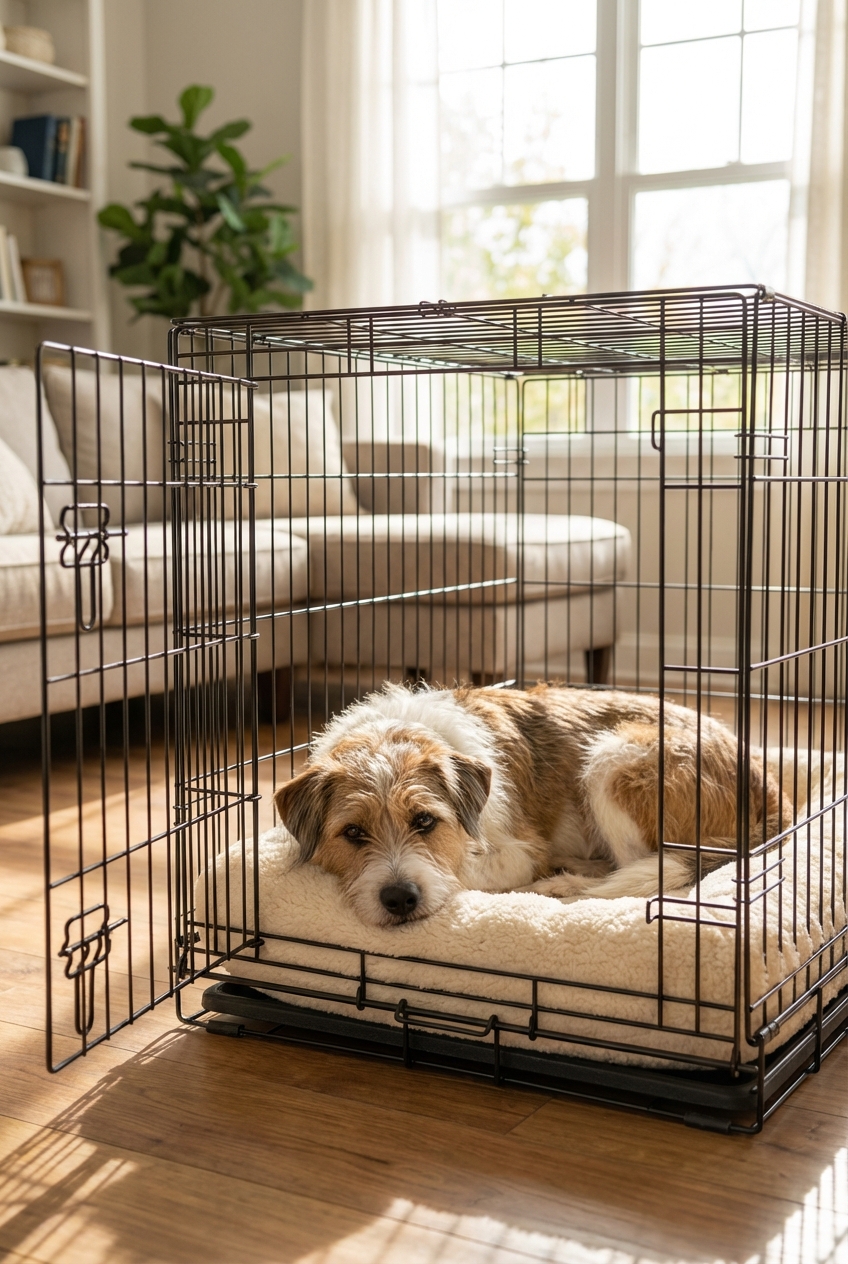
Teach an adult or senior dog to love the crate with a comfort-first setup, positive reinforcement steps, and practical fixes for barking, accidents, and anxi...
Article
•
Designer Mixes
Crate Training an Older Dog

Shari Shidate
Designer Mixes contributor
Crate training is not just for puppies. I have helped plenty of adult and senior dogs learn to feel calm and secure in a crate, even if they have a complicated past. The key is to treat the crate like a comfort zone, not a punishment, and to move at your dog’s pace.
In this article, I’ll walk you through what works, what to avoid, and how to make crate training kind, effective, and realistic for older dogs.
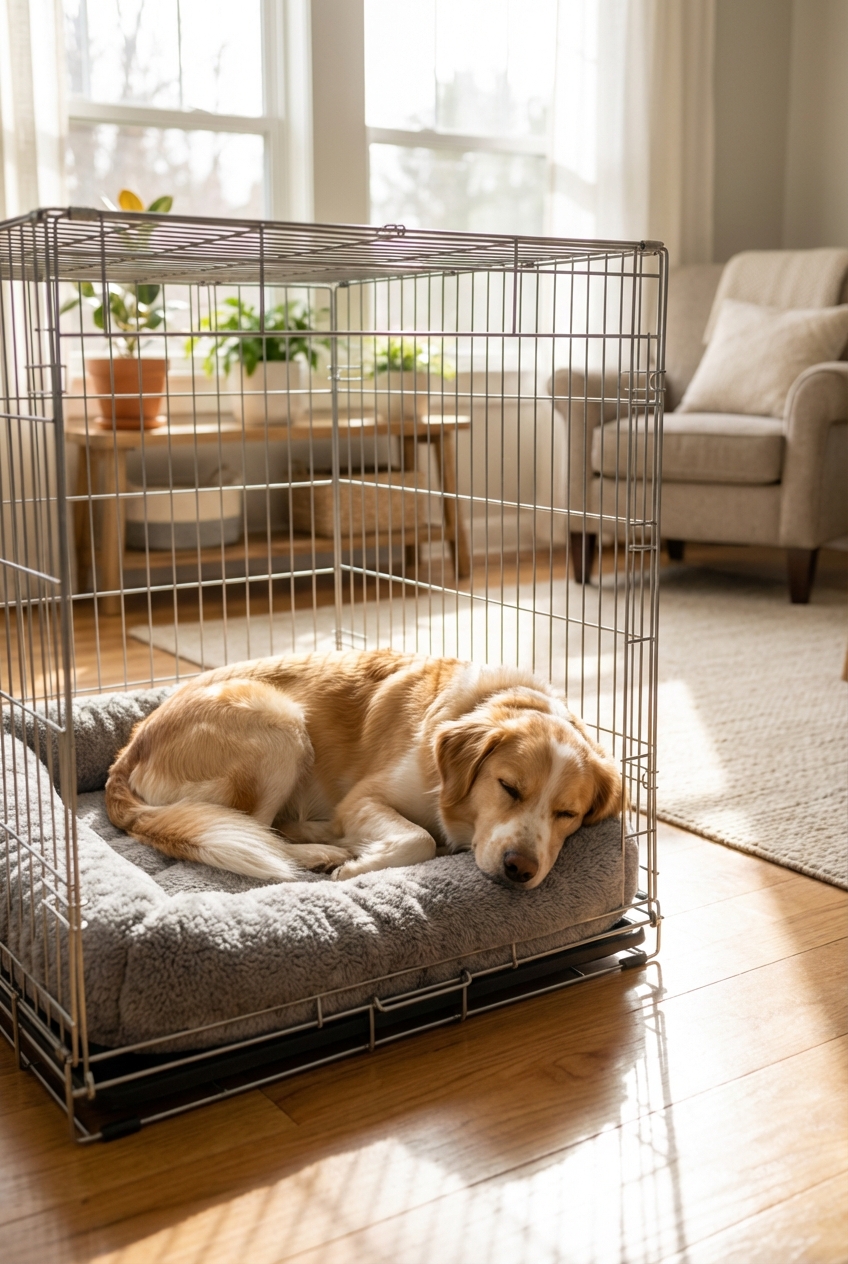
Why crate train an older dog?
For adult dogs, a crate can be a practical tool and an emotional anchor. When introduced correctly, it can help with:
- Safety when you cannot supervise (especially if your dog is a chewer or counter-surfer).
- Travel for car rides, hotels, or vet visits.
- House-training refreshers if accidents have started again.
- Reduced stress during thunderstorms, fireworks, guests, or home repairs.
- Injury recovery or post-surgical rest when your vet recommends restricted movement.
Some dogs naturally enjoy den-like spaces. Others need more convincing. Our job is to make the crate feel like a protected, cozy “room,” and to respect the dog in front of us.
Quick clarity: crate training is about comfort and safety first. Any house-training benefit is a bonus, not the only goal.
Before you start
1) Older dogs learn well
Adult dogs can absolutely learn new habits. What they often need is more consistent, low-pressure practice than a puppy who is already in a rapid learning stage. Short sessions done daily usually beat one long session.
2) Behavior has a why
If an older dog resists the crate, it is often tied to a real reason: past confinement, separation anxiety, noise sensitivity, pain, or simply not understanding what the crate is for. The plan should match the cause.
3) Never use the crate as punishment
If the crate only appears when your dog is “in trouble,” it becomes a predictor of bad things. We want the opposite: the crate predicts snacks, calm, and safety.
4) Seniors need comfort checks
Arthritis, vision changes, hearing loss, and cognitive decline can affect crate training. If your dog is older, consider a vet check if you notice new restlessness, panting, accidents, or night waking.
Crate setup
Crate type
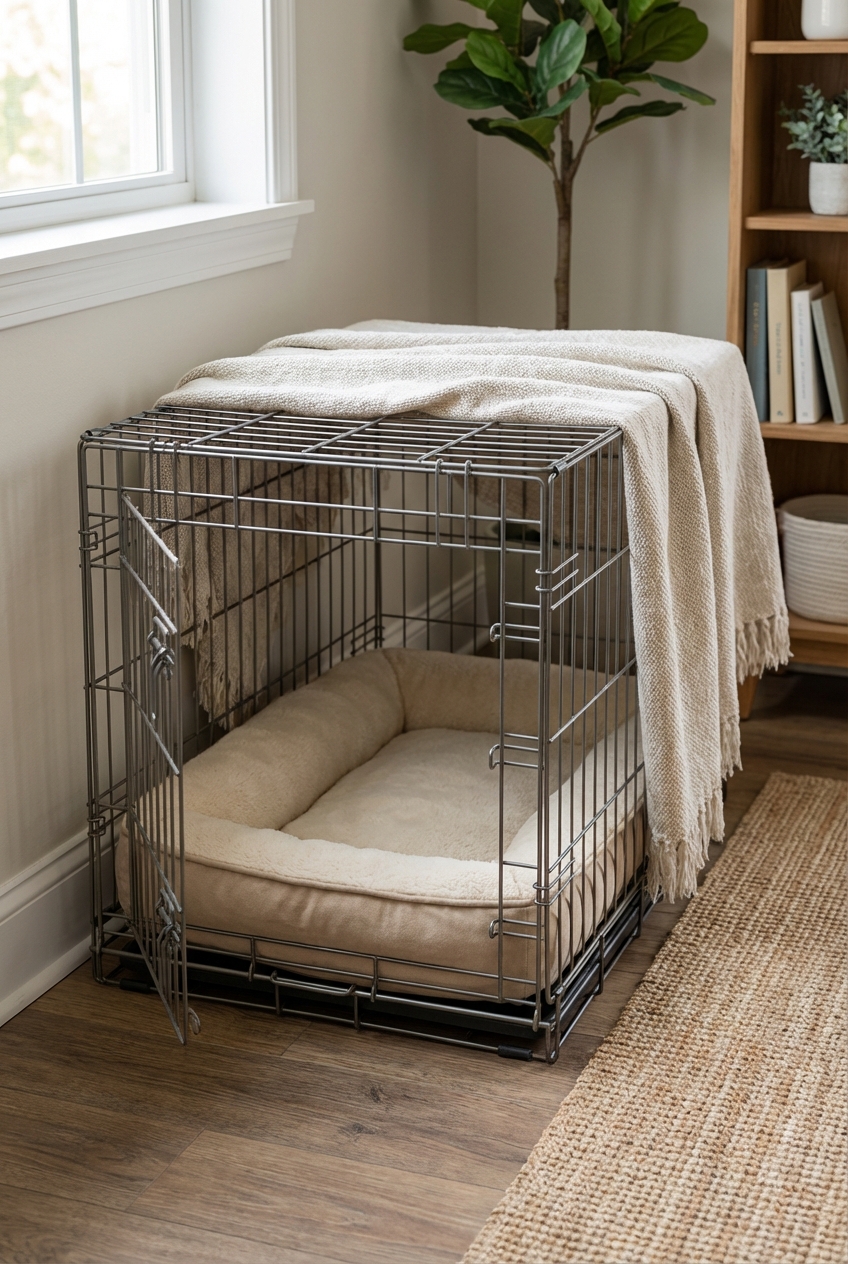
- Wire crate: great airflow and visibility, often easiest for training. Add a cover if your dog relaxes in darker spaces.
- Plastic airline-style crate: more den-like and quieter, helpful for noise-sensitive dogs.
- Soft-sided crate: only for dogs who are already calm in confinement and do not scratch or chew to escape.
Crate size
Your dog should be able to stand up, turn around, and lie down comfortably. Too large can reduce the odds your dog will avoid soiling one end of the space during house-training practice (and some dogs will still have accidents). Too small can cause stress or pain.
Comfort upgrades for older dogs
- Supportive mat or orthopedic bed if your dog has joint stiffness.
- Non-slip surface under the crate so it does not slide.
- Water option for longer crating, such as a crate-attached bowl, if safe for your dog.
Placement and safety
Where to put the crate
- Choose a quiet, low-traffic spot where your dog can still feel part of the household.
- Avoid loud hallways, drafty areas, or places where the crate gets bumped.
- Keep it out of direct sun and away from heating vents. Temperature matters more than people realize.
- If kids or other pets stress your dog, place the crate where your dog can rest without being bothered.
Basic crate safety
- Do not crate with a collar on (or dangling tags) due to snag risk.
- Check for broken wires, sharp edges, or weak latches, especially for escape-prone dogs.
- Use covers, fans, or white noise only if they help your dog relax and ventilation stays good.
Step by step
Step 1: Door open
Place the crate in a calm area where your dog already likes to rest. Keep the door open and secure it so it cannot swing and startle your dog.
- Toss a few treats just inside the doorway.
- Let your dog choose to step in and out.
- Do not shut the door yet.
Goal: your dog thinks, “I can investigate safely.”
Step 2: Meals near the crate
Food is powerful. Start with the bowl just outside the crate, then gradually move it farther in over several meals.
Tip: If your dog is nervous, slow down. We want relaxed eating, not rushed “grab and run” behavior.
Step 3: Calm chew time
Once your dog is willingly entering, offer a long-lasting chew or food puzzle inside the crate. Great options include a stuffed, frozen food toy or a vet-approved chew.
- Keep the door open for the first few sessions.
- Then briefly close the door while your dog is engaged and reopen it before they worry.
Safety note: choose chews that match your dog’s chewing style, and only use food toys or chews when it is safe for your dog. If your dog is a shredder, gulper, or resource guarder, talk to your vet or trainer about the safest options.
Goal: your dog learns, “The crate is where good things happen, and I always get out again.”
Step 4: Short closed-door sessions
Close the door for 10 to 30 seconds while you sit nearby. Gradually work up to a few minutes. The best crate training is boring in the best way, like you reading on the couch with the TV on low.
- If your dog stays calm, quietly reward by dropping a treat in.
- If your dog starts to panic, you have moved too fast. Go back a step.
When to increase time: move up only after your dog looks relaxed for several repeats at the current duration (for example, 3 to 5 easy reps).
Step 5: Add normal movement
Practice standing up, walking around the room, then leaving for a few seconds and returning. You are teaching your dog that your movement is not a reason to worry.
Important: avoid big emotional greetings when you return. Calm in, calm out.
Step 6: Short real departures
When your dog can relax in the crate for 10 to 20 minutes with you nearby, start short real-life exits like checking the mail. Slowly build up. Many adult dogs progress quickly once the foundation is solid.
How long does it take?
It depends on your dog’s history and temperament. As a general range for dogs without significant anxiety:
- 1 to 2 weeks: many adult dogs learn to rest calmly for short periods.
- 3 to 6 weeks: common for building reliable comfort during routine departures.
- Longer: dogs with separation anxiety, panic history, or chronic stress may need a customized plan and can take months.
If you feel stuck, that is not failure. It is feedback that the plan needs adjusting.
Common mistakes
- Closing the door too soon before the crate feels safe.
- Using the crate only when leaving, which makes it a predictor of isolation.
- Letting your dog cry it out when they are panicking. Panic is not a learning state.
- Crating too long without potty breaks or enrichment.
- Poor crate location, like a loud hallway or a place where the crate gets bumped.
Whining or barking
First, separate mild protest from true distress.
Mild protest
If your dog is mildly whining but otherwise relaxed, you can wait for a brief pause, then calmly reward the quiet. This reinforces calm behavior.
Distress signs
Heavy panting, drooling, frantic scratching, trying to escape, repeated howling, or self-injury attempts can signal panic. In that case, you should:
- End the session before it escalates.
- Go back to easier steps with more reward and shorter durations.
- Talk to your vet or a qualified trainer if you suspect separation anxiety.
Evidence-based note: for dogs with separation anxiety, best practice typically involves gradual desensitization and teaching relaxed independence. In some cases, veterinary behavior support and medication can be appropriate and humane tools.
Important: if your dog has true confinement panic, a crate may not be the right tool at first. A dog-proofed room or an exercise pen setup can be a safer starting point while you work with a professional.
Senior dog tips
Arthritis and mobility
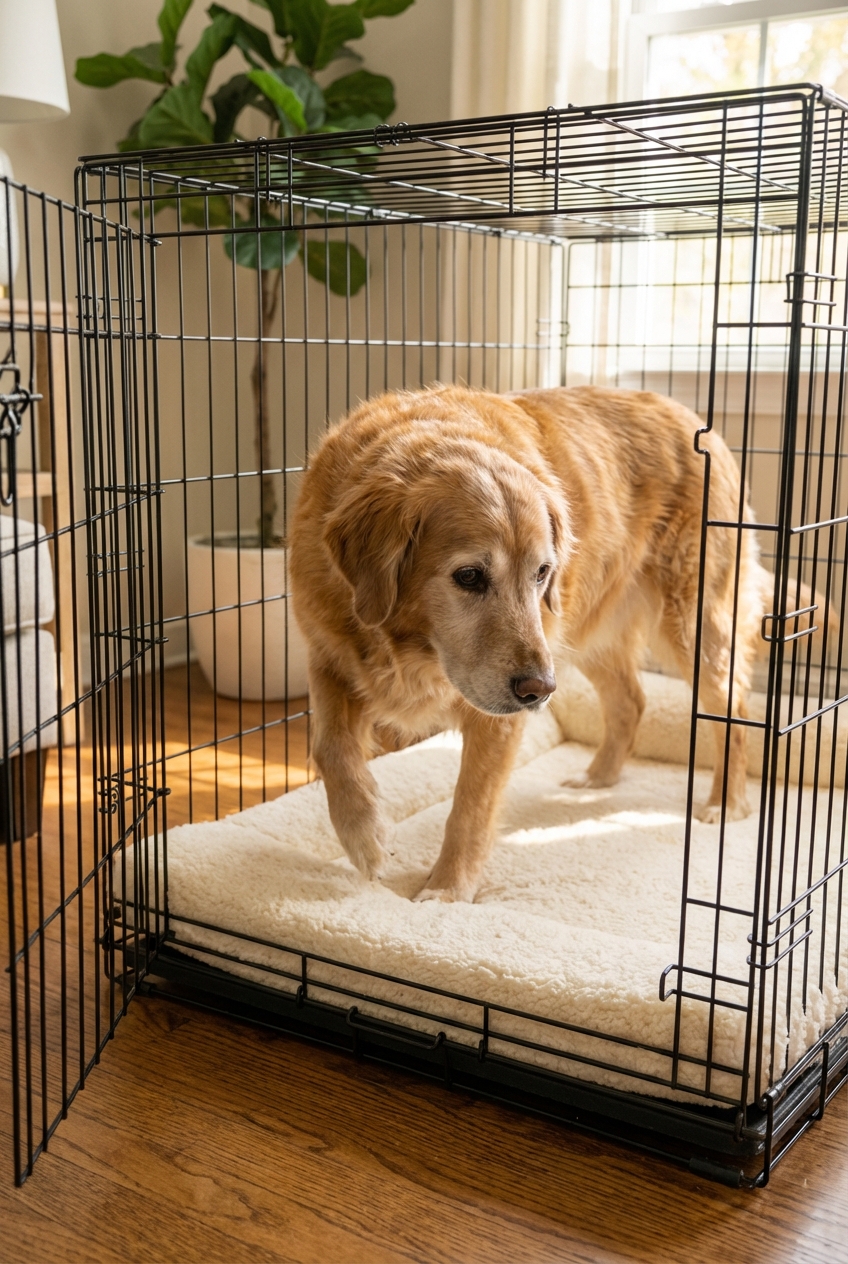
Older dogs may hesitate to step into a crate if the lip is high or the flooring is slippery. Consider a crate with a lower threshold, add a stable ramp if needed, and use a thick non-slip mat.
Night restlessness
If your senior dog is newly restless at night, rule out pain, urinary changes, or cognitive dysfunction with your veterinarian. Crating can help some seniors settle, but it should not be used to contain discomfort.
Potty needs
Many older dogs need more frequent bathroom breaks. Keep crate sessions aligned with their physical needs, especially overnight.
How long can they stay crated?
This varies based on age, health, bladder control, and exercise level. As a gentle guideline for healthy adult dogs, many can manage a few hours, but seniors often need shorter stretches and more breaks.
- Make sure your dog has had a potty break and some movement before crating.
- Provide a safe chew or enrichment option if appropriate.
- If your schedule requires long crating periods, consider a midday dog walker, pet sitter, or a secure pen setup.
If you are ever unsure, your veterinarian can help you decide what is reasonable for your dog’s body and medical needs.
Rescue dogs
Many rescued adult dogs do beautifully with crate training, but the first weeks should be especially gentle.
- Go slower than you think you need to.
- Keep the door open often so the crate does not feel like a trap.
- Use predictable routines like meals, short training sessions, and calm rest periods.
- Pair the crate with comfort cues such as soft music, a familiar blanket, or a consistent bedtime routine.
Quick checklist
- Crate is the right size and comfortable.
- Door is secured open during early sessions.
- High-value treats are reserved for crate time.
- Sessions are short and end on a calm note.
- Crate is used daily, not only when you leave.
- Potty, exercise, and enrichment needs are met.
- Collars and tags are removed before crating.
- Signs of panic are addressed with a slower plan and professional help if needed.
Kind crate training is about teaching safety, not forcing tolerance. When your older dog chooses the crate, you have built real trust.
When to get help
Reach out to your veterinarian or a certified trainer if you notice:
- Escape attempts that could cause injury
- Severe drooling, vomiting, or self-harm behaviors in the crate
- Signs of separation anxiety (panic when you leave, even outside the crate)
- Sudden crate intolerance in a dog who used to do fine
There is no shame in getting support. In my experience, the right plan can make a world of difference for both you and your dog.