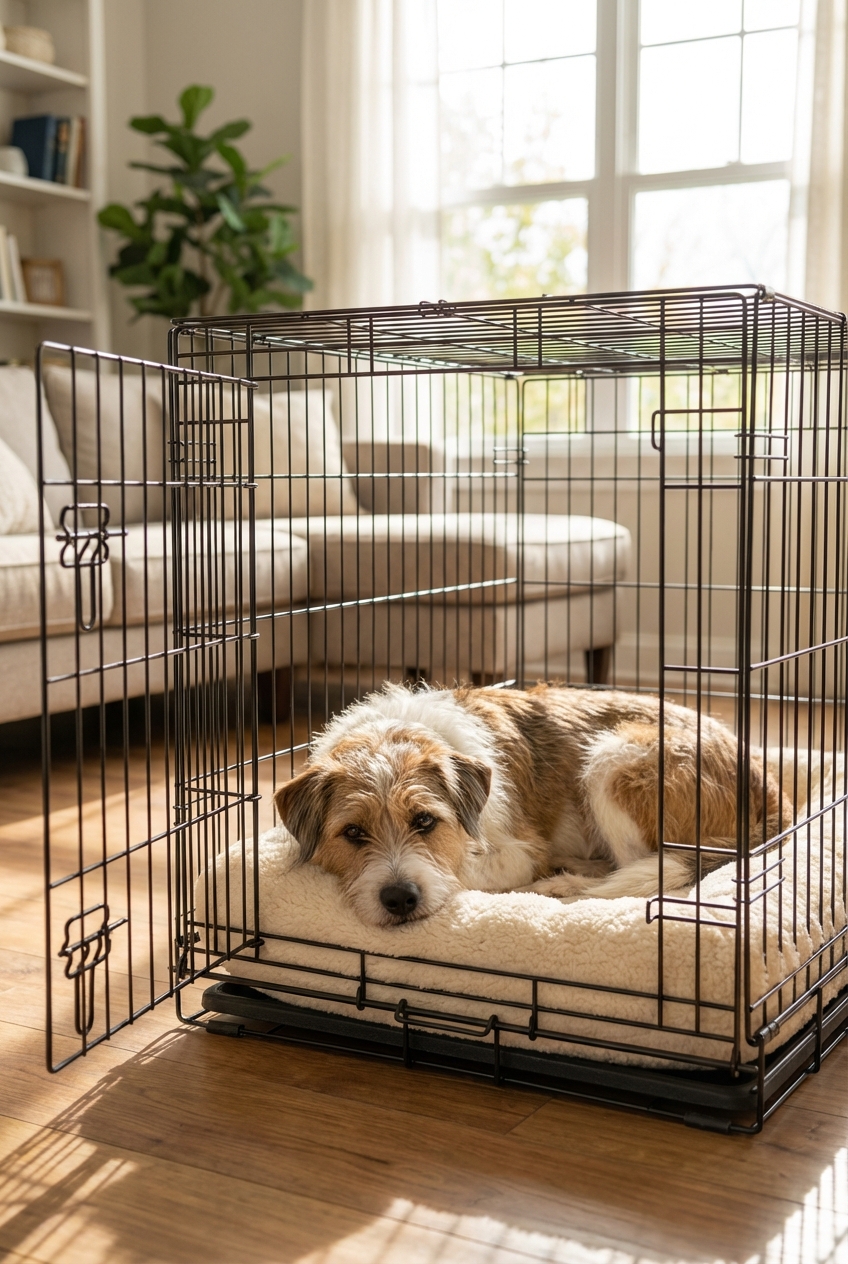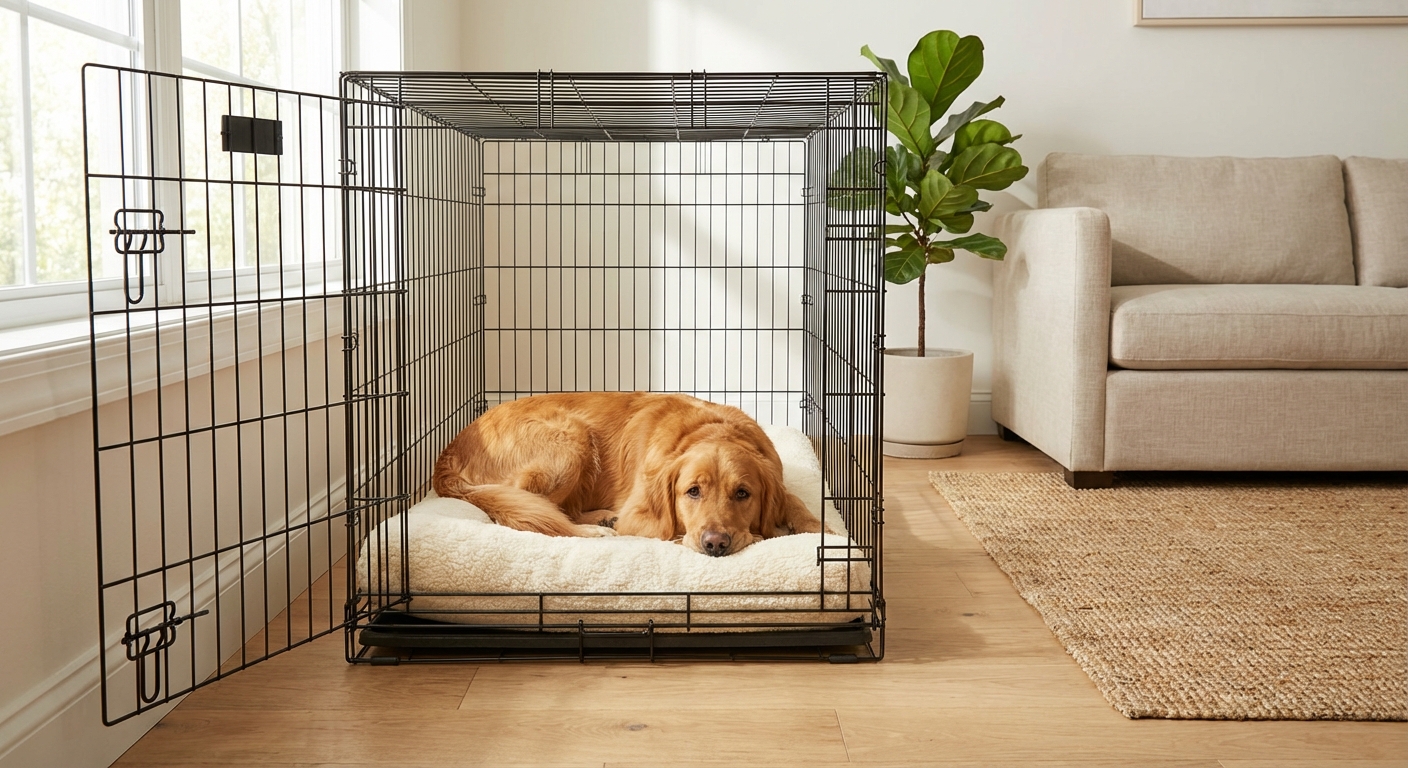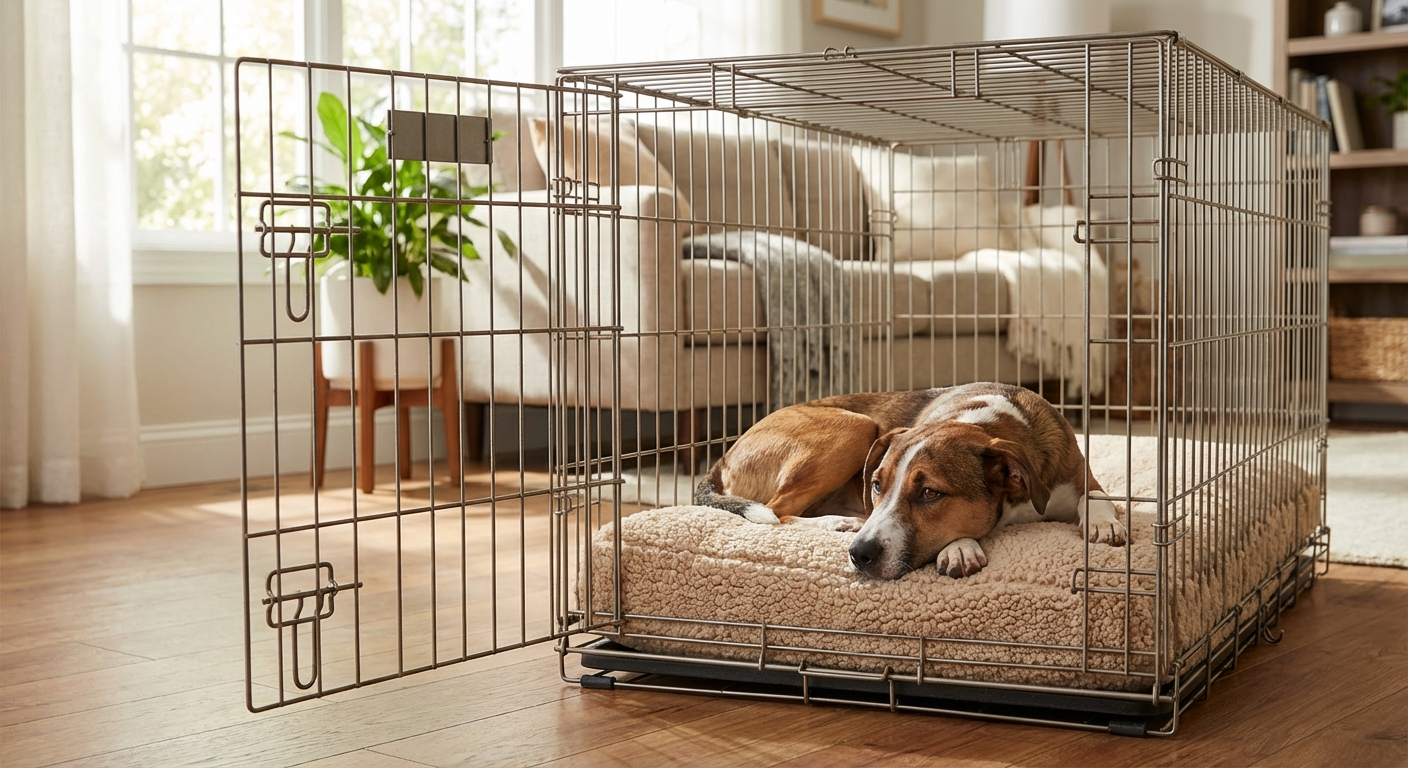
A vet assistant’s step-by-step crate training guide for puppies, adult rescues, and senior dogs. Learn crate setup, timing, whining fixes, safe duration, a...
Article
•
Designer Mixes
Crate Training an Older Dog

Shari Shidate
Designer Mixes contributor
Crate training is not just for puppies. I have helped plenty of adult and senior dogs learn to love a crate, and when it is done with kindness and structure, it can become a true comfort zone. A crate can help with house training refreshers, anxiety support, travel safety, recovery after surgery, and simply giving your dog a predictable place to rest.
The key is this: for an older dog, crate training is about trust and pacing, not “tough love.” If you go slowly, use high-value rewards, and set the crate up correctly, most dogs learn faster than people expect.
Start with the right crate setup
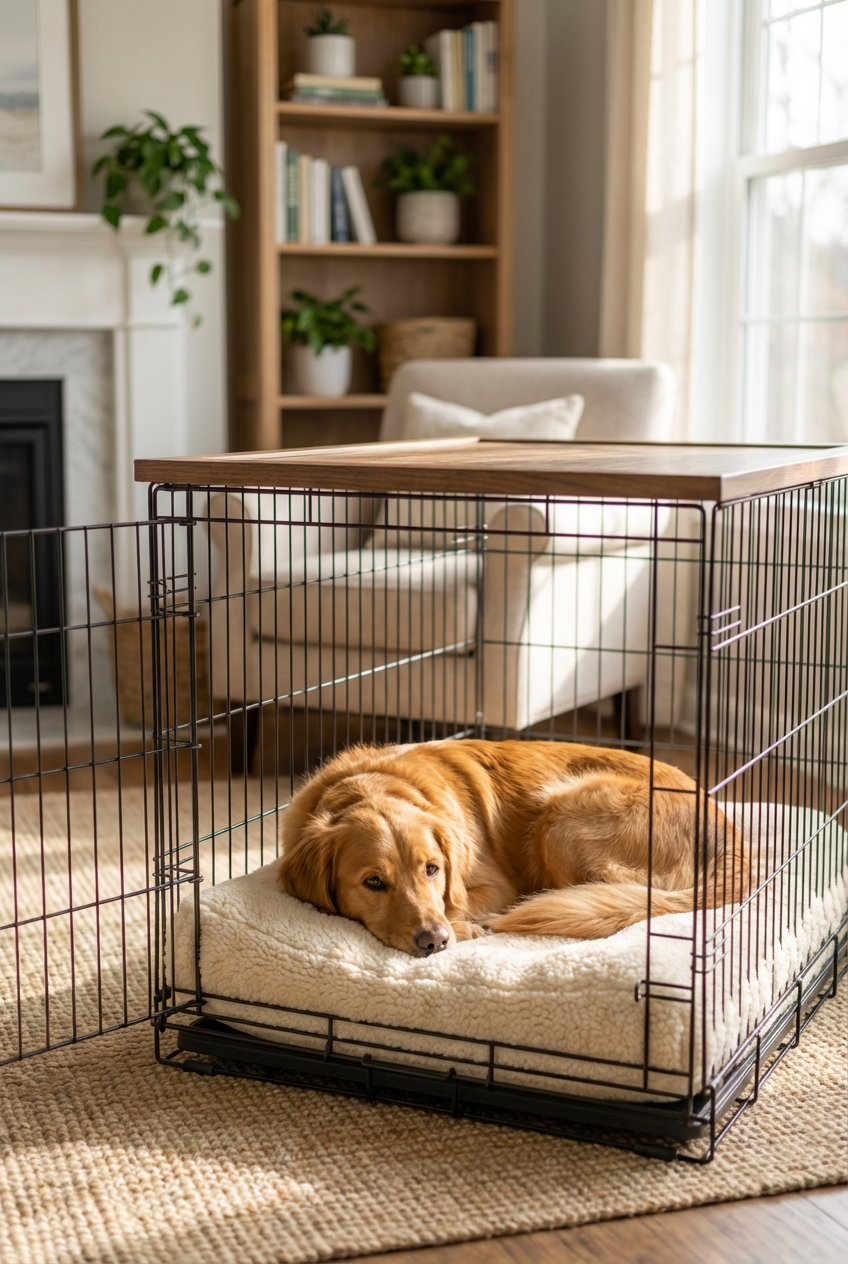
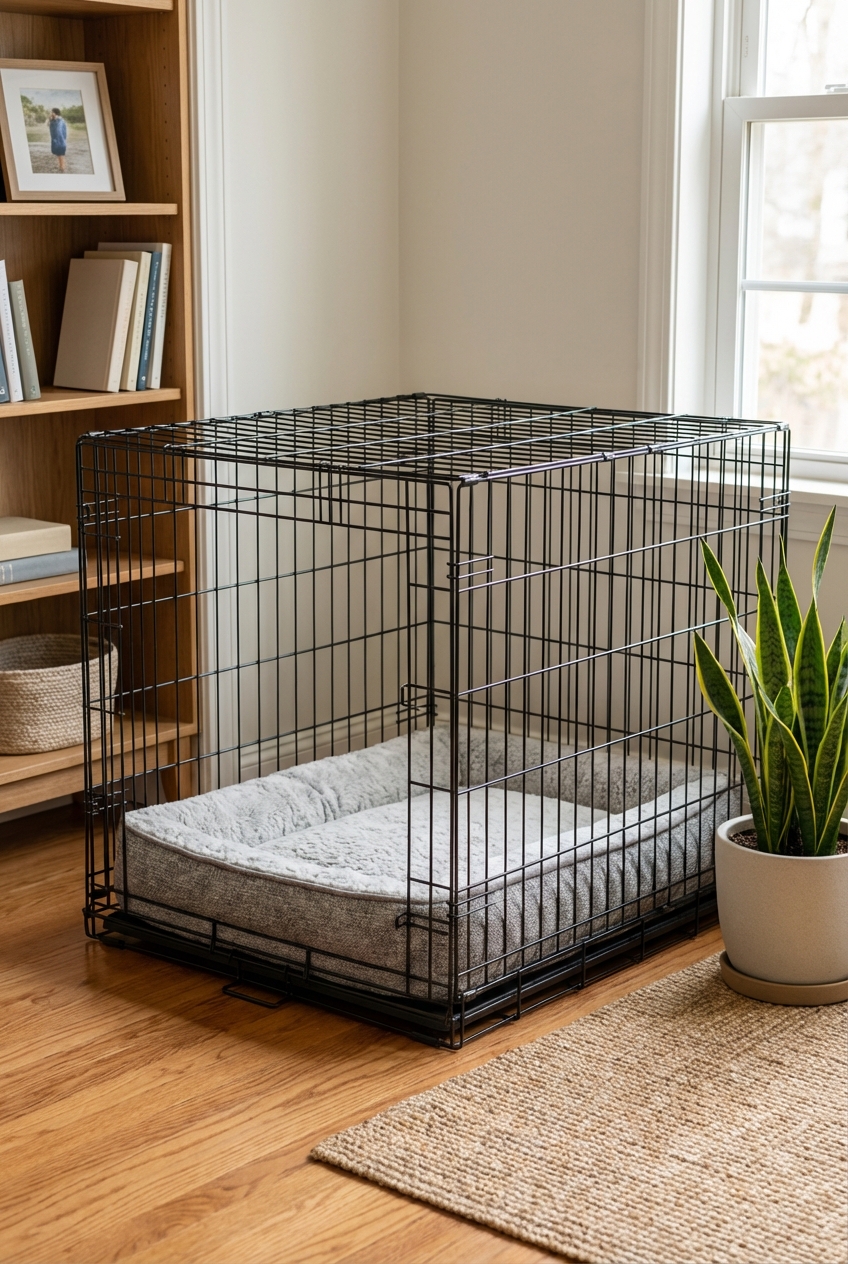
Before you begin training, make the crate feel safe, roomy, and inviting. A poor setup can make training feel impossible.
Choosing a crate size
- Big enough to stand up, turn around, and stretch out. Too small feels trapped.
- Size and accidents: A very large crate can make potty accidents more likely, especially during house-training refreshers. If accidents continue, rule out medical causes like urinary issues, GI upset, or incontinence with your veterinarian.
- Consider mobility. Seniors with arthritis often do better with a lower entry and plenty of padding.
Crate type options
- Wire crates: Good airflow and visibility, easy to attach bowls, easy to clean.
- Plastic kennels: More den-like and often helpful for travel.
- Soft-sided crates: Lightweight, but not ideal for chewers or dogs who push and paw when stressed.
- Senior-friendly details: Look for a low threshold, wide door opening, and enough floor space for an orthopedic bed.
Location matters
- Place the crate where your dog already likes to relax, often a quiet corner of the living room or your bedroom at night.
- Avoid busy, high-traffic areas (kids running, constant door slams) early on.
Comfort and safety basics
- Soft, supportive bedding for older joints. If your dog chews fabric, use a chew-resistant mat and supervise.
- Water if your dog will be crated more than a brief period and it is safe to do so. “Safe” means your dog is not likely to tip the bowl, chew the attachment, or soak the bedding. After surgery or with certain medical conditions, follow your veterinarian’s instructions about water access.
- Remove collar tags in the crate to reduce snag risk.
- Use a light cover if it helps your dog settle. Some dogs prefer the crate uncovered.
The most important rule
Once the crate feels inviting, your training rules matter even more.
If the crate only happens after scolding, arguments, or when company comes over and your dog gets “banished,” your dog will naturally resist it. Your goal is for the crate to predict good things: meals, treats, calm praise, and rest.
If you want your older dog to accept the crate, your dog has to feel in control of entering it, especially at first.
Step-by-step training
Step 1: Explore with the door open
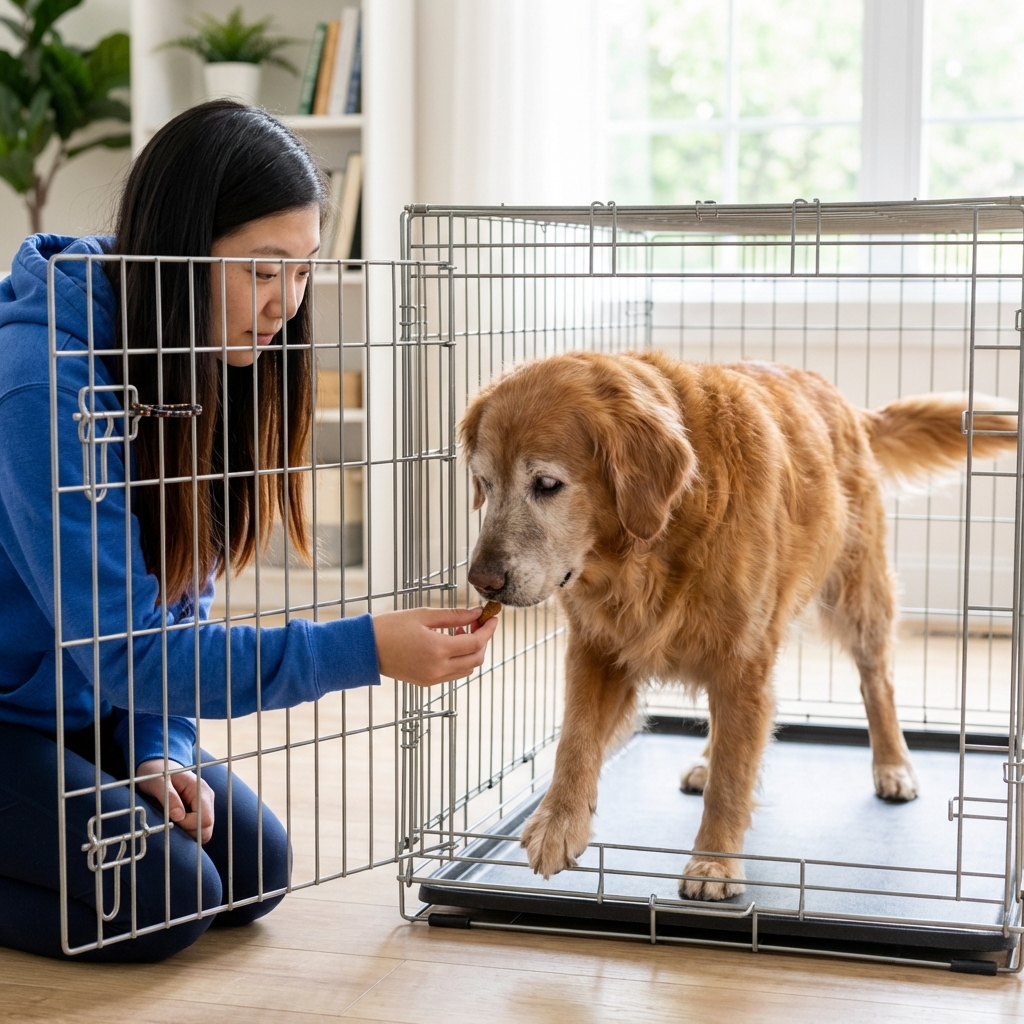
Set the crate up and leave the door open. Toss a few treats near the entrance, then just inside, then all the way in. Let your dog go in and out freely. No pushing, no shutting the door “to see what happens.”
- Practice 3 to 5 minutes, 2 to 4 times per day.
- End the session while your dog is still relaxed and curious.
Step 2: Feed meals in the crate
Meals are a powerful way to build positive associations. Start with the bowl near the opening, then gradually move it farther inside over a few days.
- If your dog hesitates, move the bowl closer to the door again and slow down.
- For nervous dogs, scatter feeding inside the crate can work better than a bowl.
Step 3: Add a “go to crate” cue
When your dog is willingly walking in, add a simple cue like “crate” or “bed.” Say the cue once, then toss a treat inside. After a few days, pause slightly before tossing the treat so your dog begins to move in after hearing the cue.
Step 4: Brief door closes, then reopen
When your dog is inside enjoying a treat, gently close the door for 1 to 3 seconds, then open it before your dog worries. Slowly build time.
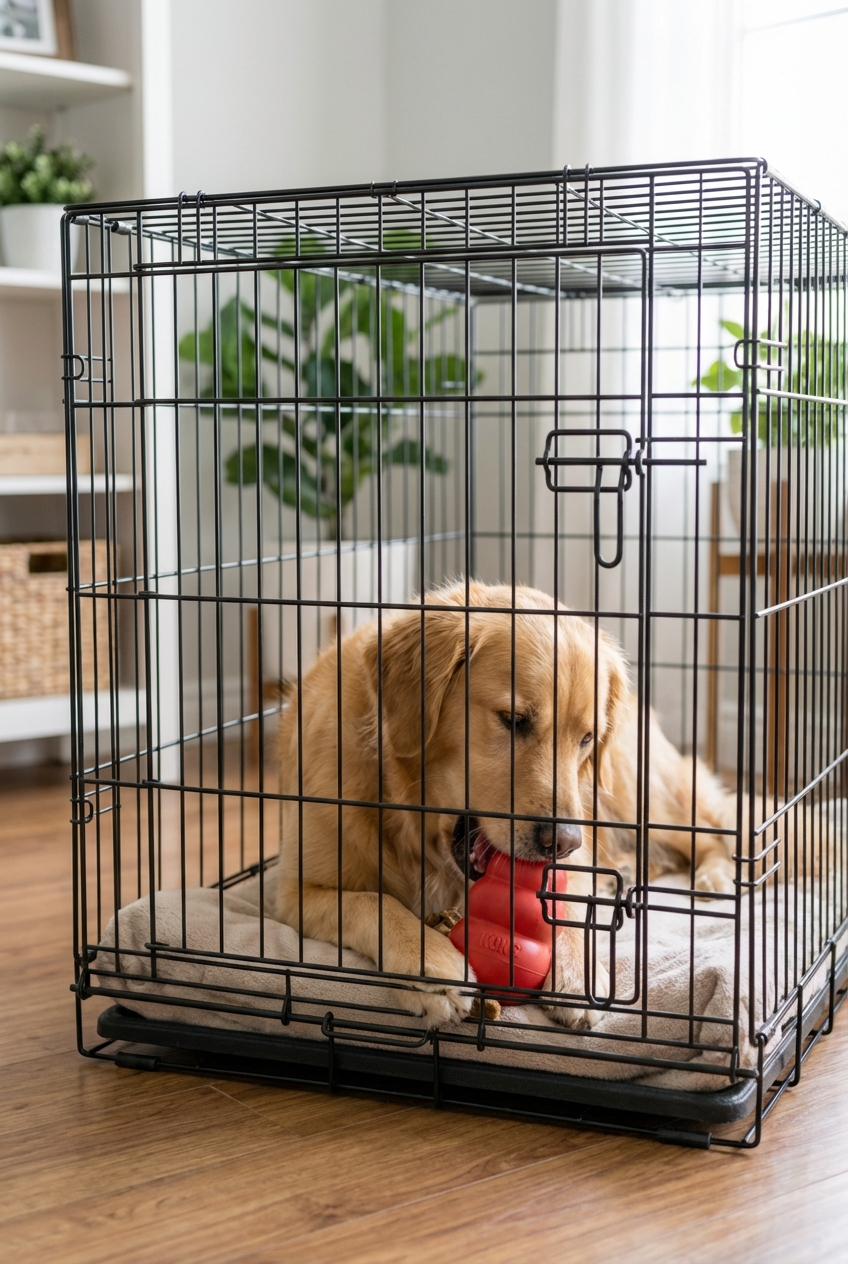
- Offer a steady chew or stuffed food toy during these sessions.
- Chew safety: Choose the right size, supervise at first, and remove anything that splinters, cracks, or is getting shredded. For seniors or dogs with dental disease, skip very hard chews and ask your vet what is appropriate.
- Keep your body language calm and neutral. Excitement can rev some dogs up.
Step 5: Build calm time
Increase crate time in small increments: 10 seconds, 30 seconds, 1 minute, 3 minutes, 5 minutes, and so on. This is where people usually rush. Going slower is often faster long term.
Step 6: Add distance and real-life movement
Once your dog can relax with you nearby, practice standing up, walking around the room, stepping out briefly, and coming back. Your dog learns that your movement does not predict abandonment.
How long does it take?
It depends on your dog’s history, temperament, and health. Some adult dogs settle within a few days if they are already comfortable with confinement and alone time. Others, especially rescues with confinement trauma, may need several weeks of gentle conditioning.
- Look for progress markers: entering the crate readily, soft body posture, choosing to nap in the crate, and calm breathing.
- Watch for stress: frantic pawing, drooling, heavy panting when the room is cool, or trying to bite bars. If you see these, slow down and consider professional support.
Common challenges
“My dog panics when the door closes”
This can be a sign of separation anxiety or confinement anxiety. In these cases, “cry it out” can make things worse.
- Return to very short door closes (1 to 2 seconds) paired with a high-value reward.
- Practice when your dog is already calm, not when the household is hectic.
- Ask your veterinarian about anxiety support if panic is intense or persistent.
Important: For true separation anxiety, crating alone is not the fix. Many dogs need a separate, gradual alone-time plan (often with a trainer) in addition to any crate work.
“My dog barks nonstop”
Barking can mean stress, frustration, or simply a habit that worked before. First, make sure your dog’s needs are met: potty, exercise, mental enrichment, and comfort.
- Reward quiet moments, even one second of calm at first.
- Use a long-lasting chew or food toy to help settle.
- Avoid letting barking be the way the door opens. Instead, wait for a brief pause, then calmly release.
“My senior dog seems uncomfortable in the crate”
Older dogs can have arthritis, spinal issues, dental pain, or vision loss that makes new routines harder.
- Use an orthopedic bed and ensure easy entry.
- Keep nails trimmed for traction.
- If stiffness, limping, or restlessness is new, schedule a vet visit. Pain can look like “behavior.”
“My dog was punished with a crate in the past”
You can absolutely rebuild the relationship, but it may take time. Start with the door removed or securely tied open so the crate never closes unexpectedly. Then rebuild from treats and meals only.
When not to crate
Crates are helpful for many dogs, but there are situations where you should pause and get guidance.
- Severe panic or self-injury: If your dog is breaking teeth, bleeding, or throwing their body at the door, stop and talk to your vet and a certified force-free trainer. A different confinement setup may be safer.
- Post-op restrictions: Some surgeries require crating, others require specific positioning, bedding, or water rules. Follow your veterinarian’s discharge instructions.
- Heat and breathing risk: Flat-faced dogs and any dog in a warm room can overheat quickly. Prioritize airflow, temperature control, and vet guidance.
- Cognitive changes: Dogs with canine cognitive dysfunction may struggle with new routines and confinement. Your vet can help you plan a safer setup.
Crate time guidelines
Crates are great tools, but they are not meant for long stretches of isolation. Adult dogs generally handle longer periods than puppies, but they still need movement, potty breaks, and connection.
- Most healthy adults: Many can handle 3 to 5 hours during the day with breaks, but individual needs vary.
- Seniors: Often do best with more frequent breaks due to mobility, thirst, or bladder changes.
- Always: Give a potty break before and after crating, and aim for exercise and enrichment first.
If you work long shifts, consider a dog walker, doggy day care, a safe dog-proofed room, or an exercise pen setup depending on your dog’s needs.
Nighttime training
Many older dogs do best at night when the home is quiet. If your dog is new to the crate, placing it in your bedroom can speed success.
- Keep the bedtime routine consistent.
- Offer a final potty break right before bed.
- If your dog wakes and fusses, take a calm potty trip first. No playtime. Then back to bed.
When to get help
As a veterinary assistant, I always remind families: behavior and health are connected. Get extra help if you notice any of the following:
- Sudden new crate resistance in a dog who previously crated fine
- Injuries (broken nails, bloody gums) from trying to escape
- Signs of pain, confusion, or worsening mobility
- Intense panic that does not improve with gradual training
A certified force-free trainer can tailor a plan, and your veterinarian can rule out pain or consider anxiety treatment options if needed.
A simple daily plan
If you like a clear routine, here is a gentle schedule that works well for many adult dogs:
- Morning: potty break, short walk, breakfast served in the crate with door open
- Midday: 3-minute crate game session (treat tosses, “crate” cue)
- Evening: potty break, enrichment (sniff walk or training), then 5 to 20 minutes of calm crate time with a safe chew
- Bedtime: quiet crate settle with lights low and a consistent routine
Keep notes for a week. If something is not working, your notes will tell you where your dog is getting stuck so you can adjust without guessing.
Progress with older dogs is usually quiet and gradual. Look for relaxed shoulders, a soft face, and your dog choosing the crate on their own.