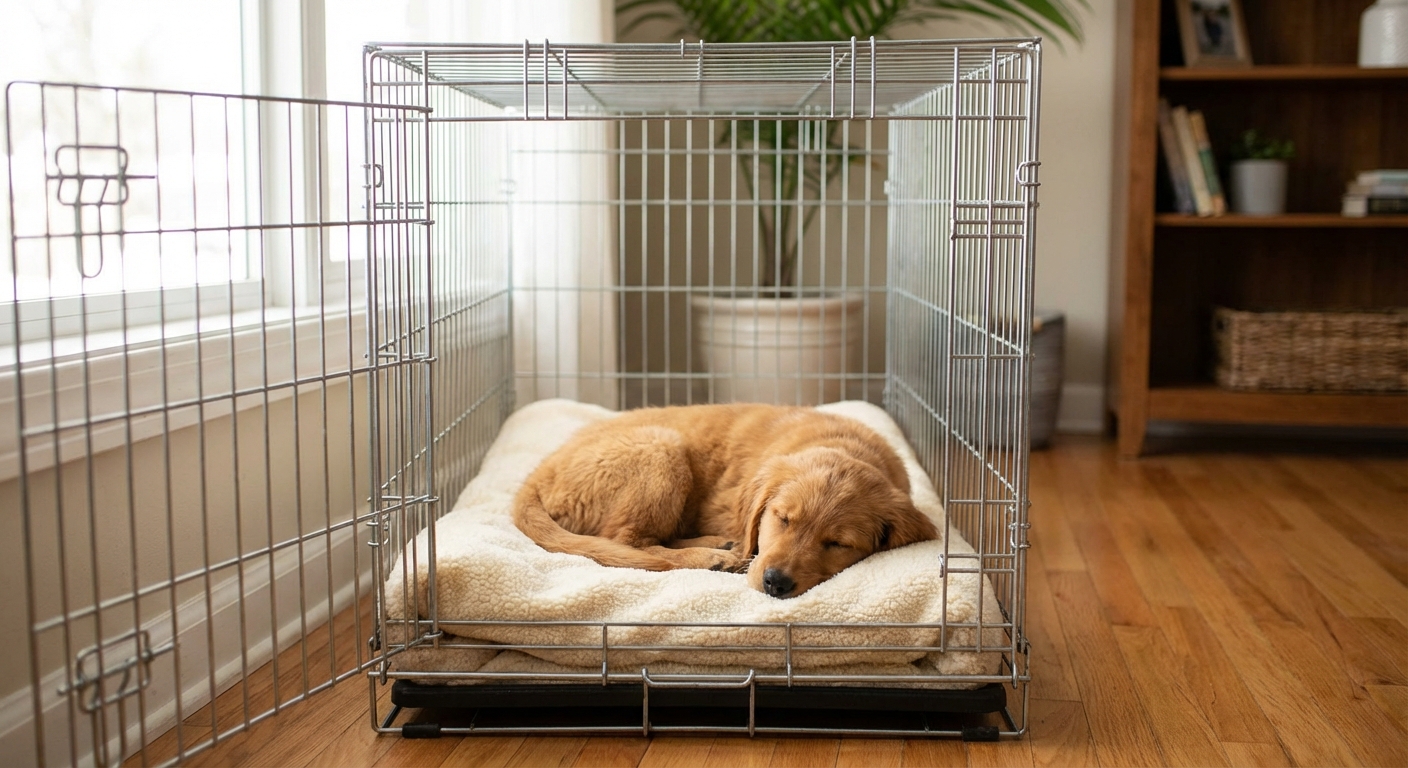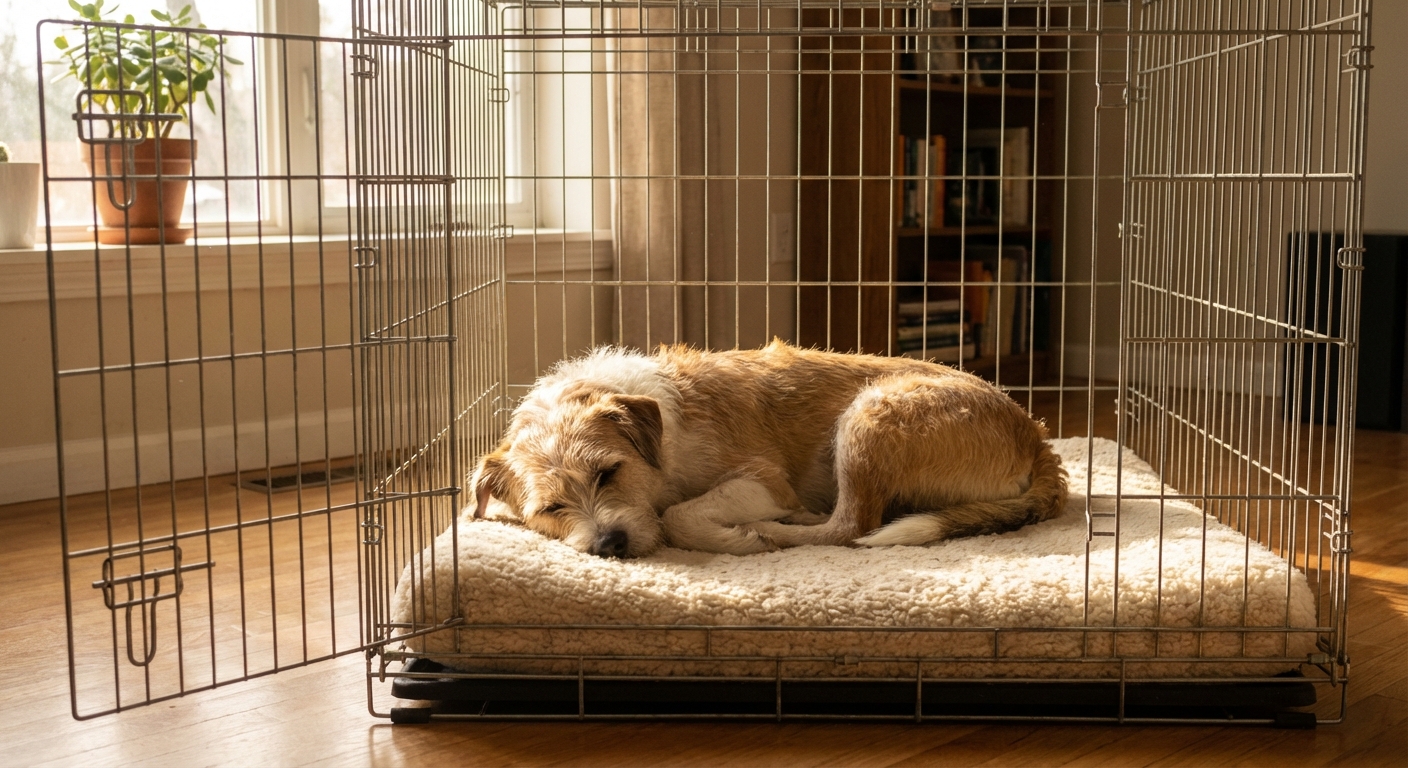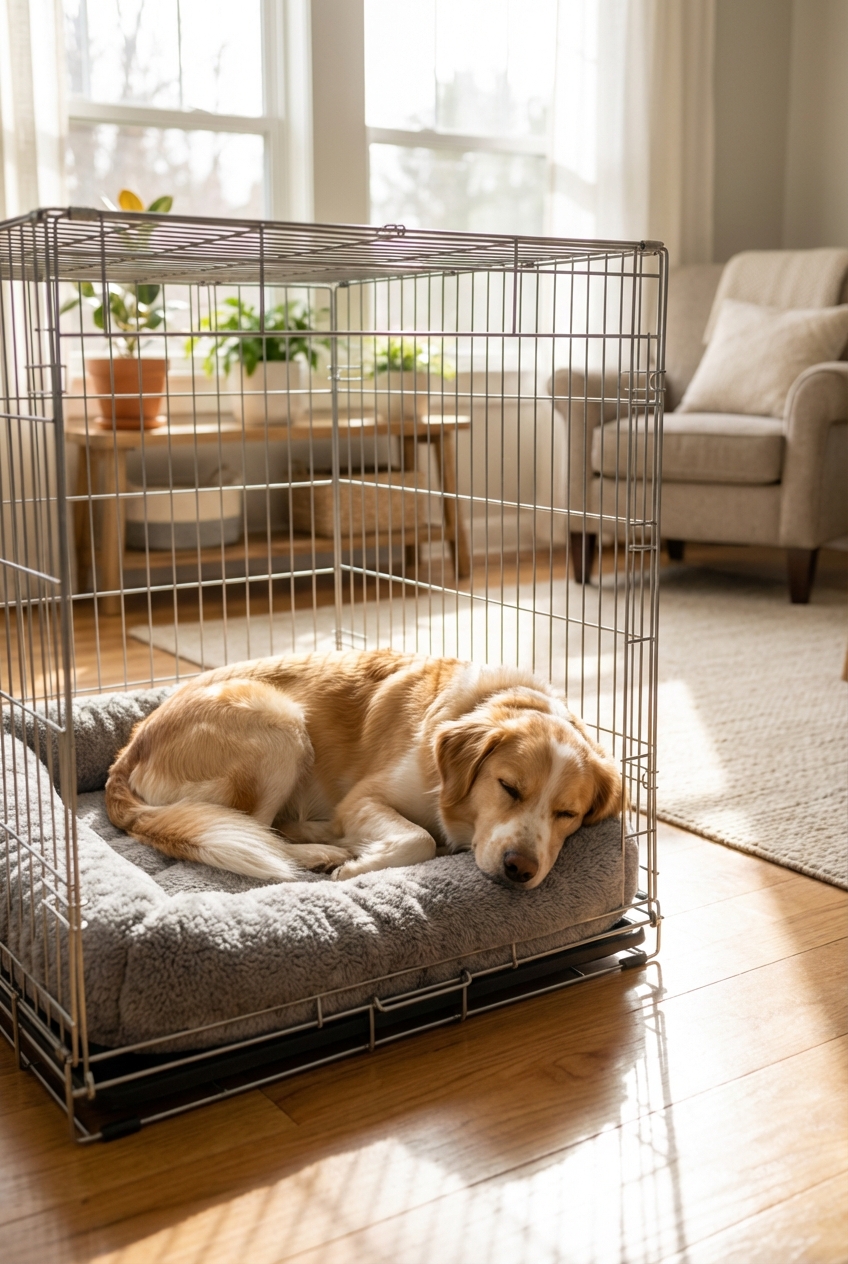
Crate training isn’t just for puppies. Learn a kind, realistic plan to help an adult or senior dog feel safe in a crate—setup tips, timelines, mistakes t...
Article
•
Designer Mixes
Crate Training an Adult Dog

Shari Shidate
Designer Mixes contributor
Crate training is not just for puppies. Adult dogs can learn to feel safe in a crate too, and for many families it becomes one of the easiest ways to create calm routines, prevent accidents, and keep everyone safe when you cannot supervise closely.
As a veterinary assistant here in Frisco, Texas, I have seen crates used in a truly family-friendly way: as a quiet bedroom for the dog, not a punishment. When you set it up correctly and move at your dog’s pace, many adult dogs settle in faster than you would expect. That said, anxious dogs and some rescue dogs may need more time, and that is normal.
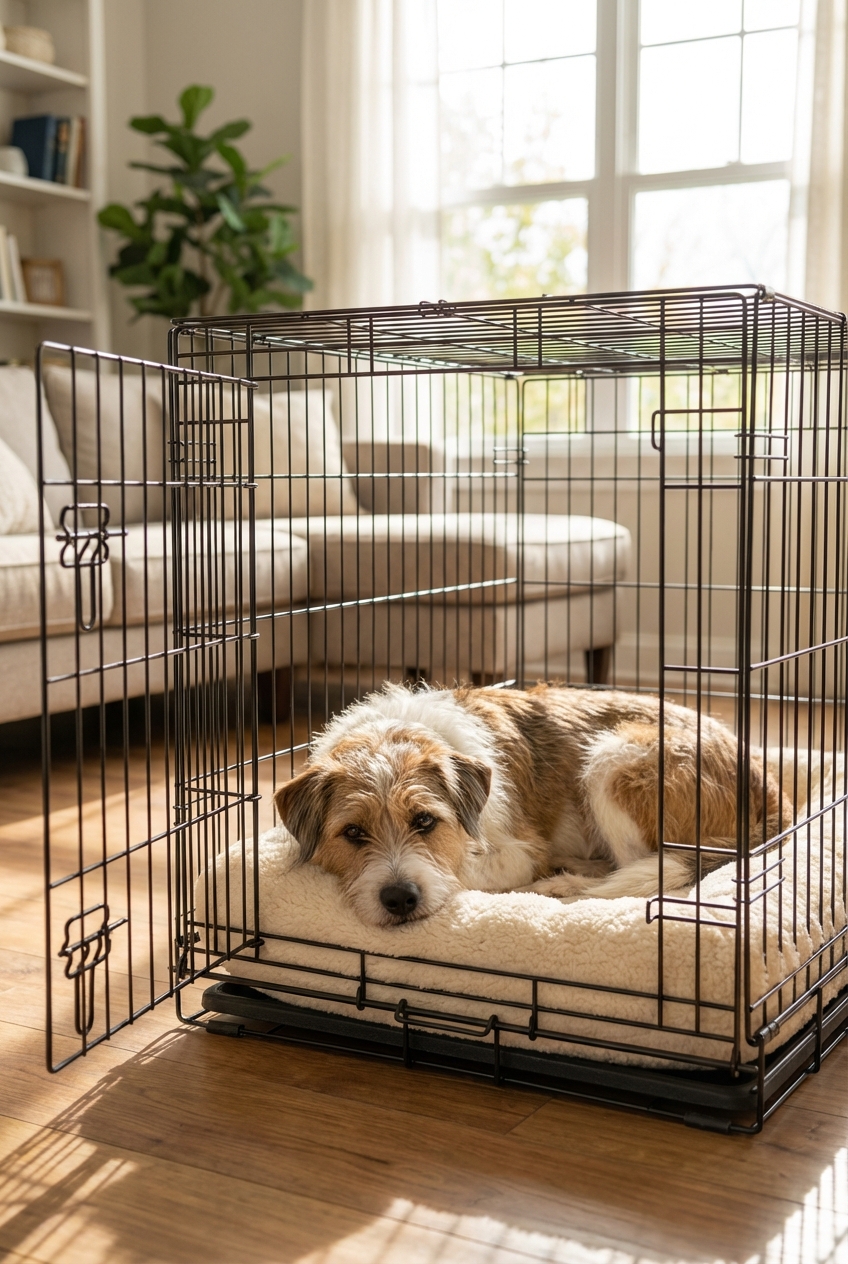
What a crate is and is not
A crate is a management tool and a safe resting place. It helps you prevent problems while you teach skills like house training, calm settling, and being alone.
A crate is not a place to send a dog for “being bad.” If kids are involved, this is an important house rule: the crate is your dog’s private space, and everyone respects it.
- Good use: naps, bedtime, travel safety, post-surgery recovery, brief alone-time practice.
- Not good use: long daily confinement, punishment, or forcing a fearful dog to “get over it.”
Pick the right crate
Size matters
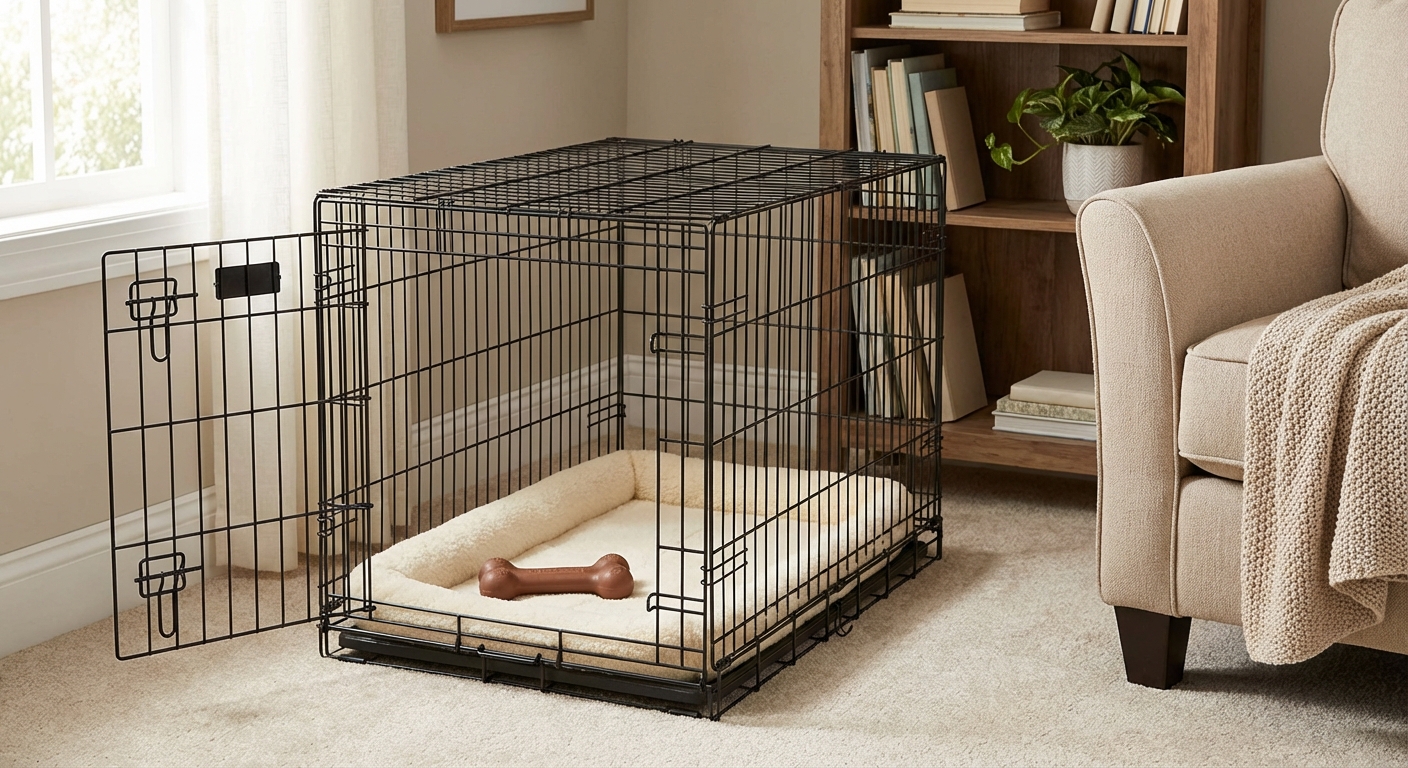
Your dog should be able to stand up, turn around, and lie down comfortably. Too small feels stressful. Too large can make it easier for a dog to potty in one corner, especially during retraining.
Type of crate
- Wire crates: airy, easy to clean, often foldable. Great for most households.
- Plastic airline-style crates: more den-like and cozy for some dogs, helpful for travel.
- Soft crates: only for dogs who are already relaxed in a crate and do not chew or claw.
Location
For family-friendly crate training, place the crate where your dog can still feel included, like a living room or near the kitchen. At night, many adult dogs relax faster if the crate is in or near the bedroom at first.
Comfort and setup
- A washable bed or folded blanket.
- One safe chew or food toy (skip anything your dog can shred and swallow).
- Water: for short sessions, many dogs do fine without a bowl and it can reduce spills and accidents. For longer crating, hydration matters, so use a spill-resistant bowl or bottle style attachment if your dog can drink calmly.
Crate safety basics
A few simple safety habits prevent most crate problems:
- Remove collars and harnesses before crating to prevent snagging.
- Check the latch every time, especially with smart escape artists.
- Ventilation matters: avoid covering the crate fully in warm rooms and keep it out of direct sun.
- Choose safe enrichment: if your dog shreds toys, skip anything that can be swallowed. Supervise new chews until you know your dog’s style.
Before you start
If an adult dog is suddenly having accidents, restless pacing, or cannot settle, it is worth checking in with your veterinarian. Pain, urinary issues, gastrointestinal upset, and cognitive changes in seniors can all affect crate training.
Also, be honest about anxiety. Distress can be separation-related, confinement-related, or both. A crate helps many dogs, but for true separation anxiety or intense confinement anxiety it can sometimes make panic worse. If your dog drools excessively, bites the bars, breaks nails trying to escape, or injures their mouth, stop and ask your vet or a qualified trainer for help.
Once you have ruled out health issues and you are confident your dog can handle gentle training, you can begin the step-by-step plan below.
5-step plan
Step 1: Door open
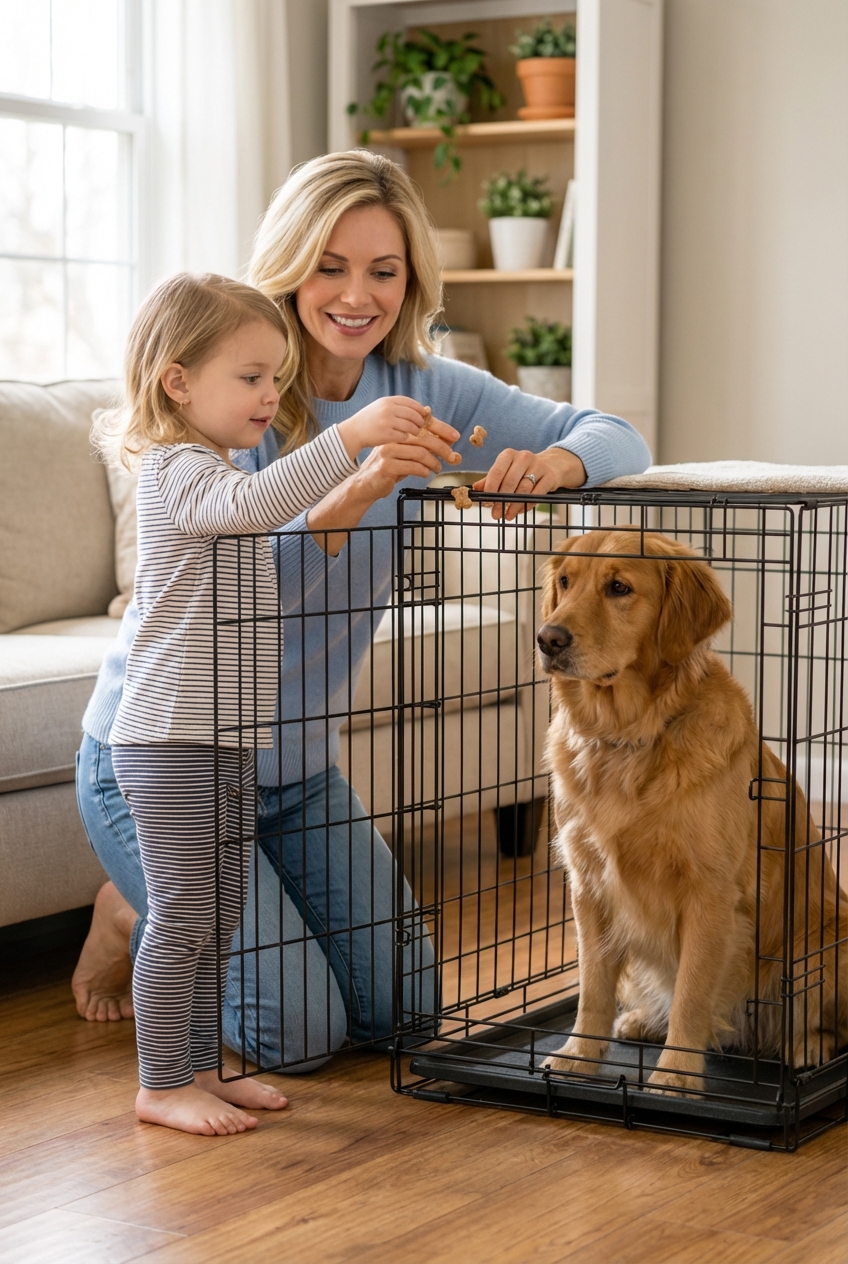
Start with the crate door propped open so it cannot swing and startle your dog. Toss a few small treats inside, then let your dog come back out. Repeat. No pushing, no pulling, no closing the door yet.
- Feed meals near the crate, then just inside the crate, then fully inside.
- Anytime your dog chooses to step in, quietly praise and reward.
Step 2: Build calm time
Once your dog is comfortable walking in and out, give a chew or a stuffed food toy and let them relax inside for 30 to 60 seconds with the door still open. You are looking for soft body language: loose muscles, slow blinking, settling onto a hip.
Gradually increase to a few minutes. If your dog pops up and leaves, that is fine. Do not lure them back with frantic energy. Just make the crate predictably pleasant.
Step 3: Close the door briefly
When your dog is happily engaged with a chew, gently close the door for 3 to 5 seconds, then open it before your dog worries. Repeat, gradually stretching to 30 seconds, then 1 minute, then 3 minutes.
A common mistake I see: families wait until the dog finally protests, then they open the door. It makes sense, but it can accidentally teach “noise opens the crate.” Instead, open the door while your dog is still calm, even if it feels almost too soon.
Tip for families: let one adult be the “crate coach” so the timing stays consistent. Kids can help by tossing treats in, but adults should handle door closing at first.
Step 4: Add distance
Now you will take one step away, then return and reward calm behavior. Slowly increase distance and begin brief out-of-sight moments, like stepping into the hallway and back.
- Keep departures and returns low-key.
- If whining starts, you moved too fast. Go back to an easier step.
Step 5: Practice real routines
Crate time should match your actual household rhythm: a short crate session while you shower, a longer nap after a walk, quiet time while kids do homework.
Most adult dogs do best when crate time follows enrichment, like a sniff walk, training session, or puzzle feeding. Tired brains and bodies settle more easily.
Simple daily schedule
Adult dogs thrive on predictability. Here is a simple structure many families can maintain:
- Morning: potty break, short walk, breakfast (ideally in the crate), 15 to 45 minutes quiet crate rest.
- Midday: potty break, play or training for 10 minutes, then a brief crate session with a chew.
- Evening: walk, family time, dinner, then crate rest while the household settles.
- Night: last potty break, then bedtime in the crate if needed.
If you are home, do not feel like you must crate constantly. The goal is that the crate is a safe option, not the only option.
How long is too long?
This depends on age, health, training history, and your dog’s individual tolerance. In general, healthy adult dogs should not be crated for long stretches every day without breaks for potty, movement, and mental stimulation.
- Common range: many adult dogs can handle about 3 to 4 hours at a time, especially if they have had exercise and a potty break. Some can do longer, some need shorter.
- Senior dogs: may need more frequent potty breaks and softer bedding.
- Dogs with medical issues: follow your veterinarian’s guidance.
If your schedule requires longer confinement, consider a safe dog-proofed room or exercise pen setup, or plan for a midday break.
Common challenges
“My dog refuses to go in.”
- Start even smaller: reward one step toward the crate, then two steps, then a paw inside.
- Try a different location or crate type, especially if the current spot is noisy.
- Use high-value rewards like tiny pieces of chicken or cheese if your dog can tolerate them.
“My dog panics when the door closes.”
- Go back to door-open work and shorter closures.
- Practice closing the door halfway, then opening, with treats in between.
- If panic is intense, contact your vet and a trainer experienced in anxiety cases.
“Whining at night.”
- Confirm potty needs first, especially during the first week.
- Place the crate near your bed initially.
- Use a consistent bedtime routine: potty, calm chew, lights down.
“Accidents in the crate.”
- Check that the crate is not too large.
- Increase potty breaks and supervise closely outside the crate.
- Ask your vet about urinary or digestive causes if accidents continue.
Multi-dog homes
If you have more than one dog, separate crates are usually the safest and calmest option.
- Feed dogs in their own crates or separate areas to prevent resource guarding.
- Do not crate dogs together unless you have a very specific reason and professional guidance.
- Give each dog their own quiet space so nobody feels pressured.
Kid rules
Crate training works best when kids understand the crate is a safe zone. These simple rules prevent bites and protect trust.
- No crawling into the crate with the dog.
- No reaching into the crate to hug, grab, or move the dog.
- No teasing, barking, or banging on the crate.
- Let sleeping dogs sleep, especially in the crate.
If your dog chooses the crate to rest, that is a great sign. It means the crate is doing its job.
Food and enrichment
One of the fastest ways to build a positive crate association is to pair it with long-lasting, safe enrichment. Keep portions small at first and count treat calories toward your dog’s daily intake.
- Stuffed food toys: softened kibble mixed with a little canned pumpkin or plain, unsweetened yogurt, then frozen. If your dog is sensitive to dairy, skip yogurt and use wet food or soaked kibble instead.
- Lick mats: a thin smear of dog-safe wet food (supervised until you know your dog’s chewing style).
- Chews: choose size-appropriate, vet-approved options and supervise at first.
If your dog has a sensitive stomach, keep it simple and introduce new chews slowly. Calm bellies help calm behavior.
When to get help
Reach out to your veterinarian or a qualified positive reinforcement trainer if you see any of the following:
- Drooling, frantic panting, or repeated attempts to escape.
- Crate biting, broken teeth, bloody gums, or torn nails.
- Severe distress even with very short crate sessions.
- Regression paired with new symptoms like increased thirst, straining to urinate, vomiting, or diarrhea.
There is no shame in needing support. Adult dogs often have a history we do not fully know, and your job is to make the crate feel safe again.
Do and don’t
- Do: go slow, reward calm behavior, and build duration in tiny steps.
- Do:
- Do:
- Don’t:
- Don’t:
Bottom line
Crate training an adult dog is absolutely doable, and it can be one of the most family-friendly ways to create calm, safe structure at home. Go slow, reward the tiniest wins, and remember: the crate is your dog’s bedroom, not a penalty box.
If you stay consistent for a couple of weeks, many dogs show a real shift in comfort and confidence. If your dog needs longer, that is okay too. Progress is still progress.